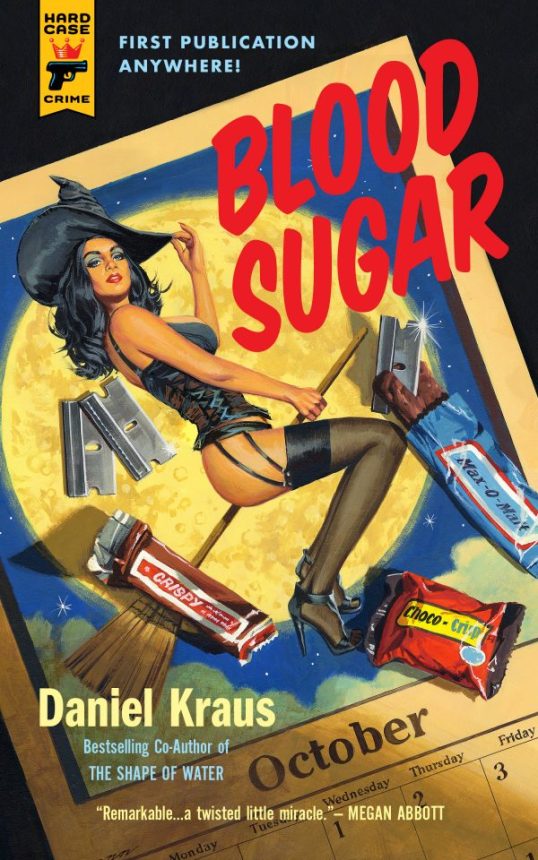
Spicy Mystery Stories was published from 1934 to 1943 and was one of the many “Spicy” magazines of the pulp era. The Spicy line featured the same stories as the other pulps, just with a lot more sex and violence. It was a popular magazine but it was also so controversial with the moral guardians of the era that it was eventually forced to tone things down and change its name to Speed Mystery.
Below are some of the controversial covers of Spicy Mystery Stories! As always, the artist has been credited when known:
4 Shots From 4 Films is just what it says it is, 4 shots from 4 of our favorite films. As opposed to the reviews and recaps that we usually post, 4 Shots From 4 Films lets the visuals do the talking!
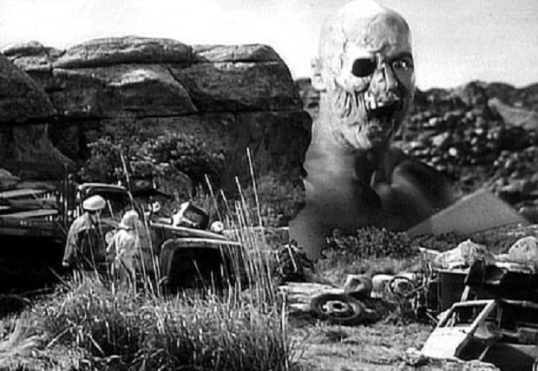
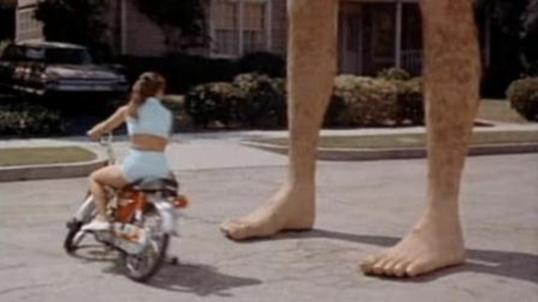
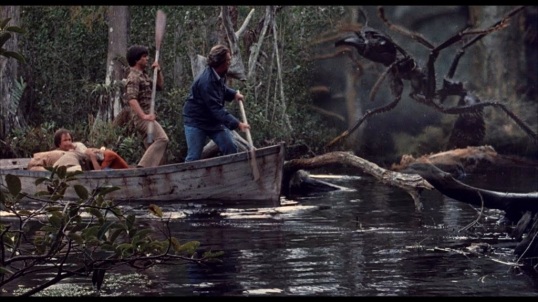
This October, we’ve been using 4 Shots From 4 Films to pay tribute to some of our favorite horror directors! Today, we celebrate Mr. Big himself, Bert I. Gordon!
4 Shots From 4 Films
The Amazing Colossal Man (1957, dir by Bert I. Gordon)
War of the Colossal Beast (1958, dir by Bert I. Gordon)
Village of the Giants (1965, dir by Bert I. Gordon)
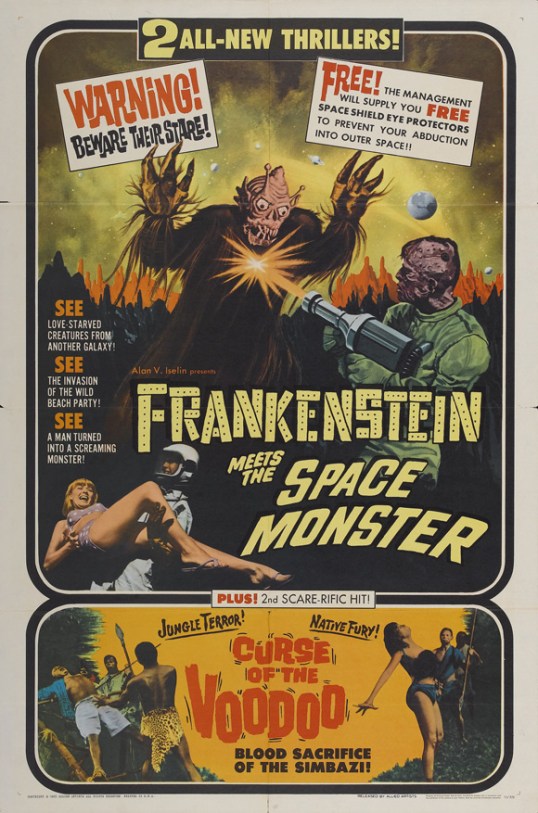
Today’s horror on the lens is the 1965 film, Frankenstein Meets The Space Man. This film features not only the debut of character actor James Karen but it also gave him a rare lead role. You may not recognize the name but you’ll know James Karen as soon as you see him. He’s probably best known, among horror fans, for his roles in Poltergiest and Return of the Living Dead.
Despite the movie’s title, it’s not about Frankenstein. Instead, it’s about an astronaut named Frank who is actually an android. When his latest mission into space goes wrong, Frank ends up crashing in Puerto Rico. Now malfunctioning, Frank causes some major chaos. Can his creator, Dr. Adam Steele (James Karen), track Frank down and put an end to his reign of terror?
And what about the Martians? Android Frank isn’t the only threat in Puerto Rico. A group of Martians have landed and are determined to kidnap any girl wearing a bikini so that they can use them to repopulate their race. We’re told that every woman on Mars — with the apparent exception of Princess Marcuzan, played with evil haughtiness by Marilyn Hanold — has been killed as the result of an atomic war. Assisting Princess Marcuzan is Dr. Nadir (Lou Cutell), a short, bald Martian with pointy ears.
One of the oddest things about Frankenstein Meets The Space Monster is that, despite being a standard — if wonderfully nonsensical — low-budget B-movie, it features a great soundtrack! Just try to get “That’s The Way It’s Got To Be” out of your head.
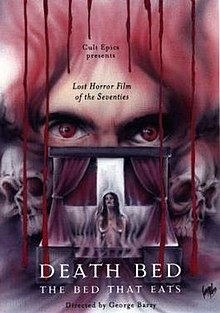
Perhaps one of the most brilliant films ever, the 1977’s Death Bed: The Bed That Eats is a film about a bed that eats people. Yes, just like the title says.
Seriously, that’s almost the entire film. The bed sits in an abandoned, dilapidated mansion that appears to be located out in the middle of nowhere. People break into the mansion. People find the bed, which is surprisingly well-cared for considering the fact that it’s sitting in the middle of a dusty, abandoned house. Some people make love. Some people try to get some sleep. Some people just sit down so they can take off their shoes. But in the end, all of them get eaten.
The bed is vaguely alive, which is to say that, if you listen carefully, you can hear it breathing and chewing. Many years ago, the bed was conjured up by a demon who needed a place to make love to his girlfriend. Unfortunately, his girlfriend died while they were having sex which caused the demon to cry. The demon’s tears brought the bed to life and now, every ten years or so, it has to feed.
We know all of this because the painter Aubrey Beardsley tells us so. Much like Paganini Horror, Death Bed is unique in that it features an actual historical figure as a key part of the story. Aubrey Beardsley was an English illustrator who specialized in pictures of the grotesque, the decadent, and the erotic. Beardsley was only 25 years when he lost his life to tuberculosis, dying in France in 1898. However, Death Bed suggests that Beardlsey did not actually die but was instead imprisoned for eternity inside one of his paintings, forced to helplessly watch as Death Bed feasted. Though Beardsley knows how to destroy the Death Bed, no one can hear his words.
One of the more interesting things about Death Bed is that we actually get to see the inside of the bed while it’s digesting it’s victims. The bed literally eats everything that’s dropped on it, except for one woman who reminds the bed of the woman whom the demon loved. Whenever the bed sees this particular woman, it cries out in pain and we get a shot of red blood shooting through the inside of the bed.
The woman is Sharon (Rosa Luxemburg), a runaway who has come to the mansion with two of her friends. Why they’re at the mansion is never really quite clear, beyond the fact that they want to take care of the place for some reason. Suzan (Julie Ritter) brings flowers, just for Diane (Demene Hall) to point out that the mansion is in the middle of the wilderness and is therefore already surrounded by flowers! The bed eats Suzan and half of Diane.
Meanwhile, Sharon’s brother shows up and, believe it or not, he’s played by a vaguely recognizable actor, William Russ. (Russ is probably best known for playing Cory’s father on Boy Meets World.) Sharon’s brother — who doesn’t get a name beyond that — gets his hands eaten down to the bone by the bed but it doesn’t seem to bother him that much. He just sits there and stares down at his skeletal fingers. Can Sharon and her brother end the bed’s reign of terror? Will Aubrey Beardsley ever find peace?
Earlier, I called Death Bed brilliant and I was not joking. Death Bed plays out like a dream, full of weird images and off-kilter dialogue and strangely subdued performances. As odd as the story may be, the film delivers exactly what it promises. This is a film the promises a bed that eats people and that’s exactly what this bed does. The film plays out in a collection of strange, vaguely-connected images, mixed in with odd moments of humor. There’s a random shot of an elderly woman reading hardcore pornography. The bed drinks pepto bismol after having too much to eat. William Russ explains why his bony hands are falling apart. Death Bed is a dream of dark and disturbing things, a film that creates its own reality and dares you to stop watching. Much like An American Hippie In Israel, there’s no other film like it and therefore, it’s important that it be watched and appreciated. Death Bed is a unique spectacle, one that exists in a universe of its very own.
Surviving what has happened to the world requires you to be alone.
But if you want to keep driving down the hallway, you’re going to have to find the closest garage and get some gas. And when the gas pumps turn out to be locked, you’re going to have to figure out how to get them unlocked and you might not be able to do it alone.
Alone is a post-apocalyptic Interactive Fiction game. While you try to solve the puzzle of how to unlock the gas pumps, you also find journals and other notes that reveal what has happened to the world and why it’s so important to stay isolated from other people. It’s not a bad text game. The descriptions are sparse but effective and the puzzles are not that difficult to solve as long as you pay attention. As befits its story, it’s a straight forward game without any unnecessary padding. In the game, you don’t have any time to waste and neither does Alone.
Not surprisingly, Alone is one of many IF games that I’ve played this year that deals with people having to isolate themselves because of an apocalyptic events. This is the year of the quarantine so, of course, it’s going to be reflected in our games, books, and movies. I think that’s one reason why Alone sticks with you. Right now, a lot of people are feeling alone. Depending on the choices you make and how you play the game, Alone can end on a note of either hope or uncertainty. It’s up to you.
Alone is one of the entrants in the 26th annual Interactive Fiction Competition, which is currently ongoing and accepting entries until November 29th. You can play it (and all the other entries) by visiting the Interactive Fiction Comp’s home page.
Today’s horror scene that I love comes not from film but from television. In this episode of The Twilight Zone (entitled “It’s A Good Life”), the citizens of a rural community have to go out of their not to upset a rather unpredictable six year-old.
What happens when you upset little Anthony Fremont?
Take a look:
Written by Rod Serling and directed by James Sheldon, this episode originally aired on November 3, 1961.
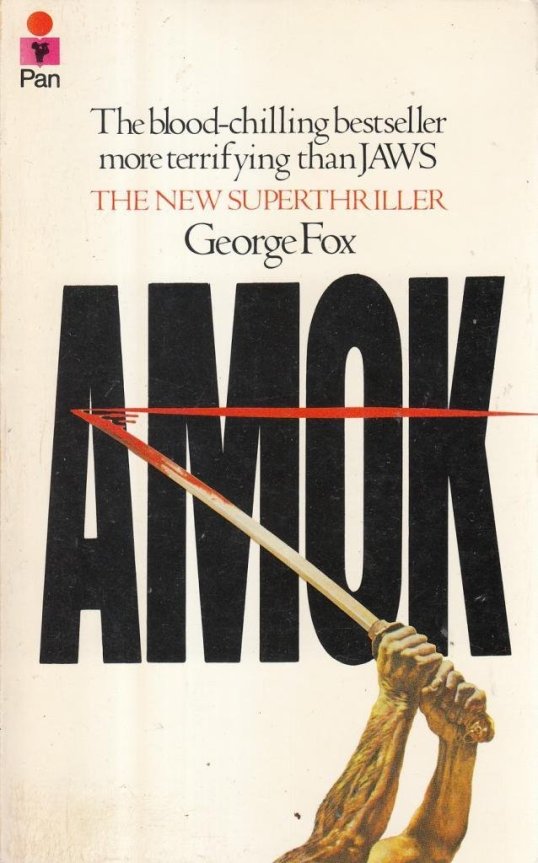
First published in 1978, Amok tells the story of a gigantic Japanese soldier who, during the final days of World War II, was ordered to stay in The Philippines and not stop fighting until he got word that the war had ended. Unfortunately, the soldier never found out about Hiroshima and Nagasaki so, decades after Japan’s surrender, he’s still living in the jungle, sneaking around at night with his sword and killing anyone who he comes across.
When he kills the brother of Mike Braden, Braden returns to his estranged family’s tobacco plantation, determined to get revenge. Braden’s a Vietnam vet, a soldier much like the predator who killed his brother. Mike is obsessed with ending the soldier’s reign of terror but no one else believes him when he claims that there’s a rampaging monster — The Amok, as the local villagers call it — in the jungle. To the other Americans in The Philippines, the Amok is just a legend. To Mike and its victims, the Amok is all too real.
Amok is one of those paperback that I always used to see in my aunt’s collection. (She had a huge stack of paperbacks in her bedroom closet and I used to go through them whenever we were visiting, mostly so I could “borrow” the racier ones.) I always found myself fascinated by the cover of Amok, which featured an unseen figure holding up a bloody sword. It looked really scary!
Having now finally read the novel, I can say that it is effectively scary. Amok is a relentlessly-paced story, one that doesn’t take its time getting to the blood and the guts and which does a great job of leaving you to wonder when the Amok is going to strike next. It touches on a lot of important themes — colonialism, war, racism — but it doesn’t really explore any of them in depth. And that’s fine! Ultimately, the job of a book like Amok is to generate suspense and to frighten the reader and Amok does a very good job of doing that!
It’s interesting to note that, when the book was first published, the cover announced that it was the scariest thing since Jaws. To be honest, Amok has a lot in common with Jaws. Like the giant shark, the Amok is a force of nature and one that many people refuse to believe exists despite the fact that he obviously does. It’s easy to imagine Amok being adapted into a Jaws-like film but, strangely enough, it doesn’t appear that it ever happened. Somehow, with the hundreds of slasher films that were made in the late 70s and 80s, no one ever got around to making a movie out of Amok, a book that seems like it was practically written so that someone would pick up the film rights.
Even if it never was turned into a movie, it’s still an effective page turner. Those of you looking for a mix of blood, guts, sex, and manly man talk will enjoy it.
“Really, Lisa Marie? That’s going to be your entire review of this film? Three words?”
Listen, I’ve been wanting to use those three words for a while. Do you think it’s easy to come up with 500 words about every stupid movie that you see, especially when it’s not exactly a movie that really holds your attention? Considering the importance that entertainment plays in our lives and the fact that there actually are good and interesting films being made, dismissing a forgettable film with “Eh, who cares?” is not only justifiable but it’s also perhaps the most honest review that one can give.
“Haven’t you always said that every film deserves a review?”
I may believe that but I’ve never been stupid enough to paint myself into a corner by saying it.
“Well, why don’t you at least tell everyone what the movie is about?”
Goddammit.
“Lisa Marie….”
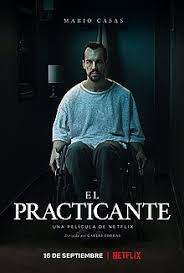
Okay, okay. It’s a Spanish film about this paramedic named Angel Hernandez (Mario Casas). He’s a jerk, a total believer in all of that machismo bullshit. He spends all of his time talking about how smarter he is than everyone else and he has a girlfriend named Vane (Déborah François). They’re trying to have a baby but Angel has a low sperm count. Angel refuses to tell Vane this because, to him, that would make him less of a man.
“So, it’s a film about toxic masculinity.”
Eh. Kinda. Anyway, as a result of an accident, Angel is confined to a wheelchair. He doesn’t take it well. He expects Vane to wait on him hand-and-foot while he does stuff like spy on her and hack her laptop. Eventually, Vane leaves him for Ricardo (Guillermo Pfening) so Angel starts stalking her and, after he discovers that Ricardo has gotten her pregnant, Angel kidnaps her and holds her prisoner in his apartment. He gives her an engagement ring that he stole from a patient and starts talking about how they’re going to get married and how they’re going to raise the child.
“It sounds like a Lifetime movie.”
It is kind of but …. eh. A Lifetime movie would be more fun. This is just another boring movie where a loser kidnaps a woman and holds her prisoner in his apartment while killing anyone who comes close to discovering her. You would think that the villain being in a wheelchair would at least add some sort of curiosity value to the film but it’s all so predictable that it’s hard to care. Hence, my original review.
“Were the actors at least any good?”
I guess. I’ll give Mario Casas all the credit in the world. He did a good job of bringing a really loathsome character to life. I mean, everyone has had to deal with someone like Angel Hernandez at some point in their life. Anyone who has ever been told that they don’t really understand what they need or what they want will be able to relate to what Vane goes through.
“So, the film wasn’t all bad.”
No, it wasn’t all bad but at the same time, there was nothing particularly surprising about it either. I was never surprised by anything that happened. It’s just kind of there. You watch it and you shrug and you say….
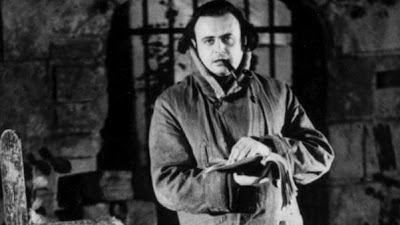
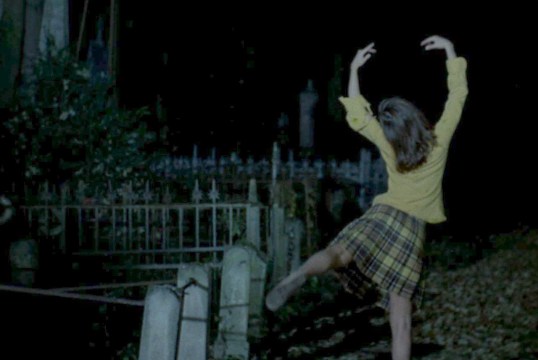
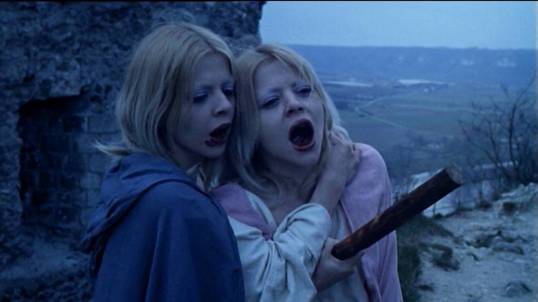
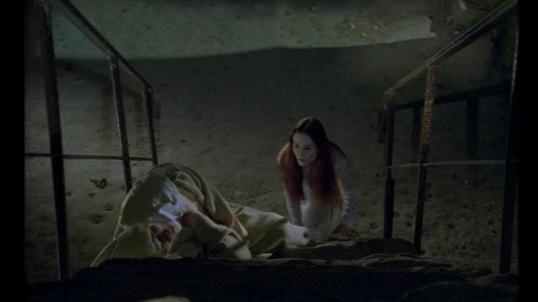
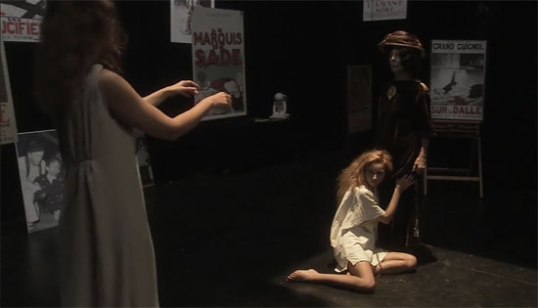
4 Shots From 4 Films is just what it says it is, 4 shots from 4 of our favorite films. As opposed to the reviews and recaps that we usually post, 4 Shots From 4 Films lets the visuals do the talking!
This October, we’ve been using 4 Shots From 4 Films to pay tribute to some of our favorite horror directors! Today, we take a look at the brilliant French director, Jean Rollin!



 Through the Shattered Lens