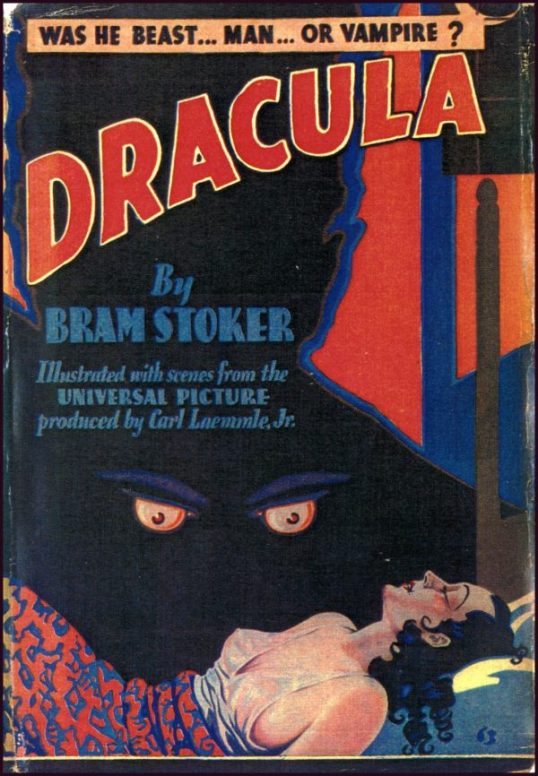
The 1970 film, Count Dracula, is unique in that it’s a film that stars Christopher Lee but it wasn’t produced by Hammer. Instead, it was directed by Lee’s friend, the Spanish director Jess Franco. It was sold as being a far more faithful adaptation of the Dracula story than anything that had been filmed up to that point. Lee, who frequently bemoaned the quality of the Hammer films, later described Count Dracula as being a personal favorite of the many films in which he appeared.
In the scene, Dracula confronts Herbert Lom’s Prof. Van Helsing. Lee gets more dialogue in this scene than he did throughout the entirety of Hammer’s Dracula, Prince of Darkness.
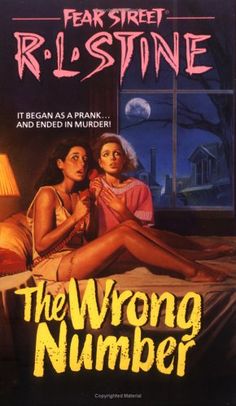
The Wrong Number, an R.L. Stine novel that was first published way back in 1990, is a real artifact.
The plot itself is pretty simple and kind of ripped off from an old Joan Crawford called I Saw What You Did. Basically, two teenage girls — Dina and Jade — are totally bored so they decided to pass the time by prank calling people. They call up Jade’s sister. They call up Rob, the boy whom Dina totally has a crush on. It’s all pretty basic and, to be honest, kind of stupid. I mean, if you’re going to prank call someone, don’t pretend like you’re calling on behalf of the mall or something. Instead, you call them up and say something like, “You need to come home right away. Everyone you love is dead.”
While Dina and Jade are making prank calls, some unidentified man is having a stream of consciousness discussion with himself, all about how his plan has nearly come to fruition and he just has to make sure that all the loose ends are tied up and how he’ll kill anyone who gets in his way. Though the identity of this man is not immediately confirmed, it doesn’t take a genius to realize that that he’s eventually going to get an unwanted phone call from Dina and Jade.
Actually, it’s all Chuck’s fault. Chuck is Dina’s half-brother and he’s got a history of fights and petty crimes. He seems like kind of a punk but this being an R.L. Stine book, he’s actually just a misunderstood rebel who plays be his own rules. It turns out that Chuck is an expert on prank calls. Long story short, Dina and Jade eventually call up a man who is in the process of murdering his wife. Somehow, this leads to them deciding that they need to investigate the murder themselves. Myself, I’d probably just try to get on with my life but, on Fear Street, everyone’s curious.
The Wrong Number is pretty much typical Fear Street. Solve the crime, get a boyfriend, try not to die. It’s the type of book where Chuck gets into a knife fight after only being in town slightly less than day yet, instead of worrying that Chuck might have issues, it just makes him more attractive to Jade. (Actually, speaking from my own long and sordid history of developing crushes on bad boys, that might be the most realistic part of the story.)
The most interesting thing about The Wrong Number is that it’s totally a product of its time. This a book that literally could not take place today. This plot is dependent upon everyone having a landline (and only a landline) and no one having caller ID or the ability to block annoying numbers. It’s an artifact of a past time. Thirty years ago, the world was a much different place.
Don’t ever play with mysterious board games, especially if you find them in the basement of a dead person’s house.
That would seem to be the main lesson of Deseo, Deseo.
The other, secondary lesson would be to be careful what you wish for. You might just get it and all that.
Then again, I guess you could argue that the lesson is less about board games and less about wishes and more about the importance of not spending too much time hanging out with your cousins. Because it really does seem as if a lot of the bad things that happen in Deseo Deseo could have been avoided if the cousins involved hadn’t all been so peculiarly close. I mean, don’t get me wrong. I come from a big Irish/Italian/Spanish family and I love my cousins but even I’m smart enough not to spend every waking moment with them.
(Basically, a cousin is a sibling for whom you’re not obligated to buy a birthday present.)
Anyway, Deseo Deseo is a Mexican horror film. (The title translates to I Wish, I Wish.) Though it’s listed on Prime as being a 2020 film, it’s actually been around for a while. It was filmed and started making the rounds on the festival circuit in 2016. It spent four years playing festivals before being “released” on Prime in August. I point this out not to criticize. Instead, I just always find interesting how we’ll refer to a film as if it belongs to the year that it finally got a wide release whereas many films — especially independent horror films — are usually one or two years old by the time they’re finally made available to the viewing, non-festival public. I think sometimes there’s a tendency to assume that a film is shot and then it’s magically released a month or two later. Actually, it takes a lot of work to not only make a movie but also to get it distributed.
Deseo Deseo tells the story of five cousins who visit the dilapidated home of their dead grandmother. Each cousin is a very definite type. You’ve got the fat nerdy guy and the arrogant wannabe rich guy and the awkward virgin guy and the girl who wants to be Salma Hayek and the other girl who is just normal enough that she might have a chance to survive the film. They’ve all got their hopes and dreams, some of which are better than others. The aspiring actress wants to be a star, which is understandable. The awkward virgin guy wants to bang his cousin, which is really icky.
They find a board game in the basement and they make the mistake of playing it. While holding a magical token, each one makes a wish. The game then tells them what they have to do to make that wish come true. (“I want to be a star.” “Cheat on your boyfriend.”) The game also tells them who will be punished if they fail to follow the instructions. “It’s just a stupid game!” the arrogant rich guy says, despite the fact that the game gives some very specific recommendations.
One way or another, everyone’s wish come true. Of course, this being a horror movie, the wishes usually come true in a totally unexpected way that kind of messes up everyone’s life. And, of course, people have to die. Eventually, our five cousins end up back in the basement, trying to wish their lives back to normal which …. yeah, don’t try to trick the demonic board game, folks.
“I wish for this all to end!” someone says.
“Kill them all,” the game suggests.
Seriously, don’t mess with board games!
So, the plot is a bit predictable but honestly, that really didn’t matter. I mean, yes, the board game is obviously bad news and playing with it was a huge mistake but part of the deal that we enter into when we start watching a film like this is a willingness to accept that the film’s characters are going to do dumb things. I liked Deseo Deseo, even if it wasn’t exactly the most original horror film that I’ve ever seen. It was fast-paced, the atmosphere was creepy, and the actors were all likable enough that you at least felt a little bit of regret when they started dying. I look forward to seeing what director Eduardo M. Clorio does next.
4 Shots From 4 Films is just what it says it is, 4 shots from 4 of our favorite films. As opposed to the reviews and recaps that we usually post, 4 Shots From 4 Films lets the visuals do the talking!
This October, we’ve been using 4 Shots From 4 Films to pay tribute to some of our favorite horror directors! Today we recognize the talents of the master of Hammer horror, Terence Fisher!
4 Shots From 4 Films
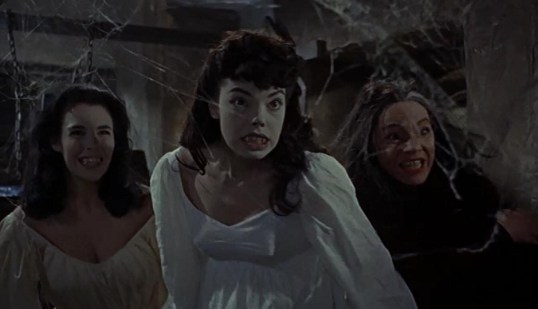
The Brides of Dracula (1960, dir by Terence Fisher)
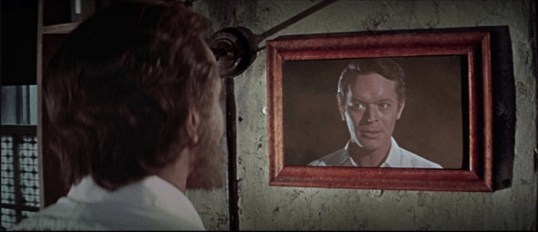
The Two Faces of Dr. Jekyll (1960, dir by Terence Fisher)
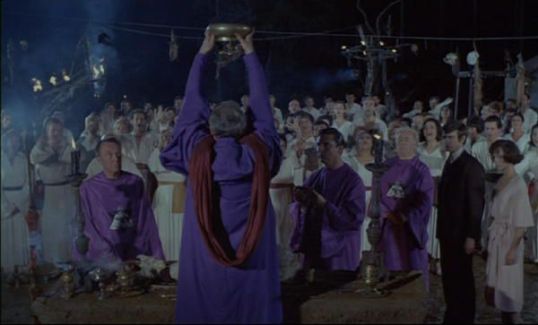
The Devil Rides Out (1968, dir by Terence Fisher)
Frankenstein and the Monster From Hell (1973, dir by Terence Fisher)
Hi, and welcome to the 100th remake of The Wicker Man.
In this version from 2006, our victim is played by Jeremy Sisto. He’s a good actor but he’s no Nicolas Cage. He played Steve Kady, who works for the U.S. Census Bureau so let’s all take a moment to boo the federal government. Booooo! Steve has been sent to the small town of Rockwell Falls, North Dakota so that he can count the citizenry and I guess help to determine whether North Dakota should get a second congressional district.
Anyway, Steve arrives in town and he quickly meets Deputy Bobby Caine, who is played by Fred Durst. A town where Fred Durst is responsible for maintaining law and order? It’s a madhouse! Actually, it’s a bit of a exaggeration to call the town a madhouse but there’s definitely something a little bit off about it. The people seem to be old-fashioned and very religious. Could it be that they’re Mennonites? If so, Steve’s gotten lucky because we’ve got a lot of Mennonites in Texas and, for the most part, they’re the nicest people you could hope to meet.
Anyway, Steve does some research and he discovers that the town has a long history of losing people to a mysterious fever and that somehow the town has never had more nor less than 436 citizens. It’s almost as if something’s being done to specifically make sure that the town’s population always remains at 436. The people who live there can’t leave without falling victim to any number of mysterious accidents. The people who show up — like folks from the Census Bureau, for instance — are expected to stay. Is it a supernatural thing or is it just an amazing religious-based coincidence?
Steve is going to have to figure it out because he’s falling in love with Courtney Lovett (Charlotte Sullivan) and she apparently doesn’t want to spend the rest of her life in a small town in North Dakota. Also, it turns out that Bobby Caine is also in love with Courtney and he’s not happy about losing her to someone who works for the Census Bureau. I don’t blame him. I guess this where I would insert a joke about some song written by Limp Bizkit but, to be honest, I haven’t thought about Limp Bizkit in nearly twenty years and I’m not going to start now.
Anyway, this is kind of a padded review because there’s really not a lot to say about Population 436. It’s an okay horror movie but it’s not a particularly interesting one. By this point, we’ve seen so many messed up little towns and so many weirdly old-fashioned people with strange religious beliefs that it’s hard to be shocked by any of it anymore. Even the movie’s “shock” ending feels predictable. On the plus side, the film does make good use of the inherent creepiness of living in a state that’s defined by wide open spaces. The town of Rockwell Falls does look convincingly creepy. On the negative side, the film is a bit superficial and never bothers to really explore any of the issues that it raises. It’s content to just say, “Religious people are crazy,” and while many will agree with that sentiment, it’s hardly as subversive a statement as Population 436 seems to think that it is.
Of course, if Population 436 encourages just one viewer to be paranoid about census takers and government bureaucracy, it will have all been worth it.
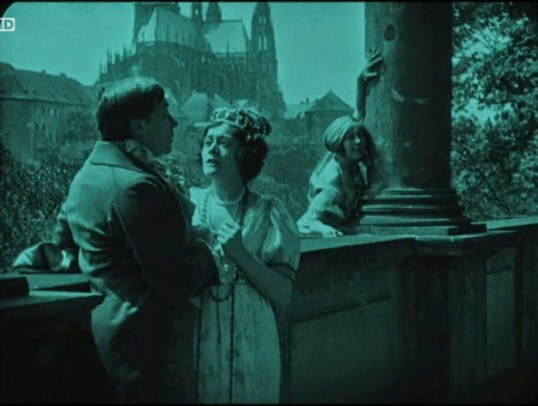
For today’s horror on the lens, we have a film from 1913! A German adaptation of Edgar Allan Poe’s William Wilson, The Student of Prague is often considered to be the first feature-length horror film. Featuring Paul Wegener (who also co-directed the film) in the lead role, this is the story of what happens when the popular but poor Balduin attempts to get rich by dealing with the dark arts. These things never work out well, as Balduin discovers once his reflection steps out of a mirror and goes out of its way to make Balduin’s life difficult.
Of course, to watch the film today, audiences have to adjust both their expectations and the way that they take in and process cinematic storytelling. As of this writing, The Student of Prague is 106 years old and it’s definitely a film of its time. The camera largely remains stationary and, from a modern perspective, the film is rather slow-paced. And yet, the film’s story remains rather intriguing. Despite the static camera work, the film manages to create and maintain a properly ominous atmosphere and a scene in which Balduin and Margit attempt to meet in a cemetery is effectively creepy. Paul Wegener’s performance holds up well. Largely eschewing the overly theatrical acting style that we usually tend to associate with silent cinema, Wegener gives a nuanced and effectively subtle performance as both Balduin and his doppelganger. When he’s acting opposite of himself, you don’t think about the fact that you’re witnessing an early camera trick. Instead, Wegener creates two separate but believable versions of the same character. The doppelganger represents all of Balduin’s undesirable impulses and everything that has kept Balduin from achieving happiness. By the end of the film, Balduin can’t live with his doppelganger but he can’t live without him as well.
The Student of Prague is an interesting piece of history and one that every true student of horror should watch and learn from at least once.
It’s been a while since we last shared an AMV of the Day here on the Shattered Lens. So, let’s change that right now with this AMV inspired by Castlevania!
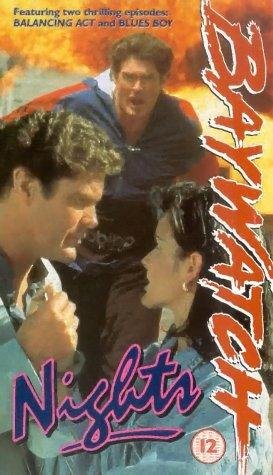
The 2nd season of Baywatch Nights was pretty clearly designed to duplicate the success of The X-Files and that’s certainly true of tonight’s episode, which finds David Hasselhoff, Eddie Cibrian, and Angie Harmon dealing with “space dust.” It turns out that, in its way, space dust is almost as dangerous as regular dust!
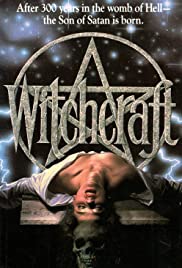
In this low-budget movie, Grace (Anat Topol), her husband John (Gary Sloan), and their newborn son, William, move in with John’s mother, Elizabeth (Mary Shelley). It’s only supposed to be temporary but Grace soon comes to feel as if Elizabeth never wants her or her son to leave. Even though John supposedly owns “half of Massachusetts,” he’s clearly not willing to stand up to his mother and, at times, it seems like he’s closer to her than he is to his own wife.
Meanwhile, Grace is haunted by visions of a puritan couple being burned at the stake. When the local priest has a vision of his own and sees William’s crib surrounded by super-imposed flames and he tells Grace that William needs to be baptized as soon as possible, Grace suspects that something strange is happening. When the priest ends up hanging from a tree in the backyard, Grace knows that witchcraft must be afoot.
Obviously influenced by both Rosemary’s Baby and The Amityville Horror, Witchcraft isn’t terrible but it’s not very good either. For a low budget film, the acting is surprisingly adequate and Elizabeth’s creepy mansion is a good location for a cheesy horror movie. The film’s plot, though, is predictable. You will guess what’s going on long before Grace does. What’s strange is that the film is full of references to things that supposedly happened but which we didn’t see. For instance, Grace says that she had a vision of the priest hanging before she actually saw him. That’s the way things usually happen in a film like this but how come we didn’t get to see that vision too? How come Grace doesn’t mention it to anyone until after the priest is actually dead? Did the movie run out of money before they could shoot the scene? Did it just slip someone’s mind to include the scene in the film? What’s going on?
The most amazing thing about Witchcraft is that this forgettable film was a big enough hit on video that it got a sequel. And not just one sequel. As of right now, there have been fifteen sequels to Witchcraft, each one of which is a direct sequel to the one that preceded it. (There are 18 films in the Amityville franchise but few of those films share a direct connection beyond the use of the word “Amityville” in the title.) Compared to the later films in the Witchcraft franchise, the first one is pretty tame. Later installments would play up the sex to such an extent that they became notorious for it. The first Witchcraft discreetly fades to black whenever Grace and John are in the mood.
Witchcraft is forgettable but, as the first entry in an apparently unkillable franchise, it’s an important landmark in direct-to-video history.



 Through the Shattered Lens