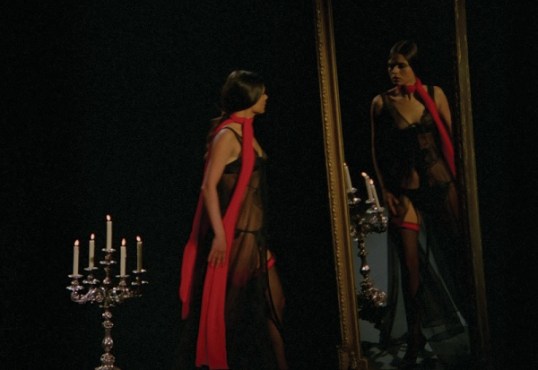
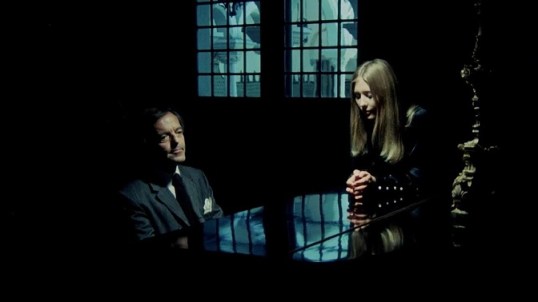
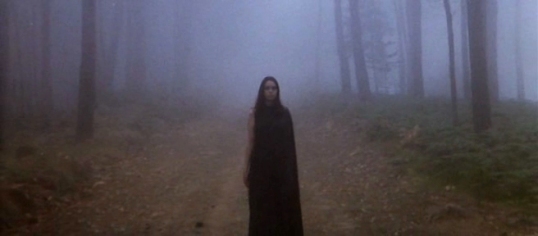
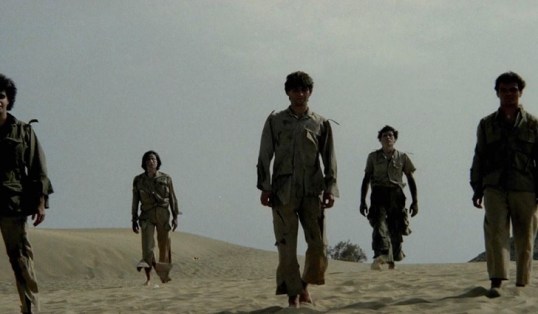
4 Shots From 4 Films: Special Edward D. Wood Edition


4 Shots From 4 Films is just what it says it is, 4 shots from 4 of our favorite films. As opposed to the reviews and recaps that we usually post, 4 Shots From 4 Films lets the visuals do the talking!

Today, on what would have been his 100th birthday, we take time to honor Edward D. Wood, Jr.

4 Shots From From 4 Ed Wood Films

Bride of The Monster (1955, dir by Edward D. Wood, Jr., DP: Ted Allan and William Thompson)

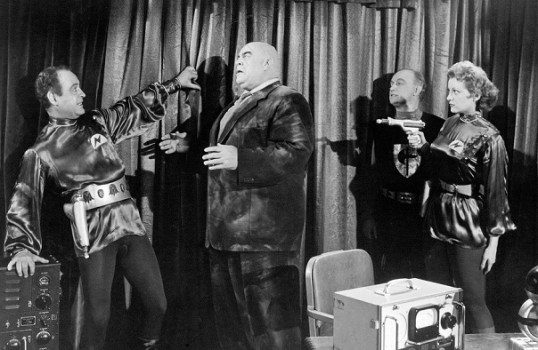
Plan 9 From Outer Space (1957, dir by Edward D. Wood, Jr., DP: William C. Thompson)

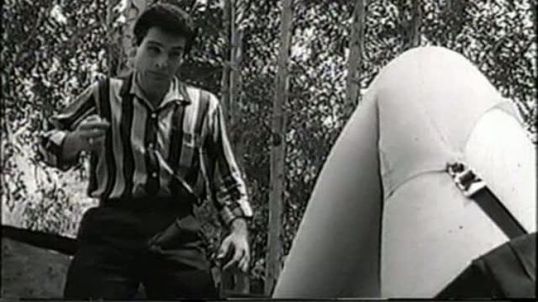
The Sinister Urge (1960, dir by Edward D. Wood, Jr., DP: William C. Thompson)

Necromania (1971, dir by Edward D. Wood, Jr.)

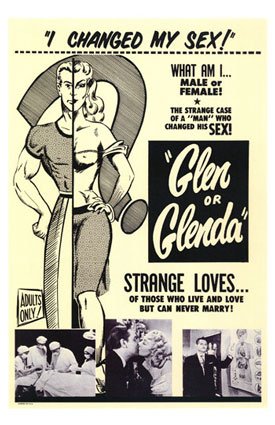
Icarus File No. 15: Glen or Glenda (dir by Edward D. Wood, Jr.)


Today is the 100th birthday of Edward D. Wood, Jr., the director who is often referred to as being “the worst director of all time.”  Personally, I’ve never really agreed with that title.  Ed Wood had a long career in Hollywood and yes, he may have worked exclusively in B-movies and yes, he eventually turned to softcore and then hardcore porn to pay the bills and yes, his life ended under rather tragic circumstances.  But, unlike most truly bad directors, his films are still being watched today and, again unlike most bad directors, his style is immediately recognizable.  You don’t need to see his name in the credits to know when a film was directed by Ed Wood.  You just have to keep an eye out for stock footage, a few familiar actors, and a lot of angora.

If anything, Ed Wood was a director whose ambitions far outweighed the money that he could usually raise for his films.  On the one hand, Plan 9 From Outer Space was a film where the strings holding the flying saucers were clearly visible and where a shower curtain was used to represent the door into an airplane’s cockpit.  On the other hand, it was also a very sincere plea for world peace and a lament that humans would rather blow themselves up with Solarnite than work out their differences.

Or you take a film like 1953‘s Glen or Glenda.  Ed Wood, who identified as a heterosexual and who was considered, by his friends, to be quite a womanizer (and it should be noted that young Ed Wood was strikingly handsome, though he was subsequently very badly aged by alcoholism and homelessness), also preferred to wear clothing designed for women and was open about it at a time when American culture was even more conformist-minded than usual.  In Glen or Glenda, Wood plays the autobiographical role of Glen, who struggles to tell his fiancée (played by Wood’s real-life girlfriend, Delores Fuller) that he dreams of being able to wear her angora sweater.  Glen’s story is told by a psychiatrist (Timothy Farrell) who is talking to a cop (veteran Hollywood character actor Lyle Talbot) who is investigating the death of a transvestite.  Among other things, Glen or Glenda is known for its bad acting, stiffly delivered dialogue, and its occasional digressions about why men go bald while women do not.  (It’s the tight-fitting hats, which cut-off blood flow to the head and not only cause men to lose their hair but also develop the Solarnite bomb.)  But, at the same time, it’s a film in which Wood attempts to handle, with sensitivity and empathy, a subject that most films in the 50s would have either ridiculed or portrayed as being a threat to the American way of life.  All of Wood’s films are sympathetic to those who are considered to be outsiders by conventional society.  This is especially true of Glen or Glenda.

Of course, Glen or Glenda is also known for Bela Lugosi randomly appearing in a laboratory and shouting things like, “Pull ze string!  Pull ze string!”  As far as I can tell, Lugosi is supposed to be playing the creator, who is not portrayed as being a stereotypical God but instead as being a mad scientist who rants and raves in his library and his laboratory.  And while it’s obvious that Bela was probably added to the film at the last minute and, more or less, allowed to do whatever the Hell he wanted, his presence adds a wonderfully bizarre touch to film’s dry style.  (I would compare him to the mysterious burned man who appears at the start of David Lynch’s Eraserhead.)  Whenever the film starts to get a bit too much like an educational film, Lugosi pops up and starts to literally shout at the audiences, frantically issuing a bunch of commands and nursery school rhymes that don’t really made any sense.  It reminds one of H.P. Lovecraft’s insistence that the universe was created by a blind idiot God who had no idea that he was actually creating anything.  The presence of Lugosi and a lengthy and increasingly surreal dream sequence in which Glen imagines himself being tormented by both his fiancée and the devil all suggest that, under different circumstances, Ed Wood could have been the American Buñuel.

Sadly, it was not to be.  Ed Wood died in alcoholic poverty and was reportedly pretty miserable during the final years of his life.  There was nothing pleasant about the end of Wood’s life.  But, on his birthday, I think the least we can do is remove the title of “worst director” from his legacy.  He was nothing of the sort.

Previous Icarus Files:

  1. Cloud Atlas
  2. Maximum Overdrive
  3. Glass
  4. Captive State
  5. Mother!
  6. The Man Who Killed Don Quixote
  7. Last Days
  8. Plan 9 From Outer Space
  9. The Last Movie
  10. 88
  11. The Bonfire of the Vanities
  12. Birdemic
  13. Birdemic 2: The Resurrection 
  14. Last Exit To Brooklyn

Horror on the Lens: Night of the Ghouls (dir by Edward D. Wood, Jr.)


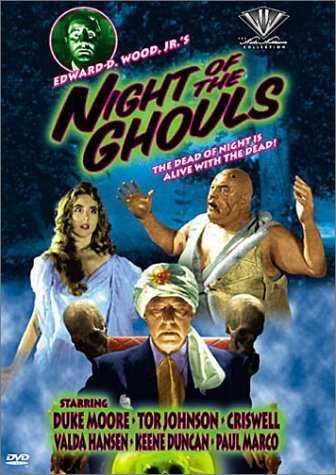
GhoulsdvdToday we celebrate Ed Wood’s 100th birthday with his sequel to Bride of the Monsters.  In Night of the Ghouls, con man Dr. Alcula (Kenne Duncan) moves into Bela Lugosi’s old mansion and pretends to talk to the dead.  What Alcula doesn’t realize is that the house is actually haunted (by Tor Johnson’s Lobo, among others) and real ghosts don’t appreciate pretend ghosts.

What can you say about a film like of Night of the Ghouls?  It’s an Ed Wood film, with all that suggests.  However, how can you resist a film that starts with Criswell sitting up in his coffin and providing commentary?

The role of Dr. Alcula was originally written for Bela Lugosi.  After Lugosi’s death, veteran actor and longtime Wood friend Kenne Duncan got the role instead.  Also of note, Wood appears twice in this film.  Not only does his picture appear on a wanted poster in the police station but Wood also plays one of the ghouls.

Song of the Day: Ed Wood by Howard Shore


Today is the 100th birthday of the pioneering indie director, Edward D. Wood, Jr!

Today’s song of the day is the theme from Tim Burton’s 1994 biopic of the director.  In my opinion, this remains Burton’s first film.  Burton also directed the musical video below while the great Toni Basil choreographed.  And, best of all, the dancer is named Lisa Marie!

Happy birthday, Ed, wherever you may be.

Late Night Retro Television Review: Monsters 2.17 “One Wolf’s Family”


Welcome to Late Night Retro Television Reviews, a feature where we review some of our favorite and least favorite shows of the past! On Wednesdays, I will be reviewing Monsters, which aired in syndication from 1988 to 1991. The entire series is streaming on YouTube.
This week, Jerry Stiller is a werewolf!

Episode 2.17 “One Wolf’s Family”

(Dir by Alex Zamm, originally aired on February 11th, 1990)

In this rather heavy-handed episode of Monsters, Jerry Stiller and Anne Meara star as Victor and Greta, two immigrants who have built a successful life for themselves in America.  Victor is very proud of his heritage and his success.  He’s even more proud of the fact that he and Greta are pure-bred werewolves.  He expects his daughter, Anya (Amy Stiller), to marry a purebred werewolf.

(Ben was apparently busy when they shot this episode.)

So, how will Victor react when he discovers that Amy’s fiancé, Stanley (Robert Clohessy), is a were-hyena!?

*sigh*

Okay, I will give some credit here.  The scene where Victor meets Stanley and they all gather around the kitchen table for dinner does have some funny moments.  Stanley, being a hyena in human form, cannot stop laughing, even when he’s being insulted.  And when Jerry Stiller launches into a rant about how no daughter of his is going to hang out on the roadside and eat trash, I did laugh.  This was largely due to Jerry Stiller’s delivery of the line.  Jerry Stiller was always funny whenever he started to rant.

Otherwise, this episode was pretty disappointing.  There’s a subplot about a nosey neighbor named Agnes (Karen Shallo).  Agnes is upset to discover that her neighbors are werewolves that keep dead bodies in their refrigerator so that they’ll have something to snack on.  “It’s bad enough that they’re immigrants!” Agnes says.  And yes, I get it.  Agnes is supposed to be a small-minded suburbanite who doesn’t understand that America is a country of immigrants and all the rest.  The problem is that, regardless of how Agnes feels about immigrants, she has every right to be concerned about living next door to a werewolf who keeps a dead body in his refrigerator.  When she sees Victor eating a foot, it totally makes sense that she would be upset about it.  The show’s satire would have worked if Agnes’s sole objection to them had been that they were immigrants.  (It would have been even funnier if Agnes has absolutely no problem living next door to werewolves as long as they were born in America.)  But by making them werewolves and having Agnes be upset by the fact that they were werewolves, the show instead suggests that Agnes might have a point.

Not that it matters.  Stanley turns into a hyena and rips off Agnes’s head and brings it to Victor and Greta as a gift.  Stanley is accepted into the family while Jerry Stiller howls a the moon.

Political satire is always hit-and-miss and this episode was definitely a mess.  It’s a shame because Jerry Stiller and Anne Meara were definitely funny people.  (If you’ve ever seen the documentary Have A Good Trip, there’s a scene where Ben Stiller tells a story about accidentally taking several tabs of LSD in college and, in a panic, calling his father for help.  “I know what you’re going through,” Jerry told him, “I once smoked an entire Pall Mall cigarette.”  “My father was Jerry Stiller, not Jerry Rubin,” Ben explains.)  This is one of those episodes that I was really hoping would be good but it just didn’t work.

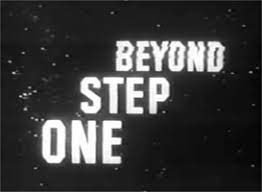
Horror On TV: One Step Beyond 2.1 “Delusion” (dir by John Newland)


On tonight’s episode of One Step Beyond.

A young woman (Suzanne Pleshette) desperately needs a blood transfusion.  Fortunately, the police have managed to track down one of the only people to share her blood type, an accountant named Harold Stern (Norman Lloyd).  Harold seems like a nice, rather mild-mannered guy and he has a long history of donating blood.  However, when the police approach him, Harold refuses to donate.

“What type of crumb are you!?” the police demand.

Harold explains that, whenever he gives someone blood, he develops a psychic connection with that person.  He can see their future.  And that’s simply a burden that he can no longer shoulder….

This episode of One Step Beyond originally aired on September 15th, 1959.  Norman Lloyd, who plays Harold, got his start as a member of Orson Welles’s Mercury Theater and he also played the villain in Alfred Hitchcock’s Saboteur.  (Speaking of Hitchcock, Suzanne Pleshette played the doomed school teacher in The Birds.)  When Lloyd appeared in this episode of One Step Beyond, he was 44 years old.  He would go on to live for another 62 years, making his final film appearance at the age of 101!

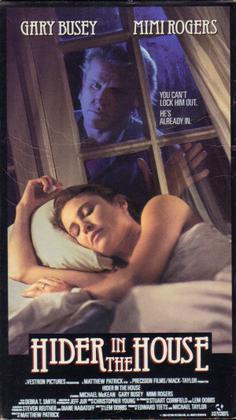
Hider In The House (1989, directed by Matthew Patrick)


After spending years in a mental hospital for murdering his abusive parents, Tom Dreyer (Gary Busey) is released and told to find somewhere else to live.  He ends up secretly living in the crawl space of the new home Julie (Mimi Rogers) and Phil Dreyer (Michael McKean).  Obsessed with Julie, he’ll do anything to be with her, including breaking up her marriage to Phil and killing anyone who comes to close to discovering him in the crawlspace, whether it’s the family dog, an exterminator, or Julie’s best friend.

Due to the distributor having financial issues, Hider In The House never got a theatrical release but it used to show up on HBO frequently in the late 80s and 90s.  I can also remember that our local video store had the film’s poster hanging on the wall near the cash register, creating the impression that Gary Busy was not only staring at Mimi Rogers but also judging whatever you decided to rent for the weekend.  Hider In The House was very popular amongst those of us who had a crush on Mimi Rogers, which was basically every guy on the planet back in the day.

It’s not a bad movie, even if it is predictable.  Both Mimi Rogers and a pre-motorcycle accident Gary Busey give good performance and it’s interesting to see Michael McKean playing a dramatic role for once.  The main problem with the movie is that it’s impossible to believe that big and hulking Busey could possibly live in someone’s attic and move around between the walls without everyone immediately noticing.  A Clydesdale would have more luck going unnoticed than Gary Busey.

Shortly after he completed filming on Hider In The House, Gary Busey was in a motorcycle accident that nearly killed him.  He fractured his skull and suffered permanent brain damage.  It’s always interesting to compare the Gary Busey of the 70s and 80s with the Gary Busey of today.  People are so used to the Busey who yells and speaks in riddles that it’s easy to forget that he was once a very good actor, even when he was appearing in something like Hider In The House.

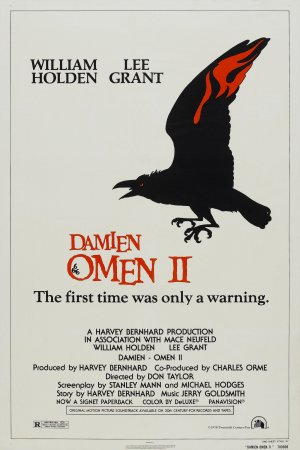
Horror Scenes That I Love: Damien Puts A Teacher In His Place in Damien: Omen II


1978’s Damien: Omen II is a perfectly ludicrous film that mixes soapy melodrama with apocalyptic horror.  It’s a fascinating mismash that doesn’t really work and often, the most dramatic scenes are also the ones most likely to draw a chuckle from the viewer.  That said, there are a few good moments.

For instance, I’ve always liked this scene where young Damien (Jonathan Scott-Taylor) shows up one of his teachers.  It’s a good thing that Lance Henriksen stepped in when he did!


6 Shots From 6 Films: Jess Franco Edition


4 Shots From 4 Films is just what it says it is, 4 shots from 4 of our favorite films. As opposed to the reviews and recaps that we usually post, 4 Shots From 4 Films lets the visuals do the talking!  (And yes, sometimes we do more than just 4 shots!)

Today, we honor the one and only Jesus “Jess” Franco!

6 Shots From 6 Jess Franco Films

The Awful Dr. Orloff (1962, dir by Jess Franco, DP: Godofredo Pacheco)

Count Dracula (1970, dir by Jess Franco, DPs: Manuel Merino and Luciano Trasatti)

Vampyros Lesbos (1970, dir by Jess Franco, DP: Manuel Merino)

A Virgin Among The Living Dead (1970, dir by Jess Franco, DP: anyone’s guess)

Female Vampire (1973, dir by Jess Franco, DP: Jess Franco)

Oasis of the Zombies (1981, dir by Jess Franco, DP: Max Monteillet)