International Horror Film Review: Orloff Against The Invisible Man (dir by Pierre Chevalier)


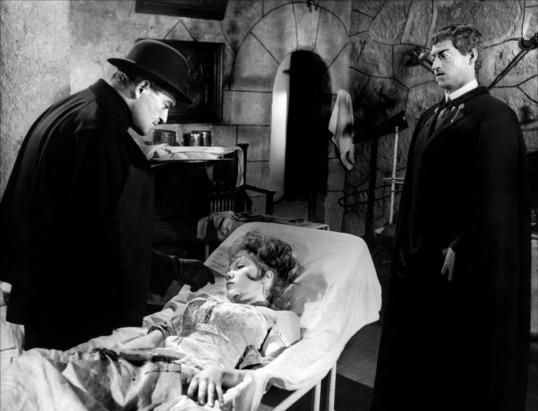
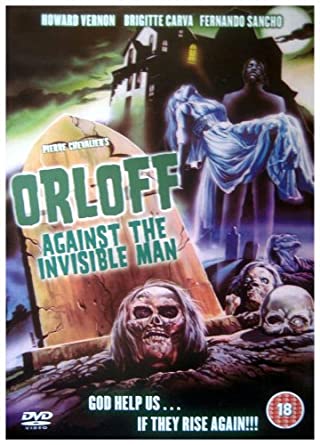
In 1970’s Orloff Against The Invisible Man, Paco Valladares stars as Dr. Garondet, a turn-of-the-century psychologist.  One morning, Garondet is at his office when a mysterious child delivers a letter requesting that he travel to the castle of Prof. Orloff.  Apparently, Orloff’s daughter feels that her father is losing his mind and is in deep need of therapy.

The castle is located in one of those remote villages that always seem to be home to mad scientists and vampires.  As soon as Garondet arrives, he discovers that none of the villagers are willing to talk about Orloff or his castle.  Instead, they all fear him and, if the audience has seen The Awful Dr. Orlof or any of the other dozen or so films that Jess Franco made about the mad doctor, that shouldn’t be a surprise.

What is a surprise is that Franco apparently had nothing to do with this particular Orloff film.  Instead, Orloff Against The Invisible Man was directed by a French director named Pierre Chevalier.  Chevalier does direct in a very Franco-like manner, making frequent use of the zoom lens and often highlighting odd visual details that have nothing to do with the overall plot.  That said, Chevalier also direct with considerably less energy than Franco.  That is a polite way of saying that this is a surprisingly slow movie.

Eventually, Gardonet does reach the castle.  Orloff’s daughter, Cecile (Brigitte Carva), insists that she did not send the message.  Orloff (played by the great Howard Vernon) tells the doctor that he is not only totally sane but that he also lives with an invisible man.  Orloff proves his claim by having the invisible man pick up a few things in a room while Gardonet watches.  Oddly, Gardonet doesn’t seem to be particularly surprised to learn that Orloff has an invisible servant.

Orloff says that he’s going to tell Gardonet the story of how he got an invisible servant but then it turns out that the story actually has very little to do with that.  Cecile, it turns out, was once mistakenly pronounced dead and put in a coffin.  Two of Orloff’s servants decided to break open the coffin and steal Cecile’s jewelry.  However, when they opened the coffin, Cecile woke up and screamed.  One of the gravediggers stabbed Cecile before the two of them ran from the crypt.  Cecile survived but Orloff was so angry that he tracked down the graverobbers.  He killed one and whipped the other.  (Actually, he may have killed both of them.  Due to some truly bad dubbing, the film isn’t clear on this point.)  He then revived the dead servant, turned him invisible, and now uses him to rule over the village.  Or at least, I think that’s what Orloff was claiming.  Again, the editing of the film was so haphazard and the dubbing some incompetent that the plot wasn’t always easy to follow.  Interestingly enough, there is one scene where we briefly do see what the Invisible Man looks like and he looks nothing like the dead servant but instead appears to be some sort of ape.

Orloff Against the Invisible Man is a mess of bad special effects and sexualized violence.  If Jess Franco could be counted on to make films that were sleazy but enjoyably decadent, Orloff Against The Invisible Man is just sleazy and kind of boring.  The best thing that the film has going for it is Howard Vernon, who brings just the right mix of haughtiness and cynicism to the role of Orloff.  Vernon always played Orloff as being an amoral aristocrat, one whose evil is more the result of ennui than actual maliciousness.  Vernon’s the best thing about Orloff Against The Invisible Man.

As with most of the Orloff films, this one has actually been released under several different titles.  My favorite was The Love Life of an Invisible Man.  Interestingly enough, the film’s American tagline was “God Help Us …. If They Rise Again!” despite the fact that the film didn’t feature any zombies or ghosts.  Instead, it just features a few flashbacks and a lot of exposition.  Orloff Against The Invisible Man could have used the demented imagination of Jess Franco.
6 Shots From 6 Horror Films: The Early 60s


4 Or More Shots From 4 Or More Films is just what it says it is, 4 shots from 4 of our favorite films. As opposed to the reviews and recaps that we usually post, 4 Shots From 4 Films lets the visuals do the talking!

This October, I’m going to be doing something a little bit different with my contribution to 4 (or more) Shots From 4 (or more) Films.  I’m going to be taking a little chronological tour of the history of horror cinema, moving from decade to decade.

Today, we take a look at the early 60s!

6 Shots From 6 Horror Films: The Early 60s

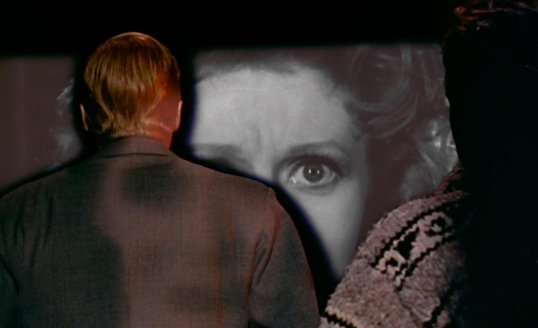
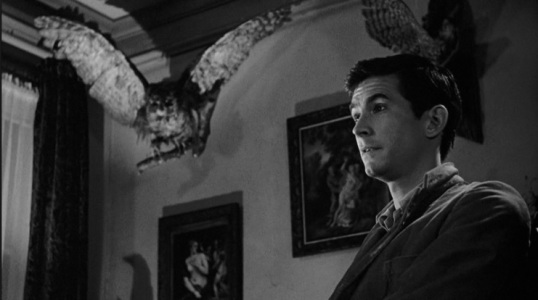
Psycho (1960, dir by Alfred Hitchcock, DP: John L. Russell)


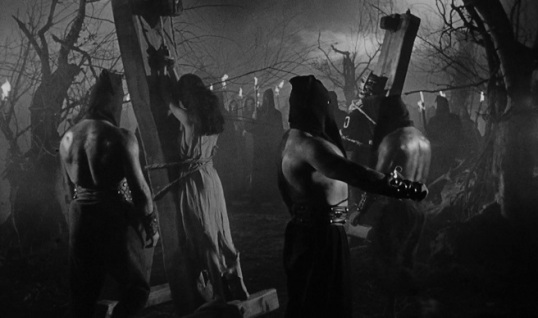
Black Sunday (1960, dir by Mario Bava)


Peeping Tom (1960, dir by Michael Powell, DP: Otto Heller)


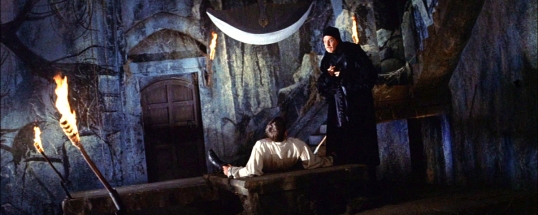
Pit and the Pendulum (1961, dir by Roger Corman, DP: Floyd Crosby)


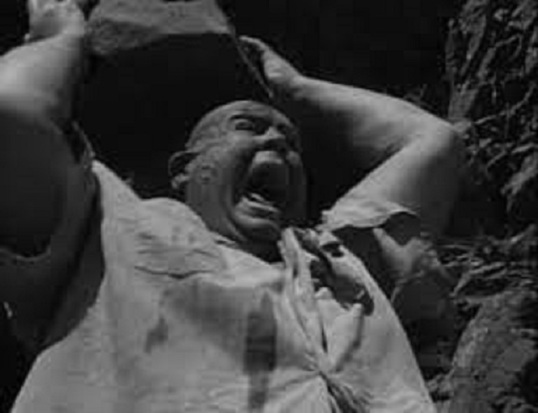
The Best of Yucca Flats (1961, dir by Coleman Francis, DP: John Cagle and Leo Strosnider)


The Awful Dr. Orloff (1962, dir by Jess Franco, DP: Godofredo Pacheco)

Horror Film Review: The Caller (dir by Arthur Allan Seidelman)


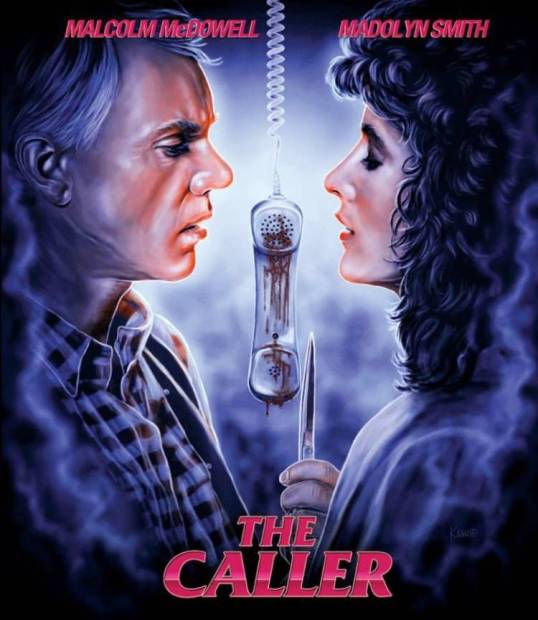
The Caller is a odd little film from 1987.

How odd is it?

It’s so odd that it’s difficult to know how to even describe it. On the surface, it’s a film about two people in a house. The Girl (Madolyn Smith) — and that’s how she’s credited at the end of the film — is staying in a secluded house in the woods. There’s a nearby town but, when the Girl stops there to get some gas, it’s impossible not to notice that there aren’t any other people around. When the Girl reaches the house, she makes a phone call and asks to speak to her daughter. From what we hear of her say to her daughter, it sounds as if The Girl is recovering from some sort of trauma.

After the Girl hangs up the phone, the Caller (played by Malcolm McDowell) knocks on her front door. The Caller seems to be a polite Englishman. He says that he’s recently had some car trouble and he asks if he can come in the house to use the Girl’s phone. The Girl lets him in but, as soon as The Caller enters, it becomes apparent that he was lying about having car trouble.

The Girl and the Caller talk. In fact, they spend several days talking. Sometimes, they’re friendly to each other and other times, they’re not. Their stories keep changing. At one point, the Caller claims that he’s a police detective and that he’s investigating a murder in the area. At another point, the Girl claims that she was responsible for the Caller’s car not working. We start to get the feeling that the Girl and the Caller might know each other and that each knows that the other is lying. Things get stranger as the night turns into day and then night again. The Caller appears to be leave but, just as mysteriously, he shows up again. The Caller tries to enter one particular room in the house. The Girl fights to keep him from doing so. The two of them taunt each other. Sometimes, they threaten each other. At times, they seem to be almost dependent on each other and you wonder if the Girl really wants the Caller to leave. They start keeping track of who is collecting the most points as they play a game that only the two of them seem to understand.

And it just keeps going and going. As many times as the Girl and the Caller both say that they’re done with conversation or that they’re leaving, neither can seem to abandon they other. Instead, they keep circling each other, like two trapped animals continually challenging one another for control. It all leads to a twist, one that you probably won’t see coming. Admittedly, the twist itself does seem to come out of nowhere but, because the film has been so weird up until that moment, the bizarre randomness of it all seems totally appropriate.

At times, The Caller can feel like a bit of an endurance test. McDowell and Smith are the only two people in the film and they spend the entire movie engaging in cryptic conversations that only seem to make sense to themselves. It’s not always easy to follow them as they go from one topic to another. Fortunately, both Smith and McDowell give excellent performances, ones that keep us guessing as to their true motivations and which also keep us interested in their enigmatic characters. You become invested in their drama, even if you don’t always understand it. The Caller is not a film for everyone but horror fans looking to take a chance on something a little different will be well-rewarded.

Horror on the Lens: Manos: The Hands of Fate (dir by Harold P. Warren)


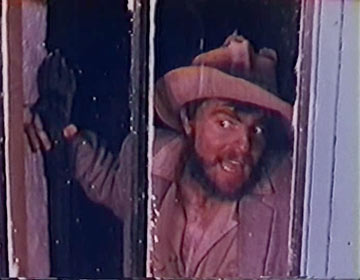
torgo

I should start things off with a confession.  This is actually not the first time that I’ve shared Manos: The Hands of Fate here on the Shattered Lens.  I previously shared it during the 2013, 2015, and 2020 Horrorthons and, each time, I even used the exact same picture of Torgo.

However, Manos proved to be such a popular choice that I simply had to post it again. Manos has a reputation for being one of the worst films ever made.  And, honestly, who am I to disagree?  However, it’s also a film that is so bad that it simply has to be seen.

(As well, I love regional horror and there are a few films as regional as Manos, a film that was filmed in my home state of Texas and directed by a fertilizer salesman.)

By the way, everyone who watches Manos ends up making fun of Torgo, who was played by John Reynolds.  What they may not know is that Reynolds committed suicide shortly after filming on Manos wrapped.  So, as tempting at it may be to ridicule poor Mr. Reynolds’s performance, save your barbs for Torgo and leave John Reynolds alone.

And be sure to enjoy Manos: The Hands of Fate!

Music Video of the Day: Take It Off by King Kobra (1988, directed by ????)


I was trying to remember why I picked this standard 80s metal video for today’s music video of the day.  Was it because of all the shapely legs?  That seemed probable but that would not explain why I picked it for October.  Then I remembered that this song was featured in the horror classic Black Roses, which is a movie about teenagers driven to murder by heavy metal music.  In fact, the Satanic band itself was played by King Kobra.

As for this video, it doesn’t feature any Black Roses footage but it does feature Larry Fine and Humphrey Bogart.

Enjoy!

Horror on TV: Ghost Story 1.5 “The Summer House” (dir by Leo Penn)


On tonight’s episode of Ghost Story, Carolyn Jones and Steve Forrest play a couple who spend their summers in a vacation home that appears to be haunted as well.  This was one of Carolyn Jones’s final roles.

This episode originally aired on October 13th, 1972.  Director Leo Penn is perhaps best known as the father of actors Sean and Chris Penn.

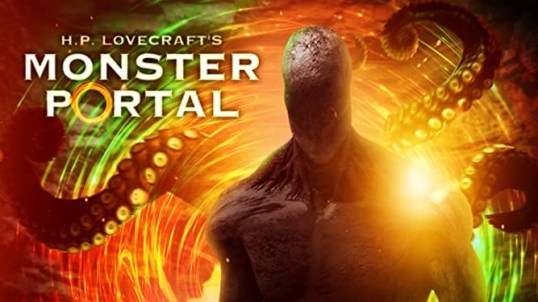
The TSL’s Horror Grindhouse: H.P. Lovecraft’s Monster Portal (dir by Matthew B.C.)


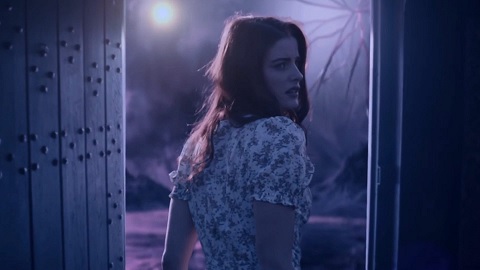
After the mysterious disappearance of her father, Celine (Sian Altman) travels to his estate with her boyfriend, Rich (Louis James) and their friends, April (Sarah Alexandra Marks) and Nick (George Nettleton).  Celine wants to deal with her memories and figure out what led to her father disappearing.  Rich wants to help her.  Nick, meanwhile, just wants to get drunk.  April just wants to be anywhere but near Nick.  It’s a bit of a dysfunctional group.  Personally, I probably would have left Nick behind but I guess the hope was that Nick would lighten the mood whenever things started to get too heavy.

Upon arriving at the estate, they notice a few weird things.  For instance, the housekeeper (Judy Tcherniak) has a habit of chanting and she keeps talking about the old ones.  There are dead rabbits all over the place.  The housekeeper says that the cat must have killed them but there doesn’t seem to be cat anywhere nearby and, as Rich quickly notices, it looks more likely that the rabbits were murdered as a sort of sacrifice.  There are strange books and paintings to be found all over the house and there are black-robed cultists who only seem to come out at night.  And, of course, there’s the portal in the back yard, which leads to another dimension but also from which spring giant, sacrifice-demanding demons.  One should probably be careful about building one of those.  I mean, sure, a gazebo looks nice but is it worth losing your soul over?  It’s something to consider.

You can probably guess where H.P. Lovecraft’s Monster Portal is heading.  Just the appearance of H.P. Lovecraft’s name in the title should tell you all that you need to know.  (The film is also known simply as The Offering, which again kind of gives away the plot.)  To the film’s credit, it actually does make proper and respectful use of the Cthulhu mythos and, even more importantly, it frequently captures the feel of a H.P. Lovecraft short story.  Lovecraft often wrote about people who were investigating the mysterious sins of their family and, of course, he was never hesitant to toss in a robed cultist or two.  Even more importantly, the film captures Lovecraft’s view of humanity as just being an insignificant pawn in the grand scheme of things.  There have been a lot of films that have claimed Lovecraft as an inspiration but Monster Portal is one of the few to really convince you that it was made by fans of his work.

The film’s low budget is obvious in nearly every frame but the monsters themselves are actually pretty impressive and director Matthew B.C. does a good job creating a properly ominous atmosphere.  The estate itself looks great.  The acting is a bit inconsistent but, for the most part, Sian Altman and Sarah Alexandra Marks are sympathetic in the lead roles and Judy Tcherniak goes so over-the-top as the housekeeper that she’s actually a lot of fun to watch.  Monster Portal is an enjoyable tribute to Lovecraft’s work.

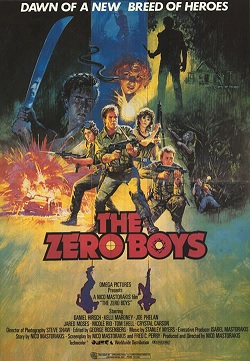
The Zero Boys (1986, directed by Nico Mastorakis)


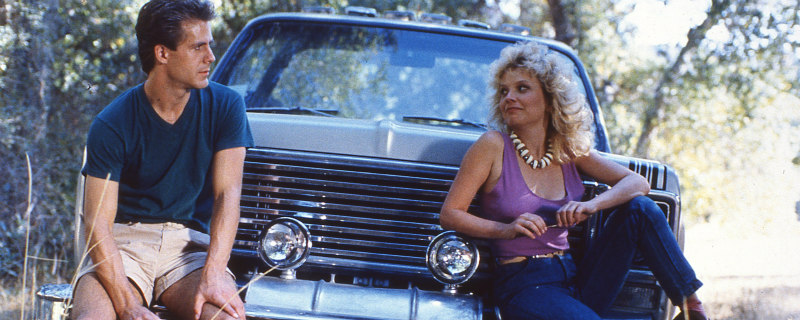
When a paintball team known as the Zero Boys wins the big tournament, they decide to celebrate by spending the weekend in the woods with their girlfriends.  Accompanying the group is Jamie (Kelli Maroney), who was put up as a side bet by her boyfriend, who just happens to be the wannabe Nazi dork who lost the tournament.  The wilderness fun and games take a disturbing turn when the group comes across a deserted cabin and decide to camp there for the night.  The cabin belongs to family of hillbilly survivalists (one of whom is played by Martin Sheen’s brother, Joe Estevez) and they don’t intend to let anyone leave alive.  Soon, the Zero Boys are forced to put their paintball knowledge to the test in a real battle for survival.

The Zero Boys is one of those films that always used to come on television when I was growing up and I would always watch it because I thought it was going to be a standard, Friday the 13th-style slasher film.  When I was a kid, I would always end up getting annoyed with the film’s deliberate pace and its weird mix of the action and slasher genres.  I would usually watch for about an hour and then I would change the channel and try to find something better.  I thought The Zero Boys was just that, a big zero.

Now that I’m older, I realize that I was wrong and I better appreciate The Zero Boys and the way that it pokes fun at both the action and the slasher genres.  The Zero Boys opens with a really intense battle scene, between the Zero Boys and Casey, who is wearing a swastika armband.  It plays out like a standard Cannon action film, up until the moment that the Zero Boys catch up to Casey and shoot him in the head with a paintball. Our “heroes” are not mercenaries or former vets looking to rescue their brothers-in-arms from a POW camp.  There’s not a single Chuck Norris among them.  Instead, they’re just a bunch of dorky teens who are good at paintball and think that they have survival skills.  (One of them looks at a picture of Rambo and says, “Sly, eat your heart out.”) The movie goes on to further upend the audience’s expectations by introducing Jamie, a heroine who is anything but the typical, virginal final girl.  When it becomes obvious that the group is being stalked by a group of killers, the Zero Boys and their girlfriends actually fight back and it’s a definite change of pace from other slasher films of the era,  When it comes to horror films, The Zero Boys has more in common with The Hills Have Eyes than with Friday the 13th.

The Zero Boys is an action/horror hybrid that is willing to poke fun at itself.  It’s also one of the many superior genre pictures that Kelli Maroney made in the 80s.  Between this film, Chopping Mall, and Night of the Comet, Kelli Maroney was the crush of every 80s and 90s kid who spent too much time searching HBO and Cinemax for R-rated horror films.  She was cute but tough and, even if no one else in the movie realized it, she could definitely take care of herself.  Whether fighting malfunctioning robots, zombie scientists, or killer hillbillies, there was no one better to have on your side.

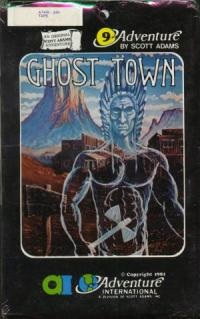
Game Review: Ghost Town (1983, Scott Adams)


You are in a deserted ghost town.  Why are you in the town?  Who knows?  What can you do in the town?  You can search it and try to find 13 hidden treasures without falling prey to ghosts, rattlesnakes, or the weather.  Good luck!  There are many puzzles to be solved.  Hopefully, you’re better at puzzles than I am.

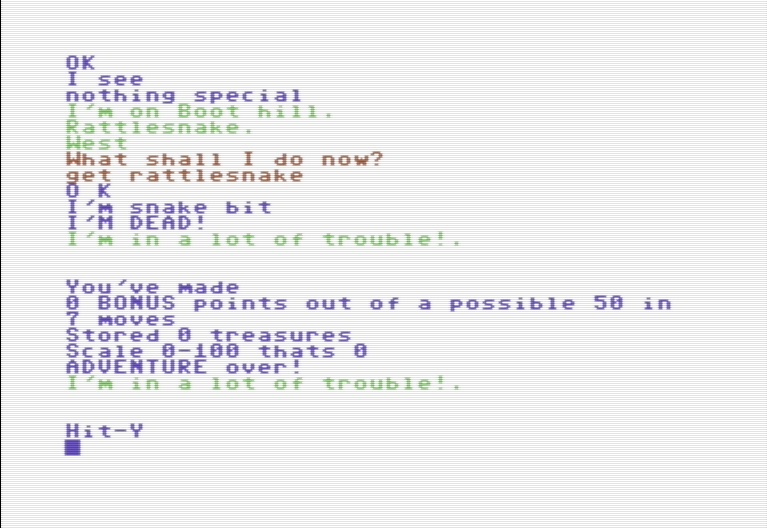
Ghost Town was one of the many text adventures to be written by Scott Adams in the early 80s.  Every text adventure film that has come out since owes debt to Scott Adams but that doesn’t make his games any less frustrating to play.  Basically, with this game, you get bare-bone descriptions and a two-word parser.  Don’t try to have a conversation with anything in the town.  Don’t try to get too creative with your choice of verbs or with any of the things that you find in the town.  This is from the early days of PC gaming and it’s as basic as can be.

Once you make the adjustment, though, it’s not a bad game.  Even the minimal descriptions of each location encourage the player to imagine the place for himself.  (Basic games like Ghost Town actually encourage the imagination more than games that devote paragraphs to intricate descriptions.)  It’s also a timed game, which was a big deal in the early 80s.  The ghosts in the town keep their own schedule and one of the challenges of the game is to keep up with them.  Spending too much time on one puzzle or trying to guess the verb can lead to consequences.  The puzzles are complicated but there’s a walk-through so you can cheat if you need to.  Just don’t make the same mistake that I did.

Play Ghost Town!