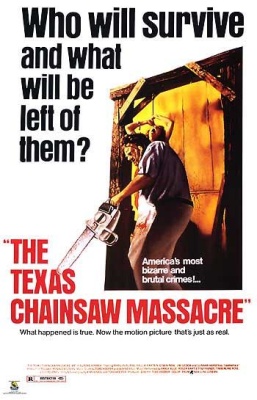
This scene, from 1974’s The Texas Chainsaw Massacre, only last 52 seconds but that’s all the time that it needs. Leatherface makes his first appearance and, sadly, Kirk exits the film.
What makes this scene so effective is that, even though it’s obvious that something bad is going to happen, Leatherface still seems to pop up out of nowhere. When he does kill Kirk, he does it so efficiently and without hesitation that there’s little doubt that this is just an ordinary day for him. When Leatherface slams that door, what he’s truly saying is that he’s very busy and he’d appreciate it if people just stopped bothering him for an hour or two.
For his part, Kirk really shouldn’t have just gone into someone’s house uninvited. That’s really not Texas manners. That said, I do think Leatherface did overreact just a bit. Killing a guest isn’t really an example of good manners either.
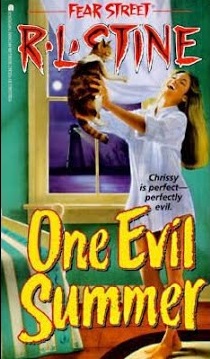
It’s summer! That means that it’s time for the Conklin Family to take a vacation to the lovely resort town of Seahvaen. Unfortunately, Mr. Conklin and Mrs. Conklin are both bringing their work with them and oldest daughter Amanda is having to take summer school classes because she failed Algebra. (How do you go on a vacation and so summer school at the same time?) Despite the fact that I never had to do a day of summer school, I could still relate to Amanda because Algebra was always my worse subject. Fortunately, my sister kept all of her tests from the previous year so I was able to cheat my way to a passing grade. I still suck at Algebra and, as Case can tell you, I still throw a fit whenever I have to discuss anything that has to do with math but the important thing is that my summers were mine.
(To be honest, I probably could have done just fine if not for the “show your work” requirement, which always struck me as being fairly nonsensical. If I got the right answer, why did it matter how I got it? Usually, I do most of my work in my head and the notes that I jot down are usually written in such a way that only I can understand what they actually mean. That works just fine for me.)
Anyway, someone has to look after the youngest two Conklin kids during the day so Mrs. Conklin hires Chrissy, despite the fact that Chrissy has absolutely no references and is obviously batshit insane. Amanda keeps trying to get her parents to understand that Chrissy is crazy and planning on killing everyone but her parents are just like, “That’s what you get for failing Algebra.” Bleh!
The book has an intriguing premise and the first few chapters were so silly that I thought I was going to really enjoy One Evil Summer. But then all three of the Conklin family pets died, including a cat named Mr. Jinx and two parakeets that got their throats slit and ended up bleeding all over the place. That pretty much turned me off of the book, as it all just felt gratuitous and cheap. I pretty much lost all interest in the story when Mr. Jinx died and the death of the two parakeets pretty much guaranteed that I wouldn’t get that interest back any time soon. I did skim the rest of the book, just so I could be honest when I wrote this review. Chrissy turns out to be a witch with a secret! I figured out the secret pretty quickly.
To be honest, things get pretty silly towards the end of the book. It would actually have been enjoyably over-the-top if not for all the dead animals. But the death of Jinx and the birds just kind of made the rest of the book too depressing to really enjoy. To Stine’s credit, Amanda to get a new kitten and the kitten got a bit of revenge for its predecessor but still, the whole book just left a sour aftertaste.
The cover is based on the urban legend about the driver who stops at a gas station. Usually, the driver is already nervous due to having heard a report about an escaped murderer or a missing mental patient. When a frantic stranger approaches the car, the driver panics and drives off. What the driver didn’t realize was that the stranger was trying to warn her that the killer was in the back seat of her car.
How about the one about the girl and the boy making out in the car when they hear a report that a killer with a hook for a hand is in the area? I’ve heard several variations of that one but the thing they all have in common is that they never end well for the couple. The underlying message, of course, is that the couple was punished for giving into temptation but, in all honesty, most people who hear the story are going to care more about the hook than the subtext.
It’s kind of like the story of the girl who thinks that a killer is trying to enter her dorm room so she locks the door, just to discover, in the safety of the morning hours, that the person pounding on the door was actually her now dead roommate. Aren’t you glad you didn’t answer the door? is written in blood on the outside of the door. That story gave me nightmares the first time that I heard it, even if memories of it didn’t exactly keep me from going out at night. Actually, being scared made me even more determined to go out. I wasn’t going to let an imaginary killer tell me what to do!
All of those stories and many more are included in Jan Harold Brunvand’s Encyclopedia of Urban Legends. Many of the urban legends included in here are frightening. A few of them are a little bit ridiculous, especially the ones that were obviously dreamt up as a way to scare kids straight in the 60s. (We’ve all heard about the stoned babysitter and the microwave, right?) Some of them are funny. Some of them are embarrassing. Some, I’ve actually heard repeated as fact by many different people. The book not only details various urban legends but it also has entries about the cultural and historical roots of those legends. (Satanic Panic, for instance, gets an entry all of its own.) It also takes a look at the urban legends of various nations, examining how several different cultures can adopt the same story and make it uniquely their own. Jan Harold Brunvand is one of the world’s leading authorities on folklore and urban legends. His encyclopedia is both entertaining to read and rather thought-provoking as it examines the roots of some of the oldest urban legends around. As well, in the introduction, he takes some time to write about how much he disliked the film Urban Legend. You have to respect that.
Encyclopedia of Urban Legends is a great reference book. It’s one of my favorites. For the aspiring horror writer, it’s treasure trove of research and inspiration. And did I mention how much I love the cover?
Sometimes, as with the films of David Lynch, it’s because the films themselves are so surreal and visually stunning that there’s no way to actually describe them. They have to be experienced. The same can be said of films that are so experimental and unique that they simply have to be watched. For instance, if I told you that Derek Jarman’s final film Blue, was 70 minutes of people talking over a blue screen, you’d probably think it was pretty boring. But if you’ve actually seen the film, you know that the opposite is true.
And then there are films that are impossible to describe because they don’t make any damn sense. These are films where the storyline is so nonsensical and the direction is so random and the editing is so ragged that it is essentially impossible to understand what’s going on from one scene to the next. That brings us to 1987’s Robo Vampire 2: Devil’s Dynamite.
And really, it shouldn’t be a surprise that Robo Vampire 2 is impossible to follow. It was directed by Godfrey Ho, the Hong Kong director who built a career out of his ability to build a brand new film out of stock footage and unused takes from other movies. If Robo Vampire 2 feels like it’s a dozen different films rolled into one, that’s probably because it actually is a dozen different films rolled into one.
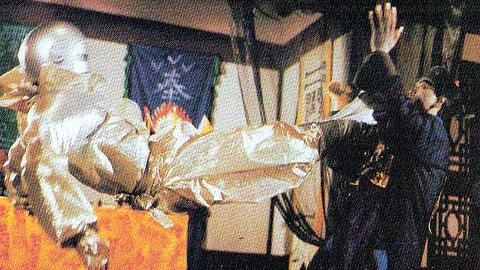
As you can tell from the title (one of the many titles that the film was released under), this film was sold in a few territories as being a sequel to Robo Vampire. Robo Vampire 2: Devil’s Dynamite does feature a cop who wears a uniform that makes him look like a knock-off Robocop and it does feature vampires but otherwise, it has little in common with the first Robo Vampire. (Indeed the cop is actually referred to as being the Shadow Warrior, instead of a cyborg as was the hero of Robo Vampire.) Robo Vampire 2 deals with the plans of Madame Mary (Angela Mao), who is concerned that her criminal empire will be taken down by a combination of the cops and a rival gangster named Steve (Tsung Hua). Madame Mary employs a monk who creates an army of vampires. When the vampires go on a rampage, killing cops and threatening random children, Alex (Lin Yun) turns into Shadow Warrior and fights them off.
Interestingly, no one is surprised to see the Shadow Warrior, so I guess he’s a pretty well-known figure. But it’s never really clear whether everyone also knows that Alex is the Shadow Warrior nor is it ever that clear just how exactly Alex became the Shadow Warrior in the first place. (The film’s title would seem to suggest that Alex is the meant to be the same hero from the first Robo Vampire but the hero from the first Robo Vampire was a cyborg whereas Alex is not.) Even more surprisingly, no one is shocked by the sudden appearance of the vampires so I guess vampire attacks are a common thing in the world of Robo Vampire 2. Why would Hong Kong’s biggest crime lord need to create any army of vampires in the first place? The film never quite says.
That said, there are a few entertaining fights. Even better, the vampires hop from place to place and they usually have their arms extended in front of them, like kids pretending to be zombies. That’s actually kind of fun to watch. If you’re going to unleash any army of vampires on a town, at least make sure they hop.
The Texas Chainsaw Massacre (1974, dir by Tobe Hooper, DP: Daniel Pearl)
4 Or More Shots From 4 Or More Films is just what it says it is, 4 shots from 4 of our favorite films. As opposed to the reviews and recaps that we usually post, 4 Shots From 4 Films lets the visuals do the talking!
This October, I’m going to be doing something a little bit different with my contribution to 4 (or more) Shots From 4 (or more) Films. I’m going to be taking a little chronological tour of the history of horror cinema, moving from decade to decade.
Today, we take a look at two very important years: 1973 and 1974!
10 Shots From 10 Horror Films: 1973 and 1974
Female Vampire (1973, dir by Jess Franco, DP: Jess Franco)
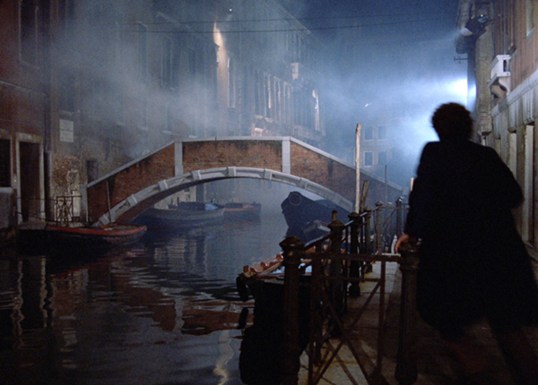
Don’t Look Now (1973, dir by Nicolas Roeg, DP: Anthony Richmond)
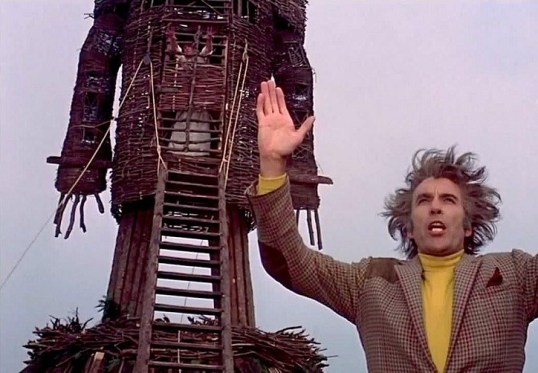
The Wicker Man (1973, dir by Robin Hardy. DP: Harry Waxman)
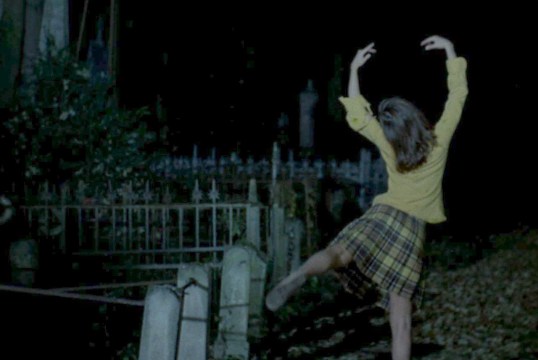
Lisa and the Devil (1973, dir by Mario Bava, DP: Cecilio Paniagua)
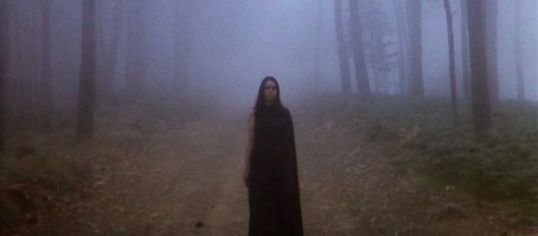
The Iron Rose (1973, dir by Jean Rollin)
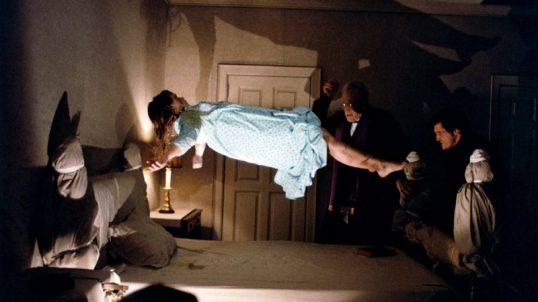
The Exorcist (1973, dir by William Friedkin, DP: Owen Roizman)
Black Christmas (1974, dir by Bob Clark, DP: Reginald H. Morris)
Deathdream (1974, dir by Bob Clark, DP: Jack McGowan)
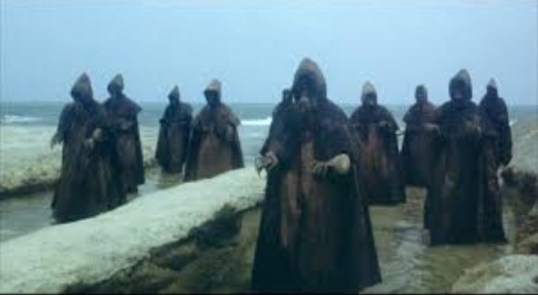
The Ghost Galleon (1974, dir by Armando de Ossorio, DP: Raul Artigut)
The Texas Chainsaw Massacre (dir by Tobe Hooper, DP: Daniel Pearl)
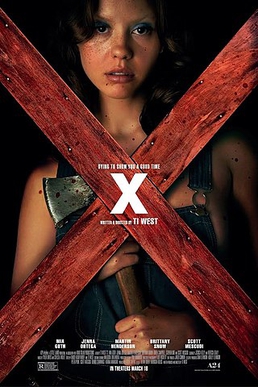
The year is 1979 and the easiest way to get rich and become a star is to appear in a porno film. At least, that’s what Maxine (Mia Goth) and her older boyfriend, Wayne (Martin Henderson), think. Wayne’s the producer. Maxine is one of the stars. The name of the movie is going to be The Farmer’s Daughter and it’s going to star Jackson Hole (Kid Cudi) as a man who stumbles across as a farm and gets to know the farmer’s daughters, played by Maxine and Bobby-Lynne (Brittany Snow). Directing the film will be a film student-turned-director named RJ Nichols (Owen Campbell). Holding the boom mic and otherwise helping out will be RJ’s girlfriend, Lorraine (Jenna Ortega). Lorraine may say that she’s not impressed with the idea of working on a pornographic film but everyone an tell that’s a lie. Everyone except for RJ, of course….
Wayne has even found a farm where they can shoot. The farm belongs to Howard (Stephen Ure) and Pearl (Mia Goth, made up to look like she’s in her 80s). Howard suspects that Wayne is making an adult film and he doesn’t exactly approve of it but it also appears that he and Pearl could use the money. Howard warns Wayne not to bother Pearl while they’re filming. However, it doesn’t take long for Pearl to wander out of the house and to discover what’s going on in the guest house. That night, people start to die….
X caused quite a stir when it was released earlier this year, with critics declaring it be a horror classic. I finally watched the film last week. X is undeniably a well-made film and it deserves a huge amount of credit, in this repressed era of trigger warnings, for not holding back on either the violence or the sex. Mia Goth deserves all of the praise that she’s received for playing both Pearl and Maxine. At first, it might seem like stunt casting to cast Goth in both roles but actually, it works well with the film’s subtext. Pearl wants to kill Maxine (and her friends) because they represent the youth that she’s lost. Maxine initially fears Pearl because she represents the inevitability of getting older. Unless you die young, you’re going to get old and much of Maxine’s actions are all about doing whatever it takes not to get old. If that means running straight into danger while fueled only on cocaine and fury, that’s what Maxine is going to do. The cocaine that Maxine snorts is as important to the story as Pearl’s resentment, Wayne’s greed, and the preacher who continually appears on television. Maxine probably couldn’t do half of what she does in the film if she wasn’t continually snorting coke and it’s significant that the other characters in the film remain relatively drug-free. Cocaine is a drug for those who want to confident and free of the worries and the self-doubt that comes with age. X becomes a film about the battle between the young and the old, a conflict that has defined much of recent history as the younger generation wonders when the older generation is finally going to surrender their power.
At the same time, it’s hard not to feel that the film itself was a bit overpraised by critics who were stunned to discover that a horror film could feature good acting, carefully composed shots, and clever editing. Judging from some of the reviews, you would get the feeling that some of these critics have never seen a subversive horror film before. X is a well-made slasher film that refuses to buy into the old trope that one has to be an innocent or a good person to survive a film like this. Indeed, the biggest mistake that people make in X is to trying to do the right thing. But it’s hardly the first film to comment on the rules of the genre by breaking them.
In the end, the most important thing about X is that it’s an effective and well-made horror movie. Visually, the film does a great job of capturing the isolation of rural Texas and all the members of the cast do a good job bringing their characters to life, even if some of the country accents a bit overdone. Martin Henderson is amusing playing a role that seems like it was written for Matthew McConaughey and Jenna Ortega does a good job playing a character who manages to be both annoying and sympathetic. (She’s far better here than she was in The Fallout.) The film ultimately belongs to Mia Goth, playing two different characters who both seem destined to meet the same fate.
As far as Ti West horror films go, X is never as energetic or as much fun as The House of the Devil. But still, it’s a good rural slasher film.
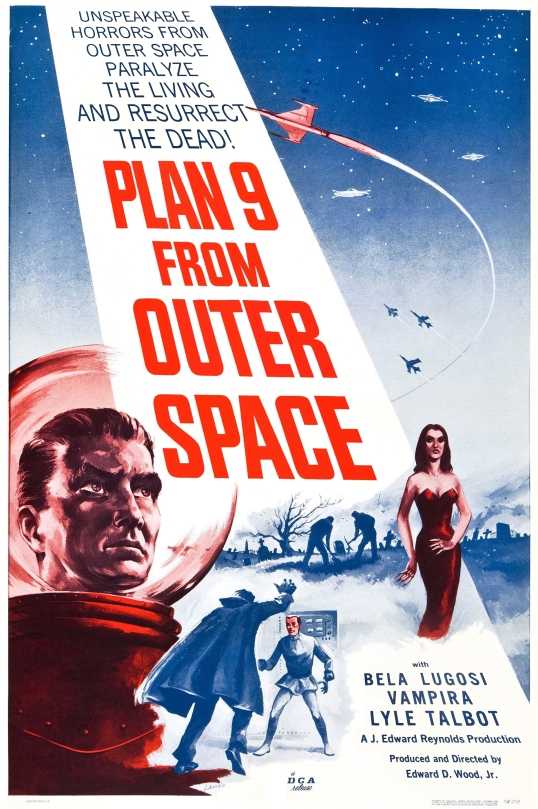
Viewing Plan 9 From Outer Space during October is a bit of a tradition around these parts and here at the Shattered Lens, we’re all about tradition. And since today is the 97th anniversary of the birth of Ed Wood, Jr., it just seems appropriate to watch his best-known film.
Speaking of tradition, this 1959 sci-fi/horror flick is traditionally cited as the worst film ever made but I don’t quite agree. For one thing, the film is way too low-budget to be fairly judged against other big budget fiascoes. If I have to watch a bad movie, I’ll always go for the low budget, independent feature as opposed to the big studio production. To attack Ed Wood for making a bad film is to let every other bad filmmaker off the hook. Ed Wood had his problems but he also had a lot of ambition and a lot of determination and, eventually, a lot of addictions. One thing that is often forgotten by those who mock Ed Wood is that he drank himself to death and died living in squalor. The least we can do is cut the tragic figure some slack.
Plan 9 From Outer Space is a ludicrous film but it’s also a surprisingly ambitious one and it’s got an anti-war, anti-military message so all of you folks who have hopped down the progressive rabbit hole over the past few years should have a new appreciation for this film. I mean, do you want the government to blow up a Solarnite bomb? DO YOU!?
Also, Gregory Walcott actually did a pretty good job in the lead role. He was one of the few members of the cast to have a mainstream film career after Plan 9.
Finally, Plan 9 is a tribute to one man’s determination to bring his vision to life. Ed Wood tried and refused to surrender and made a film with a message that he believed in and, for that, he deserves to be remembered.
Now, sit back, and enjoy a little Halloween tradition. Take it away, Criswell!
Bed of Nails is from Alice Cooper’s 11th studio album, Trash. It was the album’s second most successful single, despite not even being released as a single in the U.S. Maybe some of that success was due to this music video, in which Alice the singer performs over and in a bed of nails while women in leather walk through the studio and play the cello.
This video was directed by Nigel Dick, who directed videos for anyone who was anyone. If Nigel Dick has not done a video for you, you are not really a rock star.
On tonight’s episode of Ghost Story, a rodeo is terrorized by a series of cougar attacks. Could it have anything to do with the cat-like wife of rodeo star Doug McClure?
This episode originally aired on November 24th, 1972 and it is kind of silly but …. hey, it’s Doug McClure. It doesn’t get more early 70s than Doug McClure.








 Through the Shattered Lens