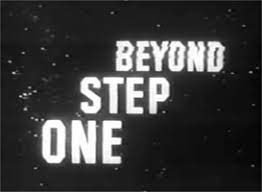
Carl Archer (Charles Aidman) is a recovering alcoholic who returns home after an extended stay in a rehab. His wife (Julie Adams, of Creature of the Black Lagoon and The Last Movie fame) is skeptical about whether or not Carl has really sobered up and is prepared to be a responsible father to their son, Steve (Charles Herbert). When Steve gets trapped in a cave, will Carl be able to use their psychic connection to find and rescue him?
Can you prove this didn’t happen!?
This episode originally aired on February 24th, 1959.
2019’s Do Not Reply is about Chelsea (Amanda Arcui, who previously played Lola during the final seasons of Degrassi), a high school student who is super-excited to have found an online boyfriend. Brad (Jackson Rathbone) seems like he’s funny, handsome, and charming and he’s even got a semi-tragic life story! Now, it should be mentioned that there are some immediate red flags about Brad. Brad seems to be just a bit too perfect and the story of his life — being adopted and having parents who won’t even spend the money necessary to get him a new phone — seems to be a little bit too on-the-nose as far as getting Chelsea to feel sorry for him is concerned.
Brad and Chelsea agree to go to the Halloween dance together. Brad says that he’ll show up as a zombie football player and he requests that Chelsea show up dressed a cheerleader. (RED FLAG! RED FLAG!) To the surprise of no one, Chelsea meets up with Brad at the dance and is promptly kidnapped.
Brad, it turns out, is not a teenager with parents who refuse to buy him a new phone. Instead, he’s a man in his 20s who lives in a surprisingly nice house. He’s been meeting and kidnapping teenager girls for a while. He holds them prisoner in his house, requiring that they wear cheerleader uniforms while cleaning the place. Brad wants the house to be spotless. He wants his prisoners to adore him. He wants them to be very polite and well-mannered whenever they eat the dinners that he prepares for them. One girl who tried to escape was several beaten by Brad and locked in her room, where she suffers as a warning to the others. Meagan (Kerri Medders) and Heather (Elisa Luthman) both seem to be suffering from Stockholm Syndrome and they not only go out of their way to keep Brad happy but also to keep Chelsea from trying to escape.
If he’s in a good mood, Brad rewards his prisoners with “outdoor time,” which means that he allows them to wear a VR headset and visit an imaginary park. Brad spends most of his day wearing his headset, not only searching for new realities but also reliving all of the terrible things he did in the past. Brad is one sick man, his madness apparently inspired by his incestuous feelings towards his deceased sister who was — wait for it — a cheerleader!
The premise is a disturbing one, precisely because it is based on reality. There are internet stalkers out there and there have been internet murderers as well. Most of them aren’t as wealthy or handsome as Brad but they’re still out there, preying on those who are too naive to question their intentions. While there’s definitely more than a small element of exploitation to the film (with the camera tending to linger over the cheerleader uniforms almost as intensely as Brad does), the film is ultimately on the side of Brad’s prisoners. As opposed to the hyperarticulate madmen who tend to populate films like this, Brad is a loser from the start and the moment when his victims finally start to get the upper hand on him is a cheer-worthy moment. Though the film gets off to a rather slow start, Amanda Arcuri, Kerri Medders, and Elisa Luthman all give good performances. It’s a flawed film but it gets the job done.
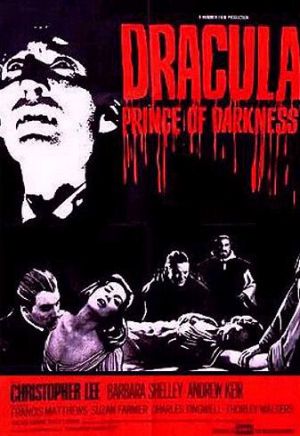
Christopher Lee often went on record about how much he disliked most of the Hammer films in which he played Dracula, feeling that Hammer didn’t really understand the character of Bram Stoker’s famous vampire. In fact, when Lee agreed to appear in 1966’s Dracula: Prince of Darkness, he did so with the requirement that he would not have any dialogue.
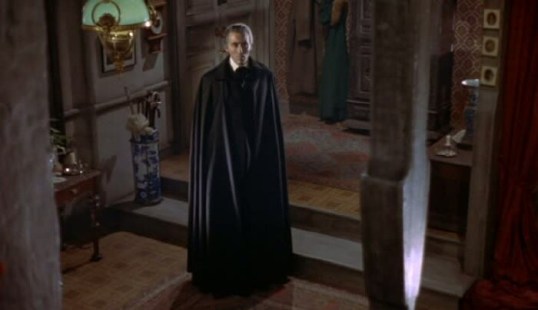
While it’s possible that Lee may have been hoping that his demand would force Hammer to release him from his contract, his requirement actually works to the film’s advantage. In the scene below, Lee shows that he didn’t need dialogue to make Dracula into a terrifying and malevolent force. Lee’s otherworldly and dangerous charisma and Dracula’s feral and vicious nature come through without him saying a word.
4 Shots From 4 Films is just what it says it is, 4 shots from 4 of our favorite films. As opposed to the reviews and recaps that we usually post, 4 Shots From 4 Films is all about letting the visuals do the talking.
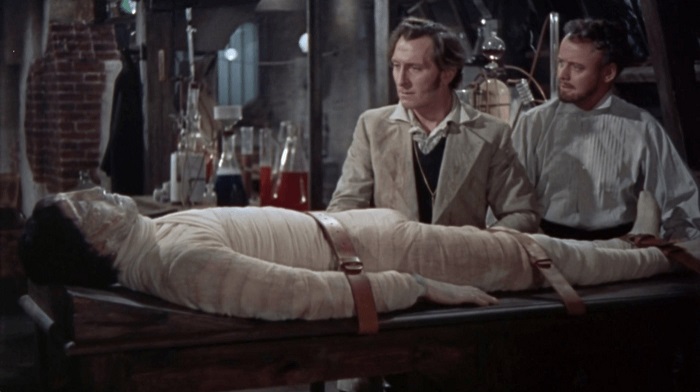
Today’s director: one of the masters of Hammer horror and the director who brought back to life both Dracula and Baron von Frankenstein, Terence Fisher!
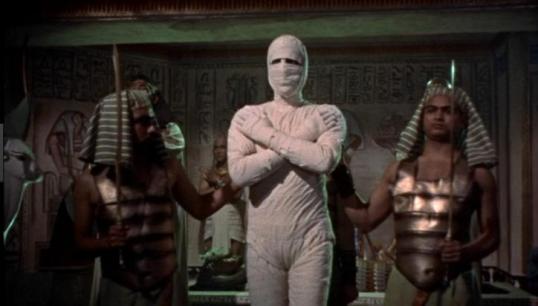
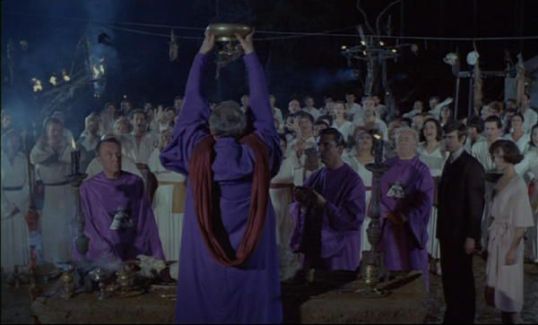
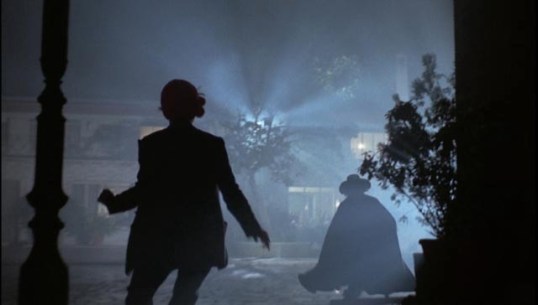
4 Shots From 4 Terrence Fisher Films
The Curse of Frankenstein (1957, dir by Terence Fisher, DP: Jack Asher)
The Horror of Dracula (1958, dir by Terence Fisher, DP: Jack Asher)
The Mummy (1959, dir by Terence Fisher, DP: Jack Asher)
The new version of Salem’s Lot, which has finally been released on Max after sitting on the shelf for nearly three years, is not very good.
At the same time, it’s definitely not terrible. There are a few effective scenes. The finale, which is a bit different from what happens in the book, is enjoyably berserk. The film made good use of Gordon Lightfoot’s Sundown and, as a history nerd, I appreciated the fact that the movie used the book’s original 70s setting as opposed to trying to update the whole thing. When writer Ben Mears (Lewis Pullman) wants to investigate the history of the old Marsten House, he has to go to the library. People looking up stuff on microfiche is always, from a cinematic point of view, more compelling than them pulling up Wikipedia.
Ultimately, the movie is just kind of forgettable. It’s mediocre in the bland way that so many recent horror films have tended to be. The movie’s style has far more in common with David Gordon Green’s unfortunate forays into horror than to anything done by Mike Flanagan. While it may not have originally been meant for a streaming release, streaming is where it begins because it feels like something that would get dumped on Netflix without much fanfare.
It’s a shame because Salem’s Lot really is one of Stephen King’s better novels, written at a time when King was still embracing his pulpy side and without any of the self-important commentary that’s come to mar some of King’s more recent works. The novel is essentially a small town soap opera, documenting the often sordid lives of the citizens of Jerusalem’s Lot. King introduces a vampire to the mix and most of the town’s problems are solved by folks dying and then coming back from the dead. Ben Mears is a typical King protagonist, a writer from Maine who is trying to deal with a childhood trauma and who discovers that ‘Salem’s Lot has a long and apparently cursed history. In both the book and the movie, Ben teams up with a group of vampire hunters to battle Kurt Barlow (played here by Alexander Ward) and his human servant, Straker (Pilou Asbaek).
The book works because it takes the time to turn Salem’s Lot into a vivid community and, as such, it’s hard not to feel the loss as the town dies off as a result of Barlow’s vampiric invasion. Clocking in at less than two hours, the movie really doesn’t have time to do that. The movie’s version of the town just comes across as being another stereotypical New England town, full of flinty characters and mudrooms. The community never comes to life and, as such, there’s not much emotional resonance as the community dies off. (It’s not a coincidence that the most successful adaptation of Salem’s Lot was a miniseries.) Add to that, the 2024 film features some truly unfortunate acting, which again makes it difficult to accept the town as a community with its own traditions and culture.
There are certain character types and themes that seem to appear in all of Stephen King’s novels and the subsequent adaptations. At its worst, the new Salem’s Lot feels like it’s quickly going through a checklist of all of the expected Stephen King elements. It’s like, “Main setting — check! Writer protagonist — check! Schoolyard bully — check! Child in danger — check!” The end result is a film that feels almost like a parody Stephen King, containing all of his familiar tropes without any of the literary flair that made the original book a classic of vampire literature.
The good thing is that the Tobe Hooper adaptation holds up well and it’s also available on Max. Check it out this weekend.
As some of our regular readers undoubtedly know, I am involved in a few weekly live tweets on twitter. I host #FridayNightFlix every Friday, I co-host #ScarySocial on Saturday, and I am one of the five hosts of #MondayActionMovie! Every week, we get together. We watch a movie. We tweet our way through it.
Tonight, for #ScarySocial, I will be hosting Mario Bava’s Baron Blood!
If you want to join us on Saturday night, just hop onto twitter, start the film at 9 pm et, and use the #ScarySocial hashtag! The film is available on Prime and Tubi! I’ll be there co-hosting and I imagine some other members of the TSL Crew will be there as well. It’s a friendly group and welcoming of newcomers so don’t be shy
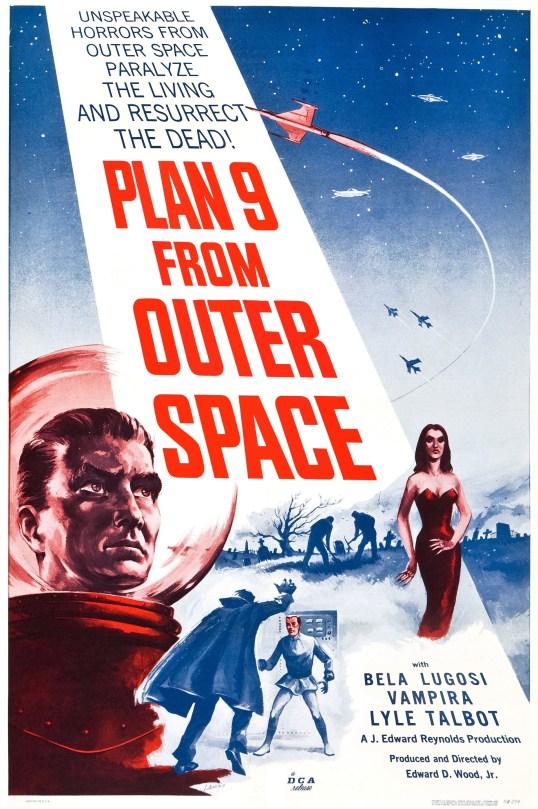
Viewing Plan 9 From Outer Space during October is a bit of a tradition around these parts and here at the Shattered Lens, we’re all about tradition. And since the 100th anniversary of the birth of Ed Wood, Jr. is just a five days away, it just seems appropriate to watch his best-known film.
Speaking of tradition, this 1959 sci-fi/horror flick is traditionally cited as the worst film ever made but I don’t quite agree. For one thing, the film is way too low-budget to be fairly judged against other big budget fiascoes. If I have to watch a bad movie, I’ll always go for the low budget, independent feature as opposed to the big studio production. To attack Ed Wood for making a bad film is to let every other bad filmmaker off the hook. Ed Wood had his problems but he also had a lot of ambition and a lot of determination and, eventually, a lot of addictions. One thing that is often forgotten by those who mock Ed Wood is that he drank himself to death and died living in squalor. The least we can do is cut the tragic figure some slack.
Plan 9 From Outer Space is a ludicrous film but it’s also a surprisingly ambitious one and it’s got an anti-war, anti-military message so all of you folks who have hopped down the progressive rabbit hole over the past few years should have a new appreciation for this film. I mean, do you want the government to blow up a Solarnite bomb? DO YOU!?
Also, Gregory Walcott actually did a pretty good job in the lead role. He was one of the few members of the cast to have a mainstream film career after Plan 9.
Finally, Plan 9 is a tribute to one man’s determination to bring his vision to life. Ed Wood tried and refused to surrender and made a film with a message that he believed in and, for that, he deserves to be remembered.
Now, sit back, and enjoy a little Halloween tradition. Take it away, Criswell!
The cliche view of Rob Zombie is that he is a shock rocker who branched out into horror filmmaking. With the song and the music video for Foxy, Foxy, Zombie shows that he is just as much a descendant of Lynard Skynard’s as he is of Alice Cooper’s. And though the video may not have the horror themes that most people expect from a Zombie production, the song itself was at least partially inspired by a Lon Chaney film, He Who Gets Slapped.
Yes, that is Sheri Moon Zombie showing up at the outdoor concert.
Welcome to Late Night Retro Television Reviews, a new feature where we review some of our favorite and least favorite shows of the past! On Fridays, I will be reviewing Friday the 13th: The Series, a show which ran in syndication from 1987 to 1990. The show can be found on YouTube!
Agck! Stranger danger!
Episode 2.12 “The Playhouse”
(Dir by Tom McLoughlin, originally aired on January 28th, 1989)
Mike and Janine Carlson (played by Robert Oliveri and Lisa Jakub) are two young siblings living in the suburbs. They don’t have much of a life. Their mother (Belinda Metz) is neglectful and continually complains that her children are the reason why she can’t find a rich boyfriend. Mike and Janine don’t appear to have any close friends. Children are vanishing all over town and parents are telling their kids, “Don’t go off with strangers!” but no one seems to care enough about Mike and Janine to even check to make sure that they haven’t been kidnapped.
Mike and Janine have a playhouse, a gift that was given to them by one of their mother’s former boyfriends. The playhouse is the only place where they feel happy. It’s a place where they literally get anything that they wish for. But sometimes, the door to the playhouse is locked. When that happens, Mike and Janine have to convince someone else to go into the playhouse. Once someone enters the playhouse, they find themselves trapped in a nightmarish world that is full of evil clowns and other circus figures. Mike and Janine have to chant, “I hate you! I hate you!” while the playhouse claims its victims.
Agck! Seriously, this is a disturbing episode! Not only are Mike and Janine terribly abused but almost all of their victims are children. Perhaps because of the age of the people involved, this is the only episode of Friday the 13th: The Series in which no one dies. They’re held prisoner in the playhouse and probably traumatized for life but they don’t die. Fortunately, that means that they can be freed once Jack convinces Mike to chant, “I love you!” instead of “I hate you!”
Yep, this episode is all about the power of love but you really have to wonder if all of Mike and Janine’s problems can be solved by chanting, “I love you!” I mean, aren’t the other kids going to remember that Mike and Janine held them prisoner in a nightmare universe? The episode may end with the playhouse defeated by Mike and Janine are still living in that terrible suburb and their mother is still a resentful alcoholic. Even though this episode has what would most would consider to be a happy ending — the kids are free! — it’s still incredibly dark.
This episode definitely left me feeling a bit shaken. I hate seeing children in danger and that’s what this episode was all about. Even things that sound kind of silly — like Mike chanting “I hate you!” while the playhouse does its thing — are actually rather disturbing when viewed. The child actors are almost too convincing in this episode. In the end, Jack says that all you need is love but this episode leaves you wondering if he’s correct.


 Through the Shattered Lens