Made For TV Horror: Death Car On The Freeway (dir by Hal Needham)


I, for one, am tired of the stereotype that women cannot drive.

I’m a woman and I can tell you right now that I am an above average driver.  I’ve only had one major accident.  Admittedly, I did smash into a parked car but it was raining and I really couldn’t see that well because I was driving convertible and the window was fogged up.  Plus, whoever parked that car must have done a bad job and left it sitting out in the middle of the street.  For the record, my convertible flipped over on impact so the parked car did far more damage than I did.

Other than that, I usually manage to stop in time for red lights.  I’ve only driven through a few stop signs and that was just because I didn’t notice them. I’ve very rarely been given a speeding ticket.  Instead, the police have always been very polite about just giving me a warning.  And yes, it is true that I have trouble with curbs and turns and going in reverse and all that but I’ve seen plenty of men do the same thing.

The statistics show that, while women are involved in more accidents, the accidents are more likely to be fatal if a man is driving.  Men are also more prone to get upset and pull a gun during a road rage incident whereas women just give other drivers the finger.  Women are not inherently bad or dangerous drivers.  The one exception, at least down here in Texas, are middle-aged women who drive SUVs with faded Beto stickers.  You really don’t want to get stuck behind one of them in traffic.

I found myself thinking about the misogyny behind the “women-are-bad-drivers” stereotype as I watched 1979’s Death Car On The FreewayDeath Car On The Freeway features a madman who is so sick of women driving in Los Angeles that he starts using his Dodge van to cause them to have accidents.  We don’t actually see his face or really learn much about him.  What we do see are his black-gloved hands on his steering wheel, which is a nifty homage to the giallo genre.  (Giallo killers have a thing for black gloves.)  Whenever the driver does try to force a woman into a fatal accident, he pops in an 8-track of hyperactive fiddle music.  The fiddle has never sounded more menacing than it does in Death Car On The Freeway.  It’s almost like prog rock fiddling.  Imagine a country western fiddler who has just done a mountain of cocaine and you’ll get a feeling for this guy’s taste in music.

News reporter Shelley Hack thinks that the public has the right to know that there’s a man causing women to crash their cars.  Her ex-husband, played to smarmy perfection by George Hamilton, thinks that Shelley should quit her current job and come work with him.  Meanwhile, police inspector Peter Graves is concerned that the media going to start a panic and make it more difficult for him to track down the “Freeway Fiddler.”  (One gets the feeling that Graves feels this entire mess could have been avoided if women had never been allowed to drive in the first place.)  At one point, Hack meets with a defensive driver instructor and he’s played by the film’s director, Hal Needham.

Oh, how I love this film!  Seriously, it’s got car chases, car crashes, 70s outfits, George Hamilton, Peter Graves, and a genuinely frightening villain.  This is one of those films where you might be tempted to be dismissive.  Folks like Dinah Shore, Sid Haig, and Abe Vigoda show up in small roles, reminding you that this really is a 70s made-for-TV movie.  But then, that fiddling explodes on the soundtrack, that van starts tailgating someone, and Death Car On The Freeway suddenly becomes a cinematic nightmare.  It’s not a surprise that Hal Needham was able to stage some impressive driving stunts in Death Car On The Freeway.  That was Hal Needham’s thing.  But Needham also manages to craft a compelling and, at times, genuinely frightening film.  Anyone who has ever glanced into their rearview mirror and suddenly realized that another vehicle is following them will be able to relate to the fear of the Fiddler’s victims.

This is a great movie and a reminder that women are not the most dangerous drivers on the streets.  Unless, of course, they’re driving an SUV with a faded Beto sticker….

Song of the Day: East Bound and Down by Jerry Reed


Hey, it’s Hal Needham’s birthday.  What other song could we go with?

East bound and down, loaded up and truckin’
A-we gonna do what they say can’t be done
We’ve got a long way to go, and a short time to get there
I’m east bound, just watch ol’ “Bandit” run

Keep your foot hard on the pedal
Son, never mind them brakes
Let it all hang out ’cause we got a run to make
The boys are thirsty in Atlanta
And there’s beer in Texarkana
And we’ll bring it back no matter what it takes

East bound and down, loaded up and truckin’
A-we gonna do what they say can’t be done
We’ve got a long way to go, and a short time to get there
I’m east bound, just watch ol’ “Bandit” run

East bound and down, loaded up and truckin’
A-we gonna do what they say can’t be done
We’ve got a long way to go, and a short time to get there
I’m east bound, just watch ol’ “Bandit” run

Ol’ Smokey’s got them ears on
He’s hot on your trail
And he aint gonna rest ’til you’re in jail
So you got to dodge ‘im and you got to duck ‘im
You got to keep that diesel truckin’
Just put that hammer down and give it hell

East bound and down, loaded up and truckin’
A-we gonna do what they say can’t be done
We’ve got a long way to go, and a short time to get there
I’m east bound, just watch ol’ “Bandit” run

Writer(s): Jerry Hubbard Reed, Dick Feller

4 Shots From 4 Films: Special Hal Needham Edition


4 Shots From 4 Films is just what it says it is, 4 shots from 4 of our favorite films. As opposed to the reviews and recaps that we usually post, 4 Shots From 4 Films lets the visuals do the talking!

Today, we take a moment to remember the great director and stuntman, Hal Needham.  It’s time for….

4 Shots From 4 Hal Needham Films

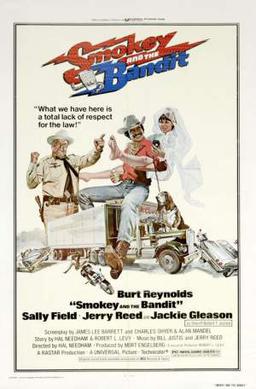
Smokey and the Bandit (1977, dir by Hal Needham, DP: Bobby Byrne)

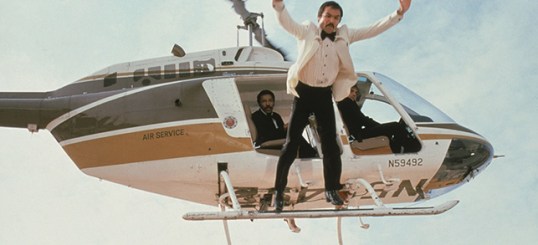
Hooper (1978, dir by Hal Needham, DP: Bobby Byrne)

The Cannonball Run (1981, dir by Hal Needham, DP: Michael Butler)

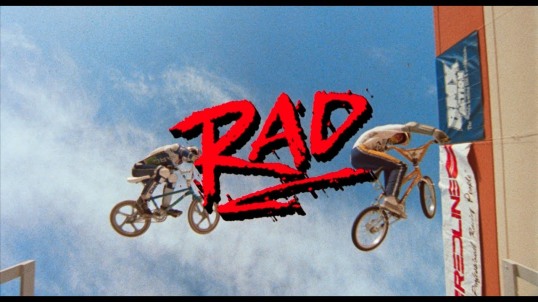
Rad (1986, dir by Hal Needham, DP: Richard Leiterman)

Body Slam (1987, directed by Hal Needham)


Music promoter M. Harry Smilac (Dirk Benedict) used to be a big deal in Los Angeles but lately, his ability to create stars appears to have left him.  He still has his Porsche and his car phone but he is also several thousand dollars in debt and he only has one client, a garage hair band called Kick.  No one wants to book Kick because no one wants to work with a known screw-up like Harry.

Desperate for money, Harry agrees to serve as the entertainment chairman for a stuffy candidate for governor.  It’s while looking for potential acts to headline a fundraiser that Harry meets Quick Rick Roberts (Roddy Piper).  When Harry sees Rick getting ripped off by a promoter, Harry assumes that Rick is a musical act and quickly offers to be Rick’s agent.  It’s only after Rick has agreed that Harry discovers that Rick doesn’t play an instrument and can’t sing a note.  Instead, Rick is a professional wrestler and, by singing him, Harry has now made an enemy of Rick’s former manager, Captain Lou Munaro (played by, you guessed it, Captain Lou Albano).

Now, Harry has to find a way to pay his creditors, make stars out of both Kick and Rick, and win the hand of Candace VanVargen (Tanya Roberts), the daughter of a wealthy political benefactor.  What if there was some way to combine rock and roll with wrestling?

Dirk Benedict, Tanya Roberts, Roddy Pipper, and Captain Lou Albana, all appearing in a movie directed by Hal Needham?  Body Slam is one of the most 80s films ever made.  It’s not really a bad film.  In typical Needham fashion, it’s a loose mix of broad comedy and scenes designed to appeal to teenage boys and their fathers.  There’s a lot wrestling.  There’s a lot of spandex.  The movie opens with Harry ogling a woman in a bikini.  Body Slam knew who its audience would be.  Dirk Benedict gives a surprisingly nimble comedic performance and even Tanya Roberts has some deliberately funny moments.  Roddy Piper is likable as the steady and fair-minded Rick.  There’s nothing subtle about Captain Lou Albano’s performance but what else would you expect from a man wearing that many rubber bands?  As was typical of Needham’s films, some of the director’s friends show up in cameos.  John Astin plays a car salesman.  Charles Nelson Reilly plays a talk show host.  Billy Barty gets into an argument with Captain Lou.  Burt Reynolds is nowhere to be seen.

Unfortunately, not many people got to see Body Slam when it was originally released.  Body Slam was going to be Hal Needham’s big comeback film after the disappointing Megaforce but the film’s producers didn’t care much for the changes that Needham made to their script and they sued to keep the film from being released.  As a result, the film never got a theatrical release and it was instead sent straight to VHS, with very little fanfare.  It has since developed a cult following amongst old school wrestling fans.

Body Slam is a typically amiable Hal Needham film.  It’s nothing special but it’s enjoyable if you’re in the mood for it.

Film Review: Rad (dir by Hal Needham)


The 1986 film, Rad, tells the story of Christopher “Cru” Jones (Bill Allen).  Cru lives in a small, kind of ugly town in middle America.  Cru has a job delivering newspapers so, every morning, he rides around town on a bicycle and he throws rolled-up copies of USA Today at people.  He throws the papers fairly aggressively and doesn’t seem to have much concern about riding his bike through backyards or using his bike to jump over (or sometimes, onto) cars.  And yet, no one can stay mad at Cru because he has a plucky, can-do attitude and he can do all sorts of tricks on his bicycle.

Cru has a decision to make.  He can either go to college or he can compete in a bicycle race.  If he goes to college, he might actually be able to get a career and actually have a future.  If he wins the bicycle race, he’ll get a car and $100,000.  His mother (Talia Shire) feels that Cru should go to college.  Cru, however, says that his gut is telling him to enter the race….

Hey, Cru, your gut is lying to you!  Seriously, I’m all for Cru competing and showing off how good he is at a rather mundane and kind of boring sport but college is college.  There’s a scene early on in the film where one of Cru’s classmates is talking about all the schools to which he’s applied.  “UCLA, Princeton, SMU, Harvard….” Cru rides by and laughs but, 35 years later, who do you think currently has the nicer house?

Of course, despite his willingness to give up his future for $100,000 and a new car, it turns out that Cru might not even be able to compete.  The race’s evil sponsor (Jack Weston) is determined to make sure that his tea, wins the race and he keeps changing the rules to prevent Cru from being able to enter.  He demands that Cru find an official sponsor so Cru starts his own business.  He then demands that the business be worth at least $50,000!  Cru doesn’t have that type of money but — wait a minute — is that Ray Waltson, playing an eccentric businessman!?  Maybe he’s got $50,000!

Still, does Cru have the confidence necessary to enter the race and beat the best in the country?  Don’t worry, Cru’s little sister designs a t-shirt that reads, “Cru is Rad!”  Seriously, just try to beat that encouragement!

Anyway, you may be thinking that Rad sounds like it’s a pretty silly movie and it is.  Having now watched Rad, BMX Bandits, and Quicksilver, I am ready to announce that, in the 80s, there was absolutely no way to make BMX racing cinematic.  At the end of the movie, Cru performs a series of tricks while the end credits role and, instead of being impressed, you just notice how much Cru is struggling to maintain his balance.  Neither Bill Allen nor Bart Conner (who plays Cru’s main rival) have much screen presence and the whole film just looks and feels cheap.

And yet….

To be honest, it’s difficult to really dislike Rad.  For all of its many flaws, it’s all just so damn sincere.  Cru just wants to win that race so badly that it’s hard not to root for him and it is kind of touching to see the way the entire town rallies around him.  While the lead racers may have been blandly portrayed, Talia Shire, Jack Weston, Ray Waltson, and Lori Loughlin all turn in effective performances.  In fact, you could probably argue that Talia Shire is almost too good in her role.  She so effectively portrays the anguish of a mother watching her son throw his future away that you really do find yourself worrying about what’s going to happen to Cru when he’s older and he can’t get a job because he blew off college.  (I’m going to guess that Talia Shire’s presence in this film is due to the fact that it was produced by her late husband, Jack Schwartzman.)

Rad is sincere and unpretentious and rather silly.  Like a lot of 80s movies, it’s got a good soundtrack.  It especially makes good use of the song Send Me An Angel.  There’s also an out-of-nowhere scene where Cru and Lori Loughlin do a series of impromptu freestyle bike tricks on the middle of a dance floor and it’s just surreal enough to be memorable.

Rad is a simple but inoffensive tribute to throwing your life away.


The Further Adventures of Smokey and the Bandit


The first Smokey and the Bandit is a classic.  What about the sequels?
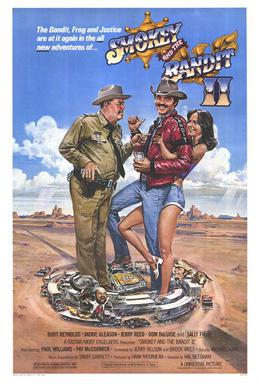
Smokey and the Bandit II (1980, directed by Hal Needham)

The gang’s all back in this sequel to Smokey and the Bandit!  Burt Reynolds is the Bandit!  Jackie Gleason is Sheriff Buford T. Justice and his two brothers, Reginald and Gaylord!  Jerry Reed is Snowman!  Sally Field is Carrie!  Pat McCormick and Paul Williams are Big and Little Enos!  Mike Henry is Junior!  Dom DeLuise is an Italian doctor!  Terry Bradshaw and Mean Joe Greene play themselves!  There’s an elephant!

You get the idea.  Smokey and the Bandit II promises more of the same.  In some ways, it delivers.  There are some entertaining stunts.  The finale features what was, at the time, the biggest car chase ever filmed.  But Smokey and the Bandit II fails at the most important part.  It fails to recreate the fun of the first film.  Everyone is just going through the motions.  Burt Reynolds later said that he only made the film as a favor to Hal Needham while Sally Field said that she agreed to appear in the film as a favor to Burt Reynolds.  Jackie Gleason did the movie because he needed the money but, because he was also in poor health, he requested that his scenes be filmed first and that they be filmed quickly.  That the three stars didn’t have much enthusiasm for the project is obvious while watching the movie.

This time, Big Enos wants the Bandit to transport an elephant to the Republican National Convention in Dallas.  The Bandit, however, has been an alcoholic wreck ever since Carrie left him to, for some reason, get back with Junior.  Snowman manages to sober up the Bandit and, after they help Carrie run out on her wedding for a second time, it’s time to transport an elephant.

In hot pursuit, Sheriff Justice gets help from his brothers, all of whom are also played by Gleason.  Reginald Justice is a Canadian Mountie who speaks with a posh accent that is in no way Canadian.  Gaylord Justice is a flamboyant state patrolman.  Whenever the brothers talk to each other, doubles are used.  There are a few split screen shots that are so ineptly handled that it ends up looking like a page from a comic book with each Gleason standing in a separate panel.  The end credits list Gaylord as having been played by “Ms. Jackie Gleason,” just in case you’re wondering the level of this film’s humor.

Dom DeLuise gets some laughs as an Italian doctor who is recruited to take care of the elephant but otherwise, this is a depressing movie.  Burt Reynolds and Sally Field were on the verge of breaking up when this film was made and neither one of them acts their scenes with much enthusiasm.  Watching the movie, it’s impossible not to compare their strong chemistry in the first movie to their total lack of it in the second movie.  There’s a subplot about the Bandit trying to prove that, even though he’s getting older, he’s still a legend and, for those who know anything about Burt Reynolds’s career, it hits too close to home.  Combining that with the sight of an obviously unwell Jackie Gleason and you’ve got a surprisingly depressing comedy.

There is one cool thing about Smokey and the Bandit II.  After the critics thoroughly roasted the film, Hal Needham took out a one-page ad in Variety.  The ad was a picture of Needham sitting in a wheel barrow full of money.  That’s one way to answer your critics!

Smokey and the Bandit 3 (1983, directed by Dick Lowry)

Smokey and the Bandit 3 is even more depressing than the second film.  Not surprisingly, Sally Field is nowhere to be found.  She had broken up with Burt after the second film and was busy pursuing a career as the type of actress who didn’t appear in car chase films.  Burt does appear in the film but he only makes a cameo appearance, showing up for a few minutes at the end with a resigned look on his face as if he realized that he was never going to escape being typecast as an aging good ol’ boy.  Also not returning was Hal Needham.  Needham was busy directing Stroker Ace so he was replaced by Dick Lowry.  What type of director was Dick Lowry?  Other than Smokey and the Bandit 3, Lowry’s best known credit is for Project Alf.

Jackie Gleason, Jerry Reed, Pat McCormick, Mike Henry, and Paul Williams all return but none of them look happy to be there.  The plot is that Sheriff Buford T. Justice has retired to Florida but he just can’t turn down a challenge from Big Enos and Little Enos to drive a stuffed shark from Miami to Dallas.  Smokey is the Bandit!  (That was originally the title of this film.)  When it looks like Buford is doing too good of a job of transporting the shark, the Enoses hire Snowman to chase Buford and slow him down.  It doesn’t make any sense and Jerry Reed and Jackie Gleason don’t share any scenes together despite co-starring in the film.  Supposedly, Gleason was originally cast as two characters — Buford and the man hired to slow Buford down — but when preview audiences were confused by the film, the studio demanded reshoots.  Jerry Reed was brought back and all of the scenes featuring Gleason as the new Bandit were reshot with Reed.  Reed even grew a mustache, wore a red shirt, and broke the fourth wall just like Burt did in the first film.

Not surprisingly, Smokey and the Bandit 3 is a disjointed mess that doesn’t even have any spectacular car crashes to justify its existence.  Jerry Reed is as amiable as he was in the first two films but Jackie Gleason’s Buford Justice was never meant to be a lead character.  In small doses, he was funny but Buford was too one-dimensional of a character to build an entire film around.

Smokey and the Bandit 3 was a failure with critics and at the box office so the Bandit’s adventures came to a temporary end.  Years later, Hal Needham produced four made-for-TV prequels the starred Brian Bloom as a young Bandit.  I haven’t seen them.  If I ever do, I’ll review them.

Hooper (1978, directed by Hal Needham)


Reuniting the Smokey and the Bandit team of director Hal Needham and stars Burt Reynolds and Sally Field, Hooper is a film that pays tribute to stuntmen.

Hooper (Burt Reynolds) is a respected but aging stunt coordinator who is currently working on an overblown action film called The Spy Who Laughed At Danger.  (The spy is played by Adam West, who appears as himself.)  Hooper knows that he’s getting too old to keep putting his life at risk but he’s addicted to thrill of doing what he calls “gags.”  Every morning, Hooper wakes up, pops pills, has a beer, and then falls off a building or crashes a car.  When he’s not doing movies, he’s getting into bar brawls.  As demonstrated during a visit to Dodge City, Hooper and his friends are modern day cowboys  but time is catching up to them.  Hooper’s girlfriend, Gwen (Sally Field), wants Hooper to settle down and retire from the business before he ends up a physical wreck like her father (Brian Keith).  Hooper feels that he has to do one last, record-setting stunt before he passes the torch over to younger stuntmen like Ski Shidski (Jan-Michael Vincent).

Hooper is a classic Burt Reynolds film, with everything that you expect from late 70s Burt.  As always, Burt is deceptively laid back.  Sally Field is cute as a button.  Old hands like Brian Keith and James Best provide strong support while Robert Klein plays the type of pompous Hollywood director who is just begging to get slugged at the end of the movie.  (He does.)  The plot of Hooper is even simpler than the plot of Smokey and the Bandit but Hooper is a more heartfelt film.  Hal Needham was a stuntman before he became a director and this film was his tribute to the underappreciated people who risked their physical well-being to make movie magic.  Needham knew men like Hooper and his friends.  They were his people.  Needham’s love for the stunt players comes through in every scene.

As for the stunts, they’re real and they’re spectacular.


Hal Needham, of course, will always be associated with Burt Reynolds.  Before moving into directing, Needham frequently served as Reynolds’s stunt double and the two were such close friends that Needham spent 12 years living in Reynolds’s guest house.  Quentin Tarantino’s Once Upon A Time In Hollywood was partially inspired by the friendship of Burt Reynolds and Hal Needham, with Leonardo Di Caprio and Brad Pitt playing characters who were based on the two men.  (Reynolds was even originally cast in Once Upon A Time In Hollywood as George Spahn but he died before he could shoot his scenes. The role was taken over by Bruce Dern.)  Needham was responsible for directing some of Burt’s best films (Cannonball Run, Smokey and the Bandit and this one) and some of his worst (Stroker Ace and Cannonball Run II).  Needham also directed Megaforce, which didn’t feature Burt but which is still, in its own way, unforgettable.

Hal Needham (1931 — 2013)

The critics may not have loved the movies that Hal and Burt made together but audiences did.  Needham’s best films are just as entertaining today as they were when they were originally released.  They don’t demand much but they deliver everything you could possibly want.  Whenever the real world is getting to be overwhelming, I’m thankful that I can turn on a Hal Needham film and return to a world where the only thing that matters is driving fast, loving hard, and having a good laugh while you’re doing it.  Today, more than ever, the legacy of Hal Needham is just what we need.

Cannonball Run II (1984, directed by Hal Needham)


In 1981, director Hal Needham and star Burt Reynolds had a surprise hit with The Cannonball Run.  Critics hated the film about a race from one end of America to the other but audiences flocked to watch Burt and a group of familiar faces ham it up while cars crashed all around them.  The original Cannonball Run is a goofy and gloriously stupid movie and it can still be fun to watch.  The sequel, on the other hand…

When the sequel begins, the Cannonball Run has been discontinued.  The film never explains why the race is no longer being run but then again, there’s a lot that the sequel doesn’t explain.  King Abdul ben Falafel (Ricardo Montalban, following up The Wrath of Khan with this) wants his son, The Sheik (Jamie Farr, returning from the first film) to win the Cannonball so he puts up a million dollars and announces that the race is back on.  Problem solved.

With the notable exceptions of Farrah Fawcett, Roger Moore, and Adrienne Barbeau, almost everyone from the first film returns to take another shot at the race.  Burt Reynolds and Dom DeLuise are back.  Jack Elam returns as the crazy doctor, though he’s riding with the Sheik this time.  Jackie Chan returns, riding with Richard “Jaws” Kiel.  Dean Martin and Sammy Davis, Jr. return, playing barely disguised versions of themselves.  They’re joined by the surviving members of the Rat Pack.  Yes, Frank Sinatra is in this thing.  He plays himself and, from the way his scenes are shot, it’s obvious they were all filmed in a day and all the shots of people reacting to his presence were shot on another day.  Shirley MacClaine also shows up, fresh from having won an Oscar.  She plays a fake nun who rides with Burt and Dom.  Burt, of course, had a previous chance to co-star with Shirley but he turned down Terms of Endearment so he could star in Stroker AceCannonball Run II finally gave the two a chance to act opposite each other, though no one would be winning any Oscars for appearing in this film.

Say what you will about Hal Needham as a director, he was obviously someone who cultivated a lot of friendships in Hollywood because this film is jam-packed with people who I guess didn’t have anything better to do that weekend.  Telly Savalas, Michael V. Gazzo, Henry Silva, Abe Vigoda, and Henry Silva all play gangsters.  Jim Nabors plays Homer Lyle, a country-fried soldier who is still only a private despite being in his 50s.  Catherine Bach and Susan Anton replace Adrienne Barbeau and Tara Buckman as the two racers who break traffic laws and hearts with impunity.  Tim Conway, Don Knotts, Foster Brooks, Sid Caesar, Arte Johnson, Mel Tillis, Doug McClure, George “Goober” Lindsey, and more; Needham found room for all of them in this movie.  He even found roles for Tony Danza and an orangutan.  (Marilu Henner is also in the movie so I guess Needham was watching both Taxi and Every Which Way But Loose while casting the film.)  Needham also came up with a role for Charles Nelson Reilly, who is cast as a mafia don in Cannonball Run II.  His name is also Don so everyone refers to him as being “Don Don.”  That’s just a typical example of the humor that runs throughout Cannonball Run II.  If you thought the humor of It’s A Mad, Mad, Mad, Mad World was too subtle and cerebral, Cannonball Run II might be right up your alley.

The main problem with Cannonball Run II is that there’s not much time spent on the race, which is strange because that’s the main reason why anyone would want to watch this movie.  The race itself doesn’t start until 45 minutes into this 108 minute film and all the racers are quickly distracted by a subplot about the Mafia trying to kidnap the Sheik.  Everyone stops racing so that Dean Martin and Sammy Davis, Jr. can disguise themselves as belly dancers to help rescue the Sheik.  By the time that’s all been taken care of, there’s only 10 minutes left for everyone to race across the country.  After a montage of driving scenes and a cartoon of an arrow stretching across the nation (the cartoon was animated by Ralph Bakshi!), we discover who won the Cannonball and then it’s time for a montage of Burt and Dom blowing their lines and giggling.  Needham always ended his films with a montage of everyone screwing up a take and it’s probably one of his most lasting cinematic contributions.  Every blooper reel that’s ever been included as a DVD or Blu-ray extra owes a debt of gratitude to Hal Needham.  Watching people blow their lines can be fun if you’ve just watched a fun movie but watching Burt and Dom amuse themselves after sitting through Cannonball Run II is just adding insult to injury.  It feels less like they’re laughing at themselves and more like they’re laughing at you for being stupid enough to sit through a movie featuring Tony Danza and an orangutan.

The dumb charm of the first Cannonball Run is nowhere to be found in this sequel and, though the film made a profit, the box office numbers were still considered to be a disappointment when compared to the other films that Reynolds and Needham collaborated on.  Along with Stroker Ace, this is considered to be one of the films that ended Reynolds’s reign as a top box office attraction.  Cannonball Run II was also the final feature film to feature Dean Martin and Frank Sinatra.  This could be considered the final Rat Pack film, though I wouldn’t say that too loudly.

Cannonball Run II is a disappointment on so many levels.  It’s hard to believe that the same director who did Smokey and the Bandit and Hooper could be responsible for the anemic stunts and chases found in this movie.  The cast may have had a good time but the audience is left bored.  Stick with the first Cannonball Run.


Stroker Ace (1983, directed by Hal Needham)


In 1983, Burt Reynolds had the choice of appearing in two films.

He was offered the role of former astronaut Garrett Breedlove in Terms of Endearment, a role that director/screenwriter James L. Brooks wrote specifically with Reynolds in mind.  The role was designed to play to all of Reynolds’s strengths and none of his weaknesses.  It was also a key supporting role in a film that was widely expected to be an Oscar contender.

Or, Reynolds could star in Stroker Ace, another car chase film that was going to be directed by his old friend, Hal Needham.  No one was expecting Stroker Ace to be an Oscar contender but Needham and Reynolds had made three similar films together and all of them had been hits at the box office.

Reynolds decided to star in Stroker Ace.  Jack Nicholson received the role of Garrett Breedlove and went on to win his second Oscar.  As for Burt, he later called Stroker Ace “the beginning of the end.”

The title character of Stroker Ace is a good old boy race car driver.  He’s a typical Reynolds character.  He grew up in the South and learned how to race cars by watching moonshiners outrun the police.  Now, he’s a star on the NASCAR circuit but he’s also arrogant and needlessly self-destructive.  Because this is a Hal Needham car chase movie, those are portrayed as being good traits.  When Stroker loses his former sponsor after pouring wet concrete on him, he’s forced to accept sponsorship from a crooked chicken mogul (played by Ned Beatty, who deserved better).  When Stroker’s not driving his car while dressed as a chicken, he’s romancing the prudish Pembrook Feeney (Loni Anderson).

It’s hard to describe the plot of Stroker Ace because it really doesn’t have a plot.  There’s a few scenes where Burt looks directly at the camera and smirks.  It’s supposed to remind us of Smoky and the Bandit but Stroker Ace doesn’t have the spectacular stunts that the first film had nor does it have the comedic energy of Jackie Gleason.  Instead, it’s got Jim Nabors as a mechanic named Lugs.  The former star of Gomer Pyle does say “Golly” but he doesn’t sing.

The main problem with Stroker Ace is that there’s no reason to root for Stroker Ace.  The Bandit was good at his job and cared about his car.  The same thing is true about the stuntman that Burt played in Hooper.  Stroker is a racer who would rather destroy his car than come in second and who loses his sponsorships because of his own stupid behavior.  Stroker Ace doesn’t care about anything so it’s difficult to get outraged over him having to wear a chicken suit while racing.

Reynolds later described turning down Terms of Endearment for Stoker Ace as being one of the biggest mistakes of his career.  When he talked about how the Terms of Endearment role won Nicholson an Oscar, Reynolds added that he didn’t win anything for Stroker Ace because “they don’t give awards for being stupid.”  It was a missed opportunity for sure and Reynolds would have to wait another fourteen years before Boogie Nights finally proved that he could do more than drive cars and smirk at the camera.

Despite the failure of Stroker Ace, Reynolds and Needham remained friends and even made two more film together (Cannonball Run II and Hostage Hotel).  Their friendship later served as the basis for the relationship between the characters played by Leonardo DiCaprio and Brad Pitt in Quentin Tarantino’s Once Upon A Time In Hollywood.

Smokey and the Bandit (1977, directed by Hal Needham)


Smokey and the Bandit is a simple film. Burt Reynolds is the Bandit. He’s hired by two bored brothers to smuggle beer from Texas to Georgia. Working with the Snowman (Jerry Reed), Bandit is easily able to pick up the beer but it’s while driving back that the two of them run afoul Smokey, a.k.a. Sheriff Buford T. Justice (Jackie Gleason, who reportedly improvised most of his profane lines). Bandit also picks up a hitchhiker and runaway bride (Sally Field) who he calls Frog.

There’s not much to Smokey and the Bandit. The Bandit has an incredibly cool car and he drives really fast. Snowman is funny and has a dog. Smokey has a dumb son and is constantly threatening to hit people.   It’s a dumb movie but it works.   The cars are fast, the crashes are spectacular, and the entire film is the perfect daydream for when you’re sitting in your office at work and wondering whether there’s something more rewarding you could be doing with your life.

Who hasn’t wanted to the Bandit at some point in their life?

Who hasn’t wanted to get behind the wheel of black trans am and just take off, driving down country roads while giving the slip to old Smoky and joking with Snowman on your CB radio and maybe picking up a young Sally Field while smuggling beer and winning a bet?

(There’s been a lot of terrible moments on The Family Guy but, for me, one of the absolute worst was when Brian Griffin went into the past and asked 70s Burt Reynolds, “So, you’re going to go get some of that hot Sally Field action, huh?” Anyone who has seen Smokey and the Bandit knows that Sally Field was smoking hot back in 1977!)

Smokey and the Bandit comes to us from a different time. No one worries about what speeding halfway across the country in a little over 24 hours is doing to the environment. No one apologizes for who they are or where they’re from. The Bandit lives by a simple rule: Treat him with respect and he’ll treat you with respect. Talk down to him or try to tell him what to do and the Bandit’s just going to jump in his car and leave you standing in a cloud of dust.

During the latter part of his career, Burt Reynolds would often lament that appearing in financially successful but critically lambasted films like Smokey and the Bandit made him a huge star but also kept him from getting the type of roles that he felt he deserved. Reynolds was right but there are worse things than being known as The Bandit.   For many, Burt Reynolds will always be the Bandit because he was so perfectly cast for the role. Not many actors could pull off the scene where, after fooling a cop, the Bandit looks straight at the camera and grins. Burt Reynolds could. Playing the Bandit may have never won Burt Reynolds an Academy Award but it did make him an American icon.

If you’re feeling down, watch Smokey and the Bandit. If you need an escape, watch Smokey and the Bandit. It demands so little and gives so much.