Rest in Peace, Gil Gerard (1943-2025)!


As a human being born in the early 1970’s, I was a big fan of Buck Rogers when I was a kid. Whenever Gil Gerard would show up on my TV screen, Dad would usually remind us that he knew him from his days at the University of Central Arkansas. My dad was already my hero, but he also knew BUCK ROGERS?! Badass!!

Gerard was born in Little Rock, Arkansas in 1943, graduated high school from Little Rock Catholic, and eventually attended UCA at the same time as my dad. Growing up, I would always tell everyone I knew that dad and Buck Rogers went to school together. Today, as a point of pride and reverence to a childhood hero, I’m telling that to all of you.

Rest in peace, Mr. Gerard.

Retro Television Reviews: International Airport (dir by Don Chaffey and Charles S. Dubin)


Welcome to Retro Television Reviews, a feature where we review some of our favorite and least favorite shows of the past!  On Sundays, I will be reviewing the made-for-television movies that used to be a primetime mainstay.  Today’s film is 1985’s International Airport!  It  can be viewed on YouTube!
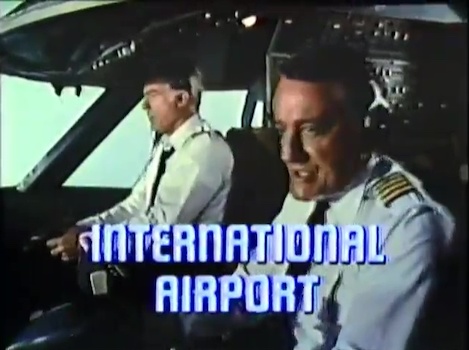
It’s not easy working at an international airport!

At least, that’s the message of this made-for-television film.  Produced by Aaron Spelling and obviously designed to be a pilot for a weekly television series, International Airport details one day in the life of airport manager David Montgomery (Gil Gerard).  Everyone respects and admires David, from the recently graduated flight attendants who can’t wait for their first day on the job to the hard-working members of the airport security team.  The only person who really has a problem with David is Harvey Jameson (Bill Bixby), the old school flight controller who throws a fit when he learns that a woman, Dana Fredricks (Connie Sellecca), has been assigned to work in the tower.  Harvey claims that women can’t handle the pressure of working the tower and not having a personal life.  He demands to know what Dana’s going to do during that “one week of the month when you’re not feeling well!”  Harvey’s a jerk but, fortunately, he has a nervous breakdown early on in the film and Dana gets to take over the tower.

Meanwhile, David is trying to figure out why an old friend of his, Carl Roberts (played by Retro Television mainstay Robert Reed, with his bad perm and his retired porn star mustache), is at the airport without his wife (Susan Blakely).  David takes it upon himself to save Carl’s troubled marriage because it’s all in a day’s work for the world’s greatest airport manager!

While Carl is dealing with his mid-life crisis, someone else is sending threatening letters to the airport.  One of the letters declares that there’s a bomb on a flight that’s heading for Honolulu.  David and Dana must decide whether to allow Captain Powell (Robert Vaughn) to fly to Hawaii or to order him to return to California.  And Captain Powell must figure out which one of his passengers is the bomber.  Is it Martin Harris (George Grizzard), the sweaty alcoholic who want shut up about losing all of his friends in the war?  Or is it the woman sitting next to Martin Harris, the cool and aloof Elaine Corey (Vera Miles)?

Of course, there are other passengers on the plane.  Rudy (George Kennedy) is a veteran airline mechanic.  Rudy is hoping that he can talk his wife (Susan Oliver) into adopting Pepe (Danny Ponce), an orphan who secretly lives at the airport.  Unfortunately, when Pepe hears that Rudy’s plane might have a bomb on it, he spends so much time praying that he doesn’t realize he’s been spotted by airport security.  Pepe manages to outrun the security forces but he ends up hiding out in a meat freezer and, when the door is slammed shut, it appears that Pepe may no longer be available for adoption.  Will someone hear Pepe praying in time to let him out?  Or, like Frankie Carbone, will he end up frozen stiff?

International Airport was an attempt to reboot the Airport films for television, with the opening credits even mentioning that the film was inspired by the Arthur Hailey novel that started it all.  As well, Gil Gerard, Susan Blakely, and George Kennedy were all veterans of the original Airport franchise.  George Kennedy may be called Rudy in International Airport but it’s easy to see that he’s still supposed to be dependable old Joe Patroni.  Unfortunately, despite the familiar faces in the cast, International Airport itself is a bit bland.  It’s a disaster film on a budget.  While the viewers gets all of the expected melodrama, they don’t get anything as entertaining or amusing as Karen Black flying the plane in Airport 1975 or the scene in Concorde: Airport ’79 where George Kennedy leaned out the cockpit window (while in flight) and fired a gun at an enemy aircraft.  Probably the only thing that was really amusing (either intentionally or unintentionally) about International Airport was the character of Pepe and that was just because young Danny Ponce gave perhaps the worst performance in the history of television.

International Airport did not lead to a television series.  Watching it today, it’s a bit on the dull side but, at the same time, it is kind of nice to see what an airport was like in the days before the TSA.  If nothing else, it’s a time capsule that serves as a record of the days when the world was a bit more innocent.
Cleaning Out The DVR: Fury To Freedom (dir by Erik Jacobson)


It’s that time of year again!  It’s the time when entertainment hoarders like me take a look at our DVR and discover, to our horror, that we’ve only got about 3 hours of space left.  When that happens, it means that it’s time clean out the DVR and hopefully make some space before 2021 brings a whole new collection of shows and movies to be recorded.

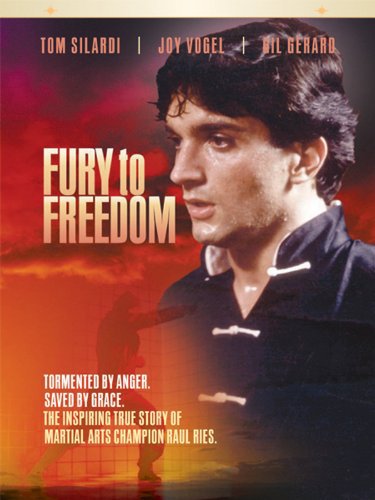
Yesterday, I got a start on cleaning out my DVR by watching the 1985 film, Fury to Freedom.  I originally recorded it back in August and I’m going to guess that I did so because I liked the title.  Fury by itself is good.  Freedom is even better.  Put them together and you’ve got something I’m definitely going to record!

As for the movie itself, it was obviously a low-budget and independently made movie.  I’m guessing that it was specifically made to be shown to church groups.  It’s one of those films that tells the true story of a sinner who becomes an evangelist.  It ends with preaching but, before you reach that point, you’ve got about an hour or so of sinning.  It’s the old Cecil B. DeMille method.

The film tells the story of Raul Ries (Tom Silardi), a teenager who grew up in an abusive home and constantly finds himself in a conflict over whether or not to do the right thing.  His girlfriend, Sharon (Joy Vogel), always pushes him to follow the right path.  All of Raul’s friends are always pushing him to follow the wrong path.  As for Raul, he just wants to earn a black belt in karate but the local sensei doesn’t think he’s ready to learn.

After Raul loses his tempter at a party and slashes someone’s face (agck!), he ends up joining the Marines and getting trained to fight in Vietnam.  (I was pretty sure that, during the basic training scene, I spotted a young Jon Favreau as one of the Marines but, according to the imdb, it was someone else.)  Anyway, Raul actually does pretty well in basic training but then he fakes a breakdown to get out of serving in Vietnam.  He returns home, knocks up his girlfriend, gets stuck in a go-nowhere job at a grocery store, and eventually he somehow opens up his own dojo.

Anyway, after about an hour or so of Raul being a jerk and hitting Sharon, he reaches the point where he’s contemplating committing a murder/suicide but then he sees a preacher on TV and, the next thing you know, he’s going to his old high school and preaching.  “Yo!  Listen up!” he yells at the students.

It was kind of a predictable film but it was also sincere in its goals and nowhere near as preachy as you might expect given the subject matter.  Tom Silardi and Joy Vogel both gave good performances as Raul and Joy and the film deserve some credit for resisting the urge to use Buffalo Springfield’s For What It’s Worth as an easy way to establish that it was taking place in the 60s.  Probably the most interesting thing about this film is that it was obviously made in the wake of the success of The Karate Kid because it spends as much time on the karate as it does on the religion.

Fury to Freedom was an effective, low-budget, and very sincere film.  And now, it’s off of my DVR.

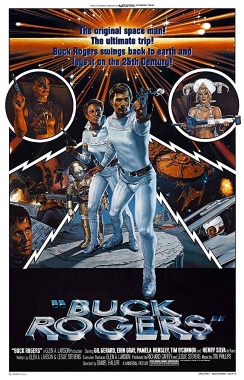
Buck Rogers in the 25th Century (1979, directed by Daniel Haller)


In the year 1987, NASA launches it’s final manned mission.  Captain Buck Rogers (Gil Gerard) is sent into space but, while he’s orbiting the Earth, he and his spacecraft fall victim to a strange space anomaly which leaves him in suspended animation.  On Earth, Buck Rogers is believed to be lost.  500 years pass.  Buck’s ship continues to orbit the Earth while, down below, mankind nearly destroys itself in a nuclear war.  Eventually, Earth is reduced to radioactive rubble and what remains of human civilization lives in the city of New Chicago.  (Old Chicago, meanwhile, has been taken over by mutants.)

Finally, in the 25th century, Buck and his ship are discovered by Draconia, a spaceship that belongs to the intergalactic Draconian Empire.  Buck is brought out of suspended animation and meets the beautiful Draconian Princess Ardala (Pamela Hensely) and her second-in-command, an Earthling named Kane (Henry Silva).  Ardala would obviously like to make Buck her prince but, after being in suspended animation for 500 years, Buck just wants to return to Earth.  The Draconians allow Buck to return home.

Upon landing in New Chicago, Buck discovers that the world is much different now.  Everyone wears skintight uniforms and a little robot named Twiki (voice by Mel Blanc) is the only person willing to be Buck’s friend.  Commander Wilma Deering (Erin Gray) is in charge of defending what’s left of human civilization and she’s immediately suspicious of Buck and his story.  When it turns out that Ardala and Kane implanted Buck with a tracking device, Deering want to execute him.  Can Buck prove his loyalty and also thwart Ardala and Kane’s plot to conquer humanity?

Buck Rogers In The 25th Century was originally a pilot for a Glen Larson-produced televisions series.  (Larson was also responsible for the original Battlestar Galactica, another sci-fi show whose pilot was given a theatrical release.)  Hoping to appeal to the same audiences who made Star Wars a monster hit, Universal spent a little extra money to upgrade the special effects, added a few suggestive scenes to prevent the pilot from getting the dreaded G-rating, and then released it in theaters a few months before the TV show premiered.  That was a good idea because the movie did become a minor hit and the TV series went on to run for two seasons.

As the movie itself, it never feels like anything more than an extended episode of a television series.  Gil Gerard is bland in the lead role and most serious sci-fi fans will probably lose interest as soon as the child-friendly robot shows up.  Buck Rogers may have been made to capitalize on the success of Star Wars but it doesn’t have any of the attention to detail or the careful world-building that went into George Lucas’s original space opera.  On the plus side, though, the Dads who took their kids to matinee showings of this film were probably happy to see Erin Gray and Pamela Hensley prominently featured in the film and Henry Silva is a great villain as always.  As with a lot of the sci-fi films that were released in the immediate wake of Star Wars, Buck Rogers In The 25th Century does have a definite camp appeal.  It’s bad but some people will enjoy it on a nostalgic level.

Probably the most memorable thing about Buck Rogers In the 25th Century was its James Bond-inspired title sequence.  Here it is, in all of its glory:

https://www.youtube.com/watch?v=BINijYepahA