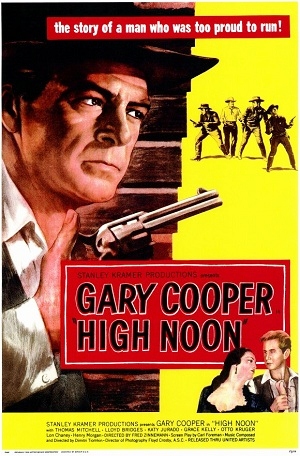
In honor of Fred Zinnemann’s birthday, today’s scene of the day comes from his best film, 1952’s HighNoon. HighNoon tells the story of the honest and forthright Marshal Will Kane (Gary Cooper), who finds himself abandoned by the town that he’s faithfully served when it is rumored that a fearsome gunman will be arriving at noon to seek revenge on the man who previously sent him to prison.
Below, we have the final scene of High Noon, in which the cowardly townspeople finally come to support Marshal Kane. Kane, disgusted by their actions, can only throw away his star and leave town. Even without dialogue, Cooper lets you know exactly what is going through Kane’s mind. It’s a great scene from a great film featuring a great actor and directed by a great filmmaker.
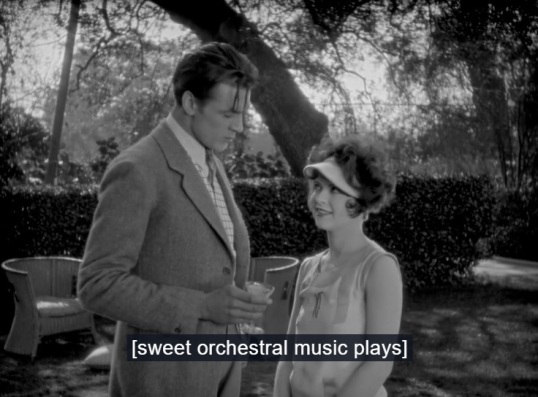
The 1927 silent melodrama, Children of Divorce, opens at a private Catholic boarding school in Paris. It’s a place for rich and idle parents to dump off their children while they enjoy the City of Lights. Jean Waddington is dropped off at the school and struggles to make friends until she meets the vivacious Kitty Flanders. Jean and Kitty bond because they are both children of divorced parents. (Kitty says that she has only one mother but that’s she’s had four different fathers.) Jean meets Ted Larrabee, who is Kitty’s neighbor back in New York and who has also been dumped off at the school by his divorced parents.
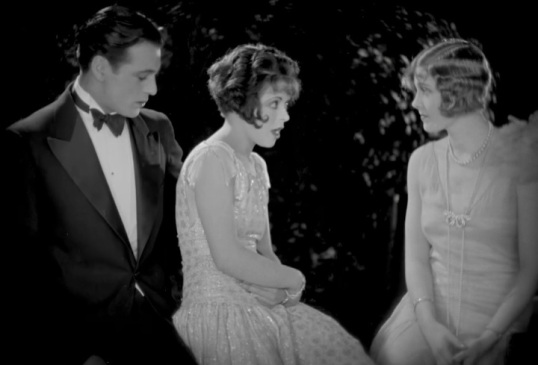
Flash forward a few years and Kitty (Clara Bow), Jean (Esther Ralston), and Ted (Gary Cooper) are all young adults. Kitty is in love with Prince Vico (Einar Hansen) but the Prince’s father refuses to allow Vico to consider marrying her because Kitty’s mother (played by future gossip columnist and Queen of Hollywood, Hedda Hopper) is not rich. Believing that the only way that she’ll ever be happy is if she marries a rich man, Kitty set her eyes on Ted. Ted, however, wants to marry Jean but Jean says that she’ll only consider marrying Ted if he gets a real job and proves that he can do something more than just live off of his father’s money.
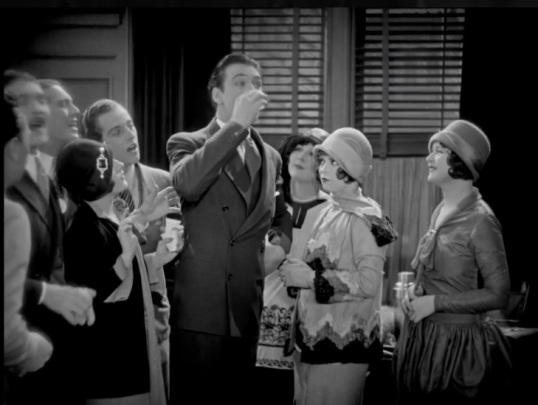
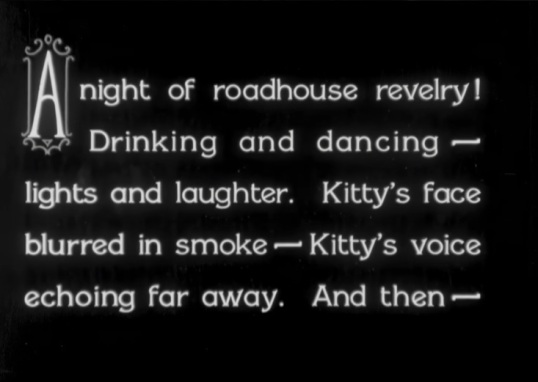
Ted starts his own architectural firm and proves that he’s capable of hard work. However, when Kitty convinces Ted to celebrate his success by going out drinking with her….
Ted wakes up with a hangover. He soon discovers that he’s also woken up with a wife! While he was drunk, he married Kitty! Ted is stunned. Jean is heart-broken. She begs Kitty to grant Ted a divorce so that she can marry him but Kitty reveals that she has no intention of ever getting divorced. As she explains it, Kitty has been raised to marry a rich man, Ted is rich, and now, she’s married to him. Why would Kitty want to give that up? When Ted says that he’ll file for the divorce, Jean tells him that she can’t marry a man who would leave his wife and then she leaves for Europe….
Of course, that’s not the end of the story. This wouldn’t be a silent melodrama if it ended that simply. Instead, years later, Kitty does come to see the error of her actions and she also discovers that her true love remains Prince Vico. But, by that point, it’s too late and, of course, Jean still refuses to marry a divorced man. Kitty seeks redemption in the most extreme was possible….
Clocking in at a brisk 70 minutes, Children of Divorce is a wonderful showcase for Clara Bow, who was born 118 years ago on this date. Gary Cooper is properly handsome and sincere as Ted and Esther Ralston is lovely if a bit boring as Jean but the film ultimately belongs to Clara Bow, who brings so much vitality and energy to her role that it doesn’t matter that Kitty tricks Ted into marrying her and destroys all of Jean’s romantic dreams. Most viewers will instantly sympathize with Kitty and, to be honest, it’s kind of hard not to be on her side. Kitty has fun. Kitty refuses to let society stand in her way. While Jean makes a list of demands about what she needs Ted to do before she can even consider marrying him, Kitty encourages Ted to loosen up and enjoy his success. Kitty is the one who I think most viewers, at the very least, would want to be friends with. While Jean tries to run away from her problems, Kitty is determined to live her best life. Indeed, Kitty’s ultimate redemption is all the more effective because, once again, Kitty is the one who is making things happen while Ted and Jean just passively accept the conventions of society.
Clara Bow was one of the greatest of the silent film stars and Children of Divorce shows why. As opposed to many of the other actresses of the day, Clara Bow was convincingly cast as women who were willing to do whatever needed to be done to find happiness. Sadly, Clara Bow’s later years were not happy ones. She deserved better than the world gave her. Watching her in films like this one and It feel like looking out a window into the past, a time when it seemed like anything was possible.
119 years ago today, Gary Cooper was born in Helena, Montana.
Cooper was an actor who, for many viewers, represented the American ideal. He played characters who were strong and modest and who refused to compromise their principles. Though Gary Cooper appeared in many films over the course of his career, he is probably destined to be forever associated with High Noon. In this classic western, Cooper plays Will Kane, the marshal who finds himself abandoned by almost everyone when a group of killers come to town looking to kill him. The film is often seen as being a commentary on the 1950s Red Scare. Cooper, who was a committed anti-Communist and about as conservative as anyone in Hollywood, stood up for the film’s screenwriter, the blacklisted Carl Foreman and threatened to walk off the picture when it appeared that Foreman’s writing credit might be removed. That was what a huge part of Cooper’s appeal. He did the right thing, even if it meant standing up for someone with whom he didn’t agree. There aren’t many Gary Coopers left today, are there?
Below, we have the final scene of High Noon, in which the cowardly townspeople finally come to support Marshal Kane. Kane, disgusted by their actions, can only throw away his star and leave town. Even without dialogue, Cooper lets you know exactly what is going through Kane’s mind. It’s a great scene from a great film featuring a great actor.
The 1935 adventure film, The Lives of a Bengal Lancer, is a film that probably could not be made today.
Of course, that’s true of a lot of films from the 30s. In some cases, that’s a good thing and, in some cases, that’s a bad thing. The Lives of Bengal Lancer is an entertainingly old-fashioned adventure story but it’s also a shameless celebration of the British Empire. The fact that it was made in Los Angeles and featured all-American Gary Cooper in the lead role doesn’t diminish the fact that it’s pretty much a celebration of British colonialism.
Gary Cooper plays Lt. Alan MacGregor, a Scottish-Canadian who serves in British Calvary. He’s a member of the Lancers and is currently serving in India, which, at the time that this movie was set (and made), was still under British control. When the film begins, MacGregor is greeting the new arrivals. Among those arrivals are Lt. John Fosythe (Franchot Tone) and Lt. Donald Stone (Richard Cromwell). Lt. Forsythe is an experienced officer who has been sent to India as a replacement for another officer who managed to get himself killed while out on a patrol. Meanwhile, Lt. Donald Stone is a newly commissioned officer who is desperate to win the approval of his father (and McGregor’s superior), Col. Tom Stone (Guy Standing). Unfortunately, Donald quickly discovers that winning the approval of his father isn’t going to be easy. Col. Stone, after all, has a lot to deal with.
For instance, there’s Mohammed Khan (Douglas Dumbrille). Kahn is a local prince and he boasts that he has got an Oxford education. He pretends to be an ally of the British but instead, he is plotting a revolution. The first step in that revolution is to intercept a convoy of British weapons but how can Kahn discover the convoy’s route? Maybe he could kidnap a lancer who is close to the unit’s commanding officer? With the help of a Russian femme fatale named Tania (Kathleen Burke), Khan is able to capture Donald. When MacGregor and Forsythe defy the colonel’s orders and attempt to rescue Donald on their own, they end up getting captured as well!
“We have ways to make men talk!” Khan declares and soon, the three men are having their fingernails ripped out and the skin underneath burned with fiery bamboo. It’s a shocking act of sadism, one that caught me by surprise in 2020. I can only imagine how audiences in 1935 reacted to Gary Cooper and Franchot Tone being so graphically tortured on the big screen. Though the men swear that they will not reveal the location of the convoy, how much torture can they take before they break?
As I said at the start of this review, The Lives of a Bengal Lancer is an old-fashioned film and, with its depiction of savage rebels and heroic colonizers, it would probably cause a riot if it were released today. However, if you can set aside the whole pro-imperialist theme of the film, this is a fairly entertaining film. It gets off to a slow start and, to modern eyes, some of the acting is bit creaky but Gary Cooper is, not surprisingly, well-cast as the film’s hero and he’s ably supported by Tone and Cromwell. Douglas Dumbrille and Kathleen Burke are entertainingly campy villains and the film’s final battle is well-done.
A box office success, The Lives of a Bengal Lancer was nominated for Best Picture but it lost to an even bigger hit (and a film that was a bit more critical of the British Empire), Mutiny on the Bounty.
I don’t know if I’ve ever seen Gary Cooper look as miserable in any film as he did in the 1949 film, The Fountainhead.
In The Fountainhead, Gary Cooper plays Howard Roark. Roark is an architect who we are repeatedly told is brilliant. However, he’s always has to go his own way, even if it means damaging his career. At the start of the film, we watch a montage of Howard Roark losing one opportunity after another. He gets kicked out of school. He gets kicked out of the top design firms. Howard Roark has his own vision and he’s not going to compromise. Roark’s a modernist, who creates sleek, powerful buildings that exist in defiance of the drab, collectivist architecture that surrounds them.
Howard Roark’s refusal to even consider compromising his vision threatens the rich and the powerful. A socialist architecture critic with the unfortunate name of Ellsworth Toohey (Robert Douglas) leads a crusade against Roark. And yet, even with the world against him, Roark’s obvious talent cannot be denied. Dominique Francon (Patricia Neal) finds herself enthralled by the sight of him working in a quarry. Fellow architect Peter Keating (Kent Smith) begs Howard to help him design a building. Newspaper publisher Gail Wynard (Raymond Massey) goes from criticizing Howard to worshipping him.
Have I mentioned that Howard Roark doesn’t believe in compromise? If you have any doubts about this, they’ll be erased about halfway through the movie. That’s when Roark responds to a company altering one of his designs by blowing up a housing project. Roark is arrested and his subsequent trial soon turns into a debate between two opposite philosophies: individualism vs. collectivism.
So, let’s just start with the obvious. Gary Cooper is all wrong for the role of Howard Roark. As envisioned by Ayn Rand (who wrote both the screenplay and the novel upon which it was based), Roark was meant to be the ideal man, a creative individualist who has no doubt about his vision and his abilities. Cooper, with his down-to-Earth and rather modest screen persona, often seems to be confused as to how to play such a dynamic (some might say arrogant) character. When Roark is meant to come across as being uncompromising, Cooper comes across as being mildly annoyed. When Roark explains why his designs must be followed exactly, Cooper seems to be as confused as the people with whom Roark is speaking. It doesn’t help that the 47 year-old Cooper seemed a bit too old to be playing an “up-and-coming” architect. In the book, Roark was in his 20s and certainly no older than his early 30s. Cooper looks like he should be relaxing in a Florida condo.
Who, among those available in 1949, could have been convincing in the role of Howard Roark? King Vidor wanted Humphrey Bogart for the role but if Cooper seemed to old for the part, one can only imagine what it would have been like with Bogart instead. Henry Fonda probably could have played the role. For that matter, William Holden would have been an interesting pick. Montgomery Clift and John Garfield would have been intriguing, though Garfield’s politics probably wouldn’t have made Ayn Rand happy. If Warner Bros. had been willing to wait for just a few years, they could have cast a young Marlon Brando or perhaps they could have let Douglas Sirk make the movie with Rock Hudson and Lana Turner. (Or, if you really wanted to achieve peak camp, they could have let Delmer Daves do it with Troy Donahue and Sandra Dee.)
If you can overlook the miscasting of Gary Cooper, The Fountainhead‘s an entertaining film. King Vidor directs the film as if it’s a fever dream. The film’s dialogue may be philosophical but the visuals are all about lust, with Pat Neal hungrily watching as a shirtless Gary Cooper breaks up rocks in the quarry and Vidor filling the film with almost fetishistic shots of phallic Howard Roark designs reaching high into the sky. If Cooper seems confused, Neal seems to be instinctively understand that there is no place for underplaying in the world of The Fountainhead. The same also holds true of Robert Douglas, who is a wonderfully hissable villain as the smug Ellsworth Toohey. Interestingly, the film ends with a suicide whereas the novel ended with a divorce because, under the production code, suicide was apparently preferable to divorce. I guess that’s 1949, for you.
Because America is currently having a socialist moment, there’s a tendency among critics to be dismissive of Ayn Rand and her worship of the individual above all else. Rand’s novels are often dismissed as just being psychobabble, despite the fact that, in some ways, they often seem to be borderline prophetic. (Barack Obama’s infamous “You didn’t build that!” speech from 2012 could have just as easily been uttered by Ellsworth Toohey or one of the many bureaucrats who pop up in Atlas Shrugged.) Here’s the thing, though — as critical as one can be of Rand’s philosophy, there’s still something undeniably appealing about someone who will not compromise their vision to the whims of the establishment. It’s goes beyond politics and it gets to heart of human nature. We like the people who know they’re talented and aren’t afraid to proclaim it. (Modesty, whether false or sincere, is a huge turn off.) We like the people who take control of situations. We like the people who are willing to say, “If you don’t do it my way, I’m leaving.” In a way, we’re all like Dominique Francon, running our hands over architectural models while trying to resist the temptation to compromise and accept something less than what we desire. We may not want to admit it but we like the Howard Roarks of the world.
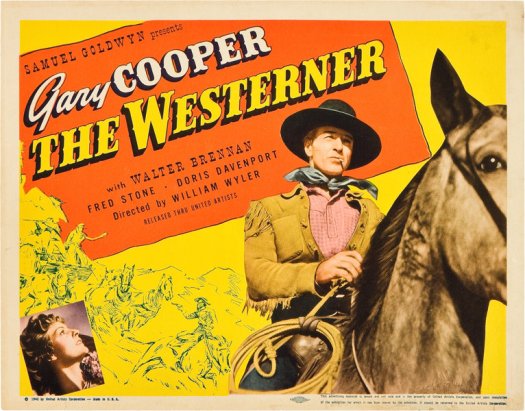
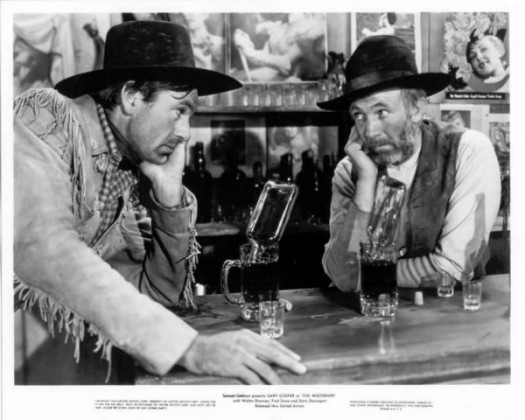
It’s hard to believe that, except for two films in which he cameoed, I haven’t covered any movies starring my namesake, Gary Cooper . Nor have I written anything about any of major Hollywood director William Wyler’s works. So let’s kill two birds with one stone and take a look at 1940’s THE WESTERNER, one of the best Westerns ever. It’s a highly fictionalized account of the life and times of Judge Roy Bean (1825-1903), played by Walter Brennan in his third and final Oscar-winning role, with Cooper as a drifter at odds with “The Law West of the Pecos”.
That “law” is Bean, who sides with the open range cattlemen against the homesteaders who’ve moved into the area. Into the town of Vinagaroon rides Coop as Cole Harden on his way to California. Unfortunately for Cole, he rides in on a horse stolen from one of Bean’s cronies, and…
(I am currently in the process of cleaning out my DVR! I recorded the 1952 best picture nominee, High Noon, off of Retroplex on January 28th. This review is scheduled to posted at 12 noon, central time. Clever, no?)
High Noon is a testament to the power of simplicity.
It’s a famous film, one that continues to be influential and which is still studied today. It’s known for being one of the greatest westerns ever made but it’s also a powerful political allegory. Even people who haven’t seen the film know that High Noon is the moment of the day when someone shows their true character. Just as everyone knows the plot of Star Wars, regardless of whether they’ve actually watched the film, everyone knows that High Noon is about a town marshal who, after the entire town deserts him, is forced to face down a gang of gunmen on his own.
And yet, it really is a surprisingly simple movie. It’s the quintessential western, filmed in black-and-white and taking place in the type of frontier town that you would expect to find hiding on the back lot of an old movie studio. Though wonderfully brought to life by a talented cast, the majority of the characters are familiar western archetypes.
There’s the aging town marshal, a simple man of integrity. Gary Cooper won an Oscar for playing the role of Will Kane. When we first see Will, he’s getting married in a frontier courtroom. All of the town leaders have come to his wedding and all of them wish him luck in the future. Will is retiring and everyone agrees that the town would never have survived and prospered if not for Will Kane. After all, Will is the one who captured the notorious outlaw, Frank Miller. When the news comes that Miller has been pardoned and will be arriving back in town on the noon train, everyone tells Will that he should just leave town and go on his honeymoon. However, the new marshal will not be arriving for another day and Will is not willing to abandon the town. However, the town is more than willing to abandon him.
Will’s new wife is Amy Fowler (Grace Kelly). Amy is a Quaker and a pacifist. Amy begs Kane to leave town but Kane says that he’s never run from a fight. Amy tells him that she’ll be leaving on that noon train, with or without him. Helen Ramirez (Katy Jurado) is the former girlfriend of both Kane and Miller. She is one of the few people in town to call out everyone else’s cowardice but she is still planning to leave before Miller arrives. As she explains it to Amy, she would never abandon Kane if he were her man but he’s not her man anymore.
The townspeople, who first appear to be so friendly and honest, soon prove themselves to be cowards. None of them are willing to stand behind Will. The Mayor (Thomas Mitchell) publicly castigates Will for staying in town and putting everyone else in danger. Deputy Harvey Pell (Lloyd Bridges) says that he’ll only help Will if Will recommends him as his replacement. The town minister (Morgan Farley) is more concerned with why Will was married by the justice of the peace, instead of in the church. The town judge (Otto Kruger) leaves early, saying he can be a judge in some other town. One of the few people to show Will any sympathy is the former marshal (Lon Chaney, Jr.) but, unfortunately, he is too old and crippled by arthritis to provide any help.
Though it all, Frank’s gang sits at the train station and waits for Frank to arrive. One gang member is played be Lee Van Cleef. He looks really mean!
With a brisk running time of 84 minutes, High Noon unfolds in real time. Throughout the film, as Kane grows increasingly desperate in his attempt to find anyone brave enough to stand with him, we see clocks in the background of nearly every scene. We hear the ticking. We know that both noon and Frank Miller are getting closer and closer. We know that, soon, Will will have no other option but to stand on the street by himself and defend a town that doesn’t deserve him.
It’s simple but it’s undeniably powerful.
It’s been said that High Noon was meant to be a metaphor for the blacklist. Frank Miller and his gang were the fascists that, having been defeated in World War II, were now coming back to power. Will Kane was a stand-in for all the men and women of integrity who found themselves blacklisted. The townspeople represented the studio execs who refused to challenge the blacklist. That’s the theory and it’s probably true. But, honestly, the political metaphor of High Noon works because it can be applied to any situation. Will Kane is anyone who has ever had to face down the forces of totalitarianism. He is anyone who has ever had the courage to take a lonely stand while everyone else cowered in the corner.
It’s a powerful metaphor and it’s also a genuinely entertaining movie. The gunfight is thrilling. The romance between Will and Amy feels real. Even the town feels like an actual place, one that has its own history and culture. It’s a simple film but it’s a great film.
Like a lot of great films, High Noon was nominated for best picture. And, like a lot of great films, it lost. In High Noon‘s case, it lost to a film that is almost its exact opposite, The Greatest Show on Earth. However, Gary Cooper did win an Oscar for his unforgettable performance as Will Kane.
I think we tend to take classic films for granted. Don’t do that with High Noon. See it the next chance you get.
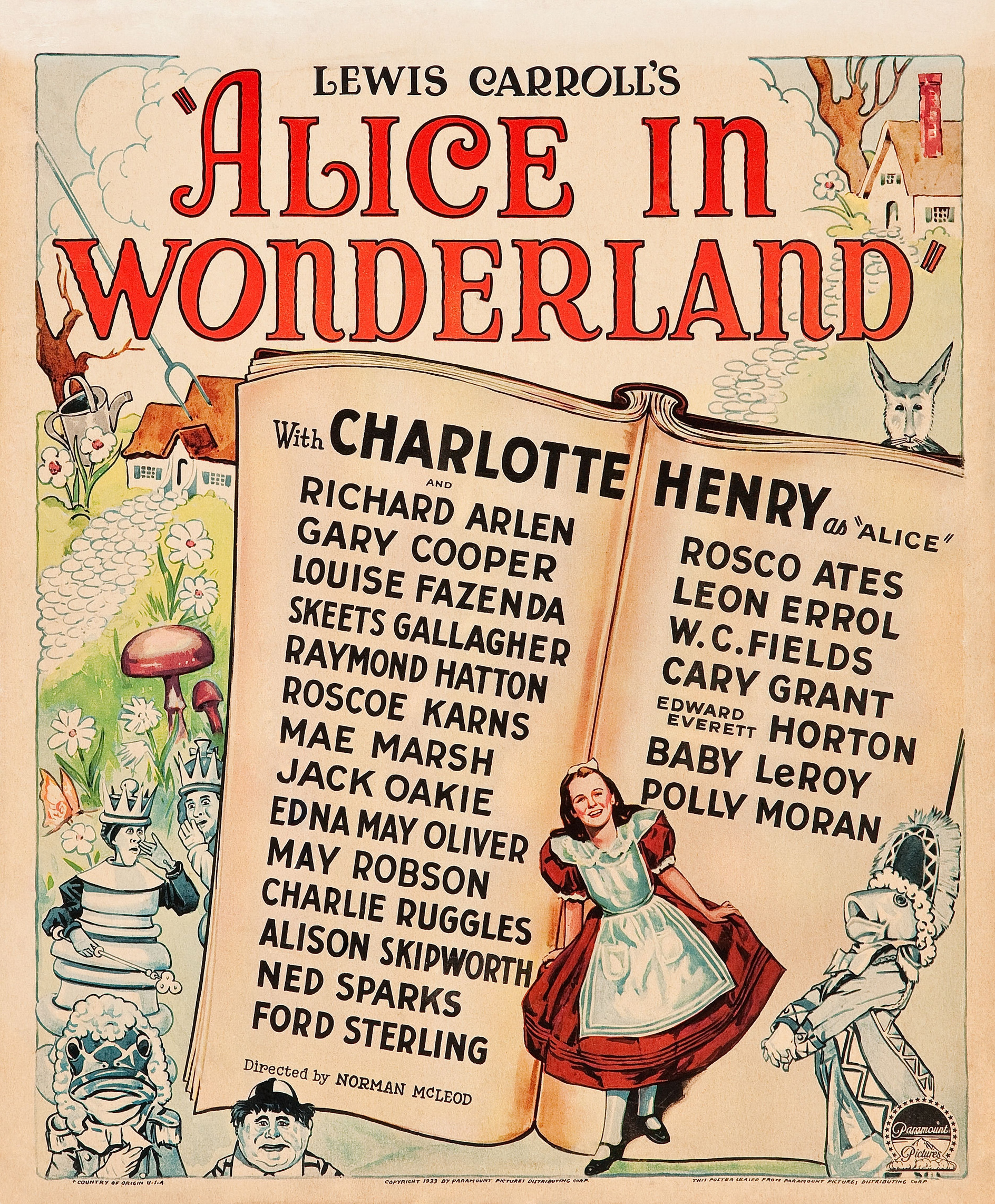
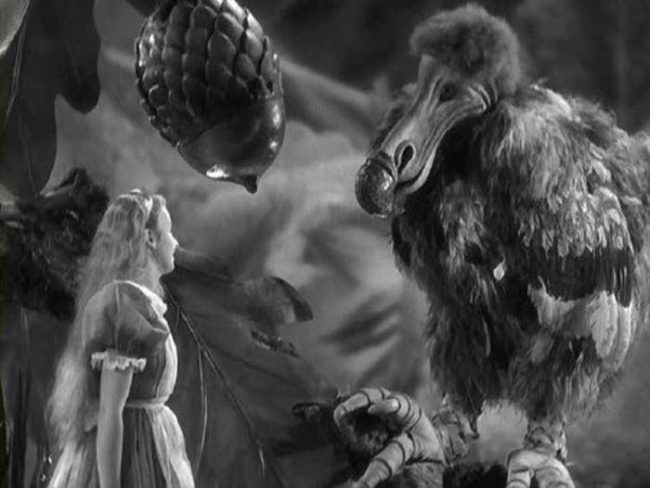
Lewis Carroll’s 1865 children’s classic ALICE IN WONDERLAND was turned into an all-star spectacular by Paramount in 1933. But the stars were mostly unrecognizable under heavy makeup and costumes, turning audiences off and causing the film to bomb at the box office. Seen today, the 1933 ALICE is a trippy visual delight for early movie buffs, thanks in large part to the art direction of William Cameron Menzies.
Menzies’ designs are truly out there, giving ALICE the surrealistic quality of the books themselves. He actually storyboarded his ideas right into the physical script, earning a co-writer credit along with Joseph L. Mankiewicz . Menzies was the cinematic wizard whose art direction brought the magical 1924 THE THIEF OF BAGDAD to life. He was co-director and special effects designer for 1932’s CHANDU THE MAGICIAN, and the title of Production Designer was invented for him on the classic GONE WITH THE WIND. Menzies also directed a few films; especially of…
Reportedly, Ernest Hemingway hated the 1932 film adaptation of his great novel, A Farewell To Arms. The novel, of course, tells the story of ambulance driver Frederic Henry (played in the film by Gary Cooper), his service in World War I, and his doomed love affair with an English nurse named Catherine (played by the very American Helen Hayes). The novel was acclaimed for being tough and unsentimental. The film is the exact opposite, revealing itself to be more typical of the work of director Frank Borzage than Ernest Hemingway.
How romantic was Borzage’s adaptation of A Farewell to Arms? It was so romantic that it even changed the novel’s famous ending. The novel ended with Catherine dying and Frederic Henry walking away, alone and in the rain. The film, however, ended with Catherine miraculously recovering. Never mind, of course, that having Catherine survive pretty much defeated the entire purpose of the story. What was important was to give American audiences a happy ending!
However, European audiences got a more downbeat ending. In the European version, Catherine does die. After she dies, Frederic picks up her body and looks up into heaven, which is certainly far more dramatic (and, in its way, sentimentally spiritual) than anything to be found in Hemingway’s novel. If, like me, you see A Farewell To Arms on TCM, you’ll see the European ending.
So, yes, I can understand why Hemingway would have hated this film. But I have to admit that I rather enjoyed it. The film adaptation makes for terrible Hemingway but it’s great Borzage. Borzage specialized in making grand, lyrical, and sweeping romantic melodramas and that’s what his version of A Farewell To Arms truly is. Helen Hayes may not be convincingly English and Gary Cooper may be a bit overly earnest for a Hemingway hero but they both look good together and they have great chemistry. (Plus, Adolphe Menjou gives a good supporting performance as Frederic’s best friend.) As a director, Borzage keeps the story moving at a steady pace and plays up the romance in every single scene. There’s a great sequence that’s filmed entirely from the wounded Frederic’s point-of-view as he’s brought into a hospital and looked over by a series of officious nurses. We see everything through Frederic’s eyes until Catherine finally enters the room and kisses him. Only then do we see Frederic and Catherine together, leaving us with no doubt that these two belong together. A Farewell To Arms may not be a great literary adaptation but it is a great cinematic romance.
A Farewell To Arms was nominated for best picture but it won to a largely forgotten film called Cavalcade.
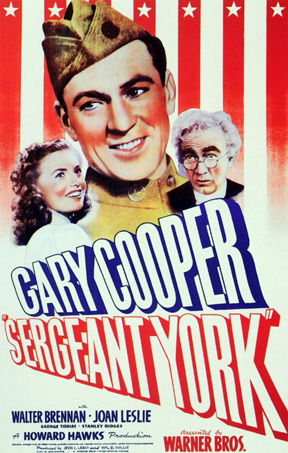
The 1941 film Sergeant York was the American Sniper of its day. A biopic of Alvin York, one of the most decorated American soldiers of World War I, Sergeant York was not only a huge box office hit but it was a film that celebrated American patriotism in the type of unabashed fashion that you would never see in a film made today. Though Sergeant York went into production at a time when the United States was officially pursuing a policy of international neutrality, it was released shortly before the Japanese attacked Pearl Harbor and, whether intentionally or not, Sergeant York served as a strong recruiting tool. According to Wikipedia (and we all know that Wikipedia is never wrong), there were reports of young men going straight from the movie to the nearest military recruitment office.
Clocking in at nearly two and a half hours (and running at least 40 minutes too long), Sergeant York is two films in one. The second half of the film deals with the military career of Alvin York (Gary Cooper), a plain-spoken and honest Tennessee farmer who, because of his strong religious beliefs, unsuccessfully attempts to register as a conscientious objector. Forced into the Army, York is, at first, dismissed as a simple-minded hillbilly. (His fellow soldiers are amused to discover that York doesn’t know what a subway is.) However, to the shock of his commanding officers, he proves himself to be an expert marksman. As he explains it, being from the country means that he’s been shooting a rifle his entire life.
On the basis of his skills as a marksman, York is given a promotion but he still says that he refuses to kill. It’s not until his superior officer reminds him of the sacrifices that past Americans have made that York starts to reconsider his position. Then, a gust of wind opens York’s bible to a verse about giving unto Caesar what is Caesar’s and York realizes that he can go to war and, if need be, he can kill.
And it’s a good thing that he can! Because World War I is heating up and York may be the only guy around with the strength and confidence to single-handedly defeat and capture over 170 German soldiers.
The army section of Sergeant York is predictable but well-done. As you’d expect from a film directed by Howard Hawks, a lot of emphasis is put on how the soldiers work together. York is portrayed not as being super human but instead as just an honest man who is exceptionally good at his job. There’s nothing surprising about the second half of Sergeant York but Hawks keeps the action moving and Cooper gives a good performance.
To be honest, I preferred the first half of the film, which examined York’s life before he joined the Army. When we first meet Alvin York, he drinks too much, he fights too much, and he’s totally irresponsible. It’s not until he falls in love with Gracie Williams (Joan Leslie) that York starts to change his ways. The scenes of York in the backwoods of Tennessee had a lively feel to them and it was enjoyable to see Cooper play a somewhat disreputable character. Cooper seemed to be having fun playing a ne’er-do-well and, in the scenes before York finds God, his bad behavior was a lot of fun to watch.
Considering its success at the box office, it’s not surprising that Sergeant York was nominated for best picture of the year. While Gary Cooper won the Oscar for best actor, the award for Best Picture went to How Green Was My Valley.



 Through the Shattered Lens