The TSL Horror Grindhouse: The Last House On The Left (dir by Wes Craven)


The year is 1972 and the news is grim.  The fighting continues in Vietnam.  The protests continue at home.  Crime is rising.  The economy is struggling.  Groups like the Weathermen and the SLA are talking about taking the revolution to the streets.  In New York, the notorious murderers Krug Stillo (David Hess) and Fred “Weasel” Podowksi (Fred Lincoln) have broken out of prison and are one the run.  They are believed to be traveling with Krug’s drug-addicted son, Junior (Marc Sheffler), and a woman named Sadie (Jeramie Rain), who is said to be feral and bloodthirsty.

However, Mari Collingwood (Sandra Cassel) doesn’t care about any of that.  She’s just turned seventeen and she can’t wait to go to her first concert with her best friend, Phyllis (Lucy Grantham).  Mari is naive, optimistic, and comes from from a comfortably middle-class family.  Phyllis is a bit more worldly and tougher.  As she explains it, her family works in “iron and steel.”  “My mother irons, my father steals.”

While Mari’s parents (Richard Towers and Eleanor Shaw, though they were credited as Gaylord St. James and Cynthia Carr) bake a cake and prepare for Mari’s birthday party, Mari heads into the city with Phyllis.  Before they go to the concert, they want to buy some weed.  When they see Junior Stillo hanging out on a street corner, they assume he must be a dealer and they approach him.  Junior takes them to an apartment, where they are grabbed by Weasel and Krug.

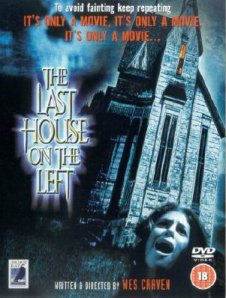
1972’s The Last House On The Left was advertised with the classic (and much-repeated line), “To avoid fainting, keep repeating, ‘It’s only a movie …. it’s only a movie…. it’s only a movie….”  That advice is easy to remember during the first part of the film because, up until Mari and Phyllis approach Junior, the movie is fairly cartoonish, with Richard Towers giving an incredibly bad performance as Mari’s father.  This film was Wes Craven’s debut as both a director and a writer.  By his own admission, Craven had no idea what teenage girls would talk about and, as such, he just wrote a lot of dialogue in which Mari talked about her breasts and Mari’s mother complaining that young women no longer wore bras.  (On the commentary that he recorded for the film’s DVD release, Craven succinctly explained, “I guess I was obsessed with breasts.”)  This part of the film plays out like a weird counter-culture comedy.  Even when we first meet Krug, he’s using his cigar to pop a little kid’s balloon.
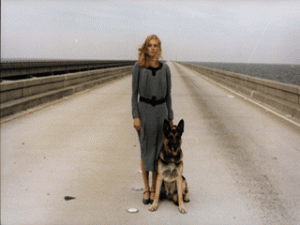
The Last House On The Left (1972, dir by Wes Craven, DP: Victor Hurwitz)

The tone of the film jarringly shifts the minute that Mari and Phyllis step into that apartment.  That’s largely due to the performances of David Hess and Fred Lincoln, who are both so convincing in their roles that it can be difficult to watch them.  In real life, Fred Lincoln was a stuntman (he’s in The French Connection) and an adult film actor.  David Hess, meanwhile, was a songwriter who was looking to break into acting.  (Hess’s songs — some of which are beautifully sad and some of which are disturbingly jaunty — are heard throughout the movie.)  Hess, in particular, is so frightening as Krug that he spent the rest of his career typecast as sociopathic murderers.  The middle part of the film alternates between disturbingly realistic scenes of Mari and Phyllis being tortured and humiliated and cartoonish scenes involving two incompetent cops (one whom is played by Martin Kove) and Mari’s parents.  Phyllis is murdered and dismembered in a graveyard and the gore effects remains disturbingly realistic even when seen today.  Mari, after being raped by Krug, recites a prayer, and then wades into a nearby lake.  Krug shoots her three times.  Afterwards, Krug, Weasel, and Sadie try to wash the blood off of themselves, the expression on their faces indicating that even they understand that they’ve gone too far.

Eventually, Krug, Weasel, Sadie, and Junior stop off at a nearby house, claiming to be salespeople who just had a little car trouble.  What they don’t realize is that the people who are generously welcoming them to spend the night are also the parents of Mari Collingwood….

Basing his script on Ingmar Bergman’s The Virgin Spring, Wes Craven has often said that The Last House On The Left was meant to be a commentary on the Vietnam War and the way that other films had glamourized violence.  That may or may not be true.  (Craven has also said that, at the time, he was so desperate to direct a movie that he would have filmed almost anything.)  What is true is that the violence in Last House On The Left is not easy to watch.  Once it starts, it’s relentless and, at no point, is the audience given an escape.  David Hess is so committed to playing a sadist that he never takes a moment to wink at the audience and say, “Hey, we’re just playacting here!”  Craven shot the film in a guerilla style and the shaky camera, the natural light, and the grainy images leave you feeling as if you’re watching some sicko’s home movies.  At the end of the movie, when Mari’s parents take the same joy in attacking her killers as Krug took in attacking their daughter, it’s hard not to feel that Mari has been forgotten.  Everyone has been consumed by the violence that has erupted around them.  Even though Richard Towers’s nearly blows the ending with a few hammy line readings, the film still leaves you exhausted.
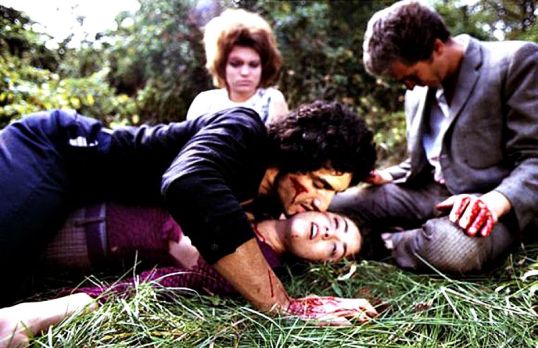
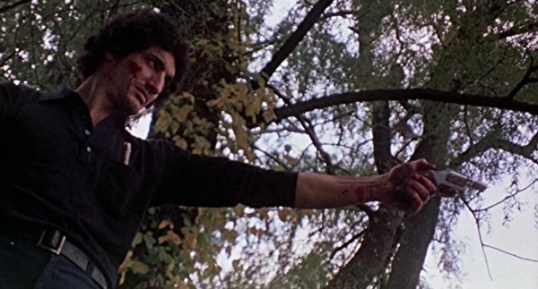
The Last House on the Left (1972, dir. by Wes Craven, DP: Victor Hurwitz)

Not surprisingly, The Last House On The Left was attacked by most reviewers when it was originally released.  The movie played the drive-in and grindhouse circuit for three years, with producer Sean Cunningham often taking out advertisements in local newspapers that read: “You will hate the people who perpetrate these outrages—and you should! But if a movie—and it is only a movie—can arouse you to such extreme emotion then the film director has succeeded … The movie makes a plea for an end to all the senseless violence and inhuman cruelty that has become so much a part of the times in which we live.”  The film’s advertisements also contained a warning that no one under 30 should see the movie.  Needless to say, The Last House On The Left was a huge hit, especially with viewers under 30.

(One of the great ironies of film criticism is that one of the few critics to defend Last House On The Left was Roger Ebert.  Ebert, who would later be one of the slasher genre’s biggest attackers, gave Last House On The Left a very complimentary review and praised it for its political subtext.)

Seen today, The Last House On The Left still packs a punch.  It’s a shocking and shamelessly sordid film, one that shows hints of the talent that would make Wes Craven one of the most important directors to work in the horror genre.  It’s flawed, it’s exploitive, it’s thoroughly unpleasant, and yet it’s also a film that sticks with you.  It’s powerful almost despite itself.  It’s not a movie that I would necessarily chose to watch on a regular basis but, at the same time, I can recognize it as being a historically important film.  For better or worse, much of modern American horror owes a debt to Wes Craven’s Last House On The Left.  Even today, when one is regularly bombarded with horrific images, Last House On The Left still has the power to shock.
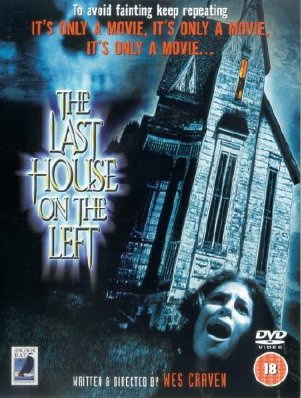
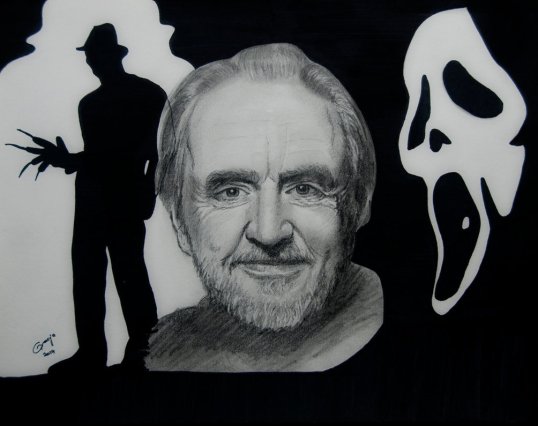
6 Trailers from Wes Craven


(Credit: Gracja Waniewska)

(Credit: Gracja Waniewska)

Last night, we were all stunned by the news that director We Craven had passed away after a battle with brain cancer.  If you want to see a great tribute to Craven, check out this 4 Shots From 4 Films that Arleigh posted on his birthday.  If you want to read a great reflection of Wes Craven and his career, check out this tribute from Ryan the Trashfilm Guru.

As for me, I’m going to share an anecdote and then, I’m going to pay tribute to Wes with a six trailer salute.

First, the anecdote.  I can still remember the first time that I ever watched Last House On The Left.  It was a film that I had mixed feelings about.  On the one hand, as a horror lover, I could not help but be impressed by the terrifying performances of Fred Lincoln and David Hess.  I could not help but by moved by the way Hess’s haunting song, Now You’re All Alone, was used in the film.  And, as low-budget and exploitive as the film may have been, I could see that Wes Craven was more interested in critiquing sadism than in celebrating it.

At the same time, it was still an unpleasant film for me, as a woman, to watch and the addition of some clumsy humor pretty much confirmed that Craven was still finding his way as a filmmaker.  It was one of those films that I knew, as a horror fan, I had to watch but I wouldn’t say that I enjoyed it.

However, that night, I did end up watching the movie twice.  I watched it a second time so that I could listen to the commentary from Wes Craven and producer Sean S. Cunningham.  And — oh my God — both of these guys were so funny and charming!  Craven, especially, seemed to enjoy pointing out scenes that didn’t quite work and the frequently awkward dialogue that he had written.  Craven and Cunningham both came across as being two of the nicest guys in the world and it was indeed an experience to hear them cheerfully talking while these absolutely vile images were flickering by onscreen.

And really, that taught me an important lesson and it’s one that I remember to this day.  Whenever I hear some judgmental know-it-all claiming that only a sick person could direct or write a horror movie, I remember that charming Wes Craven audio commentary.

And now, here are six trailers for six of Wes Craven’s films.

Wes Craven, R.I.P.

http://www.youtube.com/watch?v=95C1wxkwMeA

http://www.youtube.com/watch?v=jdb_HSvf2Zk

10 (Plus) Of My Favorite DVD Commentary Tracks


It seems like I’m always taking a chance when I listen to a DVD commentary track.  Occasionally, a commentary track will make a bad film good and a good film even better.  Far too often, however, listening to a bad or boring commentary track will so totally ruin the experience of watching one of my favorite movies that I’ll never be able to enjoy that movie in the same way again.  I’ve learned to almost always involve any commentary track that involves anyone credited as being an “executive producer.”  They always want to tell you every single detail of what they had to do to raise the money to make the film.  Seriously, executive producers suck. 

However, there are more than a few commentary tracks that I could listen to over and over again.  Listed below are a few of them.

10) Last House On The Left (The Original) — Apparently, there’s a DVD of this film that features a commentary track in which stars David Hess and Fred Lincoln nearly come to blows while debating whether or not this movie should have been made.  The DVD I own doesn’t feature that commentary but it does feature a track featuring writer/director Wes Craven and producer Sean S. Cunningham.  The thing that I love about their commentary is that they both just come across as such nice, kinda nerdy guys.  You look at the disturbing images onscreen and then you hear Cunningham saying, “We shot this scene in my mom’s backyard.  There’s her swimming pool…”  Both Craven and Cunningham are remarkably honest about the film’s shortcomings (at one point, Craven listens to some of his more awkward dialogue and then says, “Apparently, I was obsessed with breasts…”) while, at the same time, putting the film’s controversy into the proper historical context.

9) Burnt Offerings — When Burnt Offerings, which is an occasionally interesting haunted house movie from 1976, was released on DVD, it came with a commentary track featuring director Dan Curtis, star Karen Black, and the guy who wrote the movie.  This commentary track holds a strange fascination for me because it, literally, is so mind-numbingly bad that I’m not convinced that it wasn’t meant to be some sort of parody of a bad commentary track.   It’s the commentary track equivalent of a car crash.  Curtis dominates the track which is a problem because he comes across like the type of grouchy old man that Ed Asner voiced in Up before his house floated away.  The screenwriter, whose name I cannot bring myself to look up, bravely insists that there’s a lot of nuance to his painfully simple-minded script.  Karen Black, meanwhile, tries to keep things positive.  The high point of the commentary comes when Black points out that one actor playing a menacing chauffeur is giving a good performance (which he is, the performance is the best part of the movie).  She asks who the actor is.  Curtis snaps back that he doesn’t know and then gets testy when Black continues to praise the performance.  Finally, Curtis snaps that the actor’s just some guy they found at an audition.  Actually, the actor is a veteran character actor named Anthony James who has accumulated nearly 100 credits and had a prominent supporting role in two best picture winners (In the Heat of the Night and Unforgiven).

8 ) Cannibal Ferox — This is a good example of a really unwatchable movie that’s made watchable by an entertaining commentary track.  The track is actually made up of two different tracks, one with co-star Giovanni Lombardo Radice and one with director Umberto Lenzi.  Lenzi loves the film and, speaking in broken English, happily defends every frame of it and goes so far as to compare the movie to a John Ford western.  The wonderfully erudite Radice, on the other hand, hates the movie and spends his entire track alternatively apologizing for the movie and wondering why anyone would possibly want to watch it.  My favorite moment comes when Radice, watching the characters onscreen move closer and closer to their bloody doom, says, “They’re all quite stupid, aren’t they?”

7) Race With The Devil Race with the Devil is an obscure but enjoyable drive-in movie from the 70s.  The DVD commentary is provided by costar Lara Parker who, along with providing a lot of behind-the-scenes information, also gets memorably catty when talking about some of her costars.  And, let’s be honest, that’s what most of us want to hear during a DVD commentary.

6) Anything featuring Tim Lucas — Tim Lucas is the world’s foremost authority on one of the greatest directors ever, Mario Bava.  Anchor Bay wisely recruited Lucas to provide commentary for all the Bava films they’ve released on DVD and, even when it comes to some of Bava’s lesser films, Lucas is always informative and insightful.  Perhaps even more importantly, Lucas obviously enjoys watching these movies as much as the rest of us.  Treat yourself and order the Mario Bava Collection Volume 1 and Volume 2.

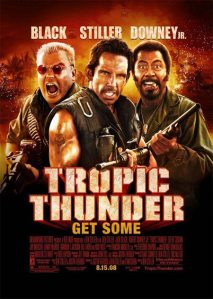
5) Tropic Thunder — The commentary track here is provided by the film’s co-stars, Jack Black, Ben Stiller, and Robert Downey, Jr.  What makes it great is that Downey provides his commentary in character as Sgt. Osiris and spends almost the entire track beating up on Jack Black.  This is a rare case of a great movie that has an even greater commentary track.

4) Strange Behavior — This wonderfully offbeat slasher film from 1981 is one of the best movies that nobody seems to have heard of.  For that reason alone, you need to get the DVD and watch it.  Now.  As an added bonus, the DVD comes with a lively commentary track featuring co-stars Dan Shor and Dey Young and the film’s screenwriter, Bill Condon (who is now the director that Rob Marshall wishes he could be).  Along with providing a lot of fascinating behind-the-scenes trivia, the three of them also discuss how Young ended up getting seduced by the film’s star (Michael Murphy, who was several decades older), how shocked Condon was that nobody on the set seemed to realize that he’s gay, and why American actors have so much trouble speaking in any accent other than their own.  Most memorable is Young remembering the experience of sitting in a theater, seeing herself getting beaten up onscreen, and then listening as the people sitting around her cheered.

3) Imaginationland — As anyone who has ever listened to their South Park commentaries knows, Matt Stone and Trey Parker usually only offer up about five minutes of commentary per episode before falling silent.  Fortunately, those five minutes are usually hilarious and insightful.  Not only are Parker and Stone remarkably candid when talking about the strengths and weaknesses of their work but they also obviously enjoy hanging out with each other.  With the DVD release of South Park’s Imaginationland trilogy, Matt and Trey attempted to record a “full” 90-minute commentary track.  For the record, they manage to talk for 60 minutes before losing interest and ending the commentary.  However, that track is the funniest, most insightful 60 minutes that one could hope for.

2) Donnie Darko — The original DVD release of Donnie Darko came with 2 wonderful commentary tracks.  The first one features Richard Kelley and Jack Gyllenhaal, talking about the very metaphysical issues that the film addresses.  Having listened to the track, I’m still convinced that Kelley pretty much just made up the film as he went along but its still fascinating to the hear everything that was going on his mind while he was making the film.  However, as good as that first track is, I absolutely love and adore the second one because it features literally the entire cast of the movie.  Seriously, everyone from Drew Barrymore to Jena Malone to Holmes Osborne to the guy who played Frank the Bunny is featured on this track.  They watch the film, everyone comments on random things, and it’s difficult to keep track of who is saying what.  And that’s part of the fun.  It’s like watching the film at a party full of people who are a lot more interesting, funny, and likable than your own actual friends.

1) The Beyond — This movie, one of the greatest ever made, had one of the best casts in the history of Italian horror and the commentary here features two key members of that cast — Catriona MacColl and the late (and wonderful) David Warbeck.  The commentary, which I believe was actually recorded for a laserdisc edition of the film (though, to be honest, I’ve never actually seen a “laserdisc” and I have my doubts as to whether or not they actually ever existed), was recorded in 1997, shortly after the death of director Lucio Fulci and at a time when Warbeck himself was dying from cancer.  (Warbeck would pass away two weeks after recording this commentary).  This makes this commentary especially poignant.  Warbeck was, in many ways, the human face of Italian exploitation, a talented actor who probably deserved to be a bigger star but who was never ashamed of the films he ended up making.  This commentary — in which MacColl and Warbeck quite cheerfully recall discuss making this underrated movie — is as much a tribute to Warbeck as it is to Fulci.  Highpoint: MacColl pointing out all the scenes in which Warbeck nearly made her break out laughing.  My personal favorite is the scene (which made it into the final film) where Warbeck attempts to load a gun by shoving bullets down the barrel.  The wonderful thing about this track is that Warbeck and MacColl enjoy watching it too.