Retro Television Review: Decoy 1.13 “My Brother’s Killer”


Welcome to Retro Television Reviews, a feature where we review some of our favorite and least favorite shows of the past!  On Thursdays, I will be reviewing Decoy, which aired in Syndication in 1957 and 1958.  The show can be viewed on Tubi!
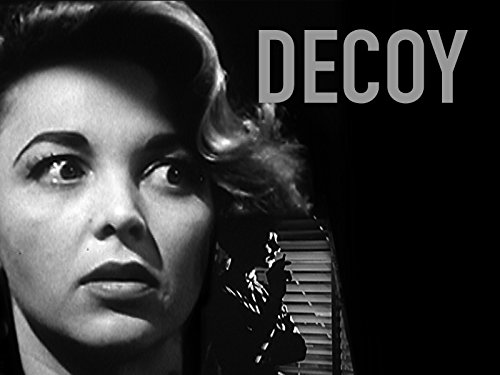
Episode 1.13 “My Brother’s Killer”

(Dir by Stuart Rosenberg, originally aired on January 6th, 1958)

Anne (Barbara Barrie) goes to the police because her boyfriend, Victor Bernard (Bernard Kates), has been acting strangely and refuses to let her into his apartment.  At first, the police point out that there’s nothing they can do about this but then Casey, in what can only be described as a miraculous feat of deductive reasoning, guesses that Victor Bernard’s last name might have originally been Bernardino and he might be the brother of wanted robber, Frank Bernardino.

A look at a picture of Victor reveals that he does look a lot like Frank.  However, as Casey discovers when she goes over to Victor’s apartment, Frank is dead.  But his partner, Hal Bishop (Sy Travers), is still alive.  Hal promptly takes Casey and Victor hostage and heads for the Canadian border.

Once you accept that Casey’s miracle hunch (and, seriously, it takes some effort), this is an intense episode.  I’m not really a fan of shows in which people are held hostage — the confined narrative tends to get tedious pretty quickly — but this episode featured a typically good performance from Beverly Garland and an absolutely terrifying one from Sy Travers.  It also features what seems like a surprising amount of violence for a 1950s television show.  Imagine gathering the family in front of the television in 1958 and being immediately confronted by Sy Travers as Hal Bishop pointing a gun at an innocent man’s head and pulling the trigger.  A lot of people get shot over the course of this episode, including Hal Bishop himself.  Casey survives but there are no smiles or celebrations.  There’s just the weary look of someone who has been confronted with the worst that humanity has to offer.

Horror on TV: The Night America Trembled (dir by Tom Donovan)


Filmed in 1957 for a television program called Westinghouse Studio One, The Night America Trembled is a dramatization of the night that Orson Welles terrified America with his radio adaptation of War of The Worlds.  

For legal reasons, Orson Welles is not portrayed nor is his name mentioned.  Instead, the focus is mostly on the people listening to the broadcast and getting the wrong idea.  That may sound like a comedy but The Night America Trembled takes itself fairly seriously.  Even pompous old Edward R. Murrow shows up to narrate the film, in between taking drags off a cigarette.

Clocking in at a brisk 60 minutes, The Night America Trembled is an interesting recreation of that October 30th.  Among the people panicking: a group of people in a bar who, before hearing the broadcast, were debating whether or not Hitler was as crazy as people said he was, a babysitter who goes absolutely crazy with fear, and a group of poker-playing college students.  If, like me, you’re a frequent viewer of TCM, you may recognize some of the faces in the large cast: Ed Asner, James Coburn, John Astin, Warren Oates, and Warren Beatty all make early appearances.

It’s an interesting little historical document and you can watch it below!

Bonus Horror on TV: The Night America Trembled (dir by Tom Donovan)


Filmed in 1957 for a television program called Westinghouse Studio One, The Night America Trembled is a dramatization of the night that Orson Welles terrified America with his radio adaptation of War of The Worlds.  

For legal reasons, Orson Welles is not portrayed nor is his name mentioned.  Instead, the focus is mostly on the people listening to the broadcast and getting the wrong idea.  That may sound like a comedy but The Night America Trembled takes itself fairly seriously.  Even pompous old Edward R. Murrow shows up to narrate the film, in between taking drags off a cigarette.

Clocking in at a brisk 60 minutes, The Night America Trembled is an interesting recreation of that October 30th.  Among the people panicking: a group of people in a bar who, before hearing the broadcast, were debating whether or not Hitler was as crazy as people said he was, a babysitter who goes absolutely crazy with fear, and a group of poker-playing college students.  If, like me, you’re a frequent viewer of TCM, you may recognize some of the faces in the large cast: Ed Asner, James Coburn, John Astin, Warren Oates, and Warren Beatty all make early appearances.

It’s an interesting little historical document and you can watch it below!

A Blast From The Past: The Night America Trembled (dir by Tom Donovan)


Filmed in 1957 for a television program called Westinghouse Studio One, The Night America Trembled is a dramatization of the night in 1938 when Orson Welles’s adaptation of H.G. Wells’s The War of the Worlds reportedly caused a panic amongst listeners.

For legal reasons, Orson Welles is not portrayed nor is his name mentioned.  Instead, the focus is mostly on the people listening to the broadcast and getting the wrong idea.  That may sound like a comedy but The Night America Trembled takes itself fairly seriously, complete with Edward R. Murrow narrating and taking drags off of a cigarette.

Clocking in at a brisk 60 minutes, The Night America Trembled is an interesting recreation of that October 30th.  Among the people panicking are a large collection of future stars and character actors.  Ed Asner, James Coburn, John Astin, Warren Oates, and Warren Beatty all make early appearances.

It’s an interesting historical document and you can watch it below!

The TSL’s Horror Grindhouse: Q (dir by Larry Cohen)


This 1982 film from Larry Cohen is a strange one.

Q stands for Quetzalcoatl, a winged-serpent that was once worshiped by the Aztecs.  In New York someone has been performing ritual sacrifices, flaying victims of their skin.  As a result, Q has flown all the way to New York City and has taken residence in the Chrysler Building.  She’s also laid an egg, from which a baby Q will soon emerge.

Now, I’ve always heard that it’s next to impossible to surprise a New Yorker.  Apparently, living in New York City means that you’ve seen it all.  And that certainly seems to be the case with this film because no one in New York seems to notice that there’s a winged serpent flying over the city.  Somehow, Q manages to snatch up all sorts of people without anyone noticing.  When Q beheads a window washer, Detectives Shepard (David Carradine) and Powell (Richard Roundtree) aren’t particularly concerned by the fact that they can’t find the man’s head.  Shepard just shrugs and says the head will turn up eventually.

Q is really two films in one.  One of the films deals with a winged serpent flying over New York and killing people.  This film is a throwback to the old monster movies of the 50s and 60s, complete with some charmingly cheesy stop motion animation.  The film is silly but undeniably fun.  Director Cohen is both paying homage to and poking fun at the classic monster movies of the past and both Carradine and Roundtree gamely go through the motions as the two cops determined to take down a flying monster.

But then there’s also an entirely different film going on, a film that feels like it belongs in a totally different universe from the stop-motion monster and David Carradine.  This second film stars Michael Moriarty as Jimmy Quinn, a cowardly but charming criminal who would rather be a jazz pianist.  Quinn may be a habitual lawbreaker but he always makes the point that he’s never carried a gun.  He does what he has to do to survive but he’s never intentionally hurt anyone.  In Quinn’s eyes, he’s a victim of a society that has no room for a free-thinker like him.

However, when Quinn stumbles across Q’s nest, he suddenly has an opportunity to make his mark.  As he explains it to the police, he’ll tell them where to find the serpent and her eggs.  But they’re going to have to pay him first….

In the role of Quinn, Michael Moriarty is a jittery marvel.  Whenever Moriarty is on screen, he literally grabs the film away from not only his co-stars but even his director and makes it his own.  Suddenly, Q is no longer a film about a monster flying over New York City.  Instead, Q becomes a portrait of an outsider determined to make the world acknowledge not only his existence but also his importance.  After spending his entire life on the fringes, Jimmy Quinn is suddenly the most important man in New York and he’s not going to let the moment pass without getting what he wants.  Thanks to Moriarty’s bravura, method-tinged performance, Jimmy Quinn becomes a fascinating character and Q becomes far more than just another monster movie.

It makes for a somewhat disjointed viewing experience but the film still works.  With its charmingly dated special effects and it’s surprisingly great central performance, Q is definitely a film that deserves to be better-known.

An October Film Review: The Night America Trembled (dir by Tom Donovan)


Today is the 79th anniversary of Orson Welles’s infamous War of the Worlds broadcast.

In 1938, Orson Welles and the Mercury Theater of the Air performed a radio adaptation of H.G. Welles’s War of the World.  Presented as a live news program, it was one of the first mockumentaries.  It also caused a panic.  How big the panic was is open for debate.  Some say only a few people took it seriously.  Other sources say that it was a nationwide crisis.  But, regardless, Welles made history on that night.  Not only did he illustrate the power of the media but he also scared the Hell out of a lot of people.  All in all, a pretty good night…

Filmed in 1957 for a television program called Westinghouse Studio One, The Night America Trembled is a dramatization of that night.  For legal reasons, Orson Welles is not portrayed nor is his name mentioned.  Instead, the focus is mostly on the people listening to the broadcast and getting the wrong idea.  That may sound like a comedy but The Night America Trembled takes itself fairly seriously.  Even pompous old Edward R. Murrow shows up to narrate the film, in between taking drags off a cigarette.  (I enjoyed the show but, whenever Murrow showed up, I was reminded of a grumpy old teacher complaining that none of his students cared about the Spanish-American War.)

Clocking in at a brisk 60 minutes, The Night America Trembled is an interesting recreation of that October 30th.  Among the people panicking: a group of people in a bar who, before hearing the broadcast, were debating whether or not Hitler was as crazy as people said he was, a babysitter who goes absolutely crazy with fear, and a group of poker-playing college students.  If, like me, you’re a frequent viewer of TCM, you may recognize some of the faces in the large cast: Ed Asner, James Coburn, John Astin, Warren Oates, and Warren Beatty all make early appearances.

As I said, it’s an interesting little historical document and you can watch it below!

Enjoy!