Retro Television Review: St. Elsewhere 1.21 “Baron von Munchausen”


Welcome to Retro Television Reviews, a feature where we review some of our favorite and least favorite shows of the past! On Fridays, I will be reviewing St. Elsewhere, a medical show which ran on NBC from 1982 to 1988.  The show can be found on Hulu and, for purchase, on Prime!
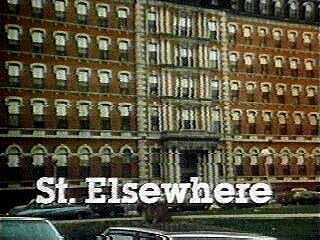
This week’s episode is a much better Dr. Craig episode than last week’s.

Episode 1.21 “Baron von Munchausen”

(Dir by Victor Hsu, originally aired on April 19th, 1983)

Anthony Rizzo (Louis Giambalvo) seems like a nice guy.  He’s admitted to the hospital with complaints of stomach pain and a high fever.  Dr. Morrison can’t find anything wrong with him but he does notice that Rizzo has a lot of scars.  Rizzo explains that he’s had a lot of surgeries over the course of his life and he’s got a story to go with each one of them.  Morrison brings in Ehrlich for a consult.  Ehrlich, who loves to perform surgery, suggests opening Rizzo up and doing an exploratory.  Morrison thinks it’s too early for that,  Rizzo, however, loves the idea.  Rizzo then proceeds to die on the operating table.

Ehrlich is shaken.  Morrison is angry.  However, Westphall and Craig take one look at the case and deduce that Rizzo suffered from Munchausen’s Syndrome.  For whatever reason, he was addicted to going to the hospital and having surgery.  He knew all the tricks, from using a light blub to make it look like he had a fever to pricking his finger with a needle to convince the doctors that there was blood in his urine.  It turns out that he died because of the drugs that he had been taking to help him fake his symptoms.  Both Morrison and Ehrlich are relieved to learn that Rizzo’s death was not their fault.

“So, Ehrlich lost his first patient today,” Craig says to Westphall.  “It won’t be his last.”

This was a good episode for Dr. Craig, especially after all that nonsense last week.  When Westphall finds himself in need of a doctor to speak to a group of inner city medical students, he is horrified to discover that Mark Craig is the only one available.  Craig accepts, saying that Westphall should have asked him earlier.

Westphall’s concerns are justified.  Dr. Craig is opinionated, wealthy, and more than a little prejudiced against …. well, everyone.  “My ancestors came here on the Mayflower!” Craig is quick to say.  And yet, the students love him, specifically because he doesn’t pretend to be anything that he isn’t.  Unlike Westphall, who tries give an inspiring pep talk, Craig is open about the reality of practicing medicine in what this episode refers to as being “the ghetto.”  When asked if his medical student son will be working in a ghetto clinic, Craig replies, “Why would he?”  Craig gets a standing ovation from the students, which felt like a bit much but whatever.  It was nice, for once, to see the show admitting that Craig’s blunt honesty can sometimes be more effective than Westphall’s noncommittal style of encouragement.

Afterwards, in a wonderfully acted scene, Craig asked Westphall why people don’t seem to like him,  Westphall shrugs and then says that Craig can be arrogant, rude, prejudiced, intolerant of other worldviews …. “Thank you, Donald,” Craig cuts him off.

Meanwhile, back at the hospital, a crazy woman (Micole Mercurio) is sent to the psych ward after threatening to kill Nurse Daniels.  (No, leave Shirley alone!)  Dr. Wendy Armstrong, who is one of the worst characters on this show, promptly discharges the woman and lets her leave the hospital.  “She threatened to kill me!” Shirley says while Wendy shrugs, unconcerned.  Fiscus also proves to be of no help, as he is once again feeling attracted to Kathy Martin.

Finally, Dr. White goes to a drug addict support group and walks out when things get too emotional.  Booo!  Dr. White is even worse than Dr, Armstrong!

This was a good episode.  Next week, the season finale!

Retro Television Review: St. Elsehwere 1.18 “Dog Day Hospital”


Welcome to Retro Television Reviews, a feature where we review some of our favorite and least favorite shows of the past! On Fridays, I will be reviewing St. Elsewhere, a medical show which ran on NBC from 1982 to 1988.  The show can be found on Hulu and, for purchase, on Prime!

This week, Judith Light has got a gun!

Episode 1.18 “Dog Day Hospital”

(Dir by Victor Lobl, originally aired on March 22nd, 1983)

Finally, Dr. Ehrlich is performing his first solo operation.  Dr. Craig is assisting but Ehrlich is in charge.  He gets to play his music in the OR.  He gets to decide what type of retractor to use.  It’s a simple hernia operation.  The patient (Sam Anderson) is awake and babbling through the whole operation.

Unfortunately, there’s also an angry woman in the OR and she has a gun.  Barbara Lonnicker (Judith Light) is eight months pregnant, despite her husband claiming that he got a vasectomy at St. Eligius.  As she already has several children to deal with, she wants to see the doctor who screwed up the vasectomy but she’s just as willing to shoot any other doctor to get her revenge.  The operation continues while Dr. Craig and Dr. Westphall negotiate with her.

I have to admit that I did find a lot of this episode to be amusing.  Ehrlich’s excitement over getting to do his first operation, Dr. Craig’s stuffy annoyance with being interrupted by a woman with a gun, and the patient’s nonstop rambling all made me smile more than once.  And Judith Light, not surprisingly, was great as the woman with the gun.  I loved the her husband was played by Tom Atkins.  You never know who you might see at St. Eligius!  That said, after the episode ended, I couldn’t help but think about how dumb the whole thing actually was.  How are people always managing to get guns into St. Eligius?  How did Barbara manage to get into an operating room without being stopped beforehand?  (Luther does tell her that she can’t be back there but he’s the only one who seems to notice her before she bursts into the OR.)  How come no one in the hospital seems to be more upset about the fact that there’s a woman waving a gun around an operating room?  At one point, Barbara shoots Ehrlich’s radio and hardly anyone seems to react.  The plot is played for laughs and that’s fine.  But, in this case, the story was a bit too implausible for its own good.

Meanwhile, Nurse Rosenthal returned to work after her mastectomy and struggled to get back into her routine.  Carolyn Pickles did a great job portraying Rosenthal in this episode.  And Fiscus and Shirley Daniels visited an old woman in a nursing home.  The subplots were handled well but, for the most part, this episode still felt as if it was trying a bit too hard.

Retro Television Review: St. Elsewhere 1.1 “Pilot”


Welcome to Retro Television Reviews, a new feature where we review some of our favorite and least favorite shows of the past! On Fridays, I will be reviewing St. Elsewhere, a medical show which ran on NBC from 1982 to 1988.  The show can be found on Hulu!

When I started reviewing Homicide, Jeff suggested that I should also review St. Elsewhere because the two shows shared a similar sensibility and a lot of behind-the-scenes personnel.  (Homicide showrunner Tom Fontana started out as a writer on St. Elsewhere.)  Apparently. a few characters from St. Elsewhere would eventually cross-over to Homicide.  Since I’m planning on soon reviewing two shows that were descended from HomicideOz and The Wire — it only seemed right to also review a show that was Homicide’s ancestor.

Though the show aired largely before my time, St. Elsewhere is definitely a show that I have heard about.  Everyone who follows American pop culture has either read about or seen the show’s infamous final episode and knows about the Tommy Westphall Universe Hypothesis.  Obviously, I can’t get into it now because that would be a spoiler but we’ll discuss it when the time comes!

For now, let’s start at the beginning, with the pilot!

Episode 1.1 “Pilot”

(Dir by Thomas Carter, originally aired on October 26th, 1982)

St. Eligius is a hospital in Boston that has obviously seen better days.  From the outside, it looks old.  On the inside, the hallways have the dim and dull look of a building that hasn’t been renovated in over ten years.  As Dr. Mark Craig (William Daniels, long before he played Mr. Feeney on Boy Meets World) angrily puts it, the hospital gets no respect in Boston.  It’s seen as being a “dumping ground” for patients who can’t afford anything better.  Dr. Craig is world-renowned heart surgeon whose wealthy patients have donated what few improvements the hospital has seen over the past few years.  (“All of our clocks now read the same time!” Dr. Craig brags at one point.)  But not even Dr. Craig can change the hospital’s reputation as being secondary to Boston General.

There are actually a few good things about St. Eligius.  For one thing, a young Denzel Washington is on staff, playing resident Phillip Chandler.  Denzel doesn’t get to do much in the pilot but still, his presence fills the viewer with confidence.  St. Eligius is also home to a world-renowned liver specialist, Dr. Daniel Auschlander (played by Norman Lloyd, who also worked with Hitchcock and Orson Welles).  Auschlander has liver cancer but the hospital chief-of-staff, Dr. Donald Westphall (Ed Flanders), assures everyone that Auschlander will probably “out live us all.”  (And he was right, to an extent.  Norman Lloyd lived to be 106 years old before passing away in 2021.  Ed Flanders died, tragically by suicide, in 1995.)  St. Eligius is a teaching hospital and the residents want to make a good impression by keeping their patients alive.  That’s always a good thing.

At the same time, how secure can you feel when Howie Mandel is one of the residents?  Mandel plays Dr. Wayne Fiscus, who wears a baseball cap and acts …. well, he acts a lot like Howie Mandel.  Like Washington, Mandel doesn’t do a lot in the pilot.  He does get a subplot where he apparently has sex in the morgue with goth pathologist Cathy Martin (Barbara Whinnery) but otherwise, we don’t see him treating a patient or anything like that.  Still, it’s a bit jarring to see Howie Mandel as a doctor.  I would not necessarily want him for my doctor because he’s to be easily distracted.  Maybe he’ll change my mind as the series progresses.

Speaking of sex, Dr. Ben Samuels (David Birney) has gonorrhea and spends most of the pilot approaching doctors and nurses and informing them of his conditions and suggesting that they might want to get tested themselves.  That’s not exactly the best way to be introduced to a character but it also lets us know that this show is not just going to be about dedicated doctors who spend all of their time worrying about their patients and making amazing medical discoveries.  Instead, this show is also about doctors who get venereal diseases.  Has anyone checked on Fiscus in the morgue?

(That said, Dr. Samuels does get a scene where he saves the life of a woman who was injured in a terrorist bombing, as if the show does want to make sure that we know that he can do his job, even if he is spreading VD through the hospital.)

The majority of the episode follows Dr. Jack Morrison (David Morse), a first-year resident who has been working several 24-hour shifts and who complains, at one point, that he hasn’t seen his wife for days.  Dr. Morrison gets upset when a surgeon wants to operate on one of his patients, a 15 year-old girl named Sandy (Heather McAdams).  Morrison believes that surgeons always want to cut into somebody.  Morrison gets even more upset when Sandy’s mother requests that Sandy be transferred to Boston General, which has a reputation for being a better, more modern hospital.  In fact, Morrison is so upset and exhausted that he forgets to file a death certificate for a patient who dies during the night.  As a result, it’s believed that the patient, who has a reputation for being violent, has gone missing and is stalking the hospital.  Dr. Annie Cavanero (Cynthia Sikes) spends the entire episode looking for a dead man, which at least gives her an excuse to visit every ward and introduce the viewers to the members of the show’s ensemble cast.

Having lost my mom to cancer and now my Dad to Parkinson’s, I was hesitant about reviewing St. Elsewhere.  (Actually, I was hesitant about reviewing any medical show.)  When my Dad was in the hospital, I felt like I couldn’t get anyone to give me a straight answer about his condition and I often felt the doctors were talking down to me.  To be honest, my worst conflicts were with the nurses, one of whom told me that I would have to “lose the attitude” before she would explain why my father had been moved to the Delirium Ward.  (It didn’t help that, at the same time my Dad was in the hospital, there was a huge storm that left us without power for a week.)  At the same time, there were other doctors who were helpful.  The staff at the rehab center that my dad was sent to were also wonderful.  I have my regrets about agreeing to hospice care but the nurse who was assigned to my Dad was very empathetic and totally understanding whenever I asked her for a cigarette.  (Under normal circumstances, I don’t smoke because I have asthma but seriously, the stress was killing me.)  I’m bitter and angry about a lot of what happened but I’m also thankful for the small moments of kindness.

Watching a show set in a hospital was not easy for me but the pilot of St. Elsewhere appealed to me with its mix of melodrama and humor.  There was a quirkiness to it that I appreciated.  William Daniels made me laugh with his annoyed rant about how little respect the hospital received.  Most of all, I cared about whether or not Dr. Morrison would still be alive at the end of his shift.  David Morse’s performance won me over.  He’s the type of doctor that I would want to have.  Well, actually, I’d probably want Denzel to my doctor but Dr, Morrison could assist.  Just keep Dr. Howie Mandel away from me.  Nothing against him but he seemed to be having way too much fun at the hospital….

Most importantly, the show ended with a cat.

Next week, the drama continues at St. Elsewhere!