In this scene, Flash earns the title of savior of the universe. Or, at least he does until Zarkov accidentally knocks him out. Between the Queen soundterack, Melody Anderson chanting, Ornella Muti vamping, Brian Blessed mugging, and Max Von Sydow doing his thing, this is a true scene that I love!
On Friday night, I was at the #FridayNightFlix live tweet hosted by our very own Lisa Marie and the conversation turned to Flash Gordon and one of the best movie soundtracks of the 80s. Even if you’re not a fan of the movie, you have to admit that the theme song rocks.
For today’s music video of the day, here is Queen performing Flash. Welcome back to 1980!
Star Wars not only launched an entire expanded universe. It also launched a few thousand rip-offs. For this weeks edition of Lisa Marie’s Favorite Grindhouse and Exploitation Film Trailers, we’ve got six trailers that might seem just a little familiar….
Battle Beyond The Stars (1980)
From Roger Corman comes this film, which is as much a rip-off of The Magnificent Seven as it is of Star Wars. Battle Beyond The Stars was a surprise box office success when it was first released.
2. Space Raiders (1983)
Also from executive producer Roger Corman, Space Raiders tells the story of what happens when a quirky band of intergalactic outlaws pick up an annoying (and frankly, rather stupid) kid.
3. The Humanoid (1979)
From director Aldo Lado, The Humanoid features the great Richard Kiel as the title character. There’s also a cute robot, an older mystic, and an evil Empire.
4. Message From Space (1978)
Do you remember another film that had a message from space?
5. Flash Gordon (1980)
Interestingly enough, Star Wars was as inspired by the original Flash Gordon as the Flash Gordon reboot was inspired by Star Wars.
6. Starcrash (1978)
And finally, we have Starcrash, the Star Wars rip-off that is actually better than Star Wars!
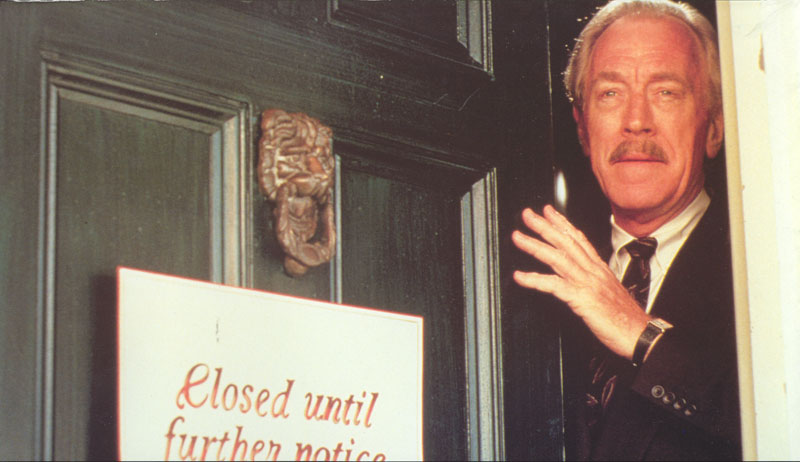
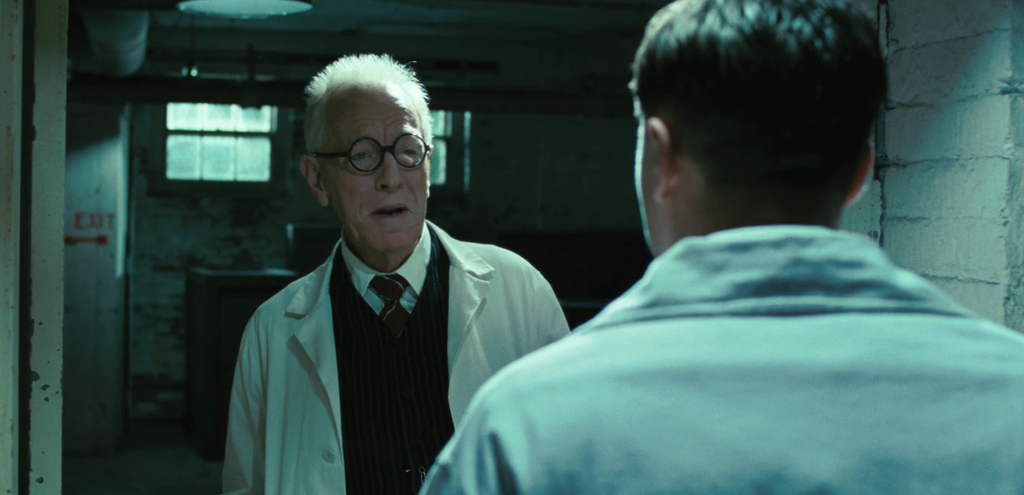
I woke up to the sad news that Max von Sydow, one of the greatest actors of all time, died yesterday. He was 90 years old and he leaves behind a truly amazing filmography. He played saints, sinners, assassins, exorcists, generals, poets, doctors, and even ordinary men who were just trying to make it day-to-day. That he was nominated for only two Academy Awards over a career that lasted 71 years was a major oversight on the Academy’s part. He was an actor who was as capable in arthouse films as he was in the latest installment of a legendary sci-fi franchise.
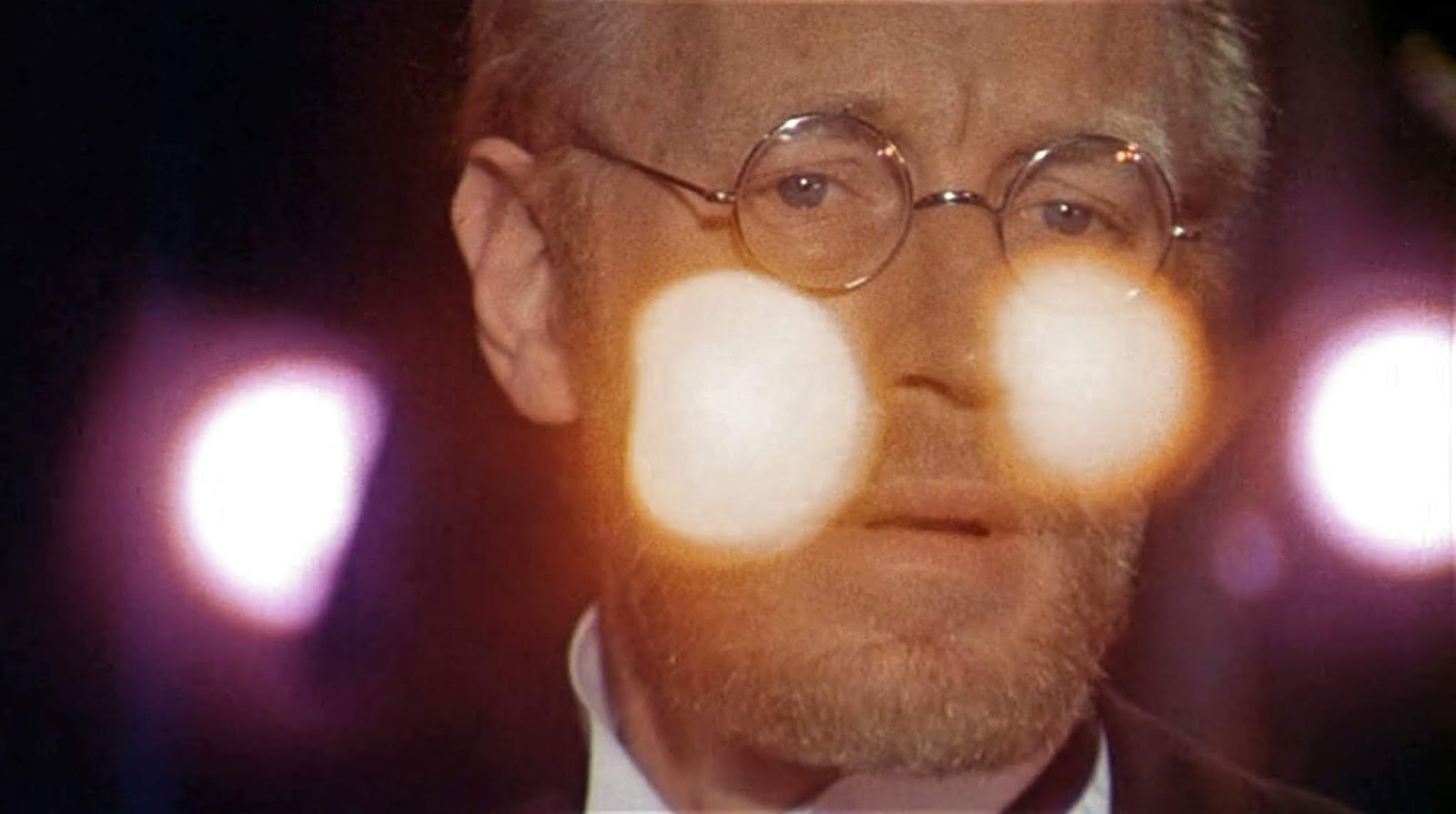
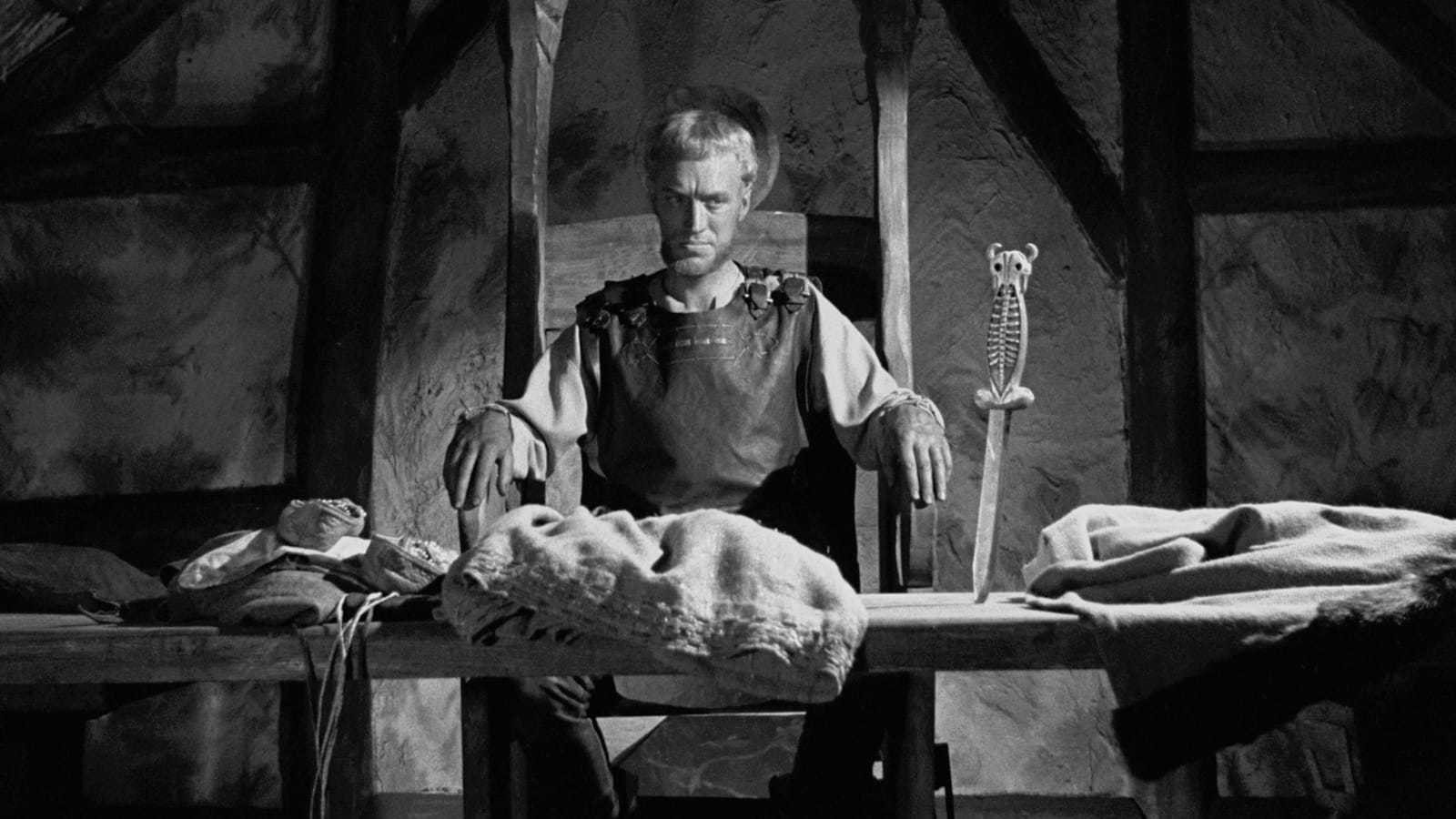
It’s hard to take a career as long and productive as von Sydow’s and narrow it down to just four shots from four films so I’m not going to try. The shots are below are some of my favorite von Sydow performances but they’re hardly definitive. Max von Sydow gave so many good and memorable performances that it’s hard to know where to start. Below are 4 shots from 4 films from a truly remarkable career.
Max von Sydow, R.I.P.
4 Shots From 4 Films
The Virgin Spring (1960, directed by Ingmar Bergman)
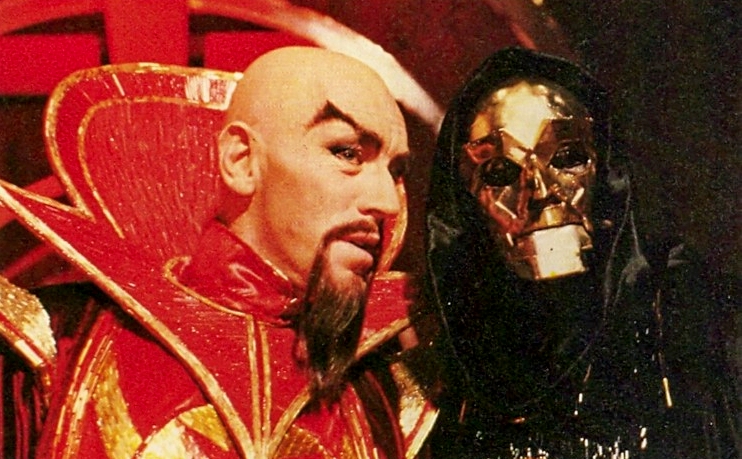
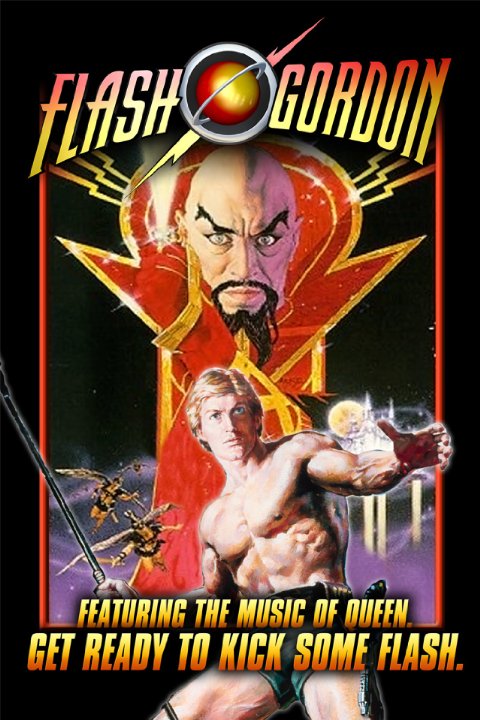
Flash Gordon (1980, directed by Mike Hodges)
Needful Things (1993, directed by Fraser C. Heston)
Shutter Island (2010, directed by Martin Scorsese)
Last night, the Late Night Movie Gang and I watched Zydereen of Neptune!
Never heard of Zydereen of Neptune? Well, don’t feel bad. It’s not really a movie. Instead, it’s three episodes of an old 1950s TV series that someone edited together. According to The Complete Directory to Prime Time Network TV Shows, Flash Gordon aired in 1954 on a now defunct network called DuMont. The eponymous space hero was played by Steve Holland, a clean-cut model with an impressive head of hair. On the show, Flash was a member of the GBI, which is like a galactic version of the FBI. Working with him was scientist and love interest Dale Arden (Irene Champlin) and scientist and non-love interest Dr. Zarkov (Joseph Nash). Flash was not a scientist but he had really nice hair. Did I mention that?
(Seriously, the Late Night Movie Gang estimated that Flash was 90% hair spray.)
Anyway, in three episodes, Flash and the GBI had to defeat the machinations of Zydereen (Marie Powers), an evil witch who lived on Neptune and who yearned to escape and take over the universe. She caused quite a bit of panic on Neptune, the majority of which, according to Wikipedia, was portrayed via stock footage of a 1953 anti-communist demonstration by citizens of East Berlin. Having been made in 1954, it’s not surprising that Flash’s struggle to keep the universe safe feels a lot like America’s effort to keep the world safe from communism.
I was fulling expecting to be dismissive of this low-budget television show-turned-movie but actually, I enjoyed it. From the threadbare production values to the grainy stock footage to the model rocket that crossed the screen whenever Flash was on a mission, there was an undeniable charm to the film’s low budget aesthetic. Steve Holland grew on me as well. At first, he seemed like a stiff but by the 30 minute mark of the film (or the second episode, if you will), Holland seemed a lot more comfortable with the role. If nothing else, he had really impressive hair. (Did I already mention that?)
Plus, Marie Powers was a good villain. Again, it helps to remember that she was playing a space witch on a low-budget TV series that was mainly aimed at children. As a result, neither she nor her schemes are particularly subtle but who cares? It was right for the show.
As I’ve said many times in the past, I’m a history nerd. And, if nothing else, Zydereen of Neptune was definitely a piece of history!
Life on the planet Mongo is not easy. Aided by Darth Vader wannabe Klytus (Peter Wyngarde) and the sadistic General Kala (Mariangela Melato), the evil Emperor Ming (Max Von Sydow) rules with an iron fist. All of the citizens are heavily taxed and kept in a state of perpetual war in order to keep them from joining together and rebelling. Those who attempt to defy Ming are executed.
There are many different races living on both Mongo and its moons. The Arborians, also known as the tree people, live in a jungle and are ruled by Prince Barin (Timothy Dalton). Until Ming overthrew his father, Barin was the rightful heir to the throne of Mongo. Barin is also one of the many lovers of Aura (Ornella Muti), Ming’s rebellious daughter.
Barin distrusts the Hawkmen, a group of winged barbarians. Led by the boisterous Prince Vultan (the one and only Brian Blessed), the Hawkmen live in a palace that floats above Mongo. Both Vultan and Barin share a desire to overthrow Ming but neither one of them can set aside their own dislike and distrust of each other.
Ming grows bored easily but Klytus has found him a new play thing, an obscure planet in the S-K system. “The inhabitants,” Klytus says, “refer to it as the planet Earth.”
It all leads to this:
You may have been too busy listening to Queen’s theme song to notice (and I don’t blame you if you were) but I have always found it strange that, even though Ming had never heard of Earth before Klytus brought it to his attention, he still had a button labeled “Earthquake.” Whenever I watch Flash Gordon, I wonder if I am the only one who has noticed this.
With Ming plaguing Earth with tornadoes, hurriances, and “hot hail,” it is up to three Earthlings to travel to Mongo and defeat him. Dr. Zarkov (Topol) is an eccentric scientist who was forced out of NASA because of his belief in Mongo. Dale Arden (Melody Anderson) is a reporter. And, finally, Flash Gordon (Sam J. Jones) is a professional athlete. Because this movie is a fantasy, Flash Gordon is a superstar quarterback for the New York Jets.
The character of Flash Gordon was first introduced in a 1934 comic strip and was played by Buster Crabbe in several classic serials. Among Flash’s many young fans was a future filmmaker named George Lucas, who would later cite Flash’s adventures as being a major inspiration for the Star Wars saga. After the unprecedented success of Star Wars:A New Hope, it only made sense that someone would try to make a Flash Gordon film.
That someone was producer Dino De Laurentiis. (Before writing the script for Star Wars, Lucas attempted to buy the rights for Flash Gordon from De Laurentiis.) To write the script that would bring Flash into the 80s, De Laurentiis hired Lorenzo Semple, Jr. Semple was best known for helping to create the 1960s version of Batman and he brought a similarly campy perspective to the character and story of Flash Gordon. As a result, the film ended up with scenes like this one, where Flash interrupts one of Ming’s ceremonies with an impromptu football scrimmage:
It also led to Brian Blessed’s entire performance as Prince Vultan, which is especially famous for the way that Blessed delivered one line:
(That also makes for a great ringtone.)
Sam J. Jones and Melody Anderson often seem to be stranded by Semple’s script but Max Von Sydow, Topol, Brian Blessed, Peter Wyngarde, and Ornella Muti all get into the swing of things. Seen today, Flash Gordon is entertaining but too intentionally campy for its own good. On the positive side, the images still pop off the screen and the soundtrack sounds as great as ever. When you listen to Queen’s theme song, you have no doubt that “he’ll save every one of us.”
As Flash Gordon himself put it after he saved the universe: “YEAAAAH!”

 Life on the planet Mongo is not easy. Aided by Darth Vader wannabe Klytus (Peter Wyngarde) and the sadistic General Kala (Mariangela Melato), the evil Emperor Ming (Max Von Sydow) rules with an iron fist. All of the citizens are heavily taxed and kept in a state of perpetual war in order to keep them from joining together and rebelling. Those who attempt to defy Ming are executed.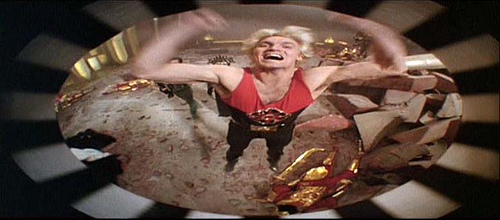
 Through the Shattered Lens