October Positivity: Early Warning (dir by David R. Elliott)


First released in 1981, Early Warning opens with a shot of a crowded, polluted city.  On the soundtrack, we hear the voices of newscasters.  The world is tottering on the brink of war.  Gas prices are skyrocketing.  Inflation is rising.  People are losing their jobs and their homes and many of them are having to skip meals in order to have enough food to last through the week.  Riots are breaking out across America.  Crime is running rampant.  The rich are getting richer.  The poor are getting poorer.  The President is a doddering old fool who sounds incapable of bringing America together.

Wow, that all certainly sounds familiar!  It’s tempting to say that Early Warning predicted the state of the world in 2022.  However, the truth of the matter is that the movie was made at the tail end of the Carter years and, as we all know, history tends to repeat itself.

Early Warning makes the argument that all of the problems in the world are due to the …. are you ready for this? …. One World Foundation.  (The One World Foundation could have picked a less obviously evil name.)  Led by Alexander Stonefield (Joe Chapman), The One World Foundation manipulates humanity by raising prices, destroying cities, and causing natural disasters.  They have a plan to start a nuclear war, by encouraging countries to invade one another and then supplying nuclear weapons to both sides.  They’ve decided that the best way to control humanity is to assign everyone a number and to…. okay, well, you know where this is going, don’t you?  Yes, this is one of those movies.  Before Left Behind, there was Early Warning!

The One World Foundation may be able to manipulate the world but their security sucks because a reporter manages to sneak into their headquarters and record a meeting where Stonefield explains, in exacting detail, everything that he’s planning on doing.  (You have to wonder why Stonefield even felt the need to have that meeting.)  The reporter is caught by a group of silly-looking guards who all wear white knee socks and tap shoes.  He’s killed but not before he put the recording in a mail box.  That’s putting a lot of trust in the U.S. Postal Service but whatever.

Another journalist, Sam Jensen (Christopher Wynne), teams up with a religious activist named Jenny Marshall (Delana Michaels) and soon, they’re doing their own investigation.  It turns out that the One World Foundation is going to have yet another meeting, this one at a hotel in the middle of the desert.  While Sam and Jenny try to uncover the truth, they fall in love but, unfortunately, Sam’s not a believer.  Can this be fixed before Sam is gunned down by a mysterious, helicopter-riding assassin known as The Cobra?

Early Warning is a bit of an odd film.  Jenny is often inappropriately cheerful, even when she’s got guards in knee socks trying to kill her.  Sam is a remarkably whiny hero.  There’s a strange sequence in which Sam and Jenny stumble across a survivalist compound in the middle of the desert and one of the survivalists is played by none other than George “Buck” Flower.  But perhaps the strangest thing about the movie just how low-rent and incompetent the One World Foundation is.  For an organization that can drive countries to war and wipe out someone’s savings just by pushing one button, One World has a remarkably difficult time tracking down two people.

(Of course, that’s always been my issue with most conspiracy theories.  It’s hard for me to buy that a group could be competent enough to control the world while also being too incompetent to properly cover up their activity.)

Early Warning is an early example of an evangelical end-of-the-world thriller.  One gets the feeling that the filmmakers were probably inspired by the then-recent success of The Omen films.  The budget was obviously low but that often works to the film’s advantage.  The grainy images feel appropriate for a movie about paranoia.  What doesn’t work to the film’s advantage are the stilted performances and a screenplay that can never decide whether it wants to primarily thrill the audience or primarily preach at them.  Still, to me, it’s interesting as an early example of a cinematic genre that, even if it doesn’t get much publicity, is still going strong.  It’s also interesting to see that, in 1981, people were just as quick to say the world was ending as they are in 2022.  The world appears to have been ending for a while now.
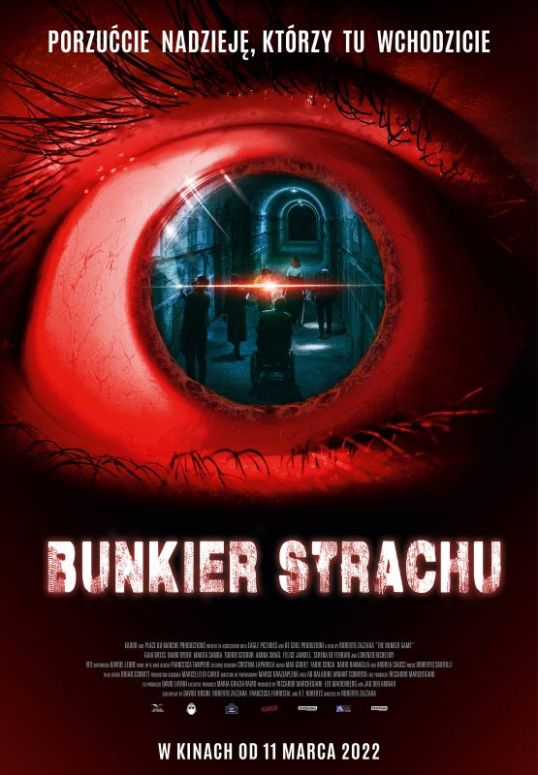
The TSL’s Horror Grindhouse: The Bunker Game (dir by Robert Zazzara)


The Bunker Game, which made its debut on Shudder earlier this year, opens with what appears to be a bit of alternate history worldmaking.   The viewer watches a black-and-white documentary that presents a world in which the Nazis conquered Europe during World War II but, ten years after Germany’s victory, the United States dropped an atomic bomb.  As a result, Europe is now an atomic wasteland.  A handful of survivors managed to find shelter in Italy, hiding out and forming a new society in an underground bunker that was built by Mussolini in the 30s.  The underground society is an authoritarian one, where mad scientists experiment on the citizens and storm troopers seem to be around every corner.  However, there is a small rebellion brewing….

Sounds potentially interesting, right?  Well, don’t get too attached to the alternative history spin because, within the first few minutes of the film, it’s revealed that the people in the bunker aren’t actually citizens of an authoritarian state and, while the Bunker is indeed real, the rest of Europe is just fine.  It turns out that documentary was just a part of an elaborate and very expensive game.  Instead of being the last refuge of the Third Reich, the Bunker is full of LARPers, people who have spent a good deal of money so that they can spend a week pretending to be …. well, Nazis.

Now again, this sounds like it could be potentially interesting.  Why would a group of people pay money in order to enter a real underground bunker and pretend to be some of the most evil people who have ever existed?  It’s an intriguing premise but, just as with the alternate history angle, don’t get to attached to it because it doesn’t take long for the film to abandon the whole LARPing plot.

Instead, unforeseen circumstances lead to the game ending early and most of the LARPers heading home. The Bunker Game proceeds to tell a fairly standard story about a handful of people who find themselves isolated in the now-deserted Bunker.  When one of their friends disappears, they split up to search for him and soon, some sort of supernatural force is killing them one-by-one.  The group is made up of identifiable types.  One person is quirky.  Another person is serious and professional.  Another is a stereotypical zoomer.  Another one is too uptight and obviously destined to go crazy before the movie is over.  For the most part, the film focuses on Laura (Gaia Weiss) and her cousin, Harry (Mark Ryder).  Harry is determined to leave the Bunker and never again deal with any LARPers.  Laura, meanwhile, finds herself strangely drawn to the Bunker, even once it becomes obvious that something is killing all of her friends.  Harry cannot understand why Laura would want to be part of the Bunker Game in the first place.  Laura cannot understand why anyone would want to live in the real world.  Most viewers will probably be able to guess where this is all going.

That said, The Bunker Game gets the job done.  The underground bunker is a wonderfully creepy setting and, even if they are playing types, the cast still does their best to bring their characters to life.  (Of course, all of them are playing characters who spent a lot of money so that they could pretend to be Nazis so, well-acted or not, most viewers will have limited sympathy for them.)  Though it’s hard not to regret that the film didn’t do more with its potentially interesting plot, director Roberto Zazzara does a good job of creating and maintaining a properly ominous atmosphere.  For what it is, The Bunker Game works well enough.  One can regret that it’s not thematically challenging while also acknowledging that, whatever flaws the narrative may have, the film still gets the job done.  Those who are just looking for a well-made horror film and who aren’t necessarily concerned with whether or not the plot makes total sense will probably enjoy The Bunker Game.

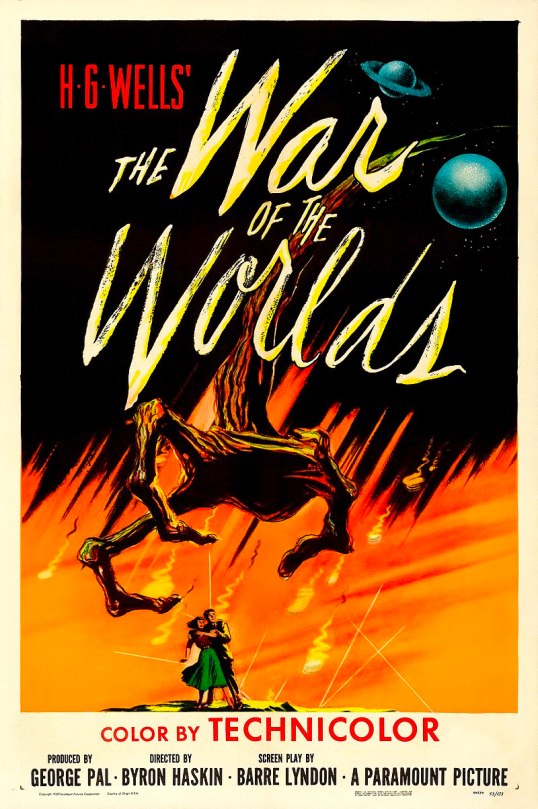
Horror Scenes That I Love: The Martians Attack In The War Of The Worlds


Today’s horror scene that I love comes from the 1953 film, The War of the Worlds.

Now, it’s probably not quite correct to say that I love this scene.  This is a scary scene and not necessairly one that you’ll want to revisit a hundred times.  Instead, this is a scene that I think is extremely well-done.  It’s a scene that perfectly establishes the fact that, in this film, humanity has no hope when it comes to defeating the Martians.  Trying to reason with them, as Uncle Matthew does, is useless.  Trying to fight them, as the army does, is useless.  Matthew is atomized as he approaches in peace.  The tough and plain-spoken military man — a reassuring authority figure in so many 50s films — is destroyed as he orders everyone out of the bunker.  The Martians, meanwhile, are unstoppable and, even worse, they are without mercy or concern for the people that they are destroying.

Seriously, this is a frightening scene when viewed today!  I can only imagine how it traumatized audiences in 1953.  If you need evidence of this fact, just consider that YouTube actually put a warning on the video that it might be too traumatic for some viewers.

After watching this scene, all I can say is Thank God for the common cold.

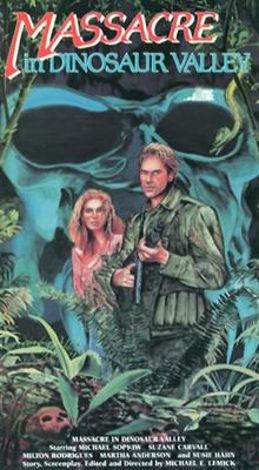
International Horror Review: Massacre in Dinosaur Valley (dir by Michele Massimo Tarantini)


As I watched the 1985 Italian film, Massacre in Dinosaur Valley, I found myself wondering one thing.

“Where are the dinosaurs!?”

Perhaps I’ve been spoiled by the Jurassic Park franchise but whenever I see the word “dinosaur” in a title, I expect to see dinosaurs.  That’s actually probably the main reason why I, or anyone else for that matter, would watch Massacre in Dinosaur Valley.  Unfortunately, there are no dinosaurs in this film.  Instead, a paleontologist shows up to explain that the valley is called Dinosaur Valley because it is the home to so many fossils.  This, of course, is the equivalent of telling us that, even though a city is really boring now, you should have seen it several thousand years ago.  Unfortunately, we also don’t get to see any fossils in Massacre in Dinosaur Valley.

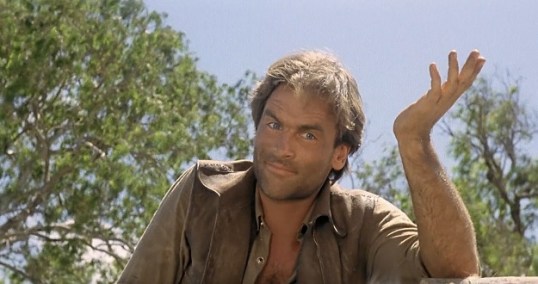
An actual screen shot from Massacre in Dinosaur Valley

There is, however, a massacre.  When a plane crashes in the valley, the pilot is killed but the majority of the passengers survive.  Insane Vietnam vet John Heinz (Milton Rodriguez) declares himself to be the leader of the survivors, even while his drunk wife (Marta Anderson) taunts him about everything from his lack of sexual prowess to the fact that his war record apparently isn’t as impressive as he claims.  The majority of the survivors would rather be led by Kevin Hall (Michael Sopikw), a soldier of fortune who is first introduced hitching a ride on a truck and then admitting that he doesn’t even have the five dollars that he promised to pay the driver.  Kevin seems like a bit of a loser but he’s better looking than Heinz and a good deal more laid back as well.

That said, it really doesn’t matter whether Kevin or John is in charge of the survivors because, what the valley lacks in dinosaurs, it makes up for in cannibals.  When the cannibals attack, the survivors rather foolishly split up and quickly discover that, if the cannibals don’t get you, the quicksand will.  Kevin ends up making his way through the jungle with Myara (Gloria Cristal) and Belinda (Susan Hahn).

Massacre in Dinosaur Valley was released towards the end of the infamous Italian cannibal cycle.  In Italy, it was originally given the much more honest title of Nudo e selvaggio, which translates to Naked and Savage.  In some parts of the world, it was released as Cannibal Ferox 2, in an effort to associate the film with Umberto Lenzi’s infamous shocker.  The plot of Massacre in Dinosaur Valley obviously owes much to Cannibal Ferox.  Fortunately, there’s far less animal cruelty in Massacre In Dinosaur Valley.  Unfortunately, the plot moves slowly and none of the film’s violence or gore is as nightmarishly realized as in the equivalent scenes from Ferox.  As well, no one in the Dinosaur Valley cast can really duplicate the charisma of Ferox‘s Giovanni Lombardo Radice, Lorraine De Selle, and Zora Kerova.

That said, even if he wasn’t a particularly dynamic actor, Michael Sopkiw was still a likable lead and he was the best thing that Massacre In Dinosaur Valley had going for it.  Sopkiw is a bit of an enigmatic figure when it comes to the history of Italian exploitation films.  He was an American actor and a model who, in quick succession, starred in four Italian films.  He started his career with Sergio Martino’s 2019: After The Fall of New York and then went on to star in Lamberto Bava’s Blastfighter and Monster Shark before ending his acting career with Massacre In Dinosaur Valley.  Sopkiw was good looking and he had a likeable screen presence.  It’s easy to imagine that he could have had a career similar to Michael Dudikoff’s if he had stuck with it.  But Sopkiw apparently decided that acting in B-movies wasn’t for him and he instead went into botany and started a company that makes special glass bottles that protect their contents from exposure to the sun.  Good for him.

4 Shots From 4 Horror Films: The Early 50s


4 Or More Shots From 4 Or More Films is just what it says it is, 4 shots from 4 of our favorite films. As opposed to the reviews and recaps that we usually post, 4 Shots From 4 Films lets the visuals do the talking!

This October, I’m going to be doing something a little bit different with my contribution to 4 (or more) Shots From 4 (or more) Films.  I’m going to be taking a little chronological tour of the history of horror cinema, moving from decade to decade.

Today, we take a look at the early 50s!

4 Shots From 4 Horror Films: The Early 50s

The Thing From Another World (1951, dir by Christian Nyby, DP: Russell Harlan)

It Came From Outer Space (1953, dir by Jack Arnold, DP: Clifford Stine)

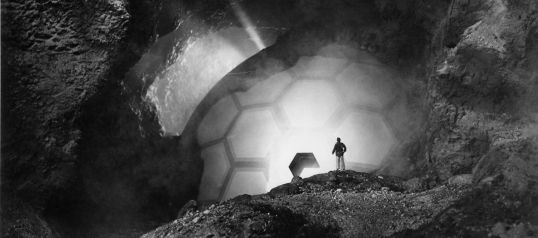
The War of the Worlds (1953, dir by Byron Haskin, DP: George Barnes)

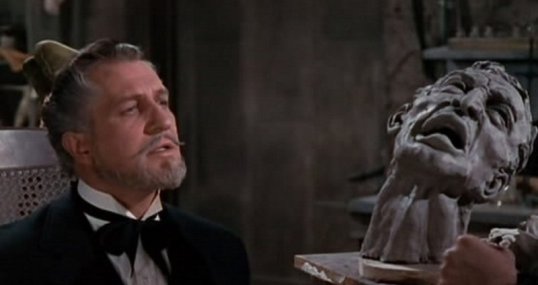
House of Wax (1953, dir by Andre de Toth, DP: Bert Glennon, J. Peverell Marley, and Lothrop B. Worth)

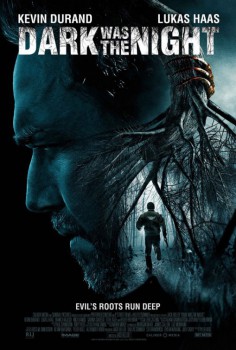
Horror Film Review: Dark Was The Night (dir by Jack Heller)


The 2014 horror film, Dark Was The Night, takes place in the town of Madison Woods.

Madison Woods is a small, isolated town that is located somewhere up north.  It’s one of those dreary blue collar towns where everyone knows everyone else.  Most of the citizens work in the logging industry, attend the same church, and drink at the same bar.  It’s not a town where much happens.  The police force consists of two guys, Sheriff Paul Shields (Kevin Durand) and his new deputy, Donny Saunders (Lukas Haas).  Donny worked in New York City before moving to Madison Woods.  Shields is currently estranged from his wife.  That’s the type of thing that passes for big news in Madison Woods.

When one of the local farmers complains that one of his horses has disappeared, Shields and Saunders assume that the horse has just run off.  When other animals start to disappear, Shields continues to insist that it’s all just a coincidence.  When the local hunters start to talk about an ancient legend of a monster that lives in the woods, Shields replies that there are no monsters and, for good measure, there’s no God as well.  (In many ways, Shields is a perfect example of the old joke about how the best way to spot an atheist is to wait a few minutes and he’ll tell you.)  Even when weird cloven footsteps start to show up around town and Shields himself spots something in his backyard, the Sheriff continues to insist that there is a rational explanation for all of this.  Meanwhile, Saunders hangs out at the bar and drinks and really, who can blame him?  As far as I can tell, it’s not like Madison Woods has a movie theater or anything like that.  It’s a really boring town.  You can either develop the beginnings of a drinking problem or you can start random fights or you can get ripped apart by the thing in the woods.  Make your choice.

Eventually, Shields and Saunders do discover that there is something lurking out in the woods.  And, despite their attempts to come up with a rational explanation, the creature proves itself to be more than just some animal.  Instead, it’s a true supernatural monster, tracking its prey through the community.  As a group of loggers discover at the start of the movie, the creature is just as quick to attack humans as it is to go after deer and other wild animals.  With the entire town locked away in the church basement (because, as Night of the Living Dead proved, the basement is always the safest place), Saunders and Shields try to figure out how to stop a monster that neither one of them has ever seen before.

Dark Was The Night was loosely inspired by a true story.  In 1885, the citizens of Topsham in the UK were stunned to wake up one cold morning and discover a series of cloven footprints in the snow.  The footprints led through the entire city and it appeared that whatever was responsible for them had stopped in front of every house and place of business.  Some claimed that the footprints belonged to the devil while others said that it was just some sort of animal.  The Devil’s Footprints, as the story became known, serves as a bit of Rorschach test.  Those inclined to believe in the supernatural have little trouble believing that the Devil visited the town of Topsham while the more rational among us assume that the footprints were left by a wild animal and then people saw whatever they wanted.  Dark Was The Night moves the story to the modern day and to America but the question remains the same.  Is there really a monster in the woods or, as Shields initially believes, are people just seeing what they want to see?  Unfortunately, the film reveals the monster’s existence within its opening minutes.  The film would have perhaps been more effective if there had at least been some mystery about whether or not Shields’s initial instincts were correct.

Dark Was The Night is a deliberately paced film, which again would be more effective if there was any mystery at all as to whether or not the monster actually existed.  On the plus side, the film is full of atmosphere and Kevin Durand and Lukas Haas are both effective as the two lawmen who find themselves in over their heads.  Fans of Lost will remember Durand as the evil Martin Keamy, who was one of the most heartless characters to ever appear on that show or any other show.  Durand gets to play the hero in Dark Was The Night and gives a good performance as a man who discovers that not everything has a rational explanation.  That said, while the film has some interesting ideas and performances, it ultimately becomes just another monster-laying-siege film and the ending is one that most viewers will see coming from miles away.  It’s not a bad film but it’s still never quite as good as one might hope.

Monday Live Tweet Alert: Join Us For Black Eagle and The Shootist!


As some of our regular readers undoubtedly know, I am involved in hosting a few weekly live tweets on twitter.  I host #FridayNightFlix every Friday, I co-host #ScarySocial on Saturday, and I am one of the five hosts of #MondayActionMovie!  Every week, we get together.  We watch a movie.  We tweet our way through it.

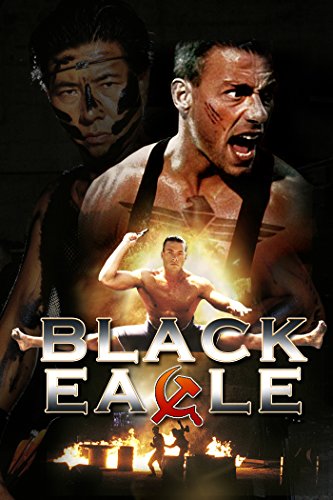
Tonight, for #MondayActionMovie, the film will be 1988’s Black Eagle!  Selected and hosted by SweetEmmyCat, this movie stars Sho Kosugi, his sons, and Jean-Claude Van Damme!  It’s also set in Malta, which I visited after graduating high school.  The movie starts at 8 pm et and can be found on YouTube!

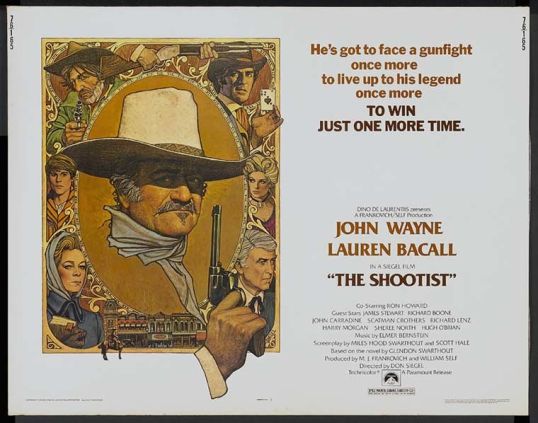
Following #MondayActionMovie, Brad and Sierra will be hosting the #MondayMuggers live tweet.  We will be watching 1976’s The Shootist, the classic western that featured both John Wayne and Jimmy Stewart giving it their all.  The Shootist is on Prime.

It should make for a night of fun viewing and I invite all of you to join in.  If you want to join the live tweets, just hop onto twitter, start Black Eagle at 8 pm et, and use the #MondayActionMovie hashtag!  Then, at 10 pm et, start The Shootist, and use the #MondayMuggers hashtag!  The live tweet community is a friendly group and welcoming of newcomers so don’t be shy.  And reviews of these films will probably end up on this site at some point over the next few weeks. 


Horror on the Lens: Robot Monster (dir by Phil Tucker)


Today’s horror film is a true classic of its kind, the 1953 science fiction epic Robot Monster.

Now, I should admit that this is not the first time that I’ve shared Robot Monster in October.  I share it every year and, every year, YouTube seems to pull the video down in November.  That sucks because Robot Monster is one of those weird films that everyone should see.  So, I’m going to share it again.  And, hopefully, YouTube will let the video stay up for a while.

As for what Robot Monster is about…

What happens with the Earth is attacked by aliens?  Well, first off, dinosaurs come back to life.  All of humanity is killed, except for one annoying family.  Finally, the fearsome Ro-Man is sent down to the planet to make sure that it’s ready for colonization.  (Or something like that.  To be honest, Ro-Man’s exact goal remains a bit vague.)

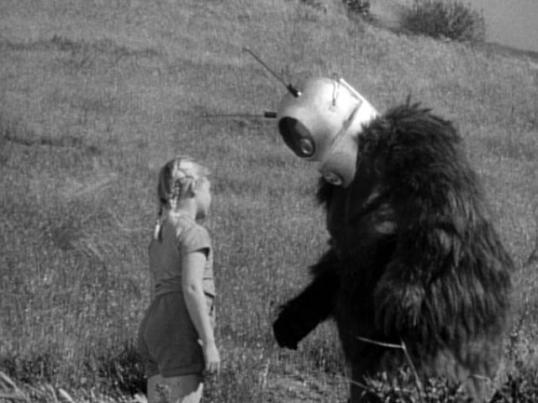
Why is Ro-Man so fearsome?  Well, he lives in a cave for one thing.  He also owns a bubble machine.  And finally, perhaps most horrifically, he’s a gorilla wearing a diver’s helmet.  However, Ro-Man is not just a one-dimensional bad guy.  No, he actually gets to have a monologue about halfway through the film in which he considers the existential issues inherent in being a gorilla wearing a diver’s helmet.

Can humanity defeat Ro-Man?  Will Ro-Man ever get his intergalactic supervisor to appreciate him?  And finally, why are the dinosaurs there?

Despite the film’s reputation for being borderline incoherent, most of those above questions actually are answered if you pay attention to the first few scenes of Robot Monster.  In fact, one could even argue that Robot Monster is maybe a little bit more clever than it’s often given credit for.  Of course, it’s still a zero-budget mess of a film but it’s also undeniably fun and, in some sections, unexpectedly dark.  If you’ve never seen it before, you owe it to yourself to set aside an hour and two minutes in order to watch it.  You’ve never see anything like it before.

Finally, I should note that Robot Monster’s hero was played by George Nader, who actually did go on to appear in several mainstream films.  Despite his good looks and talent (which may not be obvious in this film but which he did have), George Nader struggled to get starring roles in Hollywood, where he was often dismissed as just being a member of Rock Hudson’s entourage.  (It’s been theorized that Nader struggled because the studios feared that giving him too big of a role would lead to the gossip magazines writing about Nader’s relationship with Hudson, though the two were just friends.  Nader was in a relationship with Hudson’s private secretary, Mark Miller, from 1947 until Nader’s death in 2001.)  Nader finally left Hollywood and went on to have a pretty successful career in Europe.  He was perhaps best known for playing secret agent Jerry Cotton in a series of films in the 60s.

Enjoy Robot Monster!

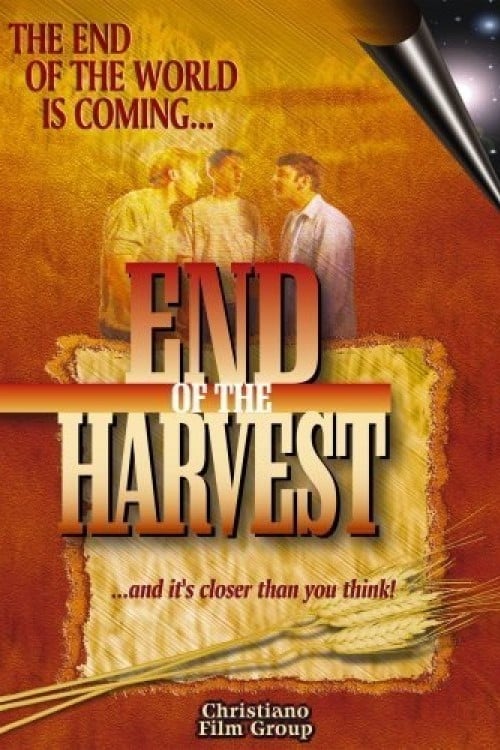
October Positivity: End of the Harvest (dir by Rich Christiano)


This 1995 film takes place on a college campus that is ruled over by the worst possible people …. THE PHILOSOPHY CLUB!

Okay, that might be an exaggeration.  It’s a big campus and undoubtedly, most of the students are just doing their own thing and don’t particularly care about any of the clubs or any of the Greek organizations or any of that stuff.  That said, it does seem like a surprisingly large amount of people are interested in the weekly Philosophy Club debates, despite the fact that the Philosophy Club itself seems to only have three members.

After seeing his religious friend get totally trampled while trying to debate the existence of God, Scott (Brad Heller) decides that it’s time to take a stand.  Scott used to be a wild frat boy and he even lost his license due to a DUI.  But now, he’s super Christian and he’s totally excited because he found a 50 year-old thesis about when the Bible says the world is going to end.  Scott challenges the Philosophy Club to a debate and soon, flyers are being put up all over campus.

The only problem is that Scott isn’t ready for the debate.  The Philosophy Club has uncovered the secrets of Scott’s dark past and, after they harass him on campus and start calling his ex-girlfriends, Scott starts to feel that he won’t be able to make his case.  He begs Matt (David A.R. White) for help but Matt says that it’s pointless to try to debate anything in front of the Philosophy Club.  The Philosophy Club doesn’t care about anything but Marx and Nietzsche.  Matt not only thinks that the debate will be a waste of time but he also thinks that it will actually drive people away from religion.

Of course, Matt has another reasons for not wanting to talk about the end of the world.  He’s been having odd dreams, in which he’s standing in a wheat field and watching an old farmer using a scythe to bring in the last harvest….

There have been several faith-base films that have been set on campus and they all have the same basic plot.  A religious person goes to college and has their faith tested by people who were raised differently and who insist that science or philosophy can serve as a substitute for religion.  It always seems to lead to a classroom debate and the religious student usually wins because all of the arguments have been slanted to their side.  Of course, it’s not just Christian films that do this.  If there’s one thing that Christians and atheists share in common, it’s an almost total ignorance about how the other side views the world and the questions of existence.  Anti-Christian films always fall back on the stereotype of the fanatical parents who refuse to allow their children to leave the house.  Christian films, on the other hand, always seem to feature an atheist who is angry at God.  End of the Harvest doesn’t go quite as far into those stereotypes as some other Christian films do but it’s still hard not to notice that the bizarrely smug members of the Philosophy Club are left speechless by some pretty basic arguments.  It’s the fantasy that both atheists and Christians tend to indulge in, the one where you come up with the pithy one-liner that no one can refute.  Christians always want to know how you can be angry at a God you don’t believe in.  Atheists always want to know, if God created everything, who created God.  In the real world, both arguments can be easily refuted but, in the movies, they’re always game changers.

End of the Harvest is a fairly standard religion-on-campus film.  It’s not going to convert anyone.  That said, the scenes of Matt standing in that wheat field have a nicely surreal feel to them.  In those scenes, it really does feel like the end is coming.

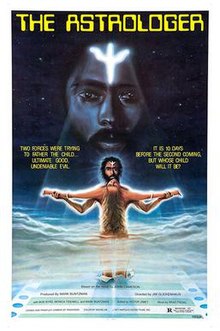
The TSL’s Horror Grindhouse: The Astrologer (dir by James Glickenhaus)


Quite possibly one of the most boring film ever made, 1975’s The Astrologer tells the story of …. well, I’m not really sure what the point of it all is.

Basically, an astrologer named Alexi Abarnel (Bob Byrd) has figured how to combine the zodiac with 70s technology and, as a result, everyone’s potential for good and evil can be determined simply by typing their birthdate into a computer.  The U.S. government funds his agency, which is known as Interzod.  And let’s be honest, that does sound like the type of dumbass thing that the government would fund, especially when the Democrats are in power.

According to the stars, the second coming of Christ is only a few days away.  Alexi is convinced that he has married the woman who is destined to give birth to the Savior.  Because of this, he refuses to consummate his marriage because it’s very important that she remain a virgin.  However, he hasn’t bothered to inform her of any of this so poor Kate (Monica Tidwell) spends all of her time wondering why her husband hasn’t touched her in five years of marriage and why it’s also so important to him that she never tell anyone the actual date of her birth.

Meanwhile, a group of gypsies are traveling the country and, under the leadership of Kajerste (Mark Buntzman), they are both murdering people and also compelling people to commit suicide.  Interzod is concerned about Kajerste because of his “zodiacal” potential but Alexei is also concerned that he doesn’t have Kajerste’s exact birthdate.  But the fact that Kajerste is commanding his followers to kill people should be enough to clue Interzod into the fact that Kajerste is bad guy, regardless of whether he’s a Capricorn or an Aquarius.  Fortunately, Interzod has come up with a plan on how to kill Kajerste, one that involves implanting thoughts in his head via electrodes and tranquilizer dots.  A young congressman (Al Narcisse) wants to help because he’s so interested in Interzod’s work.  However, it turns out that the ludicrously complicated plan to take out Kajerste is …. well, ludicrously complicated.  If my tax money is going to fund Interzod, I would hope they would make better use of it.

The film’s plot definitely has the potential to be interesting but, unfortunately, The Astrologer is a very, very talky film.  It only has a 78-minute running time and the majority of the film is made up people having very long and very dry conversations about how Interzod works and why its work is important.  The problem is that there’s not really any need to convince the viewers that Interzod is important or to show us how it works.  No watching this film is going to be interested in an in-depth examination of a fictional government agency.  Everyone knows that this isn’t 60 Minutes and it’s not like the NSA has hand-picked the correspondent who is going to be reporting on them.  This is a film about spies, astrology, and a killer cult.  It should be a lot of fun but instead it’s incredibly boring.

That’s not to say that it’s a total waste.  This was James Glickenhaus’s first film as a director.  Glickenhaus went to direct some well-regarded action films in the 80s and there are a handful of isolated moments in The Astrologer where it is obvious that the film was made by someone who had a good visual eye.   A cult ceremony scene that is almost totally made up of freeze frames is nicely done.  And, as always, it’s hard not to admire the ambition of someone trying to make a metaphysical thriller and tackle the big questions of existence on a budget.

In the end, though, the most interesting thing about The Astrologer is its insistence on having its characters frequently use the term “zodiacal.”  Take a drink every time that you hear someone say, “zodiacal” but don’t drive afterwards.