October True Crime: Dahmer (dir by David Jacobson)


2002’s Dahmer opens in a chocolate factory.  As the opening credits role, the camera lingers over the machinery effectively pouring, molding, and wrapping chocolate.  Much like the human body, the machines are set to do everything efficiently and automatically.  The only reason anyone works at the factory is to keep an eye on the machines and to make sure that they don’t break down.

A new worker at the factory is introduced to a veteran of the machines, a friendly guy named Jeffrey (Jeremy Renner, in his first starring role).  Jeffrey shows the new guy how the machines work and he flashes a somewhat friendly smile.  He seems like a nice enough human being.

But, of course, we know different.  We know what the title of this film is and, therefore, we know that the smiling man at the factory is also an infamous serial killer and cannibal named Jeffrey Dahmer.  We know enough to be nervous when, in the very next scene, Dahmer is in a department store and asking a young man (Dion Basco) if he wants to come back to Dahmer’s apartment so that Dahmer can take some pictures of him.  The man agrees and we watch as Dahmer drugs the man and then drills into the man’s head.  When the man, in a dazed state, manages to get out of the apartment, the police respond by returning him to Dahmer.

The film flashes back and fourth, between Dahmer’s life as an alcoholic cannibal in Minneapolis and his adolescence as a gay teenager from a dysfunctional family.  In the past, Dahmer steals a mannequin from a department store, tries to hide his homicidal urges from his confused, if well-meaning, father (Bruce Davison), and picks up the hitchhiker who will become his first victim.  In the present, Dahmer invites a man named Rodney (Artel Great) back to his apartment but, instead of automatically killing him, Dahmer instead talks to him about being alienated and shunned by society, almost as if Dahmer is trying to justify his own abhorrent actions to a future victim.  Rodney proves to be a bit more intuitive than Dahmer realized.

In many ways, the structure is similar to Ryan Murphy’s recently Netflix miniseries about Dahmer.  Many of the same incidents are detailed, including the time that Dahmer’s father demanded to see what Dahmer was hiding in a box.  Of course, Dahmer manages to tell the complete story in under two hours while Murphy, for some reason, dragged things out to ten episodes.  If Murphy’s miniseries sometimes came dangerously close to making excuses for Dahmer’s crime, David Jacobson’s film leaves us with no doubt that Jeffrey Dahmer was a monster.  In the film, Dahmer spends his time with Rodney trying to justify his anger and his murderous impulses, just for Rodney to continually shoot him down.  If Murphy’s miniseries often seemed to be too stylized for its own good, Jacobson’s film is directed in a near-documentary fashion, with the grainy and harsh images creating a pervasive atmosphere of evil.  The film may explain the motives behind Dahmer’s crimes but it never attempts to excuse them.

Of course, today, Dahmer is mostly known for being an early film of Jeremy Renner’s.  This was Renner’s first starring role and he received an Independent Spirit nomination for his performance here.  (As well, Kathryn Bigelow cast Renner in The Hurt Locker on the basis of his performance.)  Renner gives a haunting and frightening peformance, playing Dahmer as someone who suspects that his murderous impulses are wrong but who has given up trying to control them.  As played by Renner, Dahmer is friendly and good-looking enough that one can understand why people were willing to go back to his apartment but, at the same time, there’s always something a bit off about him.  Even when he’s surrounded by people, Renner plays Dahmer as someone who knows that he’s destined to be forever alone.

Dahmer is a haunting portrayal of evil.
Horror Film Review: Meandre (dir by Mathieu Turi)


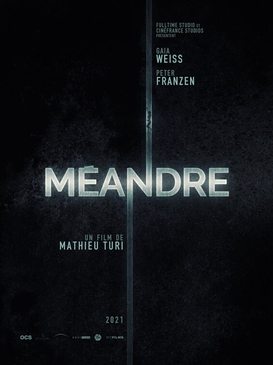
The 2020 French film, Meandre, opens with a woman named Lisa (Gaia Weiss) lying in the middle of the road, as if specifically begging someone to drive up and run her over.

When a man named Adam (Peter Franzen) approaches in his car, Lisa makes a last minute decision to get out of the car’s way.  Adam stops the car and offers Lisa a lift to wherever she wants to go.  Lisa accepts his offer and, as they drive through the night, Lisa reveals that today would have been the ninth birthday of her daughter, Nina.  Adam, who has a cross tattooed on his wrist, appears to be sympathetic.  However, then a report comes over the radio about a serial killer who is murdering hitchhikers and who has a cross tattooed on his wrist.  Realizing that Lisa now knows that he’s a murderer, Adam slams down on the brakes and throws Lisa against the dashboard, knocking her out.

When Lisa wakes up …. well, Adam is nowhere to be seen.  In fact, neither is the car.  Now wearing a white, skin-tight uniform, Lisa is in a small room.  She has a device on her wrist.  She has no idea where she is or how she got there.  She appears to be a prisoner but she doesn’t know why or who is holding her in captivity.  Suddenly, a door slides open, revealing a narrow tunnel.

Lisa spends the majority of the movie crawling from one location to another.  It’s never made quite clear just where exactly she is but it’s a place that’s full of tunnels, bobby traps, and the occasional rotting corpse.  Whenever the device on her wrist starts to beep, the viewer knows that something bad is about to happen to Lisa and she’s going to have to either avoid fire or sharp blades or being crushed as the walls of the tunnel suddenly come together.  Eventually, she also has to deal with a bizarre creature that chases her through the tunnels.  Through it all, she thinks that she can hear the voice of her daughter….

For me, Meandre got off to a good start by featuring a main character named Lisa.  Seriously, with a movie like this, it’s very important to be able to relate to the main character and, as soon as I found out that she shared my first name, I was totally on Lisa’s side.  That said, Gaia Weiss gives such a strong performance that even people who are not named Lisa will be rooting for the character.  The viewer sincerely wants Lisa to not only survive the traps but also discover why and where she is being held prisoner.  Meanwhile, Peter Franzen gives an appropriately intimidating performance as Adam (who does make a return appearance to the film after the incident in the car), alternating between being friendly and murderous.

I was not a huge fan of the film’s ending, which felt a bit too obscure and new agey for its own good.  But, ending aside, Meandre is an effective and claustrophobic horror film, featuring an excellent lead performance from Gaia Weiss.

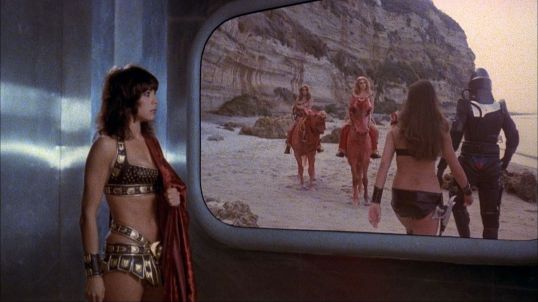
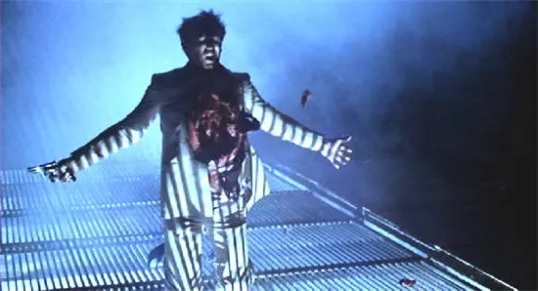
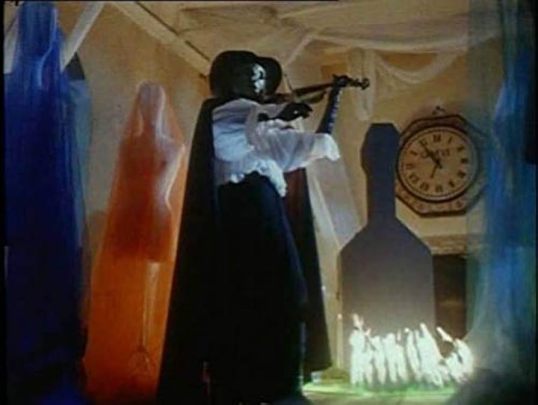
4 Shots From 4 Films: Special Luigi Cozzi Edition


4 Shots From 4 Films is just what it says it is, 4 shots from 4 of our favorite films. As opposed to the reviews and recaps that we usually post, 4 Shots From 4 Films is all about letting the visuals do the talking.

This October, I am going to be using our 4 Shots From 4 Films feature to pay tribute to some of my favorite horror directors, in alphabetical order!  That’s right, we’re going from Argento to Zombie in one month!

Today’s director is the underrated Italian filmmaker, Luigi Cozzi!

4 Shots From 4 Luigi Cozzi Films

The Killer Must Kill Again (1975, dir by Luigi Cozzi, DP: Riccardo Pallottini)

Starcrash (1978, dir by Luigi Cozzi, DP: Paul Beeson and Roberto D’Ettorre Piazzoli)

Contamination (1980, dir by Luigi Cozzi, DP: Giuseppe Pinori)

Paganini Horror (1989, dir by Luigi Cozzi, DP: Franco Lecca)

Horror Film Review: The Deeper You Dig (dir by John Adams, Zelda Adams, and Toby Poser)


Released in 2019, The Deeper You Dig tells the story of three people who live in one of those rural states where it never seems to stop snowing.

Kurt (John Adams) is a recluse who lives in a farmhouse and who goes out of his way to avoid contact with the outside world.  It only takes a minute or two of watching him to pick up on the fact that he’s haunted by something that happened in his past and now, he wants to spend his life separated from the rest of the world, except for when he goes out to the local bar.

Living nearby is Ivy (Toby Poser), who was once a legitimate psychic but who now makes her living by doing fake Tarot card readings.  Residing with Ivy is her 14 year-old daughter, Echo (Zelda Adams).  Echo, as one might expect from someone who grew up in less than conventional surroundings, is a bit of a proud eccentric.  She wears black lipstick, she listens to old music, and she enjoys hunting and sledding through the constantly falling snow.  Echo, to be honest, is extremely cool.  When I was 14, I probably would have wanted to hang out with Echo.

Unfortunately, being the coolest girl in town does not always protect you from bad things happening.  (I’ve been the coolest girl in multiple towns so I definitely know what I’m talking about here.)  One night, after he’s gone out to the local bar and had a bit too much to drink, Kurt swerves his car to avoid running over a deer.  The deer survives but, unfortunately, Kurt runs over Echo!  The panicked Kurt decides to bury Echo on his property.

Soon, Kurt is gripped by paranoia.  Despite the fact that he’s buried her, Echo keeps appearing to him and reminding him that he killed her and that she’s going to get her revenge.  He keeps hearing the old music that Echo liked.  Kurt’s attempt to move the body around doesn’t do anything to help the situation.  In fact, if anything, it makes thing worse.  Meanwhile, Ivy is searching for daughter….

The Deeper You Dig takes a few unexpected turns, as Echo goes from simply haunting Kurt to literally starting to possess him and one of the more interesting things about this film is watching the taciturn and middle-aged Kurt start to act like an angry 14 year-old girl.  Playing out in a no-nonsense and no frills style, the film does a good job of keeping you guessing as to whether or not John is truly seeing and being possessed by Echo or if his own guilt is pushing him over the edge.

As you can probably guess by the number of people involved with the last name of Adams, The Deeper You Dig is a family affair.  John Adams and Toby Poser are married and Zelda Adams is their daughter.  (Another daughter who regularly appears in their films was away at college when Deeper You Dig was filmed.)  All three of them collaborated on the film’s direction and the end result is a rather chilly ghost story that plays out at its own deliberate pace but which definitely sticks with you after it ends.

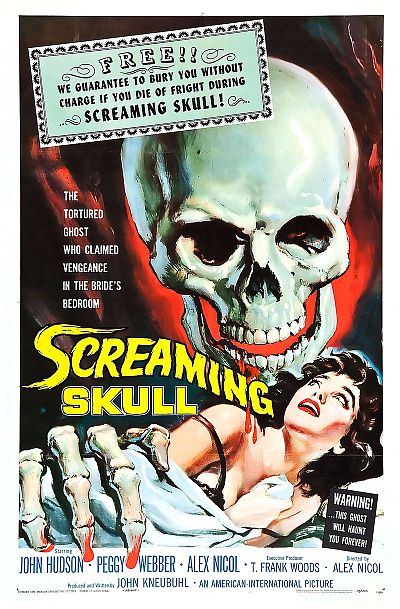
Horror Film Review: The Screaming Skull (dir by Alex Nicol)


1958’s The Screaming Skull opens with a promise.  If you die of fright while watching the climax of this movie, you will be given a free burial.  It’s a nice promise, though I have my doubts as to whether or not it would still be honored 65 years after it was made.  I mean, who exactly would be paying for the burial at this point?  It’s probably a moot point as I don’t think anyone would die of fright while watching the climax of The Screaming Skull.

That’s not to say that The Screaming Skull is a bad movie.  Though the film does not have a great reputation amongst film historians, I actually really enjoyed The Screaming Skull when I watched it a few weeks ago.  It’s an atmospheric and gothic horror film, one that mixes ghosts with hints of paranoia and insanity.  That said, it’s not really a frightening movie, at least not by today’s standards.  I think your heart will be fine while watching The Screaming Skull.

The Screaming Skull tells the story of Jenni (Peggy Webber), who has just recently been released from a mental hospital.  She had a nervous breakdown following the death of her parents in a drowning accident.  The tragedy left Jenni very wealthy but also very emotionally fragile.  She has just married Eric (John Hudson), a young widower whose first wife, Marion, died when she fell into a decorative pond on their estate and drowned.  Jenni fears that she’ll never be able to live up to Eric’s memories of Marion and it doesn’t help that Eric’s handyman, Mickey (played by the film’s director, Alex Nicol), was apparently in love with Marion and is very protective of her memory.  Marion’s portrait still hangs in the house and Jenni immediately sees that Marion looks a lot like her late mother.

Soon, Jenni thinks that she’s hearing screams in the middle of the night and she starts to see skulls almost everywhere that she looks.  Eric insists that Jenni is just letting her imagination get the better of her but Mickey is just as adamant that Marion’s ghost haunts the estate.  Eric even agrees to burn Marion’s portrait but doing so just reveals another skull sitting in the ashes.  Is Marion’s ghost haunting Jenni or is something else happening at the estate?  Who can Jenni trust?

Independently-made, The Screaming Skull is very much a horror film of the late 1950s, which means lots of tight sweaters, pointy brassieres, translucent nightgowns, and shadowy rooms, along with an important supporting character (played by Ross Conway) who just happens to be a minister and whose main job is to assure the audience that everything is going to be alright.  It’s a film that creates an effectively creepy atmosphere and Peggy Webber gives a sympathetic and likable performance in the lead role.  Most viewers will probably be able to guess the big twist within minutes of the film starting but no matter.  This is an enjoyably simple haunted house film and suspense thriller.  The Screaming Skull is not a film that exactly has a sterling reputation but I really enjoyed it.

Even more importantly, I made it through the film without having to take advantage of that free burial service!  I’m proud of myself.

Horror on the Lens: Dementia (dir by John Parker)


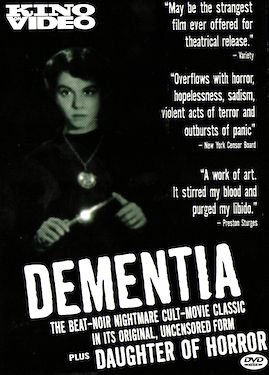
Today’s Horror on the Len is 1955’s Dementia, an experimental horror film without dialogue.  The film follows a young woman (Adrienne Barrett) over the course of one surreal and nightmarish night on Los Angeles’s skid row.

Despite an opening endorsement from no less a Hollywood luminary as Preston Sturges, audiences in 1955 were not sure what to make of this dream-like film.  However, it has since been rediscovered and reappreciated by audiences who appreciate the film’s surreal vision.

October Positivity: Uncommon (dir by Bill Rahn)


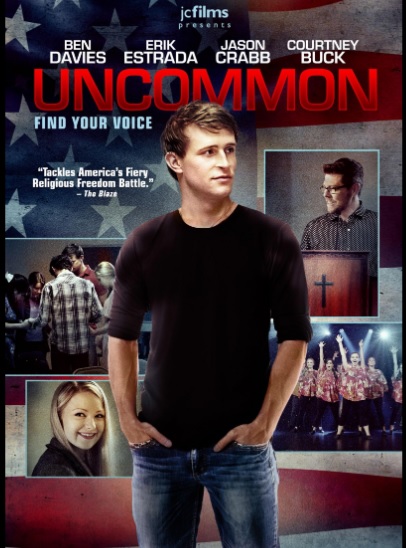
The 2015 film, Uncommon, opens with narration from Marc Garcia (Erik Estrada), a high school maintence worker.  Marc tells us that he’s seen a lot at his school.  He’s seen many changes.  He’s watched as school has gone from a home away from home to a frightening place where students come to class carrying bullet-proof backpacks.  He wonders what has caused the change in school.  He suggests that it all started in 1962, when the Supreme Court ruled the school prayer was a violation of the separation of church and state….

And let’s just stop right there.

On the one hand, I do think that, for a growing number of people, there’s a feeling that their life has no purpose and that their existence is empty and meaningless.  Some people would say that’s because our increasingly online world has left people unsure of how to relate to one another and express their emotions.  Some people would say that’s because of the decline of religion.  Some would say that’s because society is obsessed with fame.  Regardless of the reason, when you feel that your life has no purpose, it is undoubtedly a lot easier to justify doing things that, in the past, would have been unthinkable.

That said, when it comes to prayer in public, state-funded schools, the Supreme Court made absolutely the right and the Constitutional decision.  Separation of church and state is one of the most important amendments to be found in the Constitution.  Not only does it prevent the State from telling you what to believe, it also prevents the State from ordering you what not to believe.  If you think the government has a tendency toward being authoritarian now, just imagine what it would be like if they could claim that they were passing the laws of God.

Believe it or not, this is relevant to the film because Uncommon is all about the separation of church and state.  As you may have already guessed, the film’s opinion is the opposite of mine.

Uncommon does open strongly, with Aaron (Ben Davies) helplessly watching as a gunman shoots up his school.  His brother dies in the shooting and Aaron transfers to another high school.  While attending church, Aaron meets and befriend Mike Garcia.  Mike recruits Aaron and his friend, Drew (Wesley Elder), to volunteer at the local assisted living facility.

Meanwhile, at Aaron’s new school, budget cuts have led the principal to announcing that there is no more money to fund the Drama Department or the choir.  The drama kids freak out, especially Hailey (Courtney Buck).  Hailey was counting on getting a theater scholarship to college but how is that going to happen without a theater department!?  Eventually, Hailey and the theater kid come up with a clever idea.  They’ll start a drama club and just put on a show themselves!  But they have to find a faculty sponsor and all of the teachers are busy.  Hey, how about Mike Garcia?  Mike agrees, on the condition that the drama club also help out at the assistant living facility.

Meanwhile, Aaron wants to start a bible study group.  Mr. Stevens (Don Brooks), the atheist social studies teacher, throws a fit and announces that the school cannot sponsor a bible study group.  To be honest, it seems like the easy solution would be for Aaron to just do his bible study group off school grounds but whatever.

Anyway, Mike introduces Aaron to the Drama kids and Aaron agrees to write their school play, which is based on stories from the Bible and…. well, you can see where this is going, right?  Again, Mr. Stevens throws a fit.  The school board announces that the school cannot sponsor a religious play.  Mike somehow knows a lawyer who files a lawsuit on the behalf of the drama club.  Somehow, the drama kids win their lawsuit and they perform their show.  We only see the first musical number, in which the kids sing that “You got to have faith,” which would seem to prove that Mr. Stevens was right about the show being intended to push religion on the audience.

When people talk about preachy religious films that beat their audience over the head with their message, they’re talking about films like UncommonUncommon is a very earnest film but, in the end, it’s mostly just a case of wish fulfillment.  Despite the fact that there’s no way that the drama club should have been allowed to put on their show at the high school, they were.  Why?  Because this film wanted them to be able to.  But, in the end, Mr. Stevens was right.  Mr. Stevens was obnoxious and hateful but, when he said that a public school can’t put on a show that promotes one religion over another, he was absolutely correct.

Beyond the film’s theological and legal arguments, Uncommon is also a poorly-acted film that is full of corny humor. The drama kids are so overdramatic.  The old people are so quirky.  It gets old pretty quickly.  Erik Estrada was a lot more fun when he was starring in Guns.

The TSL Horror Grindhouse: Things (dir by Andrew Jordan)


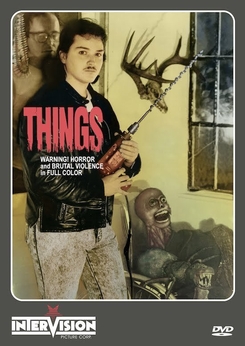
Things is a low-budget, independently-made horror film from 1989.

Things tells the story of Don (Barry J. Gillis) and Fred (Bruce Roach), two gentlemen with mullets who decide to drop by the house of Don’s brother, Doug (Doug Bunston).  When they arrives at the house, they’re surprised to find that Doug is nowhere to be seen.

“Doug, are you here?” Don asks, “Doug, are you alive?”

Don and Fred decide to raid the refrigerator in search of beer.  Inside the refrigerator, they find a book by Aleister Crowley and a tape recorder.  They decide to listen to the tape, which was a huge mistake because, when you’re starring in a crappy horror film, the last thing you want to do is remind the viewer of a different, better horror film.  As they played the tape, I thought to myself, “Don’t mention Evil Dead, don’t mention Evil Dead….”

“Hey,” Don said, “this is like that movie where those weird things happened….”

Anyway, Doug finally makes an appearance and orders them to stop making so much noise.  His wife is trying to sleep.  She’s been exhausted because she and Doug have been working with the mad Doctor Lucas (Jan W. Pachul) in an attempt to conceive a child.  Unfortunately, Lucas’s experiments have led to Susan giving birth to several insect-like monsters, which promptly attempt to eat Doug, Don, and Fred.

Things is such a Canadian film that I actually had to pause the movie after about ten minutes so that I could put on one of Jeff’s hockey jerseys and watch the film in proper style.  Don and Fred are just two regular guys who want to show off their guts and drink some beer.  Indeed, it’s debatable whether or not Don and Fred are as upset about the killer monsters as they are about the fact that Doug doesn’t have much beer left in the refrigerator.  For his part, Don sports both a formidable mullet and truck driver mustache.  He looks like he can’t wait to head back to Toronto as soon as the problem with all of the killer monsters are taken care of.

Things has a reputation for being one of the worst horror films ever made and …. well, it’s certainly not a good film.  The film takes a few stabs at Robocop-style social commentary by casting porn star Amber Lynn as a news reader who appears at random moments and announces that there’s been a power failure in New York and that George Romero is heading to the Supreme Court in his attempt to establish his ownership of Night of the Living Dead.  We’re also promised a story about the presidency of George H.W. Bush and the growing possibility of nuclear war.  Unfortunately, these scenes don’t add much to the film but they do provide a diversion from listening to Don and Fred attempt to have an articulate conversation.  Even if one can accept the bad acting (and sometimes, when it comes to indie horror films, you have to be ready to accept a few awkwardly delivered lines), the film itself is so poorly lit that it’s often difficult to tell what’s actually happening on screen.  Perhaps Things’s biggest problem is that, unless you really enjoy listening to two grown men argue about whether or not there’s any beer left, Things is just a boring movie.  It’s developed a cult reputation, largely due to being riffed on by the Rifftraxx crew, but I would be shocked to find anyone who has actually watched the film more than once.  Things is not The Room.  It’s not even Birdemic.

That said, the film did end with the suggestion that the whole thing might have just been a dream and I appreciated that.  It was a solution that made about as much sense as anything else in the film.

FRIEND, Short Film, Dir: Saga Spjuth-Sall, Review by Case Wright


Hello Horror Friends! I am taking a break from making meatball sliders and studying for Drilling to review something truly great. WHAAA? Yes, this is legit, guys. I was really worried that I was going to have to review a series of turds and just embrace them, but when I did my search this popped up and it is straight-up scary. It has Hitchcock levels of suspense with a simple story that ratchets up the tension for the entire film. It’s so great to see talent. From what I can tell, they’re Swedish artists and their story craft, directing, and acting just grabs you right by the proverbials and does not let go! 

Nathalie is a teleworking IT customer service agent and she gets a rude call. She takes a break and we see a shadow of a man is in her house; I’m still a little goose-fleshed. I know some of my readers are anti-gun. I used to have one for work, but I get your point of view……sort of. What I mean is this, if I were a single woman, I would be armed- ALWAYS….ALWAYS…ALWAYS- the shower, taking out the trash, playing pickle ball, maybe have a shotgun swung around my back The Last of Us style when I’m cooking marinara, and just a wee .22 caliber in an ankle holster when I’m cooking my Nutella gelato (oh yeah I make that, sup?). 

The entire film you’re so worried for Nathalie because the actress imbues the character with this sweet sort-of Audrey Hepburn in “Wait Until Dark” quality. Nathalie becomes a Rorschach image of every “girl next door/ nice college roommate” and knowing that she’s in peril is almost too much. I will NOT lie: I had … no joke…. 4 jump out of my seat moments. This is one of the best short films that I have ever seen; in fact, it might be the best short-film I’ve ever seen; now, I need to think on that. One thing is certain, it’s absolutely going to be impossible to top this short film for the 2023 Horrorthon; so, I wish the rest of the filmmakers well in all of their future endeavors. 

This film will grab you by the proverbials!

Horror Scenes That I Love: Godzilla in Godzilla vs. Megalon


For today’s Horror Scene That I Love, let’s take a minute or two to show some respect to one of the world’s greatest (and longest-lived) film stars, Godzilla!  Whether he’s attacking humanity as the literal representation of atomic age anxiety or if he’s saving Earth from a bunch of aliens, Godzilla has always been a superstar.

In this scene from 1973’s Godzilla vs. Megalon, Godzilla shows just how much of a star he is by taking a stand against bullying and saving his friend, Jet Jaguar.  In this scene, Godzilla shows that he was an anti-bullying activist even before it was cool.  Megalon and his friend thought they could just taunt poor old Jet Jaguar.  Not as long as Godzilla’s around!