Scenes That I Love: Paul Morrissey’s Mixed Blood


Today, the Shattered Lens wishes a happy 86th birthday to the one and only Paul Morrissey!

Though he may not be as well known as some of his contemporaries, Paul Morrissey is one of the godfathers of independent film.  He first came to notice as a collaborator of Andy Warhol’s.  Morrisey’s first films were shot at the Factory and starred the members of Warhol’s entourage.  At a time when the indie film scene barely even existed, Morrissey was making boldly transgressive films and distributing them largely on his own.  In fact, it could probably be argued that, if not for Paul Morrissey, the American independent film scene would never have grown into the impressive artistic and financial force that it is today.

There’s always been some debate over how much influence Warhol had over Morrissey’s films.  Morrissey has always said that Warhol had next to nothing to do with the films, beyond occasionally taking a producer’s or a co-director’s credit.  Others have disagreed.  What can be said for sure is that, even after Warhol retreated from directly involving himself in the cinematic arts, Morrissey continued to make fiercely independent films.

Paul Morrissey made films about outsiders.  While other directors were telling stories about the middle and upper classes, Morrissey was making movies about junkies, prostitutes, and people simply trying to make it from one day to another.  His films also frequently satirized classic Hollywood genres.  In fact, his two best-known films, Flesh for Frankenstein and Blood for Dracula, not only satirized the old Universal horror films but also the Marxist-themed films being made in Europe.  A devout Catholic and a political conservative, Morrissey took a particular delight in tweaking the left-wing assumptions of the counterculture.  Who can forget Joe Dallesandro’s gloriously shallow revolutionary in Blood for Dracula?

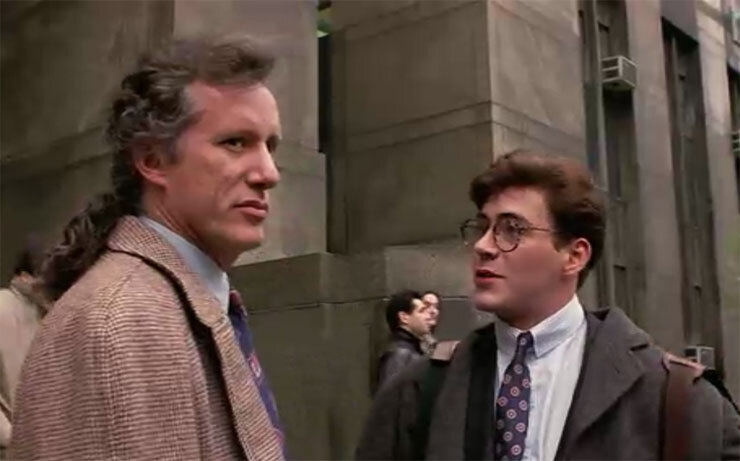
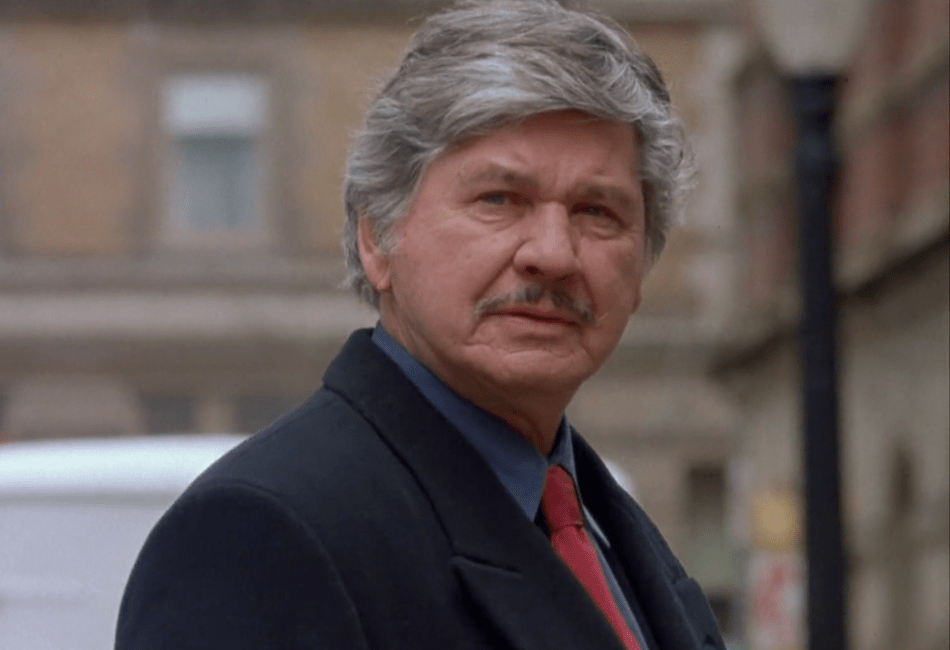
Today’s scene of the day comes from Paul Morrissey’s 1985 Mixed Blood, a film about a war between a Brazilian gang and a Puerto Rican gang that is fought almost entirely by underage soldiers.  (The film compares the street soldiers to the members of the boy band Menudo, in that they are rotated out once they reached the age at which they could be tired as adults.)  In this scene, a police officer visits a drug operation that is almost entirely staffed by children.

4 Shots From 4 Films: Special Terence Fisher Edition


4 Shots From 4 Films is just what it says it is, 4 shots from 4 of our favorite films. As opposed to the reviews and recaps that we usually post, 4 Shots From 4 Films lets the visuals do the talking!

Today, we celebrate the 120th anniversary of the birth of the great British film director, Terence Fisher.  Though Fisher worked in all genres, he is best remembered for the horror films that he directed for Hammer Studios.  Along with proving that there was still an audience for horror, he also helped to make stars out of Peter Cushing and Christopher Lee.

It’s time for….

4 Shots From 4 Terence Fisher Films

The Curse of Frankenstein (1957, dir by Terence Fisher, DP: Jack Asher)

Horror of Dracula (1958, dir by Terence Fisher, DP: Jack Asher)

The Mummy (1959, dir by Terence Fisher, DP: Jack Asher)

The Devil Rides Out (1968, dir by Terence Fisher, DP: Arthur Grant)

14 Days of Paranoia #7: No Way Out (dir by Roger Donaldson)


Trust no one in Washington would seem to be the message of this 1987 thriller.

Kevin Costner plays Lt. Commander Tom Farrell, a Naval Intelligence officer who is hailed as a hero after saving a shipmate who falls overboard.  In Washington, Tom is recruited by a friend from college, Scott Pritchard (Will Patton), to work for Secretary of Defense Brice (Gene Hackman).  Brice doesn’t trust the head of the CIA (played by future senator, Fred Dalton Thompson) and he wants Tom to serve as his mole within the service.  What Brice doesn’t know is that Tom is sleeping with Brice’s mistress, Susan Atwell (Sean Young).

Still, Brice does suspect that the woman with whom he is cheating is also cheating on him.  When he confronts her about it, their argument leads to him accidentally pushing Susan over an upstairs railing.  Pritchard, who is implied to be in love with Brice, takes charge of the cover-up and decides to push the story that Susan was killed by a possibly mythical Russian agent who is known only by the name “Yuri.”

Tom assists with the investigation of her death, both because he wants to know who killed Susan and also because he knows that there’s evidence in Susan’s apartment that could be manipulated to make him look guilty of the crime.  For instance, Susan took a picture of Tom shortly before her death.  The picture failed to develop but, through the use of what was undoubtedly cutting edge technology in 1987, Naval Intelligence is slowly unscrambling the picture.  For Tom, it’s a race against time to find the actual killer before the picture develops and he’s accused of both killing Susan and being Yuri.

Everyone has an agenda in No Way Out, from the ambitious Brice to the fanatical Scott Pritchard to the head of the CIA, who wants Brice to approve funding for a costly submarine.  Even the film’s nominal hero has an agenda, which has less to do with finding justice for Susan and everything to do with protecting himself and his future.  In fact, as is revealed in the film’s enjoyable if slightly implausible twist ending, some people in Washington have multiple agendas.  The film portrays Washington as being a place where, behind the stately facade, everyone is a liar and everyone is ultimately a pawn in someone else’s game.  If you have the right connections, you can even get away with murder.  Loyalty is rewarded until you’re no longer needed.

It’s an enjoyably twisty thriller, one that makes good use of the contrast between Kevin Costner’s All-American good looks and his somewhat shady screen presence.  The film introduces Costner as being a character who, at first glance, seems almost too good to be true and then spend the majority of its running time suggesting that is indeed the case.  Gene Hackman is well-cast as the weaselly cabinet secretary, as is Sean Young as the woman who links them all together.  In the end, though, the film is stolen by Will Patton, who plays Scott Pritchard as being someone who has unknowingly given his loyalty to a man who is incapable of returning it.  As played by Patton, Scott is an outsider who desperately wants to be an insider and who is willing to do just about anything to accomplish that goal.  He’s a version of Iago who never turned against Othello but instead devoted all of his devious tricks to trying to cover up the murder of Desdemona.

Even with an over-the-top final twist, No Way Out holds up well as a portrait of how the lust for power both drives and corrupts our political system.

14 Days of Paranoia:

  1. Fast Money (1996)
  2. Deep Throat II (1974)
  3. The Passover Plot (1976)
  4. The Believers (1987)
  5. Payback (1999)
  6. Lockdown 2025 (2021)

4 Shots From 4 Luis Buñuel Films: Special Luis Bunuel Edition


4 Shots From 4 Films is just what it says it is, 4 shots from 4 of our favorite films. As opposed to the reviews and recaps that we usually post, 4 Shots From 4 Films lets the visuals do the talking!

Today is the 124th birthday of the great Spanish surrealist filmmaker, Luis Bunuel!  That means that it is now time for….

4 Shots From 4 Luis Buñuel Films

Los Olivados (1950, dir by Luis Bunuel, DP: Gabriel Figueroa)

Viridiana (1961, dir by Luis Bunuel, DP: José F. Aguayo)

The Exterminating Angel (1962, dir by Luis Buñuel, DP: Gabriel Figueroa)

Simon of the Desert (1965, dir by Luis Bunuel, DP: Gabriel Figueroa)

Scene That I Love: Kyle MacLachlan in Dune


Today, the Shattered Lens wishes a happy birthday to the one and only Kyle MacLachlan!

Today’s scene that I love comes from MacLachlan’s film debut, 1984’s Dune.  MacLachlan played Paul Atriedes in David Lynch’s unfairly maligned film and his otherworldly vibe made him as perfect for the role as he would later be for Agent Dale Cooper in Lynch’s Twin Peaks.  As good as Timothee Chalamet was in the more recent adaptations of Frank Herbert’s novel, I still feel that MacLachlan is the superior Paul.

In this scene, Paul confronts the people who have been trying to destroy him and he proves his worth in an armed duel with Sting.

14 Days of Paranoia #6: Lockdown 2025 (dir by Mike Hall)


2021’s Lockdown 2025 tells the story of a neighborhood on the edge.

Clarence McGee (Glenn Plummer) has a got a nice house in the suburbs.  He has a nice view of the city in the distance and, even though we don’t learn much about what he does for a living, he appears to be very well off.  He has a wife named Carmen (Marie-Francoise Theodore) and three children, conspiracy theorist Junior (Marcus T. Paulk), daughter Crystal Marie (Parker McKenna Posey), and youngest Evan (Cristian Fagins).

To the outsider, it might look like Clarence has the perfect life but the reality is far different.  As a father, Clarence has been neglectful and, as his own wife points out, Evan is the only one of the kids with whom he  seems to have a strong connection.  Meanwhile, Crystal is pregnant and, while she’s told her boyfriend Marcos (Stewart Flores), neither one of them is quite sure how they’re going to tell Clarence.  And what is one to make of the burly police detective (James Black) who is sitting in his car and watching Clarence’s home?

Clarence is excited because he’s convinced that he’s finally going to win the lottery and become a billionaire.  However, just as the lottery numbers are about to be announced, the broadcast is interrupted by the National Alert System.  “This is not a test,” a voice says, before going on to explain that the president has declared a national emergency.  The country is under martial law.  There will be a 24-hour curfew.  No one is to leave their houses.

Suddenly, the skies are glowing and lightning bolts are streaking from the sky to the ground.  Explosions are heard in the distance.  The streets are full of “police soldiers” and anyone caught outside is subject to execution.  When Clarence’s neighbor tries to flee his house, he is executed on the spot.  Both Marcos and Junior suggest that maybe it’s all because of an online terrorist group known for being “pill-popping, weed-smoking, new age religious fanatics!”  Clarence says you can’t believe anything you see on YouTube.  For one thing, they let Junior on YouTube!

Meanwhile, a countdown clock appears on the television and starts to slowly tick down, from 80:00 to zero.  What happens the clock hits zero?  That’s what everyone is wondering.

As you can probably guess, things don’t go well for the McGees.  Being stuck in the house together not only makes them paranoid but it also leads to them revealing all of their deep, dark family secrets.  Soon, Clarence is loading a rifle.  When the detective finally enters the house and reveals his own secret, it leads to a violent confrontation.  Have you ever wondered how many people can accidentally get shot by two men firing guns at each other in a small enclosed space?  This film will tell you!

The plot description probably makes all of this sound more intriguing than it is.  Sadly, It’s not a very good movie, one that is marked by bad acting and bad special effects.  Not even the talented Glenn Plummer can do much with his role.  The initial apocalypse scenes are actually effective but soon, the Birdemic-style visuals kick in.  Worst of all, the film’s ending is the type of cheat that makes you feel stupid for getting in any way invested in the story.  An ending like this might have worked for a 15-minute short film but not for a film that drags on for 90 minutes.

This film was apparently produced by the Jehovah’s Witnesses and one of the final images is of a chastised, former doubter letting two Jehovah’s Witnesses into his home.  (Seriously, on the rare occasion that any of them are in my neighborhood, I hide in my room and don’t make a sound.)  I doubt this inspired anyone to pick up a copy of The Watch Tower.

14 Days of Paranoia:

  1. Fast Money (1996)
  2. Deep Throat II (1974)
  3. The Passover Plot (1976)
  4. The Believers (1987)
  5. Payback (1999)

Scenes That I Love: Kelsey Grammer in Money Plane


Today is Kesley Grammer’s 69th birthday.  In order to celebrate this event, here are three scenes from one of my favorite films, 2020’s Money Plane!

All of these scenes are short.  They only last a handful of seconds.  But all of them also feature Kelsey Grammer bringing the film to life as only he can.

And since I don’t do odd numbers, here’s a bonus clip of Frasier Crane reacting to Money Plane.

14 Days of Paranoia #5: Payback (dir by Brian Hegeland)


The 1999 film, Payback, opens with Porter (Mel Gibson) lying on a kitchen table while a grubby-looking doctor digs two bullets out of his back.  The scene takes place in almost nauseating close-up, with the emphasis being put on the amount of pain that Porter endures to get rid of those bullets.  Immediately, we know that Porter is not someone who can safely go to a regular hospital.  Porter is someone who exists in the shadows of mainstream society.

He’s also someone who spends a lot of time getting beaten up.  Even back when he was still a big star, Mel Gibson always seemed to spend a good deal of his films getting beaten up and tortured in various ways and that’s certainly the case with Payback.  Porter gets punched.  Porter gets shot.  Porter has a encounter with an over-the-top dominatrix (played by Lucy Liu).  At one point, Porter allows two of his toes to be smashed by a hammer, just so he can trick the his enemies into doing something dumb.  As played by Gibson, Porter stumbles through the film and often looks like he’s coming down from a week-long bender.  It’s interesting to think that Payback is a remake of 1967’s Point Blank, which starred Lee Marvin as Walker, an unflappable career criminal who never showed a hint of emotion or weakness.  Porter, on the other hand, is visibly unstable and spends the entire film on the verge of a complete mental collapse.  A lot of people try to kill Porter and Porter kills almost all of them without a moment’s hesitation.

(Of course, both Porter and Point Blank‘s Walker are versions of Parker, a career criminal who was at the center of several crime novels written by Donald “Richard Stark” Westlake.)

After helping to pull off a $140,000 heist from a Chinese triad, Porter was betrayed and left for dead by his former friend Val Resnick (Gregg Henry) and his wife, Lynn (Deborah Kara Unger).  Porter, who just wants the $70,000 cut that he was promised, starts his quest for the money by tracking down Val and Lynn, and then continues it by going after the three bosses (played by William Devane, James Coburn, and Kris Kristofferson) of “The Outfit,” a shadowy organization that Val had gotten involved with.  Along the way, Porter deals with a motely crew of corrupt cops, violent criminals, and sleazy middlemen.  (David Paymer has a memorable bit as a low-level functionary with atrocious taste in suits.)  Porter also hooks up with a prostitute named Rosie (Maria Bello), who might be the only person that he can actually trust.

I have mixed feelings about Payback.  (So did director Brian Hegeland, who was reportedly fired towards the end of shooting and later released a far different director’s cut.)  Though the film does a good job of capturing the visual style of a good neo-noir, the story itself is so violent and grim that it actually gets a little bit boring.  The film’s advertising encouraged audiences to “Get ready to root for the bad guy,” but there’s really no reason to root for Porter.  He’s an inarticulate and ruthless killer with no sense of humor.  If anything, the people that he kills seem to be far more reasonable and likable than he does.  In Point Blank, Lee Marvin may have been a bastard but he was good at what he did and you at least got the feeling that he wouldn’t go after any innocent bystanders.  In Payback, Porter is such a mess that his continued survival is largely due to dumb luck.  It’s hard to root for an idiot.

That said, the film does do a good job of capturing the feeling of people living on the fringes of society.  The Outfit is not a typical Mafia family but instead, a collection of businessmen who work out of nice offices and, in the case of William Devane’s Carter, come across as being more of a senior executive than a crime boss.  (James Coburn and Kris Kristofferson, meanwhile, come across as being two former hippies who made it rich on Wall Street.  They’re elderly versions of Abbie Hoffman and Jerry Rubin.)  The film does a good job of creating a world where no one trusts anyone and everyone is being watched by someone.  In one memorable scene, the three men sent to watch for Porter discover that he’s been watching them the entire time.  Never forget to look over your shoulder to see who might be following.

Flaws and all, this 1999 film does a good job of capturing the atmosphere of paranoia that, for many, would come to define the early part of the 21st Century.

14 Days of Paranoia:

  1. Fast Money (1996)
  2. Deep Throat II (1974)
  3. The Passover Plot (1976)
  4. The Believers (1987)

4 Shots From 4 Films: Special Robert Altman Edition


4 Shots From 4 Films is just what it says it is, 4 shots from 4 of our favorite films. As opposed to the reviews and recaps that we usually post, 4 Shots From 4 Films lets the visuals do the talking!

Today, we celebrate what would have been the 99th birthday of the great director, Robert Altman!  It’s time for….

4 Shots From 4 Robert Altman Films

The Long Goodbye (1973, dir by Robert Altman, DP: Vilmos Zsigmond)

Nashville (1975, dir by Robert Altman, DP: Paul Lohmann)

3 Women (1977, dir by Robert Altman, DP: Charles Rosher, Jr.)

Short Cuts (1993, dir by Robert Altman, DP: Walt Lloyd)

Scenes That I Love: Tibbs Meets Endicott in In The Heat Of The Night


Today, we observe what would have been Sidney Poitier’s 97th birthday.

Today’s scene that I love comes from the 1967 Best Picture winner, In The Heat of the Night.  In this film, Poitier plays Virgil Tibbs, a Northern cop who reluctantly finds himself helping a Southern sheriff (Rod Steiger) investigate a murder.  Tibbs’s number one suspect is Eric Endicott (Larry Gates), who owns what was then a modern-day plantation.

In this scene, Tibbs interrogates Endicott, a paternalistic racist who simply cannot believe or accept that he is being questioned by a black man.  When Endicott responds to one of Tibbs questions by slapping him, Tibbs slaps him right back.

While Endicott’s slap was in the original script, Tibbs’s response was not.  At first, Tibbs was meant to turn the other cheek and leave the plantation without saying a word.  Wisely, Poitier approached director Norman Jewison and objected to that, insisting that Tibbs would respond in kind.  The scene was rewritten and it became one of Poitier’s best moments in the film.