4 Shots From 4 Films: Special Martin Ritt Edition


4 Shots From 4 Films is just what it says it is, 4 shots from 4 of our favorite films. As opposed to the reviews and recaps that we usually post, 4 Shots From 4 Films lets the visuals do the talking!

On this day, 110 years ago, Martin Ritt was born in New York City.  Like many of the Hollywood directors who came to prominence in the 1950s, he started his directorial career in the theater before moving over to live TV.  In 1952, his television career was derailed when he was accused of being a communist.  Blacklisted, it would be five years before Ritt could get another directing job.  When he did start to work again, he moved from television into the movies, starting with 1957’s Edge of the City.  Perhaps due to his own experiences, his films always had a social conscience and always defended the individual against corrupt corporations and governments.  In 1976, he directed one of the first films about the Hollywood blacklist, The Front.

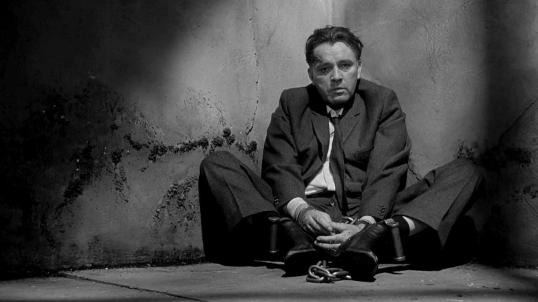
As a director, Ritt was known for his skill with actors.  More than anyone, he played a huge role in making stars out of both Paul Newman and Sally Field.  He was also one of the few directors to understand how to harness Richard Burton’s self-destructive tendencies and, as a result, Burton gave one of his best performances in Ritt’s adaptation of The Spy Who Came In From The Cold.  

It’s time for….

4 Shots From 4 Martin Ritt Films

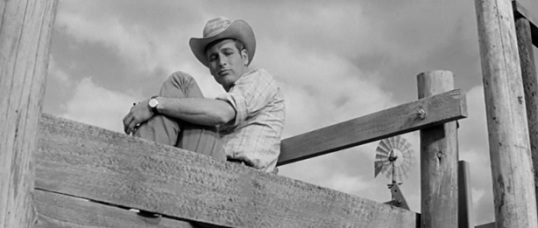
Hud (1963, dir by Martin Ritt, DP: James Wong Howe)

The Spy Who Came In From The Cold (1965, dir by Martin Ritt, DP: Oswald Morris)

The Front (1976, dir by Martin Ritt, DP: Michael Chapman)

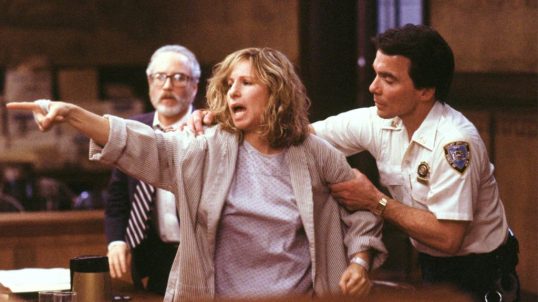
Nuts (1987, dir by Martin Ritt, DP: Andrzej Bartkowiak)

Live Tweet Alert: Watch The Original Invasion of the Body Snatchers with #ScarySocial


As some of our regular readers undoubtedly know, I am involved in a few weekly live tweets on twitter.  I host #FridayNightFlix every Friday, I co-host #ScarySocial on Saturday, and I am one of the five hosts of #MondayActionMovie!  Every week, we get together.  We watch a movie.  We tweet our way through it.

Tonight, for #ScarySocial, Deanna Dawn will be hosting the original, 1956 Invasion Of The Body Snatchers!

If you want to join us on Saturday night, just hop onto twitter, start the film at 9 pm et, and use the #ScarySocial hashtag!  The film is available on Prime.  I’ll probably be there and I imagine some other members of the TSL Crew will be there as well.  It’s a friendly group and welcoming of newcomers so don’t be shy.

Lisa Reviews An Oscar Winner: CODA (dir by Sian Heder)


Remember CODA?

I ask that because this 2021 film often seems to be forgotten about when people discuss the films that have won the Oscar for Best Picture. Indeed, when the Oscar nominations were first announced for that year, many commentators treated the film’s nomination as an afterthought.  It was pointed out that CODA only had a total of three nominations, for Picture, Adapted Screenplay, and Best Supporting Actor.  It was expected that Troy Kostur would win Best Supporting Actor but it was also felt that Best Picture would be won by one of the big nominees, like The Power of the Dog, Belfast, or West Side Story.

But, interestingly enough, the momentum began to shift shortly after the nominations were announced.  The nomination brought the film to an entirely new audience, all of whom could stream the movie on Apple TV+.  The members of the Academy who hadn’t seen the film before the nominations were announced watched the film and many reportedly fell in love with the simple but touching story of a teenage girl who must decide whether to go to music school or to stay at home with her deaf parents and older brother.  By the time the Academy Awards were held, CODA had become the new front runner.

How did this happen?  A lot of it had to do with the fact that CODA was an unabashedly emotional story, one that was specifically made to bring tears to the eyes of the audience.  CODA was more humanistic than the remote and cold Power of the Dog.  Whereas both West Side Story and Belfast were obviously made with Oscar glory in mind, the low-budget CODA felt as if it simply wanted to tell a good story.  Unlike Dune, CODA was not made to launch a franchise and, unlike King Richard, it was about more than just one performance.  Its straight-forward approach provided quite a contrast to the stylized flourishes of Nightmare Alley and Licorice Pizza.  (Incidentally, Nightmare Alley and Licorice Pizza were my two favorite films of the year.)  It should also be remembered that CODA, like the previous year’s Nomadland, was watched while many people were still hiding their faces behind masks, terrified of catching COVID.  It was a time when many people were yearning for something that would just make them feel good.

And whatever else one might say about CODA, it’s definitely a feel good movie.  From the wonderful moments when Ruby (Emilia Jones) discovers her love for singing to the slyly humorous and emotionally honest performances of Troy Kostur, Marlee Matlin, and Daniel Durant as Ruby’s parents and brother, CODA is a film that will make you smile and think about the people who you consider to be your family.  It’s a sweet movie, one that reminds us that it’s okay to get emotional and that it’s okay to tell people that you love them and that, as an artform, film can be used for something other than just comic book adaptations.

That’s not say it’s a perfect film, of course.  Those who complained that CODA had the flat look of a made-for-TV movie were not incorrect and the fact that most people ended up watching the movie on TV (or, in my case, on a laptop) did not help with the issue.  As Ruby’s music teacher, Eugenio Derbez gives a rather broad performance that often fells at odd with the more realistic work of the rest of the cast.  The film had its flaws but it also made me smile and the end brought real tears to my mismatched eyes and there’s something to be said for that.  During a year when many people were still afraid to get close to anyone else, CODA was a film that celebrated love, family, and community.

Did CODA deserve to win Best Picture?  Like I said, I would have given the Oscar to either Nightmare Alley or Licorice Pizza but I liked CODA and, looking back, I certainly prefer its positive vibes to the well-made emptiness of Power of the Dog.  The low-key CODA is probably destined to join The Artist and Argo as one of the best picture winners that people tend to forget but no matter.  It’s a film that holds up well and, in 2021, it was exactly the film that a lot of people needed.

Live Tweet Alert: Join #FridayNightFlix For Talladega Nights!


As some of our regular readers undoubtedly know, I am involved in a few weekly live tweets on Twitter and Mastodon.  I host #FridayNightFlix every Friday, I co-host #ScarySocial on Saturday, and I am one of the five hosts of #MondayActionMovie!  Every week, we get together.  We watch a movie.  We tweet our way through it.

Tonight, at 10 pm et, we’ve got a comedy classic, 2006’s Talladega Nights!

If you want to join us this Friday, just hop onto twitter, start the movie at 10 pm et, and use the #FridayNightFlix hashtag!  It’s a friendly group and welcoming of newcomers so don’t be shy.

Talladega Nights is available on Prime!  See you there!

Scenes That I Love: The Crew of Apollo 13 Sees The Moon in Ron Howard’s Apollo 13


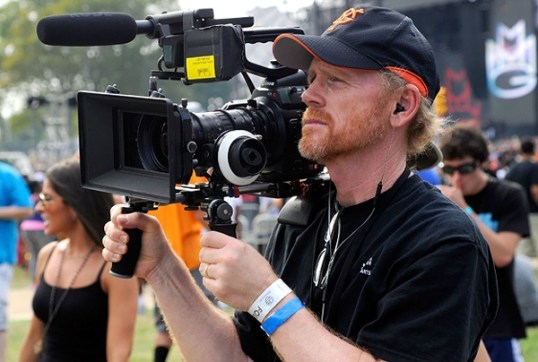
Today, the Shattered Lens wishes a happy birthday to director Ron Howard!

Ron Howard has been in the film business for his entire life, first as an actor and then as a director.  He is perhaps the epitome of the mainstream, Hollywood film director and, as such, he doesn’t always get the credit that he deserves.  He’ll never be considered an auteur but no matter!  Ron Howard makes efficient and often entertaining films and, in this age of bloated budgets and self-indulgence, there’s something to be said for his professional approach.

Plus, he gave us this absolutely beautiful scene from 1995’s Apollo 13.  In this scene, Jim Lovell (Tom Hanks) takes a look at the moon and, for a minute, thinks about what could have been.  Though Lovell may dream of walking on the moon, he knows it won’t happen and that his only concern now is getting both himself and his crew back home.  He’s a professional, much like Ron Howard himself.

4 Shots From 4 Films: Special Zack Snyder Edition


4 Shots From 4 Films is just what it says it is, 4 shots from 4 of our favorite films. As opposed to the reviews and recaps that we usually post, 4 Shots From 4 Films lets the visuals do the talking!

Today, the Shattered Lens wishes a happy 58th birthday to Zack Snyder!  Zack Snyder has been a favorite (and occasionally a not-so-favorite) of many of the people who have written for this site.  Speaking for myself, I loved Sucker Punch and disliked Man of Steel.  (Arleigh, for the record, liked both.) But Snyder is a filmmaker about whom no one seems to be neutral.  That’s definitely something of which to take some pride.  I was not a fan of the whole idea behind the Oscar Fan Favorite nonsense that took place a few years ago but there was something satisfying about both of those awards being won by films directed by a man who Hollywood has often tried to dismiss.

In honor of Zack Snyder’s birthday, here are….

4 Shots From 4 Films

Watchmen (2009, dir by Zack Snyder, DP: Larry Fong)

Sucker Punch (2011, dir by Zack Snyder: DP: Larry Fong)

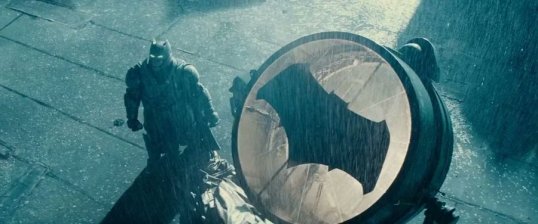
Batman v Superman: Dawn of Justice (2016, dir by Zack Snyder, DP: Larry Fong)

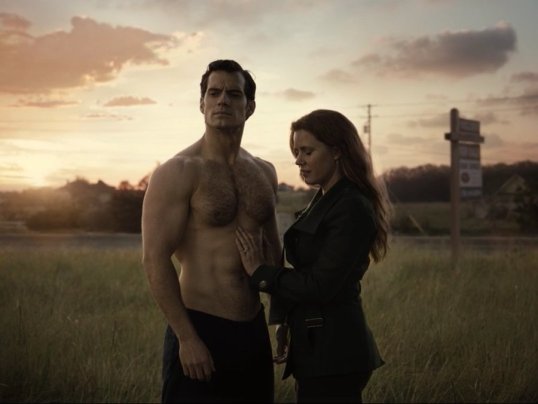
Zack Snyder’s Justice League (2021, dir by Zack Snyder, DP: Fabian Wagner)

Scenes That I Love: Elizabeth Taylor Enters Rome In Cleopatra


Today would have been the 92nd birthday of one of the greatest film stars of all time, Elizabeth Taylor!

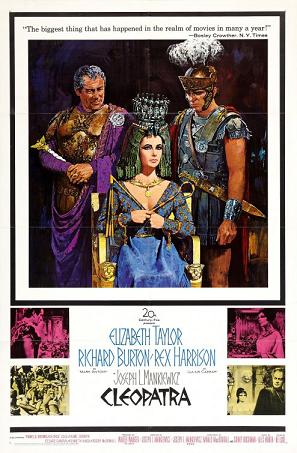
Today’s scene that I love comes from 1963’s CleopatraCleopatra is often dismissed as the film that nearly bankrupted a studio but it’s enjoyable if you’re in the right mood and you’ve got four hours of free time.  Elizabeth Taylor may not have been a historically accurate Cleopatra but who cares?  It seems appropriate that the most glamorous woman of what was then the modern world played the most glamorous woman of the ancient world.

In this scene, Cleopatra arrives in Rome with all of the fanfare befitting the world’s most beautiful and powerful woman.  Keep in mind that this scene was done in the days before CGI and — *shudder* — AI.  Every costume was real.  Every extra was real.  Everything about this scene was real.

Monday Live Tweet Alert: Join us for Busaba The Agent and Some Kind of Wonderful!


As some of our regular readers undoubtedly know, I am involved in hosting a few weekly live tweets on twitter and occasionally Mastodon.  I host #FridayNightFlix every Friday, I co-host #ScarySocial on Saturday, and I am one of the five hosts of Mastodon’s #MondayActionMovie!  Every week, we get together.  We watch a movie.  We snark our way through it.

Tonight, for #MondayActionMovie, the film will be Busaba The Agent, selected and hosted by Sweet Emmy Cat!

Following #MondayActionMovie, Brad and Sierra will be hosting the #MondayMuggers live tweet.  We will be watching Some Kind of Wonderful!

It should make for a night of fun viewing and I invite all of you to join in.  If you want to join the live tweets, just hop onto Mastodon, pull up Busaba The Agent on YouTube, start the movie at 8 pm et, and use the #MondayActionMovie hashtag!  Then, at 10 pm et, switch over to Twitter and Prime, start Some Kind of Wonderful, and use the #MondayMuggers hashtag!  The live tweet community is a friendly group and welcoming of newcomers so don’t be shy. 

February Positivity: Always A Winner (dir by Dave Christiano)


In this 2023 film, teenage golf champion Emily (Evangeline Griffin) transfers from one private Christian academy to another.  At her new school, the golf coach, Coach Kelly (Jenn Cooke), tells her two best players, Madison (Amelia Still) and Hannah (Ashley Brant), to befriend Emily and gauge whether or not she plans on continuing to play golf in high school.

When they approach Emily in the school’s cafeteria, they are shocked when Emily says that she’s a pretty good golf player and she plans to be state champion again.  They are scandalized when Emily mentions that she broke all of Coach Kelly’s old records at her previous school.  They are stunned when Emily suggests that she’s a better golfer than Coach Kelly ever was.

“Are you a Christian?” Madison asks.

Yes, this is another one of those films.  This is another Dave Christiano-directed film in which high school athletics (in this case, golf) are used as a metaphor for faith.  Emily may say she’s a Christian but first she’s going to have to learn that being a Christian means always doing what your coach tells you to do (even if that means hitting with a seven when you’d rather use your nine) and, of course, being a humble winner and a gracious loser.  As Coach Kelly explains it, Emily could be the best player in the world but God might have plans for her that don’t include winning the state championship.  To me, that’s an odd way to look at things.  I mean, if God is the one who is deciding who is going to win the tournament, why waste all that time with practicing your swing and learning how to putt?  It takes Emily a while to listen to Coach Kelly so we end up with a lot of scenes of Madison and Hannah sucking up to the coach while Emily rolls her eyes in the background.  One wonders if Christiano realized that Madison and Hannah are both the type of people who everyone hated in school, the snitches who followed the rules and called out anyone who didn’t.  Emily may be arrogant but at least she seems like she gets some sort of enjoyment out of winning.  At least she acts like a human being as opposed to a Sim, waiting to be told what to do.

Meanwhile, Madison is freaking out over whether or not she’ll be able to afford to attend Zion College.  She has applied for all of the scholarships and she’s been working part-time and saving her money and her father is willing to contribute a little as well but Madison is still short $5,000.  Madison suggests that she could take out a student loan but her mother says, “No, your father doesn’t want you borrowing any money.”

On the one hand, that’s good advice.

On the other hand, Madison’s the one who is paying for most of her tuition so shouldn’t she be the one to decide whether or not to apply for a student loan?  I mean, Madison is going to be a legal adult by the time she starts college.  And it’s not like Dad is helping out all that much so who cares what he thinks?  Still, Madison’s mother tells her that it might just be God’s plan for Madison to go to a community college.  And again, with all due respect, you have to wonder if we’re supposed to take comfort in the idea of a God who micromanages ever aspect of our lives.

Finally, Hannah learns that a friend is pregnant and thinking about getting an abortion.  Hannah tells her friend that she can’t get an abortion because the Bible says, “Do unto others.”  As Hannah explains it, how would her friend feel if she had been aborted?  Her friend takes Hannah’s words to heart and tells her father that she’s pregnant.  This leads to a montage of her father yelling at her but we don’t hear what he’s saying because a very mid Christian rock is playing over the soundtrack.  Everything works out in the end, of course.  Speaking as someone who has never been comfortable with the extremes of either side of the abortion debate , this whole scene really irked me, as it was very heavy-handed and poorly written.  It’s easy to win an argument when the other side isn’t allowed to present its case.  Just because pro-abortion writers tend to caricature pro-life arguments, that still doesn’t make it any less strident when pro-life writers do the same thing to the other side.

In the end, everything works out.  Emily learns to be humble.  Madison goes to college.  Hannah is hopefully prepared to babysit.  The film ends with one golfer getting disqualified for making a technical mistake, just for Emily to beg that the rules be suspended so that the other golfer can get the trophy she’s earned.  Amazingly, the rules are suspended which really isn’t the way rules are supposed to work.  Apparently, the message is that God’s rules cannot be broken but UIL’s rules are fair game.
14 Days of Paranoia #10: The Brotherhood of the Bell (dir by Paul Wendkos)


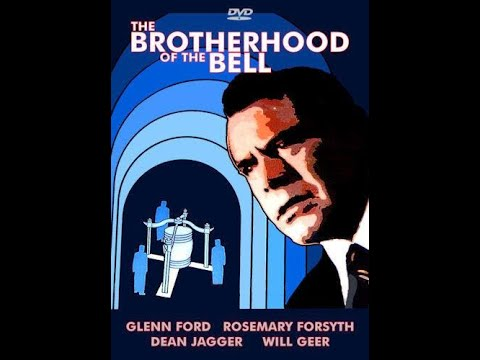
First aired on television in 1970, The Brotherhood of the Bell tells the story of Andrew Patterson (Glenn Ford).

Andrew Patterson is a widely respected economics professor.  He is an influential academic, one who has a nice house, a beautiful wife (Rosemary Forsyth), and a father-in-law (Maurice Evans) who owns a very successful business.  Patterson is also a member the Brotherhood of the Bell, a secret society made up of successful men who all graduated from the prestigious College of St. George in San Francisco.  Patterson has been a member of the society for 22 years and he’s never really taken it that seriously.  He thinks of it as just being a collection of influential men who enjoy getting together and discussing their vision for the world.

That all changes when the man who brought Andrew to the Society, Chad Harmon (Dean Jagger), gives Andrew an assignment.  The Society wants him to deliver an envelope to his friend, Dr. Konstantin Horvathy (Eduard Franz).  Horvathy is up for a deanship that another member of the Society desires for himself.  Inside the envelope is damaging information that the Society has gathered about the people who helped Horvathy defect to the United States, information that will be made public unless Horvathy withdraws as a candidate.  Reluctantly, Andrew shows Horvathy the envelope.  Horvathy responds by committing suicide.

Stricken with guilt, Andrew decides to expose the existence of the Society but he discovers that won’t be easy.  Almost overnight, Andrew’s perfect life starts to collapse.  He loses his job.  The IRS launches an investigation of his father (Will Geer).  As Chad explains it, the Society is responsible for everything that Andrew has and, therefore, the Society can take everything away.  When Andrew goes public, he’s dismissed as just being paranoid and soon, Andrew truly is paranoid.  With his marriage in ruins, Andrew goes on a talk show and can only watch helplessly as his claims are dismissed by the host (William Conrad) and as the audience argues about whether or not the Society is a white plot, a communist plot, a Jewish plot, a Catholic plot, or a government plot.  Even the people who believe Andrew are too busy fighting amongst themselves to provide any help for him or to stand up to the unified power of the Brotherhood.  The host repeatedly rings a bell during the show, the better to mock everyone’s fears.  The film makes a good point.  Crazed theorists are often a conspiracy’s best friend.

An intelligently written and well-acted film, The Brotherhood of the Bell‘s main strength is the direction of Paul Wendkos.  The lighting gets darker and the camera angles become increasingly more skewed as Andrew’s paranoia grows.  In fact, Wendkos does such a good job of visualizing Andrew’s deteriorating mental state that it’s easy to wonder if maybe everyone is right and all of this really is just happening in Andrew’s head.  Though the film ends on a slightly triumphant note, it’s hard not to feel that it’s a temporary victory at best.  The Brotherhood of the Bell (which I imagine was based on Yales’s Skull and Crossbones) will always be there.

14 Days of Paranoia:

  1. Fast Money (1996)
  2. Deep Throat II (1974)
  3. The Passover Plot (1976)
  4. The Believers (1987)
  5. Payback (1999)
  6. Lockdown 2025 (2021)
  7. No Way Out (1987)
  8. Reality (2023)
  9. Chappaquiddick (2017)