Horror Film Review: The Vampire Bat (dir by Frank R. Strayer)


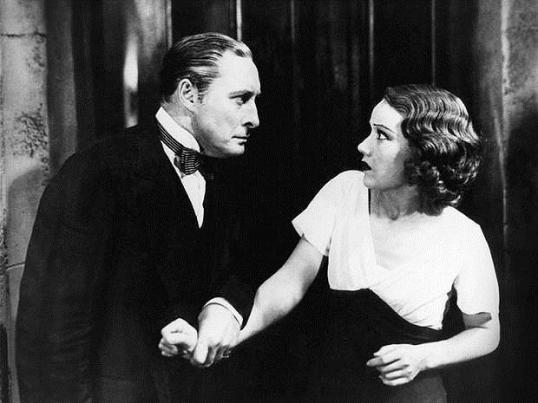
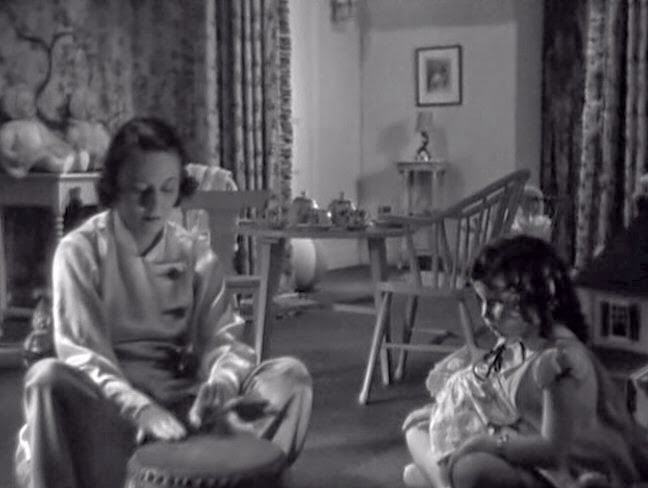
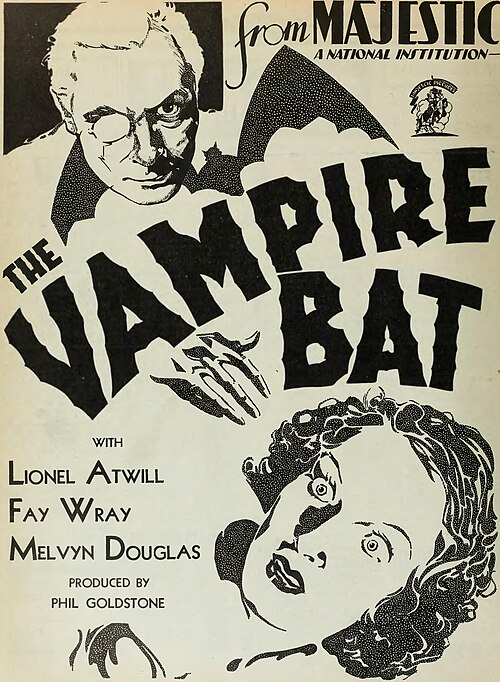
In 1933’s The Vampire Bat, people are dying in a small German village, victims of blood loss.  A woman named Martha Mueller (Rita Carlisle) was recently attacked by a bat, leading to rumors of a vampire.  When the local town eccentric, a twitchy man named Hermann Glieb (Dwight Frye), argues that bats are actually harmless and admits that he likes bats because they are “soft” and “nice,” people start to suspect that he might be the vampire.  Another man named Kringen (George E. Stone) claims that he was attacked by a vampire and insinuates that it was Glieb.  Glieb may seems like a strange man who likes to collect bats but could he be something even more sinister?

Two town leaders have opposite feelings about the claim that a vampire is attacking the town.  Karl Brettschneider (Melvyn Douglas) is the local police inspector and he deals with facts.  He doesn’t believe in superstition and he initially scoffs at the idea that a vampire is attacking the village.  Meanwhile, Dr. Otto von Niemann (Lionel Atwill) is the town’s doctor.  He’s been treating the victims of the bat attacks and he’s even be letting some of his patients live at his home.  Everyone knows that Dr. von Neimann is a kindly man of science.  Karl is even dating Ruth (Fay Wray), one of Otto’s boarders.  But is the doctor as benevolent as everyone assumes?

When answering that question, consider these four facts:

  1.  Dr. von Neimann is the one who encouraged Kringen to spread stories about a vampire haunting the town, despite the fact that Kringen himself said that he didn’t want to start a panic.
  2. Dr. van Niemann is played by Lionel Atwill.
  3. Glieb is played by Dwight Frye.
  4. Karl is played by Melvyn Douglas.

Indeed, for horror fans, the casting of Lionel Atwill gives the game away.  Lionel Atwill appeared in a number of horror films and it was rare that he wasn’t cast as the villain.  (One of his non-villainous role was as the one-armed Inspector Krogh in The Son of Frankenstein.)  From the minute the viewer sees Atwill, he seem to give off sinister vibes and it’s not really a surprise when he turns out to be less than trustworthy.

As for Dwight Frye, horror fans love him for playing a number of unhinged weirdos, like Renfield in the Lugosi-version of Dracula and the torch-bearing servant in Karloff’s Frankenstein.  Frye was good at playing twitchy types but one thing that all of Frye’s characters had in common is that they were pretty much destined to be victims.  Even when Frye played an unlikeable character,  like in Frankenstein, it was obvious that he was going to end up getting killed at the hands of the Monster.

Finally, Melvyn Douglas was the epitome of propriety in every film in which he appeared.  If Douglas thinks that there is something more going on than just a vampire attacking people, there probably is.  And since we know Douglas can’t be the main bad guy, that pretty much just leaves Lionel Atwill.

The Vampire Bat is a short and enjoyable B-movie that puts an interesting spin on the typical vampire legend.  Though the budget may be low, the cast of Atwill, Douglas, Frye, and Wray can’t be beat and all of them give fully committed performances.  Dwight Frye, in particular, gives one of his best performance as the unfortunate Glieb.  As always, Lionel Atwill makes for an entertaining villain.  At its best, The Vampire Bat comments on the power of hysteria.  Convinced that there is a vampire in their midst, the town goes mad and it directs its anger towards those who are seen as being on the outside, men like Glieb.

The Vampire Bat is more than worthy of your Halloween viewing.

Film Review: The Most Dangerous Game (dir by Irving Pichel and Ernest B. Schoedsack


On a jungle island Count Zaroff awaits.

Zaroff is a Russian nobleman and a hunting enthusiast.  However, he’s grown bored with hunting the usual big game trophies.  Those don’t provide enough of a challenge for him.  Instead, he prefers to hunt humans because humans are the most dangerous game.  Humans can think.  Humans are clever.  Humans are deadly.  When big game hunter Bob Rainsford washes up on the island after a shipwreck, he is discovered by Zaroff’s men.  Rainsford discovers that Zaroff is a fan of his work.  Rainsford also learns that Zaroff is planning to hunt him next.

It’s a tale that we’ve all heard, in one form or another.  Ever since Richard Connell’s original short story was published in 1924, The Most Dangerous Game has inspired a countless number of adaptations.  Some of those have been direct adaptations while others have merely been inspired by Connell’s plot but, in the end, they all have the same thing in common.  No animal is more dangerous than man.

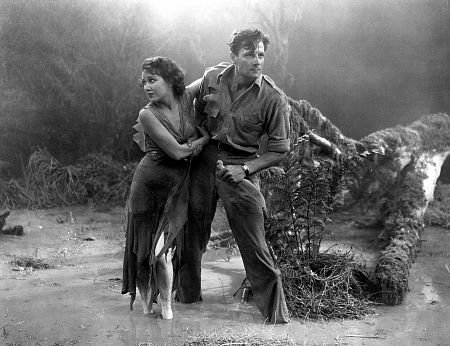
As far as my research has revealed, the very first cinematic adaptation of The Most Dangerous Game came out in 1932.  It was produced by Ernest Schoedsack and Merian C. Cooper, the same team that would later be responsible for the original King Kong.  Joel McCrea played Rainsford while Zaroff is played by Leslie Banks.  In order to provide some romance and perhaps to pad out the film to over an hour, a few extra shipwreck survivors are added.  There’s two sailors who don’t last long.  There’s also Eve Trowbridge and her brother, Martin.  Eve and Martin are played by Fay Wray and Robert Armstrong, both of whom would star in King Kong.  Zaroff’s imposing servant, Ivan, is played by Noble Johnson who also appeared in King Kong.  Are you picking up on a theme here?’

Other than the addition of the extra characters, this film version is pretty faithful to its source material.  Again, we have Zaroff “rescuing” Rainsford and then having a long philosophical discussion with him before announcing that it is Rainsford who will be hunted.  Unsurprisingly, the film’s Rainsford is a bit more heroic than the one who appears in the short story.  The literary Rainsford looks forward to defeating Zaroff at his own game while the film’s Rainsford is more concerned with getting off the island and protecting Eve.

All in all, it’s an entertaining film.  Of course, by today’s standards, it’s a bit creaky.  I mean, the film is 88 year old.  Still, Joel McCrea remains a convincing and compelling hero while Leslie Banks is enjoyably hammy in the role of Zaroff.  Zaroff is a role that calls for an actor who is willing to give into his most theatrical impulses and Banks doesn’t let the film down.  The jungle scenery is properly shadowy and even the miniatures used during the shipwreck sequence have a charm all their own.

Unfortunately, The Most Dangerous Game is one of those films that has slipped into the public domain.  As a result, there’s a lot of less-than perfect versions floating around.  (The version that I recently watched on YouTube was so grainy that it was nearly unwatchable.)  Fortunately, this film is a part of the Criterion Collection.  That’s the one to add to your collection.

4 Shots From 4 Films: Happy Birthday Fay Wray!


4 Shots From 4 Films is just what it says it is, 4 shots from 4 of our favorite films. As opposed to the reviews and recaps that we usually post, 4 Shots From 4 Films lets the visuals do the talking. Today is the birthday of 1930s Scream Queen Fay Wray (1907-2004), and since it’s so close to Halloween season (can’t wait!!), here are 4 Shots From The Horror Films of the fabulous Fay Wray!!

The Most Dangerous Game (1932; D: Irving Pichel & Ernest B. Shoedsack)

The Vampire Bat (1933; D: Frank R. Strayer)

Mystery of the Wax Museum (1933; D: Michael Curtiz)

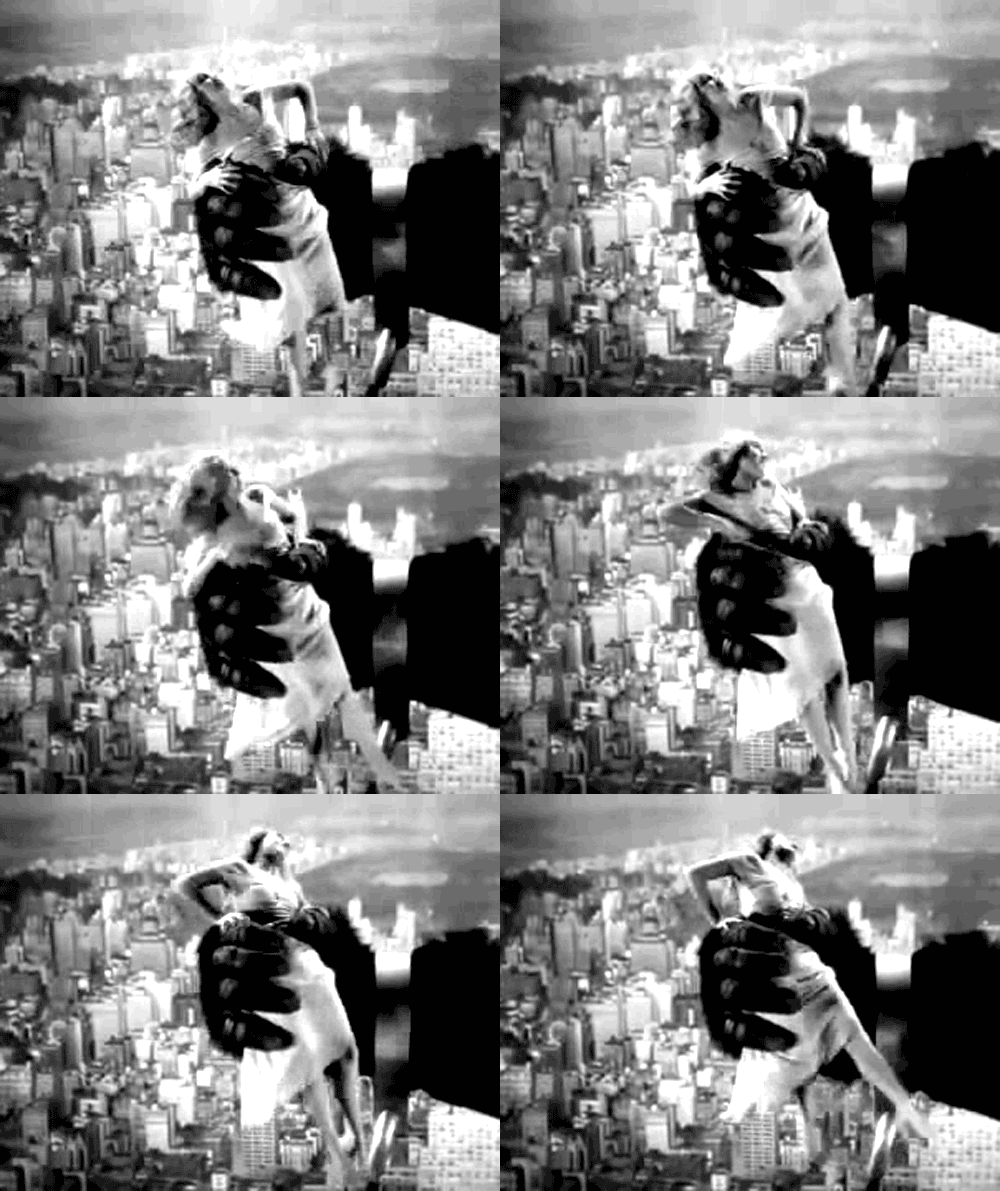
King Kong (1933; D: Merian C. Cooper & Ernest B. Shoedsack)

Halloween Havoc! Extra: THE VAMPIRE BAT (Majestic 1933) Complete Horror Movie!


gary loggins's avatarcracked rear viewer

1933’s THE VAMPIRE BAT isn’t a Universal Horror movie, but it sure comes damn close! This independent feature from Majestic Pictures contains a number of Universal Horror stars, including Lionel Atwill , Melvyn Douglas (THE OLD DARK HOUSE ), Lionel Belmore (FRANKENSTEIN ), and a positively Renfield-like performance from the great Dwight Frye – not to mention KING KONG’s main squeeze Fay Wray as our heroine! Majestic also rented some of the standing sets from FRANKENSTEIN and THE OLD DARK HOUSE to film on, giving the film a real Universal feel.

The screenplay by Edward T. Lowe (who wrote Lon Chaney’s 1923 HUNCHBACK OF NOTRE DAME, and the later horror entry HOUSE OF DRACULA) concerns the village of Kleinschloss up in arms over a series of gruesome murders that point to the presence of a vampire in their midst, with Frye’s simple-minded Herman the chief suspect. Turns out the killings…

View original post 39 more words

Halloween Havoc!: BLACK MOON (Columbia 1934)


gary loggins's avatarcracked rear viewer

moon1

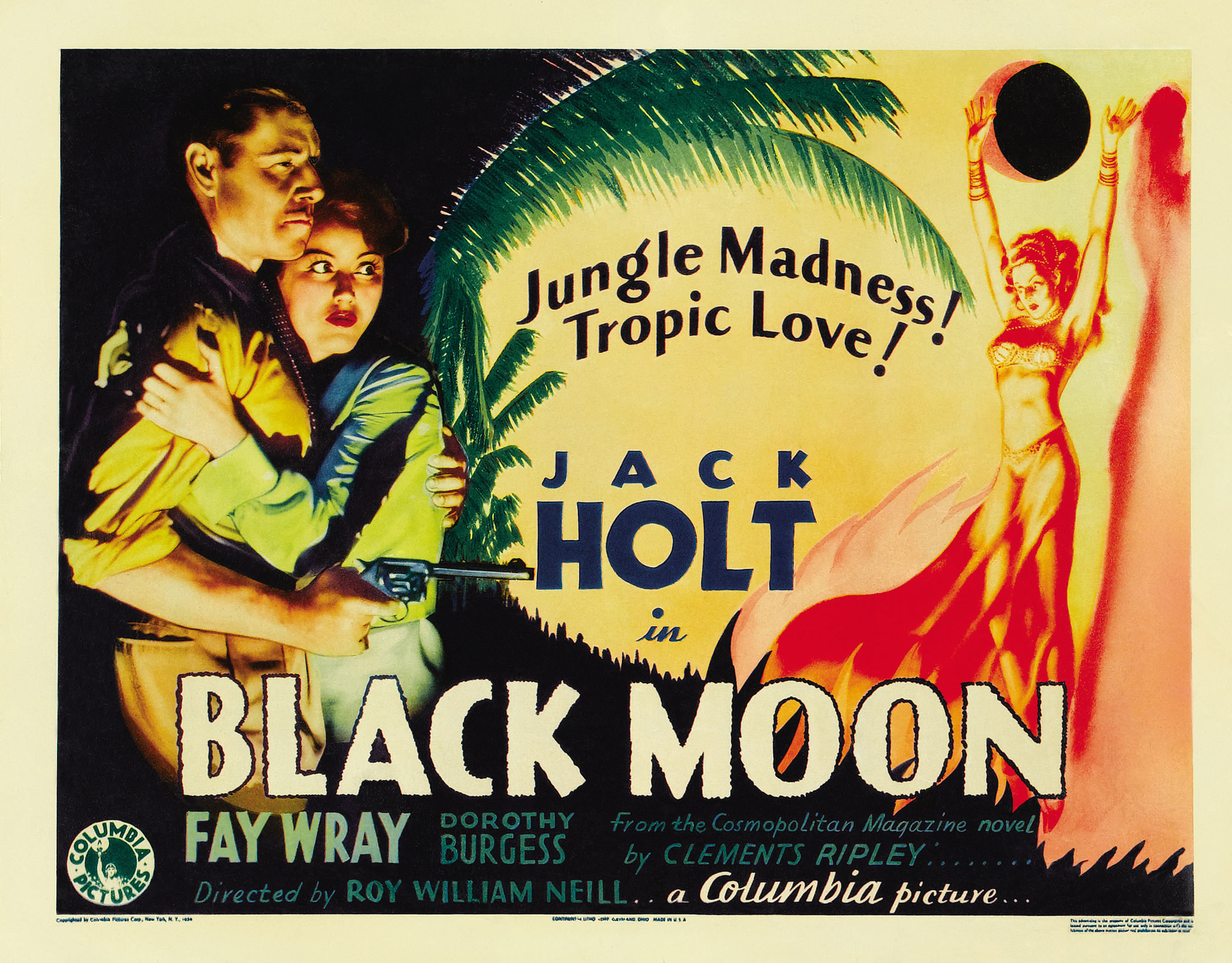
I thought I’d seen, or at least heard of, all the horror films made during the 1930’s. I was wrong. BLACK MOON was new to me when I viewed it recently as part of TCM’S Summer Under the Stars salute to KING KONG’s  main squeeze, Fay Wray. It’s a voodoo tale also starring square-jawed Jack Holt and Pre-Code favorite Dorothy Burgess . The director is Roy William Neill, who would later work with genre giants Karloff (THE BLACK ROOM), Lugosi and Chaney (FRANKENSTEIN MEETS THE WOLF MAN), and helm eleven of the Universal Sherlock Holmes films with Basil Rathbone.

moon2

The film open with the pounding of jungle drums, and we see Nita Lane (Burgess) is the one pounding them in her luxurious home. Nita grew up on the Caribbean isle of San Christopher, where her parents were murdered during a native uprising. Hubby Stephen (Holt) is against Nita returning to the…

View original post 456 more words

Netflix Noir #3: Crime of Passion (dir by Gerd Oswald)


CrimepassionPosterThe third Netflix Noir that I watched was 1957’s Crime of Passion.

In Crime of Passion, Barbara Stanwyck plays Kathy Ferguson, a San Francisco-based advice columnist.  She is approached by two homicide detectives who request her help tracking down a fugitive who they think might read her column.  Charlie (Royal Dano) is aggressive and outspoken.  When he first meets Kathy, he tells her, “You’re work should be raising a family and having dinner ready when your husband comes home from work.”  His far more passive partner is Detective Bill Doyle (Sterling Hayden).

Kathy writes a column that convinces the fugitive to turn herself in.  (The power of Kathy’s column is shown in an amusing montage where woman after woman is seen reading the column aloud.  Significantly, no men are seen to ever read anything that Kathy has written.)  The resulting fame leads to Kathy getting a job offer in New York.

However, before Kathy can leave, she gets a phone call from Bill.  He asks her out on a date and, one scene later, they’re getting married in the shabby office of a justice of the peace.  Kathy sacrifices her career to be a suburban housewife.

From the minute that Kathy first looks at the small and anonymous house and the boring neighborhood that she’ll be sharing with Bill, it’s obvious that things are not going to work out well.  Even though Kathy even tells Bill, “I hope all your socks have holes in them and I can sit for hours darning them,” the life of domestic servitude is not for her.

Every day, she stays home while Bill goes to work.  At night, she reluctantly plays hostess to the constant gatherings of Bill’s colleagues and their wives.  The women stay in one room while the man gather in another.  Kathy is quickly bored with the inane chattering of the other wives but whenever she tries to go into the other room, she finds herself treated like an unwanted intruder.

And worst of all is the fact that Bill has absolutely no ambition of his own.  He’s got his house.  He’s got his wife.  He’s got his friends.  And he doesn’t feel that he needs anything else.

Kathy takes it into her own hands to advance Bill’s career, first by having an affair with Bill’s boss (Raymond Burr) and finally by trying to find a spectacular crime that Bill can solve.  And, as the suburbs continue to drive her mad, Kathy is not above creating a few crimes on her own…

In many ways, Crime of Passion reminds of another 50s film, Nicholas Ray’s Bigger Than Life.  Both films use the conventions of melodrama to present a surprisingly subversive look at the horrors of suburban conformity.  Unfortunately, Crime of Passion never quite reaches the heights of Bigger Than Life, largely because Sterling Hayden gives such a dull performance as Bill that you never believe that Kathy would have married him in the first place.  (The film would have been far more impressive if Bill had started out as an apparently dynamic character whose dullness was then revealed after Kathy married him.)  However, Barbara Stanwyck is well-cast as Kathy and Raymond Burr plays up his character’s ambiguous morality.  If nothing else, Crime of Passion is one of those film to show anyone who is convinced that nothing subversive was produced in the 1950s.