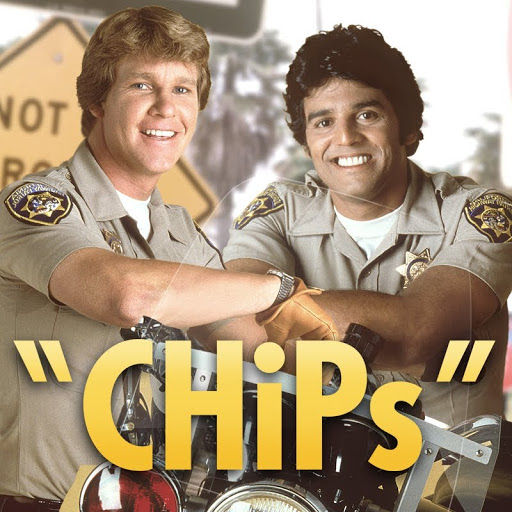
Welcome to Late Night Retro Television Reviews, a feature where we review some of our favorite and least favorite shows of the past! On Mondays, I will be reviewing CHiPs, which ran on NBC from 1977 to 1983. The entire show is currently streaming on Prime!
This week …. hey, what is this!?
Episode 5.12 “Mitchell & Woods”
(Dir by Bernard L. Kowalski, originally aired on December 18th, 1981)
When an old high school friend of Michell’s is murdered, Mitchell and Woods uncover a male prostitution ring. Along with bringing the guilty to justice, they also help Chickee (Pamela Susan Shoop) find the courage to leave her abusive relationship….
No, there’s not much motorcycle action. No, there’s no slow motion car crashes. Yes, this is an episode of CHiPs. Well, kind of.
It’s actually a backdoor pilot for a show about Mitchell and Woods. Ponch and Baker show up at the start of the show to wish Mitchell and Woods luck. Ponch and Baker return halfway through the show so that Ponch can tell Mitchell and Woods about an informant named Avrom (Tony Burton). And, finally, Ponch and Baker return at the end of the episode and give our erstwhile detectives a parking ticket.
Backdoor pilots at the worst! You’re all prepared to spend 40 minutes with people you know and suddenly, a bunch of new folks show up and start demanding your attention. It doesn’t help that Mitchell & Woods is a terrible pilot and I’m not really surprised that it didn’t become an actual series. Can Mitchell and Woods prove that woman can be good detectives? Will they ever impress their new boss (Paul Gale)? I don’t really know the characters so I don’t care.
I swear, they could have at least brought back Caitlyn Jenner for this episode.
Welcome to Late Night Retro Television Reviews, a feature where we review some of our favorite and least favorite shows of the past! On Mondays, I will be reviewing CHiPs, which ran on NBC from 1977 to 1983. The entire show is currently streaming on Prime!
This week, we say goodbye to a member of the highway patrol. Excuse while I wipe the tears away from my myopic eyes.
Episode 5.11 “Concours d’Elegance”
(Dir by John Patterson, originally aired on December 13th, 1981)
This is it. This the final episode to feature the character of Steve McLeish.
Played by a pre-transition Caitlyn Jenner, Steve was introduced as a replacement for Ponch while Erik Estrada was recovering from a stunt gone wrong. Once Ponch rejoined the series, there really wasn’t much for Steve to do but he still stuck around for a few episodes. He only appears for a few minutes in this episode. He arrests some joyriding teens who are constantly trying to get older people to buy them liquor. Maybe they should have asked Steve. He always seemed like was eager to please.
(I should mention that both of the “teens” appear to be in their 30s.)
I’m going to miss Steve, largely because Jenner’s bland performance was so bad that it actually became rather fascinating to watch. In this episode, he continues to deliver his lines with a puppy-dog earnestness that can’t disguise his total inability to show any emotion beyond wide-eyed wonderment.
As for this episode, it featured Baker and Ponch getting involved with a rich family. While matriarch Hannah Chadway (Claudette Nevins) tries to see Baker up with her niece, sleazy Anthony Chadway (Gary Graham) is illegally selling cars and using the family’s charity as a front. At one point, Hannah offers Baker a private security job. Baker turns her down. Couldn’t he have at least put in a word for his friend Steve? Ponch and Baker eventually take it upon themselves to tell Hannah that she needs to get her spoiled family under control. Hannah realizes they’re right. Personally, I would have told Ponch and Baker that it was really none of their business but that’s just me.
This episode feature two slow motion crashes, both of which are so severe that everyone involved should have been killed. (One accidents features not one but two cars flying through a trailer as it explodes.) Oddly, no one is seriously injured. I’m getting the feeling that CHiPs may not have always been a realistic show.
Welcome to Late Night Retro Television Reviews, a feature where we review some of our favorite and least favorite shows of the past! On Mondays, I will be reviewing CHiPs, which ran on NBC from 1977 to 1983. The entire show is currently streaming on Prime!
This week, Ponch is back!
Episode 5.10 “Fast Money”
(Dir by Leslie H. Martinson, originally aired on December 5th, 1981)
This is getting weird.
After being either absent or only appearing in one or two scenes over the past few episodes, Ponch returns this week. He’s once again on active duty, patrolling the California highways with Baker. As much as I notice and joke about the obvious disdain that Erik Estrada and Larry Wilcox held for each other, they do make a surprisingly good team. They just seem to belong together. If I’ve learned anything over the past few weeks, it’s that Larry Wilcox needed Estrada’s flamboyance and that Erik Estrada needed Wilcox’s cool professionalism. They balanced each other out.
With Ponch (and Estrada) back, there’s really no reason for Steve McLeish to stick around. And yet, during this episode — there he was!
He didn’t really have anything to do. Ponch and Baker were after some van-driving engineers who were using a hydraulic lift to hijack other cars. When they figured out which company had developed the hydraulics being used in the crime wave, Steve called the company’s chairman. (Steve says the chairman of the board is an old friend and no one acts surprise. I’m guessing maybe that was an inside joke or some sort of reference to the Olympics.) Later, Steve showed them a mansion that was fixing up so he could flip it. The scenes felt awkward and not just because of the Caitlyn Jenner’s total lack of acting ability. There really wasn’t any reason for them to be in the episode. There was no reason for Steve to be around. Ponch and Baker should have been out there, taking down those nerdy engineers and warning people about the dangers of technology. Instead, they were having to make time to hang out with Steve.
As I watched this episode, it occurred to me that maybe Caitlyn Jenner just refused to go home. Maybe Jenner showed up on set and wouldn’t leave until the writers wrote Steve a few scenes. That theory is really the only one that makes sense.
Anyway, this episode had a few good car crashes. The hydraulic lift was incredibly silly and so was Harlan’s suggestion that they could catch the thieves by tricking them into trying to lift a car that was weighted down with rocks. There was also a big subplot that was centered around Ponch trying to get the shower fixed in his apartment. I always like it whenever the show finds an excuse to show us either Ponch or Jon’s apartment. The wood paneling and the shag carpeting amuses me. They should have called this show Disco Cops.
According to the imdb, next week will be Jenner’s final episode. So, we’ll see how the saga of Steve McLeish comes to an end. I think he’s going to get arrested for taking payoffs from the mob. We’ll see if I’m right!
Welcome to Late Night Retro Television Reviews, a feature where we review some of our favorite and least favorite shows of the past! On Mondays, I will be reviewing CHiPs, which ran on NBC from 1977 to 1983. The entire show is currently streaming on Prime!
This week is just a mess.
Episode 5.9 “Finders Keepers”
(Dir by John Peyser, originally aired on November 29th, 1981)
Oh, it’s a Steve McLeish episode!
These episodes are fun because they were so obviously written and re-written to try to cover up the fact that Caitlyn Jenner was a terrible actor. In this episode, we learn that Steve is into rare flowers and that he drives a pretty snazzy convertible. And yet, despite these character details, Steve still doesn’t really have a personality beyond being kind of twitchy and always hesitating before delivering his lines. Jenner seemed to be made out of charisma anti-matter and it’s bizarre to see a public figure with absolutely zero screen presence.
This episode is a mess. Two teens steal a car and come into possession of some stolen money. Steve searches for the stolen car. An eccentric bounty hunter (Noble Willingham) drives from Texas to California in a pink Cadillac and gets in everyone’s way as he chases a fugitive. Oscar nominee Amy Madigan appears as a country singer who would really like to get it on with Baker but Baker always ends up running late. Ponch makes three brief appearances in this episode. It’s explained that he’s preparing to testify in a huge trial and that’s why Baker and Steve are temporary partners. None of the storylines really feel complete or connected. One gets the feeling that three different scripts were just randomly crammed together.
This episode had two effective car crashes and it was somewhat amusing to watch as Baker always showed up just a minute or two after Amy Madigan stopped singing. That said, this episode didn’t add up to much. The only thing that really made it watchable was Jenner’s bizarre performance.
There’s a part of me that kind of hopes that Ponch never comes back! Of course, if that happened, it would no longer be….
Welcome to Late Night Retro Television Reviews, a feature where we review some of our favorite and least favorite shows of the past! On Mondays, I will be reviewing CHiPs, which ran on NBC from 1977 to 1983. The entire show is currently streaming on Prime!
Who will be Jon’s partner this week? Read on to find out!
Episode 5.7 “Bomb Run”
(Dir by Phil Bondelli, originally aired on November 15th, 1981)
I was really hoping that this would be another episode with Caitlyn Jenner playing Steve but no, Ponch was back. (Erik Estrada is the better actor of the two but Jenner’s performance is often so bizarre in its utter blandness that it becomes fascinating to watch.) This episode opened with Baker observing as Ponch piloted a small airplane. CHiPs was all about the California lifestyle and apparently, a big part of that lifestyle was being able to take off in a small private plane whenever you felt like it. Ponch thinks that he’s ready for a solo flight but Baker tells him that he still needs to work on his landing skills. Sorry, Ponch, you’re not a Kennedy.
The highway patrol is preparing for the big air show. Officer Baricza (Brodie Greer) is surprised when he sees his ex-girlfriend, Terri (Kristin Griffith), hanging out around an airplane and preparing to take part in the show despite the fact that she has always been scared of flying. What Baricza does not know is that Terri and her father (Ed King) have planned a big robbery to take place during the air show. While Terri drops bombs from the airplane, the explosions will cover the sound of two safecrackers (played by Brion James and Taylor Lacher) blowing open a safe and stealing a bunch of bearer bonds. However, things get complicated when the safecrackers illegally park their car (which leads to a helicopter towing it off, carrying it through the sky). Things get even more complicated when Terri’s father has a heart attack when they’re in the air and Baker and Ponch have to perform a mid-air rescue.
So, how does Baricza react to his ex-girlfriend being a criminal? We never find out. Ponch roughly lands Terri’s plane and then show pretty much ends. As a result, we don’t know what happens to Terri and her father. We don’t know if the police succeeded in catching the safecrackers. We don’t even know if Terri’s father merely passed out or if he actually died up there. Instead, Getraer makes a joke about Ponch’s terrible landing skills and we get the familiar CHiPs freeze frame.
This episode featured a lot of airshow stock footage and it was pretty obvious that the plot was secondary to showing off all of the planes doing fancy maneuvers in the sky. It felt a bit lazy on the part of the show’s producers but I also imagine that this episode was also fairly cheap to produce. There’s more stock footage than plot. As a result, the ending is a bit unsatisfying. Is Baricza upset about Terri being a criminal? Who knows? He certainly does seem to be amused by Ponch’s landing though!
Welcome to Late Night Retro Television Reviews, a feature where we review some of our favorite and least favorite shows of the past! On Mondays, I will be reviewing CHiPs, which ran on NBC from 1977 to 1983. The entire show is currently streaming on Prime!
This week, it’s Ponch and Jon’s anniverary!
Episode 5.3 “Moonlight”
(Dir by Earl Bellamy, originally aired on October 18th, 1981)
A highway accident leads to a bunch of cars flying through the air in slow motion!
Ponch works off-duty as a security guard for an action film. Ponch being Ponch, he ends up flirting with the two female stars. He also ends up accidentally flirting with their stunt doubles, both of whom turn out to be men wearing blonde wigs. Oh, Ponch!
Someone is dumping toxic waste and ruining the beautiful California country side. Ponch and Jon turn to their old friend, trucker Robbie Davis (Katherine Cannon), for help. However, it turns out that the waste is being transported and dumped by someone close to Robbie!
There’s a lot going on in this episode but the majority of the screentime is taken up with Getraer, Grossman, Baricza, Turner, and Bonnie thinking about how to celebrate Ponch and Jon’s 4th anniversary as partners. At one point, Getraer does point out that it’s unusual for an entire department to celebrate the anniversary of a partnership. I’m glad that someone said that because, seriously, don’t these people have a job to do? I mean, aren’t they supposed to be out there, issuing tickets and preventing crashes like the one that opened this episode? You’re not getting paid to be party planners, people!
Knowing just how much Larry Wilcox and Erik Estrada disliked each other when the cameras weren’t rolling, it’s hard not to feel as if there’s a bit of wish-fulfillment going on with the anniversary storyline. Watching everyone talk about how Jon and Ponch are the perfect team, one gets the feeling that the show itself is telling its stars, “Can you two just get along? Everyone loves you two together!”
Reportedly, by the time the fifth season rolled around, Wilcox was frustrated with always having to play second fiddle to Estrada. Having binged the show, I can understand the source of his frustration. During the first two seasons, Wilcox and Estrada were given roughly the same amount of screen time in each episode. In fact, Estrada often provided the comic relief while Wilcox did the serious police work. But, as the series progressed, the balance changed and it soon became The Ponch Show. If there was a beautiful guest star, her character would fall for Ponch. If there was a rescue to be conducted, Ponch would be the one who pulled it off. When it came time to do something exciting to show off the California lifestyle, one can b sure that Ponch would be the one who got to do it. Baker got pushed to the side. This episode, however, allows Baker to rescue someone while Ponch watches from the background. “See, Larry?” the show seems to be saying, “We let you do things!”
As for the episode itself, it’s okay. There’s enough stunts and car accidents to keep the viewers happy. That said, the toxic dump storyline plays out way too slowly. At one point, Baricza finds a bunch of barrels off the side of the road and he looks like he’s about to start crying. It’s an odd moment.
The episode ends with Baker and Ponch happy. It wouldn’t last. This would be Larry Wilcox’s final season as a member of the Highway Patrol.
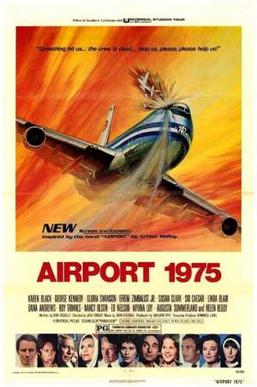
About halfway through 1974’s Airport 1975, Sid Caesar has one of the greatest lines in film history.
“The stewardess is flying the plane?”
Hell yeah, she is! After a collision with another plane takes out the crew of a Broening 747, it’s up to head flight attendant Nancy (Karen Black) to keep the plane from crashing until another pilot can somehow be lowered into the cockpit of the stricken airliner. Nancy’s never flown an airplane before but she is dating Al Murdock (Charlton Heston), who may be scared of commitment but who is still described as being one of the greatest pilots who has ever lived. None other than Joe Patroni (George Kennedy) says that no one knows more about flying than Al Murdock.
George Kennedy is the only cast member to return from the original Airport. When we previously met Patroni, he was the cigar-chewing chief mechanic for Trans World Airlines. In Airport 1975, he’s suddenly an executive with Columbia Airlines. His wife (Susan Clark) and his son (Brian Morrison) are also on the plane. Joe Patroni and Al Murdock are determined to bring that plane safely to the ground in Salt Lake City and if that means dropping a pilot into the cockpit from a helicopter, that’s what they’ll do. It’s all a question of whether or not Nancy can keep that plane from crashing while they round up a helicopter and a pilot.
Airport 1975 is so famous for being the movie where the stewardess is flying the plane that it’s often overlooked that it’s also the film where Linda Blair plays a young girl in need of a kidney transplant. When Sister Ruth (Helen Reddy) sees that the girl has a guitar with her, Ruth sings a folk song that has everyone on the airplane smiling. (If I was on a plane and someone started playing folk music, I’d probably jump out. That may seem extreme but seriously, you don’t want to test me on how much I dislike the folk sound.) This scene was, of course, parodied in Airplane! In fact, it’s pretty much impossible to watch Airport 1975 without thinking about Airplane!
It’s also overlooked that Gloria Swanson is one of the many stars to appear in this film but Swanson is the only one playing herself. Gloria Swanson starts as Gloria Swanson and I assume that this 1974 film was set in 1975 in order to generate some suspense as to whether or not Swanson was going to survive the crash. Swanson talks about how, in 1919, Cecil B. DeMille flew her over California. She does not talk about Joseph Kennedy or Sunset Boulevard and that’s a shame. As I watched Airport 1975, I found myself thinking about how different the film would have been if Gloria Swanson had been the one who had to pilot the plane instead of Karen Black.
“Gloria Swanson is piloting the plane?”
As entertaining as that would have been, it would have meant missing out on Karen Black’s intense performance as Nancy. At times, Nancy seems to be so annoyed with the situation that one gets the feeling that she’s considering intentionally crashing the plane into one of Utah’s mountains. At other times, she seems to be at a strange sort of peace with whatever happens. There’s a scene where she attempts to clear some of the clutter in the cockpit and an instrument panel falls on her head and it’s such a powerful moment because I know the exact same thing would have happened to me in that situation. There’s another moment where I’m pretty sure she accidentally kills the first pilot who attempts to drop into the cockpit and again, it’s a mistake that anyone could have made. The film doesn’t call her out on it because the film understand that none of us are perfect, except for Charlton Heston.
Speaking of which, Karen Black’s emotional performance contrasts nicely with the performance of Charlton Heston. This is perhaps the most Hestonesque performance that Charlton Heston ever gave. Al Murdock is confident, he doesn’t suffer fools, and he’s condescending as Hell. Every time he calls Nancy “honey,” you’ll want to cringe. And yet, it’s hard not to appreciate someone who can be so confident while wearing a tight yellow turtleneck. Charlton Heston watches as the first pilot to attempt to enter the cockpit plunges to his death and immediately declares that it’s his turn to try. “Get me in that monkey suit!” he snaps and it’s such a Heston moment that you have to love it.
There’s a ton of people in this movie. Norman Fell, Jerry Stiller, and Conrad Janis play three rowdy drunks. Erik Estrada, Efrem Zimbalist, and Roy Thinnes are the unfortunate members of the flight crew. Dana Andrews has a heart attack while piloting a small private plane. Myrna Loy appears not as herself but as Mrs. Delvaney, who spends almost the entire flight drinking. Christopher Norris plays Bette, who says that she may look like a teenager but she prefers to be called “Ms. Teenager” and that she’s trained in Kung Fu. Beverly Garland played Dana Andrews’s wife. Larry Storch is an obnoxious reporter. Character actor Alan Fudge plays Danton, the Salt Lake City controller who keeps Nancy calm until Charlton Heston can start snapping at people.
The first time that I watched Airport 1975, I was pretty dismissive of it but, over the years, I’ve rewatched it a few times and I have to admit that I’ve fallen in love with this wonderfully ridiculous film. There’s just so many odd details, like American Graffiti showing up as the plane’s in-flirt entertainment and Sid Caesar saying that he’s only on the flight because he has a small role in the movie and he finally wanted to see it. (It seems like it would have been cheaper to just go to a drive-in but whatever.) And there’s Karen Black, giving the performance of a lifetime and letting us all know that, in 1975, the stewardess flies the airplane!
“War never changes. You look out at this Wasteland, looks like chaos. But here’s always somebody behind the wheel.” — The Ghoul
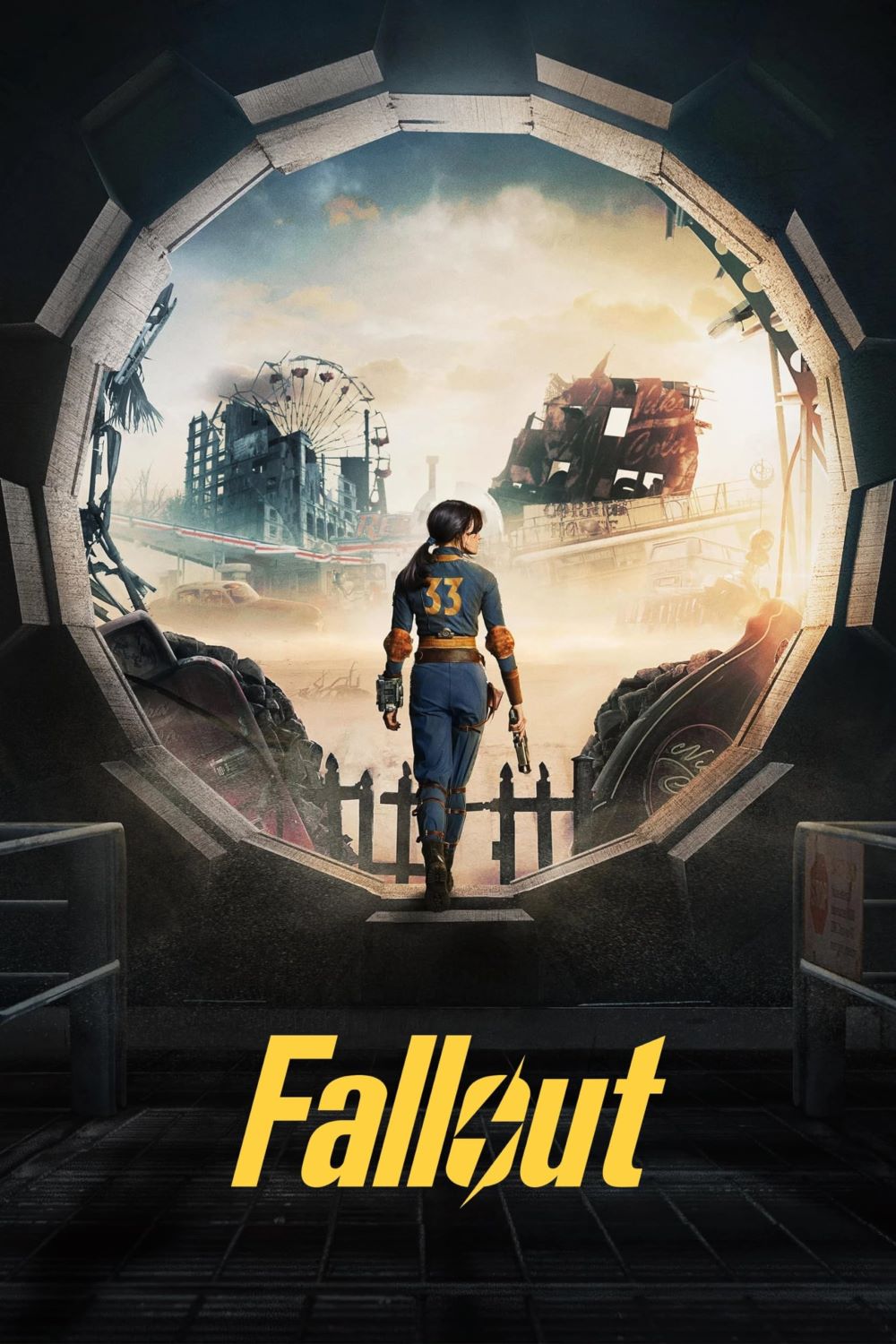
Fallout’s first season lands like a mini-nuke: messy around the edges, but undeniably powerful and surprisingly fun. It’s one of those adaptations that feels comfortable being both a love letter to the games and its own weird, often hilarious beast.
Set a couple of centuries after nuclear war, Fallout drops viewers into a retro-futurist wasteland where 1950s aesthetics collide with irradiated horror and corporate evil turned up to eleven. The show splits its focus between three main threads: Lucy, a bright-eyed vault dweller forced to leave her underground utopia; Maximus, an eager but insecure squire in the Brotherhood of Steel; and The Ghoul, a bounty hunter whose past life as a pre-war actor slowly bleeds through his charred exterior. The decision to juggle these perspectives is smart, because each storyline scratches a different itch: Lucy carries the emotional core and fish-out-of-water comedy, Maximus gives the militaristic, power-armor fantasy with a side of satire, and The Ghoul supplies the hard-boiled noir edge and moral ambiguity. The result is a season that rarely feels static; even when one plotline stalls a bit, another kicks in with fresh energy.
The tone is one of the show’s biggest strengths. Fallout leans hard into pitch-black humor without ever completely undercutting the stakes, which is harder to pull off than it looks. Limbs fly, heads explode, dogs get eaten, and yet the show keeps finding a way to make you laugh at the absurdity without turning the apocalypse into a joke. The violence is graphic and frequent, but it usually serves a purpose: to remind you that this world is brutal, even when the characters are cracking wise or bartering over chems. If the games felt like wandering into a deranged theme park built on the ruins of civilization, the series captures that same feeling of “this is horrible, but also kind of hilarious.” That balance, more than any specific lore reference, is what makes it feel like Fallout rather than just another grimdark sci-fi show.
Performance-wise, the casting is pretty inspired. Ella Purnell plays Lucy with this mix of optimism, naivety, and stubborn decency that could easily have been grating, but instead becomes the emotional anchor of the whole season. She brings just enough steel to the character that her idealism feels like a choice, not a default setting. Aaron Moten’s Maximus is a slower burn, and early on he risks fading into the background as “generic soldier guy,” but the more the show digs into Brotherhood politics, insecurity, and the pressure to be “worthy” of power armor, the more interesting he becomes. Walton Goggins, though, more or less walks away with the show. As The Ghoul, he’s vicious, funny, and weirdly tragic, and the flashbacks to his pre-war life give the season some of its most compelling dramatic beats. There’s a sense of continuity in his performance between the slick actor he was and the monster he becomes that keeps the character from feeling like a one-note cowboy caricature.
Visually, Fallout looks a lot better than a streaming adaptation of a video game has any right to. The production design leans into practical sets and tactile props where possible, and it pays off. Power armor has real heft, the vaults look lived-in rather than just glossy sci-fi hallways, and the wasteland feels like a place where people actually scrape out a living instead of just a CGI backdrop. The show has fun with the franchise’s iconography—Nuka-Cola, Pip-Boys, Vault-Tec branding, goofy radios—but it rarely pauses to point and wink too hard. The design team clearly understands that Fallout is basically “atomic-age corporate optimism weaponized into apocalypse,” and that theme is baked into everything from costumes to billboards rotting in the sand. Even the creature designs, like the mutated critters and ghouls, walk that line between unsettling and cartoonishly over-the-top, which fits the overall tone.
On the writing side, the structure of the season feels very much like an RPG campaign. Episodes often play like individual “quests” that build toward a bigger mystery: Lucy stumbling into a bizarre settlement, Maximus dealing with Brotherhood politics, The Ghoul chasing a lead that intersects with both of them. That quest-chain structure gives the first half of the season a propulsive, almost episodic energy, and it’s one reason the show is so watchable. At the same time, this approach has trade-offs. Sometimes character development feels a bit checkpoint-driven—people change because the story needs them to for the next “quest,” rather than as a smooth emotional progression. You can occasionally see the writers nudging the pieces into place, especially as the season barrels toward the finale.
Fallout sits in an interesting sweet spot when lined up against another prestige video game adaptation like HBO’s The Last of Us. Instead of treating the games as a sacred script that must be recreated line for line, it treats the Fallout universe as a shared sandbox—a tone, a style, a set of rules—rather than a fixed storyline that must be obeyed. Where The Last of Us is largely a faithful retelling of Joel and Ellie’s journey, Fallout seems far more interested in asking, “What else can happen in this world?” instead of “How do we restage that iconic mission?” It borrows the franchise’s black-comedy vibe, retro-futurist Americana, and corporate dystopia, then builds mostly original plots and character arcs on top.
That choice immediately gives the writers room to play. They’re not constantly checking themselves against specific missions, boss fights, or famous cutscenes; they’re free to jump around the timeline, invent new factions or townships, and reframe old ideas in ways that a beat-for-beat adaptation could never manage without sparking outrage. This approach also lets Fallout add to the lore instead of just reanimating it in live action. Because it’s not locked into recreating a particular protagonist’s path, the show can explore corners of the wasteland that were only hinted at in the games, complicate existing factions, or take big swings with backstory and world history. That kind of freedom inevitably creates some continuity friction for hardcore fans, but it also keeps the series from feeling like a lavish, expensive recap of something players already experienced with a controller in hand. Where The Last of Us excels by deepening and humanizing a story many already know, Fallout thrives by expanding its universe sideways, treating the source material as a toolbox rather than a template—and that makes it feel more like a genuine new chapter in the franchise than a live-action checklist.
Thematically, the show has more on its mind than explosions and fan-service, which is nice. Fallout keeps circling back to questions about corporate power, the illusion of safety, and how far people will go to preserve their own little slice of control. Vault-Tec’s smiling fascism is a blunt but effective metaphor for real-world systems that promise protection while quietly planning for everyone’s demise. The Brotherhood of Steel, meanwhile, becomes a vehicle for exploring militarized religion, hierarchy, and the dream of “owning” technology and knowledge. None of this is subtle, but Fallout isn’t a subtle franchise to begin with, and the series has enough self-awareness to let its satire stay sharp without slowing everything down for speeches. When it hits, it feels like the writers are asking, “Who gets to decide what’s worth saving when everything’s already gone?”
Where the season stumbles most is consistency. The pacing isn’t always smooth; some mid-season episodes are stacked with memorable set pieces and character moments, while others feel like they’re mostly there to set up endgame twists. The finale, in particular, is likely to be divisive. On one hand, it ties several plot threads together, drops a couple of bold lore swings, and sets up future seasons with a few big, crowd-pleasing reveals. On the other hand, it rushes emotional payoffs and leans heavily on explaining rather than letting certain developments breathe. The shift in tone in the last episode is noticeable enough that some viewers may feel like they suddenly switched to a slightly different show. It’s not a deal-breaker, but it does mean the season ends with more “wow, that was a lot” than a clean emotional landing.
As an adaptation, this freedom-to-expand strategy pays off by appealing to longtime fans and welcoming newcomers without getting bogged down in purist debates. Fans of the games will catch tons of details, locations, and tonal echoes that feel like affectionate nods rather than empty easter eggs. At the same time, the show isn’t just re-skinning existing game plots, which is a good call. It feels like a side story in the same universe rather than a strict retelling. That said, the lore choices late in the season—especially around the broader timeline and certain factions—are bound to spark arguments. If someone is deeply attached to the canon of the older games, some of the retcons and reinterpretations might play like a slap in the face. If someone is more relaxed about canon and just wants an entertaining, coherent story in that world, the show will probably land much better.
The writing of individual scenes shows a lot of care, especially in the way humor and dread coexist. Some of the best moments aren’t the big action beats but the small conversations: a strange, tense chat in a ruined diner, a piece of pre-war media resurfacing at the worst possible time, or a casual bit of wasteland banter that suddenly turns threatening. The dialogue sometimes leans too modern for the retro setting, but the rhythm feels natural enough that it rarely jars. When the show is firing on all cylinders, it nails that specific Fallout flavor: characters staring at incomprehensible horror and responding with a joke, a shrug, or a desperate sales pitch.
If there’s one area where the season could improve going forward, it’s in fleshing out the secondary cast and giving certain arcs more emotional weight. Some supporting characters are memorable and sharply drawn, while others feel like they exist mainly to be lore-delivery devices or cannon fodder. The world feels rich enough that it can absolutely sustain more side stories and slower, character-focused detours. A little more breathing room for relationships—whether friendships, rivalries, or romances—would help the big twists land harder and keep the show from occasionally feeling like it’s sprinting from spectacle to spectacle.
Overall, Fallout’s first season is a strong, confident debut that understands what made the games stand out without being slavishly beholden to them. It’s funny, brutal, stylish, and surprisingly character-driven for a show that spends so much time reveling in bloodshed and nuclear kitsch. The missteps in pacing and the polarizing choices in the finale keep it from being flawless, but they also signal a series willing to take risks rather than play it safe. For viewers who enjoy genre TV with personality, and for gamers who have been burned by adaptations before, this season is absolutely worth the trip into the wasteland. It doesn’t just survive the jump to live action; it stomps into it in full power armor, flaws and all.
Welcome to Late Night Retro Television Reviews, a feature where we review some of our favorite and least favorite shows of the past! On Mondays, I will be reviewing CHiPs, which ran on NBC from 1977 to 1983. The entire show is currently streaming on Prime!
This week’s episode features a future Oscar nominee!
Episode 5.2 “Vagabonds”
(Dir by Bruce Kessler, originally aired on October 11th, 1981)
The saying goes that “everyone had to start somewhere,” and, for actor Ed Harris, somewhere included guest-starring on an episode of CHiPs.
The future Oscar nominee appears as Lonny Wilson, the scion of a family of a hillbilly con artists. He and his brother, Daws (Jesse Vint), purposefully cause auto accidents and con their victims out of their money in return for not calling the police or the insurance company. Lonny’s young son, Jamie (James Calvert), is looking forward to joining the family business until he actually is injured while taking part in one of the family’s cons. Lonny reconsiders his way of life and, by the end of the episode, he’s cooperating with the highway patrol.
Does Ed Harris come across as being a future star in this episode? Well, he definitely has charisma. He has screen presence. That said, this is also CHiPs, a show that was mostly about capturing potentially serious auto accidents in slow motion. No one came across as being a future star on ChiPs and that was actually a part of the show’s appeal. The stars on CHiPs were always the motorcycles, the cars flipping over on the freeway, and Ponch’s blinding smile. That said, Ed Harris gives a good performance. For that matter, so does Jesse Vint as his brother. This is a well-acted episode of CHiPs. Such things do exist.
In all fairness, I should also note that, when this episode aired, Harris had already starred in George Romero’s Knightriders so, while Harris may not have been a household name, it’s probably still debatable whether or not this was really at the start of his career. Ultimately, the important thing is that, two years after appearing this episode, Ed Harris would play John Glenn in 1983’s The Right Stuff and firmly established himself as one of our best character actors.
As for this episode, it also features the Highway Patrol taking part in a “supercycle” race, which is a race featuring bicycles that you lie down on as you peddle. I don’t know why anyone would want to do that but whatever. Jon Baker wins. Yay, Highway Patrol!
On that note of victory, Retro Television Reviews is going on a holiday break so that I can focus on the Oscar precursor awards and reviewing Christmas movies so this will be last CHiPs review of 2025! CHiPs will return on January 5th, 2026!
 Through the Shattered Lens