Film Review: The Caine Mutiny Court-Martial (dir by Robert Altman)


In the 1980s, director Robert Altman found himself even more outside of the Hollywood system than usual.  A series of films that confused critics and repelled audiences had led to Altman becoming something of a pariah.  As no studio was willing to give Altman a chance to make the type of quirky feature films that he made his name with in the 70s, Altman instead directed a series of low-budget theatrical adaptations.  These films may not have gotten the attention of his earlier films but they allowed Altman to show off his talents, especially when it came to working with actors.

1988’s The Caine Mutiny Court-Martial was one of those films.  Made for television and based on the play by Herman Wouk, The Caine Mutiny Court-Martial was a courtroom drama that Altman brought to life with his usual flair.  Anyone who has read either the play or Herman Wouk’s original novel (or who has seen the 1953 film version, The Caine Mutiny) will know the story.  In the final days of World War II, Lt. Steven Maryk (Jeff Daniels) has been court-martialed for mutiny.  During a particularly violent storm, Maryk took command of the USS Caine away from Lt. Commander Queeg (Brad Davis).  Maryk and his fellow officers, including aspiring novelist Lt. Thomas Keefer (Kevin J. O’Connor), claim that, after several incidents that indicated he was mentally unstable, Queeg froze up on the bridge and had to be relieved of command.  Queeg claims that everything he did was to enforce discipline on the ship and that he never froze.  Prosecuting Maryk is Lt. Commander John Challee (Peter Gallagher).  Defending him is Lt. Barney Greenwald (Eric Bogosian), who is determined to win the case even though he doesn’t necessarily agree with Maryk’s actions.

The Caine Mutiny Court-Martial is very much a filmed play.  Almost all of the action takes place in one location, a gymnasium that has been converted into a court of military law.  We don’t actually see what happened on the Caine when Maryk took control.  Instead, we just hear the testimony of those involved.  Queeg defends himself, ably at first but soon he starts to show signs of the pressure of being in command.  Maryk explains his actions and we want to believe him because he’s played by fresh-faced Jeff Daniels but, at the same time, there’s something a little bit too smug about his declaration that Queeg was not fit for command.  The other officers on the Caine testify.  Under Greenwald’s skillful cross-examination, Queeg is continually portrayed as being a flawed officer.  But only Greenwald understand that Queeg was isolated not only by the loneliness of being in charge but also by members so his own crew, like Keefer, who hated the Navy and didn’t want to take their part in the war effort seriously.  As a Jew who is very much aware of what’s at stake in the war, Greenwald has mixed feelings about the way that Queeg was treated.  It ends with a party, where a drunk Greenwald calls out the true architect of The Caine Mutiny.  As opposed to the way the scene was portrayed in the 1953 film or in Willam Friedkin’s recent adaptation), Altman focuses not so much on Greenwald but on the party occurring around him.  If the other versions of this story ended on a note of triumph for Greenwald, this one ends on a note of sadness with Greenwald’s words being almost unheard by the officers of the Caine.

Altman gets excellent performances from the entire cast and, even more importantly, he avoids the downfall of so many other theatrical adaptations.  The Caine Mutiny Court-Martial may be a talky film and it may largely take place in only one location but it’s never boring.  Altman’s camera is continually prowling around the makeshift courtroom, reflecting the tension of the case in every movement.  The end result is one of Altman’s best theatrical adaptations.

Retro Television Reviews: Miami Vice 1.13 “Milk Run”


Welcome to Retro Television Reviews, a feature where we review some of our favorite and least favorite shows of the past!  On Mondays, I will be reviewing Miami Vice, which ran on NBC from 1984 to 1989.  The entire show is currently streaming on Tubi!

This week, Crockett and Tubbs fail to observe movie line etiquette.

Episode 1.13 “Milk Run”

(Dir by John Nicolella, originally aired on January 4th, 1985)

At Miami International Airport, Tubbs is sweating buckets (one thing I do appreciate about Miami Vice is that it captures that Yankees never seem to get used to Southern humidity) while Crockett watches and smiles at a woman in a miniskirt.  Not surprisingly, ZZ Tops’s Legs is playing on the soundtrack.  Having good legs is definitely a plus in life.  They’ve certainly helped me out.

Anyway, Crockett and Tubbs notice that two teenagers have just paid for a ticket to Colombia in cash.  Crockett and Tubbs confront them in the airport cafeteria, causing both Louis Martinez (Evan Handler) and his friend, Eddie Rivers (Al Shannon), to make a run for it.  They manage to outrun both Crockett and Tubbs.  Louis and Eddie may not be as streetwise or experienced as the two cops but they’re definitely a lot younger and a lot quicker.

Louis is enthusiastic about Eddie flying down to Colombia and smuggling cocaine-filled statues into the United States.  Eddie is more nervous about it and keeps saying that he wishes he could just go home and pretend like they never agreed to help this week’s villains, the Moya cousins.

Not surprisingly, at least to anyone who has watched this show, Crockett and Tubbs just happen to be investigating a drug warehouse that belongs to the Moyas.  After the warehouse blows up, they discover a locker full of the statues and they also find out that the Moyas are into Santeria.  This leads to a scene where they attempt to interrogate one of their informants (played by Rainbow Harvest), a Santeria high priestess who works at a “punk rock movie theater.”  (Don’t ask me, I didn’t write the episode.)  While Crockett keeps bothering her at work, Tubbs has a tense conversation with her boyfriend, who is played by a youngish Eric Bogosian!

The two stories eventually link back up.  Eddie flies to Colombia but he and Louis are arrested by Crockett and Tubbs as soon as he returns to America.  While Louis continues to play tough, Eddie talks about how he wishes that he could just go back home and not get involved in any of this.  Crockett promises Eddie that he’ll make sure he gets home safely.  Can you guess who ends up getting gunned down the cartel at the end of the episode?

Milk Run was an episode about which I had mixed feelings.  At first, it was hard for me to have much sympathy for either Louis or Eddie.  But, at the same time, I also had a hard time having much sympathy for Crockett and Tubbs.  Whether they were holding up a line to interrogate a ticket agent at the airport or holding up the line to interrogate the Santeria priestess at the movie theater, they ended up holding up a lot of lines and that’s a pet peeve of mine.  But, by the end of this episode, I felt sorry for Eddie and the dark conclusion drove home the episode’s point.  There’s no way to escape your decisions.  Of course, by this point, we pretty much know what’s going to happen whenever Crockett promises to keep someone safe but that didn’t make the ending any less effective.

This was an okay episode.  The ending was powerful and it featured a strong supporting turn from John Kapelos in the role of a sleazy attorney.  In the end, the message was clear.  Don’t get involved with a shady business unless you’re totally prepared to deal with the consequences.

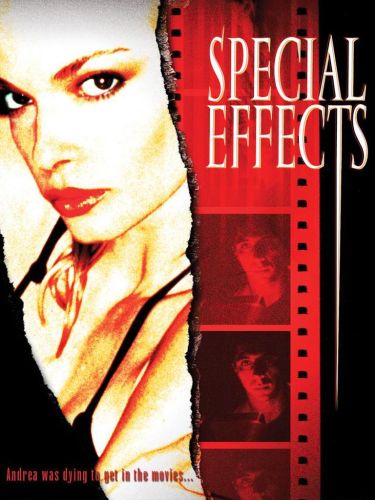
Horror Film Review: Special Effects (dir by Larry Cohen)


https://www.youtube.com/watch?v=vP_uhE5L_cM

In this rather odd horror film from 1984, dumb-as-mud Keefe Wateran (Brad Rijn) travels from Dallas to New York City, hoping to bring his wife back home.  Andrea (Zoe Tamerlis, the star of Abel Ferrara’s Ms. 45) abandoned both Keefe and their son because she wants to be a star.  When the film opens, she’s posing topless in a replica of the Oval Office.  Keefe is not too happy when he discovers that his wife is apparently appearing in politically-themed nude photo shoots.

And the thing is, you feel like you should feel sorry for Keefe, seeing as how his wife abandoned not only him but also their child.  But Keefe is just such a self-righteous know-it-all that you really can’t blame Andrea for leaving him.  As soon he starts going on and on about how she’s abandoned her family just to be a tramp in New York, you’re pretty much automatically on Andrea’s side.

Unfortunately, when Andrea turns up dead at Coney Island, the police automatically suspect that Keefe’s responsible.  When they show up to arrest Keefe for the murder, he’s only wearing his boxer shorts.  One of the detectives comments that, if he was going to commit murder, he would at least wear interesting underwear.  And, again, you may want to sympathize with Keefe but the detective has a point.  You need to dress for the job you want, not the one you have.  I have an entire drawer full of murder thongs, just in case I ever decide to go for a career change.

Keefe is bailed out of jail and provided a high-priced attorney by Christopher Neville (Eric Bogosian).  Neville is a big-time Hollywood director …. or, at least, he was until he directed a huge flop.  (Apparently, the film had over $30,000 worth of special effects, which I guess was a lot back in 1984.)  Neville, whom Andrea was supposed to have a meeting with on the night that she died, says that he’s fascinated by Keefe and Andrea’s story.  In fact, he wants to turn it into a movie and he wants to hire Keefe as a special consultant.

However, what we know (but what Keefe doesn’t know, though he’d be able to figure it out if he wasn’t such a total and complete freaking moron), is that Neville murdered Andrea!  He strangled her when she objected to him filming them while they were having sex.  Now, Neville wants to make a movie about the murder.  He even hires Elaine Bernstein (Zoe Tamerlis, again) to play Andrea in the film, despite the fact that Elaine has no acting experience.  What’s important is that Elaine looks like Andrea.  Neville also manages to manipulate the rather stupid Keefe into playing himself in the film.  Soon, Neville is suggesting that perhaps they need to film a scene of Keefe and Andrea having rough sex and maybe Keefe should choke her during the scene….

And it just gets stranger from there.  Special Effects is Hitchcock-style thriller from director Larry Cohen, one that’s got a bit more on its mind than just murder and a few heavy-handed jokes about the film industry.  Neville may be smooth and manipulative while Keefe may be loud and a bit on the dumb side but, ultimately, they’re both obsessed with turning Elaine into Andrea.  Neville wants to transform Elaine into the Andrea that he victimized while Keefe wants to turn Elaine into his idealized version of Andrea, the version that never wanted anything more than to be his wife and the mother of his children.  In the end, they’re both creeps.  (Admittedly, only one of them is murderer.)

Adding to the film’s strange tone are the three memorably eccentric lead performances.  All three of the actors do unexpected things with their characters.  Bogosian is wonderfully smug and smoothly manipulative as Neville while Brad Rijin goes all out in making Keefe one of the stupidest characters ever to appear in a leading role in a motion picture.  (He’s like Bruce Campbell, without the comedic timing.)  And finally, Zoe Tamerlis does a great job playing four different characters — Andrea, Neville’s version of Andrea, Keefe’s version of Andrea, and finally Esther.

Special Effects is an intriguing mix of thrills, horror, and satire with an undercurrent of anger.  One gets the feeling that Neville is a stand-in for many of the soulless directors who had the type of career that Cohen felt he deserved.  Track it down and check it out.