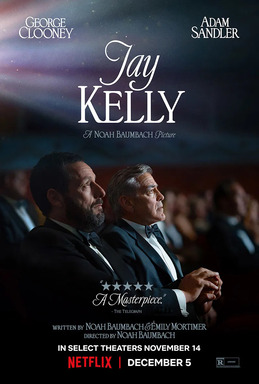
The Films of 2025: Jay Kelly (dir by Noah Baumbach)


Jay Kelly features George Clooney at both his best and his worst.

Clooney plays the film’s title character, an actor who has just hit 60 and who is having an existential crisis as he realizes everything that he’s lost as a result of being rich and famous.  Clooney’s best moments are when he plays Jay as being essentially a prick, a guy who might be well-meaning but who lacks the self-awareness necessary to understand just how condescending and fake he tends to come across to the people who know him.  This is the Jay who insists on having a drink with Tim (Billy Crudup), a former actor who lost a key role to Jay and who has never forgiven him for it.  (It starts out as a friendly drink but it eventually becomes a fight after Tim reveals that he hates Jay and Jay responds by being smug.)  This is the Jay who has alienated both of his daughters (Riley Keough and Grace Edwards) and who doesn’t seem to understand that the rest of the world doesn’t travel with an entourage.

Jay is gloriously unaware in those scenes and they give Clooney a chance to show that he’s still capable of giving a sharp comedic performance.  Watching him in those scenes, I was reminded of the gloriously dumb characters that he played for the Coen Brothers, in both Burn After Reading and Hail, Caesar.  For that matter, I was also reminded of his burned-out hatchet man from Up In the Air, who was not a dumb character but still was someone who, like Jay Kelly, always seemed to be performing.

Unfortunately, as the film progresses, Jay himself starts to wander into flashbacks of himself as a young actor and, even worse, he starts to talk to himself about everything that he’s lost due to his fame and suddenly, he transforms into the insufferably smug Clooney who spent the earlier part of this year in greasepaint, lecturing us all about Edward R. Murrow.  The flashbacks to Jay Kelly’s past often feel like stand-ins for flashbacks to George Clooney’s past (and it’s probably not a coincidence that both Kelly and Clooney are from Kentucky) but they don’t really add up to much.  Jay Kelly is a character who becomes less compelling the more that one learns about him.

The characters around Jay Kelly are far more interesting than Jay himself, though I have my doubts whether that was intentional on the part of director Noah Baumbach.  (An overly long and indulgent sequence on a train would seem to suggest that Jay Kelly was envisioned as being a more fascinating character than he turned out to be.)  Just as he did in Baumbach’s The Meyerowitz Stories, Adam Sandler gives the film its heart, playing the role of Jay’s loyal but unappreciated manager.  Sandler and Laura Dern have a few showy scenes together but Sandler’s best moments come opposite Patrick Wilson as a client who feels that he’s being neglected in favor of Jay Kelly.  (For that matter, Wilson is so good in those scenes that I almost wish he had switched roles with Clooney.)  One might not expect the star of Jack and Jill and That’s My Boy to emerge as one of Hollywood’s best sad-eyed character actors but that’s what has happened in the case of Adam Sandler.

With all that in mind, I have to admit that I enjoyed Jay Kelly more than I thought I would.  Some of that has to do with expectations.  Jay Kelly is currently getting so roasted on social media that I was expecting the film to be a self-indulgent disaster.  While the film is definitely self-indulgent and about 30 minutes too long, it’s not a disaster.  When Clooney’s performance works, it really works.  (Unfortunately, the inverse is also true.)  Adam Sandler, Billy Crudup, Riley Keough, and Stacy Keach all give performances that elevate the occasionally shallow script.  Cinematographer Linus Sandgren captures some beautiful shots, especially towards the end of the film.  Visually, Jay Kelly is a marked improvement on the bland imagery of Marriage Story.  Like its title character, Jay Kelly is imperfect and occasionally annoying but it does hold your attention.

As for the film’s Oscar chances, the reviews are mixed but it’s a film about how tough it is to be an actor and one should not forget that the Actor’s Branch is the biggest branch of the Academy and the majority of the voters are people who are probably going to watch Jay Kelly and say, at the very least, “Hey, I know that guy!”  (Few will admit, “I am that guy,” but that will still definitely be a factor in how they react to the film.)  Regardless of how social media feels about the film, I imagine Jay Kelly will be remembered when the nominations are announced.
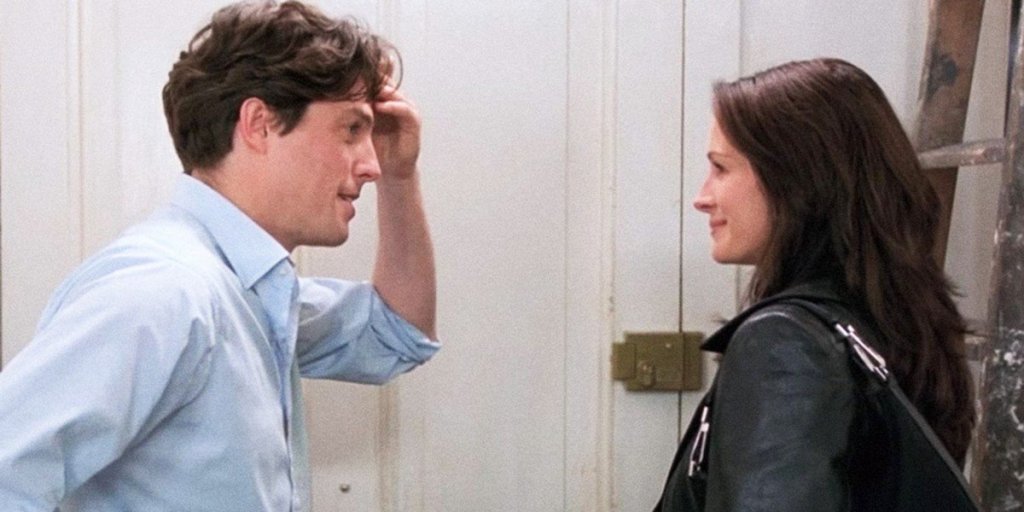
Brad reviews NOTTING HILL (1999), starring Julia Roberts and Hugh Grant!


Life takes an unexpected turn for the reserved Englishman William Thacker (Hugh Grant) when the hugely popular American movie star Anna Scott (Julia Roberts) wanders into his humble little travel book shop in the district of Notting Hill in West London. When the initial meeting is followed up by some coincidentally spilled orange juice and an unexpected kiss, William finds himself completely smitten. After Anna leaves, and still in a state of disbelief, William struggles focusing on his normal life with his eccentrically odd flat mate Spike (Rhys Ifans). When Anna surprisingly reaches back out to him wanting to get back together, the sweet and shy William is ecstatic, but he remembers that he’s already obligated himself to attend his sister Honey’s (Emma Chambers) birthday party that night. Wanting to be part of something normal, Anna goes to the party as William’s date, where she has a wonderful, relaxing evening with Honey and their close-knit group of best friends that includes Max (Tim McInnerny), Bella (Gina McKee) and Bernie (Hugh Bonneville), even if she did give them quite the shock when she walked through the door. Everything seems to be going beautifully, but the life of an international film icon tends to be complicated, and William soon finds himself caught up in a whirlwind that includes her “boyfriend,” the arrogant American actor Jeff King (Alec Baldwin). He’s not really her boyfriend anymore, but that seems of little consequence to the press. And then there’s the sudden emergence of racy pictures of Anna from her past in the British tabloids. As much as William loves Anna, will he ever be able to deal with life in Anna’s superstar spotlight?

NOTTING HILL is part of a trilogy of modern-day love stories that I’m sure to watch every year, with the other two being RETURN TO ME (2000) and HITCH (2005). I’ve noticed that these three movies have plot points in common that I find extremely appealing. First, both NOTTING HILL and RETURN TO ME feature main characters who have a group of loyal family and friends who offer uncompromising love and support. William Thacker’s sister and friends clearly care about him and want what’s best for him. If necessary, they’re willing to prove it by being honest with him when he’s unwilling to be honest with himself. One of the best scenes of the film occurs near the end when William tells his group of friends that he’s turned down Anna’s request to continue their relationship, even after she says the famous lines, “I’m also just a girl, standing in front of a boy, asking him to love her.” While his friends struggle to find the right words, the flaky Spike, played superbly by Rhys Ifans, rushes into the meeting and when asked his opinion, says these three words to William, “You daft prick!” A memorable song on the movie’s excellent soundtrack reminds us sometimes that “you say it best when you say nothing at all,” but sometimes words need to be spoken, and Spike cares enough to tell William what he needs to hear. I’ve said it before, but I love it when a movie surrounds its characters with the type of people we’d love to have in our corner in real life. Second, both NOTTING HILL and HITCH feature plot lines that show a “star” falling for a sweet nobody. Maybe it’s because I’m a nobody myself, but the idea of the rich and powerful falling in love with regular people like me always strikes a nerve. Sure, it may be a fantasy, but it’s a fantasy I’m perfectly willing to roll with. 

As far as I’m concerned, Julia Roberts and Hugh Grant have never been more appealing than they are in NOTTING HILL. Julia is so beautiful, and I fell in love with her myself for the first time when I watched this movie at the theater in 1999. There are scenes where William is watching Anna Scott on the big screen and the small screen, whether it be a love story or a science fiction movie, and he’s clearly in complete awe of her. As a film buff going back to my early teens, I can relate so easily to his character, whether it be my crush on Elizabeth Shue in the 80’s or Salma Hayek in 90’s. Heck, as recently as a couple of years ago, after interviewing the lovely Jan Gan Boyd who starred with Charles Bronson in ASSASSINATION (1987), I can still identify with a man completely smitten with a beautiful actress. And Hugh Grant is so sweet, witty and funny as William Thacker. This was a big film for Grant, as a few years earlier his promising Hollywood career had somewhat stalled due to his arrest on Sunset Strip in Los Angeles for “lewd conduct in a public place” with a prostitute named Divine Brown. With the irony not lost on me, if you’ve seen NOTTING HILL before you’ll understand that my inclusion of this matter of public record proves the character of Anna Scott to be correct when she explains to William just how difficult it can be to live life in the public eye. Regardless of all that, Hugh Grant is great in the film, and with a few years separating the events, it seems the filmgoing public was ready for forgiveness. NOTTING HILL was a runaway box office success, raking in $365 million dollars at the worldwide box office. 

The final thing I want to point out about NOTTING HILL is the incredible talent behind the scenes. Director Roger Michell helmed one of my very favorite Jane Austen adaptations, PERSUASION from 1995, starring Amanda Root and Ciaran Hinds. It’s a perfect movie as far as I’m concerned, and I watch it several times every year. Writer Richard Curtis has written the wonderful films FOUR WEDDINGS AND A FUNERAL (1994), BRIDGET JONES’S DIARY (2001), and LOVE ACTUALLY (2003), and he clearly knows how to push our love buttons. Both Michell and Curtis do the most successful work in their careers here. Now whether or not it’s their very best is a matter of opinion, but it’s definitely great work that I can confidently recommend to anyone. 

Brad’s Scene of the Day – “I’ve made the wrong decision” from NOTTING HILL (1999)!


I love the movie NOTTING HILL. Directed by Roger Michell and written by Richard Curtis, it’s one of my all time favorite romantic comedies. I especially enjoy the close relationships that William Thacker (Hugh Grant) shares with his group of friends. The movie creates a world where these people truly love and care about each other. We all need a group of friends like this. 

In honor of the late Roger Michell’s birthday, I share this clip from NOTTING HILL:

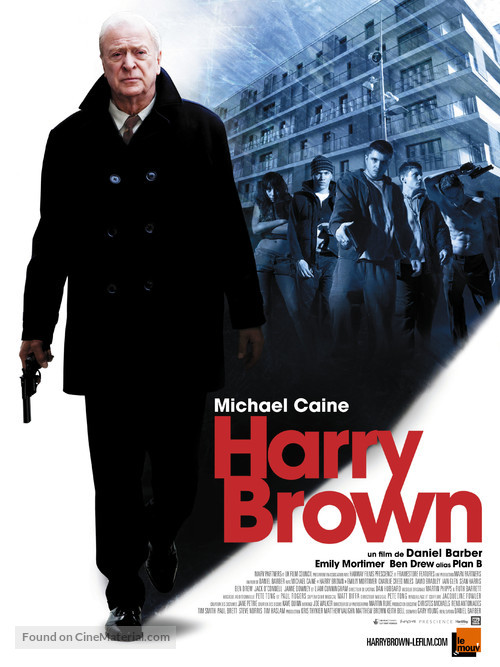
Harry Brown (2009, directed by Daniel Barber)


Today, we wish a happy 89th birthday to Michael Caine!

For longer than I’ve been alive, Michael Caine has been a star.  He’s one of the last surviving icons of the British cultural invasion of the 1960s, a venerable actor who went from being Alfie to being Carter to being Scrooge to being Alfred Pennywise without missing a step.  In many ways, he was the cockney Jack Nicholson, a working class actor with his own very identifiable style who still managed to play a wide variety of different characters.  Like Nicholson, there have been frequent reports that Caine has retired from acting and, if anyone has earned the right to enjoy their retirement, it’s Michael Caine.  Caine himself has said that he doesn’t ever see himself fully retiring from acting and he’s already proven that, even in his twilight years, he’s still as capable of giving a good performance as he was when he first started acting.

Take Harry Brown, for example.

Michael Caine was 76 when he played the title role in this violent British thriller.  Harry is a former Royal Marine who, now elderly and suffering from emphysema, lives on a London council estate that has been taken over by a gang of violent drug dealers.  The nearby underpass is so dangerous that even Harry is scared to walk under it.  Because Harry has to take an alternate route to the hospital to avoid all of the gangs, his wife dies without Harry being at her side.  When his only friend is then killed while trying to stand up to the dealers, Harry snaps.  Harry starts tracking down and killing the dealers and the gang members who have made retirement so unbearable for him.  Detective Frampton (Emily Mortimer) suspects that Harry is the vigilante but, before she can move to stop him, both she and Harry are targeted by the local drug lord, who turns out to be someone who Harry never suspected.

Harry Brown is really just an updated version of Death Wish, set in London instead of New York.  It has its share of good action scenes and director Daniel Barber does a good job making London look like the worst place on Earth but, ultimately, it’s as predictable and heavy-handed as any of the films Michael Winner made with Charles Bronson.  What makes Harry Brown special is not the script but instead the presence of Michael Caine, giving one of his best and most heartfelt performances and making the movie work, even when the story tries to sabotage him.  Caine brings an appropriate amount of righteous fury to the role but he also plays the role with a lot of heart.  Harry would much rather be enjoying his twilight years in peace but he feels that he was one last mission to pursue.  He would rather die protecting his friends and his neighbors than live his life in fear.  Harry also knows that, because he’s old, everyone underestimates him.  That’s a mistake that he uses to his advantage.

Harry Brown is like many Michael Caine films in that the main reason to watch it is because it’s a Michael Caine film.  At the time he made the film, he said that he expected Harry Brown would be his last lead role.  It wasn’t.  Just like Harry Brown, Michael Caine still has more to show the world.

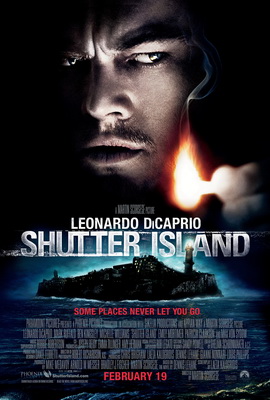
Embracing the Melodrama Part II #119: Shutter Island (dir by Martin Scorsese)


Shutter IslandThe 2010 film Shutter Island finds the great director Martin Scorsese at his most playful.

Taking place in 1954, Shutter Island tells the story of two detectives, Teddy Daniels (Leonardo DiCaprio, giving an excellent performance that, in many ways, feels like a test run for his role in Inception) and Chuck Aule (Mark Ruffalo, also excellent), who take a boat out to the Ashecliffe Hospital for The Criminal Insane, which is located on Shutter Island in Boston Harbor.  They are investigating the disappearance of inmate Rachel Solando, who has been incarcerated for drowning her three children.

Ashecliffe is one of those permanently gray locations, the type of place where the lights always seem to be burned out and the inmates move about like ghostly visions of sins brought to life.  It’s the type of place that, had this movie been made in the 50s or 60s, would have been run by either Vincent Price or Peter Cushing.  In this case, the Cushing role of the cold and imperious lead psychiatrist is taken by Ben Kingsley.  Max Von Sydow, meanwhile, plays a more flamboyantly sinister doctor, the role that would have been played by Vincent Price.

When a storm strands Teddy and Chuck on the island, they quickly discover that neither the staff nor the patients are willing to be of any help when it comes to tracking down Rachel.  As Teddy continues to investigate, he finds himself stricken by migraines and haunted by disturbing images.  He continually sees a mysterious little girl.  He has visions of his dead wife (Michelle Williams).  A horribly scarred patient in solitary confinement (Jackie Earle Haley) tells him that patients are regularly taken to a lighthouse where they are lobotomized.  When Teddy explores more of the island, he comes across a mysterious woman living in a cave and she tells him of even more sinister activity at Ashecliffe.  Meanwhile, Chuck alternates between pragmatic skepticism and flights of paranoia.

And I’m not going to share anymore of the plot because it would be a crime to spoil Shutter Island.  This is a film that you must see and experience for yourself.

This is one of Martin Scorsese’s most entertaining films, an unapologetic celebration of B-movie history. He knows that he’s telling a faintly ludicrous story here and, wisely, he embraces the melodrama.  Too many directors would try to bring some sort of credibility to Shutter Island by downplaying the film’s more melodramatic moments.  Scorsese, however, shows no fear of going over the top.  He understands that this is not the time to be subtle.  This is the time to go a little crazy and that’s what he does.

Good for him.

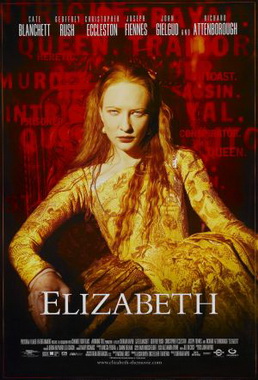
Embracing the Melodrama Part II #97: Elizabeth (dir by Shekhar Kapur)


Elizabeth_Poster“I am no man’s Elizabeth!”

— Queen Elizabeth I (Cate Blanchett) in Elizabeth (1998)

I have to admit that I always feel guilty about the fact that I love movies about British royal history.  After all, I have roots in Northern Ireland and I was raised Catholic.  If anything, I should refuse to watch films about British royalty on general principle.  I should be writing more reviews of films like Bloody Sunday.

But I can’t help myself.  Whether it’s because I enjoy looking at all of the costumes or I just have a thing for movies set in drafty old castles, I have a weakness for films about British royalty.  (And I will also admit that I sat through the entire royal wedding and I have a bit of a girlcrush on both Pippa and Kate Middleton.  As I said, I just can’t help myself.)

Of course, some of it definitely has to do with the fact that I’m an unapologetic history nerd.  I am fascinated with how people lived in the past.  And, of course, anyone who shares my obsession understands that, when it comes to history, there’s both the official story and the truth.  The official story is something that’s passed down over the centuries.  It’s what we learn in school.  The truth, however, is always far more obscure.  The truth is what historians piece together from what little gossipy evidence has managed to survive the passage of time.

We all know that the official story of Queen Elizabeth I is that she was England’s greatest Queen, she defeated the Spanish Armada, and she never married.  She was the “Virgin Queen,” forsaking love to serve her nation.  That’s the official story but is it the truth?

That’s the question at the heart of the 1998 Best Picture nominee Elizabeth.  Now, don’t get me wrong.  I’m not arguing that Elizabeth represents the truth.  Historically, the film is messy and full of speculation that is less based on evidence and more on the desire to keep things cinematic.  But still, Elizabeth is an interesting film specifically because it takes a historical figure and dares to suggest that she may have been human before she became an icon.

Cate Blanchett gives a great performance in the role of Elizabeth.  When we first meet her, she’s a somewhat silly girl who is less concerned with politics and religion and more concerned with her boyfriend, Robert Dudley (Joseph Fiennes).  Elizabeth is also the protestant half-sister of Catholic Queen Mary (Kathy Burke).  Mary is planning on ordering Elizabeth’s execution but dies of stomach cancer before she gets around to singing the order.

Suddenly, Elizabeth is Queen of England.  Young and insecure, she is, at first, manipulated by advisors like William Cecil (Richard Attenbrough), who pressures her to marry the cross-dressing Henry III (Vincent Cassel) of France.  Meanwhile, the Pope (John Gielgud) signs an order calling for Elizabeth’s death.  Catholic nobleman Thomas Howard (Christopher Eccleston) and mysterious priest John Ballard (Daniel Craig) conspire to assassinate Elizabeth.  With even Robert Dudley giving her reason to distrust him, Elizabeth discovers that her only ally is the enigmatic and ruthless “spymaster,” Francis Walsingham (Geoffrey Rush). It all ultimately ends in a sequence that basically transports the finale of The Godfather to the Elizabethan era.

I really should not like Elizabeth.  It’s undoubtedly an anti-Catholic film, though it’s nothing compared to the histrionic anti-Catholicism of its sequel, Elizabeth: The Golden Age.  But I can’t help myself, I enjoyed Elizabeth.  It was impossible for me not to relate to Cate Blanchett’s passionate performance.  (And there was just something so incredibly hot about the way Joseph Fiennes, with his intense eyes, would stare at her.)  When you ignore the film’s protestant bias and just concentrate on the performances and the gorgeous production design, you can’t help but love Elizabeth.

Review: The Newsroom S1:E4 – “I’ll Try to Fix You”


The key to Episode 4 of The Newsroom’s season really comes down to the last 10 to 15 minutes. The episode seems light and even and then by the end everyone is moving in a mad scramble to get the news out. Very nice to see that, honestly.

This episode, entitled “I’ll Try to Fix You” has the News Night 2.0 team closing out 2010 and celebrating the impending New Year. It’s more or less a lighthearted, fun episode. Mac approaches Will in his office, letting him know that her boyfriend Wade wants to speak with him on something. Wade informs Mac that he’s missing a major headline.

Neal appears to have this weird obsession over Bigfoot, which becomes a running theme in this episode. It’s cute in that it comes up a number of times here, very similar to the story about the Chicken in The Social Network. Maggie finds Jim still working to find any major stories they may have missed. After a little light flirting (well, it seemed that way), Don shows up and Maggie has to go. A lightly inebriated Don decides to set up Maggie’s roommate, Lisa, with Jim for New Year’s. In the middle of selling Jim, Lisa’s phone goes off with a Rod Stewart song. After what happened with the email fiasco, I found myself recalling that because sooner or later, that ringtone would need to come back into this episode. Maggie appears to have something of an issue with Lisa and Jim, but again, she’s with Don. I kind of wish she’d make up her mind already.

Wade tells Will that the House cut 80% of the DOJ budget, and the three go over whether this is a story to run with. When Wade leaves, Mac and Will have a slight argument over Wade. Mac’s a line in particular that made me laugh, “How do you introduce the Netflix queue of crazy divorced women with digitally remastered breasts you spend your nights with?”, which works in the argument between the two.

Will heads out to the party, and finds Sloan Sabbith. Eyeing the group, they have a short exchange on whether he should mingle and who he should mingle with. He heads out and speaks to Nina Howard and finds out she’s a Gossip Columnist. Rather than going with the New Year kiss, Will starts to lecture her on what she does, stating she “knows right from wrong” and that it’s “it’s a form of pollution.” The attempt to civilize Nina ends up with a drink in his face. Poor guy has no luck whatsoever.

Charlie and Will reconvene the following morning to find that he’s on Page Six of the New York Post. Will clears the air with Charlie on this and moves on to the morning meeting. Of the topics that weren’t discussed, they decide to run with both the notion that the Republicans believe that Obama is out to take away their guns or gun rights. The broadcast goes on to show that there really hasn’t been any kind of legislation to show that this is the current plan.

Maggie and Lisa have a brief discussion on Jim, and Maggie comes to Jim’s defense when Lisa points out that he’d think she’s dumb. Again, this is going to come to a head later on.

Mac, along with a woman named Carrie (played by Kathryn Hahn, who I haven’t seen since Step Brothers), head to his apartment. When she goes to change her clothes and informs him she has a joint in her purse, he discovers a pistol and they have words. I’m not sure if Hahn’s going to come back, but it would be interesting to have her come back as a foil to Mac.

As Will and Sloan go over the next broadcast, she beams and asks him how the night went. Will informs her that her friend was packing heat. Sloan tells him he has to stick with her because she’s a little obsessive. Olivia Munn has some great moments back and forth between Jeff Daniels in this episode, and so far her character still seems to be the only one without any romantic issues.

With Will’s chances in the dating scene spiraling downward and making headlines, Don proves how much of an ass he is by giving Maggie a news blip that causes her to call Jim. While she has Jim on the phone, Don calls Lisa, who’s phone rings in the background with the Rod Stewart song. I personally can’t wait for Don to get punched outright in the face. That will be the highlight of the season for me.

After being called in on Saturday, Will finds everyone in the office going over the particulars of the Bigfoot story. Will meets with Charlie and Mac over Will being in the newspapers when it comes to light that AWM (their parent company) has been flaming him the entire time. Charlie admits about the meeting with Leona and Mac blows up because the only way that the 3 Year no work clause could have taken effect would have been if it were changed in the contract. The contact that Will changed to allow him to fire Mac also allows AWM to keep him from working anywhere else.

Just when you think it’s going to keep going on, the story explodes into high gear with the iNews blip on the shooting of Congresswoman Gabrielle Giffords. All hands are on deck as they race to get the story together and everyone prepped. It shines as easily the biggest highlight of the episode and smacked the complaining, “Not This relationship stuff again” sigh I had right off my face. During the broadcast, it comes out that CNN and NPR are going with the story that Giffords died that day. Ironically enough, CNN had the very same problem just a week or two ago, incorrectly reporting that the “Obamacare” Heath Reform vote didn’t pass before Justice Roberts’ vote came through.

When Reese shows up onto the floor and calls Will out to declare Giffords dead just as everyone else does, who shows up to actually save the day but Don of all people. Talk about jaw drop!! He’s the last person I would have expected to have come in to help this group. Will calls in Mac and Charlie to thank them in a cursing tirade, and gives Neal a chance on his Bigfoot story. With all of this done to Coldplay’s “Fix You”, it plays out so damn well that you may almost forget all of the other scenes you were watching beforehand. It’s a fantastic final few minutes that showcases what the Newsroom is about.

My only worry is that they’re moving so fast with these news reports that by the time the season is over, they could conceivably end up in the Present Time. How they’re going to come up with news after doing that is going to require a few rabbits and hats. Overall, a well done episode.

Review: The Newsroom S1:E3 – “The 112th Congress”


Though I’m a registered Democrat (which I did before realizing I could be Independent) and my family’s mostly Republican, Politics tend to make my eyes glaze over and a lot of it goes over my head. My reasoning is that no matter who you have in office, neither side has everything right and you’ll find corruption and/or underhanded deals no matter what side is chosen. It’s because of this that makes The Newsroom a little difficult for me to write about from a political standpoint, but on an entertainment standpoint, I’m having fun. This show is getting a little tighter with every episode.

This episode, titled “The 112th Congress”, opens with a statement taken from the 9/11 Commission back in 2004. Will makes an apology to the American viewing public on the way News Night has been, stating that they failed to give the right news – “A leader in an industry that miscalled election results, miscalled hyped up terror scares, ginned up controversy, and failed to report on tectonic shifts in our country”. Will stresses that they will be concentrating on giving the news, and opinions that also contrast his own. I liked the way this scene moved, jumping back and forth through the events of writing out the speech, getting everyone up for their morning meeting, cleaning it all up and providing it to Charlie before the actual broadcast. This is all while the speech is given. The opening editorial lays down the template to the News Night viewers on where it’s headed.

The following scene is a conference room with Charlie, Reese, another associate and Leona (Jane Fonda) in a debriefing meeting on the News Night changes. This takes place on November 3rd, 2010. The show moves to this location, the Bigwig Conference, a number of times as we go over the months since NN2.0’s inception. I have to admit I really liked the movement of the scenes back and forth here. Don approaches Jim and gives him a little flak on why he wasn’t in the loop on Will’s speech, given that his own show that comes afterward is also trying to be the one to move up to that treasured 8pm slot. Don also has something of an issue with Maggie on this as well, but it only lasts for a moment.

Reese goes on to mention that since the News Night change, Will’s lost about a good 7% of his audience. Though they’re doing what they feel is the right thing, it is costing them from a viewer’s standpoint. I liked how Leona really doesn’t speak up until the middle of the episode, her character just kind of taking in all of the information that’s given.

There’s a very interesting conversation between Will and Charlie, talking about the changes in the Tea Party’s progression. Granted, this all requires first level research for stronger opinions & statements to be formed, but from the way The Newsroom presents it (and my interpretation of it), the Tea Party kind of swooped in and changed the Republican landscape (or was at least trying to at the time) for their own pursuits. That Will, being a Republican himself, decides to make this the top story felt like it added to the “all the facts” angle the NN2.0 was shooting for. For the record, were he a Democrat, I’m pretty sure that they could have done the same thing for that party, using a story on gun control or something like that.

Getting back to the story, it’s revealed in the Bigwig conference that Will is treating his interview subjects like members in a courtroom and that at one point in his life, he was a prosecutor. I liked this, but the information seemed sudden to me, as if Sorkin and crew were in their writing room and the question came of “Well, how is Will so good at this?”, and they came up with the lawyer angle. Then again, to counter that, we learned 4 episodes into Mad Men that Don Draper’s name wasn’t his and his past wasn’t his either. I suppose it makes sense here too.

Mac meets one of Will’s new dates and overreacts a little with the compliments, inquiring on who she is. Turns out that the lady works for the New York Jets as a choreographer. Mac and Will move to Will’s office, where she berates him on his dating choice for the evening. There’s a bit of cute back and forth banter before she nearly storms out and Charlie catches her, telling them both the keep up what they’re doing with the Tea Party pressure. Will asks how the 44th floor (The Bigwig Conference) is handling this, and Charlie lies to him about it. Undoubtedly, this will end up being a problem later on in the season. The relationship angles still appear a little blurry. We learn that Maggie’s issues are attributed to Panic Attacks, which opens a nice scene between she and Jim on the terrace of the building. I already touched on the Sorkin Girls in the last episode. I’ll let it go here, but it does kind of show why she’s been the way she’s been. The problem here is that with the forward momentum the scene made, it takes two steps back in having her with Don still by the end of the episode. I’m not saying they should be in each other arms by now, but I wouldn’t mind seeing thing forward just a little more.

The story moves ahead to June 18, 2010, where Will goes after a senator regarding statements made on AIDS and it’s spread. The Bigwigs are not pleased at all on this. After the broadcast, Mac finds another date waiting for Will, who Will points out is an actual brain surgeon. That was actually worth a chuckle, indeed.

At the Bigwig Conference, Reese points out that there was a party every year he and his mother were invited to at Telluride that they didn’t receive an invite for this time around. Reese points out that Will’s broadcasts has cost them Koch Industries, which happens to be close to the Lansing’s (Reese and Leona).

Near the end of the Bigwig Meeting, Leona finally speaks up, letting Charlie know that Will needs to back off as the parent company, AWM has special interests with of the parties that Will has been attacking. Leona threatens to fire Will, which of course would be a problem due to a special clause in his contact that prevents him from working for 3 years. That was kind of cool, reminding me of what happened with Conan O’Brien when he left NBC. So now, the stakes are raised. Do they continue doing what they’ve planned and face being fired or revert back to the old format?

While I still have the same complaints as before (Sharpen up the girls, etc.), the episode ramped up things with some of the actual broadcasts that were done. The Bigwig Conference scenes were some of the strongest parts there, I felt. We’ll see where this all goes.

Review: The Newsroom S1:E2 – “News Night 2.0”


After seeing the second episode of The Newsroom, which is my first Aaron Sorkin show experience, I’ve learned four things:

1.) In the Sorkin Universe, guys may be asses, but girls seem to make all the huge mistakes.

2.) Everyone is just one moment away from emotionally exploding.

3.) The “Walk and Talk” gets things done.

4.) There are very few moments of silence.

Okay, here we are with the second episode for The Newsroom. This one appears to be tighter compared to the pilot episode and an overall improvement from that, though it still has it’s problems. The episode overall is about the construction of News Night 2.0, the revised version of the broadcast that will concentrate on giving the news and not letting the ratings control the content. It’s a great plan, but issues do arise. Charlie (Sam Waterston) has to warn one of Will’s colleagues, Reese (Chris Messina) about giving Will the numbers on the ratings. As Will is a big fan of the ratings, Charlie fears that this will sway him from following the new broadcast process. Reese explains that he’s not the bad guy, but is only giving Will what he wants. Despite the warning, he still speaks with Will in a later scene.

That I liked, the notion that Will is still laboring under the belief that he should shoot for the news that people want to hear versus the news they should. This episode was partially supposed to show how going against that process didn’t work out for him and should ground him going forward. In some ways, I think it succeeded. The News Night Team is trying something different, but in order for that to work, everyone has to be on board. By the end of the episode, you come to find out who’s with Mac on this, and who’s against it. I’m loving where the show is going on that front.

We now have our antagonists in Reese, who wants Will to keep the old format going and we have Don. Don is staying with the NewsNigh Team to make sure the transition goes well, but at the same time, is rooting for Will to fail because it puts his new show in that prized time slot. I’m under the impression that later on, we’ll see both of these individuals trying to sabotage things.

Here’s what worked for me:

The Introduction of both Reese and Sloan. Both Chris Messina and Olivia Munn had some good scenes in the episode. They both appeared to be even keeled for the most part. Reese’s “walk and talk” with Will was nice, though in doing a bit of research, I’ve discovered it’s bit of a Sorkin staple.  Olivia Munn’s character, Sloan Sabbith is introduced when Mackenzie hires her to perform the Financial News segment to start before Will’s broadcast. I’m hoping her character gets some more time in. Of course, I’ve been a fan of Olivia’s for years, so there’s some bias there, admittedly. It’s cool seeing how far she’s come. Sabbith also happens to be one of the only girls who hasn’t had some kind of serious emotional crash, yet (and that’s still questionable).

More pop and zip. Overall the episode moved very well. I didn’t get the feeling of slowdown from the pilot, with it’s empty areas and all the time spent trying to figure out who was what. It was basically, “What’s our show?”, “Who do we need to get it going?”, “Oh damn, we messed up!”, “The Broadcast”, “The Aftermath”. I wouldn’t mind seeing that template keep going. By the time we reached Will’s actual broadcast, I was all smiles. It’s quick, to the point and there’s just never a quiet moment. Everyone has something to say to fill in the space, all the time. I wish I could write the dialog in my fiction like that.

And then there’s the one glaring problem:

Women are Always the Source of the Issue in a World Where Men Seemingly Do No Wrong. During last year’s Oscars, Lisa Marie and I got into a debate over her hatred of Sorkin and my love for The Social Network. We agreed to disagree that he can do dialog and that he kinda, sorta, maybe has a problem with writing women. I was pretty sure I won that argument when Sorkin accepted his Oscar – I was rooting for him to win. This episode, however had me face palming myself, like a PR agent watching their star client mess up with everyone watching.

Again, where Sorkin excels in dialog and moving that forward, the girls get the short end of the stick. Every mistake and problem that occurs in this episode is the direct result of something a girl should have done or didn’t do or blew out of proportion. The flow moves in this pattern:

1.) Girl makes big mistake. As her Superior Male supervisor is going to blow up because of it, she loses her mind in a theatrical fashion. (Both Maggie and Mac do this to great effect, it’s like they haven’t had tea or something.).

2.) Girl gets verbally chewed out by Superior Male. This also seems to happen publicly where people can see it.

3.) Girl apologizes, kowtows and hopes the Male she works for doesn’t look bad because of her actions.

It may sound a little exaggerated, but it’s there. Now you may say, “Len, that’s not right. The girls are on equal footing with the guys. And you’re a guy, it shouldn’t matter, should it?” Perhaps it shouldn’t, but as someone who prefers seeing women in media that don’t complain about broken fingernails, The Newsroom still needs improvement on this level. I can’t claim to understand women in the slightest, but I’ve seen and have known tons of them that just aren’t this…submissive, for want of a better word. Case in point – It’s stated that Mackenzie McHale was a journalist in war-torn areas for a long time. Yet, in the Newsroom, she comes across as being particularly clumsy and high-strung. I would have expected a calmer person, kind of a like a Kathryn Bigelow. Could you imagine Mac, the way she is in the Newsroom, being as effective in a warlike environment? That bothered me a bit, honestly. If Sorkin could fix that one part, he’d be downright perfect. It has me wondering what the first show he doesn’t write will be like. That this has become the only problem for me says a lot for how much better the show’s done in these two episodes.

So basically, I’m loving where the show is going, but it needs to up the girl factor. I’m hoping Sloan may be that factor. For the next episode, I’ll try not to be issue like a dead horse, but if they keep giving me the ammo, I’m be tempted to fire off a round or two.

Film Review: Cars 2 (dir. by John Lasseter & Brad Lewis)


There was once a rumor that the major heads of Pixar – John Lasseter, Pete Docter, Andrew Stanton, and Lee Unkrich (I don’t count Brad Bird because he came later) were afraid to let any of their staff take on directing any of their films. With such an illustrious track record, it’s understandable. Pixar has picked up quite a reputation as being one of the few production companies one can count on to have Supposedly, they felt that the quality wouldn’t be as great.

So, I’m certain that the Pixar Heads are eating their own pie when they realize how Cars 2 turned out. It’s a fun film that the kids will adore, but it really lacks the heart that many of the other Pixar films are known for. Mind you, I’m not blasting the movie and saying it should be avoided. Not at all. It’s just that this is more of a movie for the kids and less of one for the adults. I feel that’s the problem everyone’s having with it. This is a good thing. It reminds Pixar of what they need to do to keep winning Oscars, while still being entertaining for the kids. Hopefully, because one of the head honchos made a mistake, maybe the company may consider letting some of the new kids try a hand at it.

In short, the Kid in me loved Cars 2. The Adult in me felt “Well, at least the Kid enjoyed it.” It suffers from two problems – a great story that would have been better set in the world of The Incredibles and a forced moral to the story. This may be the first Pixar film since A Bug’s Life where I haven’t teared up, this coming from someone who couldn’t make it out of the first 15 minutes of Up without tissues.

Previously on Cars, Lightning McQueen (Owen Wilson) won his very first Piston Cup after a pit stop in the small town of Radiator Springs, where he learned to slow down and relax. He also met up with Tow Mater (Larry the Cable Guy), who may not be the brightest spark plug in the engine, but means well and manages to help when he can. Now, we find that McQueen has earned a number of Piston Cups and is one of the best racers in the world. After returning to Radiator Springs, he finds himself greeted by Mater – who’s been anxiously waiting for his best friend. Mater, being who he is, can’t help but be a little overboard in his fun, which ends up getting McQueen involved in a brand new race that’s sponsored by a clean fuel magnate.

Finn McMissile (Michael Caine) and Holly Shiftwell (Emily Mortimer) are also investigating what could be a dangerous situation. While meeting with one of their American contacts (a great cameo by Bruce Campbell), the contact passes on some special information to Mater. Mater, not realizing what he’s been tagged with, is mistaken for a spy by the duo and brought into the investigation. That’s basically what Cars 2 is. It’s “Mater becomes a Spy”, and for the most part it works, but only if you really like the character. Mater is finally given his time to shine and he pulls it off well. I myself don’t mind Larry the Cable Guy, so it’s okay for me. For the grown ups, it could be a Mater overload. The kids will eat it up. The parents may actually get a little annoyed at how clueless Mater can be at times.

I have to admit that both Michael Caine and John Tuturro (Francesco Bernoulli) were two of the strongest character voices in the film. Owen Wilson’s okay, but the story really is only about him in terms of his relationship to Mater. I really didn’t care too much about Lightning this time around. We know his story, he’s grown about as much as he can in my eyes. More or less, he’s playing second or third fiddle. Seeing Caine in this made me want to watch Harry Brown again, or The Fourth Protocol. The fact that he’s also playing an Aston Martin DB5 type Vehicle is a sweet touch for me. He ’s smooth with his lines and pulls off the British Agent role pretty well. Mortimer is also relaxed in her role. Tuturro’s Bernoulli is as over the top as he was in The Big Lebowski, and he was a treat here as McQueen’s main rival. He may have had more fun than the others working on this, from the way he sounds.

Visually, Cars 2 is as beautiful as the other Pixar films, but doesn’t really seem to break that much new ground. Toyko looks nice, Paris is perfect (right down to the Ratatouille reference, if you catch it) and Italy looks sweet, but we know Pixar can do that. The 3D, however is downright magical, and I’m one who honestly believes the medium is best served with Animated films rather than filmed ones. It’s not exactly How to Train Your Dragon, but it’s still good in it’s own right.

I mentioned earlier that the story could have been better set in the world of The Incredibles. It’s an interesting spy story (the reasoning behind why what’s happening was funny in the sense of cars and the like), but the idea that cars are actually doing all of this action kind of pulls away from the story. At least, the adult in me comes off with this thought. For kids, it’s cars doing cool stuff, and I doubt it’ll come across as boring. The other problem is that the moral of the story – accepting your friends for who they are, despite their quirks (because we all have them) – feels a little forced. It’s like someone concentrated so hard on trying to do it that when it does occur, you go..”Okay, I get it.”, But I didn’t walk away feeling anything. Ratatouille’s Remy had a passion for cooking, one so great that he even made the most wicked food critic believe that “Anyone Can Cook”. In Up, Carl Fredricksen learned to let go of what he was holding on to and found new adventures. Mater undergoes a change, but it isn’t quite a big or a substantial. Actually it doesn’t even last long. It’s just clean fun.

Overall, looking at Cars 2, it’s not the greatest Pixar film they’ve done – far, far from it, but it’s a kid’s film. It’s quite enjoyable, but it sacrifices heart for action, something that Kung Fu Panda 2 managed to hold onto this year. Your kids will love it and you’ll enjoy that they’ll love it, but just don’t bring any tissues. They’re not necessary. You really wont find your heartstrings pulled here too much.