4 Shots From 4 Underground Films: Vinyl, Beauty No. 2, Kitchen, Chelsea Girls


4 Shots From 4 Films is just what it says it is, 4 shots from 4 of our favorite films. As opposed to the reviews and recaps that we usually post, 4 Shots From 4 Films is all about letting the visuals do the talking.

We survived Tuesday the 13th!

To celebrate, here are 4 shots from 4 underground films!

4 Shots From 4 Films

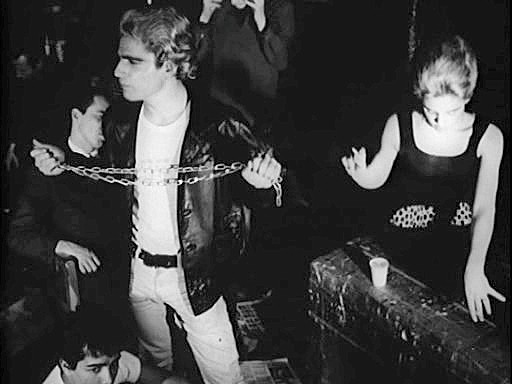
Vinyl (1965, directed by Andy Warhol)

Beauty No. 2 (1965, dir by Andy Warhol)

Kitchen (1966, dir by Andy Warhol)

Chelsea Girls (1966, dir by Andy Warhol and Paul Morrissey)

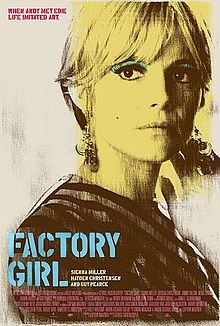
Film Review: Factory Girl (dir by George Hickenlooper)


Oh God.  Factory Girl.

Released in 2006, Factory Girl was a biopic about Edie Sedgwick, the tragic model/actress/artist who was briefly both Andy Warhol’s muse and one of the most famous women in America.  Before I talk too much about this film, I should probably admit that I’m probably the worst possible person to review a movie about Edie Sedgwick.

Why?

Allow me to repost something that I wrote when I reviewed Edie’s final film, Ciao Manhattan:

“In the late 60s, Edie Sedgwick was a model who was briefly the beautiful face of the underground.  Vogue called her a “youthquaker.”  She made films with Andy Warhol, she dated the rich and the famous and for a brief time, she was one of the most famous women in America.  But a childhood full of tragedy and abuse had left Edie fragile and unprepared to deal with the pressures of being famous.  She was fed drugs by those who claimed to care about her, she had numerous mental breakdowns, and, when she was at her most vulnerable, she was pushed away and rejected by the same people who had loved her when she was on top of the world.  Edie died because, when she asked for help, nobody was willing to listen.


Edie Sedgwick (1943 — 1971)

I guess I should explain something.  I don’t believe in reincarnation but if I did, I would swear that I was Edie Sedwick in a past life.  Of all the great icons of the past, she, Clara Bow, andVictoria Woodhull are the ones to whom I feel the closest connection. (Edie is the reason why, for the longest time, I assumed I would die when I was 28.  But now I’m 29, so lucky me.)”

(Incidentally, I wrote that two years ago and I’m still alive so, once again, lucky me.)

Anyway, my point is that I’m always going to be a hundred times more critical of a film about Edie Sedgwick as I would be about any other film.  If you’re already guessing that I didn’t particularly care for Factory Girl, you’re right.  However, there are some people whose opinions I respect and some of them love this film.

Anyway, Factory Girl is a biopic that’s structured so conventionally that it even opens with Edie (played by Sienna Miller) narrating her story to an unseen interviewer.  I can count on one hand the number of successful biopics that have featured someone telling the story of their life to an unseen interviewer.  It’s a conventional and kind of boring technique.  Anyway, the film follows all of the expected beats.  Edie arrives in New York.  Edie is spotted by Andy (Guy Pearce).  Edie makes films with Warhol.  Her famous dance in Vinyl is recreated.  Edie becomes Andy’s platonic girlfriend but then, she meets and falls in love with Bob Dylan…

Oh, sorry.  He’s not actually Bob Dylan.  According to the credits, his name is Folksinger.  He says Bob Dylan type stuff.  He rides around on a motorcycle.  He carries a harmonica.  Oh, and he’s played by Hayden Christensen.

See, the first half of Factory Girl is actually not bad.  Sienna Miller gives a pretty good performance as Edie, even if she never comes close to capturing Edie’s unforced charisma.  Despite being several years too old, Guy Pearce is also credible as Andy Warhol.  The film itself is full of crazy 60s clichés but, even so, that’s not always a terrible thing.  Some of those 60s clichés are a lot of fun, if they’re presented with a little imagination.

But then Hayden Christensen shows up as Bob Dylan and the film loses whatever credibility it may have had.  Hayden, who gave his best performance when he played a soulless and largely empty-headed sociopath in Shattered Glass, is totally miscast as a musician who once said that if people really understood what his songs were about, he would have been thrown in jail.  The film attempts to portray Dylan and Warhol as two men fighting for Edie’s soul but Christensen is so outacted by Guy Pearce that it’s never really much of a competition.  Even though the film makes a good case that Edie’s relationship with Andy was ultimately self-destructive, Guy Pearce is still preferable to Hayden Christensen trying to imitate Dylan’s distinctive mumble.

Anyway, Factory Girl doesn’t really work.  Beyond the odd casting of Hayden Christensen, Factory Girl is too conventionally structured.  In its portrayal of the Factory and life in 1960s New York, the film never seems to establish a life beyond all of the familiar clichés.  (Before anyone accuses me of contradicting myself, remember that I said that the old 60s clichés are fun if they’re presented with a little imagination.  That’s a big if.)  At no point, while watching the film, did I feel as if I had been transported back to the past.  If you want to learn about Edie Sedgwick, your best option is to try to track down her Warhol films.

Edie!

Never Nominated: 16 Actresses Who Were Never Nominated For An Oscar


The late actress Deborah Kerr was nominated for six Oscars over the course of her distinguished career.  She never won and, in fact, she currently holds the record for the most Best Actress nominations without a victory.

But, at least, Deborah Kerr was nominated!

The 16 actresses below have never been nominated for an Oscar, despite some excellent and compelling performances.  10 of them still have a chance to be nominated.  Sadly, 6 of them are no longer with us.
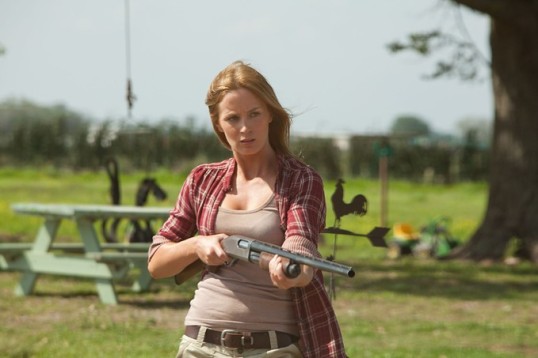
  1. Emily Blunt

Emily Blunt came close this year.  She received a SAG nomination for her performance in Girl On The Train and some of the critics groups also honored her work.  However, when the Oscar nominations were announced, Meryl Streep was nominated for a film nobody saw and Emily Blunt was nowhere to be seen.  This year, she’s in good company, as neither Amy Adams nor Annette Bening picked up expected nominations either.  Personally, I didn’t care much for Girl on the Train.  I would have much rather seen Blunt nominated for Looper, Sicario, or even Edge of Tomorrow.  Blunt will be nominated eventually.

2. Dale Dickey

You may not know Dale Dickey’s name but you’d recognize her if you saw her.  She usually plays characters who are strong, outspoken, and occasionally a little scary.  You never want to get on the bad side of someone played by Dale Dickey.  To date, Dickey’s most award-worthy role was in Winter’s Bone.  She also had a memorable (if small) role in Hell or High Water, playing the bank teller who, when asked if the men who robbed her were black, replies, “Their skin or their souls?”
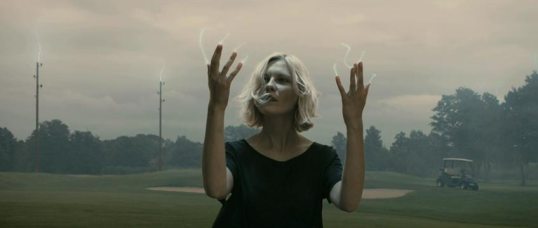
Melancholia

3. Kirsten Dunst

As a result of Bring It On, Dunst is often thought of as being the ideal cheerleader.  But, by far, her most award-worthy turn was in a film that was about as different from Bring It On as possible, Melancholia.  Dunst was just twelve when she was first mentioned, for her performance in Interview With A Vampire, as a potential nominee.  She was also very good in Marie Antoinette and the overlooked Crazy/Beautiful.  Dunst fell off the radar for a while but she’s been quietly making a comeback.

4. Greta Gerwig

Greta Gerwig is my spirit animal.  She deserved a nomination for Francis Ha and for Damsels in Distress before that.  She’ll be nominated some day.

5. Rebecca Hall

Rebecca Hall received some Oscar buzz last year for Christine.  I haven’t seen Christine but I think that her performances in 2008’s Vicky Christina Barcelona and especially 2010’s Please Give were criminally overlooked.
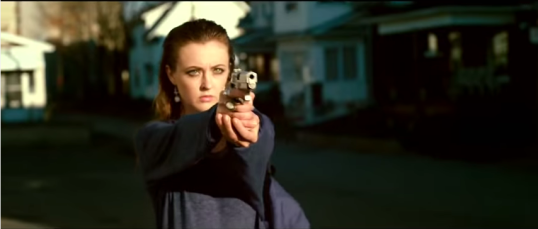
6. Katharine Isabelle

Though Isabelle is best known for Ginger Snaps, I think she deserved a nomination for last year’s underrated 88.  One of the best actresses working today, Isabelle will hopefully get a role worthy of her talents.

Film Review Under the Skin

7. Scarlett Johansson

It’s a bit of a shock that Scarlett Johansson has yet to be nominated.  Her work in Lost in Translation was just as important to that film’s success as Bill Murray’s.  And her performance in Under the Skin remains one of the bravest pieces of acting to ever be put on screen.

8. Ashley Judd

Unfortunately, Ashley Judd now seems to be more concerned with political activism than acting.  It’s been a while since she’s appeared in a really great role (and no, the Divergent movies don’t count).  Judd’s best work came in the 90s, when she gave award-worthy performances in Ruby in Paradise, Heat, and especially Normal Life.

9. Kelly MacDonald

Scottish actress Kelly MacDonald doesn’t make enough movies but it’s still hard not to feel that she’s been overlooked by the Academy.  Not only did she hold her own in Trainspotting but her performance in No County For Old Men provided that otherwise cold film with a much-needed heart.

Kristen Stewart

10. Kristen Stewart

Kristen Stewart managed to survive the Twilight films and has emerged as a consistently interesting actress.  Her work in Clouds of Sils Maria won her a Ceasar but was overlooked by the Academy.  Before that, Stewart did excellent work in Into the Wild, Adventureland, Still Alice and Welcome to the Rileys.

Sadly, these six unnominated actresses are no longer with us:

  1. Rita Hayworth

That the wonderful Rita Hayworth was never nominated — not even for Gilda — is nothing less than mind-blowing.

2. Myrna Loy

Myrna Loy was an actress who was such a natural that she made it look easy.  Perhaps that’s why she wasn’t even nominated for The Thin Man.

Marilyn

3. Marilyn Monroe

Perhaps one of the most tragic actresses in the history of Hollywood, Monroe was never nominated despite giving some of the most iconic performances in film history.  I would even make the case that she deserved a nomination for her tiny cameo in All About Eve.

4. Maureen O’Hara

Despite great performances in classic films like The Quiet Man and Miracle on 34th Street, Maureen O’Hara was never nominated for the Oscar she deserved.
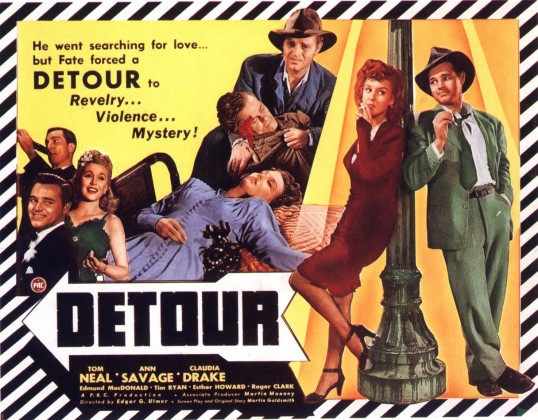
detour1

5. Ann Savage

You may not recognize the name but if you’ve ever seen Detour, you know Ann Savage.  Savage largely appeared in low-budget noirs and she always gave performances that were just as fierce as her last name.

Edie!

Edie!

6. Edie Sedgwick

Sadly, Edie never got a chance to play a truly award-worthy role.  Actually, since almost all of her films were underground Andy Warhol movies, it’s debatable whether she ever played a role at all.  During the 1960s, as one of the top models in New York (a so-called “youthquaker”), Edie was best known for being herself.  But, whenever I see Edie in an old Warhol film like Vinyl or even in something like Ciao! Manhattan, I see what a great actress she could have been if she’d only been given the chance.

Edie Sedgwick (1943 -- 1971)

Edie Sedgwick (1943 — 1971)

Artwork of the Day: Edie, Andy, and Chuck Wein


(Hi everyone!  Usually, my sister — the Dazzling Erin Nicole — tracks down and selects the images that we feature in our Artwork of the Day feature.  However, Erin is taking the week off — and November 24th is not only Thanksgiving but her birthday as well!, so be sure to wish her a happy one! — so, for the next few days, I’ll be selecting our artwork of the day! — Lisa Marie)

Edie, Andy, and Chuck Wein (1965, by Burt Glinn)

Edie, Andy, and Chuck Wein (1965, by Burt Glinn)

Needless to say — and this shouldn’t surprise anyone who knows how obsessed I am with Edie Sedgwick — this is one of my favorite pictures of all time!  Beyond the cleverness of having this oh-so chic icons emerging from a manhole, Edie, Andy, and Chuck all look so young and optimistic.  Just a few years after this picture was taken, Edie would die in a mysterious fire and Andy Warhol would be living in seclusion after being shot by Valerie Solanas.  Film director Chuck Wein — who was responsible for introducing Edie to Andy — would also leave the Factory after Andy’s near-fatal shooting.

But, in this picture, none of that matters.

They have their entire life ahead of them and they own the future.

Back To School Part II #2: Vinyl (dir by Andy Warhol)


vinyl1

For my next back to school film, I watched the 1965 underground film, Vinyl!

Now, admittedly, Vinyl does not appear to take place in a high school.  Then again, maybe it does.  All of the action takes place in a cramped corner of a room and we’re never really told, for sure, where the room is located.  All we know is that various characters keep wandering in and out of the static frame while the film’s action unfolds.

The center of the film is Victor (Gerald Malanga) who appears to be in his late 20s but who insists to us that he’s a “J.D,” which stands for juvenile delinquent.  He does what he wants, whether that means lifting weights or enthusiastically dancing.  Victor may be a murderous teenager with a bad attitude but he truly loves rock music.

While Victor dances and occasionally stumbles his way through a monologue about being a J.D, there’s an ever-present audience in the background of the scene.  Occasionally, they seem to be interested in what Victor is saying but, just as often, they seem to be bored with the whole thing.  Sitting off to Victor’s right and smoking through nearly the entire film is the iconic and tragic Edie Sedgwick.  Occasionally, she dances but, for the most part, she’s just observes with an enigmatic half-smile on her face.

Eventually, some men who we assume are the police get tired of Victor dancing and boasting about being a delinquent so they grab him, tie him to a chair, and force him to wear bondage gear while they beat him.  It’s a new, government-sanctioned rehabilitation technique and it’s guaranteed to turn Victor is a responsible member of society.  While they torture him, they play vinyl records in the background and Victor, possibly to his horror though, due to Malanga’s out-of-it performance, it’s often difficult to surmise what’s going on in Victor’s head, realizes that his beloved rock music is now being used to torture him.

All the while, Edie watches from the corner of the screen.  She smokes a cigarette.  She dances.  Sometimes, someone will refill her drink.  She holds a candle for a while.  As a viewer who is more than a little obsessed with the tragically short life of Edie Sedgwick and who relates to her on a personal level, it was occasionally difficult for me to watch because, even in a non-speaking role, Edie’s star power was obvious.

Edie!

Edie!

Of course, Edie isn’t the only person watching as Victor is tortured.  Many people wander in and out of the frame.  (Vinyl lasts 70 minutes and features exactly three shots.)  For the most part, the majority of them regard the torture happening in from with a studied detachment.  In fact, they’re very detachment and they’re very refusal to act in any sort of expected way becomes rather fascinating.  Vinyl goes so far out of it’s way to defy our expectations of what a movie should be that it becomes one of the most watchable unwatchable movies ever made.

Vinyl was directed by Andy Warhol.  Reportedly, it was filmed without any rehearsal and without multiple takes.  Hence, when Malanga stumbles over his lines or occasionally turns his back to camera, the moment is preserved.  When Edie Sedgwick breaks character and laughs, the film keeps on rolling.  When another actor accidentally drops his papers and has to spend half a minute picking them up and trying to get them back in order, it’s saved on camera.  And, because it’s in the final cut, Gerald Malanga forgetting his lines becomes as much a cinematic moment as Humphrey Bogart telling Ingrid Bergman to get on that plane or Clark Gable saying that he didn’t give a damn.   There is no editing and, as a result, there is no protection.  Instead, we just get a group of eccentric outsiders in their amateur glory.  Yes, it’s self-indulgent and deliberately alienating but it’s also undeniably fascinating.  (It helps that, while he may not have been a good actor, Gerald Malanga had an absolutely fascinating face.)  When one watches one of Warhol’s underground films, the question always arises as to whether he was a genius or a con artist.  Vinyl would seem to suggest that he was both.

(“What’s the point of all this?” some viewers may ask.  The point is that it was filmed and now you’re watching and, because he’s at the center of a static frame, Gerald Malanga is now a movie star.)

Though you might have a hard time realizing it from just watching the film, Vinyl was also the first cinematic adaptation of Anthony Burgess’s A Clockwork Orange.  Victor was a stand-in for Alex and Alex’s love of Beethoven is replaced by Victor’s love for Motown.  Six years later, Stanley Kubrick would release his better known adaptation of Burgess’s novel but Andy Warhol, Gerald Malange, and Edie Sedgwick all got there first.

ANDY-WARHOL-VINYL-3

Scenes that I Love: Edie Sedgwick and Gerald Malanga Dance in Andy Warhol’s Vinyl


Today’s scene that I love comes to use from an underground 1965 film called Vinyl!  Believe it or not, this adaptation of A Clockwork Orange was directed by Andy Warhol and predates the famous Kubrick film by 6 years!

This is a film that I hope to get a chance to review very soon but until then, check this out scene of Edie Sedgwick and Gerald Malanga dancing to Nowhere to Run by Martha and The Vandellas.

Watching her in this scene, it’s sad to think that, in just six years (and at the same time that Stanley Kubrick was releasing his version of A Clockwork Orange), Edie Sedgwick would die at the age of 28.  Like all of us, she deserved much better than what the world was willing to give her.

Edie Sedgwick (1943 -- 1971)

Edie Sedgwick (1943 — 1971)
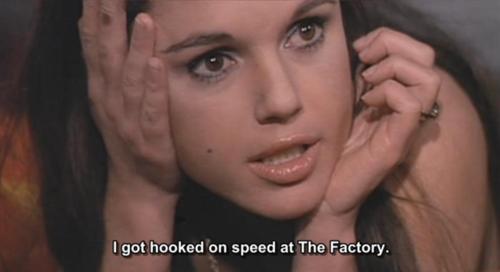
Embracing the Melodrama Part II #41: Ciao! Manhattan (dir by John Palmer and David Weisman)


Ciao_posterI recently watched the 1972 film Ciao! Manhattan on TCM and it left me with incredibly mixed feelings.  The specific reason that I was watching Ciao! Manhattan was because it was the last film to feature the legendary model and actress Edie Sedgwick.  Tragically, at the age of 28, she died merely weeks after completing work on Ciao! Manhattan.  And while the film is dedicated to her memory and was apparently meant to be a tribute to her, it instead feels incredibly exploitive.  Watching the movie, I was aware that Edie was literally dying on screen and, as so often happened in her life, nobody was willing to step forward and help her.

In the late 60s, Edie Sedgwick was a model who was briefly the beautiful face of the underground.  Vogue called her a “youthquaker.”  She made films with Andy Warhol, she dated the rich and the famous and for a brief time, she was one of the most famous women in America.  But a childhood full of tragedy and abuse had left Edie fragile and unprepared to deal with the pressures of being famous.  She was fed drugs by those who claimed to care about her, she had numerous mental breakdowns, and, when she was at her most vulnerable, she was pushed away and rejected by the same people who had loved her when she was on top of the world.  Edie died because, when she asked for help, nobody was willing to listen.

Edie

I guess I should explain something.  I don’t believe in reincarnation but if I did, I would swear that I was Edie Sedwick in a past life.  Of all the great icons of the past, she, Clara Bow, and Victoria Woodhull are the ones to whom I feel the closest connection. (Edie is the reason why, for the longest time, I assumed I would die when I was 28.  But now I’m 29, so lucky me.)  When I watched Ciao! Manhattan, I felt as if I was watching myself (or, at the very least, a close relation) on-screen.

Ciao! Manhattan opens with Susan Superstar (Edie Sedgwick), standing topless on a street corner and hitchhiking.  She’s picked up by an aimless drifter named Wesley (played by Wesley Hayes).  Wesley gives Susan a ride back to the mansion that she shares with her mother (Isabell Jewell) and her servant, a rather disgusting guy named Geoff (Jeff Briggs).  Her mother hires Wesley to help take care of Susan.  It turns out that Susan used to be a world-famous model but now she spends her time sitting in an empty swimming pool, drinking and doing drugs.  While Wesley and Geoff listen, Susan talks about her past in New York.  While Susan talks, we see black-and-white footage of Susan (and Edie’s) past.

337224340_f1a0a57d44

Ciao! Manhattan began life in 1967 as an underground parody of a spy film.  When Edie had a nervous breakdown and was sent to rehab, filming was abandoned.  When she was finally released in 1970, filming began again.  The 1967 footage was now used for flashbacks to the wonderfully glamorous life that Susan (and Edie) had lost.

And, when viewed as a documentary of how Edie was exploited and then subsequently abandoned by everyone that she cared about, Ciao! Manhattan works.  The contrast between the happy and vibrant Edie of 1967 and the barely coherent and visibly unhealthy Edie of 1970 is heartbreaking.  Whereas the 1967 footage features an existence that is in constant motion, the 1970 footage shows us an existence that is slow and drenched in sadness.  The film makes no effort to pretend that Susan Superstar is anyone other than Edie Sedgwick and, when Edie talks about her past, no names are changed to protect the guilty.  And the film shows that, even after surviving a literal Hell, Edie Sedgwick was still a natural-born star.  Even when she’s slurring her words and staring at the world with poignantly sad eyes, Edie demands and gets the audience’s attention.

Edie2

When Ciao! Manhattan allows Edie to tell her own story, it works.  But, unfortunately, the film spends too much time with Wesley and Geoff, who are two of the most repulsive characters that I’ve ever seen.  Geoff is written to be offensive whereas the character of Wesley is done in by the very bad performance of the guy playing his role.  (Wesley Hayes was reportedly not a professional actor and it certainly shows.)

This is a film that provides evidence that, even in her last days, Edie Sedgwick was a talented and unique presence and, for that, I’m glad.  But, ultimately, it’s hard not to feel that Ciao! Manhattan was the final case of Edie and her tragic life being exploited for someone else’s profit.

Edie Sedgwick

Usually, I would end a review like this by including either a scene or the film’s trailer.  But, instead, I’m going to end this review with Edie Sedgwick’s silent Warhol screen test.  This is how I prefer to think of Edie Sedgwick — hopeful and curious with the promise of her entire life ahead of her.