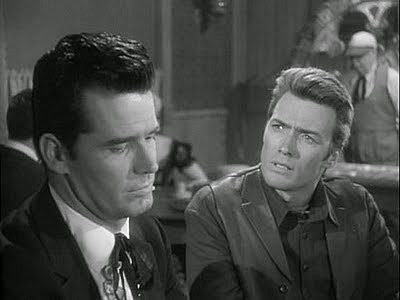
MAVERICK (TV Series) – starring James Garner – S2, E19: “Duel at Sundown” (Guest star – Clint Eastwood)


Bret Maverick (James Garner) stops off and visits his old friend Jed Christianson (Edgar Buchanan). Jed is desperate to break up the hot and heavy romance between his beautiful and wild daughter, Carrie (Abby Dalton), and a good for nothing gunslinger named Red Hardigan (Clint Eastwood). He asks Bret to stay for a while and help break them up. Not really wanting to get involved, Bret changes his tune when he’s offered $1,000 to hang around for a week. There is one serious problem, though, and that’s the fact that Red has a reputation for being extremely fast and accurate with a gun, and he’s not afraid to use it. When Bret actually sees a demonstration of Red’s shooting skills, he knows he’s going to have to come up with a plan to drive Red away that avoids a gunfight at all costs. And that’s exactly what he does. I won’t give away exactly what he does, but it involves his brother Bart (Jack Kelly) and a notorious gunslinger named John Wesley Hardin, and it’s genius! 

As we continue to celebrate the birthday of Hollywood legend Clint Eastwood, I decided I’d watch his 1959 guest starring appearance on the TV series MAVERICK with James Garner. I recently watched Eastwood and Garner work together in the enjoyable “geezers in space” movie SPACE COWBOYS (2000), which came out about 40 years after this. With that fresh in mind, I especially enjoyed seeing them work together while they were both in their prime. “Duel at Sundown” is the first episode I’ve watched of the MAVERICK TV series, and I must say that I had a ball with it. James Garner’s effortless charisma and laid back demeanor as Bret Maverick make his character right down my alley. Nothing seems to rattle the man, and he’s as funny as hell! As of the time of this review, all five seasons of the series are streaming on PlutoTV, so I’m planning on catching some more episodes as I can. As far as the young Clint Eastwood, who was 29 when this show premiered, he definitely looks the part of a future star. Maybe I’m just being influenced by what he’s accomplished over the last 60 years, but his steely intensity, his great head of hair, and his way with the ladies are all on display. And even though his character of Red is a hot headed gunslinger who’s driven by jealousy, there are a couple of times when he flashes that million dollar smile, and you can’t help but like him. For me, it’s fun to watch these megastars in roles when they were just working actors trying to build a career. You can usually see the qualities that will make them the most popular actors in the world, but they’re still going to lose to the star of the series at the end. It’s a rite of passage. 

Overall, “Duel at Sundown” is an excellent introduction to the MAVERICK TV series for me. It’s funny and actually quite clever, as evidenced by the scheme that Bret Maverick comes up with at the end to keep from having to face Red in a gunfight. But the true highlight is seeing Garner, in one of his signature roles, working with a young Eastwood who’s destined for stardom. I highly recommend it! 
I Watched Flashing Spikes (1962, Dir. by John Ford)


When infielder Bill Riley (Patrick Wayne) makes an error that costs his team the game, sports columnist Rex Short (Carleton Young) claims that he witnessed Bill being paid off by Slim Conway (James Stewart).  Slim is a former player who was banned from Major League Baseball after he was accused of taking a bribe from a gambler.

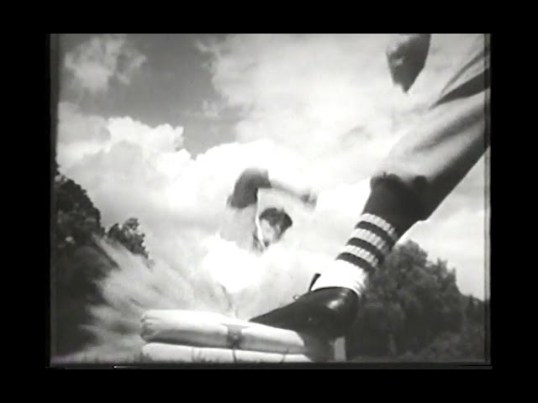
Most the movie is a flashback, showing how Bill first met Slim when Slim was playing for a barnstorming team of former major leaguers.  That was my favorite part of the movie.  Slim and a collection of old, worn-out men stumble out of their bus and even though they might move a little slower and they might need to stretch a little more before swinging a bat, they still show up a cocky team made up of young local players.  Even after the crowd nearly riots when they realize that Slim is one of the players, the old players keep their cool and their eye on the game.  After Bill spikes Slim while sliding into home plate, Bill apologizes.  Slim remembers the young man’s humility and, working with one of the few friends that he has left in the game, Slim helps Bill get his chance in the Majors.

Usually, when my sister yells at me to come watch something because “it’s got baseball!,” I’m prepared for it turn out to just be a movie with one scene of someone holding a bat.  I’m glad that she called me to come watch Flashing Spikes with her because it really is a good and loving celebration of my favorite game.  Even after Slim is treated so unfairly by the press, the League, and even some of the fans, he never stops loving the crack of the bats and the cheers of the crowd.  Flashing Spikes is unabashedly pro-baseball and Slim stands in for every player who was ever unfairly railroaded out of the game by scandal mongers like Rex Short.

Four Fast Guns (1960, directed by William J. Hole, Jr.)


Outlaw Tom Sabin (James Craig) rides into Purgatory, a frontier town that is so dangerous that even the welcome sign warns that those entering should say goodbye to God.

The townspeople take one look Tom and hire him to clean up the town.  The town is controlled by a ruthless saloon owner named Hoag (Paul Richards).  Hoag is a self-styled intellectual and a dangerous man but he is considered to be untouchable because he is crippled and no one wants to be known as the person who shot a man in a wheelchair.  Instead, they would rather hire a stranger to do it for them but Tom has more honor than they originally realized.

Hoag summons three gunmen to kill Tom.  Two of the gunmen prove to be no match for Tom but then he meets the third and is shocked to discover that it’s his own brother, Johnny Naco (Brett Halsey).

Four Fast Guns is a better-than-average B-western.  What sets it apart from other films about strangers being hired to clean up a town is that the characters are portrayed with more depth than usual.  The towns people are not innocent victims but instead want to pay Tom to take the risks and do the dirty work that they’re not willing to do.  Tom is not a cut-and-dried hero and the gunmen who are hired to kill him are not portrayed as being one-dimensional villains.  Johnny Naco may be a killer but he also has a code of honor.  He may be willing to kill his own brother but he’s not willing to see him humiliated.  The wheelchair-bound Hoag is himself a more interesting bad guy than usually shows up in movies like this.  He’s the type of bad guy who quotes Dickens and Whitman while waiting for his hired guns to do their job.  Hoag feels that his cultured background sets him above the rest of the town’s rabble but he ultimately proves himself to be just as petty as those that he looks down on.

Four Fast Guns feels like a forerunner to the morally ambiguous Spaghetti westerns and films like Clint Eastwood’s Unforgiven.  It is essential viewing for fans of the genre.

Yuma (1971, directed by Ted Post)


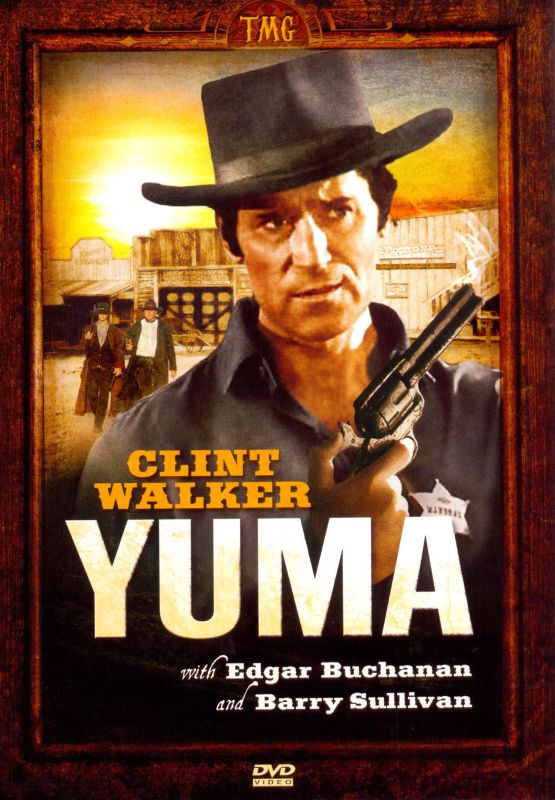
At the start of this made-for-TV western, experienced lawman Dave Harmon (Clint Walker) has just been appointed the new marshal of Yuma.  He’s served as the marshal of several towns, all of which were near rowdy army bases.  He’s a laconic, no-nonsense lawman who is quick with a gun and smart enough to negotiate with the local Indian tribes.

As soon as Harmon rides into town, he comes across the King Brothers (Bruce Glover and Bing Russell) making trouble.  He kills one of the brothers in a saloon and then takes the other one to jail, where he’s mysteriously gunned down during a midnight jailbreak.  It turns out that there’s a third Harmon brother, cattle baron Arch King (Morgan Woodward), and he rides into town looking for revenge.  He gives Harmon a set amount of time to find and arrest his brother’s killer or Arch and his men are going to return to town and kill Harmon.

Fortunately, Harmon has a witness to the jailbreak murder.  Andres (Miguel Alejandro) is a young, Mexican orphan who sleeps at the jail.  He witnessed the murder but he only saw that the killer was wearing what appeared to be army boots.  Harmon’s investigation brings him into conflict with the local army base’s commandant (Peter Mark Richman) and also leads to the discovery of a plot to defraud the local Indians.

The main problem with Yuma is that it was clearly designed to be a pilot for a weekly television series and, as a result, it introduces a lot of characters who don’t get much to do.  There’s a lot of talk about how Harmon is searching for the men who earlier killed his family but that subplot is never resolved.  (If Yuma had been picked up as a weekly show, maybe it would have been.)  Yuma has to set up the premise for a potential show and tell a complete story in just 70 minutes.  That’s a lot to handle and Yuma ends up feeling rushed and incomplete.

As a B-western for undemanding fans of the genre, it’s acceptable.  Clint Walker was a convincing lawman and the film was directed by Ted Post, who knew how to stage a gunfight.  But it’s not really a western that you’re going to remember for long after you watch it.

30 Days of Noir #23: Framed (dir by Richard Wallace)


The 1947 film noir, Framed, is the story of a loser.

That, in itself, is not a surprise.  The loser who finds himself stranded in a strange place where he’s manipulated by nearly everyone he meets is a film noir archetype.  This is especially true when it comes to movies about men who end up getting manipulated by another film noir archetype, the femme fatale.  I mean, let’s be honest.  Most film noir “heroes” fall victim to their own desperation.  If they weren’t so obviously desperate to find money or sex, they probably wouldn’t end up in the trouble that always seems to follow them around.

Framed tells the story of Mike Lambert (Glenn Ford).  When we first meet Mike, he’s sitting behind the wheel of an out-of-control truck.  While the truck recklessly speeds down a steep hill, Mike desperately tries to keep from crashing.  It’s not until Mike pulls into a small town that he finally gets the truck to stop.  Of course, in the process of stopping, he also dings the back of someone else’s pickup truck.

It turns out that, until recently, Mike was a mining engineer.  After he lost his job, he found temporary employment as a truck driver.  He needed the money so he didn’t bother to find out what he was hauling or even if the truck had working brakes.  When Mike calls up the man who hired him and tells him that the owner of the pickup is demanding that Mike’s employer pay for the damage, the man hangs up on him.  To recap, before we’re even 10 minutes into the movie, we’ve seen that Mike can be tricked into driving a truck with no brakes and that he can’t even convince his employer to help pay for the damage caused by those faulty brakes.  In other words: Loser!

Anyway, the local cops are planning on tossing Mike in jail for reckless driving but fortunately, a local waitress, Paula Craig (Janis Carter), is willing to pay Mike’s fine.  She even helps a drunken Mike find a hotel room.  Is Paula doing all of this out of the goodness of her heart or is it all just a part of an elaborate scheme?  While Mike is getting a job with a local prospector (Edgar Buchanan), Paula is meeting with her married boyfriend, Steve Price (Barry Sullivan), and bragging about how she’s finally found the perfect patsy.

Yes, to no one’s surprise, Paula and Steve have hatched a nefarious scheme and Mike is about to find himself stuck right in the middle of it.  Of course, since this is a film noir, it should come as no surprise to learn that Paula and Steve are just as willing to double cross each other as they are Mike….

Framed is an entertaining if slightly predictable noir.  From the minute that Paula first appears, we know that she’s not to be trusted but part of the fun of the film is that those of us in the audience are always a step or two ahead of poor Mike.  You watch Mike in amazement that someone could be so dense but, at the same time, Glenn Ford is likable enough that you do hope that everything will turn out okay for him.  As for the film’s main villains, Barry Sullivan is perfectly slick and sleazy as Steve Price but the film is really stolen by Janis Carter, who plays Paula as if she were a panther waiting to pounce on her prey.

Framed is a film that will definitely be enjoyed by those who appreciate the shadowy landscape of an old school film noir.  It may not rewrite the rules of genre but it’s still an undeniably entertaining film about a loser and the people who use him.

http://www.youtube.com/watch?v=-INr2cINnt4

Lisa Reviews An Oscar Nominee: Shane (dir by George Stevens)


“Hey, Shane!  Come back, Shane!”

There’s a few ways in which you can view the 1953 film, Shane.

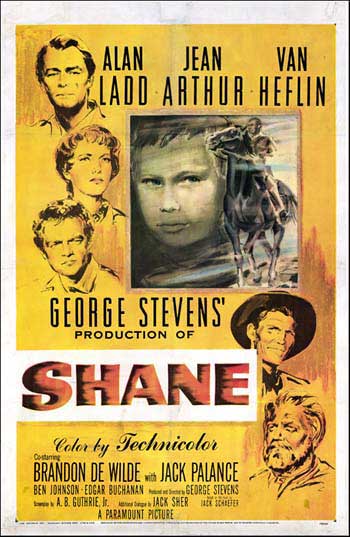
The more popular view is that it’s a Western about a man named Shane (Alan Ladd) who rides into town and gets a job working for the Starretts, Joe (Van Heflin) and Marian (Jean Arthur).  Joe is a farmer who is determined to hold onto his land, despite the efforts of cattle baron Rufus Ryker (Emile Meyer) to force him off of it.  While we don’t learn much about Shane’s background, it becomes apparent that he’s a man who can fight.  That comes in handy when Ryker brings in a sinister gunfighter named Wilson (Jack Palance).

Another view is that Shane is the story of a man who just wants to settle down but, instead, finds himself continually hounded by an annoying little kid, to the extent that he finally gets involved in a gun battle just so he’ll have an excuse to leave town and get away from the little brat.  Little Joey Starrett (Brandon deWilde) idolizes Shane from the minute that he comes riding up.  When he hears that Shane refused to get into a fight at the local saloon, Joey demands to know whether it was true.  He tells his mom that he loves Shane almost as much as he loves his father.  When Shane does get into a brawl with all of Ryker’s men, Joey stands in the corner and eats candy.  And then, when Shane tries to leave town, Joey runs behind him shouting, “Come back, Shane!  Come back!”

Myself, I think of it as being the story of Frank Torrey (Elisha Cook, Jr.).  Frank is the farmer that’s been nicknamed “Stonewall,” due to his status as a former Confederate and his quick temper.  Stonewall may be smaller than the other farmers but he’s usually the quickest to take offense.  Still, it’s impossible not to like him, largely because he’s played by Elisha Cook, Jr.  When Wilson feels the need to put the farmers in their place, he does so by picking a fight with Torrey.  Standing on a porch in the rain, looking down on the smaller man, Wilson starts to insult both him and the South.  When Torrey finally starts to reach for his gun, Wilson shoots him dead.  While Torrey lies in the mud, Wilson smirks.  It’s a shocking scene, all the more so for being shown in a long shot.  (By forcing those of us in the audience to keep our distance from the shooting, the film makes us feel as powerless as the farmers.)  If you didn’t already hate Wilson and Ryker, you certainly will after this scene.

Shane is a deceptively simple film, one in which many of the details are left open for interpretation.  We never learn anything about Shane’s background.  He’s a man who shows up, tries to make a life for himself, and then leaves.  He’s a marksman and an obviously experienced brawler but, unlike Ryker’s men, he never specifically looks for violence.  In fact, he often seems to avoid it.  Why?  The film doesn’t tell us but there are hints that Shane is haunted by his past.  Shane seems to want a chance to have a life like the Starretts but, once he’s forced to again draw his gun, he knows that possibility no longer exists.

Is Shane in love with Marian Starrett?  It certainly seems so but, again, the film never specifically tells us.  Instead, it all depends on how one interprets the often terse dialogue and the occasional glances that Marian and Shane exchance.  When Shane and Joe get into a fist fight to determine who will face Ryker and Wilson, is Shane really trying to protect Joe or is it that he knows Marian will be heart-broken if her husband is killed?

One thing’s for sure.  Little Joey sure does love Shane.  “Come back, Shane!”  Little Joey follows Shane everywhere, with a wide-eyed look on his face.  To be honest, it didn’t take too long for me to get sick of Little Joey.  Whenever director George Stevens needed a reaction shot, he would cut to Joey looking dumb-founded.  Brandon deWilde was 11 years when he appeared in Shane and he was nominated for an Oscar but he’s actually pretty annoying in the role.  Elisha Cook, Jr. was far more impressive and deserving of a nomination.

I know that many people consider Shane to be a classic.  I thought it was good, as long as the action was focused on the adults.  Alan Ladd plays Shane like a man who is afraid to get too comfortable in any situation and the film works best when it compares his reticence to Wilson’s cocky confidence.  Whenever Joey took center stage, I found myself wanting to cover my ears.

Shane was nominated for Best Picture but lost to From Here To Eternity.

Hittin’ the Dusty Trail with THE DESPERADOES (Columbia 1943)


gary loggins's avatarcracked rear viewer

desp11

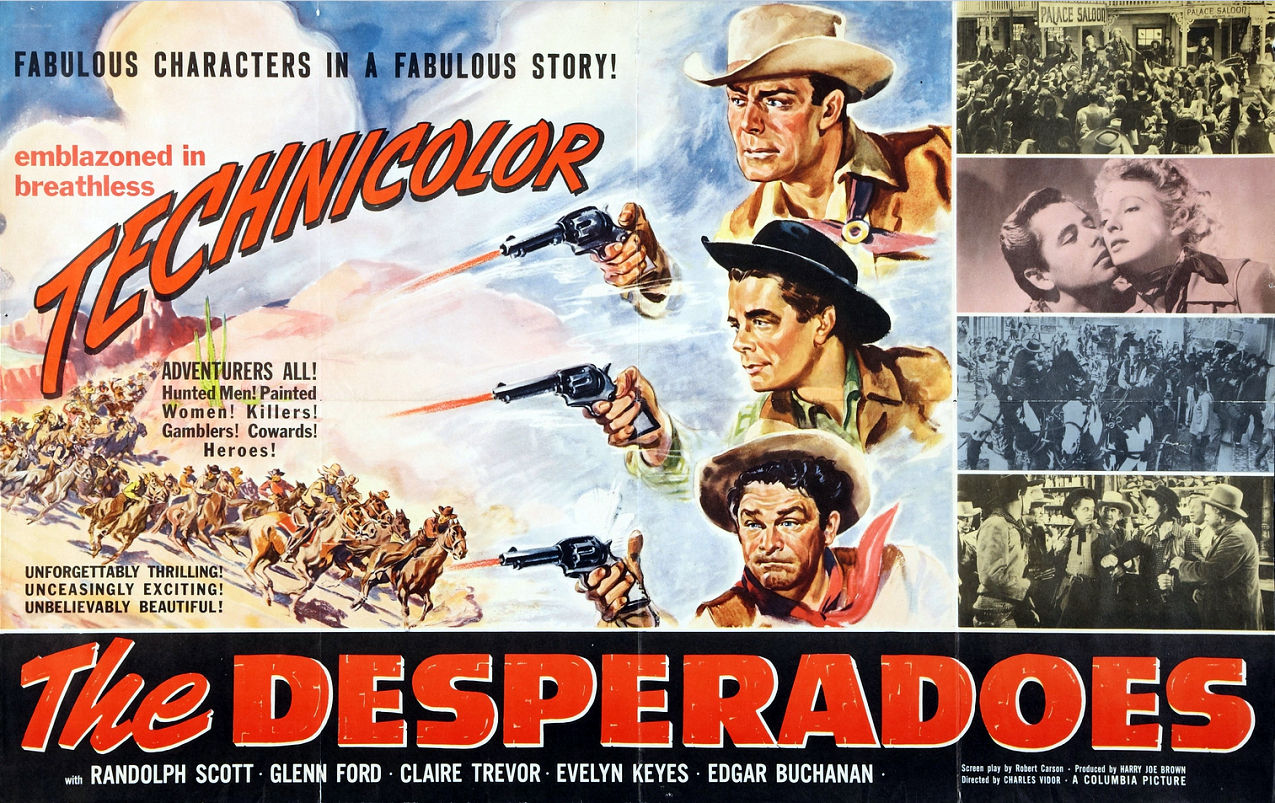
There’s a lot to like about THE DESPERADOES. Not that it’s anything groundbreaking; it’s your standard Western outing with all the standard clichés. you’ve got your two pals, one the sheriff (Randolph Scott ), the other an outlaw (Glenn Ford ). You’ve got your gambling hall dame (Claire Trevor ) and sweet young thing (Evelyn Keyes) vying for the good/bad guy’s attention. You’ve got your goofy comical sidekick (Guinn ‘Big Boy’ Williams). You’ve got your  supposedly respectable heavy (Porter Hall ), a mean heavy (Bernard Nedell), and a heavy who has a change of heart (Edgar Buchanan). What makes this one different is the movie seems to know it’s clichéd, giving a nod and a wink to its audience as it merrily makes its way down that familiar dusty trail.

Based on a novel by pulp writer Max Brand (who also created the Dr. Kildare series), this was one of Columbia’s big releases of the year, and…

View original post 385 more words

Cleaning Out The DVR, Again #4: The Talk of the Town (dir by George Stevens)


The_Talk_of_the_Town_dvd_cover

The fourth film on my DVR was the 1942 film, The Talk of the Town.  The Talk of The Town originally aired on TCM on March 20th and I recorded it because it was a best picture nominee.  As some of our regular readers undoubtedly know, it’s long been a goal of mine to watch and review every single film nominated for Oscar’s top prize.

The Talk of The Town is an odd little hybrid of comedy, melodrama, and a civics lecture.  Michael Lightcap (Ronald Colman) is a brilliant attorney and legal professor.  He’s been shortlisted for the Supreme Court and he’s also a widely read author.  In fact, he’s even rented a house for the summer, so that he may work on a book.  The owner of the house — teacher Nora Shelley (Jean Arthur) — will also be acting as his secretary.

As well-read as Prof. Lightcap may be, he’s also rather stuffy and out-of-touch with what’s going on outside of the world of academia.  He knows how the law should work but he has little understanding of how the law actually does work.  Fortunately, he gets a lesson in reality when he arrives at the house and eventually meets the gardener, Joseph (Cary Grant).  Joseph turns out to be surprisingly intelligent and very passionate about politics.  Lightcap and Joseph have many debates about whether or not the American legal system actually protects the working man.

What Lightcap doesn’t know is that Joseph is actually Leopold Dilg.  Leopold is a labor activist, the type who you always see in old documentaries, standing on a street corner and preaching about unions.  Leopold is also a fugitive.  He was accused of setting fire to a mill, a fire that apparently led to the death of the foreman.  Despite the fact that he loudly proclaimed his innocence, Leopold was arrested and prosecutors announced that they would seek the death penalty.  Convinced that he would never get a fair trial, Leopold escaped from jail and fled to Nora’s house.

Nora and Leopold went to school together.  They love each other, even though circumstances — mostly his political activism — conspired to keep them apart.  When Lightcap moves into the house, Nora and Leopold’s attorney, Sam (Edgar Buchanan), hope that they can convince him to take on Leopold’s case.  However, they also have to not only convince Leopold to reveal his true identity but also convince Lightcap to put his supreme court appointment at risk by defending a politically unpopular defendant.  Their solution is to trick Lightcap into falling in love with Nora and then convince him to take on the case for her.

However, Nora soons finds herself falling in love with Lightcap for real.  Who will she choose in the end?  Cary Grant or Ronald Colman?  Today, it seems like a pretty easy decision but apparently, in 1942, Columbia Pictures actually shot two different endings for the movie.

The Talk of The Town is an odd little movie.  For the most part, it’s a drama.  But it also has plenty of comedic elements, mostly dealing with the attempts to keep Leopold’s identity a secret.  In the end, it’s a little bit too preachy to really work as either a drama or a comedy.  That said, I still liked The Talk Of The Town because it made a strong case for the importance of due process, which is a concept that a lot of people take for granted.

(At the same time, The Talk of the Town was made in 1942 so you never have any doubt that Lightcap’s belief in the American legal system will eventually be vindicated.  With America having just entered World War II, 1942 was not a time for cynicism.  If Talk of the Town has been made in the 30s, it probably would have been a very different movie.)

Probably the best thing about Talk of the Town is the cast.  It may not be a great film but, when you’ve got Cary Grant and Jean Arthur in a scene together, it almost doesn’t matter.

The Talk of the Town was nominated for best picture but it lost to Mrs. Miniver.

The Fabulous Forties #37: Penny Serenade (dir by George Stevens)


Penny_Serenade_1941_Poster

How many tears can be jerked by one tear jerker?

How melodramatic can one melodrama get?

These are the type of questions that I found myself considering as I watched the 36th film in Mill Creek’s Fabulous Forties box set, 1941’s Penny Serenade.

Penny Serenade opens with Julie (Irene Dunne) announcing that she’s planning on leaving her husband, Roger (Cary Grant).  Fortunately, before Julie goes through with her plan, she listens to a song called You Were Meant For Me.  Perhaps not coincidentally, the song is included on an album called The Story Of A Happy Marriage.  As she stares at the spinning vinyl, Julie starts to have flashbacks!

No, not flashbacks of the LSD kind.  (Though, interestingly enough, Cary Grant was reportedly a big fan of LSD…)  Instead, she has flashbacks of her marriage to Roger.  We see how she first met Roger while she was working in a music store.  Roger stopped by the store to tell her that a record was skipping and it was love at first sight.  However, Roger had no interest in getting married.  Or, at the least, he didn’t until Julie opened up a fortune cookie and read the fortune: “You get your wish — a baby!”

Julie continues to stare at the spinning record and we discover that eventually, she and Roger did get married.  Julie did get pregnant but, as the result of an earthquake, she lost the baby.  (Curse you, fortune cookie!  CURSE YOU!)  Meanwhile, Roger took over a small town newspaper and revealed himself to have absolutely no idea how to handle money.

Because of the earthquake, Julie will never be able to have a child.  (DAMN YOU, FORTUNE COOKIE!  DAMN YOU FOR YOUR LIES!)  However, they can still adopt!  She writes to Miss Oliver (Beulah Bondi), the head of the local orphanage.  Julie demands to be given a baby with “blue eyes and curly hair.”  Fortunately, Miss Oliver apparently has a surplus of curly-haired, blue-eyed babies but she’s still reluctant to approve the adoption.  After all, Julie is such a terrible housekeeper!  However, she is impressed by how much both Julie and Roger want a baby so Miss Oliver puts aside her concerns and allows them to have a baby for two years.

At the end of the two years, Roger and Julie have to go to an adoption hearing.  Unfortunately, the paper has gone out of business, the family has absolutely no money, and the fortune cookie has stopped giving advice.  Fortunately, Roger is Cary Grant and who can say no to Cary Grant?  Roger promises the judge that he’ll always love and take care of the baby…

But that’s not all!  The movie is not over yet.  And even as Roger makes his plea, we can’t help but think about the fact that this movie is being told in flashback and that present day Julie is still planning on leaving Roger.  Now, I’m not going to spoil the movie by going into why or revealing what happens in the end.  I’ll just say that it involves more tragedy and more melodrama.  In fact, it includes so much tragedy and so much melodrama, that it starts to get a little exhausting.  How much bad stuff can happen to Cary Grant!?

And the record just keeps spinning…because what goes up must come down, spinning wheel got to go round…

Over the course of his long career, Cary Grant only received two Oscar nominations.  Penny Serenade was his first nomination and, as a fan of Cary Grant’s comedies, it saddens me to say that Cary’s nominated performance really wasn’t that good.  Watching this film, you can tell that Cary felt that this was his chance to prove himself as a dramatic actor and, as a result, he acts the Hell out of every scene.  Of course, Cary’s undying popularity comes from the fact that he rarely seemed to be acting.  His charm was in how natural he was.  In Penny Serenade, he never seems natural.  He’s trying too hard and it’s just odd to see Cary Grant trying too hard.

If you want to see Cary Grant at his best, check out The Awful Truth.  Or maybe The Philadelphia Story.  Those are two great films that prove that Cary Grant was a great actor.  Even a rare misfire of a performance can’t change that fact.

Until next time…

Ride a painted pony, let the spinnin’ wheel spin. … Ride a painted pony, let the spinnin’ wheel turn.

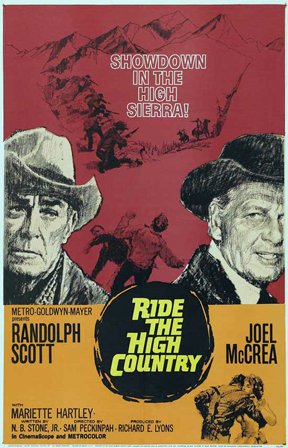
Thank You, Mr. Peckinpah: Ride the High Country (1962, directed by Sam Peckinpah)


rideIt’s the turn of the 20th century and the Old West is fading into legend.  When they were younger, Steve Judd (Joel McCrea) and Gil Westrum (Randolph Scott) were tough and respect lawmen but now, time has passed them by.  Judd now provides security for shady mining companies while Gil performs at county fairs under the name The Oregon Kid.  When Judd is hired to guard a shipment of gold, he enlists his former partner, Gil, to help.  Gil brings along his current protegé, Heck Longtree (Ron Starr).
On their way to the mining camp, they spend the night at the farm of Joshua Knudsen (R.G. Armstrong) and his daughter, Elsa (Mariette Hartley).  Elsa is eager to escape her domineering father and flirts with Heck.  When they leave the next morning, Elsa accompanies them, planning on meeting her fiancée, Billy Hammond (James Drury), at the mining camp.

When they reach the camp, they meet Bill and his four brothers (John Anderson, L.Q. Jones, John Davis Chandler, and the great Warren Oates).  Billy is a drunk who is planning on “sharing” Elsa with his brothers.  Gil, Judd, and Heck rescue Elsa and prepare for a final confrontation with the Hammond Brothers.  At the same time, Gil and Heck are planning on stealing the gold, with or without Judd’s help.

Ride the High Country was actually Sam Peckinpah’s second film but it’s the first of his films to truly feel like a Sam Peckinpah film.  (For his first film, The Deadly Companions, Peckinpah was largely a director-for-hire and had no say over the script or the final edit.)  Peckinpah rewrote N.B. Stone’s original script and reportedly based the noble Steve Judd on his own father.  All of Peckinpah’s usual themes are present in Ride the High Country, with Judd and, eventually, Gil representing the dying nobility of the old west and the Hammond brothers and the greedy mining companies representing the coming of the “modern” age.  Ride The High Country‘s final shoot-out and bittersweet ending even serve as a template for Peckinpah’s later work in The Wild Bunch.

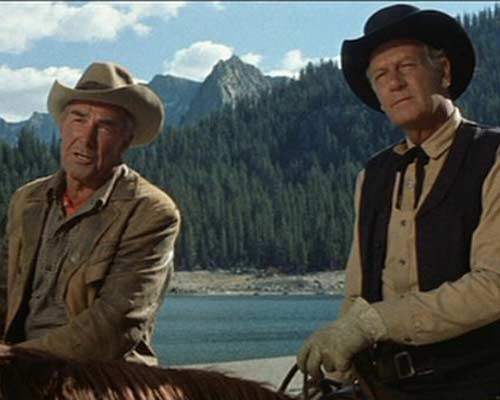
Much like the characters they were playing, Randolph Scott and Joel McCrea were two aging veterans on the verge of retirement.  For these two aging stars, who had starred in countless westerns before this one, Ride The High Country would provide both fitting farewell and moving tribute.  This would be the last chance that either of them would have to appear in a great movie and both of them obviously relish the opportunity.  The best moments in the film are the ones where Judd and Gil just talk with the majestic mountains of California in the background.

Among the supporting cast, Ron Starr and Mariette Hartley are well-cast as the young lovers but are never as compelling as Gil or Judd.  Future Peckinpah regulars R.G. Armstrong, L.Q. Jones, and Warren Oates all make early appearances.  Seven years after playing brothers in Ride the High Country, L.Q. Jones and Warren Oates would both appear in Peckinpah’s most celebrated film, The Wild Bunch.

The elegiac and beautifully-shot Ride The High Country was Sam Peckinpah’s first great film and it might be his best.

Randolph Scott and Joel McCrea in Ride The High Country

Randolph Scott and Joel McCrea in Ride The High Country