Today, we wish a happy birthday to Ron Howard with this classic Howard-directed scene from 1995’s Apollo 13!
Today, we wish a happy birthday to Ron Howard with this classic Howard-directed scene from 1995’s Apollo 13!
Welcome to Late Night Retro Television Reviews, a feature where we review some of our favorite and least favorite shows of the past! On Mondays, I will be reviewing CHiPs, which ran on NBC from 1977 to 1983. The entire show is currently streaming on Prime!
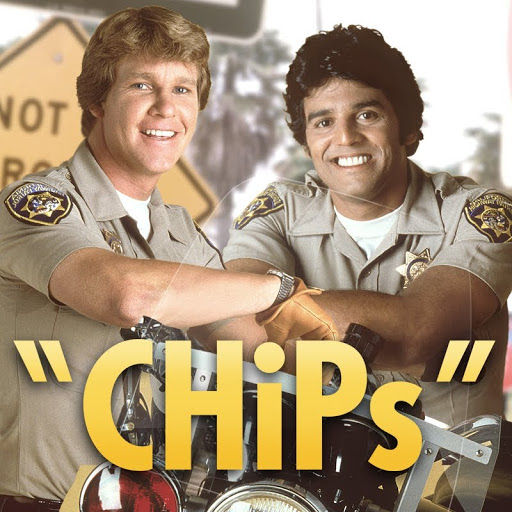
This week’s episode features a future Oscar nominee!
Episode 5.2 “Vagabonds”
(Dir by Bruce Kessler, originally aired on October 11th, 1981)
The saying goes that “everyone had to start somewhere,” and, for actor Ed Harris, somewhere included guest-starring on an episode of CHiPs.
The future Oscar nominee appears as Lonny Wilson, the scion of a family of a hillbilly con artists. He and his brother, Daws (Jesse Vint), purposefully cause auto accidents and con their victims out of their money in return for not calling the police or the insurance company. Lonny’s young son, Jamie (James Calvert), is looking forward to joining the family business until he actually is injured while taking part in one of the family’s cons. Lonny reconsiders his way of life and, by the end of the episode, he’s cooperating with the highway patrol.
Does Ed Harris come across as being a future star in this episode? Well, he definitely has charisma. He has screen presence. That said, this is also CHiPs, a show that was mostly about capturing potentially serious auto accidents in slow motion. No one came across as being a future star on ChiPs and that was actually a part of the show’s appeal. The stars on CHiPs were always the motorcycles, the cars flipping over on the freeway, and Ponch’s blinding smile. That said, Ed Harris gives a good performance. For that matter, so does Jesse Vint as his brother. This is a well-acted episode of CHiPs. Such things do exist.
In all fairness, I should also note that, when this episode aired, Harris had already starred in George Romero’s Knightriders so, while Harris may not have been a household name, it’s probably still debatable whether or not this was really at the start of his career. Ultimately, the important thing is that, two years after appearing this episode, Ed Harris would play John Glenn in 1983’s The Right Stuff and firmly established himself as one of our best character actors.
As for this episode, it also features the Highway Patrol taking part in a “supercycle” race, which is a race featuring bicycles that you lie down on as you peddle. I don’t know why anyone would want to do that but whatever. Jon Baker wins. Yay, Highway Patrol!
On that note of victory, Retro Television Reviews is going on a holiday break so that I can focus on the Oscar precursor awards and reviewing Christmas movies so this will be last CHiPs review of 2025! CHiPs will return on January 5th, 2026!
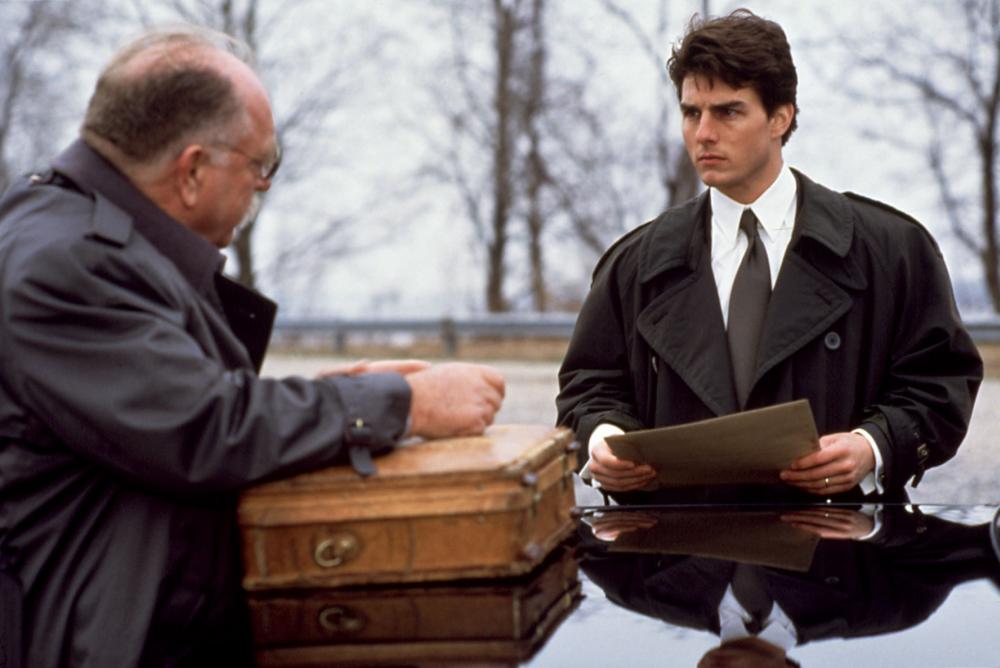
In honor of Tom Cruise’s 63rd birthday, I decided to watch THE FIRM, which is based on the 1991 novel from author John Grisham. Cruise stars as the brilliant Harvard law graduate Mitch McBride, who convinces his wife Abby (Jeanne Tripplehorn) to move to Memphis, TN, so he can join the prestigious Memphis law firm of Bendini, Lambert & Locke. With the help of his veteran mentor Avery Tolar (Gene Hackman), Mitch seems to be excelling at his job, and everything is just so perfect. Unfortunately, the good times don’t last as Mitch starts to notice some suspicious stuff going on with the firm, beginning with the mysterious deaths of two of his fellow attorneys. He’s soon approached by FBI agents, led by Wayne Tarrance (Ed Harris), who tell him that there are nefarious deeds taking place at the firm, including the laundering of money for the Chicago mob. When Mitch starts questioning the activities of the firm, he finds himself the subject of blackmail and intimidation from the firm’s security officer William Devasher (Wilford Brimley) because the firm will do anything to protect its secrets. Mitch is soon caught between betraying his corrupt employers, who are threatening to kill him, and the FBI, who is pressuring him to expose the firm’s criminal activities. Not wanting to lose his life, go to jail, or get disbarred, Mitch devises an extremely risky plan to outsmart the firm and the FBI, but is even he brilliant enough to pull this one off?!
Back in the early 90’s, it seemed that every other movie being released was adapted from a John Grisham novel, and the very first of those adaptations was THE FIRM in 1993. Extremely successful at the box office, THE FIRM grossed over $270 million worldwide, setting the stage for five new movies based on Grisham novels over the next five years. THE FIRM was not only financially successful, it’s also an extremely effective movie that showcases a 30-year-old Tom Cruise at his very best. Director Sydney Pollack crafted a creepy and paranoid thriller, using a slow-burn buildup that relies on Cruise’s ability to believably go from naïve and starstruck at the beginning, to scared and desperate during the middle portion of the film, and ultimately to resourceful and intelligent at the end, as he navigates the dangerous situations he finds himself in. It’s a dynamic, intense performance, and even with a huge supporting cast of excellent actors around him, Cruise dominates every frame of this film. Other performances that stand out to me are Jeanne Tripplehorn as Mitch’s wife Abby, Wilford Brimley as the firm’s enforcer, Gary Busey and Holly Hunter as a private investigator and his administrative assistant from Little Rock, and David Strathairn as Mitch’s jailbird brother in Arkansas. Gene Hackman is good in his role as Mitch’s corrupted mentor Avery Tolar, but his character is not one of my favorites from the legendary actor. His character has accepted his corruption and learned to cope with it over the years through alcohol and womanizing, just so he can keep making the money. He knows better and that’s the part that ultimately makes him the most pathetic. Ed Harris is also good in the film as the FBI Agent, but his character is kind of an asshole, and it’s fun to see Mitch outsmart him.
I also like the Memphis, Tennessee locations showcased in THE FIRM, locations that I’ve been to many times, such as Beale Street, Mud Island, and The Peabody Hotel. Early in the movie, Cruise’s character flips right along with the “Beale Street flippers,” popular Beale Street entertainers who perform nightly for tips. I’ve given them some of my cash over the years! And the chase sequence that starts at Mud Island and spills over into downtown Memphis is one of the most exciting parts of the movie. My home state of Arkansas even gets in on the action when Mitch meets FBI agent Wayne Tarrance at the Southland Greyhound Park located in West Memphis, Arkansas. The greyhound race track no longer exists at that location, as the final dog race was held on December 31, 2022. The site has now become the Southland Casino, one of three operating casinos in Arkansas, with the other two being the Oaklawn Casino in Hot Springs and The Saracen Casino in Pine Bluff. I also like the fact that the sleazy private investigator, played by Gary Busey, is from Little Rock, Arkansas. I commute to Little Rock daily to work at my accounting and tax firm, and it’s fun imagining that there could be an “Eddie Lomax” somewhere around here.
THE FIRM may not be a perfect film… some fat could have been trimmed out as it runs for over two and a half hours, a lot of time for a “thriller;” and while effective on paper, I also can’t help but wonder if the resolution would have worked quite as well in real life as it’s portrayed in the film. I still love the movie and consider it to be one of Tom Cruise’s best. I revisit it quite often, and I’m glad his birthday gave me another excuse to watch it again today!
“Always be closing!” Alec Baldwin shouts at a group of seedy salesman in 1992’s Glengarry Glen Ross and, as tempting as it can be to be snarky about Alec Baldwin, I have to admit that he delivered that line so well that even I briefly worried about my job and I was just watching the movie!
Baldwin plays Blake, the top salesman at a company that sells worthless real estate to people who are dumb enough or trusting enough to believe what its salesmen tell them about always pursuing their dreams. Murray and Mitch, the never-seen but often-mentioned owners of the company, send Blake to the New York office to try to inspire its salesmen to stop whining about their terrible leads and to actually start selling. Blake inspires through bullying. Coffee isn’t for losers, he hisses. The salesman who makes the most money will win a car. The salesman who makes the second-most money will get a set of steak knives. (Blake even brings the knives with him.) Everyone else will get fired. Blake’s speech and Baldwin’s cameo are justifiably famous. Baldwin is only in the film briefly but he’s unforgettable, whether he’s bragging about how much his watch costs or if he’s holding up a pair of brass balls to tell the salesmen (and they are all men) what they’re lacking. He not only attacks them for not being good at their jobs. He also attacks their masculinity. It’s a totally ludicrous speech but it works because the film is taking place in a ludicrous world, one where desperate men try to appear confident as they sell worthless land.
The only salesman who misses Blake’s speech is Ricky Roma (Al Pacino), who is busy conning a friendly but nervous fellow named James Lingk (Jonathan Pryce) out of his money. Roma is probably the only salesman who could have stood up to Blake and that’s because Roma is the only one who has any confidence. Roma’s on a streak. Roma’s winning that car!
Dave Moss (Ed Harris) isn’t going to win that car. Moss is steak knife bound. Moss is bitter and angry and won’t stop talking about how he’s not being treated with enough respect by Murray and Mitch. When the hated office manager, John Williamson (Kevin Spacey), hands out a bunch of leads, Moss is quick to point out that the leads are worthless. When Williamson refuses to hand out the leads identifying prospective customers for the “Glengarry Heights Development,” Moss tells another salesman, the neurotic and weak-willed George Aaronow (Alan Arkin), that they should break into the office, steal them, and sell them to a competitor. Aaronow isn’t a thief but Moss insists that, just because he listened to Moss talk about it, Aaronow is now legally considered to be an accomplice.
And then there’s Shelley Levene (Jack Lemmon), who used to be the top salseman but who is now a desperate mess, begging people to listen to his pitch and insisting that he’s only hit a temporary dry spell. He has a sick daughter. He needs the job and he needs the money and he needs the good leads. Williamson offers to sell them to Levene but the two men then get caught up in arguing about the specifics.
Welcome to Mamet World. Glengarry Glen Ross is a film adaptation of a David Mamet play so it’s not surprising that the film is about a group of men who can argue about anything. The characters in this film talk a lot and the dialogue is so profane, angry, and desperate that it can be easy to overlook that it’s often very funny as well. Roma is having fun. He loves his job, even when he’s yelling at Williamson for ruining a possible sale. Even when the salesmen come to the office and discover that someone has robbed the place and that they’re now all suspects, they continue to try to outhustle everyone around them. Roma tries to sell Lingk on some worthless land. Aaronow, Levene, and Moss try to sell the cops on their innocence. Williamson tries to sell the salesmen on the idea that he’s a boss who is worthy of respect. They’re all born salesmen, even if some of them aren’t very good at it.
Glengarry Glen Ross is very much a filmed play, dialogue-heavy and largely confined to that office and the restaurant nearby. (Levene does visit one prospective investor at home but it doesn’t reduce the film’s staginess.) Fortunately, the combination of Mamet’s dialogue and the performances of the amazing cast holds our interest. Pacino was nominated for an Oscar for his performance. Jack Lemmon should have been as well. (Lemmon’s tendency to overact works well with Levene’s character.) Alec Baldwin and Kevin Spacey, problematic as they may be for modern audiences, both give outstanding supporting performances. You’ll want to hug Alan Arkin. You’ll want someone to punch Ed Harris. Glengarry Glen Ross holds up as a darkly humorous examination of desperate men.
1984’s Swing Shift begins in 1941. Kay (Goldie Hawn) and Jack Walsh (Ed Harris) are a young married couple in California. At first glance, they seem to have the perfect life. Jack works all day and comes home and has a beer and tells his wife how much he loves her. Kay spends her day cleaning up around the house and when her husband comes home, she sits down next to him and tells him how much she loves him. Whenever their neighbor, Hazel (Christine Lahti), walks by their bungalow, Jack mutters that she’s a tramp. Hazel sings in a sleazy nightclub and dates a shady fellow named Biscuit (Fred Ward) and that’s just not what respectable people do!
When the Japanese bomb Pearl Harbor, Jack enlists in the Navy. Kay suggests that she could get a job while he’s gone but Jack is firm. He doesn’t want his wife working. However, after Jack leaves, Kay is motivated by both boredom and her patriotic duty to apply for a job in an armaments factory. With all of the men overseas fighting, their wives have been implored to do their part for the war effort.
Kay works the swing shift, along with Hazel and a trumpet player named Lucky (Kurt Russell). (Lucky sweetly declines to explain why he’s called Lucky.) Despite some early antagonism, Hazel and Kay becomes friends. Kay starts to come out of her shell, especially where Lucky is concerned. How will Jack react when he returns home?
The late director Jonathan Demme described directing Swing Shift as being one of the worst experiences of his career. Demme’s original cut of the film was an ensemble piece that was a drama with comedic moments. Star Goldie Hawn was reportedly not happy with Demme’s original cut and the film was essentially taken away from the director. Screenwriter Robert Towne was brought in to write some additional scenes. (Even before Towne was brought in, at least four writers had written a draft of the script and the screenplay itself was finally credited to a non-existent “Rob Morton.”) Some scenes were reshot. The film itself was reedited. The end result was a film that focused primarily on Kay and made her relationships with Hazel, Jack, and Lucky far less complex. Jonathan Demme walked away from the film, retaining his directorial credit but pointedly requesting that the film not be advertised as a “Jonathan Demme film.” Later in life, Demme declined to discuss either Swing Shift or the experience of working with Goldie Hawn.
Watching the studio cut of Swing Shift on Prime, I could understand many of Demme’s objections. It’s a film that’s full of good performances and some stylish visuals but it really doesn’t have much narrative momentum and, especially when it comes to Kay’s friendship with Hazel, it does feel like certain scenes are missing. Hazel is remarkably quick to forgive someone who she believes has spent years calling her a tramp. As well, there’s a lot of interesting characters in the background, many of whom are played by regular members of the Jonathan Demme stock company. (Charles Napier, Susan Peretz, Holly Hunter, Roger Corman, Lisa Peilkan, Sudie Bond, and Stephen Tobolowsky all have small roles.) Watching the film, one gets the feeling that they all probably had more to do in Demme’s original cut.
That said, I have to admit that I still enjoyed the studio cut of Swing Shift, flaws and all. A lot of that is due to the performances of Hawn and Russell. (Christine Lahti received a Supporting Actress Oscar nomination for her performance in this film. She’s okay, though I don’t really think she deserved a nomination over someone like Elizabeth Berridge in Amadeus or Tuesday Weld in Once Upon A Time In America.) Hawn does a wonderful job portraying Kay’s transformation from being a rather meek housewife to someone who can put a plane together without a moment’s hesitation. Hawn and Russell began their legendary romance on the set of Swing Shift and their chemistry is strong enough to carry the film over plenty of rough spots. At its best, Swing Shift inspired me to wonder what I would have done if I had been alive in the 1940s. Would I have ended up cutting my hair and working in a factory? Would I have waited at home from my ‘husband or sweetheart” (as the film refers to them) to come home? Or would I have run off with Lucky and followed him from town to town? Swing Shift is a good film that could have been great and, by many accounts, actually was great before it was recut. (Even with the reediting, enough of Demme’s trademark humanity comes through to make the scenes in the factory memorable.) In the end, Swing Shift isn’t perfect but I still enjoyed it.
Today, we wish a happy birthday to Ron Howard with this classic Howard-directed scene from 1995’s Apollo 13!
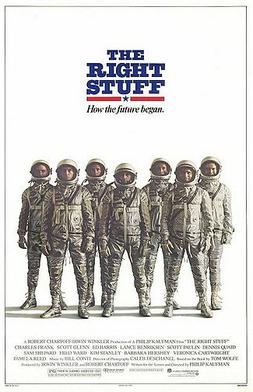
There’s a brilliant scene that occurs towards the end of 1983’s The Right Stuff.
It takes place in 1963. The original Mercury astronauts, who have become a symbol of American ingenuity and optimism, are being cheered at a rally in Houston. Vice President Lyndon Johnson (Donald Moffat) stands on a stage and brags about having brought the astronauts to his supporters. One-by-one, the astronauts and their wives wave to the cheering crowd. They’re all there: John Glenn (Ed Harris), Gus Grissom (Fred Ward), Alan Shephard (Scott Glenn), Wally Schirra (Lance Henrisken), Deke Slayton (Scott Paulin), Scott Carpenter (Charles Frank), and the always-smiling Gordon Cooper (Dennis Quaid). The astronauts all look good and they know how to play to the crowd. They were chosen to be and sold as heroes and all of them have delivered.
While the astronauts are celebrated, Chuck Yeager (Sam Shepard) is at Edwards Air Force Base. Yeager is the pilot who broke the sound barrier and proved that the mythical “demon in the sky,” which was whispered about by pilots as a warning about taking unnecessary risks, was not waiting to destroy every pilot who tried to go too fast or too high. Yeager is considered by many, including Gordon Cooper, to be the best pilot in America. But, because Yeager didn’t have the right image and he had an independent streak, he was not ever considered to become a part of America’s young space program. Yeager, who usually holds his emotions in check, gets in a jet and flies it straight up into the sky, taking the jet to the edge of space. For a few briefs seconds, the blue sky becomes transparent and we can see the stars and the darkness behind the Earth’s atmosphere. At that very moment, Yeager is at the barrier between reality and imagination, the past and the future, the planet and the universe. And watching the film, the viewer is tempted to think that Yeager might actually make it into space finally. It doesn’t happen, of course. Yeager pushes the jet too far. He manages to eject before his plane crashes. He walks away from the cash with the stubborn strut of a western hero. His expression remains stoic but we know he’s proven something to himself. At that moment, the Mercury Astronauts might be the face of America but Yeager is the soul. Both the astronauts and Yeager play an important role in taking America into space. While the astronauts have learned how to take care of each other, even the face of government bureaucracy and a media that, initially, was eager to mock them and the idea of a man ever escaping the Earth’s atmosphere, Chuck Yeager reminds us that America’s greatest strength has always been its independence.
Philip Kaufman’s film about the early days of the space program is full of moments like that. The Right Stuff is a big film. It’s a long film. It’s a chaotic film, one that frequently switches tone from being a modern western to a media satire to reverent recreation of history. Moments of high drama are mixed with often broad humor. Much like Tom Wolfe’s book, on which Kaufman’s film is based, the sprawling story is often critical of the government and the press but it celebrates the people who set speed records and who first went into space. The film opens with Yeager, proving that a man can break the sound barrier. It goes on to the early days of NASA, ending with the final member of the Mercury Seven going into space. In between, the film offers a portrait of America on the verge of the space age. We watch as John Glenn goes from being a clean-cut and eager to please to standing up to both the press and LBJ. Even later, Glenn sees fireflies in space while an aborigines in Australia performs a ceremony for his safety. We watch as Gus Grissom barely survives a serious accident and is only rescued from drowning after this capsule has been secured. The astronauts go from being ridiculed to celebrated and eventually respected, even by Chuck Yeager.
It’s a big film with a huge cast. Along with Sam Shepherd and the actors who play the Mercury Seven, Barbara Hershey, Pamela Reed, Jeff Goldblum, Harry Shearer, Royal Dano, Kim Stanley, Scott Wilson, and William Russ show up in roles both small and large. It can sometimes be a bit of an overwhelming film but it’s one that leaves you feeling proud of the pioneering pilots and the brave astronauts and it leaves you thinking about the wonder of the universe that surrounds our Earth. It’s a strong tribute to the American spirit, the so-called right stuff of the title.
The Right Stuff was nominated for Best Picture but, in the end, it lost to a far more lowkey film, 1983’s Terms of Endearment. Sam Shepard was nominated for Best Supporting Actor but lost to Jack Nicholson. Nicolson played an astronaut.
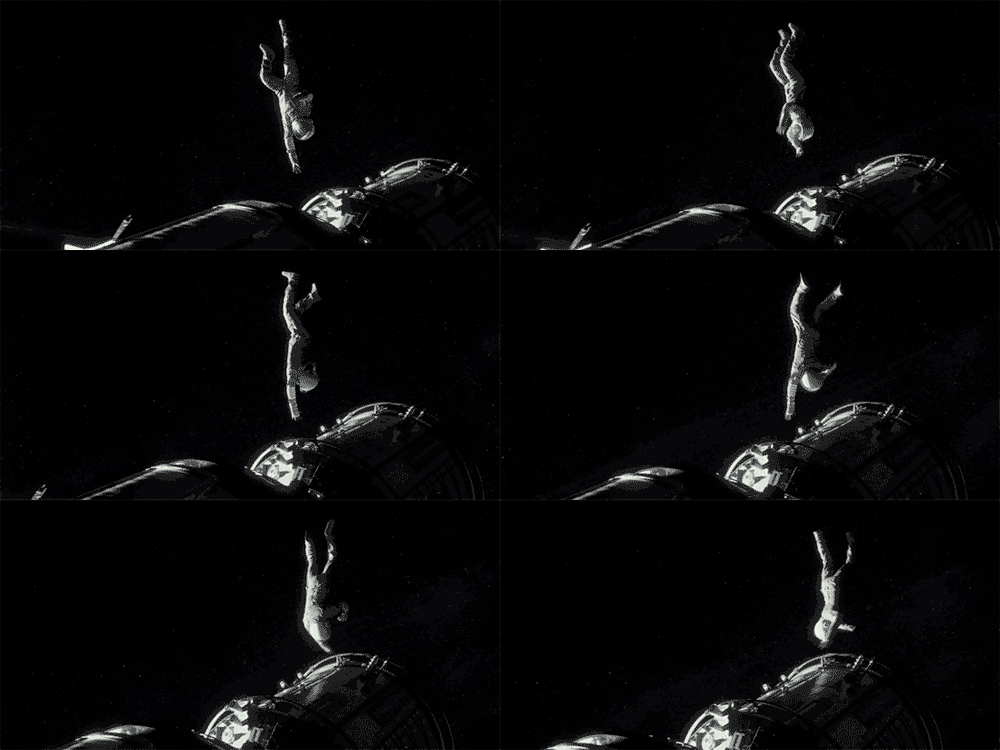
Remember Gravity?
Released in 2013, Gravity is largely a two-person film. There are a few other characters who appear at the start of the film and we hear different voices throughout the movie (including the voice of Ed Harris, cast once again as the voice of NASA) but, for the most part, this film centers on George Clooney and Sandra Bullock floating through space. Clooney is Kowalski. Bullock is Stone. They’re two astronauts who are in space trying to fix the Hubble Telescope when their shuttle is struck by a wave of space debris. When the shuttle inoperable and the rest of the crew dead, Kowalski and Stone try to figure out how to get back down to Earth.
Space, it turns out, is not as empty as we tend to assume. Along with the space debris that caused them to get stranded in space in the first place, there’s also a lot of abandoned equipment and outposts that they can use to get back to Earth. Unfortunately, they’ve got limited oxygen and limited time with which to reach any of that equipment and, even if they do reach it, there’s no guarantee that they’ll be able to get any of it to work. After Kowalski sacrifices himself to help Stone reach the International Space Station, Stone alone must find a way to return to Earth before the space debris complete their orbit and again threaten to send her hurtling into space.
Gravity is one of those films that demands to not only be seen on the big screen but also to be seen in 3D. (I say this as someone who was not exactly a fan of the post-Avatar 3D boom. Too often, 3D felt like a distraction. In Gravity, it feels like a key part of the story.) The film not captures the terror of being alone in the emptiness of space but, at the same time, it also captures the beauty of having the entire universe in front of you. It’s a visually stunning and beautiful film. Kowalski says, at one point, that he has a hell of a view and it’s hard not to agree with him. Space may be deadly but it’s beautiful as well. Stone finds herself tempted to simply allow herself to spend the rest of eternity floating lifelessly in space but ultimately, she embraces life. She refuses to give up and the film refuses to give up on her or, by extension, the rest of humanity. Gravity celebrates the beauty of space and creation while also showing that life on Earth has its own beauty as well. By the film’s end, one can argue that Stone has literally been reborn.
It’s a powerful film, one that is well-acted by both Bullock and George Clooney, both of whom have the star power necessary to hold our interest even when the overwhelming grandeur of space threatens to steal our attention. (I would argue that Bullock’s performance here is far superior to her Oscar-winning turn in The Blind Side.) Gravity received ten Oscar nominations and it won seven of them, including the Best Director award for Alfonso Cuaron. However, it lost Best Picture to another powerful film, 12 Years A Slave.
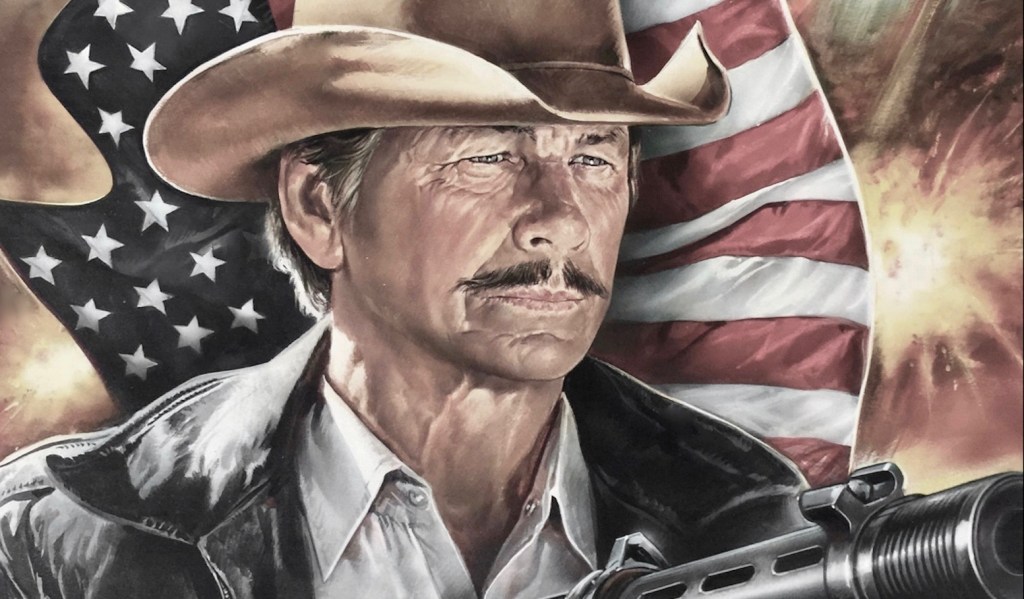
After a couple of decades of toiling away in TV and supporting roles, Charles Bronson became a huge international film star in 1968 when he starred in the films FAREWELL, FRIEND (with Alain Delon), and Sergio Leone’s ONCE UPON A TIME IN THE WEST (with Henry Fonda). For the next 5 years, Bronson would star in successful international co-productions, before hitting it big in the United States with the influential 1974 blockbuster, DEATH WISH. From 1974 to 1977, Bronson had his pick of any role that he wanted. This was probably the most interesting time in his career as he truly tried to expand his range with films like the depression-era HARD TIMES (1975), the romantic comedy FROM NOON TILL THREE (1976), the Raymond Chandler-esque ST. IVES (1976), and the surreal western THE WHITE BUFFALO (1977). But after 1977’s TELEFON and a series of underwhelming box office returns in the states, Bronson’s star was on the wane. He wouldn’t have his next #1 box office hit until he joined forces with the infamous Cannon studios in 1982 for the sequel to his biggest hit and DEATH WISH II. Cannon Studios would provide Bronson with a guaranteed paycheck and a non-stop presence on cable TV and at the video store for the remainder of the decade. I call the films that Bronson made between 1977 and 1982 the in-betweens. They don’t really fit into his European phase (1968-1973), his post-DEATH WISH phase (1974-1977) or his Cannon phase (1982-1989). To be completely honest, it seemed his career was somewhat in limbo at this point, and the movies he made during these years are some of his least well-known.
One of the movies that Charles Bronson made during the in-between years was 1980’s BORDERLINE. In this film, he plays Jeb Maynard, a border patrolman and expert tracker who will stop at nothing to find the human smuggler responsible for killing his friend and fellow patrolman Scooter, played by Wilford Brimley. I like this lower-key Bronson film. Director Jerrold Freedman has made a more realistic film than a lot of the movies in Bronson’s filmography. Outside of the murder that gets the story going, and the final showdown with the lead smuggler (a young Ed Harris), most of the film is made up of good old-fashioned field work and investigation. Bronson even based much of his performance on the technical advice of legendary border patrolman Albert Taylor. Now that doesn’t mean there aren’t some solid, action-packed scenes during the movie. My favorites include a scene where an undercover Maynard goes into Mexico with the mother of a young Mexican boy who was accidentally killed at the same time as Maynard’s friend Scooter. Maynard poses as a family member of the woman in hopes of being smuggled across the border so he can see how the illegal immigrants are being brought in. When thieves intercept the group, all hell breaks loose, and Maynard and the woman must fight their way out. Another badass moment occurs when Bronson beats needed information out of one of the smugglers in a nasty bathroom. This last scene is especially enjoyable for us Bronson fans.
There are so many good actors in this film. Outside of Bronson, Brimley, and Ed Harris, the cast is filled out by other veterans like Bruno Kirby, Bert Remsen, Michael Lerner, John Ashton, and Charles Cyphers. On a side note, Ed Harris gets the “introducing” credit here, even though he had appeared in several TV shows, as well as the movie COMA with Michael Douglas. This was his first major role in a feature film though. I also want to throw out special mention to Karmin Murcelo. She’s not a household name, but she’s excellent as the mother of the young boy who gets killed with Wilford Brimley’s character, who then helps Bronson in his quest to find the killer. Her career extended over 3 decades, and it’s easy to see why based on this performance.
BORDERLINE may not be an explosive action film like some of Bronson’s other work, but it’s an effective drama with a good performance from the star. I think he embodies the character perfectly. It’s also just as relevant in 2025 as it was in 1980, and I give the film a solid recommendation.
In 1987’s The Last Innocent Man, Ed Harris plays Harry Nash.
Harry is a criminal defense attorney, one who specializes in defending people who have been charged with committing murder. He’s good at his job but he’s not sure that he’s happy with his life. He went into the law to save people from Death Row but years of getting acquittals for guilty people have taken their toll on Harry’s psyche. His most recent client was Jonathan Gault (David Suchet), a man accused of having killed his wife. The verdict was “not guilty” but Harry suspects that Gault may have been guilty of both what he was charged with and also countless crimes for which he hasn’t been charged. It doesn’t help that Gault confronts Harry in a parking lot and says he wants Harry to co-write a book about how he got Gault acquitted. Gault proceeds to tell Harry that he did kill his wife, before suddenly laughing and saying that he’s only joking.
Despite all of the money and the fame, Harry needs a break from dealing with guilty people. He tells his shocked partner that he will be temporarily stepping back from their practice. Along with being burned out, Harry is also interested in pursuing a romantic relationship with Jenny Stafford (Roxanne Hart). Jenny is married but she assures Harry that she is in the process of getting a divorce from her husband, Philip (Darrell Larson).
However, when Philip is arrested and accused of murdering a policewoman who was working undercover as a prostitute, Harry finds himself defending Philip in court. Philip swears that he’s innocent of the crime and that he’s never even been with a prostitute. He claims that, when the murdered occurred, he was at home with his wife. Jenny is willing to collaborate Philip’s alibi, even though Harry suspects that she’s lying.
As you can probably guess, there are plenty of twists and turns to the plot of The Last Innocent Man. Unfortunately, they’re not exactly shocking twists and turns. The Last Innocent Man is a courtroom drama and it pretty much sticks to the rules of the genre, which means a lot of snarky comments between Harry and the prosecutor and also plenty of scenes of various lawyers snapping “Objection!” and demanding a recess. This is the type of film where people fall apart on the witness stand and the audience in the courtroom murmurs whenever something shocking happens. The Judge can’t pound that gavel hard enough to make The Last Innocent Man anything more than a standard courtroom drama.
That said, director Roger Spottiswoode keeps the action moving at a quick-enough pace and Ed Harris is ideally cast in the role of the morally conflicted Harry Nash. As well, there’s an entertaining supporting performance from Clarence Williams III, cast here as a cocky pimp, and David Suchet is chillingly evil as the worst of Harry’s clients. The Last Innocent Man doesn’t quite reach the Hitchcockian heights that it was reaching for but, still, fans of courtroom dramas will enjoy it or, at the very least, show a little leniency in their judgment.
 Through the Shattered Lens