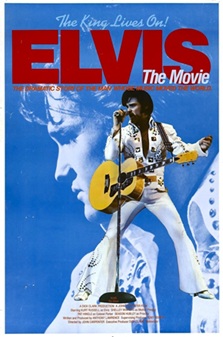
Elvis (1979, directed by John Carpenter)


Elvis, not to be confused with the later film starring Austin Butler, is a historically-interesting film for a number of reasons.

Made for television, it was the first of many biopics to be made about the King of Rock and Roll.  Seeing as how it went into production just a year after Elvis’s death and that its script was vetted and approved by Priscilla Presley herself, it’s not surprising that Elvis doesn’t really delve into the darker aspects of his life.  Elvis shoots a television, gets frustrated with his bad movies, and wonders who he can trust but we don’t see him get fat nor do we see him popping pills.  The movie ends with Elvis making his comeback in 1969, allowing a happy ending for the title character.

The film was directed by John Carpenter.  It was his first film to be released after the monster success of Halloween, though Carpenter actually started work on Elvis before Halloween was released.  Though the film’s television origins means there aren’t many examples of Carpenter’s signature style in Elvis, Carpenter does a good job recreating Elvis’s performances and, most importantly, he comes up with a film that holds your interest for three hours.

Finally, the role of Elvis is played by Kurt Russell, who was at the time still struggling to prove himself as being something more than just a Disney star.  Russell, who made his film debut kicking Elvis in the shins, throws himself into playing the role and captures the look, the swagger, and the voice of Elvis without ever descending into caricature.  His singing voice is dubbed for the performances but Russell is still convincing as the King.  It takes skill to wear that white jumpsuit without looking like you’re wearing a bad Halloween costume.  While this film showed that Russell was capable of more than just Disney films, it even more importantly launched his friendship with John Carpenter.  Escape From New York, The Thing, and Big Trouble In Little China all began with Elvis.

The movie doesn’t really tell us anything that we didn’t already know about Elvis but its entertaining and it has a big, colorful cast that include Pat Hingle as Tom Parker, Shelley Winters as Elvis’s mother, and Bing Russell (Kurt’s father) as Elvis’s father.  Priscilla is played by the beautiful Season Hubley, who married Kurt Russell shortly after filming.  (They divorced in 1983.)  Joe Mantegna, Ed Begley Jr., Ellen Travolta, and Dennis Christopher all appear in small roles and do their part to bring Elvis’s world to life.  Elvis is a fitting tribute to the King of Rock and Roll, one that gave Elvis a happy ending and started a great collaboration between a director and his star.

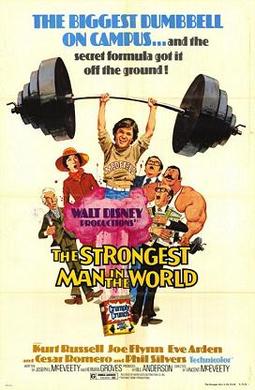
I Watched The Strongest Man In The World (1975, Dir. by Vincent McEveety)


Dexter Riley (Kurt Russell) is back, again!  He still hasn’t graduated from Medfield College and Medfield is still on the verge of going broke.  Dean Higgins (Joe Flynn) discovers that the reason Medfield can never get out of the red is because the science class and students like Dexter are spending so much money on their experiments.  The Dean fires the science professor and threatens to expel Dexter!  But when Dexter’s latest experiment develops a type of milk that gives the drinker super strength, the Dean might have to change his mind.

A cereal company wants to buy the supermilk, which would get Medfield out of the hole.  But a rival cereal company just wants to steal the formula for the milk so they hire disgraced businessman and gangster A.J. Arno (Cesar Romero) to once again try to thwart the best laid plans of Medfield College.  Meanwhile, Dexter competes in a contest to prove that the supermilk has truly made him into the strongest man in the world.

The plot of the last Dexter Riley movie somehow manages to be even dumber than the first two and it was high time for Dexter to graduate and get on with his life but The Strongest Man In The World did make me laugh a few times.  Because this entry in the series involved super strength instead of invisibility or merging with a computer, it allowed for more physical comedy and it felt less dates than the other two movies.  The action is pretty much nonstop, as Dexter gets into one scrape after another and the cast is likable even if they all were getting a little old to still be playing college students.  Like the other Dexter Riley films, The Strongest Man In The World is too innocent and good-natured not to enjoy on some level.

I guess Dexter finally graduated after this movie.  Both he and Kurt Russell went on to better things.

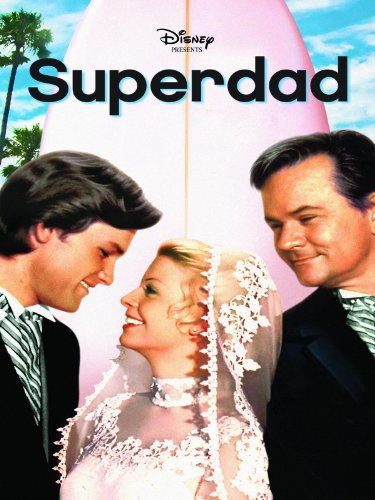
Life’s A Beach: Superdad (dir by Vincent McEveety)


In 1973’s Superdad, Disney takes on the generation gap.

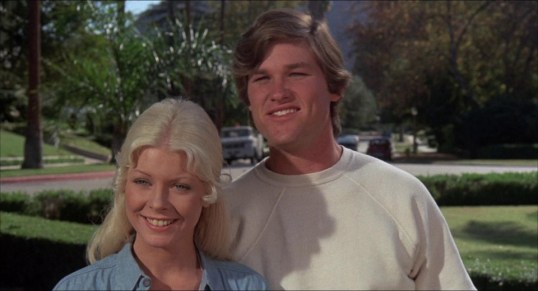
Charlie McCready (Bob Crane) just can’t understand what’s going on with his daughter, Wendy (Kathleen Cody).  She’s smart, pretty, and has the potential for a great future ahead of her but all she wants to do is hang out with her friends on the beach.  Eccentric Stanley Schlimmer (Bruno Kirby) drives everyone around in a souped-ambulance.  Ed Begley, Jr. (who plays a character who doesn’t even get a name) joins in whenever the group sings a folk song.  Wendy’s boyfriend, Bart (young and likable Kurt Russell), is a surfer and water skier.  Charlie is truly convinced that this extremely clean-cut group of teenagers is going to lead his daughter astray.  In fact, Wendy wants to marry Bart!  Charlie attempts to hang out with Wendy, Bart, and his friends on the beach and he can’t keep up.  He can’t water ski, he can’t play football, he can’t play volleyball.  All he can do is scream in this weird high-pitched voice.  The entire time is Bart is extremely nice to him and doesn’t even make fun of him for not being able to hit a volleyball over a net.  I mean, even I can do that!  But because Charlie’s not dealing well with becoming middle-aged, he decides that Bart is a threat.

(I’m going to assume that Charlie also teams up with a creepy friend and starts filming himself having threesomes with groupies, though we don’t actually see that happen in the film.  The subtext is there, though!)

Charlie decides that he has to get Wendy away from this group and the best way to do that would be to trick her into thinking she’s received a scholarship to …. Yes, this is just that stupid …. a scholarship to a prestigious university.  While Bart and his healthy, non-smoking, non-drinking friends are all going to City College and living at home with their parents, Wendy will be miles away at a college where she can do anything that she wants. Charlie thinks this is a great plan.  One gets the feeling that Charlie, for all of his overprotectiveness, hasn’t read a newspaper in 20 years.  Seriously, has he not been keeping up with what was happening on most college campuses in the late 60s and early 70s?

The main problem with this film is that Charlie is an incredible jerk.  It’s one thing to be overprotective.  Fathers are supposed to be overprotective of their daughters.  It’s one thing to worry about his daughter not having a good deal of ambition.  I can even understand him getting annoyed with Stanley because Stanley is kind of annoying.  (Watching this film, it’s hard to believe that Bruno Kirby was just one year away from playing the young Clemenza in The Godfather, Part II.)  But seriously, Charlie is freaking out over his daughter dating KURT RUSSELL!  In this film, Kurt Russell plays a character who is always polite, mild-mannered, sensible, and remarkably understanding of Charlie’s attempts to keep him from marrying Wendy.  There is one scene where Bart gets upset and he barely even raises his voice.  He’s incredibly likeable and, for all of this film’s flaws, it’s still easy to see why Kurt Russell became a star.

Of course, what really makes this film a cringe-fest is that it stars Bob Crane as a family man with a secretly manipulative side and, the whole time I was watching, I kept having flashbacks to Greg Kinnear in Auto-Focus.  Wendy, to make her dad really angry, gets engaged to an actual hippie named Klutch (Joby Baker) and there’s a scene in which Klutch and Charlie get into a fight in Klutch’s artist studio.  Every time Klutch swung anything near Charlie’s head, I definitely cringed a bit.  Red paints get spilled everywhere, though luckily it ends up on Klutch and not Charlie.  Still, watching the film, I couldn’t help but think that there are worse things that could happen to someone than having their daughter marry Kurt Russell.

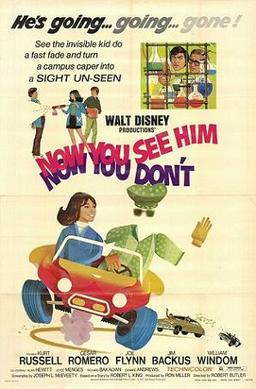
I Watched Now You See Him, Now You Don’t (1972, Dir. by Robert Butler)


Dexter Riley (Kurt Russell) is back and just in time because Medfield College is on the verge of getting closed down again.

In The Computer Wore Tennis Shoes, buying a computer was supposed to be the solution to all of Medfield’s financial problems.  I guess it didn’t work because Medfield is broke again and corrupt businessman A.J. Arnoe (Cesar Romero) is planning on canceling the school’s mortgage so that he can turn it into a casino.

There is some hope.  Dexter has accidentally created an invisibility spray.  Not only does it tun anything that it touches invisible but it also washes away with water so there’s no risk of disappearing forever.  Dexter and his friend Schuyler (Michael McGreevey) know that they can win the science fair with their invention but the science fair doesn’t want to allow small schools like Medfield to compete unless they really have something big to offer.  Dexter tells the Dean (Joe Flynn) that he has a sure winner but Dexter also refuses to reveal what it is because he doesn’t want word to leak before for the science fair.  The Dean decides to raise the money to pay off the mortgage by becoming a golfer, as one does.  Schulyer works as the Dean’s caddy while Dexter uses the invisibility spray to help the Dean cheat.  That’s a good message for a young audience, Disney!  But when Arno finds out about the spray, he wants to steal it so he can rob a bank.

This was even dumber than The Computer Wore Tennis Shoes but it was also hard to dislike it.  The comedy was too gentle, Kurt Russell and the rest of the cast were too likable, and the special effects were too amusingly cheap in that retro Disney way for it to matter that the movie didn’t make any sense.  When a bunch of college kids learn the secret of invisibility and use it to cheat at golf, you know you’re watching a Disney film.

I Watched The Computer Wore Tennis Shoes (1969, Dir. by Robert Butler)


Medfield College has a problem.  No one takes the college seriously.  Maybe if the college could win the big college quiz show, people would finally stop laughing at Medfield but the students are not academically talented.  Professor Quigley (William Schallert) thinks that the college needs to finally buy a new-fangled device called a computer.  The Dean (Joe Flynn) says that there’s no way any college can afford something as expensive as that!  Luckily, businessman and gangster A.J. Arno (Cesar Romero) is willing to donate one of his computers.  It takes several students to move the computer into the lab because the computer is huge.

Medfield finally has a computer but are the students smart enough to win that quiz show?  Popular jock Dexter Riley (Kurt Russell) happens to be in the lab during a freak thunderstorm.  When both he and the computer get struck by lightning at the same time, it leads to Dexter becoming a human computer.  He suddenly knows everything.  He can speak any language and solve any equation.  He can answer any question/  Whenever anyone shines a light into Dexter’s ear, they see circuit boards.  No one really cares that none of this makes sense.  Medfield is going to win that quiz show for sure!  But first, Dexter is going to have to escape from Arno, who fears Dexter now knows all the details about his gambling ring.

Watching this Disney film was a real eye-opener for me.  Computers are such a part of my everyday life that it was strange seeing a college making such a big deal about getting one.  The computer that Medfield got looked more like the type of computer that NASA used to go to the moon than the ones that were in my high school computer lab.  I was worried that no one seemed to care that Dexter had a circuit board in his head.  Not even Dexter seemed to care.  It was also funny to me that all he had to do was get struck by lightning while standing near a computer and suddenly, he knew how to speak every language and solve every problem.  I use a computer everyday and I can still only speak English and Spanish.  I feel like I’m getting cheated.

The whole movie was absolutely ludicrous but I did enjoy watching this movie.  It was too sweet, innocent, and good-natured not to enjoy.  There was nothing realistic about the movie but it was nice to imagine a world where everyone gets along, the bad guys are all too buffoonish to really be dangerous, and a serious knock on the head leads to thing returning to normal instead of permanent brain damage.  Kurt Russell was only 18 when he made The Computer Wore Tennis Shoes but he could already carry a movie.

Retro Television Review: St. Elsewhere 1.16 “Monday, Tuesday, Sven Day”


Welcome to Retro Television Reviews, a feature where we review some of our favorite and least favorite shows of the past! On Fridays, I will be reviewing St. Elsewhere, a medical show which ran on NBC from 1982 to 1988.  The show can be found on Hulu and, for purchase, on Prime!
It’s another day in Boston.

Episode 1.16 “Monday, Tuesday, Sven Day”

(Dir by Mark Tinker, originally aired on March 1st, 1983)

It’s a busy day at St. Eligius.  Here’s a breakdown:

  1. The racial conflict is continuing.  Putting a young white man and a young black man in the same hospital room leads to an all-out brawl.  Some poor guy walking down the hall on a broken leg gets trampled in the melee.  Agck!
  2. A man in a crude astronaut’s uniform shows up at the ER.  He doesn’t get any lines but his name tag identifies him as “J. Masius,” which is a reference to one of the show’s writers.
  3. Oh, hey, it turns out that kid who claimed he was jumped by a bunch of black guys actually wasn’t jumped by a bunch of black guys.  Instead, his father (Dick O’Neill) beat him up.  Dr. Westphall threatens to beat up the kid’s dad.  They may be old but they both grew up on the streets of Boston!  What is it with old men from Boston and they’re need to threaten each other with fisticuffs?
  4. Dr, Chandler hears another doctor make a racist remake and gets angry.  “I keep forgetting he’s black,’ the doctor says.
  5. Dr. Morrison apologizes on behalf of the racist doctor.  Chandler tells Morrison that he’ll never understand what it’s like to be black.  Morrison agrees but then points out that he only lives two blocks away from Chandler so he does understand what it’s like to live in a poor neighborhood.  Uhmm….see, this is why I was kind of dreading watching this show try to deal with racism.  St. Elsewhere has been a good show so far but well-intentioned TV writer liberalism is usually the cringiest liberalism there is.
  6. Peter’s wife is pregnant.  Peter is not the father.  Peter asks a nurse for a loan so that he can pay his wife’s abortion.
  7. By the way, Peter is sleeping with the nurse who unknowingly paid for his wife’s abortion.
  8. There’s no way any of this is going to end well.
  9. A sex worker comes in to get her appendix removed.  “I love my job,” Fiscus says after telling her to undress.  Ugh, what a pig.  I get that guys say stuff like that when they’re talking to each other and that’s fine but you don’t say that to someone when they’re in terrible pain and in the emergency room.
  10. Finally, the show’s best storyline featured Ehrlich going to party at Dr. Craig’s house for a visiting Scandinavian doctor named Sven.  Ehrlich brings Shirley Daniels as his date and proceeds to have way too much to drink.  This storyline was fun because it highlight William Daniels’s wonderfully sardonic portrayal of the abrasive Dr. Craig.  I love that Ehrlich is both terrified of and desperate to impress him.  Drunk Ed Begley, Jr. was definitely this episode’s highlight.

This was an okay episode.  It wasn’t the most memorable that I’ve seen but I did enjoy that terrible party at Dr. Craig’s house.  Terrible parties are always so much more fun to watch than good ones.


Retro Television Review: St. Elsewhere 1.14 “Remission”


Welcome to Retro Television Reviews, a feature where we review some of our favorite and least favorite shows of the past! On Fridays, I will be reviewing St. Elsewhere, a medical show which ran on NBC from 1982 to 1988.  The show can be found on Hulu and, for purchase, on Prime!

It’s another day at the hospital.

Episode 1.14 “Remission”

(Dir by Mark Tinker, originally aired on February 22nd, 1983)

A young Michael Madsen pops up in this episode, playing a hoodlum named Mike O’Connor who brings his severely beaten friend to the hospital.  This was Madsen’s first role on television and, in his very first scene and while delivering his very first televised monologue, he drops the N-word as he accuses a group of black men of beating up his friend.  Dr. Morrison is worried about whether or not Madsen’s friend is going to lose a kidney.  Meanwhile, race relations in Boston are not doing well.  What else is new?

(I remember, after the shooting of Michael Brown in Ferguson, there was a commentator who thought he was being clever when he said, “I don’t understand why blacks stay in the South when they could just move to Boston.”  The response to his comments served as a reminder that Boston’s history of racism makes some Southern cities seem almost progressive by comparison.)

It’s interesting that Michael Madsen is the second well-known actor to appear on St. Elsewhere as a gang member.  Just a few episodes ago, Howie Mandel was chasing Ray Liotta out of the hospital.  This particular episode ended with a fight breaking out in the ER between a white gang and a black gang.  I assume this will be continued next week so I guess we still have time to see Howie Mandel pull a gun on Michael Madsen.  Seriously, it better happen.  I’m plotting the upcoming week around it.

Speaking of Dr. Fiscus, he got evicted from his apartment.  He was shocked, even though he hadn’t paid his rent in forever.  No one wants Fiscus to stay with them but, after Fiscus saved Dr. Ehrlich from getting beaten up in the ER (and no, this was not a part of the gang fight, instead it was a different fight — goldang, Boston’s dangerous!  And yes, I gave up cursing for Lent), Ehrlich agrees to let Fiscus stay with him until he gets a new place.  I imagine Ehrlich will come to regret that, especially after Fiscus showed up with Dr. Kochar and a homeless guy who had earlier helped them steer a truck out of a traffic jam.  What?  Don’t ask, it didn’t make much sense on the show either.

Dr. Cavenero has been nominated for a prestigious fellowship by Dr. Auschlander but she’s not sure if she should accept it because the fellowship would be for research and she’s not sure that’s what she wants to focus on.  Auschlander has bigger issues to deal with, as he ends up collapsing in the hospital hallway, a result of his liver cancer.  The irony that Auschlander, a liver specialist, is dying of liver cancer is not lost on Auschlander and Norman Lloyd did a wonderful job in this episode, portraying not only Auschlander’s frustration but also his gentle humor.

Also, a woman was walking around the hospital and flashing people.  She said it was because she wanted to show off that, even in middle age, she still had a good body.  That makes sense to me.  Played by Janis Page, she was somehow who was fine for a one episode storyline but I’m going to scream if this becomes a multi-episode thing, like it did with Ralph the Birdman.

This was a good episode, even if I get the feeling the whole gang thing is going to be cringey in the way that most 80s television shows tended to be whenever they tried to take on race relations.  Norman Lloyd’s heartfelt performance carried the hour.  I’m hoping the best for Dr. Auschlander.  He’s a character that I would hate to lose.

Retro Television Review: St. Elsewhere 1.13 “Family History”


Welcome to Retro Television Reviews, a feature where we review some of our favorite and least favorite shows of the past! On Fridays, I will be reviewing St. Elsewhere, a medical show which ran on NBC from 1982 to 1988.  The show can be found on Hulu and, for purchase, on Prime!

Usually, I review this show on Friday but, yesterday, my week of visiting Lake Texoma in freezing weather finally caught up with me and I spent most of the day congested and curled up in bed.  As a result, St. Elsewhere got preempted until today.  Now, let’s see what’s happening at St. Eligius….

Episode 1.13 “Family History”

(Dir by Kevin Hooks, originally aired on February 8th, 1983)

After being a background character for the past few episodes, Dr. Wendy Armstrong (Kim Miyori) finally gets her time in the spotlight with this episode.  When Charlie Heller (Keenan Wynn) comes into the ER with a chronic nosebleed, Dr. Armstrong is too quick to assume that it’s nothing serious.  Dr. Westphall, who is in an especially crappy mood this episode, reprimands her for not getting a family history before making her diagnosis.  A chastened Armstrong gets Charlie’s family history and comes to suspect that he has a rare blood condition that only seems to effect Jewish men.  A very expensive test confirms Armstrong’s diagnosis.  Armstrong is excited.  “I was right!” she says.  Westphall again reprimands her, telling her that she now needs to tell Charlie that he has a chronic condition and will have to take medicine for the rest of his life.

Seriously, Westphall was not in a good mood during this episode!  But I don’t blame him.  From her first appearance on the show, Dr. Armstrong has been complaining nonstop.  No matter what happens in the hospital, she seems to take it as a personal affront.  Now, after several episodes of complaining about the other doctors, Armstrong fails to do a simple thing like get a family history.  No wonder Westphall was all like, What are you bragging about?

That said, even if his mood was understandable, I would not want to get on Westphall’s bad side.  Even after Armstrong makes the correct diagnosis, Westphall takes the time to say, “Next time, do what I told you to do.”  Agck!

While Westphall was dealing with whatever was eating away at him, Dr. Chandler was getting annoyed by John Doe’s refusal to try to remember anything about his past.  Even when John Doe’s real father showed up and explained that Doe was his son, Dave Stewart, he refused to try to remember anything.  Eventually, Chandler snapped at Dave for refusing to even try.  Chandler, of course, is played by a young Denzel Washington so, when he gets mad, it’s like having the voice of God call you out.  After Chandler’s reprimand, Dave finally makes an effort to remember his past.  He realizes that, when he was shot, he had a vision of his deceased mother welcoming him to heaven.  Awwww!

Dr. Craig’s friend has his gender affirmation surgery.  Crag met his friend’s lover, a trans man.  Needless to say, this episode featured a lot of scenes of Craig rolling his eyes as he struggled to come to terms with everything he was learning about his old friend.  It was all pretty predictable but William Daniels did a great job playing up Craig’s confusion and single-mindedness.

And finally, Peter was happy because his wife wanted to get back together.  I get the feeling any happiness Peter feels is destined to always be temporary.

This episode was a bit uneven.  Armstrong’s story would have been compelling if Armstrong herself was a more interesting character.  The highlight of the episode were the scenes between Denzel Washington’s doctor and Tom Hulce’s amnesiac.  It’s always enjoyable to watch two good actors perform opposite of each other.

Next week, the great Norman Lloyd takes center stage as Auschlander’s cancer returns.


Retro Television Review: St. Elsewhere 1.12 “Release”


Welcome to Retro Television Reviews, a feature where we review some of our favorite and least favorite shows of the past! On Fridays, I will be reviewing St. Elsewhere, a medical show which ran on NBC from 1982 to 1988.  The show can be found on Hulu and, for purchase, on Prime!

This week, things get dark.

Episode 1.12 “Release”

(Dir by Victor Lobl, originally aired on February 1st, 1983)

The gunshot victim (Tom Hulce) who was saved by Samuels last week has woken up but he has no idea who he is.  He is labeled John Doe #12, meaning there’s at least eleven other people at St. Eligius who are suffering from amnesia!  That’s a scary thought.  There’s a lot of things that I don’t want to suffer from and amnesia is high on the list.  I can’t imagine how frightening that would be, not having any idea who you are or where you belong.

Dr. Chandler tries to help John Doe #12 get his memory back but, in this episode at least, neither has any luck.  Even an attempt at hypnosis reveals that John can’t remember anything before being rolled into the ER.  At one point, an older couple step into the room to discover if John is their son, who has been missing for two years.  He’s not, which leaves the couple in tears.

As serious and as heart-breaking as this all is (and both Washington and Hulce give outstanding performances in this episode), there is one moment where Dr. Westphall makes a reference to a “Lt. Gerard,” who is searching for John’s parents.  It seems like a throw-away reference, unless you’re familiar with either the 1950s television show The Fugitive or the subsequent 1993 film adaptation.  Lt. Gerard was the name of the detective who was hunting for that show’s main character, Dr. Richard Kimble.  Ed Flanders delivers the line solemnly and it occurs at a serious moment.  There’s no winking at the audience.  Instead, it’s simply a reward for the pop culture-literate who might be watching the episode.

For the most part, this was a grim episode.  After losing a patient to cancer, Dr. Peter White was ordered to talk his family into signing a release for an autopsy.  The autopsy was largely to protect the hospital from getting sued.  The family didn’t want an autopsy.  Peter didn’t feel the autopsy was necessary.  But, having been bullied by his superiors, Peter proceeded to bully and manipulate the dead man’s son into signing the release.  In the end, it turned out that Peter was correct.  The man did die of cancer.  The autopsy was not necessary.  Upset over the whole process, Peter said that he felt like he had “raped” a mourning family.  The doctor who ordered Peter to get the release merely smiled and said he would see Peter at rounds the next day.

Meanwhile, Dr. Craig was shocked and angered when he discovered that his old friend (played by Andy Romano) had checked into the hospital for gender-affirming surgery.  This led to the episode final scene, in which Craig talked about not liking the way the world had changed since he was a young man.  The scene was well-acted by William Daniels, who was one of the best when it comes to giving a monologue of frustration.

And finally, Dr. Samuels and Dr. Paxson disagreed on how to treat a patient and this storyline would have been interesting if either Samuels or Paxson had been an interesting character.  But they’re not.  I don’t care about them.  I don’t care about their boring relationship.  And, knowing that neither is going to be around once this season ends, I really didn’t care that much about their storyline.  With all of the interesting stuff that happened in this episode, I groaned whenever I realized I was going to waste a few minutes watching Samuels and Paxson argue.

This episode left me feeling pretty depressed.  Between Peter bullying that family and John Doe searching for his identity, there wasn’t much hope to be found.  Still, I have faith that John Doe will find his identity and maybe Peter will even become a better doctor.  (He certainly can’t get much worse.)  If Lt. Gerard could find Richard Kimble, then anything’s possible!


Retro Television Review: St. Elsewhere 1.11 “Graveyard”


Welcome to Retro Television Reviews, a feature where we review some of our favorite and least favorite shows of the past! On Fridays, I will be reviewing St. Elsewhere, a medical show which ran on NBC from 1982 to 1988.  The show can be found on Hulu and, for purchase, on Prime!

This week, a handful of doctors save two patients and lose one.

Episode 1.11 “Graveyard”

(Dir by Victor Lobl, originally aired on January 18th, 1983)

It’s the graveyard shift at St. Eligius.  The halls and the cafeteria are dark.  The ER is oddly calm.  There are only a few patients to be looked after and most of the doctors are playing poker and talking about the rather boring subject of Dr. Samuels’s love life.

Only a handful of the series regulars make an appearance in this episode but that’s fine.  This episode actually provides a nice break from having to keep track of where everyone is.  Unfortunately, as I already said, a lot of this episode is centered around the character of Dr. Samuels.  Nothing against the late David Birney, who did a perfectly acceptable job in the role, but Dr. Ben Samuels is just not that interesting of a character.  He’s a dedicated surgeon who feels too much, drinks too much, and wants to sleep with his colleagues.  That’s fine but I grew up watching General Hospital.  I’ve seen a hundred doctors just like Samuels on television.

To me, the far more interesting characters are the people like David Morse’s Jack Morrison or Ed Begley, Jr’s Victor Ehrlich or even Terence Knox’s Peter White.  They’re doctors who screw up and aren’t always brilliant and sometimes say the wrong things.  They feel like real people whereas Dr. Samuels just feels like a cliche, a holdover from some other medical show.  Samuels is not a particularly compelling character and, when I did some research, I was not surprised to discover that David Birney only appeared on one season of the show.

G.W. Bailey’s Hugh Beale also only appeared in the first season and that’s a shame because Bailey’s performance as Beale has been one of the first season’s real pleasures.  Bailey plays Beale as a compassionate man who often pretends to be more naive than he is.  As a Southerner, he’s an outsider on this Boston-set show and, being an outsider, he can often relate to the patients in the psych ward.  Of course, that still doesn’t stop Dr. Beale’s main patient, Ralph the Birdman, from throwing himself off the roof of the hospital in this episode.  To be honest, I already suspected things weren’t going to go well for Ralph on this show but his suicidal jump still upset me.  As annoying as the character was, he was also finally making some progress.  He finally admitted he wasn’t a bird.  And then he proved it by showing that he couldn’t fly.

While Ralph plunged to his death, Dr. Samuels saved a gunshot victim (played by Tom Hulce).  And Jack allowed the father (James Hong) of one of his comatose patients to perform a Chinese ritual that led to the patient waking up and eventually walking into the cafeteria, where the doctors were playing poker.  “Who ordered the Chinese?” Fiscus asked and …. ugh.  Not cool, Fiscus.

It was a night of triumph and tragedy.  Ralph died but Dr. Samuels and Dr. Paxton agreed to give their relationship another try which …. eh.  I don’t care about Samuels and Paxton.  For the most part, though, I liked this episode.  The smaller cast made it easier to keep track of things and the poker game banter reminded me that the doctors are all people too.  Still, I have to feel bad for Ralph.  All he wanted to do was fly.