Marshal Tom Nightlander (Douglass Dumbrille) shows up in a lawless frontier town, tasked with bringing peace. He could sure use the help of Dr. John Poole (Johnny Mack Brown), a former gunslinger who has set his weapons aside and now works as the town doctor. Dr. Poole has sworn off guns but with corrupt businessman Wilson (Harry Woods) and his gang determined to keep their town lawless, Poole is soon forced to reconsider.
This B-western from Monogram is better than many of the other low-budget, poverty row westerns of the era. While the plot is another example of a corrupt businessman and his gang making life difficult for peaceful settlers, the characters in Flame of the West are a little more complex than usual. Brown stands out playing a character who, for once, doesn’t want to fight and believes that it’s better to talk than to shoot. Of course, this being a B-western, he soon sees the error of his ways. Dumbrille was usually cast as a villain so this film is a chance to see him in a likable and heroic role and he’s very convincing as a Wyatt Earp-style marshal.
Of course, even a serious B-western is still a B-western so songs and entertainment are provided by the gorgeous Joan Woodbury and Pee Wee King and his Golden West Cowboys. (Don’t worry, I had never heard of them before, either.) Joan Woodbury plays a saloon owner who wants to bring a higher class of entertainment to the frontier and she provides the film with enough sex appeal that 1945 audiences probably didn’t mind having to sit through the musical numbers before getting to the inevitable showdown between Johnny Mack Brown and Harry Woods.
Flame of the West is a good B-western that shows what dependable actors like Johnny Mack Brown and Douglass Dumbrille were capable of when given the opportunity.
Though you may not know it if you’ve only seen the film during one of its annual showings on television, the 1956 religious epic, The Ten Commandments, originally opened with director Cecil B. DeMille standing on a stage. Speaking directly to the audience, DeMille explains that, though the film they’re about to see me take some dramatic license with the story of Moses, it still based on not just the Bible but also the accounts of Philo, Josephus and Eusebius. He also tells us that The Ten Commandments is more than just an adaptation of the Book of Exodus. Instead, it’s a film about every man’s desire to be free.
Demille concludes with: “The story will take 3 hours and 29 minutes to unfold. There will be an intermission. Thank you for your attention.”
To be honest, it’s kind of a sweet moment. Cecil B. DeMille is a name that is so associated with (occasionally overblown) epic filmmaking that it’s easy to forget that DeMille was one of the most important names in the artistic development of American cinema. He was there from the beginning and, unlike a lot of other filmmakers, he was equally successful in both the silent and the sound era. Say what you will about his films, DeMille was a showman and he handles the introduction like a pro. At the same time, there’s a real sincerity to DeMille’s tone. After you listen to him, you’d almost feel guilty if you didn’t sit through all 3 hours and 29 minutes of his film.
That sincerity extends throughout the entire film. Yes, The Ten Commandments is a big, long epic and some members of its all-star cast are more convincing in their roles than others. And yes, the film can seem a bit campy to modern viewers. (In fact, it wouldn’t surprise me if it seemed a bit campy to viewers in 1956 as well.) Yes, The Ten Commandments does feature Anne Baxter saying, “Oh Moses! You sweet adorable fool!” But it doesn’t matter. Even the most ludicrous of dialogue just seem right. The film is just so sincere that it’s difficult not to enjoy it.
In the Book of Exodus, Moses is described as having a speech impediment and even tries to use it as an excuse to get out of going to Egypt. That’s actually one of the reasons why Moses brought Aaron with him to Egypt, so that Aaron could speak for him. In the movie, Moses is played by Charlton Heston, who comes across as if he’s never felt a moment of insecurity over the course of his entire life. But no matter. Heston may not by the Moses of Exodus but he’s the perfect Moses for the DeMille version. When Heston says that Egypt will be visited by plagues until his adopted brother Ramses (Yul Brynner) agrees to allow the Jews to leave Egypt, you believe every word. (Aaron, incidentally, is played by the legendary John Carradine. He doesn’t get too much other than respectfully stand a few feet behind Charlton Heston but still: John Carradine!)
And really, anyone who dismisses The Ten Commandments out-of-hand should go back and, at the very least, watch the scene where the Angel of Death descends upon Egypt. The scene where Moses and his family shelter in place while the screams of distraught mothers echo throughout the city is chilling. Ramses may spend most of the film as a petulant villain but you almost feel sorry for him when you see him mourning over his dead son. When he sets off after Moses, it’s not just because he’s doing what villains do. He’s seeking vengeance for the loss of his first born. For that brief moment, Ramses goes form being a melodramatic bad guy to being someone with whom the viewer can empathize. Brynner, with his burning intensity, gives a great performance as Ramses.
As I said before, this film has what, in 1956, would have been considered an all-star cast. Watching the names as they show up during the opening credits — Cedrick Hardwicke! Yvonne DeCarlo! Woody Strode! Debra Paget! — is like stepping into a TCM fever dream. Some of the performers give better performance than others. And yet, even the worst performer feels as if they just naturally belong in the world that DeMille has created. John Derek may seem rather smarmy as Joshua but his callowness provides a good contrast to the upright sincerity of Heston’s performance as Moses. Edward G. Robinson’s cries of, “Where is your God now!?” may have provided endless fodder for impersonators but just try to imagine the film without him. Even Vincent Price is in this thing! He doesn’t have his famous mustache but, as soon as you hear his voice and see that famous glare, you know that it’s him.
Of course, when you’re growing up and The Ten Commandments is on TV every year, you mostly just want to see the scene where Moses parts the Red Sea. The Ten Commandments was nominated for seven Oscars but it only won one, for its special effects. (The prize for Best Picture went to another epic, Around The World In 80 Days.) Today, the film’s special effects may no longer amaze viewers but there’s still something rather charming about the Red Sea parting and then crashing in on the Egyptian army. The scene where the Earth opens up and swallows those who worshiped the Golden Calf remains impressive, if just because all of the extras really look terrified that they might die. And while the Pillar of Fire may look a bit cartoonish to modern eyes, that’s a huge part of the film’s appeal.
The Ten Commandments is a big, long, sometimes silly, sometimes effective, and always entertaining epic. It’s a grand spectacle and one that I usually watch every year when it shows up on television. I missed this year’s showing but, fortunately, I own it on DVD. It’s a sincere epic and a difficult one not to like.
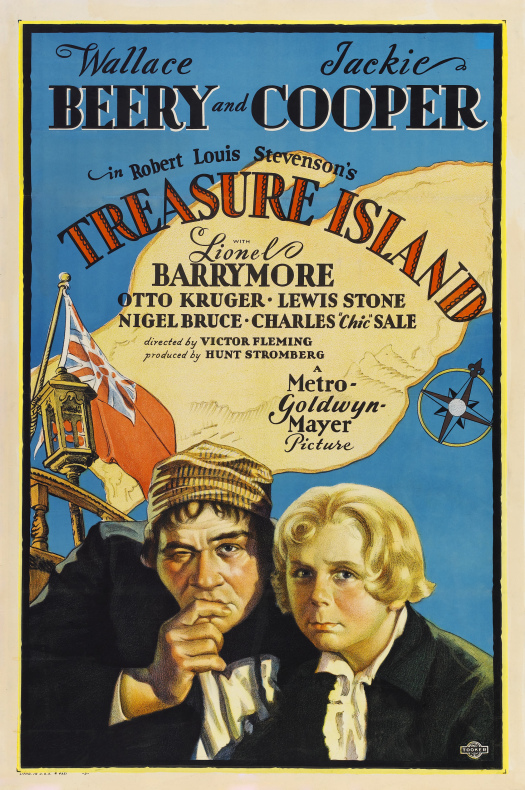
Robert Louis Stevenson’s venerable 1883 adventure novel TREASURE ISLAND has been filmed over 50 times throughout the years, beginning with a 1918 silent version. There was a 1920 silent starring Charles Ogle (the original screen FRANKENSTEIN monster!) as that dastardly pirate Long John Silver, a 1972 adaptation with Orson Welles, a 1990 TV Movie headlined by Charlton Heston, and even a 1996 Muppet version! Most movie buffs cite Disney’s 1950 film as the definitive screen TREASURE ISLAND, with Bobby Driscoll as young Jim Hawkins and Robert Newton as Long John (and Newton would go on to star in the TV series LONG JOHN SILVER, practically making a career out of playing the infamous fictional buccaneer), but…
…a case can certainly be made for MGM’s star-studded 1934 interpretation of the story, teaming Wallace Beery and Jackie Cooper as Long John and Jim. This was the first talking TREASURE ISLAND, and the…
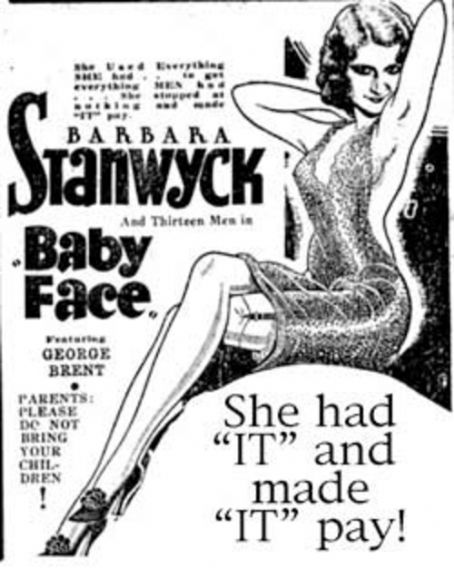
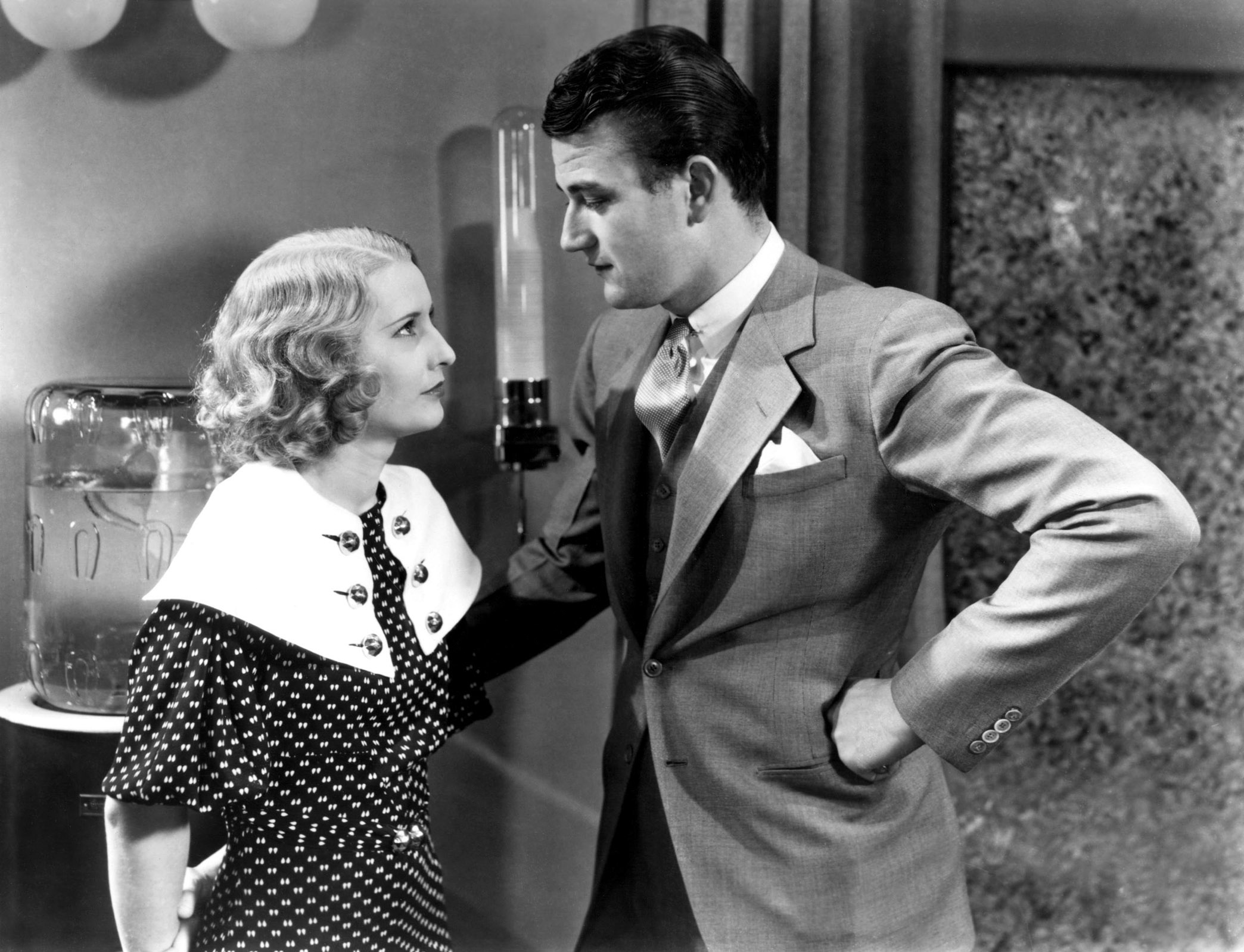
Barbara Stanwyck uses sex as a weapon and screws her way to the top in BABY FACE, an outrageously blatant Pre-Coder that had the censors heads spinning back in 1933. Miss Stanwyck plays Lily Powers, a young woman who works in her Pop’s speakeasy in smog-filled Erie, PA, where Pop’s been pimping her out since she was 14. Lily has a black female friend named Chico who seems to be more than just a friend (though it’s never stated, the implication’s definitely there). All the men paw over her like dogs with a piece of raw meat except the elderly Mr. Cragg, who gives her a book by Fredrich Nietzche along with some advice: “You have power… you don’t realize your potentialities… you must use men, not let them use you… exploit yourself, use men! Be strong, defiant!”.
When Pop’s still blows to smithereens, taking Pop with it, Lily and…
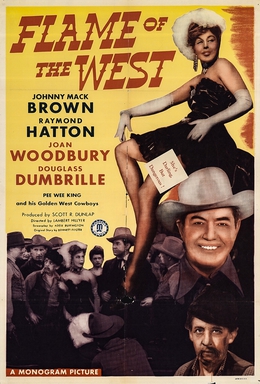 Marshal Tom Nightlander (Douglass Dumbrille) shows up in a lawless frontier town, tasked with bringing peace. He could sure use the help of Dr. John Poole (Johnny Mack Brown), a former gunslinger who has set his weapons aside and now works as the town doctor. Dr. Poole has sworn off guns but with corrupt businessman Wilson (Harry Woods) and his gang determined to keep their town lawless, Poole is soon forced to reconsider.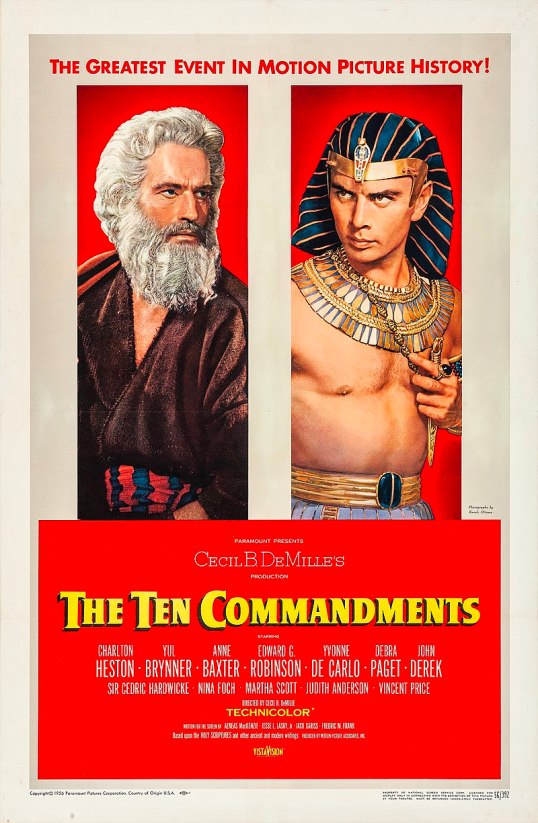

 Through the Shattered Lens