4 Shots From 4 Films: Special Twilight Zone Edition


4 Shots From 4 Films is just what it says it is, 4 shots from 4 of our favorite films. As opposed to the reviews and recaps that we usually post, 4 Shots From 4 Films lets the visuals do the talking!

It’s Twilight Zone Day!  In honor of this site’s favorite anthology show, it’s time for….

4 Shots From The Twilight Zone

Twilight Zone 1.8 “Time Enough At Last” (1959, dir by John Brahm)

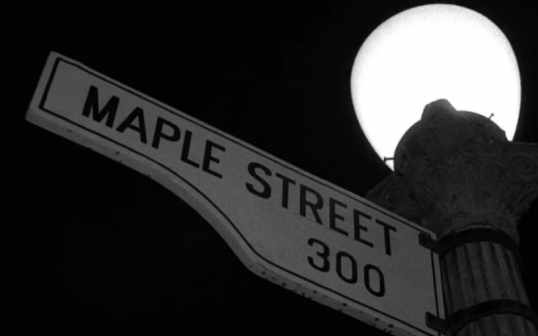
Twilight Zone 1.22 “The Monsters Are Due On Maple Street” (1960, dir by Ronald Winston)

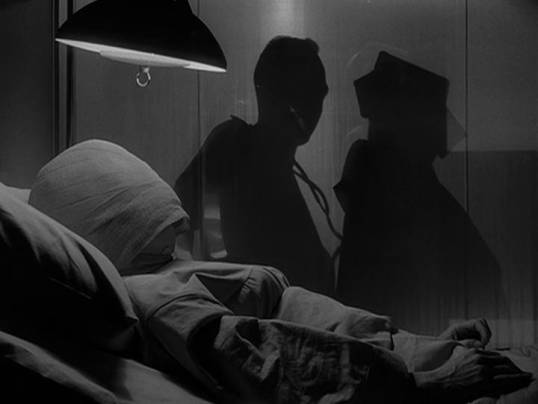
Twilight Zone 2.6 “Eye of the Beholder (1960, dir by Douglas Heyes)

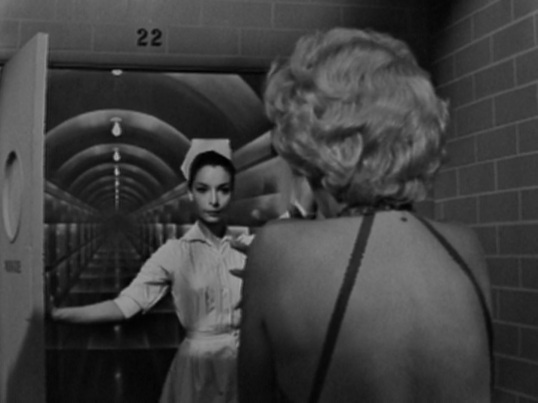
Twilight Zone 2.17 “Twenty-Two (1961, dir by Jack Smight)

4 Shots From 4 Films: Special Twilight Zone Edition


4 Shots From 4 Films is just what it says it is, 4 shots from 4 of our favorite films. As opposed to the reviews and recaps that we usually post, 4 Shots From 4 Films lets the visuals do the talking!

According to CheckiDay, today is Twilight Zone Day!  In honor of this site’s favorite anthology show, it’s time for….

4 Shots From The Twilight Zone

Twilight Zone 1.8 “Time Enough At Last” (1959, dir by John Brahm)

Twilight Zone 1.22 “The Monsters Are Due On Maple Street” (1960, dir by Ronald Winston)

Twilight Zone 2.6 “Eye of the Beholder (1960, dir by Douglas Heyes)

Twilight Zone 2.17 “Twenty-Two (1961, dir by Jack Smight)

TV Review: Night Gallery 1.1 “The Dead Man/The Housekeeper” (dir by Douglas Heyes and John Meredyth Lucas)


As I wrote yesterday, I recently decided to sit down and watch every episode of the horror anthology series, Night Gallery.  Yesterday, I watched and reviewed the pilot movie.  Tonight, I watched the first episode of the weekly series.

Though the pilot originally aired in 1969, Night Gallery did not start to air as a regular series until December of 1970.  The first episode of season one was broadcast on December 16th, 1970.  As all of the episodes did, it stated with Rod Serling walking through a dimly lit museum and inviting the audience to look at a macabre painting.  Each painting was inspired by a different story.  Or were the stories inspired by the paintings?  To be honest, I don’t think the show ever made that clear.

The first episode featured two stories, both of which dealt with mad scientists.
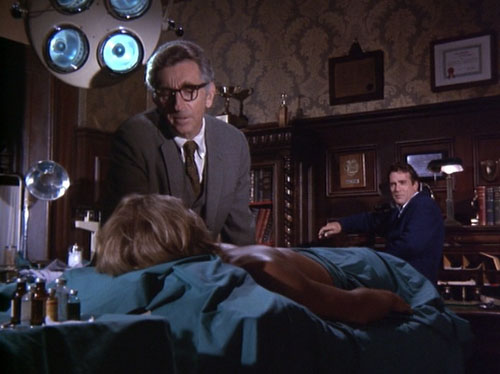
The Dead Man (written and directed by Douglas Heyes)

The first segment was The Dead Man, an enjoyably atmospheric if somewhat difficult-to-follow story about a scientist, a young man with an amazing ability, and the woman who is torn between the two of them.

Carl Betz plays Max Redford, a doctor who has discovered that, under hypnotic suggestion, John Michael Fearing (Michael Blodgett) can simulate any medical condition, no matter how severe.  When Max reveals his discovery to his associate, Dr. Talmadge (Jeff Corey), Talmadge is concerned that Fearing will suffer permanent damage as a result of Max’s experiments.  Nonsense! Max explains.  All he has to do is give Fearing the proper signal and he’ll pop right out of his condition, as good as new.

Max decides to put Fearing to the ultimate test by having him simulate death.  However, when Fearing goes under, he dies for real.  Was it just an accident or did Max — who suspects that Fearing was having an affair with his wife (Louise Sorel) — secretly mean for Fearing to die?

The Dead Man raises some intriguing questions about life, death, and medical ethics.  It also has a quartet of good performances with Carl Betz doing an especially good job as Max.  Michael Blodgett showed up in a lot of early 70s films and TV shows and he was always convincing as a decadent hedonist.  The entire segment is full of creepy atmosphere but the ending is a bit of a let down.  After a great set-up, the segment just kind of fizzles out.
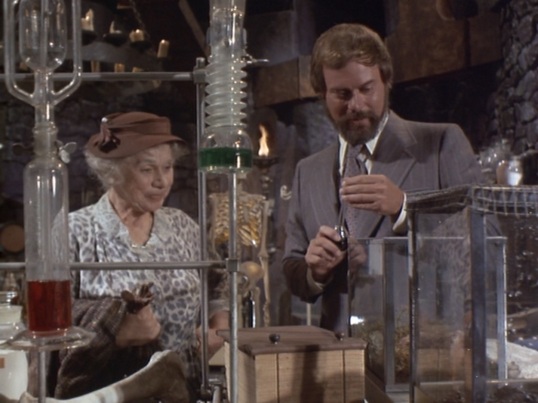
The Housekeeper (written by Heyes, directed by John Meredyth Lucas)

In the second segment, our mad scientist is named Cedric Acton (Larry Hagman).  Whereas Max Redford, in the previous segment, was misguided, Cedric Acton is just crazy.  Through the use of black magic (it involves a frog), Cedric has been experimenting with soul and brain transference.  (There’s an oinking chicken and a clucking pig in his laboratory, just in case anyone’s wondering how the experiments are going.)

Because Cedric loves his wife’s body but hates her personality, he wants to put the soul of his kindly housekeeper (Jeanette Nolan) into the body of his wife, Carlotta (Suzy Parker).  At first, the experiment is a success but things get complicated and …. well, I’m not really sure what it all leads to because this is one of those stories that just kind of ends without really offering up any type of resolution.

The Housekeeper is meant to be a comedy but it’s a bit too mean-spirited to really work.  This segment really calls out for karma to intervene and for Cedric’s soul to end up in something else’s body but instead it just ends with Cedric continuing his experiments.  It’s more than a little dissatisfying.  Larry Hagman does a good job playing Cedric, though.  He’s convincingly crazy.

Especially after the pilot, it’s hard not to be disappointed by the first episode of Night Gallery.  Both stories had potential but they were let down by weak endings.  Oh well.  Hopefully, tomorrow’s episode will be an improvement!
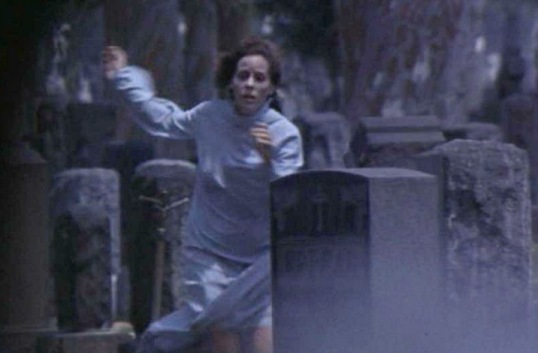
Horror on TV: Thriller 2.3 “The Premature Burial” (dir by Dougles Heyes)


In tonight’s episode of Thriller, Boris Karloff not only hosts but also stars!

An adaptation of the Edgar Allan Poe short story, this episode is about a man (Sidney Blackmer) who has very good reason to fear that he might end up being buried alive!  Karloff appears as his loyal physician, who might be Blackmer’s only hope to avoid being murdered by his wife and her lover.

Enjoy!

Horror on TV: Thriller 1.7 “The Purple Room” (dir by Douglas Heyes)


For tonight’s televised horror, we have The Purple Room, an episode of Thriller!  This was an anthology series, which was hosted by Boris Karloff.  Admittedly, Thriller was not always a horror show.  Several of the episodes were crime stories that had a diabolical twist.  But anything hosted by Boris Karloff is perfect for October viewing.

The Purple Room is the story of what happens when a skeptic (played by a young Rip Torn) learns that he must spend a year living in a house that may or may not be haunted.  This episode is enjoyably creepy and, of course, it has a twist.

This episode originally aired on October 25th, 1960.

Horror on TV: Twilight Zone 2.5 “The Howling Man”


TheTwilightZoneLogo


This is one of my favorite episode of The Twilight Zone. I originally shared it two years ago but it has subsequently been taken off of YouTube. At first, that upset me but then I realized that it gave me the perfect excuse to share it again!


In The Howling Man, American wanderer Dave Ellington (H.M. Wynant) comes across a castle. There’s a man (Robin Hughes) being held prisoner in the castle. Brother Jerome (the great John Carradine) explains that the man is the devil. The man says that Brother Jerome is crazy. Dave Ellington has to decide who to believe.


This well-acted, dream-like episode was written by Charles Beaumont and directed by Douglas Heyes. It originally aired on November 4th, 1960.


Horror On TV: Twilight Zone 1.34 “The After Hours”


TheTwilightZoneLogo

In this episode of The Twilight Zone, Marsha White (played by Anne Francis) discovers some strange things happening in a department store. If you’re like me and you find mannequins to be super creepy, this episode is for you!

This episode originally aired on June 10th, 1960.

Horror on TV: The Twilight Zone 2.6 “Eye of the Beholder”


TheTwilightZoneLogo

First broadcast on November 11th, 1960, Eye of the Beholder is one of the best known and most acclaimed episodes of The Twilight Zone. Telling the story of a bandaged patient and the shadowy doctors who continually talk about how the patient’s upcoming surgery will be her final chance, this is one of those universal episodes that is probably more relevant today than when it was first broadcast.