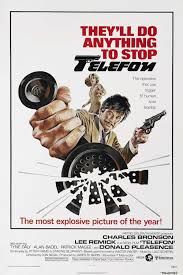
Well before THE NAKED GUN was triggering Reggie Jackson, director Don Siegel and Charles Bronson were triggering human time bombs in TELEFON (1977). Quentin Tarantino even borrowed from this film when he chose the Robert Frost poem for Stuntman Mike’s (Kurt Russell) lap dance from Arlene (Vanessa Furlito). It’s not as sexy, but it’s still a good time as Bronson tries to prevent World War III. Enjoy!
It’s debatable whether “The Changing of the Guard” is truly a Christmas episode. However, it does take place during the holiday season and it’s such a wonderful and sweet 23 minutes of television that it simply has to be shared and enjoyed.
The Changing of the Guard, which features a poignant lead performance from Donald Pleasance, originally aired on June 1st, 1962.
All of us here at the Shattered Lens hope that you have had and will continue to have a wonderful holiday season! Please enjoy The Changing of the Guard.
Mr. Freedom, William Klein’s 1968 political satire, is a strange one.
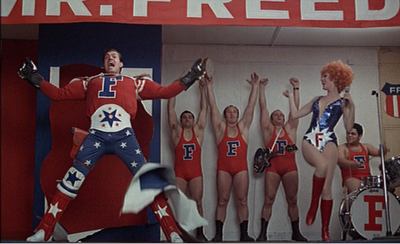
The film opens with a riot in the inner city. A scowling Southern sheriff (played by John Abbey) goes into his apartment and, when he comes back out, he’s transformed into Mr. Freedom, a patriotic super hero whose is costumed in a red, white, and blue football uniform. Mr. Freedom proceeds to invade a black household where, while firing two guns, he sings his theme song.
“F-R-Double E-Double D-OM! FREEDDOM!”
That’s right, he misspelled freedom.
It turns out that Mr. Freedom works for Freedom, Inc. His boss is Dr. Freedom (played by Donald Pleasance) who communicates with Mr. Freedom via a flickering TV screen. Dr. Freedom is concerned that France is on the verge of turning communist and he sends Mr. Freedom to Paris in order to “win the hearts and minds” of the French.
William Klein, himself, was an American expatriate who lived in France and is best known for being both a fashion photographer and a documentarian. His view of America is epitomized by the sight of Mr. Freedom (wearing a gigantic cowboy hat) wandering around Paris and assaulting random tourists. With the help of a prostitute played by Delphine Seyrig, Mr. Freedom attempts to rally the French to the side of freedom and to defeat the schemes of Red China Man. When the French don’t prove enthusiastic enough, Mr. Freedom responds by making plans to blow the country up.
Unlike a lot of left-wing films, which celebrate the American establishment by pretending to attack it, Mr. Freedom is sincere in its politics. It’s obvious that William Klein set out to make the most anti-American film that he could and he succeeded. Mr. Freedom is an irredeemable character. When the film begins, Mr. Freedom is quickly established as being an idiot and, at the end of the film, he has somehow become an even bigger idiot. Perhaps not surprisingly, a lot of people over at the imdb have compared Mr. Freedom’s quest to conquer France to America’s current policy towards the Middle East.
If you’ve read some of my previous reviews, you would be justified in expecting that this is where I would condemn Mr. Freedom for being heavy-handed and tediously left-wing. After all, I’m the girl who condemned Avatar for being predictable environmental propaganda. And yes, I did find Mr. Freedom to be heavy-handed but I actually enjoyed it.
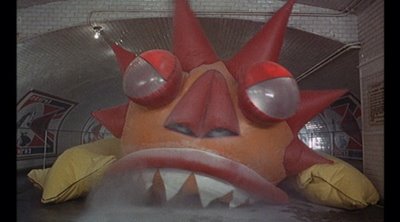
Even if you didn’t know that William Klein was an award-winning photographer both before and after he started making films, you would be able to guess it after taking one look at Mr. Freedom. The film’s narrative is undeniably uneven but visually, it’s a feast for the eyes. From the costumes worn by Mr. Freedom and his disciples to the design of Mr. Freedom’s secret headquarters, the screen is full of bold, primary colors and Klein shows a taste and appreciation for the bizarre that makes it easier to deal with the film’s moments of peachiness. Perhaps my favorite scene in the film involves Mr. Freedom confronting Red China Man. Red China Man, it turns out, is a gigantic dragon-shaped balloon.
“Say goodbye to classical reality, because our logic collapses on the subatomic level… into ghosts and shadows.”
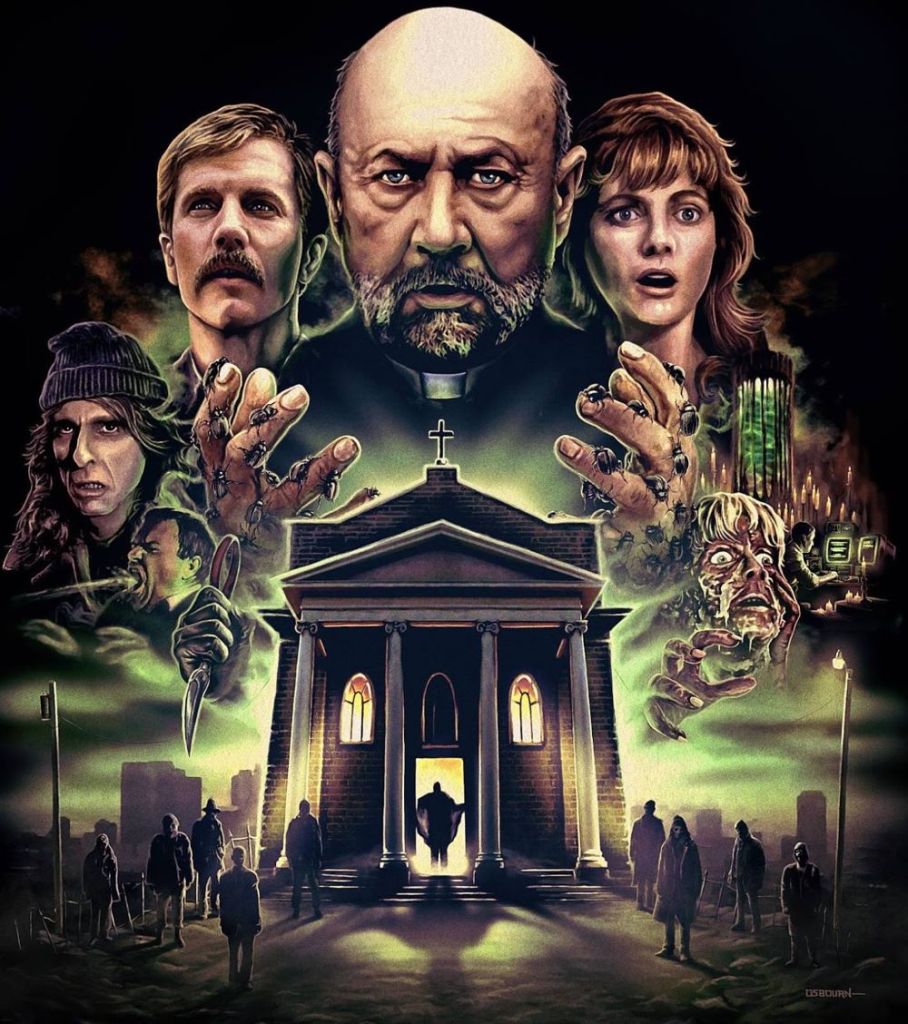
John Carpenter’s Prince of Darkness is a criminally underrated entry in his canon—a blend of philosophical, apocalyptic horror and supernatural mystery that’s as unsettling as it is deliberately strange. Released in 1987, the film often gets eclipsed by Carpenter classics like The Thing and In the Mouth of Madness. Even so, it stands out as a unique organic link between science-driven paranoia and cosmic horror—the sort of film that grows on you as you unravel its layers.
The setup is simple but immediately offbeat: In a derelict Los Angeles church, Father Loomis (Donald Pleasence, always at his nervous best) stumbles on a swirling green cylinder hidden away in the basement. Loneliness and age hang over Loomis as he realizes this is no mere relic but possibly the essence of absolute evil—the literal embodiment of Satan. Sensing he’s in over his head, the priest reaches out to Professor Birack (Victor Wong), a physicist whose rational mindset is quickly tested by the uncanny. Birack arrives with a diverse team of grad students and lab techs, each bringing curiosity, skepticism, and just enough personality to keep things lively.
What starts as an academic investigation quickly goes off the rails. Strange, shared dreams trouble the researchers—fragmented transmissions from the future, warning of disaster in unsettling, VHS-glitch style. Meanwhile, the area outside the church transforms into a kind of urban wasteland: homeless people, gripped by an unseen force, stumble with zombie-like intent, trapping the group inside. Inside, members fall prey to unsettling phenomena, from unexplained possession to increasingly grotesque violence. There’s a sense that the evil in the cylinder isn’t content to simply stay put—and the combination of supernatural implication and scientific uncertainty gives everything a persistent, gnawing tension.
Carpenter directs the film with measured, stifling precision. His color palette—rotting yellows, bruised greens, washed-out sunlight—creates a perpetually uneasy mood. He uses slow tracking shots and carefully composed frames to ratchet up suspense, and the score (co-composed with Alan Howarth) pulses with ominous synths that buzz beneath all the dialogue, making even the film’s quieter moments feel restless and charged with threat. Compared to the gooey spectacle of The Thing, the terror in Prince of Darkness is more metaphysical—less visible monsters, more eroding reality.
Sound and image work together to keep the audience on edge: moments of unsettling silence are punctuated by visual oddities, like swarms of bugs or the warped geometry of the church’s shadows. The group’s scientific attempts to decode the evil—a jumble of quantum theory, apocalyptic Christian lore, and unsettling mathematics—do more to ramp up anxiety than offer answers. Carpenter seems to delight in ambiguity; the revelations never clarify so much as deepen the void, giving shape to a primordial kind of fear.
The film’s most iconic device is its recurring nightmare sequence, where the group—cut off from the world—witnesses a cryptic, shadowy figure emerging from the church, broadcast as a tachyon transmission from the future. It’s classic Carpenter: deeply unsettling, oddly hypnotic, and open to any number of interpretations. The blending of science fiction and theological horror feels fresh and ambitious, and it’s fair to say these sequences alone have ironically kept the film alive in horror culture discussions and remixes.
The cast, featuring Pleasence and Wong, manages the film’s shifts in tone—moving from banter about theoretical physics to genuine terror with surprising ease. The grad students are likable enough for you to root for, especially Lisa Blount and Jameson Parker, who carry the emotional brunt as things collapse. Alice Cooper’s cameo as a silent, menacing street dweller further anchors the film’s reputation for “unexpected creepy” in the best way possible.
While there are flashes of gore—possessions, injuries, even some memorable stabbings—Carpenter resists making violence the centerpiece. The real horror here is psychological: paranoia, loss of agency, and the collapse of foundational beliefs. Where The Thing was about trusting (or not trusting) your friends, Prince of Darkness is about grappling with a world where even faith and science seem powerless and interchangeable in the face of the unknown.
Thematically, this is Carpenter at his most cerebral and bleak. The notion that neither faith nor science can adequately tackle the unfathomable echoes Lovecraft, yet Carpenter grounds it all in urban decay and deadpan dialogue rather than Gothic flourish. The questions get bigger—what good is faith if truth is poisonous, and what does science matter against a force older than logic? Dialogue about quantum uncertainty and theological paradoxes isn’t there to solve anything, but to make everything less secure.
If the film has a flaw, it’s that its pacing feels deliberately patient—some might say slow. Tension accumulates gradually, and you’re invited to sit in the discomfort as the group loses sleep, loses one another, and loses touch with reality. As the stakes escalate, the line between dream and waking life shreds, leading to an ending that’s haunting, ambiguous, and deeply open-ended. There’s no neat wrap-up or cathartic victory—only trauma, unsolved terror, and a lingering sense that evil never really left, just waited.
It’s this refusal to explain or comfort that gives Prince of Darkness its lasting cult appeal. Carpenter puts cosmic pessimism front and center: knowledge itself stands as a kind of curse, and both faith and reason bend beneath the weight of mystery. Rather than offer solutions, the movie warns about the dangers of peeling back reality’s surface—a theme that’s only grown more unsettling in the years since it was made.
Watching Prince of Darkness now, the film may not fit everyone’s idea of a fun Friday-night scarefest. But if you want horror that’s slow, dense, and sticks with you, this is essential viewing. Carpenter delivers a bleak, hypnotic nightmare about what happens when explanations fail—when the universe itself seems ready to swallow us whole. Whether you’re a die-hard genre fan or someone looking for something different, Prince of Darkness is cult horror at its most unshakable—proof that the scariest stories are often those that leave their deepest secrets unexplained.
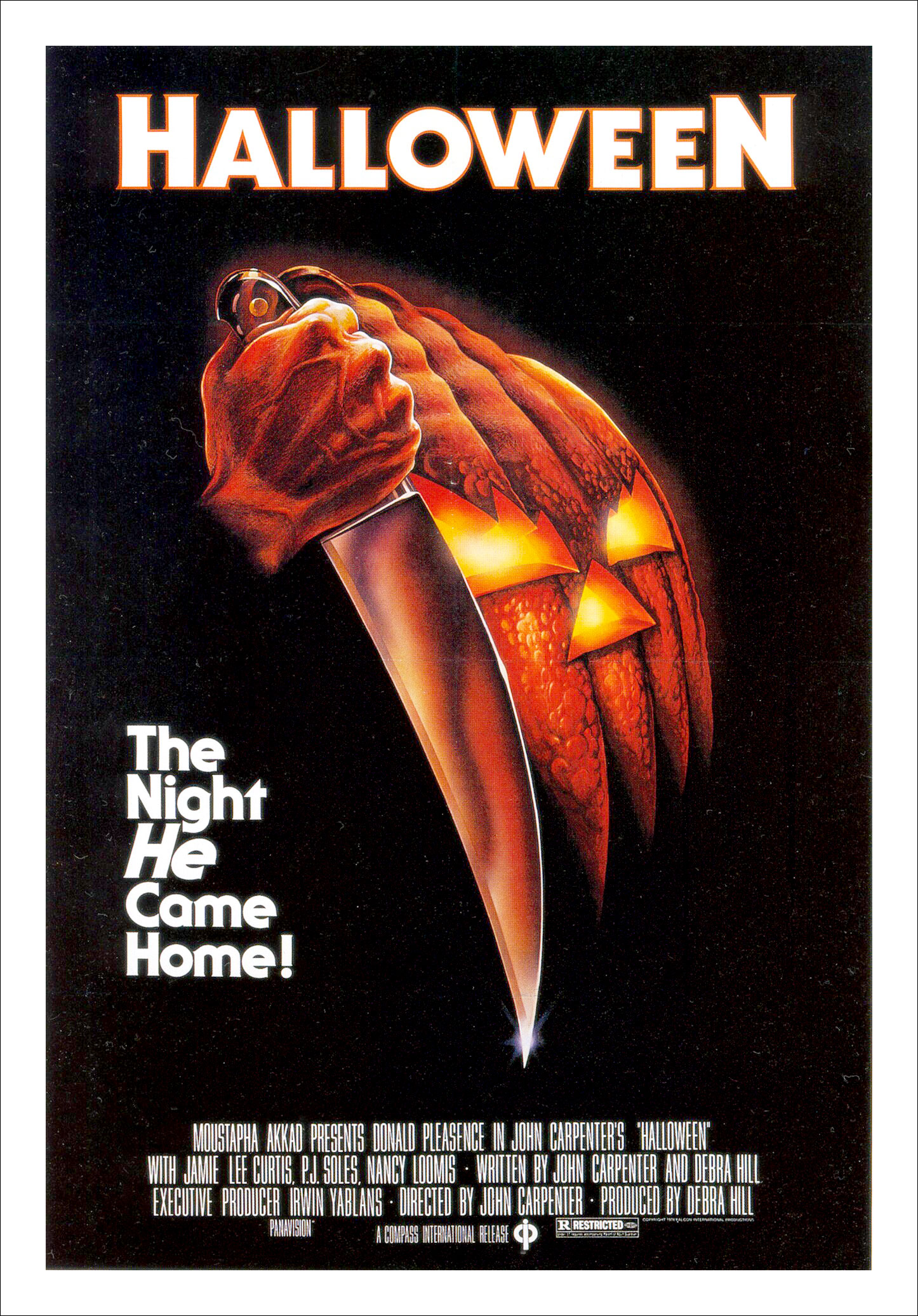
What better way to bring back a new daily grindhouse than the film which started the teen slasher genre. I speak of John Carpenter’s Halloween.
The film was truly a child of 1970’s independent filmmaking. With a budget of just $320,000 (even adjusting for inflation it’s still quite low) Carpenter made what’s considered one of horror’s defining films. Carpenter’s film was a smash hit when it was released in 1978. It played mostly in drive-in’s, grindhouse cinema houses before finally appearing in more mainstream venues. By then the film had become one of those must-see titles that many films both independent and mainstream try for but fail to do.
Some have commented that since Halloween was such a success in the box-office then it shouldn’t be considered grindhouse. I look at such thinking as quite narrow. Grindhouse was never synonymous with bad filmmaking. If one said the term meant cheap filmmaking then I would agree. Carpenter’s film has all the trappings of what makes a great grindhouse. It’s violent (though it really has less blood than what audience really remember) and uses sex as a storytelling tool (again the sex is quite chaste compared to later teen slashers).
While some film historians credit Hitchcock’s Psycho as the granddaddy of the slasher genre it wasn’t primogenitor of the teen slasher subgenre which has become an industry onto itself since Carpenter’s breakthrough hit. A hit that set many of the basic rules of teen slasher horror for decades to come. We get the nigh-unstoppable killer who seems more like a force of nature than human. The notion that teenage girls who have premarital sex will die horribly because of it while the chaste and virginal girl survives and inevitably stops the killer (until the subsequent sequel that is).
Halloween is grindhouse through and through. The fact that Carpenter’s obvious talent and skill as a director, editor, film composer and cinematographer shouldn’t DQ this film from being called grindhouse.


 Through the Shattered Lens