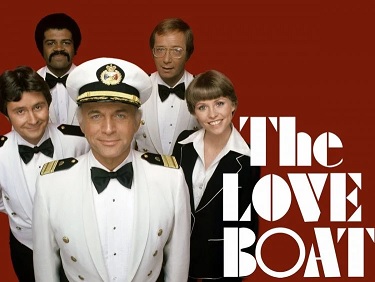
Retro Television Review: The Love Boat 6.22 “Abby’s Maiden Voyage/He Ain’t Heavy/I Like To Be In America”


Welcome to Retro Television Reviews, a feature where we review some of our favorite and least favorite shows of the past!  On Wednesdays, I will be reviewing the original Love Boat, which aired on ABC from 1977 to 1986!  The series can be streamed on Paramount Plus!
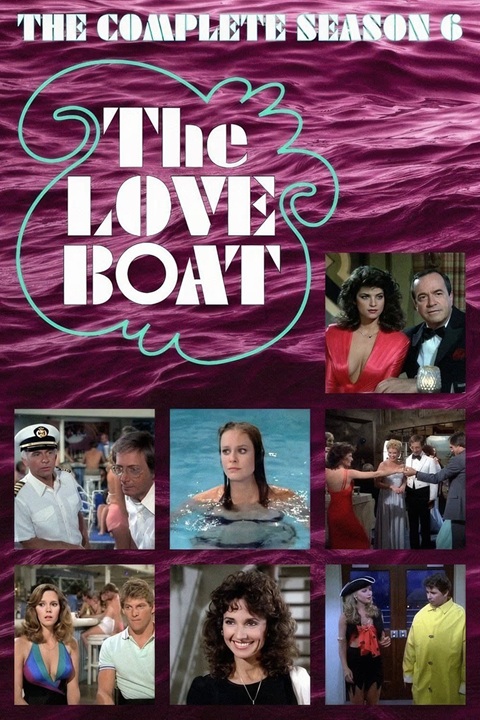
Love, life’s sweetest reward….

Episode 6.22 “Abby’s Maiden Voyage/He Ain’t Heavy/I Like To Be In America”

(Dir by Jerome Courtland, originally aired on February 26th, 1983)

When Abby (Mary Beth McDonough) boards the boat, her best friend (Constance Forslund) informs Julie that this cruise will be Abby’s “first time.”  She may be setting sail a virgin but she won’t be returning one.  Julie is too coked up to care.  Abby meets Neil (Brodie Greer), who is handsome and nice but, whenever they start to fool around, Abby starts laughing and the mood is killed.  At the end of the voyage, Abby is still a virgin but she and Neil are now a couple.

Spoiled high school grad Jimmy (Michael J. Fox) boards the boat with his adoptive parents (Don Porter and Barbara Billingsley) and almost immediately makes an enemy out of a waiter named Greg (Gregg Henry).  We’ve never actually seen Greg on the show before but Isaac acts as if Greg has been working on the boat forever.  Jimmy later realizes that Greg is his older brother, the one who he hasn’t seen since their parents died and Jimmy was adopted.  At first, Greg refuses to accept that Jimmy is his brother but, by the end of the cruise, they embrace.  Awww!  Actually, considering that Gregg Henry and Michael J. Fox look absolutely nothing alike, I can understand why Greg had his doubts.  That said, if he’s been on the boat for as long as this episode implies, Greg has surely seen another long-lost siblings just happen to find each during a cruise.  It happens at least once every season.

Speaking of once every season, it’s time for April Lopez (Charo) to take her annual voyage.  Though April is returning to Mexico, she wants to become an American citizen.  Good for her!  America rocks!  Unfortunately, she struggles with the oral exam.  Judge Kramer (Esther Rolle) realizes that April will be able to remember the answers if she sings them so she gives April the examination while April is performing in the Acapulco Lounge.  The audience loves it because who doesn’t love paying money for an expensive cruise just so you can spend the final night watching someone take a citizenship exam.

(For the record, in high school, I tutored one student who was about to take his exam because he was like really hot but he couldn’t remember how many years were in a Congressional term.  I taught him to think of it as 2-4-6.  Two for the House.  4 for the President.  6 for the Senate.  He became a citizen and sent me flowers and then he moved to Idaho.)

This week’s cruise was a bit bland but I’m glad April became a citizen of the greatest country in the world.
Horror Film Review: The Norliss Tapes (dir by Dan Curtis)


1973’s The Norliss Tapes begins with a disappearance.

David Norliss (Roy Thinnes), a California-based journalist, has vanished.  Before he disappeared, he had started work on a book that would have detailed his own adventures investigating the paranormal.  Though Norliss vanishes, he leaves behind several audiotapes in which he discusses some of the frightening things that he has seen.  Searching for clue about Norliss’s disappearance, his editor, Sanford T. Evans (Don Porter), sits down and listens to the tapes.

(Incidentally, Sanford T. Evans is a wonderful name for an editor.  It’s a name that just says, “My father knew Hemingway and I went to the University of Pennsylvania as a legacy.’)

As Evans listens to each tape, we watch the story unfold from Norliss’s point of view.  In this film, we watch as Norliss investigates an incident in which Ellen Sterns Cort (Angie Dickinson) claims that she was recently attacked by her dead husband, James Cort (Nicki Dimitri).  James was an artist who, in his final days, became obsessed with the occult and fell under the influence of the Mademoiselle Jeckiel (Vonetta McGee), a mysterious woman who claimed to appreciate James’s art and who gave him a scarab ring that he insisted on being buried with.

Norliss interviews Ellen and investigates her story.  He’s far more sympathetic to the idea of James having returned from the dead than the local sheriff (Claude Akins) is.  Of course, the sheriff has problems of his own.  Dead bodies keep turning up in his county, their skin gray and their bodies drained of blood.  Hmmm …. I wonder if that could have anything to do with James Cort and his scarab ring….

The Norliss Tapes is a pretty simple film.  Norliss shows up and then basically waits around until James Cort makes an appearance.  The film only runs 72 minutes and it’s very much a pilot for a television series that never went into production,  Apparently, each episode would have featured Stanford listening to a different tape and hearing about David Norliss and a weekly guest star dealing with some sort of supernatural occurrence.  Director Dan Curtis was also responsible for the cult television series, Kolchak: The Night Stalker, and The Norliss Tapes feels very much like a dry run for that show.  The main difference is that Roy Thinnes’s David Norliss is nowhere near as nervous as Darren McGavin’s Carl Kolchak.

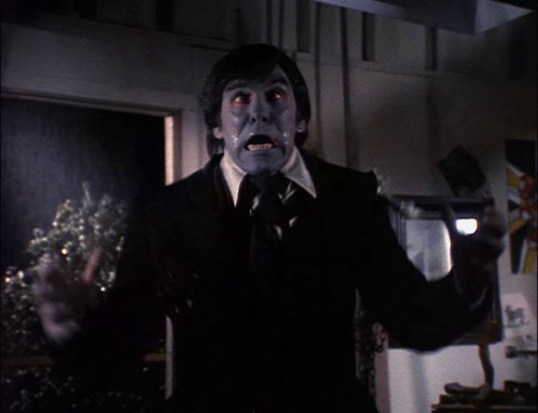
That said, the exact details for what’s going on with James Cort are almost ludicrously complicated.  It turns out that James Cort is not only trying to cheat death but he’s also helping an ancient Egyptian deity invade our world.  It’s best to ignore the nonsense about the Egyptian Gods and instead just focus on how creepy the undead James Cort is.  With his hulking frame, his gray skin, and his nearly glowing eyes, Cort is a truly frightening monster and he’s certainly the most impressive thing about this movie.  What makes Cort such an effective villain is how angry he seems to be.  Whenever he’s on screen, he’s either bursting through a door or chasing someone.  He’s pure nightmare fuel.

The Norliss Tapes never became a series but it did do well in Europe, where it was released in theaters.  The Norliss Tapes still has a cult following, not bad for a failed pilot.  Who knows what other adventures David Norliss could have had?

Horror on the Lens: The Norliss Tapes (dir by Dan Curtis)


The Norliss Tapes (1973, dir by Dan Curtis)

Today’s Horror on the Lens is The Norliss Tapes, a 1973 made-for-TV movie that was also a pilot for a television series that, unfortunately, was never put into production.

Reporter David Norliss (Roy Thinnes) has disappeared.  His friend and publisher, Stanford Evans (Don Porter), listens to the tapes that Norliss recorded before vanishing. (Stanford Evans, it must be said, is a great name for an editor.)  Each tape details yet another paranormal investigation.  (Presumably, had the series been picked up, each tape would have been a different episode.)  The first tape tells how Norliss investigated the mysterious death of an artist who apparently returned from the grave.

For a made-for-TV movie, The Norliss Tapes is pretty good.  It’s full of atmosphere and features a genuinely menaching yellow-eyed zombie monster. The film was directed by Dan Curtis, who was responsible for several made-for-TV horror films and who also created the deathless TV show, Dark Shadows. Curtis also directed a few feature films. Burnt Offerings, for instance, will be forever beloved for its scene of annoying little Lee Montgomery getting crushed by a chimney. If you ever get a chance to listen to the director’s commentary that Dan Curtis recorded for the Burnt Offerings DVD release, you must do so. Curtis comes across as the crankiest man on the planet and it’s actually kind of fascinating to listen to. His irritation when Karen Black keeps asking him if he knows the name of the actor who played the ghostly chauffeur is truly an amazing thing to here. (For the record, the actor’s name was Anthony James, he also had important supporting roles in two best picture winners — In The Heat of the Night and Unforgiven — and yes, he was one of the best things about Burnt Offerings. Karen Black knew what she was talking about.)

But back to The Norliss Tapes!

Admittedly, this is not the first Halloween in which I’ve shared The Norliss Tapes with our readers. Back in both 2015 and 2021, The Norliss Tapes was one of our “horrors on the lens.” Unfortunately, there’s only so many good quality, public domain horror films available on YouTube so, occasionally, a movie is going to show up more than once over the years. But, as long as it’s good film, who cares?

Enjoy The Norliss Tapes!

Retro Television Review: Fantasy Island 4.17 “Also Rans/Portrait of Solange”


Welcome to Retro Television Reviews, a feature where we review some of our favorite and least favorite shows of the past!  On Tuesdays, I will be reviewing the original Fantasy Island, which ran on ABC from 1977 to 1984.  Almost the entire show is currently streaming on Daily Motion.

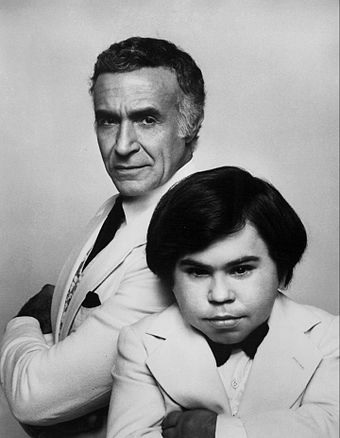
Smiles, everyone, smiles!  It’s Tattoo’s birthday!

Episode 4.17 “Also Rans/Portrait of Solange”

(Dir by Leslie H. Martinson, originally aired on February 28th, 1981)

It’s hard to know where to start with this episode, it’s so odd.

The first fantasy features Larry Linville as Jerome Pepper, who works in the “women’s shoes department” at Latham Department Store.  He has a crush on his co-worker, Delia (Joan Prather).  Delia is also the daughter of Emmett Latham (Don Porter), the owner of the store.  The shy Jerome has only one fantasy.  He just wants Delia to notice him.

Well, it turns out that Delia and Emmett are on the Island!  They keep their horse at the Fantasy Island Stables.  Delia has challenged the owner of Selby’s Department Store, widow Amelia (Arlene Dahl), to a race.  The only problem is that Delia is having trouble training her horse.  The horse is fast but it always stops before crossing the finish line.

Mr. Roarke arranges for Jerome to bring a horse named The Professor to the stables.  The Professor is such a charismatic horse that all other horses want to hang out with him.  If The Professor is standing at the finish line, Delia’s horse will have no trouble running across it.  Delia has definitely noticed Jerome now.

The day of the race, The Professor disappears!  So, Jerome steals an ice cream truck (“Fantasy Island Ice Cream” is written on the side of vehicle) and drives around the island announcing, “Professor!  Tutti Frutti!  Professor!  Tutti Frutti!”  Luckily, Professor loves Tutti Frutti and escapes from the stable where Amelia’s people were holding him prisoner.

Jerome and the Professor show up at the finish line, just in time to help Delia’s horse win the race.  Jerome and Delia fall in love.  Amelia confesses that she’s in love with Emmett and the two decide to combine their stores.  So, I guess we’re just going to ignore the fact that Amelia tried to steal The Professor!

Good Lord, this fantasy!  The whole thing just felt like a combination of random plot devices that had probably been snipped out of other episodes.  Perhaps it would have worked better if Jerome had been a young, nerdy guy but Larry Linville appeared to be in his 50s and far too old to require a fantasy in order to talk to a co-worker.

The second fantasy is a little bit more interesting, if just because Mr. Roarke is actually nice to Tattoo for once.  Tattoo’s birthday is approaching so Roarke decides to give him a fantasy as a gift.  Knowing that Tattoo is a fan of Toulouse-Lautrec (and Herve Villechaize was an acclaimed painter in real life, as well), Mr. Roarke arranges for the Traditional Dance Company of Paris to come to Fantasy Island to rehearse and so Tattoo can paint them.

While Tattoo enjoys sketching all of the dancers, his favorite subject is Solange Latienne (Elissa Leeds), who takes care of the company’s costumes but who dreams of dancing herself.  We’re told that Solange is French, though she doesn’t speak with an accent and she uses an American pronunciation for her last name.  Tattoo falls for Solange but the company’s arrogant choreographer, Mark Ellison (David Groh), goes out of his way to try to keep Solange away from Tattoo.  Knowing that Tattoo is watching from a distance, Mark kisses Solange.  Thinking that Solange has rejected him, Tatoo throws away a sketch he had done of her.  Awwwwww!

Mr. Roarke informs Tattoo that an emergency meeting of the “Island Council,” has been scheduled for the night.  (This is the first time we’ve ever heard of this Island Council.)  Tattoo agrees to go in Roarke’s place but it turns out that the meeting is a surprise party!  The owner of the Traditional Dance Company, Alfred Gerrard (MacDonald Carey), buys Tattoo’s sketches.  Then Solange dances as a part of the birthday celebration and Alfred is so impressed that he makes her a part of the company.  Take that, Mark!

So, both Solange and Tattoo’s fantasies come true.  Though Solange still leaves the Island so, once again, Tattoo’s heart is broken.  Again, awwwwww!

Elissa Leeds was convincing neither as a French girl nor as a dancer but the second fantasy was still enjoyable, if just because it gave Herve Villechaize a rare chance to do something more than announce the plane and ask Mr. Roarke to explain everyone’s fantasies.  Villechaize did a good job in this episode and it was nice to see he and Montalban pretending to like each other.

It was an uneven episode but at least Tattoo had a nice birthday.

Retro Television Reviews: The Love Boat 1.25 “Pacific Princess Overtures / Gopher, the Rebel / Cabin Fever”


Welcome to Retro Television Reviews, a feature where we review some of our favorite and least favorite shows of the past!  On Wednesdays, I will be reviewing the original Love Boat, which aired on ABC from 1977 to 1986!  The series can be streamed on Paramount Plus!

The Love Boat

Today, we wrap up season one of The Love Boat!  All aboard!

Episode 1.25 “Pacific Princess Overtures / Gopher, the Rebel / Cabin Fever”

(Dir by Alan Baron, originally aired on May 20th, 1978)

As I sat down to watch this episode on Paramount Plus, I was once again confronted with that weird commercial featuring P!nk and Michael Phelps tossing a big red COVID germ at each other.  I’ve seen this commercial a few times.  It’s popular not only on Paramount Plus but also on Hulu and Peacock.  For a commercial that’s all about the terrors of COVID, I have to say that representing the risk by using a big rubber ball feels a bit …. well, counterproductive.  (Actually, perhaps silly would be a better way to describe it.)  To be honest, P!nk and Michael Phelps look like they’re almost having too much fun tossing COVID at each other.  Someday, someone will actually take a serious look at how and why the combined efforts of the media and the advertising industry struggled to convince people to take the vaccine and this commercial will hopefully be remembered.  Considering that it’s the elderly who are at the greatest risk when it comes to COVID, it’s interesting that almost all of the vaccination commercials that I’ve seen have been stylistically aimed at older millennials.  Michael Phelps saying that his depression puts him at a greater risk of COVID is not the sort of thing that’s going to convince an 80 year-old to get a booster.

Speaking of commercials, the first season finale of The Love Boat featured Antonio Fargas as an advertising exec named Lee Graham.  When we first see him, he’s saying goodbye to his wife as he boards the ship.  He tells her that he’ll miss her and that the only reason he’s going to be on the boat is because he’s working on ad campaign for the cruise company.  Of course, he’s lying.  He’s actually taking the cruise so that he can spend some time with his mistress, Andrea (Jonelle Allen).  Lee and Andrea are excited to finally have a few days where they can be with each other without feeling like they have to hide for everyone.  However, Lee soon discovers that his nosy neighbors (played by Kaye Bass and Elias Jacob) are also on the boat!  As a result, Lee doesn’t get a chance to cheat on his wife and, at the end of the cruise, he and Andrea realize that they don’t want to continue their adulterous ways.  Fortunately, it turns out that Lee’s wife already knew about the affair and is incredibly forgiving.  I’m not really sure why she’s so forgiving but hey, it was the 70s!  It’s not like The Love Boat is going to end with a divorce.  That’s more of a 90s thing.

While this is going, ruthless business tycoon Mr. Yamashiro (Pat Morita — yes, you read that correctly) is determined to convince Ruth Newman (Diane Baker) to sell him her late husband’s factory.  Yamashiro even orders his assistant, Ken Davis (Gary Collins), to trick Ruth by pretending to fall in love with her.  However, Ken really does fall in love with her and he loses his job as a result.  Fear not, though.  Ruth hires him and agrees to invest in a special, voice-activated word processor that he’s created.  Yamashiro is so impressed that he agrees to invest as well.  Yamashiro says that they can consider his investment to be a wedding present.  Ruth and Ken have only known each other for a few days but sure, why shouldn’t they get married?  I mean, it’s the 70s!  People get married about knowing each other for a weekend and then they forgive each other for cheating.  Love is all around, no need to waste it.  They’re all going to make it, after all.

However, none of those stories can compare to what happens to Gopher.  After starting the cruise in a bad mood because he feels that Captain Stubing doesn’t respect him,  Gopher falls for a young communist named Vanessa!  And Vanessa is played by Eve Plumb.  That’s right!  This episode features the original Jan Brady filling Gopher’s head with a bunch of Marxist nonsense!  Vanessa is traveling on the boat with her wealthy father (Don Porter) and she sure does resent all of the money that’s being spent on the cruise.  When she tells Gopher that he should stop taking orders from the Captain because, as “members of the Personhood,” no one has any right to order anyone else around, Gopher takes her words to heart and he ended up getting fired for insubordination!  Fortunately, it doesn’t take long  for both Vanessa and Gopher to see the errors of their ways and the Captain hires Gopher back, with the understanding that Gopher will never again bring a certain impractical economic theory.  It’s a bit like that episode where the Captain told Isaac that he was spending too much time learning about black history.  The Captain’s not going to let his purser go down the Marxist rabbit hole!

And so, the first season comes to a close.  This was a good episode with which to end the season.  Though his storyline was undeniably icky, Antonio Fargas proved himself to be a talented physical comedian as he tried to keep his neighbors from noticing his girlfriend.  The second story was a bit bland but Pat Morita transcended his stereotypical role.  And seriously, how can you not enjoy Eve Plumb radicalizing Gopher?

When The Love Boat began, the crew was unsure of how to react around Captain Stubing.  As the first season comes to a close, they’ve learned that Stubing will always have their back, as long as they don’t talk about Black History or Marxism.  What will the crew discover about their captain during season 2?  We’ll find out soon!

Horror on the Lens: The Norliss Tapes (dir by Dan Curtis)


The Norliss Tapes (1973, dir by Dan Curtis)

Today’s Horror on the Lens is The Norliss Tapes, a 1973 made-for-TV movie that was also a pilot for a television series that, unfortunately, was never put into production.

Reporter David Norliss (Roy Thinnes) has disappeared.  His friend and publisher, Stanford Evans (Don Porter), listens to the tapes that Norliss recorded before vanishing. (Stanford Evans, it must be said, is a great name for an editor.)  Each tape details yet another paranormal investigation.  (Presumably, had the series been picked up, each tape would have been a different episode.)  The first tape tells how Norliss investigated the mysterious death of an artist who apparently returned from the grave.

For a made-for-TV movie, The Norliss Tapes is pretty good.  It’s full of atmosphere and features a genuinely menaching yellow-eyed zombie monster. The film was directed by Dan Curtis, who was responsible for several made-for-TV horror films and who also created the deathless TV show, Dark Shadows. Curtis also directed a few feature films. Burnt Offerings, for instance, will be forever beloved for its scene of annoying little Lee Montgomery getting crushed by a chimney. If you ever get a chance to listen to the director’s commentary that Dan Curtis recorded for the Burnt Offerings DVD release, you must do so. Curtis comes across as the crankiest man on the planet and it’s actually kind of fascinating to listen to. His irritation when Karen Black keeps asking him if he knows the name of the actor who played the ghostly chauffeur is truly an amazing thing to here. (For the record, the actor’s name was Anthony James, he also had important supporting roles in two best picture winners — In The Heat of the Night and Unforgiven — and yes, he was one of the best things about Burnt Offerings. Karen Black knew what she was talking about.)

But back to The Norliss Tapes!

Admittedly, this is not the first Halloween in which I’ve shared The Norliss Tapes with our readers. Back in 2015, The Norliss Tapes was one of our “horrors on the lens.” Unfortunately, there’s only so many good quality, public domain horror films available on YouTube so, occasionally, a movie is going to show up more than once over the years. But, as long as it’s good film, who cares?

Enjoy The Norliss Tapes!

Horror on the Lens: The Norliss Tapes (dir by Dan Curtis)


Today’s Horror on the Lens is The Norliss Tapes, a 1973 made-for-TV movie that was also a pilot for a television series that, unfortunately, was never put into productions.

Reporter David Norliss (Roy Thinnes) has disappeared.  His friend and publisher, Stanford Evans (Don Porter), listens to the tapes that Norliss recorded before vanishing.  Each tape details yet another paranormal investigation.  (Presumably, had the series been picked up, each tape would have been a different episode.)  The first tape tells how Norliss investigated the mysterious death of an artist who apparently returned from the grave.

For a made-for-TV movie, The Norliss Tapes is pretty good.  It’s full of atmosphere and features a genuinely menaching yellow-eyed zombie monster.

Enjoy!

http://www.youtube.com/watch?v=bmET4ypSzFA


Shattered Politics #30: The Candidate (dir by Michael Ritchie)


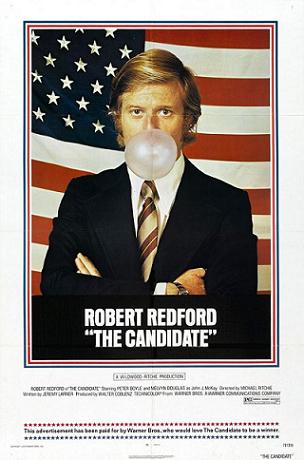
Candidateposter

“What do we do now?” — Democratic senate candidate Bill McKay (Robert Redford) in The Candidate (1972)

When I reviewed Advise & Consent, I mentioned that if anyone could prevent billionaire Tom Steyer from winning the Democratic nomination to run in the 2016 California U.S. Senate election, it would be Betty White.  Well, earlier today, Tom Steyer announced that he would NOT be a candidate.  You can guess what that means.  Betty White has obviously already started to set up her campaign organization in California and, realizing that there was no way that he could possibly beat her, Tom Steyer obviously decided to step aside.

So, congratulations to Betty White!  (I would probably never vote for her but I don’t live in California so it doesn’t matter.)  As future U.S. Senator Betty White prepares for the next phase of her career, it would probably be a good idea for her to watch a few movies about what it takes to win political office in the United States.

For example: 1972’s The Candidate.

The Candidate would especially be a good pick for the nascent Betty White senate campaign because the film is actually about a senate election in California!  California’s  U.S. Sen. Crocker Jarmon (Don Porter) is a Republican who everyone assumes cannot be defeated for reelection.  Democratic strategist Marvin Lucas (a heavily bearded Peter Boyle) is tasked with finding a sacrificial candidate.

The one that Marvin comes up with is Bill McKay (Robert Redford, before his face got all leathery), a 34 year-old lawyer who also happens to be the estranged son of former Governor John J. McKay (Melvyn Douglas, whose wife Helen ran for one of California’s senate seats in 1950).  As opposed to his pragmatic and ruthless father, Bill is idealistic and the only reason that he agrees to run for the Senate is because Marvin promises him that he’ll be able to say whatever he wants.  Marvin assures Bill that Jarmon cannot be beaten but if Bill runs a credible campaign, he’ll be able to run for another office in the future.

However, Jarmon turns out to be a weaker candidate than everyone assumed.  As the charismatic Bill starts to close the gap between himself and Jarmon, he also starts to lose control of his campaign.  He soon finds himself moderating his positions and worrying more about alienating potential voters than stating his true opinions.  (In one of the film’s best scenes, Bill scornfully mutters his standard and generic campaign speech to himself, obviously disgusted with the vapid words that he has to utter in order to be elected.)  The film ends on a properly downbeat note, one that reminds you that the film was made in the 70s but also remains just as relevant and thought-provoking in 2015.

Written by a former political speech writer and directed, in a semi-documentary style, by Michael Ritchie, The Candidate is an excellent film that answer the question as to why all political campaigns and politicians seem to be the same.  The Candidate is full of small details that give the film an air of authenticity even when a familiar face like Robert Redford is on screen.

Whenever I watch The Candidate, I find myself wondering what happened to Bill McKay after the film’s iconic final scene.  Did he ever regain his idealism or did he continue on the path to just becoming another politician.  As much as we’d all like to think that the former is true, it’s actually probably the latter.

That just seems to be the way that things go.

Hopefully, Betty White will learn from Bill McKay’s example.

http://www.youtube.com/watch?v=thSY0g22j8Y