Retro Television Review: St. Elsewhere 1.19 “Working”


Welcome to Retro Television Reviews, a feature where we review some of our favorite and least favorite shows of the past! On Fridays, I will be reviewing St. Elsewhere, a medical show which ran on NBC from 1982 to 1988.  The show can be found on Hulu and, for purchase, on Prime!
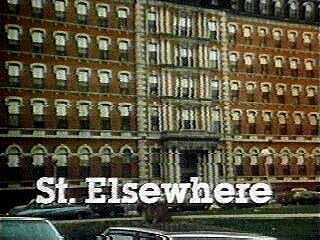
This week, someone’s getting sued!

Episode 1.19 “Working”

(Dir by Bruce Paltrow, originally aired on April 5th, 1983)

Dr. Morrison becomes upset when he deduces that a patient (Ed Lauter) is trying to drink himself to death so that his family can collect his life insurance.  Dr. Chandler becomes upset when one of his patients dies while being admitted to the hospital and the family ends up suing for malpractice.  For once, Dr. Craig is not upset because he’s been charmed by a visiting surgeon (Rita Zohar) from Hungary.  And, finally, Dr. White continues to be Dr. White as he obsesses over his separation, pops pills, and screws up even the simplest of medical tasks.

It’s just another day at St. Eligius!

This was a pretty good episode.  Dr. Craig’s storyline was probably the weakest but William Daniels is such a good actor and Dr. Craig was such an interesting character that even a weak Craig storyline is still better than average.  (That said, the visiting surgeon’s amazement at visiting at actual McDonald’s was a bit heavy handed.)

What really made this episode stand out is that Denzel Washington finally got to do something more than just stand in the background and nod.  For most of the first season, Dr. Chandler has been portrayed as being perhaps the most perfect and ultra-competent resident in the history of medical residences so it was interesting to see him not having all the answers for once.  Washington did a wonderful job portraying Chandler’s transformation from being almost cocky to being worried that he actually was, in some way, responsible for his patient’s death.  (The fact that the other doctors just shrugged off the man’s death made Chandler even more determined to figure things out.)  In the past, Chandler has always been quick to call out other people’s errors and this episode actually features him nearly coming to blows with White over White’s terrible job performance. Seeing Chandler having to critically examine his own job performance brought a bit more depth to the character.

Speaking of Dr. White …. WHAT A JERK!  The first season is nearly over and it seems like the show is building up to something terrible happening to Dr. White.  Whatever it may be, it’s hard not to feel that he brought it on himself.  In a hospital full of dedicated doctors, Dr. White is the guy you never want to see come in your room.  I have no idea what’s going to happen with this doctor but I can’t imagine it will be a good thing.

Finally, Morrison’s storyline left me wondering why Morrison always ends up with the most melodramatic patients.  That said, Ed Lauter was one of the best and his scenes with Norman Lloyd’s Dr. Auschlander were wonderfully acted by both men.

This was a good episode.  We’re approaching the end of season one and I can’t wait to see how things are going to wrap up with the doctors at Boston’s most underrated hospital.

The TSL Grindhouse: The Spook Who Sat By The Door (dir by Ivan Dixon)


1973’s The Spook Who Sat By The Door opens with Senator Hennington (Joseph Mascolo) in a panic.

The Senator is running for reelection and is struggling to appeal to white voters and minority voters at the same time.  White voters are happy that the Senator recently gave a speech in favor of “law and order” but now, he’s polling weakly with black voters.  His wife (Elaine Aiken) suggests that the Senator win back black voters by demanding that the CIA hire more black agents.

The CIA responds to the political pressure by hiring Dan Freeman (Lawrence Cook) to be their first black agent.  Freeman is given the standard CIA training and taught how to start revolutions in other countries.  However, after he completes his training, Freeman is assigned no real responsibilities.  He is given a desk job and spends most of his day making copies.  Whenever a senator or a reporter visits CIA Headquarters, Freeman is trotted out so that the CIA can claim to be diverse.  Freeman understands that he’s a token.  He knows that his job is to basically sit by the door and be seen.  But Freeman actually has bigger plans.

After spending a few years at the CIA, Freeman resigns and heads back to Chicago to work as a social worker.  Using what he learned at the agency, he starts to recruit young black men as freedom fighters.  He and the Cobras (as they’re called) launch their own guerilla war against the establishment in Chicago.  Some of their tactics are violent and some of them are not.  Freeman understands the importance of winning both hearts and minds and he recruits Willy (David Lemieux) to serve as his lead propagandist.  Because Willy is light-skinned, he is also assigned to rob a bank because Freeman knows that both the witnesses and the police will mistake him for being white and will be less likely to fire on him.  (The other members of the Cobras wear whiteface during the robbery.)

Freeman hopes that he will be able to recruit his childhood friend, Dawson (J.A. Preston), to the cause.  Dawson, however, now works as a detective for the Chicago PD and has been assigned to beak up the Cobras.  Will Freeman be able to bring over Dawson and what will happen if Dawson resists?

Based on a novel by Sam Greenlee (who was one of the first black men to be recruited to work with the United States Information Agency and who based many of Freeman’s CIA experiences on his own), The Spook Who Sat By The Door has achieved legendary status as a film that the FBI reportedly tried to keep out of theaters.  Theater owners were pressured to either not book the film or to only book it for a week before replacing it with a less incendiary film.  As a result, The Spook Who Sat By The Door became a difficult film to see.  As often happens, the efforts to censor the film only added to its revolutionary mystique.

Of course, in 2024, one can go on YouTube and watch the film for oneself.  It’s definitely uneven film, one that has pacing issues (especially at the beginning) and also one that suffers due to its low budget.  Depicting the overthrow of the government on a budget will always be a challenge.  Some of the acting is a bit amateurish but Lawrence Cook broods convincingly as Freeman and he’s well-matched by J.A. Preston’s portrayal of the more down-to-Earth Dawson.  At its best, there’s a raw authenticity and anger to the film that immediately captures the viewer’s attention.  It’s the rare political film to actually feature conversations about actual politics and it’s a film that asks how far people would be willing to go to accomplish change.  The Spook Who Sat By The Door suggests that the true villains are the members of the establishment who cynically embraced the civil rights struggle in their words but not in their actions.  In the end, Dan Freeman becomes a bit of a fanatic but the film suggests that perhaps a fanatic was what the times demanded.

Film Review: Short Eyes (dir by Robert M. Young)


Last night, fully intent on just viewing one movie before going to bed, I decided to watch the 1977 film, Short Eyes.

Why I thought that was a good idea, I’m not sure. Even though I didn’t know much about the film, I did know that it was a gritty prison drama that was written by an ex-con, filmed in an actual New York prison, and that a few prisoners appeared in small roles in the film. So, I really can’t claim that I didn’t realize that I was about to watch something that probably wasn’t going to be deal with particularly pleasant subject matter. I think my main reason for watching it, to be honest, was just that it had been sitting there on my Prime watchlist for nearly a year. My main motivation can be summed up as “If not now, when?” Of course, if I had know that “Short Eyes’ was apparently prison slang for someone who is a pedophile, I might have thought twice about watching.

The Short Eyes of the title is Clark Davis (Bruce Davison), a young man from a vaguely wealthy background who is being held on charges of raping a young girl. Clark is one of only three white men being housed in his cell block. As Clark soon discovers, everything in prison is determined by your race and what you’re accused of doing. As a white man, he’s already in the minority and, because he’s a “short eyes,” he soon discovers that not even the other whites are willing to watch his back. The only person who is vaguely sympathetic to Clark is Juan (Jose Perez), a longtime prisoner who is determined to not allow prison to turn him into an animal. Juan tells Clark that he needs to get a transfer to protective custody but it soon becomes apparent that’s not going to happen. The prison guards feel no obligation to protect Clark and Clark himself almost seems to have a death wish.

As Clark explains to Juan, he’s not sure whether he’s guilty or not. He says that he blacks out and sometimes, he’s not sure what he did. Clark thinks he’s innocent but, at the same time, he also confessed to Juan that he has molested other girls. Juan knows that Clark’s a dead man if he doesn’t get out of prison but he also know that, even if Clark is innocent this time, he won’t be in the future. When the other prisoners decide to kill Clark, Juan has to decide whether to let it happen or to risk his safety by trying to stop it.

Short Eyes is one of the most thoroughly unpleasant films that I’ve ever watched but that obviously was the point. This is a film about the reality of prison, that it’s a dirty, brutal, and inhumane place where the weak are targeted and anyone who goes against the system — whether it’s the system enforced by the guards or the even more important system created by the prisoners — will be punished. It’s not at all fun to watch but, if anyone wants to know why incarceration tends to just create hardened criminals as opposed to rehabilitating them, they should find some answers in the film’s portrait of prison life.

The film is based on a play and, in many scenes, it’s a bit too theatrical for its own good. Clark delivers a lengthy monologue about his previous actions and, while it’s well-delivered by Davison, it also goes on and on and you never quite understand why he’s opening up to Juan in the first place. (Juan, himself, angrily responds that he never asked to be Clark’s father confessor.) The scenes of the prisoners just hanging out and talking are also well-acted but again, they tend to drag on for a bit too long. Musicians Curtis Mayfield and Freddy Fender both appear as anonymous prisoners and both sing songs, which brings the film’s already uneven narrative momentum to a complete halt. Just as the inmates will never be able to escape prison, the film never escapes its theatrical origins. While the decision to film Short Eyes in an actual operating prison brings a good deal of authenticity to the production, the production’s staginess ultimately works against it.

At its best, this is a well-acted portrait of people trapped in a man-made Hell. Jose Perez gives an excellent performance and Bruce Davison will make your skin crawl as Clark, a character about whom most viewers will have very mixed feelings. Nathan George and Joseph Carberry are both properly intimidating as the heads of, respectively, the black prisoners and the whites.

This is definitely not a film to watch late at night, unless you’re actively trying to generate nightmares. (Of course, if that’s your goal, have it!) As for me, I stayed up an extra two and a half hours just so I could watch another movie after Short Eyes. As a result, I spent all of Saturday tired but I still think I made the right decision.