Film Review: The Inventor: Out For Blood In Silicon Valley (dir by Alex Gibney)


Oh my God, this was such a creepy documentary!

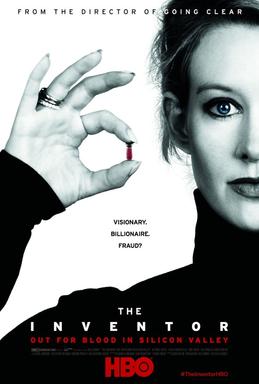
The Inventor tells the story of the rise and fall of Elizabeth Holmes, who, at one point, Forbes named the wealthiest self-made female billionaire in America, and who is currently facing criminal charges of defrauding not only her investors but also a countless number of doctors and patients.  After dropping out of college, Elizabeth Holmes founded Theranos, a Silicon Valley-based company that claimed it had devised a method that would revolutionize how blood was tested and which would lead to people leading longer and healthier lives.  (“No one will have to say an early goodbye,” as Elizabeth put it.)  It all had to do with a blood-testing device called the Edison, a device that Holmes designed, patented, and made a fortune by licensing.  That the Edison didn’t actually do what Holmes claimed that it did put lives at risk and ultimately led to her downfall.

So, what makes The Inventor such a creepy documentary?  A lot of it has to do with the fact that Elizabeth Holmes herself comes across as being so creepy.  With her endless supply of black turtlenecks and her rather monotonous (not to mention notably deep) voice, she comes across as being a cult leader in the making.  When we see archival footage of her being interviewed or of her giving a speech to her worshipful employees, she has the type of demented gleam in her eye that one would normally associate with a particularly enthusiastic Bond villain.  When her former employees talk about her, they not only mention her drive and her dedication but they also mention the fact that she rarely blinked.  In fact, she so rarely blinked that other people also felt as if they shouldn’t blink in her presence.  Theranos was a company full of people with thousand-yard stares.

Despite the fact that, as many people point out, Elizabeth Holmes had no experience in the medical field and that the majority of her lies were easily exposed, she still had little trouble getting wealthy and powerful men to invest in her company.  Among those who invested in Theranos and sat on its board of directors: two former secretaries of state, one former and one future secretary of defense, and several prominent businessmen.  Though the documentary doesn’t explore this angle as perhaps it should have, it’s interesting to note that the majority of Holmes’s backers and defenders were 1) elderly and 2) male.  The one female investor that Holmes tried to bring in easily saw through Holmes’s lies.  On the other hand, former Secretaries of State Henry Kissinger and George Shultz became enthusiastic backers of Holmes and her “vision.”  Meanwhile, attorney David Boies — who was best-known for being Al Gore’s personal attorney and who later was hired to head up Harvey Weinstein’s defense team — is on hand to intimidate any Theranos employees who might be on the verge of turning into a whistleblower.  Elizabeth Holmes may currently be an indicted pariah but, before that, she spent many years as a proud member of the American establishment.

In fact, several other members of the Establishment makes cameo appearances in The Inventor.  At one point, we see Holmes being interviewed by Bill Clinton.  At another point, Joe Biden stops by Theranos and praises the company.  We see pictures of Elizabeth Holmes in the Oval Office, visiting with Barack Obama.  Holmes is put on the covers of magazines.  Numerous publications declare her to be the next Steve Jobs.  She’s held up as the future of not just blood testing but also the future of business.  It’s only after one reporter has the courage to actually investigate her claims and two employees risk their futures to tell the truth about what they saw at Theranos that Elizabeth Holmes is revealed to be a fabulist and a con artist.  Was she ever sincere in her desire to make the world a better place or was that just another part of her carefully constructed persona?  The Inventor is full of people still struggling to answer that question for themselves.

The Inventor was directed by Alex Gibney.  Gibney previous directed the Going Clear, an expose of Scientology.  Watching The Inventor, it’s hard not to make comparisons between Scientology and the cults of Silicon Valley.  Watching Elizabeth Holmes give a speech to her employees is like watching that infamous video of Tom Cruise pay homage to L. Ron Hubbard.  And just as Scientology takes advantage of those with a need to believe in something bigger than them, Elizabeth Holmes did the same thing.  Everyone wanted the promises of Homes, Theranos, and the Edison machine to be true.  They wanted it to be true so much that they became blind to the reality that was right in front of them.

The Inventor is a fascinating documentary about power, wealth, fraud, and the prison of belief.  It can currently be seen on HBO.


Spring Breakdown #7: FYRE: The Greatest Party That Never Happened (dir by Chris Smith)


So, last night, I finally watched FYRE: The Greatest Party That Never Happened, the Netflix documentary about the infamous Fyre Festial.

As you may remember, the Fyre Festival was supposed to be the greatest party of 2017.  Influencers played it up on Instagram.  A commercial for it, one that featured the world’s top models on a beautiful island, was pretty much inescapable on Facebook.  It was going to be the greatest musical festival of all time, with luxury villas and yachts and private chefs and …. Blink-182?  Even before the entire festival was revealed to be a massive fraud, I have to admit that I was kind of like, “All this for Blink-182?”

Anyway, the festival did turn out to be a disaster.  A lot of people paid a lot of money to end up on the beach, staying in rain-soaked FEMA tents and eating pre-packaged sandwiches.  The bands cancelled so there wasn’t even any music.  After the festival was officially canceled, several people found themselves stranded on the island.  Those of us who weren’t there followed the drama on twitter.  We joked about the Lord of the of Flies.  One of my favorite tweets about the whole mess compared it to an episode of It’s Always Sunny In Philadelphia.  “The Gang Puts On A Music Festival.”

At the time, very few people had much sympathy for anyone involved in the Fyre Festival.  Not only did the organizers seem to be a group of insufferable douchebags but so did the people who paid thousands for dollars for a FEMA tent, a cheese sandwich, and Blink-182.  Having now watched the Netflix documentary …. well, I still don’t have much sympathy for the organizers or the participants.

I do have sympathy for the people who actually lived in the island.  They were taken advantage of and most of them received no financial compensation for the work that they put into the festival.  While we were all laughing on twitter, one poor restaurant owner lost a fortune feeding all of the people who were stranded in the Bahamas.  While we were making jokes, the people who actually did all the work went unpaid.

The documentary starts with festival organizer Billy McFarland and celebrity co-sponsor Ja Rule annoying Bella Hadid, Emily Ratajowski, and Hailey Baldwin on an island that once belonged to drug lord Pablo Escobar and it ends with McFarland heading for federal prison.  Billy McFarland emerges as a professional con man who built his success by exploiting people’s desire to be a part of an “exclusive” club.  Before Fyre, McFarland ran a credit card company.  Even after the disaster of the Fyre Festival, McFarland continued to use the Fyre e-mail list to try to sell VIP access that he couldn’t actually provide.  Even when under indictment, McFarland allows himself to be filmed while he brags about “hustling.”  He really can’t help himself.

Ultimately, this documentary works best as a portrait of the power of fame.  From the start, it’s obvious that the festival is going to be a disaster.  Everyone who is interviewed states that, at no point, did they think Fyre would be a success.  (One person explains that it takes at least a year to set up a successful music festival.  Fyre tried to do it in a matter of weeks.)  But, because Billy McFarland paid Kendall Jenner and a bunch of other social media superstars to promote the festival, people who should have known better paid a lot of money for a tent and a stale sandwich.  McFarland may not have known how to put on a music festival but he definitely knew how to exploit our celebrity-obsessed culture.

During the documentary, one of the festival’s organizers — Andy — tells a story about how he was prepared to give a customs official oral sex in order to get him to release a delivery of Evian water.  Reportedly, due to the success of the documentary and the popularity of that anecdote, Andy will be getting his own reality show.  That seems like a fitting coda for the whole thing.

Film Review: Leaving Neverland (dir by Dan Reed)


“Is it okay to still listen to the music of Michael Jackson?”

Over the past few days, I’ve seen many different variations of that headline.  The Guardian asked, “Can We Still Listen To Michael Jackson?” From Slate: “Will Michael Jackson songs still play at weddings?  We asked three DJs.”  And, of course, Entertainment Weekly chimed in with: “Can we still listen to Michael Jackson’s music after HBO doc Leaving Neverland?” As far as I know, the Guardian has yet to accuse Entertainment Weekly of headline plagiarism.  That’s how seriously this question is being considered.

Fortunately, for me, it’s not a question that I have to answer.  Michael Jackson’s music has never been an important part of my life.  All of the songs and albums that people rave about — Thriller, Bad, that song about the rat — were all pretty much before my time.  Usually, whenever I have heard any of those so-called classics, my usual reaction has been that 1) they’re ludicrously overproduced and 2) they tend to drag on forever.  (Seriously, there’s no reason to ask Annie if she’s okay that many times.)  Some people grew up with the idea of Michael Jackson being the King of Pop and a musical innovator.  I grew up with the idea of Michael Jackson being a rather frightening eccentric who didn’t appear to have a nose and who wrote songs about how unfair it was that the world wouldn’t accept that he just really, really enjoyed the company of children.  Since neither Jackson nor his music have ever been an important part of my life, it’s rather easy for me to shrug and say, “Sure, let us never hear his music again.”

Still, there are many people debating the question of whether or not it’s time to cancel the legacy of Michael Jackson.  That’s because of Leaving Neverland, a 4-hour documentary that premiered at Sundance and which recently aired on HBO.  Leaving Neverland deals with two men — choreographer Wade Robson and former actor Jimmy Safechuck — who claim that they were both sexually abused by Michael Jackson as children.  Interviewed separately, both Robson and Safechuck tell nearly identical stories about first meeting Jackson, being invited into the sanctuary of Jackson’s Neverland, and eventually being brainwashed, abused, and eventually abandoned by Jackson.  It’s not just that Robson and Safechuck both separately tell the same story.  It’s also that the details will be familiar to anyone who has ever been abused.  The grooming.  The manipulation.  The thrill of sharing a secret eventually giving way to the guilt of feeling that you’re somehow at fault.   And, of course, the combination of fear and denial that both Robson and Safechuck say initially caused them to lie and deny having been abused by Jackson.  Both men talk about how Jackson used their own broken families to control them, suggesting that only he understood what they were going through and that they were only truly safe when they were with him.  Jimmy Safechuck, in particular, speaks in the haunted manner and nervous cadences of a survivor.  Their stories are frequently harrowing and, watching the documentary, one can understand why counselors were on hand for the Sundance showing.

That said, those who have complained that Leaving Neverland is a very one-sided affair do have a point.  (To see what many of Michael Jackson’s supporters have to say about the men and their stories, check out #mjinnocent on twitter.Leaving Neverland is very much a product of our current cancel culture.  From the start it clearly chooses a side and, for four hours, it focuses only on that side.  Far more attention is paid to the civil suit that Jackson settled out of court than the criminal trial in which Jackson was acquitted.  Much has been made on twitter about inconsistencies in Safechuck and Robson’s stories.  Yet, are those inconsistencies the result of an intentional attempt to subvert the truth or are they the result of the trauma that the two men suffered at the hands of their abuser?  When I checked in on twitter during the documentary’s airing, it was fascinating to watch as the two camps debated who should be cancelled, Michael Jackson for being accused of pedophilia or Wade Robson for saying that Jackson’s hair felt like a brillo pad.

https://twitter.com/morgandallasx/status/1103422069495250950

Ultimately, Leaving Neverland is a portrait of the power of fame.  One imagines that if a stranger had approached the mothers of Wade Robson and Jimmy Safechuck and said that he wanted to spend a weekend sleeping in the same bed as their sons, the mothers would have a very different response than they did when Michael Jackson did essentially just that.  For all the red flags to be found in Jackson’s public behavior, he was often dismissed as just being an eccentric artist, a harmless Peter Pan-like figure.  (You have to wonder if there was no one in his camp who was willing to say, “Y’know, Michael, maybe you should stop being photographed with little boys for a while.”)  One of the more interesting things about the documentary is to see how quickly Jackson recovered from the 1993 abuse allegations.  The same reporters who very gravely report the allegations about Jackson in ’93 are later seen glibly referring to Jackson as being the “king of pop,” just a few years later.

Leaving Neverland is a powerful documentary but I doubt it will change anyone’s mind.  That’s one of the dangers that comes from picking a side as deliberately and unapologetically as this documentary does.  Your argument may be great but only those who agree with you are going to listen.  Those who support Jackson will see it as being a hit piece.  Those who believe Jackson was guilty will see the documentary as being validation.  Ultimately, whether or not it’s still okay to listen to Michael Jackson’s music is a decision that only you can make for yourself.

Documentary Review: Studio 54 (dir by Matt Tyrnauer)


Here’s two things that you should know about me:

First off, I am a huge history nerd.  History fascinates me the way that some people are fascinated by football or video games.  I’m always interested in learning about the way the world used to be and I think one of the biggest problems that we, as a society, have right now is that too few people actually know much about anything that happened before they were born.  For that reason, I absolutely love documentaries.

Secondly, my two favorite 20th century decades are the 20s and the 70s.  If you think about it, both decades have a lot in common.  In both the 20s and the 70s, American reacted to a national trauma by essentially saying, “Fuck this.  I’m going to have a good time.”  After the trauma of World War I and the Spanish Flu pandemic, Americans in the 1920s reacted by retreating to speakeasies and idolizing gangsters and tycoons.  In the 1970s, American dealt with the aftereffects of Vietnam and Watergate by retreating to discotheques and drugs.  It’s all a part of the cycle of history.  When confronted by a combination of trauma and humorless scolds (whether they’re preaching prohibition or governmental reform), many Americans will decide to seek pleasure instead.

(Interestingly enough, the wild parties of the 20s and the 70s were both ended by a combination of a financial crisis and a new presidential administration.)

The 20s and the 70s are especially relevant today because I think we’re on the verge of entering another decade in which people are going to pursue pleasure above all else.  Right now, America is dealing with several traumas and while the humorless scolds may currently be getting the majority of the media attention, there’s a definite backlash brewing.  People are getting tired of being told they have to do this or that they can’t say that.  If the world’s going to end anyway, the thinking will go, we might as well enjoy our final days.

With all that in mind, it’s no surprise that I ended up watching the 2018 documentary, Studio 54, on Netflix last night.

From 1977 to 1979, Studio 54 was the Manhattan discotheque, a nightclub that was populated by the rich, the famous, and the coked up.  Depending on which side of the cultural divide you called home, Studio 54 represented either everything that was good about New York in the 70s or everything that was bad.  It was place where people could be themselves but only if they were famous enough or interesting enough to convince the people working the door to let them in.  In Spike Lee’s ode to New York in the 70s, 1999’s Summer of Sam, John Leguizamo and Mira Sorvino may have been the most glamorous couple in the Bronx but not even that was enough to get them through Studio 54’s front doors.

Through the use of archival footage and interviews with some the people who were actually at Studio 54 during its heyday, Studio 54 shows how two young men, Ian Schrager and Steve Rubell, opened a nightclub in the sleaziest part of Manhattan and quickly became the undisputed kings of New York nightlife.  Perhaps the only thing quicker than their rise was their fall.  A combination of drugs, hubris, and the IRS led to not only Schrager and Rubell losing Studio 54 but also spending a year in prison.  After they two were released from prison, they found success opening up another nightclub and several hotels.  Rubell died in 1989, his official cause of death listed as being hepatitis and septic shock complicated by AIDS.  Schrager has gone on to become one of the world’s top hoteliers and received a presidential pardon in 2017.

Though the film is largely built around interviews with Ian Schrager, it’s the deceased Rubell who dominates the majority of the story.  As Schrager himself puts it, Schrager was an introvert who thrived behind-the-scenes while Rubell was an extrovert who loved hanging out with and being seen in the company of the rich and famous.  One of the most interesting themes of the documentary is that, even though he made a fortune by embracing the LGBT community and its culture with Studio 54, Steve Rubell himself remained closeted.  Rubell, the film suggests, created 54 so he could finally have a place where he could be himself in a way that he couldn’t be in the outside world.  When we see archival footage of Rubell being interviewed during 54’s heyday, we see evidence of both his charisma and his decline.  There’s quite a contrast between the fresh-faced, enthusiastic Rubell who we see at 54’s opening and the exhausted-looking Rubell that we see a year later, slurring his words and looking at the world with dark-circled, bloodshot eyes.

Schrager, unfortunately, never comes across as being as compelling a figure as Rubell.  In his interviews, Schrager is open about some things but there are other times when he seems to shut down.  Schrager tells us about all the work that went into getting Studio 54 ready for its grand opening but, when it comes time to discuss his own arrest for cocaine possession, he becomes evasive.  I guess that’s understandable because, really, who wants to relive being arrested?  But since Shrager’s arrest set off the chain of events that eventually led to 54’s downfall, it’s hard not to regret the feeling that we’re not getting the full story.

The same could be said about this documentary as a whole.  It’s frequently fascinating and I loved seeing all of the old pictures of people like Andy Warhol and Liz Taylor hanging out at Studio 54.  If you’re interested in the McCathy era, you might want to watch this documentary just for the chance to see Roy Cohn show up at Rubell and Schrager’s attorney.  And yet, you watch the film and you regret that it didn’t dig even deeper into both what Studio 54 was and what it represented to people in both the 70s and today.  Studio 54 is a good place to start but, by the end of documentary, you still feel like there’s more to the story than you’ve been told.

Living History: Peter Jackson’s THEY SHALL NOT GROW OLD (Warner Brothers 2018)


gary loggins's avatarcracked rear viewer

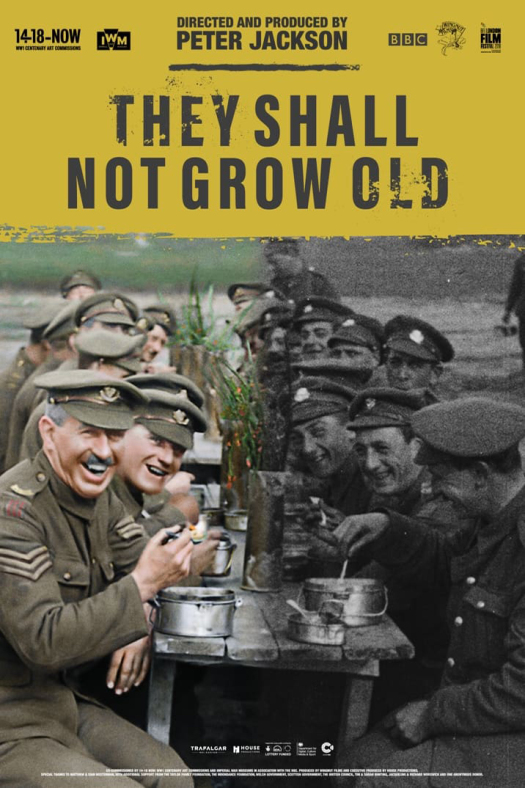
If you like history as much as old movies, Oscar-winning New Zealander Peter Jackson has a treat for you – THEY SHALL NOT GROW OLD, a World War I documentary utilizing 100+ year old footage from the Imperial War Museum (most of it never viewed outside there) to tell the story of the British Empire’s infantry during The Great War. Jackson was given access to hundreds of hours of actual film and audio and commissioned to create something “unique and original”, and with the aid of modern technology he certainly succeeded in his mission.

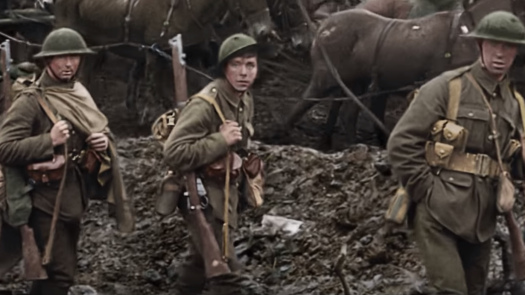
Jackson’s narrative is told through the eyes of the young men and boys (some as young as 15) as they go through enlistment and boot camp, training to kill the enemy, then follows them to the Western Front, where they encountered not only battles in the trenches, but dysentery, rats gnawing at their fallen comrades, lice…

View original post 343 more words

A Blast From The Past: Peter Cushing — A One Way Ticket To Hollywood


I’m not sure if you can be a true fan of horror (especially British horror) without loving Peter Cushing.

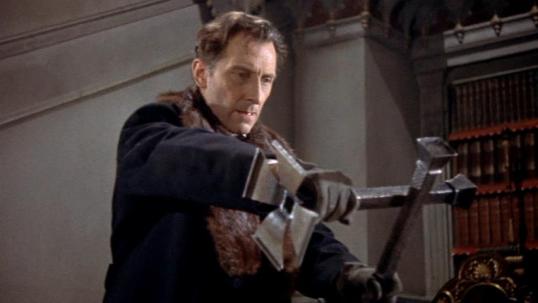
The actor played many roles over the course of his long career.  In fact, the first film in which he and Christopher Lee both appeared was not a horror film but instead Laurence Olivier’s 1948 production of Hamlet.  (They both also appeared in 1952’s Moulin Rouge.)  However, Cushing will probably always be best known for his Hammer roles and, of course, his villainous performance in Star Wars.  Peter Cushing was not only the virtuous Prof. Van Helsing but also the far less virtuous Baron Frankenstein.

According to almost every interview that I’ve read, Peter Cushing was a genuinely nice and professional person, one who didn’t personally care for horror films but who never took it personally when he was recognized for appearing in them.  Though they regularly played rivals on screen, he was close friends with Christopher Lee.  I once read an interview with Lee where he said that, decades later, he still hadn’t recovered from Cushing’s death in 1994.

Below, you’ll find a documentary from 1989.  It was called Peter Cushing — A One-Way Ticket To Hollywood.  It’s basically just Peter Cushing talking about his life and career for 49 minutes but it’s a charming little documentary.  Peter Cushing comes across as being very nice and very British.  He discusses not only his horror films but also his work in Star Wars and his performance as Winston Smith in a 1954 production of 1984.

It’s a nice documentary and I offer it up on Halloween as a tribute to one of horror’s gentlemen.

(Thank you to VintageTreats for uploading this!)

Film Review: Guerrilla: The Taking of Patty Hearst (dir by Robert Stone)


“Death to the fascist insect that preys upon the life of the people!”

— Patty “Tania” Hearst

2004’s Guerrilla is not the first movie that I’ve reviewed about the kidnapping of heiress Patty Hearst.  Previously, I took a look at Abduction, a grindhouse film that was released while Hearst was still missing, and 1988’s Patty Hearst, which was based on Hearst’s own book about her ordeal.  However, Guerrilla is different from those two films in that it’s a documentary and it features interviews with people who actually knew Patty and her kidnappers.

It’s a strange and complicated story, the type that you would probably be dismissed as implausible if not for the fact that it actually happened.  In 1973, Oakland school superintendent Marcus Foster was gunned down in a parking lot.  Because Foster was the first black man to held the position of superintendent, it was originally assumed that he had been gunned down by a racist paramilitary group.  However, a neo-Marxist group known as the Symbionese Liberation Army (SLA) soon took responsibility for the murder, claiming that Foster had been tried in a people’s court and sentenced to death for his crimes.  (Foster’s “crime” was apparently trying to introduce ID cards in Oakland schools.)

Who were the SLA?  They were a small group of self-styled revolutionaries.  Though their leader was a black, escaped convict named Donald DeFreeze, the other members of the SLA were white and largely middle class.  They enjoyed sending out portentous political announcements and they went out of their way to try to portray themselves as being a highly disciplined and regimented military organization.  Donald DeFreeze changed his name to “Field Marshal Cinque.”  According to the interviews in Guerrilla, most of their fellow radicals viewed the SLA as being a joke.  (One contemporary expresses his disappointment in meeting the SLA and discovering that they were all very boring and middle class.)  No one could understand the logic behind murdering Foster, who was viewed as being a progressive educator.

If not for what happened in the months after Foster’s murder, the SLA probably would have faded into the same obscurity that has swallowed up so many activist groups.  After two members of the group were arrested, the SLA retaliated by kidnapping Patty Hearst.

At the time that she was abducted, Patty Hearst was a nineteen year-old student at Berkeley.  She was also the granddaughter of William Randolph Hearst, the publishing magnate whose life famously inspired the film Citizen Kane.  With the entire world now watching, the SLA announced that Patty would be executed unless the Hearst family arranged for every poor person in California to receive $70 worth of food.  As is portrayed in cringe-inducing detail in the documentary, the Hearst family actually attempted to meet the SLA’s demands, just to watch the food distribution program descend into chaos.  As for the SLA, they were not impressed by the Hearst family’s effort.  Even more tellingly, Patty was not impressed.  In a recording sent to the press, Patty complained that her family hadn’t made enough of an effort and assured everyone that the SLA was treating her in accordance to international law.

Shortly afterwards, the SLA released another recording.  In this recording, Patty announced that she had been given the option of either returning to her family or joining the SLA.  She had decided to join the SLA and take the new name of Tania.  Soon, Patty Hearst was robbing banks and declaring “death to the fascist insect.”

Was Patty sincere in her conversion or was she brainwashed?  That’s the question that Guerrilla explores, while leaving it to the audience to decide for themselves what was actually going on in Patty’s mind.  Though Patty is not interviewed in the film, we do get to hear the recordings that she made during her time with the SLA.  We listen as she goes from being a sacred abductee to a self-declared “urban guerrilla.”  Listening to her dull, flat voice, you get the feeling that she didn’t have much of an individual identity before she was kidnapped and she had even less of one after she converts to the SLA cause.  When she talks about how much she loves the other members of the SLA, she sounds like an actress giving a bad audition.  Before she was kidnapped, she was a Hearst.  After she was kidnapped, she was a revolutionary.  At no point do you get the feeling that she was ever just Patty.

It’s an interesting story and Guerrilla is a fascinating documentary, one that explores how idealism can sometimes be just as dangerous as cynicism.  It’s also a film that explores how the kidnapping of an heiress received more attention than the murder of a teacher.  It’s interesting to note that, while the other members of the SLA eventually ended up either dead or in prison, Patty Hearst ended up getting a full pardon from Bill Clinton.  It’s hard not to feel that the story would have been much different if the SLA had kidnapped Jane Smith instead of Patty Hearst.

Here Are The 15 Semi-Finalists For The Best Documentary Oscar!


Yesterday, the Academy announced the 15 semi-finalists for the Best Documentary Feature Oscar.

I’ve seen quite  a few documentaries this year but I haven’t seen any of the films listed below.  Quite a few of them are on Netflix.  Abacus: Small Enough to Jail can be found on YouTube.  I have a feeling that An Inconvenient Sequel will win, just because Al Gore will probably trash Trump during his acceptance speech.

Anyway, here are the semi-finalists:

Abacus: Small Enough TO Jail,

Chasing Coral,

City of Ghosts,

Ex Libris — The New York Public Library,

Faces Places,

Human Flow,

Icarus,

An Inconvenient Sequel,

Jane,

LA 92,

Last Man in Aleppo,

Long Strange Trip,

One Of Us,

Strong Island,

Unrest


Cleaning out the DVR: Burn Motherf**ker, Burn! (dir by Sacha Jenkins)


(Lisa is currently in the process of cleaning out her DVR!  She has got over 170 movies to watch and she is determined to get it all done by the end of the year!  She recorded the 2017 documentary Burn Motherfucker, Burn! off of Showtime on April 22nd!)

I should note that the title of this film actually doesn’t contain any asterisks.  Burn, Motherf**ker Burn! may be how it was listed in the guide but the opening credits proudly and loudly proclaim: BURN MOTHERFUCKER, BURN!

It’s an appropriate title because there’s actually not a subtle moment to be found in Burn, Motherfucker, Burn!  Burn, Motherfucker Burn probably will not change anyone’s opinion about anything but that doesn’t really seem to be the film’s goal.  This is an angry and outspoken documentary, one that deals with the long history of conflict between the LAPD and the black community of Los Angeles.  Starting with cell phone footage of the 2015 killing of Charley Keunang before flashing back to the 1965 Watts riot and ending with the 1992 Los Angeles uprising, Burn, Motherfucker, Burn! is pure agitprop.

How you react to the documentary will largely depend on how you view race in America.  If you go into this film thinking that issues of police brutality and systemic racism are overstated, you’ll probably think Burn, Motherfucker Burn is one-sided propaganda.  If you go into the film thinking that America is still struggling to overcome the effects of systemic racism and that the police unfairly target minorities, Burn, Motherfucker Burn will confirm your every suspicion and might even inspire you to take a stand.  If the viewer doesn’t already agree with Burn, Motherfucker Burn‘s outlook, then Burn, Motherfucker Burn doesn’t have much use for that viewer.

I have to admit that I probably would have had a stronger reaction to Burn, Motherfucker Burn! if I hadn’t finally watched O.J.: Made In America a few weeks ago.  Quite a bit of the more infuriating footage used in Burn, Motherfucker Burn! — such as Bill Parker, the chief of the LAPD in the 60s, casually dismissing the concerns of the black community on a talk show — also appeared in O.J.: Made in America.  In fact, there’s very little in Burn, Motherfucker Burn! that wasn’t previously dealt with in the first two parts of the O.J. documentary.

That said, speaking as a self-confessed history nerd, there are a few interesting things to be learned from Burn, Motherfucker Burn.  For instance, before watching this documentary, I didn’t know that the infamous gangs of Los Angeles — which have been the subject of so many movies and tv shows — were started largely to provide neighborhoods with protection from the police.  The film shows how a vibrant artistic and cultural movement came about as a result of people rebelling against endless oppression.  For me, those were the most interesting parts of the film.

Charlie Beck, the current LAPD chief, is also interviewed.  He suggests that, as long as everyone does what they’re told to do, no one should worry about a thing.  He doesn’t bother to mention what Charley Keunang did to get gunned down at the start of the documentary.

Film Review: Portrait of Jason (dir by Shirley Clarke)


The 1967 film, Portrait of Jason, is one of the most fascinating documentaries that I’ve ever watched.  It’s also one of the most exhausting.

Directed by Shirley Clarke and filmed over the course of 12 hours in Clarke’s apartment, Portrait of Jason is, at its most basic, an interview with a self-described “hustler” who goes by the name of Jason Holliday. Holliday starts things off by explaining that he was born Aaron Payne but that he was renamed Jason Holliday by a friend of his in San Francisco.

“Jason Holliday was created in San Francisco,” he explains, “and San Francisco is a place to be created.”

The entire film is Jason either standing or sitting in front of a fireplace and talking about his life as a gay black man in America in the 1960s.  (Occasionally, voices are heard off camera, asking him questions.)  From the start of the film, it’s obvious that Jason is a great talker.  He has a way with words and it’s almost impossible not to get swept up in his stories, even if they are frequently hard to follow and sometimes contradict themselves.  As Holliday admits from the start, he is a man playing a role.  Over the course of the film, he smokes, he drinks, and he gets stoned.  He talks about being both a cabaret performer and a prostitute.  He wraps a feather boa around his neck and, when he sings, he takes on a totally different persona.  In fact, it can be argued that the entire film is about Jason taking on different personas.  Over the course of his marathon interview, he is sometimes happy, sometimes angry, sometimes sad, sometimes manipulative, and sometimes defiantly honest.  He admits to using people but, at the same time, when he suddenly very coldly announces, “I can make you feel like the most desirable human being on Earth,” you can’t held but admire his honesty.

In the beginning, Jason laughs.  Jason’s high-pitched giggle almost becomes a separate character, we hear it so often.  He uses the laugh in the way that some people use a period to end a sentence.  The laugh comes out when a story is over.  And yet, over the course of the film, we come to realize that the laugh is Jason’s left defense.  Whenever he feels that the story is getting too personal or that he might be revealing too much of what’s underneath the surface, Jason laughs.  The laugh is what Jason Holliday uses to keep Aaron Payne from coming out.

And yet, as the film progresses, the laugh is heard less and less.  Drunk and stoned, Jason starts to let down his defenses just a little bit.  The off-screen voices, which originally had been so encouraging of Jason, starts to become vaguely hostile.  They ask him about specific instances that Jason has used all of the unseen people in the room.  And Jason starts to change.  His tone becomes sarcastic.  When he breaks down crying, the camera gives us a close-up of his face and it’s hard to watch.  You realize not only how exhausted Jason is but also how exhausted you are as well.  And yet, at the same time, you wonder if Jason is really crying or if this is just a part of his extended performance.

To be honest, this is one of those documentaries that raises all sorts of ethical questions.  Jason’s a fascinating character but it’s obvious that he was set up by the filmmakers.  Much as the film will leave you with mixed feelings about Jason Holliday, it will also leave you with mixed feelings about the people who got him drunk and then filmed his subsequent breakdown.

At the end of the film, we hear Shirley Clarke telling Jason, in almost comforting tone, “That’s it, that’s the end.”  When I first saw this film, I was happy to hear that it was over because I didn’t how much more of Jason’s breakdown I could take.  However, at the same time, I found myself looking forward to the next time that I would watch Portrait of Jason so that I could search for more clues as to just who Jason Holliday actually was.

Long thought to be a lost film, Portrait of Jason occasionally shows up on TCM Underground.  Keep an eye out for it.  It’s not always an easy film to watch but it’s worth the effort.