October Hacks: Wrong Turn (dir by Rob Schmidt)


Poor West Virginia!

Seriously, I’ve been to West Virginia.  It’s a beautiful state and the majority of the people that I met while I was there were just lovely.  And before anyone trots out all the usual stereotypes about rural communities, let me say that one of the nicest used book store that I’ve ever been to was in West Virginia.  It’s a nice state, one that feels like a throwback to a less cynical universe.  Even all of the bridges and the streets named after the loathsome Robert Byrd added to the lovely quaintness of the place.

And yet, when it comes to the entertainment industry, West Virginia is rarely portrayed in a positive light.  The coastal elite has never had much use for West Virginia or the surrounding states and that’s something that comes out in the films and television shows that are made in New York and California.  Whenever anyone says that they’re from West Virginia in a movie or a television show, you can be sure that they’re either going to be a meth cook or a villainous redneck.  West Virginia is one of those regions that’s never given much respect in Hollywood and that’s a shame.

Take Wrong Turn, for instance.  First released in 2003, the original Wrong Turn taught an entire generation that West Virginia was full of cannibals and blood farmers.  If you’re going to go for a drive in the wilderness of West Virginia, this film tells us, keep an eye out for barb wire booby traps.  If you’re going to hiking in the mountains, notify your next of kin because you probably won’t be coming back.  Wrong Turn follows a group of friends as they are tracked by a family of cannibal hillbillies and the main message seems to be, “For the love of God, stay out of Appalachia!”

(When I first started writing for this blog, I caused a mini-controversy when I said that no one would pay good money to see a film called The Vermont Chainsaw Massacre.  My point was that Texas has a reputation, albeit one that has more to do with fevered imaginings of out-of-staters than anything rooted in reality, that made it the only place where that film could really be effectively set.  The same is true of Wrong Turn.  It’s a story that people wouldn’t buy if it was happening anywhere other than in Appalachia.  Nobody would care about cannibals living in Minnesota, for instance.)

West Virginia slander aside, the original Wrong Turn holds up well.  It’s a slasher film from the era right before slasher films started taking themselves so seriously.  It’s a throwback to the rural horror films of the 70s, with an attractive cast getting picked off in various gruesome ways.  The cannibals are frightening and the victims are all likable without being so likable that you can’t handle seeing them killed off.  Jeremy Sisto and Lindy Booth both bring some comic relief to the film before their characters are dispatched.  Desmond Harrington is a sold-enough lead.  When I first saw Wrong Turn, my main reaction was that Eliza Dushku kicked ass and that was still my reactions when I rewatched it.  The film is bloody, shameless, and fully willing to give the audience what it wants without scolding them for it.  In short, it’s a perfectly fun slasher film and, watching it, it’s hard not to miss the era before horror films started taking themselves so damn seriously.

Wrong Turn‘s a fun movie.  But West Virginia is a lovely state and that should never be forgotten!


Horror Film Review: Ghost Ship (dir by Steve Beck)


Way back when we first started this year’s horrorthon, Arleigh shared a horror scene that he loved.  That scene was the opening few minutes of the 2002 horror-at-sea film, Ghost Ship.

That scene featured a few dozen wealthy cruise ship passengers all getting bisected by a thin wire cord.  While a young girl named Kate (Emily Browning) watches, everyone on the ship’s dance floor literally falls to pieces.  Torsos slip off of legs.  Bodies split in half.  The captain’s head literally splits in two.  While gallons of blood gush everywhere, people vainly try to reattach their limbs.  Actually, some of them can’t even figure out which limb belongs to them.  By the time everyone’s collapsed, there’s a lot of arms and legs to sort through.

In short, it’s an absolute mess.  I wouldn’t want to be the person assigned to clean up after all that.

It’s also a rather brilliant opening, one that only takes a minute to go from romance and sophistication to bloody dismemberment.  It’s definitely the one moment that everyone remembers about Ghost Ship, which is a bit of a problem because, once that scene is done, there’s still 85 minutes of film to sit through.  Ghost Ship‘s opening is so shocking and visceral that there’s no way that the rest of the film can live up to it.

As for the rest of the film, it deals with a boat salvage crew.  Gabriel Byrne is Murphy, the captain.  Julianne Margulies is Maureen Epps, whose name might as well be Ellen Ripley.  Ron Eldard is Dodge, who is in love with Epps.  And then there’s Karl Urban, Isiah Washington, and Alex Dimitriades, who are all playing characters who you know are going to be doomed as soon as you see them.  When they’re told by a pilot named Jack Ferriman (Desmond Harrington) that he’s spotted a ghost ship in international waters, they set out to claim it for themselves.

Of course, what Jack has spotted is the same cruise ship where, forty years before, everyone was chopped in half.  After Murphy, Epps, and the crew board the ship, they discover a large amount of gold.  They also end up seeing a lot of ghosts, including the young girl from the start of the movie.  To their credit, the crew decides to leave the ship as quickly as they can.  Unfortunately, after their tugboat explodes, escape appears to be impossible and it becomes obvious that they have been lured to the cruise ship for a very specific purpose.

The film encourages us to wonder what the ship wants from the salvage crew but the answer to that question is never really in doubt.  For that matter, it’s not really a shock when it turns out that one member of the boarding party isn’t what he claims to be.  Despite being a bit predictable, Ghost Ship isn’t a bad film.  It has a reputation for being disappointing but actually it’s an atmospheric and competently directed horror film.  Though the characters are all thinly drawn, the talented cast does their best to try to bring them to life.  If the film ultimately doesn’t seem to work as well as it should, it’s largely because nothing that follows can match the power of that opening.  You watching the film waiting for a scene that’ll match that opening scene and when it never comes, it’s hard not to be disappointed.


Horror Scenes I Love: Ghost Ship


Ghost Shp

Ghost Ship came out in 2002 and it was part of that very brief wave of Dark Castle Entertainment which began in 1999 with their remake of House On Haunted Hill and then petered out with 2005’s Gothika.

While not one of the better horror films to come out during the first decade of the new millennium, Ghost Ship was still entertaining enough to become a sort of guilty pleasure for horror aficionados.

Part of why some horror fans seem to enjoy this film, mediocre as it is through much of it’s running time, is the opening scene which takes on a grand guignol meets the Road Runner brilliance in its execution.

Just take a gander for yourself and try not to either vomit in disgust or smile gleefully at such a ludicrous gory sequence.

Playing Catch-Up: The Neon Demon (dir by Nicholas Winding Refn)


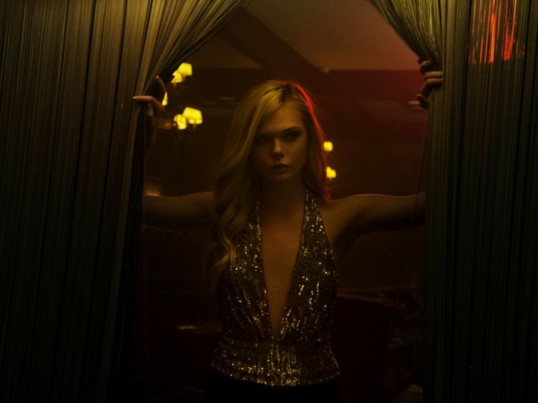
the-neon-demon-elle-fanning-900x0-c-default

What to say about The Neon Demon?

See, this is a film that you have to be careful about discussing.  From the moment that it premiered at Cannes last year, The Neon Demon was the love-it-or-hate-it film of 2016.

Those of us that loved The Neon Demon really, really loved it.

And those that hated it — well, let’s just say that they really, really hated it.  They complained that The Neon Demon was exploitive.  They found the subject matter to be sordid.  They accused the movie of being both pretentious and ultimately pointless.  The plot made no sense, they complained.  The film was overlong and featured about a handful of false endings.  It almost seemed as if Nicholas Winding Refn was taunting anyone who expected him to make a typical melodrama about life in Hollywood.

All of that is true but, honestly, what were these people expecting?  As a result of the success of Drive, many people have made the mistake of thinking that Nicholas Winding Refn is a mainstream director.  He’s not.  Refn is a provocateur.  He is a director who often dares his audience to walk away.  In The Neon Demon, each false ending challenges the audience’s assumption about how a story — any story — should end.  Some people, I’m sure, would complain that Refn is all style and no substance.  However, The Neon Demon is about a world where one’s worth is determined by their style.  Style is substance.  The world of The Neon Demon may be empty but the film is not.

For all the debate about the film’s deeper themes (or lack of them), The Neon Demon‘s story is a fairly simple and deliberately familiar one.  A teenage runaway comes to Hollywood, finds some success as a model, and discovers that the world of show business is not as romantic as she may have initially believed.  When we first see Jesse (Elle Fanning), she’s posing for her boyfriend and she’s pretending to be dead.  Death, beauty, and sex go hand-in-hand in The Neon Demon.

Jesse’s an interesting character, one who constantly challenges our assumptions.  At first, Jesse seems like a typical innocent.  She’s a virgin who is so introverted that she can barely carry on a conversation.  She lives in a cheap apartment, under the menacing gaze of her sleazy landlord (Keanu Reeves, having fun playing his skeezy character).  She has a boyfriend and on their dates, she tells him about how she’s always dreamed of being a star.  It’s only as the film progresses that you start to realize how little you actually know about Jesse.  That she’s a runway is implied early on.  We never learn what led to her running away.  In fact, we learn next to nothing about who she was before she appeared in Los Angeles.

In Los Angeles, Jesse is everything that the fashion industry values.  She’s beautiful and, even more importantly, she’s young.  We watch as Jesse goes to a casting call and we’re struck by the blank-look on her face.  We wonder if there’s anything going on underneath the surface.  Jesse has hallucinations, seeing a shining triangle and kissing her own reflection.  Someone asks her what it’s like to be desired.  She replies, “It’s everything.”

Jesse befriends Ruby (Jena Malone), a makeup artist who lives in a gigantic mansion, overlooking an empty swimming pool.  When Ruby isn’t working in the fashion industry, she works at a morgue, applying makeup to corpses and occasionally engaging in necrophilia.  She makes the dead beautiful so that they can be buried looking their best.  Again, beauty and death are intertwined throughout The Neon Demon.

Ruby has two other friends, Gigi (Bella Heathcote) and Sarah (Abbey Lee).  They’re both models, struggling to maintain their careers even as younger models, like Jesse, continue to flood into Los Angeles.  Gigi has had so much cosmetic surgery that none of her original features remain.  Gigi is neurotic and fearful.  Sarah, on the other hand, is confident and sarcastic.  When asked what she did the last time another model screwed her out of a job, Sarah calmly replies, “I ate her.”

Sarah isn’t necessarily joking either.  Without giving too much away, The Neon Demon features, among other things, a character eating an eyeball that another character has just thrown up.  Not surprisingly for a Refn film, there’s a lot of blood in The Neon Demon.  It’s a film that opens with fake blood and ends with very real blood.

Combining the visual sense of Dario Argento with the thematic concerns of Jean Rollin, The Neon Demon is a triumph of pure style.  The visuals are so strong that it’s impossible to look away, even when the film’s themes are deliberately obscure.  The Neon Demon is a surreal journey into the dark side of Hollywood, a mixture of ennui, alienation, decadence, and sacrifice.  It may not always make sense but it’s always fascinating to watch.

Personally, I think The Neon Demon would make a great double feature with La La Land.  Two triumphs of style, two very different views of Los Angeles.