The Films of 2025: Happy Gilmore 2 (dir by Kyle Newacheck)


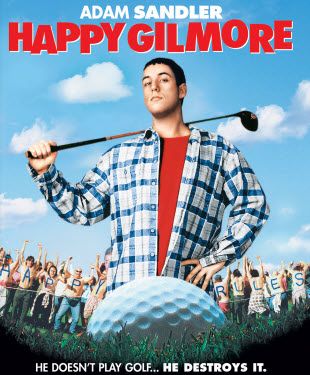
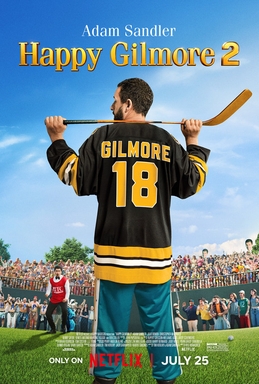
I love 1996’s Happy Gilmore and, over the past few months, I have very much been looking forward to the release of the long-delayed sequel, Happy Gilmore 2.  Still, I was a bit concerned when I opened the film on Netflix and discovered that the sequel had a nearly two-hour running time.  (The original clocked in at an efficient and fast-paced 90 minutes.)  Comedy is all about timing and, in general, shorter is funnier.  I know that Judd Apatow and Adam McKay might disagree with me on that but let’s be honest.  For all of the acclaim that it was met with, when was the last time you actually felt any desire to rewatch The King of Staten Island?  For that matter, if you have to pick between Anchorman or Anchorman 2, which are you going to pick?  The 90 minute original or the sequel that takes more than two hours to tell essentially the same story?

Having now watched the film, I can say that Happy Gilmore 2 does run a bit too long.  There are a few sequences that could have been trimmed without hurting the film.  I can also say that I thoroughly enjoyed the film.  I laughed more often than not.  It’s a funny film but it’s also a surprisingly touching one.

Taking place 29 years after the first film, Happy Gilmore 2 features an older and slightly more mature Happy.  It also features an older and slightly more mature Adam Sandler and, to its credit, the film acknowledges that.  It doesn’t try to convince us that Sandler and Gilmore are still the young hell-raisers that they once were.  (Happy’s Happy Place has changed considerably.)  I’ve often written that there are two Adam Sandlers.  There’s the youngish Sandler who made silly and often stupid films where he basically just hung out with his friends and didn’t seem to put much effort into anything.  That’s the Sandler who has won multiple Razzie awards.  And then there’s the older and wiser Adam Sandler, the sad-eyed character actor who gives sensitive performances as world-weary characters.  This is the Adam Sandler who seems to be overdue for an Oscar nomination.  If an alien came to Earth and only watched Adam Sandler’s serious films, they would probably think he was one our most-honored actors.  While Happy Gilmore 2 is definitely a comedy, it still features quite a bit more of the serious Sandler than I was expecting.

At the start of the movie, Happy is not in a happy place.  His grandmother has passed away.  His wife, Virginia, was killed by an errant tee shot.  He has four rambunctious sons and a daughter, Vienna (played by Sunny Sandler, who was so good in You Are So Not Invited To My Bat Mitzvah).  After Virginia’s death, Happy gave up golf.  He lost his money.  He lost his grandmother’s house.  Now, he’s working in a grocery store and he’s an almost forgotten figure.  He’s also an alcoholic, keeping bottles of liquor hidden around the house.  (A tiny liquor bottle is hidden in the cuckoo clock.)  And while this film is certainly not Uncut Gems or even The Meyerowitz Stories, Sandler still does a good job of capturing the reality of Happy’s depression.  There’s a true sense of melancholy running through the film’s first hour, as Happy returns to golf to try to make enough money to pay for Vienna to attend a prestigious dance academy.  The second hour, in which Happy leads a team of pro golfers against a team of “extreme” athletes is far more goofier but Happy’s love for his family is a theme that runs through the entire film.

Aging is the other theme that runs through the film.   Forced to play with three younger players (including Eric Andre and Margaret Qualley) at a local golf course, the rusty Happy grimaces when he hears one of them say, “Is he trying to do the Happy Gilmore swing?”  When Happy rejoins the PGA, he discovers that all of the younger players now hit the ball as hard as he used to.  An obnoxious tech bro (Benny Safdie) wants to start a new, extreme golf league, one that will “continue the revolution” that Happy started.  Happy finds himself defending traditional golf and it’s an acknowledgement that both Gilmore and Adam Sandler have grown up and have come to appreciate that not everything needs to change.  Sometimes, you just want to play a nice round of golf on a pretty course without having to deal with the sensory overload of the 2020s.

It’s a funny movie.  Even when he’s playing it straight, Sandler still knows how to deliver a funny line.  Ben Stiller returns as Hal L., who is now an addiction recovery specialist.  (His techniques include ordering people to wash his car.)  Christopher McDonald also returns as Shooter McGavin, having escaped from a mental asylum and now fighting, alongside Happy, to save the game that they both love.  As someone who always felt that Shooter kind of had every right to be upset during the first film, I was happy to see him get a bit of redemption.  Several professional golfers appear as themselves.  A running joke about Scottie Scheffler getting arrested and then forcing all of his cellmates to watch golf made me laugh a lot more than I was expecting it too.

The sequel is full of shout-outs to the first film.  A fight in a cemetery reveals that everyone who died during and after the first film just happens to have a gravestone and it was actually kind of a nice tribute.  (Even the “Get Me Out Of Here” Lady gets a headstone.)  It’s a sequel that truly appreciates and values the legacy and the fans of the first film.  It’s also a sequel that seems to truly love the game of golf, which is not necessarily something that could be said about the first film.

Happy Gilmore 2 is a worthy sequel, even if it is a bit long.  It made me laugh but, at the same time, it was hard not to be touched by the obvious love that Happy had for his family and that they had for him.  (It didn’t hurt that Happy’s daughter was played by Sandler’s daughter.)  In the first film, Happy played golf for his grandmother.  In the second film, he returns to the game for his daughter.  It’s all about family, as Adam Sandler’s unexpectedly heartfelt performance makes clear.
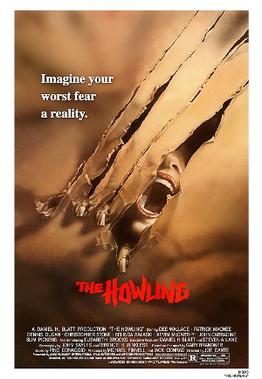
Horror Film Review: The Howling (dir by Joe Dante)


The 1981 film, The Howling, takes place at The Colony.

The Colony is a lovely place, a nice resort out in the middle of the countryside.  It’s a place that celebrity therapist George Waggener (Patrick Macnee) sends his clients so that they can recover from trauma.  It’s a bit of a grown-up version of the ranch to which Dr. Phil used to send juvenile delinquents.  Of course, the Colony is full of adults and they’re an eccentric bunch.  I mean, one of them — named Erle Kenton — is actually played by John Carradine!  That’s just how eccentric the place is.  Sheriff Sam Newfield (Slim Pickens) keeps an eye on the place but everyone knows that there’s nothing to worry about when it comes to The Colony.  Dr. Waggner does good work.

Karen White (Dee Wallace) is a Los Angeles news anchor who was held hostage by a serial killer named Eddie Quist (Robert Picardo).  While she was with Eddie, she was forced to not only watch videos of Eddie’s crimes but she also saw something happen with Eddie that terrified her to such an extent that she has blocked it from her mind.  Karen was rescued by the police but she is haunted by nightmares.  Dr. Waggner arranges for Karen and her husband, Bill Neill (Christopher Stone, who was married to Dee Wallace when they co-starred in this film), to spend some time at the Colony.

Bill loves the Colony, especially after he attracts the eye of Marsha (Elisabeth Brooks), the resort’s resident seductress.  Karen, however, is less enamored of the place.  The Colony feels off to her and she’s not happy about the howling in the distance or the fact that Bill has suddenly started to grow distant from her.  Could it be that The Colony is actually crawling with werewolves and that Bill has become one of them?  (It’s totally possible and, to The Howling‘s credit, it doesn’t waste any time letting us know that.)  Karen’s friend, Terry Fisher (Belinda Balanski), and her boyfriend, Chris Halloran (Dennis Dugan), do some research of their own into Eddie Quist, The Colony, and whether or not werewolves exists and they meet a helpful bookstore owner named Walter Paisley (Dick Miller).

To understand the approach that director Joe Dante and screenwriter John Sayles take to The Howling, one needs to only consider the names of some of the characters.  George Waggner.  Bill Neill. Terry (which can be short for Terence) Fisher.  Fred (or is that Freddie) Francis.  Erle Kenton.  Sam Newfield.  Jerry Warren.  All of these characters are named after horror film directors.  This is the type of werewolf film where Chris Halloran has a copy of The Three Little Pigs sitting on his desk.  Veteran actors like Kevin McCarthy, John Carradine, Slim Pickens, and Kenneth Tobey show up in small roles.  Roger Corman mainstay Dick Miller plays yet another character named Walter Paisley and he kicks Forrest J. Ackerman out of his bookstore.  Roger Corman himself plays a man making a phone call.  After a werewolf is shot on live TV, the program immediately cuts to a dog food commercial and we see a blank-faced child telling his unconcerned parents that someone just turned into a wolf.  The Howling was made by people who obviously love B-horror and that love is present in every frame of the film.

Like Dante’s Piranha, The Howling is a film with a sense of humor but it’s not a comedy.  The werewolves are still impressive, even forty-two years after the film was first released.  The character of Eddie Quist (“I’m going to give you a piece of my mind”) is a terrifying monster and the sight of his signature smiley face will fill you with dread, especially when it shows up in a place where it really shouldn’t be.  The film cynically ends on a note of noble sacrifice that will apparently not make much difference, with the suggestion being that human beings are either too distracted or too jaded to realize that there are monsters among them.  The Howling is a fast-paced and well-directed homage to B-horror and it’s still terrifically entertaining.

Live Tweet Alert: Join #FridayNightFlix for Happy Gilmore!


As some of our regular readers undoubtedly know, I am involved in a few weekly live tweets on twitter.  I host #FridayNightFlix every Friday, I co-host #ScarySocial on Saturday, and I am one of the five hosts of #MondayActionMovie!  Every week, we get together.  We watch a movie.  We tweet our way through it.

Tonight, at 10 pm et, #FridayNightFlix has got 1996’s Happy Gilmore!

How much do you like Shooter McGavin?

If you want to join us this Friday, just hop onto twitter, start the movie at 10 pm et, and use the #FridayNightFlix hashtag!  It’s a friendly group and welcoming of newcomers so don’t be shy.

Happy Gilmore is available on Prime!  See you there!

Great Moments In Television History: Freedom’s Last Stand


I have recently started rewatching Hill Street Blues on Hulu and there are two things I can say for sure about the characters who appeared on this seminal cop show.

Anyone who thinks that anything in the world can be defined as simply being all-good or all-bad is due for a rude awakening.

Anyone who spends any time with Detective Mick Belker is destined to die on a sidewalk.

Unfortunately, Captain Freedom made both of those mistakes.

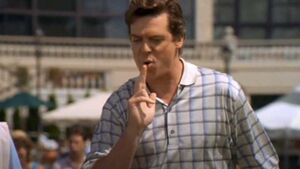
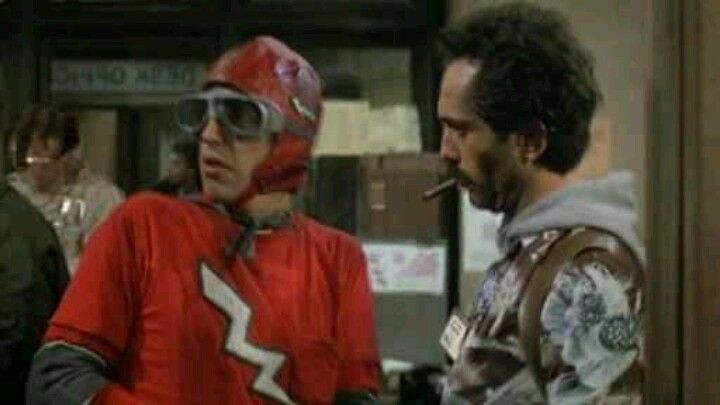
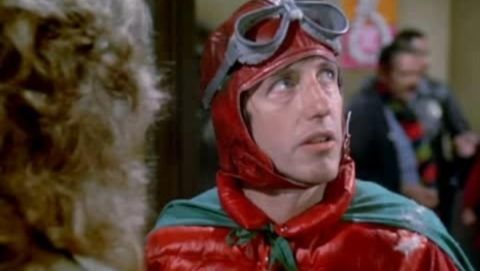
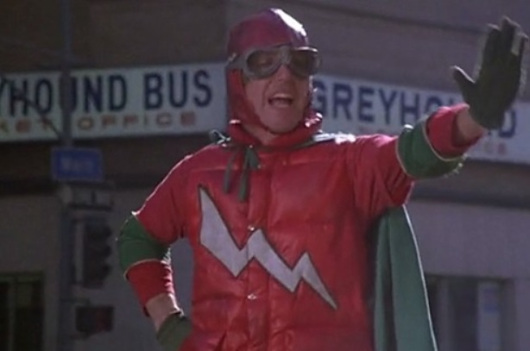
Played by Dennis Dugan, Captain Freedom appeared on four episodes during the second season of Hill Street Blues.  He was a goofy and friendly man who dressed in a red lycra suit with green shorts and Chuck Taylor running shoes.  He believed that he had super powers and would jump in front of muggers and shout, “Stop this criminal act, or I shall be forced to use violence!”

As always happened whenever an eccentric appeared on the show, he spent three episodes annoying Bruce Weitz’s Detective Belker, a streetwise detective who always looked filthy and who often growled at criminals.  Belker told Captain Freedom to stop following him and to stop trying to help.  Captain Freedom said that it was his duty to protect Belker and keep the city safe.

During Freedom’s Last Stand, the 11th episode of the second season of Hill Street Blues (aired on January 28th, 1982), Captain Freedom’s dedication to keeping the city safe got him killed.  In the middle of a dramatic shoot out between robbers and some of the Hill’s best cops, Captain Freedom jumped on top of a car and shouted, “Stop this criminal act!”  The shocked robber responded by shooting Captain Freedom in the chest.

The show pulled out all the stops for the death of Captain Freedom.  Not only did he get shot in slow motion, but he even got a monologue before finally dying of his wounds.  He gave Belker his gloves, explaining that all of his powers were stored in the gloves.  Belker sobbed as the Captain went on to become the first of many Belker acquaintances to die on a sidewalk.

After his death, Captain Freedom was never mentioned again and Dennis Dugan went to become a comedy director but the character made an undeniable impact.  He only appeared in four episodes but Captain Freedom is better remembered than some of the show’s regulars.  Few people can tell you who Ken Olin played for three seasons (Det. Harry Garibaldi) but anyone who has binged through the early seasons of Hill Street Blues remembers Captain Freedom.  He was someone to whom everyone can relate.  Who doesn’t want to be a super hero?  Who doesn’t want to stop evil doers and make the streets safe again?  His death was the show’s loss of innocence.  If even the likable and funny Captain Freedom can die, than anyone can die.

This Halloween, pour one out for Captain Freedom, the man who tried to make his costume a reality.  Evildoers beware!

Don’t try this at home.

Previous Great Moments In Television History:

  1. Planet of the Apes The TV Series
  2. Lonely Water
  3. Ghostwatch Traumatizes The UK
  4. Frasier Meets The Candidate
  5. The Autons Terrify The UK

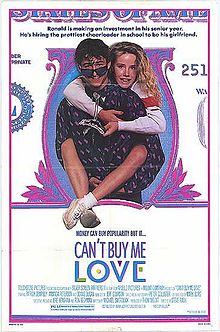
Back to School Part II #24: Can’t Buy Me Love (dir by Steve Rash)


220px-cant_buy_me_love_movie_poster

For some reason, the 1987 comedy Can’t Buy Me Love is really beloved by clickbait headline writers.  I’ve lost track of the number of times that I’ve seen headlines like “Why We Still Love Can’t Buy My Love” or “See What The Cast Of Can’t Buy Me Love Looks Like Today!”

Why is it that the worst movies always seem to have the most rabid fan bases?  Actually, to be fair, Can’t Buy Me Love is not one of the worst movies of all time.  I watched it on Netflix a few nights ago and it wasn’t terrible.  But, at the same time, it was hardly the classic that so many articles have made it out to be.  Maybe the people writing about Can’t Buy Me Love are viewing it through the lens of nostalgia.  Who knows?  Maybe my future children will think I’m a weirdo for loving Easy A.

(They better not!  Easy A is the best!)

Anyway, Can’t Buy Me Love takes place in the same upper class suburb in which all teen films from the 80s take place.  Nerdy Ronald Miller (Patrick Dempsey) has spent the summer mowing lawns and he’s raised enough money that he can finally afford to buy a super telescope.  However, as Ronald is walking through the mall, he sees the girl that he’s been crushing on, Cindy Mancini (Amanda Peterson).  Disobeying her mother, Cindy borrowed a suede outfit without asking.  She wore it to a party, the outfit got ruined, and now Cindy desperately needs a replacement.  The leads to Ronald getting an idea.  Who needs a telescope when he can use his money to pay Cindy to be his girlfriend for a month?  Cindy can buy a new outfit and Ronald can date the most popular girl in school and become popular himself!

School begins and Ronald’s plan seems to work.  With Cindy’s help, Ronald goes from being a nottie to being a hottie!  (Yes, that’s a reference to the infamous Paris Hilton film from 2008, The Hottie and the Nottie.)  Of course, it’s a very 80s transformation.  Ronald learns about the importance of sungalsses, vests, and going sleeveless.  Along the way, Cindy falls in love with Ronald and comes to realize that her friends are all a bunch of followers.  When Ronald starts to do a spastic dance, Cindy can only watch in shock as all of her friends starts to the same dance, convinced that it has to be cool if Ronald is doing it!

Meanwhile, Ronald changes.  Being popular goes to his head.  He rejects his old friends.  He becomes a jerk.  It’s only when he discovers that his oldest friend, Kenneth (Courtney Gains, who appears in hundreds of these films), is being targeted by the popular kids that Ronald is forced to confront the type of person he has become and hopefully realize that you can’t buy love…

It’s always weird to see Patrick Dempsey in these old high school movies.  Some of that is because he was so scrawny that it’s hard to believe that he’s the same actor who made McDreamy into a household word.  Add to that, Patrick Dempsey is a good actor now.  Judging from this film, he wasn’t necessarily a good actor in the 80s.  At times, Dempsey seems to be trying so hard that it’s actually uncomfortable to watch.  Amanda Peterson, who tragically passed away last year, is a lot more natural as Cindy.

Anyway, Can’t Buy Me Love was apparently a huge hit back when it was released and it appears that a lot of people have good memories of watching it.  I thought it was kind of bland and poorly acted.  I’ll stick with Easy A.