Until 1954’s DRUM BEAT, Charles Bronson had been billed on screen as Charles Buchinsky. He then proceeded to steal the film right out from under star Alan Ladd. Bronson’s powerful performance as renegade Modoc indian Captain Jack is an early sign of Bronson’s immense talent and charisma.
Enjoy this action-packed clip from Delmer Davis’ excellent western, and happy 104th birthday, Charles Bronson!
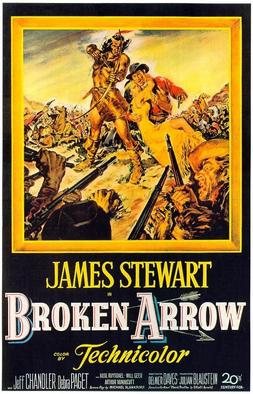
The 1950 film, BrokenArrow, takes place in the years following the Civil War.
Having survived the war, frontier scout Tom Jeffords (James Stewart) just wants to get away from his fellow countrymen for a while. During the Civil War, Jeffords saw the worst that humanity had to offer and the experience has left him cynical about the idea of bringing civilization to the American frontier. Tom just wants to be left alone. Still, when he comes across a 14 year-old Apache who has been shot in the back, Tom stops to help. Though wounded, the Apache still tries to attack him. He’s learned not to trust the white man. BrokenArrow is a film that suggests that he has good reason not to. Indeed, BrokenArrow was one of the first major Hollywood productions to attempt to treat the American Indians with sympathy and fairness.
Tom saves the Apache’s life and reunites him with his tribe. When the Apaches attack and kill a group of nearby gold prospectors, they allow Tom to live but they warn him to stay out of their territory. However, circumstances make it impossible for Tom to do that. When Tom arrives in Tucson, the citizens are incredulous that he allowed the Apache child to live. When Tom learns the Apache language and customs and marries an Apache woman named Sonseeahry (Debra Paget), it causes the other whites to distrust him even more. However, it is Tom’s eventual friendship with the Apache chief Cochise (Jeff Chandler) that eventually lands Tom in the middle of the conflict between the Apaches who want to preserve their way of life and the white men who want their land.
BrokenArrow is a well-intentioned film, in the way that mildly liberal films from the 50s tended to be. The U.S. government and its citizens are criticized for breaking their promises and their treaties to the Apache but the film’s ultimate message is one of compromise and understanding. The bigoted whites may be the villains but then again, so is Geronimo (Jay Silverheels) for refusing to accept Cochise’s desire for peace. Cochise is the film’s hero specifically because he calls for setting aside differences and living in peace with the white man, despite his own distrust of their leaders. The majority of the extras were Apache, though Neither Jeff Chandler nor Debra Paget were of Native descent. Both of them give good performances that largely avoid the stereotypes of the time. Chandler received his only Oscar nomination, for Best Supporting Actor, for his performance in this film.
That said, the unnominated Jimmy Stewart dominates the film and that’s not really surprising. (It should be noted that, while Stewart was not nominated for this film, he was nominated for his performance in Harvey, that same year.) Stewart may have first found fame as the happy and go-lucky face of Middle America but his experiences in World War II left a definite mark on him. He returned from the war a much more serious figure and every character that he played (even the lovable Elwood in Harvey) had more than a hint of melancholy to him. Stewart plays Tom as being a troubled soul, someone who is still struggling to come to terms with the destruction and cruelty that he saw during the Civil War. There’s an authenticity to Stewart’s performance, leaving little doubt that he understood exactly what Tom was going through. BrokenArrow ends on a note of compromise and racial harmony but it’s a sad film because we know what waits in the future for Cochise and his people. Tom Jeffords fights to bring peace to the frontier but it’s a peace that won’t last. And, as played by Stewart, Tom seems to understand that better than anyone.
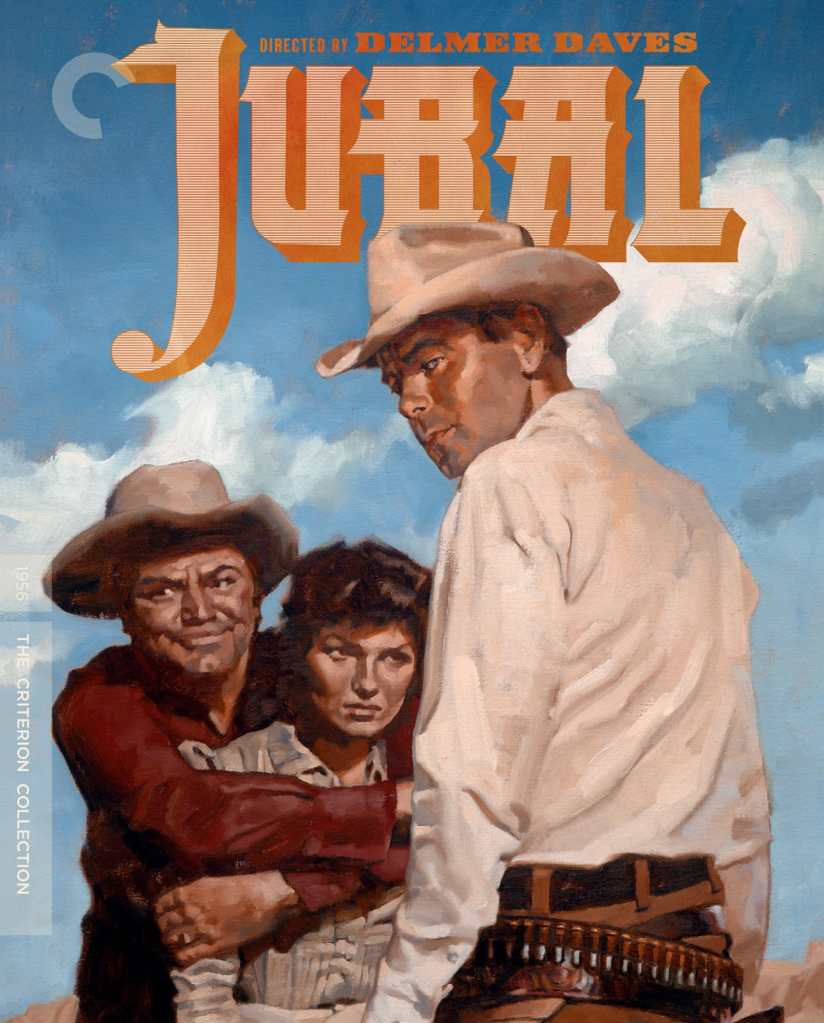
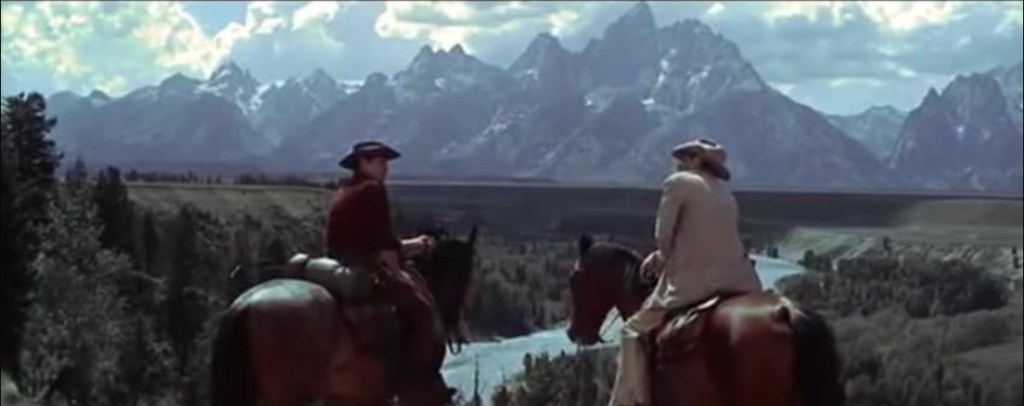
JUBAL (1956) is one of my favorite westerns. It’s set in the Grand Tetons and it stars some of my all time favorite actors, namely Bronson, Ford and Steiger. On what would have been his 109th birthday, I just wanted to take a moment to appreciate Glenn Ford. I visited the Tetons a couple of summers ago and I thought of these great actors often! Enjoy this scene from these icons of cinema!
In 2023, our family (parents, siblings, kids, nieces & nephews, everybody) took a vacation to the Grand Teton National Park. It was one of the most enjoyable vacations I’ve ever been on. Of course, this dad got on his family’s nerves by continuously referencing the film JUBAL since it was filmed with the Grand Tetons in the background. I just kept thinking about the fact that we were hanging out near a place where Glenn Ford, Ernest Borgnine, Rod Steiger, and Charles Bronson worked on one of my favorite westerns. For good measure I mentioned SHANE a few times as well since it was also filmed there.
Nice guy rancher Shep Horgan (Ernest Borgnine) finds Jubal Troop (Glenn Ford) injured and at the point of death. He takes Jubal back to his ranch and they nurse him back to health. The two men hit it off and soon Shep asks Jubal to be his foreman. This doesn’t set well at all with the duplicitous Pinky (Rod Steiger) who’s used to being in charge. It sets too well with Shep’s beautiful wife Mae (Valerie French) who takes the wrong kind of liking to Jubal, a habit that seems to keep rearing its head with the lonely lady. This eventually turns into a powder keg of betrayal, lies & misunderstandings. Charles Bronson has a small, but pivotal role as cowhand who’s there for Jubal when things get really rough.
I bought JUBAL on VHS early in my movie collecting days in the 80’s. Of course, they put Bronson’s face on the front of the box with the other stars, even though it was over-inflating the size of his role in the movie. But that’s okay because it was probably the first time a teenage Bradley ever watched a movie with old Hollywood stars like Ford, Borgnine & Steiger. I loved the movie, and I’ve since searched out each actor’s filmography to watch their best films. Steiger especially stands out as the evil Pinky. I’ve been a huge fan of his ever since.
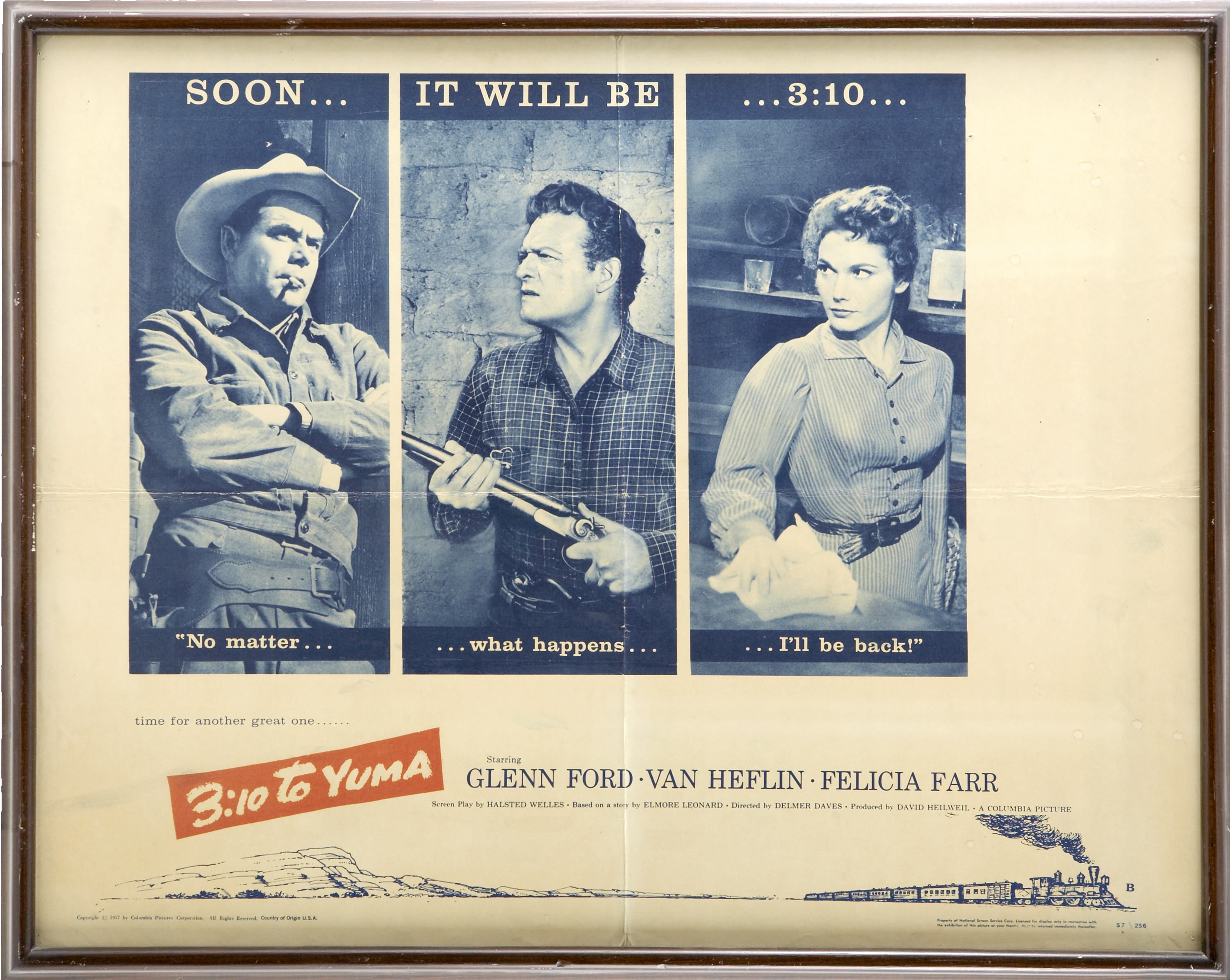
JUBAL also turned me on to the director Delmer Daves. Daves is one of the great directors of that time period. It’s been nice seeing some of his work being released as part of the Criterion Collection. His other films include DARK PASSAGE with Humphrey Bogart, BROKEN ARROW with Jimmy Stewart, DRUM BEAT with Alan Ladd & Charles Bronson, THE LAST WAGON with Richard Widmark, and 3:10 TO YUMA again with Glenn Ford. Heck, the guy wrote the classic tearjerker AN AFFAIR TO REMEMBER. The guy was awesome!
Just to finish off a little personal history related to our family’s trip to the Grand Tetons in 2023…. I recently took my blu-ray of JUBAL to my parents’ cabin and watched it with my Dad and Mom. Me and Dad looked at each other and smiled every time a beautiful shot of the Tetons was in the background, and those majestic mountains are featured in almost every shot. It was marvelous.
Shortly after this 1961 film begins, 17 year-old Susan Slade (Connie Stevens) announces, “We’ve been sinful!”
She’s talking to her first lover, Conn White (Grant Williams). You would think that anyone — even someone as unbelievably naive and innocent as Susan Slade — would know better than to ever trust someone named Conn White but no. From the minute that Conn and Susan met on an ocean liner heading from South America to California, it was love at first sight. In fact, Susan was so sure of her love that she spent the night in Conn’s cabin, fully knowing that it would mean surrendering her status as an Eisenhower era good girl.
Conn laughs off her concerns about sin. He also tells her that it makes perfect sense for her not to tell her parents (played by Dorothy McGuire and Lloyd Nolan). “When we’re married,” he asks, “are you going to tell your mother every time that we make love?”
Wow, Conn still wants to get married even though he’s already had sex with her!? And he’s also extremely wealthy and stands to inherit control of a multinational corporation! He sounds like the perfect guy! Way to go, Susan!
Unfortunately, it turns out that Conn does have one flaw. He really, really likes to go mountain climbing. In fact, he’s planning on scaling fearsome old Mt. McKinley. While Susan and her family settle into life in Monterey, California, Conn heads up to Alaska. He promises Susan that he’ll keep in touch but, when she doesn’t hear from him, she fears the worse. Has he abandoned her? Was he lying when he said he wanted to get married? Then one day, she gets a call from Conn’s father, informing her that Conn fell off the mountain and died. Susan’s almost father-in-law tells her that Conn’s body cannot be retrieved from the mountain. Though it’s neither confirmed nor denied by the film, I decided that this was because Conn faked his own death to get out of having to spend any more time listening to Susan talk about sin.
Anyway, Susan’s single again but, fortunately, she does not lack for suitors. For instance, there’s the spoiled Wells Corbett (Bert Convy), who is kind of shallow and arrogant but who has a lot of money. And then there’s Hoyt Brecker (played, in reliably vacuous style, by Troy Donahue), who is poor but honest and who is also an aspiring writer. “Someday,” Susan declares,”they’ll say that Robert Louis Stevenson, Jack London, and Hoyt Brecker wrote here!” Who will Susan chose? The sensitive artist who loves her unconditionally or the arrogant rich boy who smirks his way through the whole film?
Complicating matters is the fact that Susan is …. pregnant! That’s right, this is another one of those movies from the early 60s where having sex outside of marriage always leads to an unplanned pregnancy. And, because this movie is from 1961, the only solution is for the Slades to move down to Guatemala for two years, just so they can fool the people on Monterey into believing that the baby is actually McGuire’s and that Susan Slade is not an unwed mother but is instead an overprotective older sister. Will either of Susan’s two suitors be waiting for her when she and her family return to California?
Now, please don’t get me wrong. I do understand that there’s a big difference between 1961 and 2019 and that there used to be a lot more scandal attached to sex outside of marriage and unwed pregnancy. In fact, I guess that difference is really the only thing that makes Susan Slade interesting to a modern viewer. As soon as we see that this film was directed by Delmer Daves (the poor man’s Douglas Sirk) and that it stars Troy Donahue, we know who poor Susan is going to end up with so it’s not like there’s any real surprises lurking in the film’s plot. And none of the actors, though Connie Stevens sometimes to be trying, seems to be that invested in the film’s story. Instead, Susan Slade is mostly useful of a time capsule of the time in which it was made, a time when sex outside of marriage was unironically “sinful” and the only possible punishment was either pregnancy, death, or both. Indeed, Susan Slade is less concerned about the hypocrisy of a society that would force Susan to lie about her new “brother” and more about whether bland lunkhead Troy Donaue will still be willing to marry Susan even if she’s no longer eligible to wear white at their wedding. The film seems to be asking, “After being sinful, can Susan Slade become a good girl again?” As a movie, it’s fairly turgid but as a cultural artifact of a time in which everyone was obsessed with sex but no one was willing to talk about it, Susan Slade is occasionally fascinating.
Poor Susan Slade! If only she had gotten pregnant in a 1971 film instead of one made in 1961, her story could have been so different. But no, she was sinful in the early 60s and that means she’ll be have to settle for Troy Donahue.
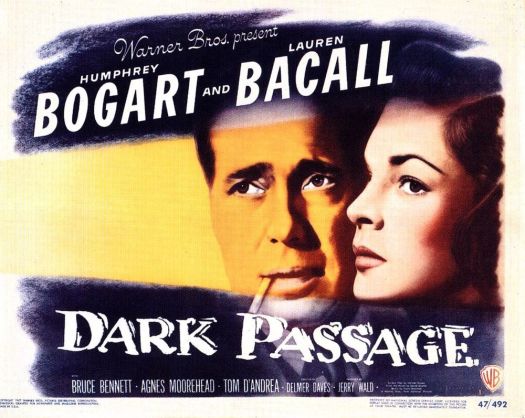
“Tuesdays in Noirvember” concludes with the genre’s biggest icon, Humphrey Bogart (and he’s bringing Lauren Bacall along for the ride!):
The year 1947 belonged to filmnoir, as some of the dark genre’s true classics saw the light of day: Robert Mitchum donned that iconic trenchcoat in OUT OF THE PAST , Richard Widmark snarled his way through KISS OF DEATH, Burt Lancaster battled sadistic Hume Cronyn with BRUTE FORCE , Tyrone Power got trapped in NIGHTMARE ALLEY , Rita Hayworth bedeviled Orson Welles as THE LADY FROM SHANGHAI , Ronald Colman won an Oscar as a cracked actor leading A DOUBLE LIFE, and Lawrence Tierney terrorized the hell out of everyone in his path in BORN TO KILL . Humphrey Bogart and Lauren Bacall, noir’s power couple thanks to the previous year’s THE BIG SLEEP , teamed again for DARK PASSAGE, an slam-bang crime drama that may not…
Actor Glenn Ford was born 100 years ago today in Sainte-Christine-d’Auergne, Quebec, Canada. Yes, the All-American star was actually Canadian, becoming a U.S. citizen in 1939. That same year, Ford signed a contract with Columbia Pictures and began a long, prosperous career with the studio. After getting noticed in films like HEAVEN WITH A BARBED WIRE FENCE, SO ENDS OUR NIGHT, and TEXAS (his first Western), Ford took a break from acting and joined the Marine Corps to serve in World War II.
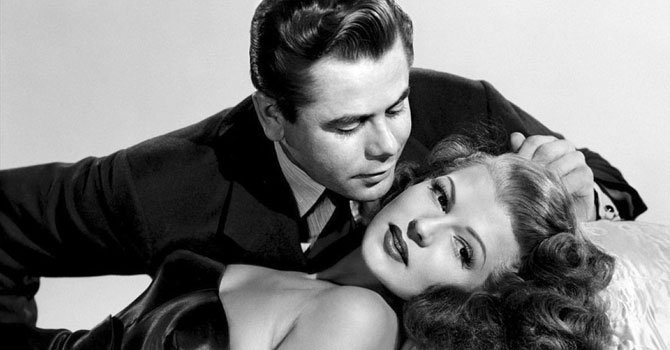
After the war, Glenn Ford was one of Hollywood’s top leading men. He hit it big with 1946’s GILDA, co-starring Rita Hayworth in what may very well be the first true film noir. Soon he found himself the hero in a string of successes: FRAMED, MAN FROM THE ALAMO, THE BIG HEAT , BLACKBOARD JUNGLE, JUBAL, and TEAHOUSE OF THE AUGUST MOON. But my favorite Ford role casts him…
Last week, I started on my latest project — watching all 50 of the movies included in Mill Creek’s Fabulous Forties box set! I started things off with Port of New York and then I was lucky enough to discover two excellent low-budget gems: The Black Book and Trapped.
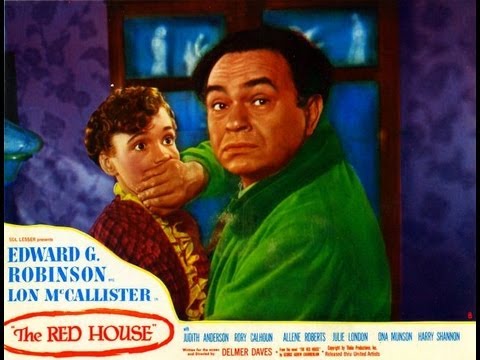
And now, we come the 7th film in the Fabulous Forties box set: 1947’s The Red House.
The Red House takes place is one of those small and seemingly idyllic country towns that always seem to harbor so many dark secrets and past crimes. Everyone in town is friendly, cheerful, and quick to greet the world with a smile.
Well, almost everyone.
Pete Morgan (Edward G. Robinson) is the exception to the rule. A farmer who moves with a pronounced limp, Pete lives on an isolated farm and refuses to have much to do with any of the other townspeople. He lives with his wife, Ellen (Judith Anderson), and his niece, 17 year-old Meg (Allene Roberts). Pete and Ellen are extremely overprotective of Meg. Pete, especially, is always quick to tell her not to associate with any of boys in the town and not to enter the dark woods that sit next to the farm. He tells her that there’s a red house hidden away in the woods and the house is haunted. Going into the red house can only lead to death.
Despite Pete’s eccentricities, Meg is finally able to convince him to hire one of her classmates to help do chores around the farm. Nath (Lon McAllister) is a good and hard worker and soon, even Pete starts to like him. Meg, meanwhile, is falling in love with Nath. However, Nath already has a girlfriend, the manipulative Tibby (Julie London), who cannot wait until they graduate high school so that she and Nath can leave town together. When Nath starts to also develop feelings for Meg, Tibby responds by flirting with the local criminal, Teller (Rory Calhoun).
Though things seem to be getting better on the Morgan Farm, Nath eventually makes the mistake of admitting that, when he goes home, he takes a short cut through the old woods. Pete angrily forbids Nath from entering the woods. Of course, this has the opposite effect. Soon, Nath and Meg are spending all day sneaking away into the woods so that they can look for the red house.
Once Pete learns of what they’re doing, he decides to hire Teller to keep them from even finding and entering the red house. Needless to say, love, melodrama, murder, and tragedy all follow…
Despite the fact that the DVD suffered from a typically murky Mill Creek transfer, I enjoyed The Red House. It’s one of those films that is just so over the top with all of the small town melodrama that you can’t help but enjoy it. (If M. Night Shyamalan had been a 1940s filmmaker, he probably would have ended up directing The Red House.) Nath and Meg were kind of boring but Julie London was a lot of fun as Tibby. If I had ever starred in production of The Red House, I would want to play Tibby.
Plus, the film’s got Edward G. Robinson doing what he does best! Robinson was an interesting actor, in that he could be both totally menacing and totally sympathetic at the same time. He has some scary scenes as Pete but they’re also poignant because Robinson suggests that Pete hates his behavior just as much as Ellen and Meg. Robimson was a powerhouse actor, the type who could elevate almost any film.
And that’s certainly what he does in The Red House!
Judging from the films I’ve seen from the decade, the 50s were a time when everyone was obsessed with sex but nobody felt comfortable talking about it. Boys were, of course, allowed to do whatever they wanted, as long as they kept their hair perfectly straight and went out for a school team or two. Girls, meanwhile, were divided into “good girls” and “bad girls.” The most important thing in the world was to remain a good girl and to understand that the bad girls really weren’t having as much fun as they appeared to be having. As for adults, their lives apparently revolved around sheltering their daughters and encouraging their sons to go get laid. Now, to be honest, the culture really hasn’t changed that much. I guess what distinguished 50s hypocrisy from the hypocrisy of today is that people in the 50s were apparently so much more sincere about that hypocrisy.
Case in point: 1959’s A Summer Place. A Summer Place is one of those films where everyone is obsessed with sex but nobody can ever come right out and admit it. It’s a film where people seem to exclusively speak in the language of euphemism. It’s a film, about sex, in which you never see anyone actually having sex though, of course, there is an unplanned pregnancy towards the end of it. That was the 50s for you. Have sex outside of marriage once and you’re pretty much guaranteed to get knocked up. You just better hope that the father is played by Troy Donahue.
(Has ever an actor has a more appropriate name than Troy Donahue? The name itself just resonates a certain handsome blandness.)
In A Summer Place, Troy Donahue plays all-American boy Johnny Hunter. Johnny’s father (played by Arthur Kennedy) is an alcoholic. Johnny’s mother, Sylvia (Dorothy McGuire), is frustrated with her perpetually drunk husband and spends her days dreaming of a lifeguard that she once knew. The Hunters own an inn, located on beautiful Pine Island off the coast of Maine.
One summer, Ken (Richard Egan) and his cold wife Helen (Constance Ford) come to stay at the inn. Accompanying them is their teenage daughter, Molly (Sandra Dee). Helen insists on trying to control every aspect of Molly’s life. Ken, on the other hand, takes a much more relaxed attitude towards his daughter. When Molly complains that Helen forces her to wear a bra and a girdle, Ken grabs his daughter’s underwear and tosses it all into the ocean.
(Uhmmm …. yeah, that’s more than a little creepy…)
Molly meets Johnny and, despite the fact that the stiff Troy Donahue generates absolutely zero romantic sparks, the two of them soon fall in love. (It probably has something to do with the Theme From A Summer Place, a hypnotic piece of music that plays on the soundtrack whenever the two of them so much as even glance in each other’s direction.) Helen, however, doesn’t want Molly to have anything to do with Johnny. When Molly and Johnny spend a day stranded on an island together, Helen forcefully checks to make sure that Molly’s virginity is still intact while Molly repeatedly shouts, “I WANT MY FADDAH! I WANT MY FADDAH!”
However, her father is not there because he’s too busy having an affair of his own. It turns out that Ken is the former lifeguard who Sylvia Hunter once loved…
And through all of the complications and the melodrama (and believe me, there’s a lot), the Theme From A Summer Place keeps on playing in the background.
Apparently, A Summer Place was considered to be incredibly risqué back in 1959. Watched today, it all seems to be rather quaint and, in its way, oddly likable. It’s not necessarily a good film but it’s an agreeable enough offering if you’re looking to waste two hours with whatever happens to be on TCM. As opposed to some of the other regular directors of 50s melodrama — like Douglas Sirk and Nicholas Ray — director Delmer Daves made films where the only subtext was unintentional. As a result of Daves’s direction and Donahue’s “nice young man” blandness, A Summer Place is a pleasant film that never quite becomes a memorable one.
Still, just try to get that music out of your head…








 Through the Shattered Lens