David Bowie was one of the first artists to truly understand the potential power of a good music video and, as can be seen in this video for Ashes to Ashes, he was an early pioneer of the form. At a time when most music videos were just performance clips, Bowie put together a narrative that offered an artistic interpretation of the song’s lyrics and themes and which invited viewers to interpret the song on their own.
The video was largely shot on two beaches in the UK, at Beachy Head and Hastings. Interior scenes were filmed on the set of the Kenny Everett Show. Bowie’s followers were played by the Blitz kids, who were known for frequenting the Blitz nightclub in Covent Garden.
Bowie said that the video was meant to combine the past and the future, which is why Bowie not only appears as an astronaut but also as an Edwardian clown. The scenes with Bowie as an astronaut are, as the lyrics make clear, a reference to Major Tom. The look of the scenes was heavily influenced by H.R. Giger’s work on Alien.
David Mallet would go on to become one of busiest directors of music videos of the 80s, directing videos for Queen, Iron Maiden, AC/DC, and others. David Bowie would also go on to play a huge role in MTV’s history, due to both his videos and his willingness to call out that station’s initial refusal to feature videos from black artists.
What do you get when you set David Bowie and Mick Jagger loose in an abandoned flour mill?
You get the video for their version of Dancing In The Street. Their cover of the classic tune by Martha Reeves and the Vandellas was recorded to raise money for the Live Aid famine relief charity. The video was shown twice during the Live Aid event and it also aired before theatrical showings of Ruthless People, a film for which Jagger had contributed to the soundtrack. The video was also a hit on MTV, where it helped to introduce both Bowie and Jagger to a new generation of listeners.
The video was directed by David Mallet, who did the majority of Bowie’s videos in the 80s and 90s.
On August 1st, 1981, MTV premiered. Over the course of 24 hours, 166 unique music videos were played on MTV. Yes, there was a time when the M actually did stand for music.
The 59th video to air on MTV was the video for David Bowie’s Boys Keep Swinging. This was also the first Bowie video to ever air on the network. Not surprisingly, Bowie would soon prove himself to be a master of the video form. He was also one of the few artists willing to publicly criticize MTV for rarely playing non-white artists during the first years of their existence. Pretty cool guy, that David Bowie.
I was surprised to discover this when I went searching for David Bowie music videos. This is a video that Bowie did for his version of Kurt Weill’s The Drowned Girl. This was included as a part of the Baal EP, which was released to coincide with Bowie appearing in a BBC production of the Bertolt Brecht’s play of the same name. The play is about an irresponsible womanizer whose actions lead to all sorts of tragedy. In The Drowned Girl, the play’s main character (played, of course, by Bowie) sings about a former lover who committed suicide after her left her.
This video was directed by David Mallet and was filmed at the same time as the video for Bowie’s version of Wild Is The Wind. This video was apparently shot in Berlin and the black backdrop and stark lighting was meant to reflect the style of Bowie’s Isolar-1976 Tour.
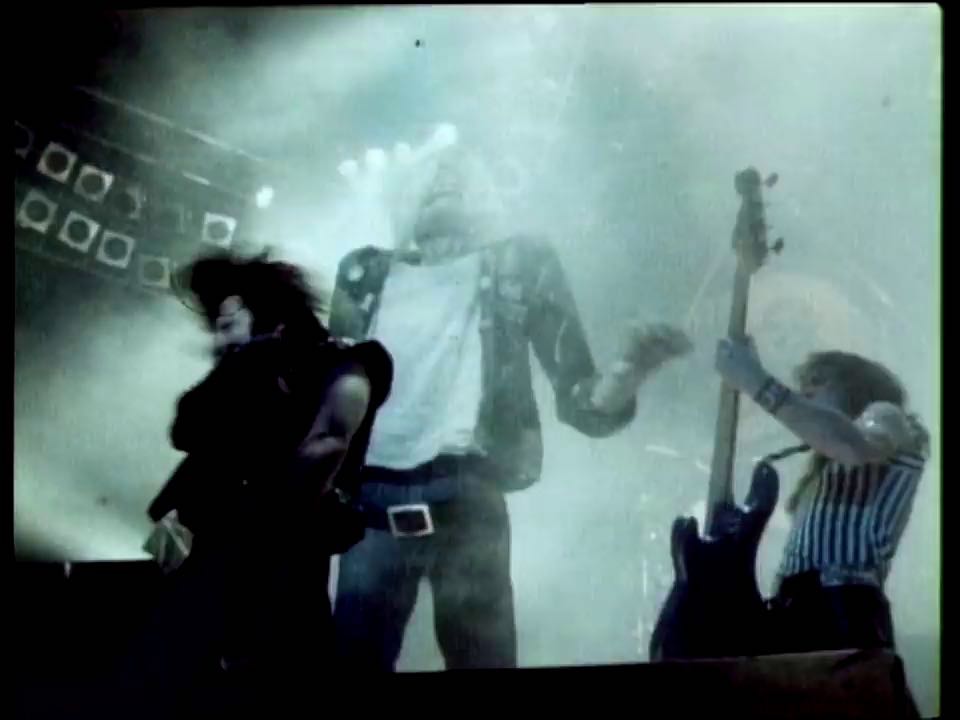
Today’s music video of the day is for the song that convinced an entire generation of parents that heavy metal was Satan’s music. Iron Maiden bassist Steve Harris wrote The Number of the Beast after watching the second Omen film and a careful listen to the lyrics will reveal that the song is not meant to be taken seriously. Of course, religious groups across America took it very seriously and spent 1982 protesting Iron Maiden.
It all seems a little silly now.
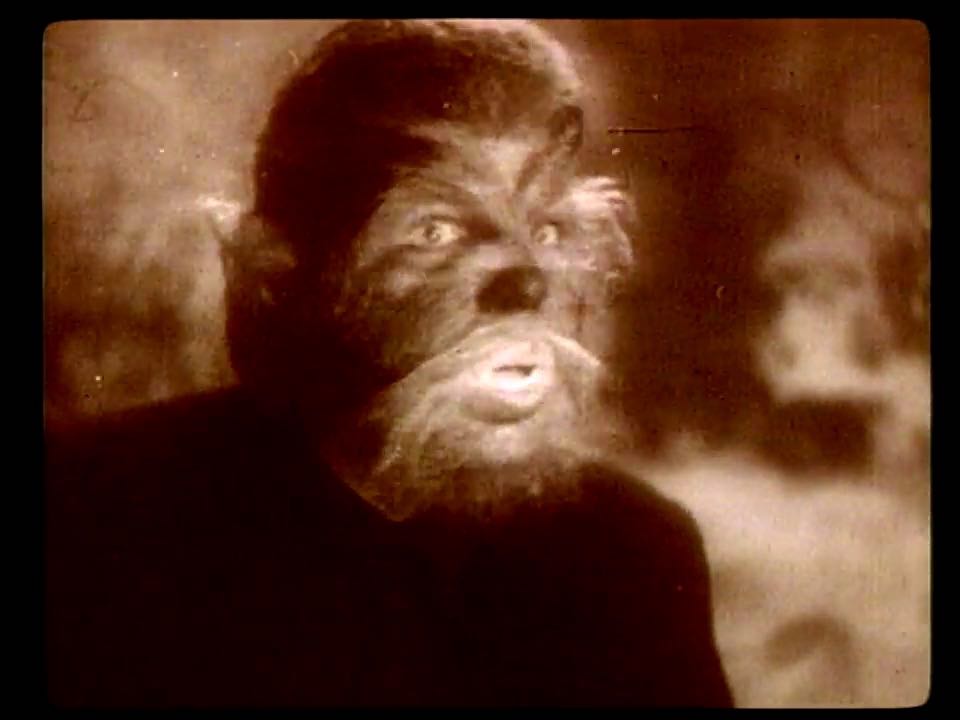
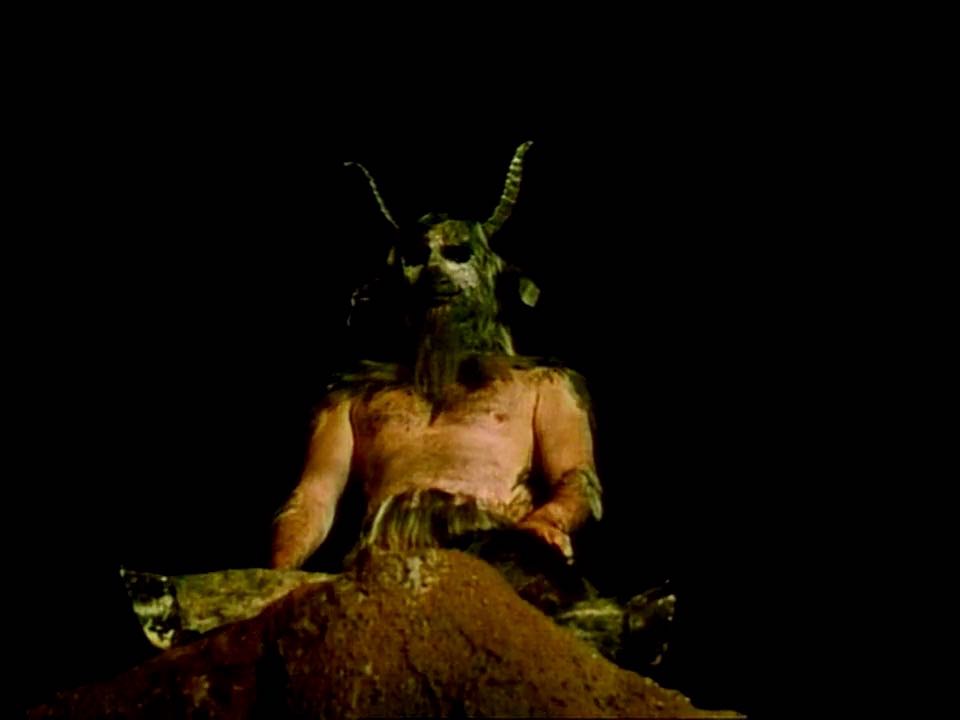
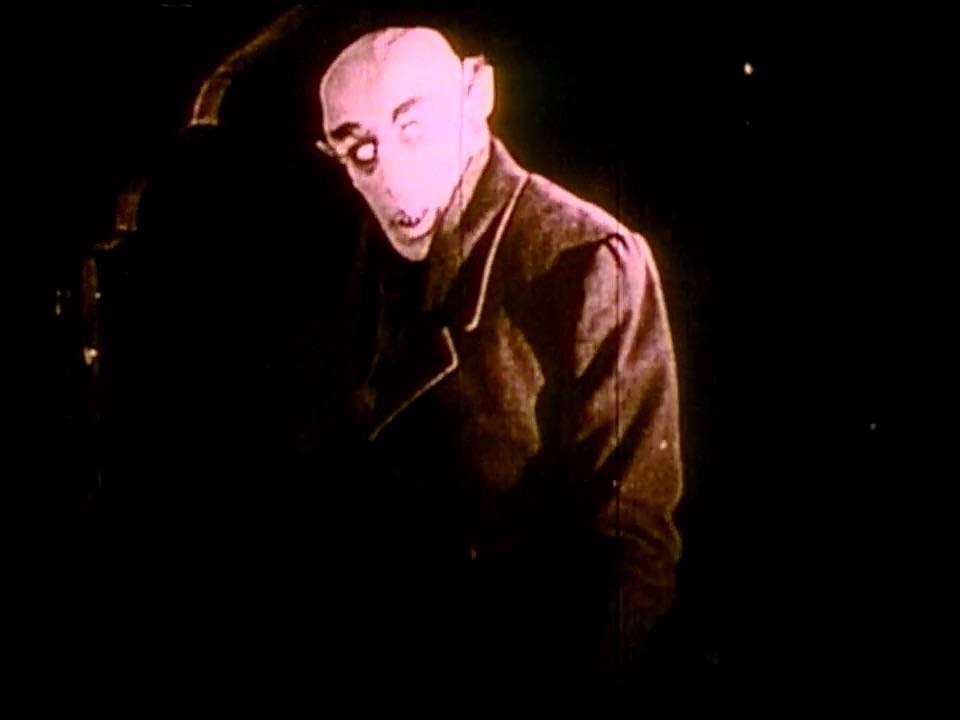
The video was also controversial, even though it was really just clips of old horror movies mixed with footage of Iron Maiden performing. With Lisa Marie’s help, I think I have correctly identified the source of almost every clip featured in the video:
0:10 — The video starts with a scene from 1944’s The Return of the Vampire. Contrary to popular belief, that is not Vincent Price providing the voice over. Originally, the band wanted Price but, when they discovered they couldn’t afford him, they hired an actor named Barry Clayton instead.
0:30 — The Goatman who first appears here and then reappears throughout the video is taken from 1968’s The Devil Rides Out.
0:36 — This clip is from 1922’s Nosferatu.
0:42 — This is the star of 1957’s I Was A Teenage Frankenstein.
0:50 — The fighting dinosaurs are from 1940’s One Million Years B.C.
1:12 — This is from 1958’s The Screaming Skull.
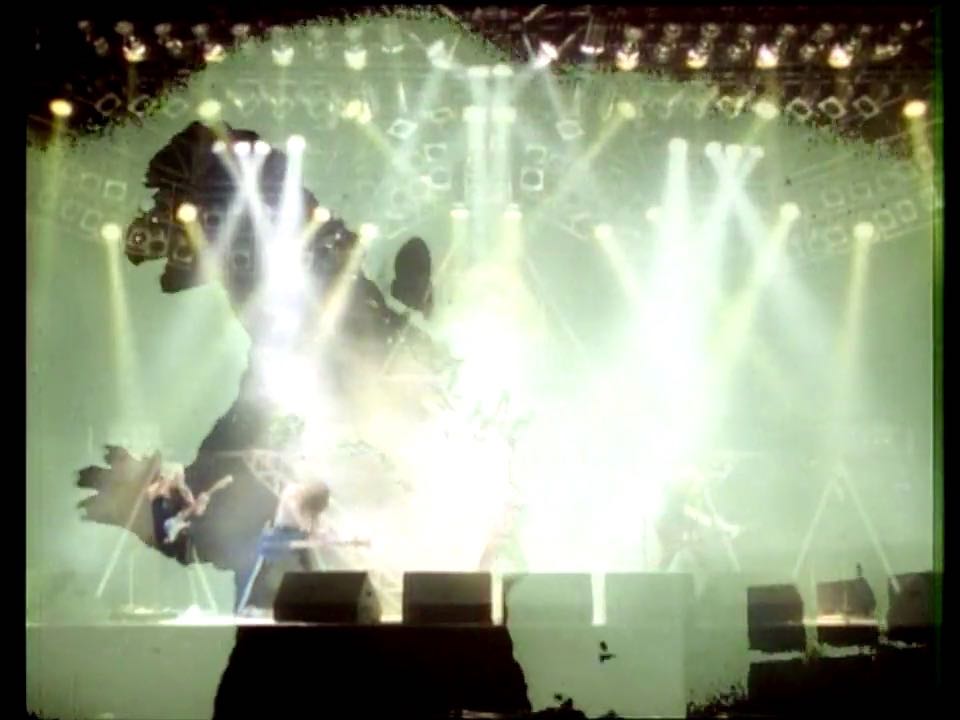
1:19 — The Godzilla footage is taken from 1964’s Mothra vs. Godzilla.
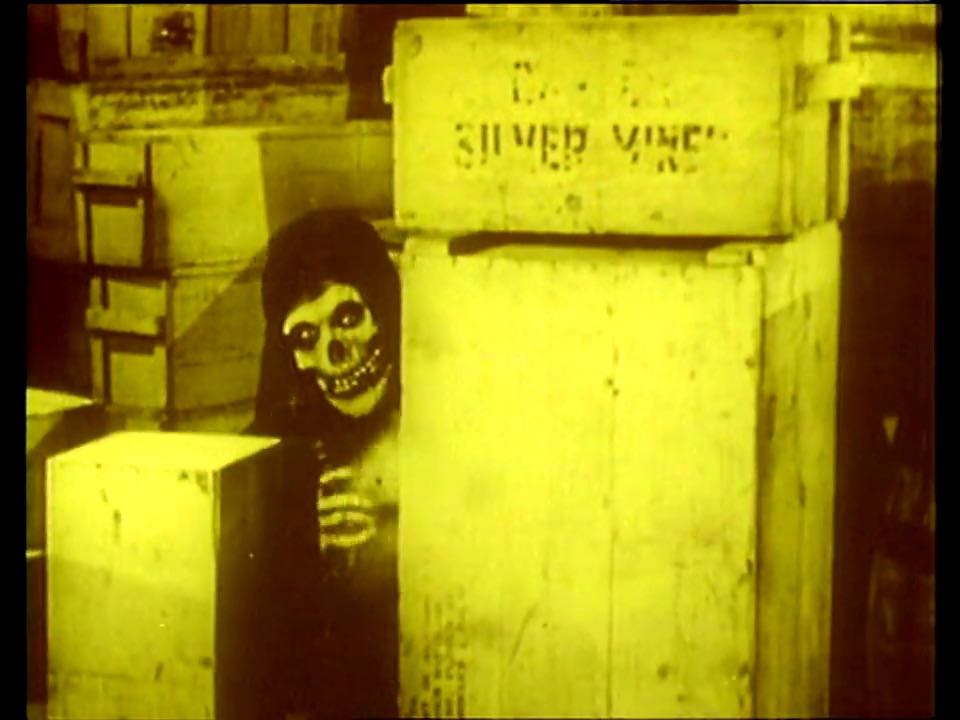
2:15 — I’m not totally sure but I think this is from 1946’s The Crimson Ghost.
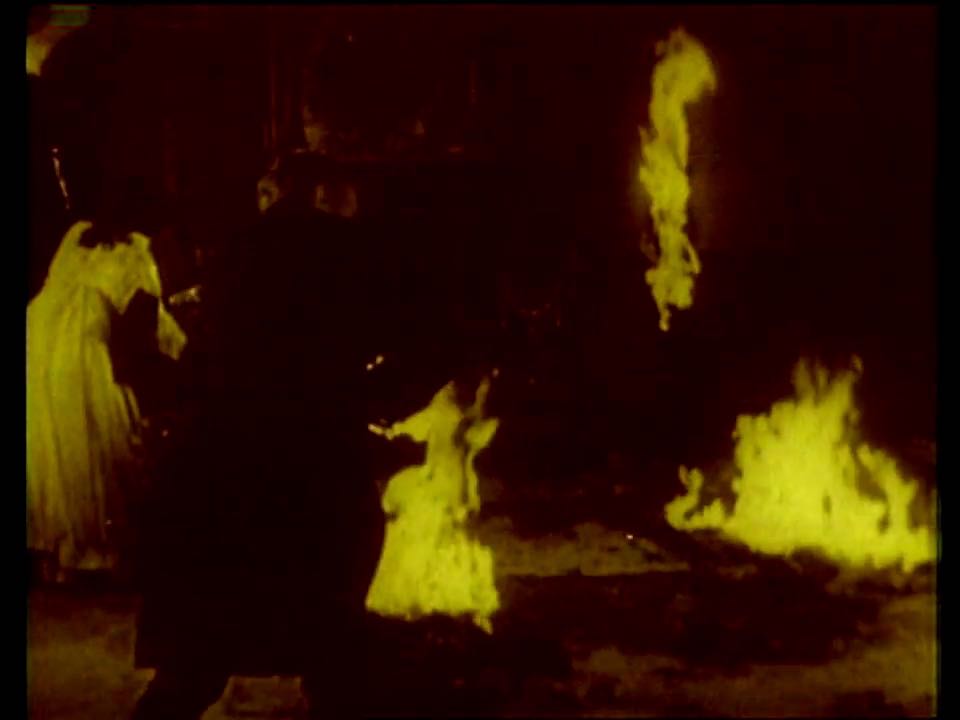
2:19 — The exploding Goatman is, again, from The Devil Rides Out.
2:30 — This is from 1958’s How To Make A Monster, which was a sequel to I Was A Teenage Frankenstein.
2:38 — This is either another clip from How To Make A Monster or a clip from 1957’s I Was A Teenage Werewolf.
2:41 — This scene is from The Crimson Ghost.
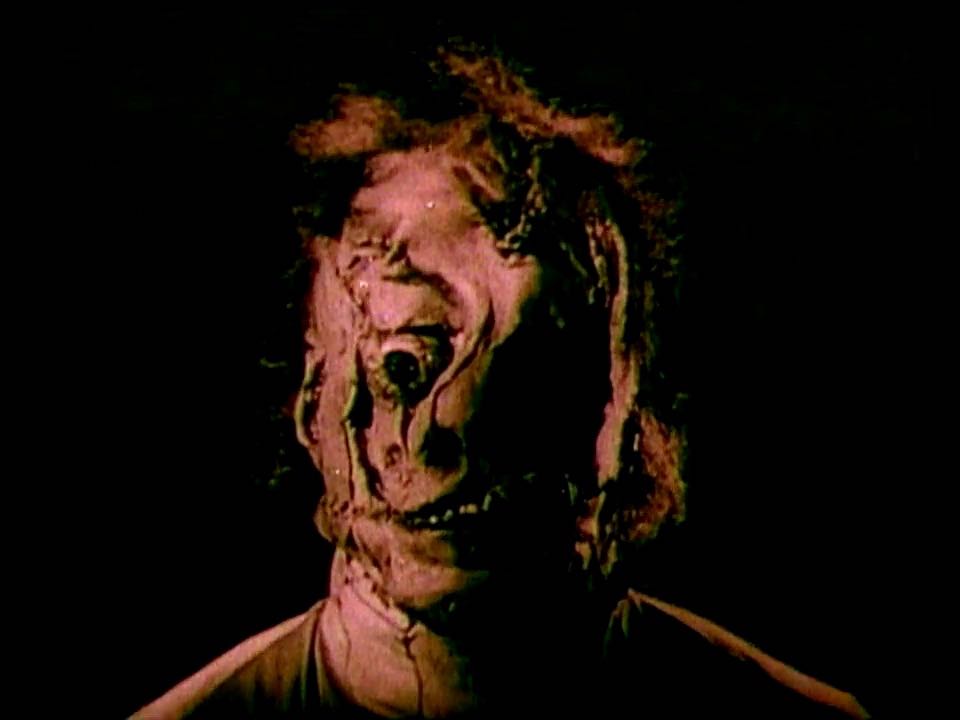
3:21 — The scarred giant is from 1958’s War of the Colossal Beast.
3:24 — I like this way this part of the video was edited to make it appear as if Godzilla was reacting to the Colossal Beast.
3:51 — The big spider is from 1959’s The Angry Red Planet.
4:00 — This is another clip from The Crimson Ghost.
Times sure have changed. The appearance of Eddie at the end as Frankenstein was edited out of this video originally because it was scaring viewers. This was 1982. I can understand something like One by Metallica. Being trapped in your own body, screaming in your mind with the only possibilities for escape being the mortality of your own body or someone who assists your suicide. That’s scary. Frankenstein? Just because Frankenstein’s head is that of Eddie? Really?
Nothing else in the video bothered people?
The Werewolf?
Goathead?
Max Schreck?
I Was A Teenage Frankenstein?
Godzilla?
The movie Haxan?
The Crimson Ghost?
A reference to Dr. Mabuse?
War Of The Colossal Beast?
Giant bat?
The Devil?
etc.
Nope! Remove Frankenstein. Everything else is fine. At least that’s what this site that is cited by Wikipedia says.
But behind the scenes, it was more like Face Without Eyes. I’m not abridging this story. Thank you Rob Tannenbaum and Craig Marks for writing the book I Want My MTV. Also, thank you John Diaz and Billy Idol for sharing this story.
John Diaz: On “Eyes Without a Face,” I brought in Tony Mitchell as DP–that was one of the first videos he shot. David Mallet directed, and David always shot in 16mm. I said, “I don’t care what else you do, but we have to shoot this in 35mm and Billy has to look like a beauty queen.”
Billy Idol: The video was super-important because we had large hopes for “Eyes Without a Face.” We poured into it not only ideas, but also money and time. For three days, I didn’t see anything but dry ice, smoke, fire, and naked bodies. We hardly slept.
John Diaz: Bill Aucoin brought some new contact lenses for Billy. I said, “You can’t give them to Billy, they might redden his eyes during the shoot.” Well, he gave them to Billy. David Mallet liked to use lots of dry ice in videos. So Billy was laying in dry ice for quite some time, and he was really tired, and his eyes dried out. The contact lenses fused to his eyeballs.
Billy Idol: We’d been up all night finishing the video and got straight on a plane to do a gig in Arizona. It was boiling hot so I laid down on the grass outside the venue, and when I woke up, a sheriff was standing with his gun drawn. I’d never really had a gun barrel in my face.
I almost couldn’t think because of the pain in my eyes. I’d fallen asleep with my contact lenses in, and they were dried from being on set, then on an airplane. I said, “I’m with the band that’s sound-checking inside that building.” My eyes were tearing, pouring water. So we go inside and the sheriff made my road crew line up. He said, “Who is this?” And they said, in unison, “The boss.” So he left me alone. Then they had to take me the hospital because I’d scraped the cornea so badly. I had my eyes bandaged for three days, until the cornea grew back. It was stupid, really. But I wasn’t thinking too much, I was just trying to get the video done.
According to the authors of I Want My MTV, during this period, “the average budget had been $30,000 to $40,000, but videos now became more sleek and elaborate–and so grueling that three different people went temporarily blind.” This wasn’t even the only time somebody went temporarily blind on a Billy Idol video.
Stories like this are something to keep in mind the next time you see a music video you love that isn’t in IMDb. People temporarily lost the ability to see in order to get these made. So, submit.
I’ve mentioned this song several times as an odd exclusion from Clear Channel’s post 9/11 no-no playlist, so I figured I’d actually get around to talking about the music video. I was going to do a ZZ Top video, but their stuff really needs a retrospective to do it properly. They not only have an interesting history with MTV that got them a whole chapter in the book I Want My MTV, but the videos hang together. That said, AC/DC also has an interesting history with music videos as well. While this is one of their best, you can go all the way back to 1974 and see them performing Can I Sit Next To You Girl? with original lead-singer Dave Evans. That’s quite the trip. It gets even weirder if you go back to Bon Scott’s 60s band The Valentines singing Build Me Up Buttercup.
Of course the weirdest has to be watching Rick Astley do Highway To Hell.
Thunderstruck is a great song. It’s classic blood-pumping play-to-the-back-row AC/DC.
Prolific music video director David Mallet made it. Among his many other credits, he directed 12 music videos for AC/DC.
David Gardner edited it. He worked on a few music videos. They were mostly with director Nigel Dick.
Bill Laslett was the art director. He seems to have been the go-to person to be the production designer on award shows and concerts after 1995 or so. That’s hilarious considering this music video. Before that, he worked on television shows.
Jacqui Byford was the producer on this music video. She doesn’t appear to have done a bunch of music videos, but they are memorable ones. She did White Wedding by Billy Idol, Photograph by Def Leppard, Total Eclipse Of The Heart by Bonnie Tyler, True by Spandau Ballet, and Distant Early Warning by Rush, among others.
Peter Sinclair is the star of the show. The reason I go back to this particular AC/DC music video over and over again is for the cinematography. He has done a bunch of TV and music work. Just like Laslett, some of them have been concert films. It’s a little difficult to pin down his credits, but he seems to have shot Material Girl by Madonna.
He also did some directing, such as for Karma Chameleon by Culture Club.
I love his work here in particular. It seems like everyone came together well here to produce an excellent music video.
Happy Columbus Day! Or if I was still living in Berkeley, CA; then the parking meters would be telling me this was Indigenous People’s Day. I couldn’t think of a better time to do my first Iron Maiden music video. Sadly, there isn’t much to say.
The song tells us the story of Europeans coming to America and brutally taking the land from the Native Americans. They tell the story from two different points of view. The first is from the Native Americans. The second one is from the European point of view. The second one takes up the majority of the song. This makes sense since it mirrors how the story of the New World is often dominated by the European side of things. So much so that we got plenty of Westerns like the one they intercut with the band performing the song on a stage.
There is one issue with writing about this music video. There are two different versions of this listed on mvdbase. There is the version above, and one from 1985 that was directed by Jim Yukich. To make matters even more confusing is that there is a version called the Camp Chaos version.
That version is even marked as unlisted on YouTube. I stumbled upon it because it is the version that IMVDb has embedded into their entry for this music video.
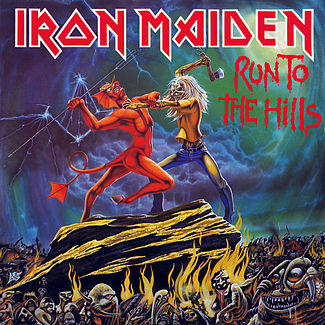
All things considered, I’d say that the first and second ones are the same one directed by David Mallet. The only difference being that they took out the old movie and replaced it with some animation instead. You can still see people in the comments on this music video that think the song is racist, so it’s no surprise that they made a different version of the same video. Also, people called the band Satanic back then because of the name of the title track for the album this song is on. In addition, people thought that this cover…
of a Native American in Hell fighting a demon was equating Europeans with devils, and got angry about it. You think? The song isn’t exactly subtle, and neither is the music video.
David Mallet appears to have worked on around 130 music videos in his career
I couldn’t find a music video that they did, so here is just the song We Live from the Native American band XIT.






 Through the Shattered Lens