Guilty Pleasure No. 110: Undercover Brother (dir. by Malcolm D. Lee)


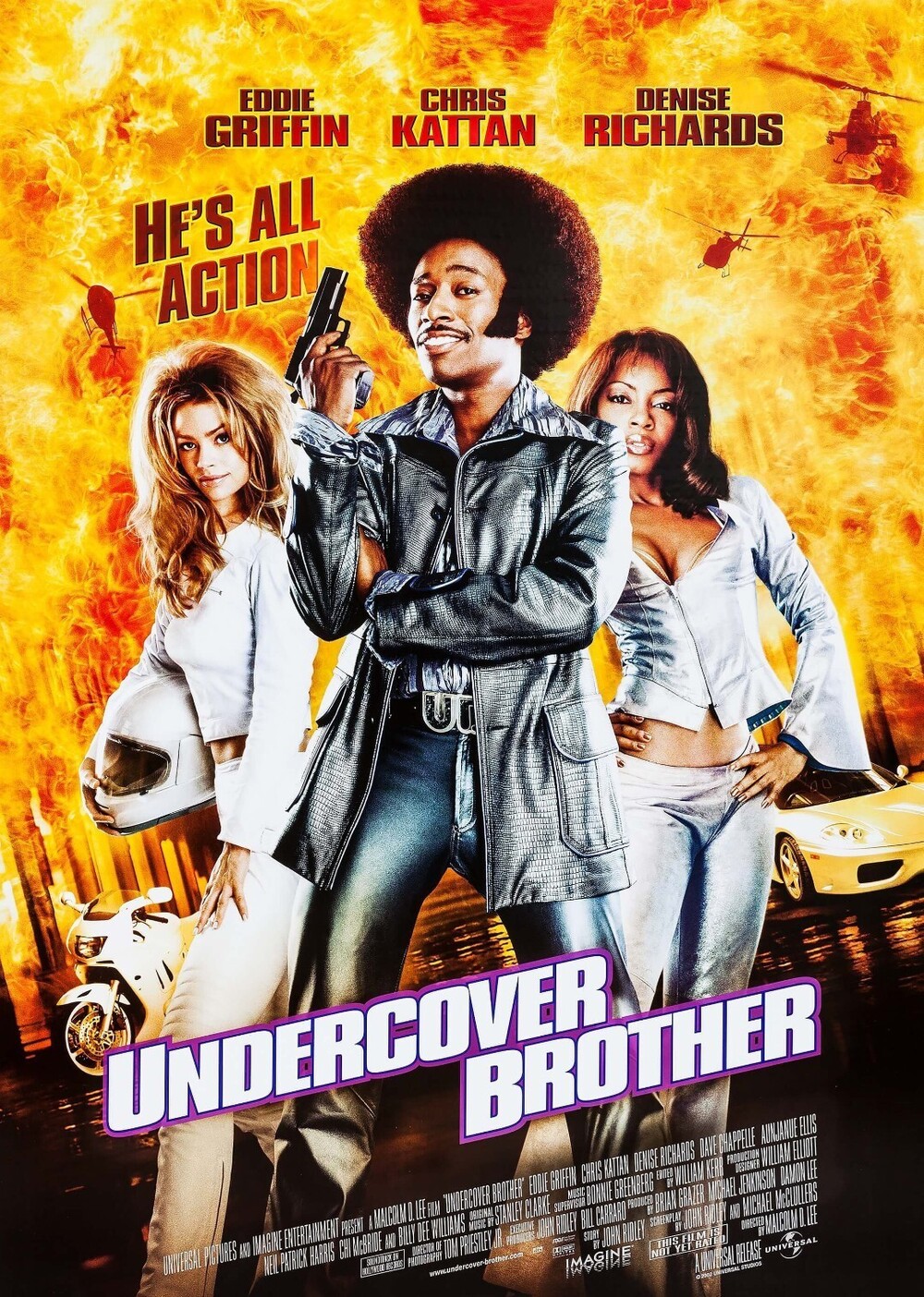
Undercover Brother is exactly the kind of movie that earns the phrase “guilty pleasure.” It is messy, broad, and often ridiculous, but it is also packed with enough energy, attitude, and sharp-enough satire to make its flaws feel like part of the joke rather than dealbreakers. The result is a comedy that may not always land cleanly, but it absolutely understands its own vibe and commits to it hard.

At the center of it all is Eddie Griffin, who gives the title character a big, swaggering, old-school cool that carries the movie through its shaggier patches. He plays Undercover Brother as a throwback spy hero with a giant Afro, loud fashion sense, and nonstop confidence, and that exaggerated persona is a big reason the film works as well as it does. Griffin’s performance is not subtle, but subtlety is not really the point here; he sells the movie’s cartoonish energy without making it feel lazy.

What makes Undercover Brother more than just a random parody is how committed it is to poking at both blaxploitation iconography and mainstream spy-movie clichés. The film was directed by Malcolm D. Lee and written from material based on John Ridley’s earlier animated series, and it leans into that satirical roots-and-gadgets formula with a lot of style. It clearly wants to be playful, but it also wants to say something about race, image, and the way Black identity gets packaged or watered down in pop culture.

That said, the movie is not exactly a model of precision. Some of the jokes are sharp and immediate, while others feel like they are still revving the engine long after the punchline should have arrived. The plot is basically an excuse to move from one set piece to another, and the film knows it, which helps, but it also means the whole thing can feel more like a high-speed sketch comedy than a fully shaped story. If you go in expecting airtight narrative logic, you will probably be annoyed; if you go in wanting a fast, funky send-up, you will have a much better time.

The supporting cast gives the movie a lot of its flavor. Dave Chappelle, Aunjanue Ellis, Billy Dee Williams, Chris Kattan, Denise Richards, and Neil Patrick Harris all add to the film’s chaotic mix, and the casting itself becomes part of the joke. Billy Dee Williams especially feels perfectly placed in a movie that is constantly riffing on cool, style, and old-school charisma, while Denise Richards gets a knowingly exaggerated role that plays into the film’s cartoonish battle between seduction and resistance.

What helps Undercover Brother age a little better than some early-2000s comedies is that it is not just throwing random nonsense at the screen for cheap laughs. There is a genuine satirical target here, and even when the movie gets clumsy, it still feels like it has a point of view. The movie clearly aims to be both goofy and observant, and even when the balance is uneven, it is hard not to appreciate the effort.

The best thing about Undercover Brother is its attitude. It moves like a movie that wants to be loud, stylish, and a little bit too much, and that confidence gives it a strange charm. The humor is often broad, sometimes cartoonish, and occasionally uneven, but the film’s willingness to fully commit to its bit makes it easy to forgive a lot. Even when the satire is more enthusiastic than elegant, the movie keeps its foot on the gas, and that momentum is a big part of its appeal.

Its biggest weakness is also the thing that makes it memorable: the movie can feel overstuffed with ideas, references, and gags, some of which work better than others. A few jokes feel a little dated now, and the film’s style of satire is not always as clean or as clever as it seems to think it is. Still, the movie has enough bite, personality, and goofy confidence that those rough edges become part of its charm instead of sinking it. That is the hallmark of a true guilty pleasure: you can see the flaws clearly, but you keep smiling anyway.

So Undercover Brother is not a perfect comedy, and it is not trying to be one. It is loud, silly, politically aware in a very pop-movie way, and shamelessly committed to its own funk. If you want polish, you will find plenty to criticize; if you want a movie with attitude, quotable energy, and the kind of swagger that makes its imperfections oddly lovable, this one delivers. It is a flawed satire, sure, but it is also a genuinely fun one, and that is why it still plays like a guilty pleasure worth revisiting.

Previous Guilty Pleasures

  1. Half-Baked
  2. Save The Last Dance
  3. Every Rose Has Its Thorns
  4. The Jeremy Kyle Show
  5. Invasion USA
  6. The Golden Child
  7. Final Destination 2
  8. Paparazzi
  9. The Principal
  10. The Substitute
  11. Terror In The Family
  12. Pandorum
  13. Lambada
  14. Fear
  15. Cocktail
  16. Keep Off The Grass
  17. Girls, Girls, Girls
  18. Class
  19. Tart
  20. King Kong vs. Godzilla
  21. Hawk the Slayer
  22. Battle Beyond the Stars
  23. Meridian
  24. Walk of Shame
  25. From Justin To Kelly
  26. Project Greenlight
  27. Sex Decoy: Love Stings
  28. Swimfan
  29. On the Line
  30. Wolfen
  31. Hail Caesar!
  32. It’s So Cold In The D
  33. In the Mix
  34. Healed By Grace
  35. Valley of the Dolls
  36. The Legend of Billie Jean
  37. Death Wish
  38. Shipping Wars
  39. Ghost Whisperer
  40. Parking Wars
  41. The Dead Are After Me
  42. Harper’s Island
  43. The Resurrection of Gavin Stone
  44. Paranormal State
  45. Utopia
  46. Bar Rescue
  47. The Powers of Matthew Star
  48. Spiker
  49. Heavenly Bodies
  50. Maid in Manhattan
  51. Rage and Honor
  52. Saved By The Bell 3. 21 “No Hope With Dope”
  53. Happy Gilmore
  54. Solarbabies
  55. The Dawn of Correction
  56. Once You Understand
  57. The Voyeurs 
  58. Robot Jox
  59. Teen Wolf
  60. The Running Man
  61. Double Dragon
  62. Backtrack
  63. Julie and Jack
  64. Karate Warrior
  65. Invaders From Mars
  66. Cloverfield
  67. Aerobicide 
  68. Blood Harvest
  69. Shocking Dark
  70. Face The Truth
  71. Submerged
  72. The Canyons
  73. Days of Thunder
  74. Van Helsing
  75. The Night Comes for Us
  76. Code of Silence
  77. Captain Ron
  78. Armageddon
  79. Kate’s Secret
  80. Point Break
  81. The Replacements
  82. The Shadow
  83. Meteor
  84. Last Action Hero
  85. Attack of the Killer Tomatoes
  86. The Horror at 37,000 Feet
  87. The ‘Burbs
  88. Lifeforce
  89. Highschool of the Dead
  90. Ice Station Zebra
  91. No One Lives
  92. Brewster’s Millions
  93. Porky’s
  94. Revenge of the Nerds
  95. The Delta Force
  96. The Hidden
  97. Roller Boogie
  98. Raw Deal
  99. Death Merchant Series
  100. Ski Patrol
  101. The Executioner Series
  102. The Destroyer Series
  103. Private Teacher
  104. The Parker Series
  105. Ramba
  106. The Troubles of Janice
  107. Ironwood
  108. Interspecies Reviewers
  109. SST — Death Flight

Brad reviews YOU’VE GOT MAIL (1998), starring Tom Hanks and Meg Ryan!


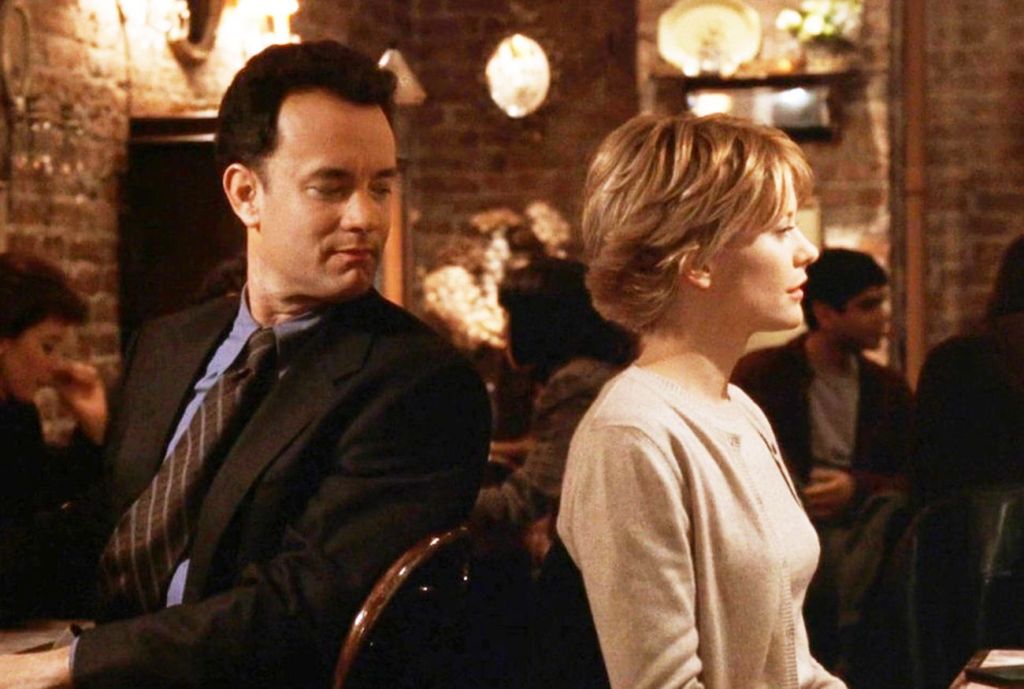
Kathleen Kelly (Meg Ryan) owns a children’s bookstore in New York City named “The Shop Around the Corner.” It’s a small, cozy store that she inherited from her dear mother, and it’s part of the lifeblood of who she is as a person, as well as the community itself. Joe Fox (Tom Hanks), on the other hand, is the heir to a major bookstore chain, Fox Books (think Barnes & Noble), that threatens to wipe places like Kathleen’s off the map. As fate would have it, the two meet anonymously online where they trade their hopes, dreams and insecurities through daily e-mails, with both excitedly opening their computers each night hoping to hear those three little words, “You’ve Got Mail.” Things begin to get interesting when Joe plans to open up a Fox Books Superstore just around the corner from Kathleen’s place with neither knowing that they’re real-life business adversaries. When will they find out that they’re enemies in the business world? Can true love find a way in the most difficult of circumstances? And isn’t that why we watch these kinds of movies in the first place?!

I’ll start off by saying that Meg Ryan is operating at the top of her “America’s sweetheart” phase here… she’s cute, sincere, nostalgic, slightly neurotic, and ultimately quite believable as a person who romanticizes her world and truly believes there will always be a place for her small store and the gigantic superstores! I grew up and still live in the state where Wal-Mart started so I definitely know how hard it is for the “mom and pop” stores to compete. Tom Hanks walks a bit more of a tightrope as Joe Fox. He’s likable enough that you want him to be able to win her heart, but he’s also just arrogant enough that you understand why Kathleen resents everything he stands for. Ultimately, Hanks is able to pull it off with enough charm that you still root for him even when he can be a little bit of a jerk at times.

What’s really strange about revisiting YOU’VE GOT MAIL at this point in my life is the fact that it takes me back to the late 90’s when the internet was something new to me and it seemed like something magical. In this movie, the internet connects two souls, and when we hear “you’ve got mail” as they fire up their computers, the movie expects you to feel genuine excitement, without a hint of irony. Compare that with where the world is today with almost any kind of online activity, especially social media. While there are still a lot of positives to be found, it’s sad that going online now is often exhausting, hateful, and stressful! In 1998, though, it was still possible to believe that logging on could lead to something incredible!

Nora Ephron, who directed the film and co-wrote the screenplay, does a good job of presenting a sad reality of the real world underneath this romantic comedy’s love story. “Progress” can be cruel, and it seems like it just can’t be stopped no matter what! I spend a lot of time talking about the wonderful hours I spent in the video stores of my youth. Those stores are all gone now and have been for decades. The stores that replaced them are mostly gone now, and almost all of my movie viewing is now done through online streaming. In YOU’VE GOT MAIL, Fox Books certainly isn’t better than Kathleen’s Shop Around the Corner. As a matter of fact, it’s not nearly as educational or personal. What it is, however, is bigger, cheaper, and more efficient, and that’s what seems to win in the end, just like it did with the local video stores and Wal-Mart. This is where Ephron does her strongest balancing act. Joe Fox and Kathleen Kelly still fall in love despite the fact that the realities of the world around them take their realistic and natural course. A true human connection is made in the most difficult and painful of circumstances, and that ultimately means more than anything else in the film.

Revisiting YOU’VE GOT MAIL now doesn’t feel that much different than revisiting the film that inspired it, 1940’s THE SHOP AROUND THE CORNER, starring Jimmy Stewart and Margaret Sullavan. Both films are time capsules of a world that no longer really exists. However, both films ultimately realize the time-tested truth that it’s our relationships with other people that provides the most meaning to our lives. That’s a truth that won’t change whether we’re writing letters, sending e-mails, exchanging texts or whatever “progress” the human race achieves in communication in the future! I find some comfort in that.

Lisa Reviews An Oscar Nominee: A Star Is Born (dir by Bradley Cooper)


Happy birthday, Bradley Cooper!

Bradley Cooper is 45 years old today.  With all the recent talk about how people’s lives have changed over the past decade, let’s take a minute to appreciate just how spectacularly things have gone for Bradley Cooper, career-wise.  Ten years ago, Bradley Cooper was probably best-known for playing the smarmiest member of The Hangover‘s quartet of friends.  Now, Cooper is known for not only being one of the best actors working today but also for making an acclaimed directorial debut with the 2018 Best Picture nominee, A Star Is Born.

Cooper not only directed A Star is Born but he also starred in it.  He played Jackson Maine, a country musician who has been drinking for as long as he can remember.  He used to drink with his father and when his father died, Jackson continued to drink alone.  (At one point, Jackson says that he was a teenager when his father died.)  Managed by his older brother, Bobby (Sam Elliott), Jackson became a star but his career has been in decline for a while.  For all of his talent and for all of his belief that he has something worth saying, Jackson is drinking his life away.  He stumbles from show to show and is often dependent upon Bobby to tell him what he missed while he was blacked out.

When Jackson stumbles into a drag bar and sees Ally (Lady Gaga, making her film debut) singing a song by Edith Piaf, he is immediately captivated by her talent.  Ally, whose father (Andrew Dice Clay) is a limo driver who once aspired to be bigger than Sinatra, is at first weary of Jackson but he wins her over.  After she punches a drunk and he takes her to a grocery store to construct a makeshift cast for her hand, she sings a song that she wrote and Jackson decides to take her on tour.  Soon, they’re in love and, before you know it, they’re married!

Unfortunately, Jackson’s alcoholism threatens both their happiness and their future.  While Ally’s star rises, his continues to dim.  Will Ally sacrifice her career for Jackson or will Jackson sacrifice his life for Ally?

It’s a familiar story, one that’s been told many times.  The first version was 1932’s What Price Hollywood, which featured aspiring actress Constance Bennett falling in love with an alcoholic director played by Lowell Sherman.  In 1937, What Price Hollywood? was unofficially remade as A Star Is Born, with Janet Gaynor as Esther, the actress who falls in love with faded matinee idol, Norman Maine (Fredric March).  The next version came out in 1954 and featured Judy Garland as Esther and James Mason as Norman.  Significantly, the 1954 version added music to the plot, with Judy Garland singing The Man That Got Away.  

In 1976, the story was told a third time.  This version of A Star is Born starred Barbra Streisand as singer Esther Hoffman and Kris Kristofferson as a self-destructive rock star named John Norman Howard.  The 1976 version was terrible, largely because there was zero chemistry between Streisand and Kristofferson.  And yet, one gets the feeling that the 1976 version is the one that had the most influence on the 2018 version.  Not only does Bradley Cooper’s version of A Star Is Born make the story about aspiring singers but one gets the feeling that Cooper watched the 1976 version, saw the lack of chemistry between Kristofferson and Streisand, and said, “There’s no way that’s going to happen in my movie!”

Indeed, it’s the chemistry between Bradley Cooper and Lady Gaga that makes the latest version of A Star Is Born so compulsively watchable.  I mean, we already know the story.  From the minute that Jackson and Ally meet for the first time, we know what’s going to happen.  But Cooper and Lady Gaga have got such an amazing chemistry, that it almost doesn’t matter whether the movie surprises us or not.  There’s a scene where Ally says that she’s always been told that her nose is too big and Jackson responds by nonchalantly touching her nose and, with that one simple and very naturalistic gesture, the film convinces us that Jackson and Ally are meant to be together, even if just for a while.  It also makes it all the more upsetting when a drunk and jealous Jackson later uses Ally’s insecurities against her.

(Of course, I should admit that I’ve always been insecure about my own nose so, at that moment, I totally understood what Ally was feeling.)

It’s an unabashedly romantic and sentimental film but it works because, as a director, Cooper brings just enough of an edge to the story.  Cooper, who has been sober since 2004, has been open about his past struggle with alcoholism and, as both an actor and director, he’s smart enough not to romanticize Jackson’s addictions.  In many ways, Jackson Maine is a pain in the ass to be around.  We watch as he goes from being a fun drunk to a sad drunk to a mean drunk, all the while lashing out at anyone who gets too close to him.  At the same time, Cooper also captures the spark of genius and the hints of inner goodness that would explain why he is never totally rejected by those that he’s hurt.  Cooper offers up hints of who Jackson could have been if he hadn’t surrendered to pain and addiction.  We understand why Ally and Bobby stick with him, even if we wouldn’t blame either one of them if they refused to have anything more to do with him.

Lady Gaga, meanwhile, gives a performance is that is down-to-Earth and instantly relatable.  Anyone who has ever been insecure or who has ever felt as if she was being punished for being independent or thinking for herself will understand what Ally’s going through.  At some point, we’ve all been Ally and we’ve all had a Jackson Maine in our lives.  Sadly, these stories rarely have happy endings.

For most of 2018, it was assumed that A Star Is Born would be the film to beat at the Oscars.  While it was eventually nominated for 8 Oscars, Bradley Cooper did not receive a nomination for Best Director.  (Cooper, Lady Gaga, and Sam Elliott were all nominated in the acting categories.)  In the end, Green Book won Best Picture while A Star Is Born only won one award, for Best Original Song.

Of course, Bradley Cooper and Lady Gaga’s performance of that song was perhaps the highlight of the entire Oscar ceremony.

That’s the power of good chemistry.


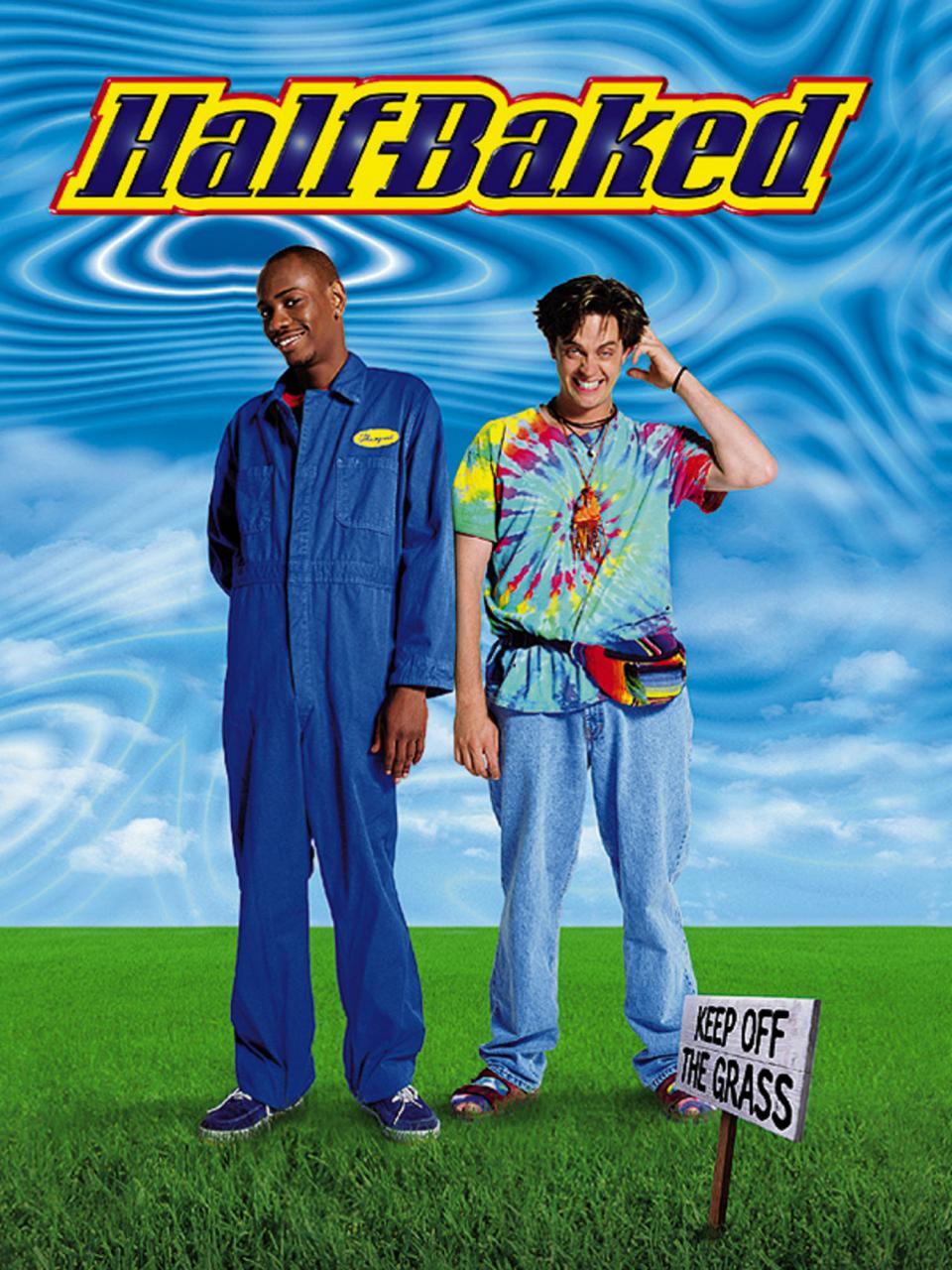
Guilty Pleasure No. 1: Half Baked


Half Baked

“Abba Zabba….You’re my only friend” — Thurgood

With the first month of January 2013 almost coming to an end I thought it was high time to introduce a new feature to the site. This one shall be called “Guilty Pleasure” and it will encompass all sorts of entertainment examples that I and those who on the site who wish to participate that they consider a personal guilty pleasure. It could be any film, music, book or games that one considers a personal favorite despite not being highly accepted by critics and the general population, at large.

The first entry to “Guilty Pleasure” is a stoner comedy that I always end up stopping whatever activity I’m doing at the moment to watch. I have it on DVD, will watch it on cable whenever it’s on and if a Blu-Ray version ever gets released I probably would buy it just to have it. This guilty pleasure film is 1998’s Half Baked starring Dave Chappelle and…well let’s just say all one needs to know is that it stars Dave Chappelle. It’s a mary jane flick that’s reached the levels of the Cheech and Chong flicks of the 70’s and 80’s.

My brother and I have seen this film so many times that we could quote scenes from it almost perfectly. I may not be quite the pothead that the characters in this film end up being, but anyone who has seen Half Baked knows at least one or two who fit the different type of stoners we find in it.

In the immortal words of Sampson Simpson: “YES! Cuban B!”