Review: Predator: Badlands (dir. by Dan Trachtenberg)


“Here, you’re not the predator. You’re the prey.” — Thia

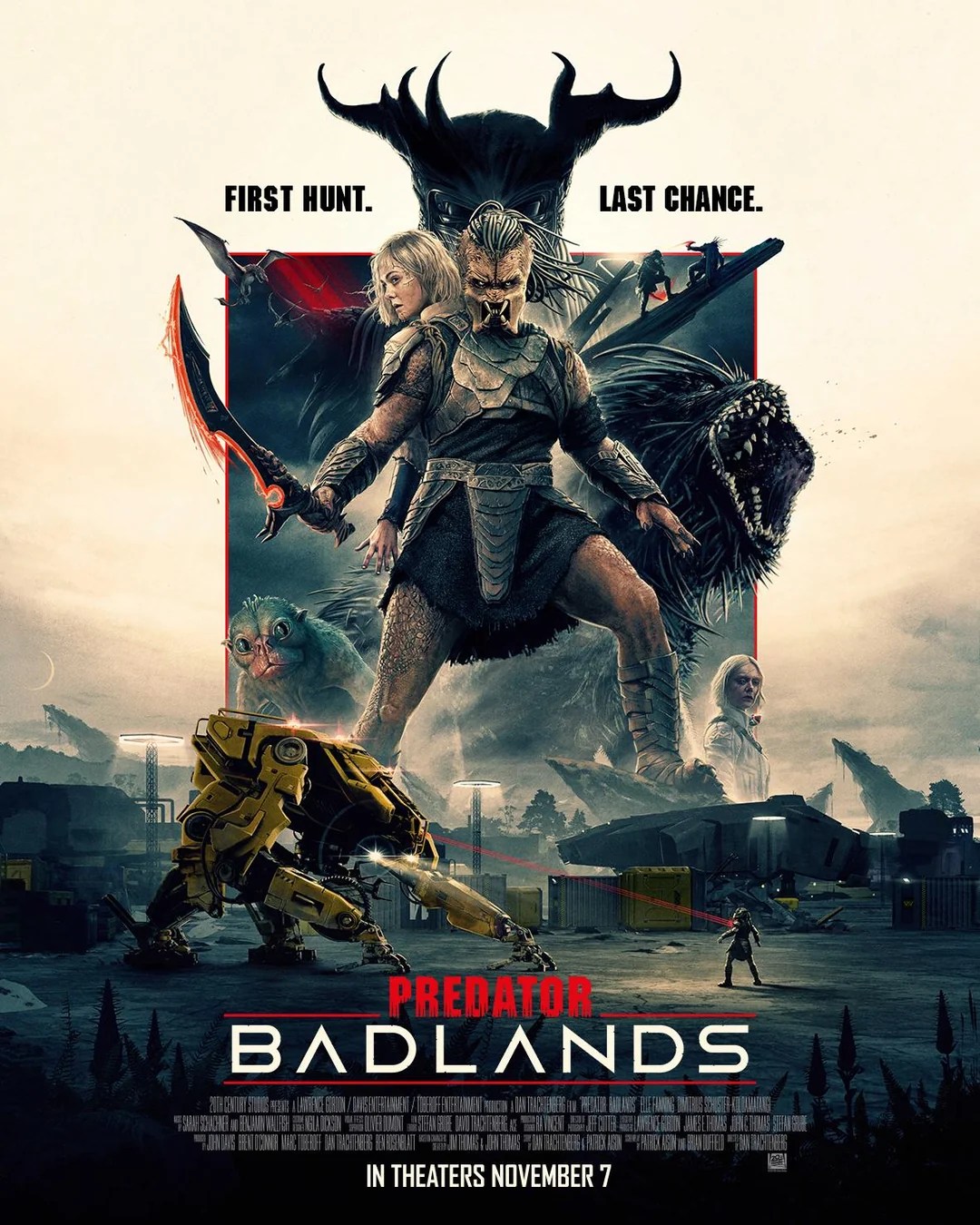
Predator: Badlands, directed by Dan Trachtenberg, marks a significant evolution within a franchise that has captivated audiences for nearly four decades. Known for its intense action and the enigmatic extraterrestrial hunters called the Yautja, the Predator series has continuously explored themes of survival, honor, and primal combat. Trachtenberg’s vision shifts the focus toward a more intimate and nuanced perspective by centering the narrative on Dek, the youngest and smallest member of the Predator clan. Through Dek’s journey, the film delves deep into Predator culture, ritual, and the personal struggles of one cast out from his tribe.

Dek, the youngest and smallest member of his Predator clan, finds himself exiled and cast out due to perceptions of weakness. Determined to prove himself worthy, he crash-lands on the hostile planet Genna—infamously named “The Death Planet”—where he must navigate a dangerous ecosystem full of lethal creatures and unpredictable hazards. Struggling to survive alone, Dek forms an uneasy alliance with Thia, a damaged synthetic android with knowledge of the planet. Together, they embark on a perilous journey that will test their strengths, challenge their beliefs, and redefine what it means to be predator and prey.

The chemistry between Dimitrius Schuster-Koloamatangi and Elle Fanning as Dek and Thia is notably believable and compelling. Their performances breathe life into this unconventional duo—Dimitrius conveys Dek’s internal struggle and fierce determination almost entirely through physicality and subtle expression, while Fanning’s portrayal of Thia is richly layered with intelligence, resilience, and warmth despite her synthetic nature. Their interactions—marked by moments of tension, wit, and genuine connection—ground the narrative emotionally, making their partnership feel authentic even amid the film’s relentless action and alien setting.

At the emotional core of the film lies this evolving relationship, where Thia’s intelligence, wit, and empathy contrast Dek’s warrior stoicism. Physically bound to Dek early on, their partnership forged from necessity deepens into a profound bond that challenges traditional Predator stereotypes of ruthless isolation, opening space for exploration of trust, companionship, and mutual reliance in an unforgiving universe.

Adding to this complexity, Fanning also portrays Thia’s sister Tessa, embodying a dogmatic loyalty to the Weyland-Yutani corporation’s ruthless agenda. This dual role enriches the film’s meditation on identity, autonomy, and control, as the opposing android personas reflect divergent paths of resistance and compliance. The tension between Thia’s compassion and Tessa’s dogmatic obedience mirrors Dek’s own conflict between inherited tribal honor and his emerging personal values shaped by empathy and survival.

The narrative intensifies in the second act as the story shifts from Dek and Thia navigating Genna’s rough terrain to confronting the formidable forces of Weyland-Yutani and their synthetic android enforcers. This escalation brings broader stakes and a shift from survival to active resistance, with Dek’s combat style evolving into inventive use of the alien ecosystem’s deadly plants and creatures. His resourcefulness and adaptability are tested as much as his physical prowess.

Thia’s role grows beyond mere survival partner, serving as a moral compass guiding Dek through escalating challenges. Their deepening bond underscores themes of loyalty and defiance against overwhelming power. The rivalry between Thia and Tessa encapsulates both personal and systemic struggles, enriching the narrative’s emotional and thematic layers.

Action scenes in this act blend visceral intensity with strategic ingenuity, highlighting the evolving dynamic between Dek’s warrior instincts and Thia’s empathetic intelligence. This partnership provides an emotional anchor amid rising external threats.

Visually, while some of the VFX may not reach the technical heights of blockbuster films like AvatarPredator: Badlands excels in blending digital effects with practical makeup and effects work. This approach makes the portrayal of Dek and the other Yautja—particularly when not helmeted—convincing and tangible. The hybrid effects allow Dek’s Yautja character to emote convincingly, adding crucial depth and relatability to a typically masked and silent character. This tactile realism enhances the immersive quality of the film and brings the Predator characters to life in a way that CGI alone might not achieve.

A distinct departure for the franchise, the film carries a PG-13 rating—a strategic decision enabled by the filmmakers’ exclusive use of non-human characters—synthetic androids and other alien beings—in violent scenes. This choice eliminates the display of red human blood, substituting blue synthetic fluids, thereby maintaining intensity while broadening audience accessibility. Although this approach softens the visceral brutality traditionally associated with the franchise, it allows for sustained creative violence and suspense without an R-rating’s restrictions. Some fans may find the absence of traditional gore reduces the raw impact and immediacy familiar to previous entries.

Throughout, the violence is intentional and purpose-driven, enriching the narrative rather than serving gratuitous spectacle. The film’s conclusion thoughtfully underscores themes of self-determination, as Dek eschews rigid tribal expectations in favor of personal autonomy, while Thia embraces an evolving identity beyond her synthetic origins.

One of the film’s most impressive achievements—and a testament to its commitment to authenticity—is the introduction of a fully constructed Yautja language. Developed by linguist Britton Watkins, who was recommended by Paul Frommer (the creator of the Na’vi language for James Cameron’s Avatar), this language was crafted with respect for the anatomical and cultural traits of the Predator species. Lead actor Dimitrius Schuster-Koloamatangi and his fellow Yautja cast members learned to perform fluently in this language. This effort adds remarkable depth and realism to the Predator characters, creating a linguistic culture that supports the film’s immersive world-building. Scenes featuring Yautja dialogue are carefully subtitled, offering fans a fascinating and detailed glimpse into Predator communication and ritual.

Predator: Badlands is a layered, compelling addition to the saga. It pairs exhilarating action with thoughtful meditations on identity, survival, and connection. The evolving relationship between Dek and Thia, amplified by Elle Fanning’s complex dual roles, grounds the film emotionally and thematically, broadening the Predator mythos in significant ways.

Director Dan Trachtenberg has firmly cemented his position as the franchise’s caretaker, continuing a remarkable three-film streak following the critically acclaimed Prey and the animated Predator: Killer of Killers. Each installment boasts distinctive narrative voices and innovative approaches that have successfully engaged and expanded the fanbase. Trachtenberg’s vision skillfully balances honoring the franchise’s core elements with fresh storytelling, ensuring Predator remains vital and intriguing for both longtime followers and new viewers alike.

Predator Franchise Reviews
Review: Predator: Killer of Killers (dir. by Dan Trachtenberg)


“A fight to the death… only one will live… and the survivor… will face me!” — Grendel King

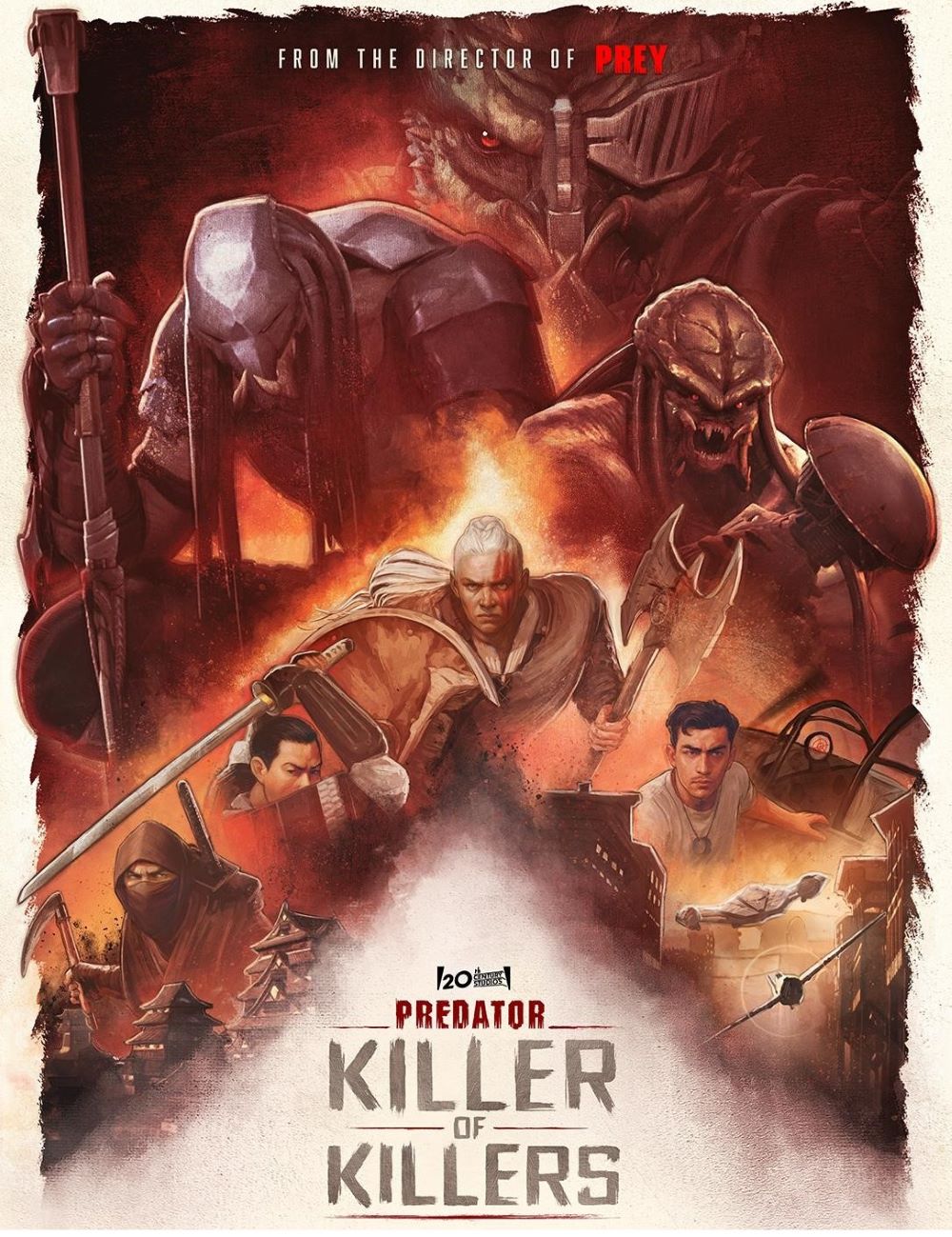
Hulu’s Predator: Killer of Killers signifies an ambitious and stylistically bold evolution of the Predator franchise, once again directed by Dan Trachtenberg following his excellent 2022 film Prey. Trachtenberg has clearly become the new creative caretaker of this series, bringing fresh vision and depth to the franchise. This animated anthology spans three distinct historical periods—Viking-era Scandinavia, feudal Japan, and World War II Europe—and tells the story of humanity’s ongoing, brutal clash with the alien hunters. By setting the predator mythos across such different cultures and eras, Trachtenberg presents a compelling exploration of survival, legacy, and adaptation.

The film unfolds in three chapters, each focusing on a different protagonist. The first segment introduces Ursa, a Viking mother consumed by grief and vengeance, who soon encounters a Predator in a primal battle that tests her strength and will to survive. The second segment is largely silent, centering on estranged brothers—a samurai and a ninja—in feudal Japan, who must unite against the alien menace. The final chapter shifts to World War II, following Torres, a Latino mechanic who seizes a chance to become a pilot amid chaotic battles against the Predators. Each story is steeped in its cultural milieu, aiming for depth and texture despite the limited runtime.

Visually, the film leverages a painterly animated style reminiscent of acclaimed adult animations like Arcane and Spider-Verse, yet it carries a darker, grittier tone suitable for the Predator universe. This style allows for intense, stylized violence—gore, blood, and brutal combat—which the anthology format showcases spectacularly. The distinct visual aesthetics of each era—from the somber shadows of Viking times, the flowing elegance of Japanese landscapes, to the metallic intensity of WWII dogfights—remarkably serve the film’s atmospheric ambitions. Notably, the Predators themselves are designed to reflect the atmosphere of each segment: the hulking, brute force Predator in the Viking-era matches the raw, physical brutality of that time; the lithe, agile Predator in feudal Japan suits the stealthy, precise combat of the samurai and ninja; and the grizzled, veteran pilot Predator in the WWII segment complements the aerial warfare and war-hardened theme. While some viewers may find the animation style unconventional compared to live-action, it delivers a fresh and inventive energy, allowing for spectacle and mood impossible in a traditional film.

Trachtenberg and screenwriter Micho Robert Rutare invest effort in creating emotionally grounded characters despite the anthology’s compressed storytelling. Ursa’s portrayal as a grieving mother brings weight to her arc, the Japanese chapter uses sibling rivalry and silence to evoke tension and tradition, while Torres embodies hope, determination, and cultural representation in a largely unexplored protagonist archetype for the series. The Predator itself remains a fearsome, vigilant hunter. Yet this film adds layers by examining how violence and survival shape human experience across eras, giving thematic weight beyond simple action thrills.

The film delivers relentless and varied action, ranging from poetic, skillful duels in Japan to brutal, visceral fights in the Viking and WWII chapters. Its anthology structure allows exploration of different combat styles and settings. However, this rapid pace sometimes sacrifices emotional depth and character development, making the stories feel like glimpses rather than fully realized narratives. Regarding the WWII segment, I found Torres’s character problematic; he often seems to succeed less through skill or ingenuity and more through luck or circumstance, embodying a “failing upwards” trope that weakens the audience’s emotional investment in his narrative. His frequent self-dialogue also disrupts the tone established by the near-silent Japanese chapter, creating a jarring shift that detracts from the overall cohesion.

Another notable aspect is the anthology format itself: while it enables a rich diversity of storytelling across periods and styles, the film’s roughly two-hour runtime limits how deeply each segment can develop. This leaves viewers craving more time to fully explore the characters and settings. In this respect, Predator: Killer of Killers might have been better served as a four-episode limited series rather than a single anthology film. Such a format would have allowed each segment to breathe, providing more room for nuanced storytelling and emotional engagement without making the runtime feel excessive. Stretching this anthology into a feature film already pushes its length near two hours, and adding more time to fully flesh out each story could have pushed it close to three hours, which might have been challenging for a theatrical or streaming movie. A limited series would have accommodated this expansiveness, letting each era’s story flourish while maintaining pacing and cohesion across episodes.

Though the film culminates in a grand finale combining the protagonists, the climax is somewhat chaotic and lacks coherence, which diminishes its impact. Notably, the movie ends on an unresolved note that doesn’t fully tie up the main storyline but instead clearly hints at a future sequel. While this open-ended conclusion may frustrate viewers seeking closure, it sets up anticipation for what lies ahead under Trachtenberg’s continued direction.

A fun piece of trivia is Michael Biehn’s inclusion as one of the voice actors in the film. With his role as Vandy in the WWII segment, Biehn has joined a very exclusive club: he is just the second actor to be part of all three iconic 1980s sci-fi franchises—AlienPredator, and Terminator. Known for his roles as Kyle Reese in The Terminator and Corporal Dwayne Hicks in Aliens, Biehn’s presence in Killer of Killers cements his unique legacy alongside fellow actors Lance Henriksen and the late Bill Paxton, who both previously held this sci-fi trifecta distinction. Director Dan Trachtenberg deliberately cast Biehn as a nod to this legacy, making his involvement a meaningful Easter egg for longtime fans.

While Predator: Killer of Killers marks a striking artistic and narrative effort within the franchise, it is not without flaws. The anthology format, while innovative, sometimes feels like a drawback—it limits how much the film can dig into each character or setting fully. The weakest link remains the WWII chapter and its protagonist Torres, whose arc doesn’t quite deliver the same resonance and often feels contrived. The finale’s lack of narrative closure may leave some feeling unsatisfied, though it promises more to come.

Despite these negatives, this film confirms Dan Trachtenberg’s role as a visionary leader for the Predator franchise, blending genre thrills with cultural specificity and psychological insight. For fans and newcomers alike, it offers a unique, stylized, and intense take on the alien hunters—the best the franchise has offered in many years. The film’s ambition and creativity outweigh its shortcomings, setting a foundation for a promising future for Predator under Trachtenberg’s direction.

Review: Prey (dir. by Dan Trachtenberg)


“It knows how to hunt, but I know how to survive.” — Naru

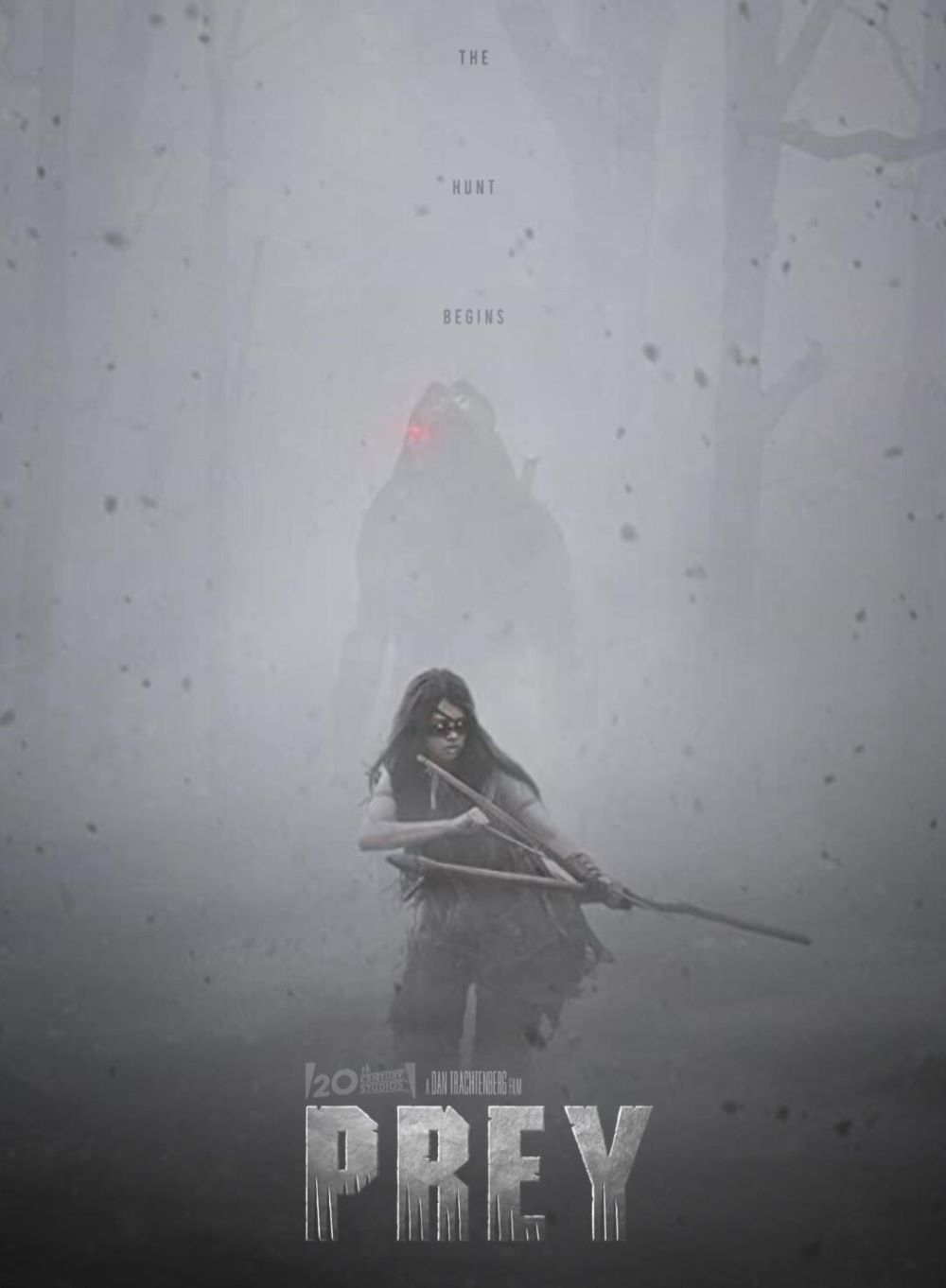
Dan Trachtenberg’s Prey is honestly a breath of fresh air for the Predator series. It takes us way back to the early 18th century, deep in the Comanche Nation, ditching the usual sci-fi city jungle for actual wide-open plains and a history-rich vibe. The story follows Naru, a young Comanche woman who’s determined to prove she can hunt just as well as the men in her tribe. Amber Midthunder totally nails it as Naru, giving a performance that’s both vulnerable and tough without trying too hard. Her journey isn’t just about hunting the Predator; it’s also about breaking free from the limits her tribe has set for her as a woman, and that makes the story hit a lot deeper than your typical monster flick.

Speaking of the monster, Prey strips away the Predator’s fancy gadgets and drops it into a more primal, back-to-basics showdown. This Predator isn’t rocking all the high-tech gear we usually see—it’s raw and brutal, with stuff that fits the time period, which makes the whole hunter vs. hunter dynamic feel way more grounded and tense. The movie smartly uses survival skills and brains over flashy tech, and that makes the hunt way more interesting because it’s about anticipation and smarts, not lasers and gadgets.

One of the coolest behind-the-scenes moves with Prey was the filmmakers’ emphasis on cultural authenticity, especially with language. While most of the film is in English, they also made a full Comanche language dub, which is huge because Comanche is a nearly lost language with very few fluent speakers. The cast went back and recorded the whole movie in Comanche, making it the first feature to do so. Originally, they intended to shoot the whole film in Comanche, which would have been even more impressive, but having this dub option available on streaming platforms gives viewers an immersive way to connect with the culture in an authentic way. This shows a real commitment to uplifting Indigenous voices while still making the film accessible.

Trachtenberg did a great job balancing the suspense with action. The Predator’s scenes are super intense and keep you on edge without going overboard. One of the coolest parts is when the Predator takes down a bear—it’s done so cleverly that even though the creature is rarely fully seen, the splashes of its green blood make the moment feel really eerie and unforgettable. The film really puts you in Naru’s shoes, making you feel her fear and determination as she tries to outsmart this deadly creature.

Now, even though the Predator is the main beast to watch out for, the behavior of the French fur trappers is actually more disturbing in many ways. These guys aren’t just out there trying to survive—they’re slaughtering entire herds of bison en masse, skinning the animals and leaving huge carcasses to rot. It’s a brutal, wasteful approach to hunting that contrasts starkly with the Predator, who hunts singularly and with purpose, never wasting what it kills. The trappers’ wanton destruction of the environment and disregard for the land and its creatures makes them a reprehensible presence in the film. They’re essentially invaders who exploit the natural resources with no respect, creating a real commentary on colonial greed. So while the Predator is the alien menace, the human antagonists serve as a grim reminder of real historical violence and environmental exploitation faced by Indigenous peoples. It’s a powerful layer in the story that adds depth to the conflict.

Besides Naru, the rest of the characters feel real and fleshed out. Her brother Taabe adds a nice sibling angle—there’s a good mix of support and conflict that makes their relationship believable and keeps the story grounded. The French fur trappers act as another layer of conflict, showing that not all dangers come from the Predator. Their ruthless ways make you think about the real threats to the Comanche people, adding depth to the narrative beyond just monster vs. human.

Visually, the film is gorgeous. The cinematographer Jeff Cutter captures the sweeping plains and natural beauty in a way that really draws you in, and the natural lighting, weather, and shadows all add to the mood perfectly. The music supports this vibe, mixing suspense with subtle tribal influences that really tie the whole atmosphere together. This combo of visuals and sound creates an immersive world you just want to get lost in.

The themes in Prey are surprisingly meaty. It challenges old-school gender roles, shines a light on indigenous culture with respect, and subtly touches on colonialism through its human villains. Naru’s fight to prove herself becomes more than just physical—it’s a stance against tradition that resonates on a broader level. This isn’t your usual throw-everything-at-the-wall action flick; it’s thoughtful and makes you care about the characters.

Sure, the movie’s pacing slows down a bit toward the end, stretching out the finale more than necessary, and a few moments lean on familiar action tropes, but these are small grumbles in an otherwise tight and exciting film. Practical effects—especially in how the Predator moves and attacks—bring a rawness that CGI-heavy movies often miss, making the battles feel grounded and visceral.

All in all, Prey stands out as probably the best Predator movie since the original. It respects the classic elements fans love but brings fresh ideas and a ton of heart. Amber Midthunder steals the show with her performance, and Dan Trachtenberg’s direction keeps things suspenseful and sharp. The cultural respect and social layers make it more than just another monster movie—it’s a rare example of blockbuster cinema that gets representation right.

If you’re into smart, intense action movies with a meaningful story and some cultural depth, you really shouldn’t miss Prey. It strips things down to the essentials—survival, smarts, and heart—and the result is a movie that sticks with you long after the credits roll. It’s about more than just hunting a monster; it’s about standing your ground, breaking through barriers, and owning your strength. Definitely worth checking out if you haven’t already.

Double Feature Trailers for Predator: Badlands and Predator: Killer of Killers


When Prey was released straight to streaming on Hulu in 2022, there were many who thought that the film was going to be another Predator franchise entry that would lead to major disappointment. I mean, if it was good, it would’ve had a theatrical release. So, it was a pleasant surprise when it was well-received by most critics and audiences, alike.

Director Dan Trachtenberg had earned much goodwill from those same people as with the executives who ran 20th Century for Disney. That goodwill has allowed Trachtenberg to work on two projects for the House of Mouse both of which are two different ideas to expand the Predator franchise.

The two projects in question are the 3-part animated series for Hulu, Predator: Killer of Killers and the one set for a full theatrical release this November, Predator: Badlands.

The animated series will be about following the stories of the titular hunter set in three different eras (Viking era, Feudal Japan and World War 2). Predator: Killer of Killers may be animated but from the trailer it doesn’t skimp on the gore and violence. The series is set to premiere on Hulu on June 6, 2025.

The feature film Predator: Badlands is set for a November 7, 2025 release and will take a coming-of-age route but from the point of view of a young Predator seen as an outcast from his clan and teaming up with an unlikely ally played by Elle Fanning.

Predator: Killer of Killers Trailer

Predator: Badlands Trailer

4 Shots From 4 Evil Alien Invasions: Cloverfield, Battle Los Angeles, Skyline, 10 Cloverfield Lane


4 Shots From 4 Films is just what it says it is, 4 shots from 4 of our favorite films. As opposed to the reviews and recaps that we usually post, 4 Shots From 4 Films lets the visuals do the talking.

Over the past few years, the idea of this planet being invaded by aliens has suddenly gotten very popular.  Now, I know that some films continue to suggest that the aliens would actually be benevolent explorers or that they would land here and order us to protect the environment.  However, I don’t really buy the whole idea of friendly aliens.  (Actually, I don’t really buy the idea of alien visitors in general but that’s something was can discuss in anothe post….)

So, in order to keep our readers from getting complacent, here are….

4 Shots From 4 Evil Alien Invasions

Cloverfield (2008, dir by Matt Reeves)

Battle Los Angeles (2011, dir by Jonathan Liebesman)

Skyline (2011, dir by The Brothers Strause)

10 Cloverfield Lane (2016, dir by Dan Trachtenberg)

The Hawaii Film Critics Society Embraces La La Land


la-la-land

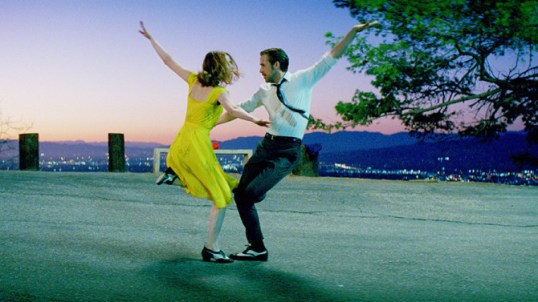
On January 16th, the film critics of Hawaii (and who wouldn’t want to be a member of that group?) announced their picks for the best of 2016!  They really, really liked La La Land!

BEST FILM:
La La Land

BEST DIRECTOR:
Damien Chazelle, La La Land
BEST ACTOR:
Casey Affleck, Manchester by the Sea
BEST ACTRESS:
Viola Davis, Fences
BEST SUPPORTING ACTOR:
Jeff Bridges, Hell or High Water (tie)
Michael Shannon, Nocturnal Animals
BEST SUPPORTING ACTRESS:
Michelle Williams, Manchester by the Sea
BEST ORIGINAL SCREENPLAY:
Taylor Sheridan, Hell or High Water
BEST ADAPTED SCREENPLAY:
Tom Ford (Based on the Novel by Austin Wright), Nocturnal Animals
BEST CINEMATOGRAPHY:
Linus Sandgren, La La Land 

BEST EDITING:
Tom Cross, La La Land
BEST ART DIRECTION:
Austin Gorg, La La Land 
BEST COSTUME DESIGN:
Madeline Fontaine, Jackie
BEST MAKE-UP:
Bill Corso, Deadpool
BEST VISUAL EFFECTS:
Arrival (tie)
Doctor Strange
BEST ORIGINAL SCORE:
Justin Hurwitz, La La Land 
BEST SONG: 
Justin Hurwitz, Benj Pasek and Justin Paul, “Audition (Fools Who Dream),” La La Land  (tie)
Lin-Manuel Miranda, “How Far I’ll Go,” Moana
BEST ANIMATED FILM:
Kubo and the Two Strings (dir. Travis Knight) (tie)
Zootopia (dir. Byron Howard, Rich Moore and Jared Bush)
BEST DOCUMENTARY:
OJ: Made in America (dir. Ezra Edelman)
BEST FOREIGN LANGUAGE FILM:
The Handmaiden (dir. Chan-wook Park), (South Korea) (tie)
Neruda (dir. Pablo Larrain),  (Chile)
BEST HAWAII FILM:
Moana (dir. Ron Clements, Don Hall, John Musker and Chris Williams)
BEST NEW FILMMAKER:
Dan Trachtenberg,  10 Cloverfield Lane
BEST FIRST FILM:
10 Cloverfield Lane (dir. Dan Trachtenberg)
BEST OVERLOOKED FILM:
Hell or High Water (dir. David Mackenzie)
BEST SCI-FI/HORROR FILM:
Arrival (dir. Denis Villeneuve)
BEST STUNTS:
The Magnificent Seven 
BEST VOCAL/MOTION CAPTURE PERFORMANCE:
Charlize Theron/ Kubo and the Two Strings
WORST FILM OF THE YEAR:
Fifty Shades of Black  (tie)
Zoolander 2

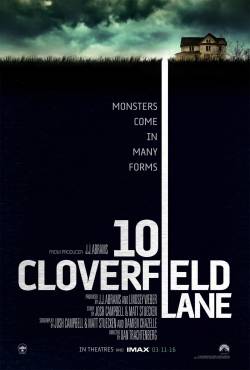
Film Review: 10 Cloverfield Lane (dir by Dan Trachtenberg)


10_Cloverfield_Lane

I know that everyone’s excited about Batman v. Superman being released this weekend but before you go off and spend your money to watch two comic book titans beat up on each other for six hours (or however long that damn movie is supposed to last), you should ask yourself, “Have I seen 10 Cloverfield Lane?”

If the answer to that question is no, you need to go out and see it now.  Yes, even before you see Batman v. Superman.  Batman v. Superman is going to be around for a while.  10 Cloverfield Lane has already been out for a couple of weeks and, though it’s done well enough, it still hasn’t quite become the blockbuster that it deserves to be.

Most of the talk about 10 Cloverfield Lane has centered around the twist ending.  I’m not going to spoil the ending, even though you probably already know what it is.  Oddly enough, as much as I liked the film, the ending didn’t really work for me.  I liked the idea behind the ending more than I liked the actual execution.  Add to that, it added an element of hope to a film that, up until that point, had been wonderfully and defiantly hopeless.  The film’s ending also set things up for a sequel, one that will probably not be as interesting as the original.

Fortunately, the first 83 minutes of 10 Cloverfield Lane are so strong and well-executed that I can overlook any minor quibbles that I had with the final 20.  Mary Elizabeth Winstead plays Michelle.  Michelle lives in New Orleans and, when we first meet her, she’s breaking up with her fiancée.  (Though we never actually see him, the fiancée is played by Bradley Cooper.  What is Michelle thinking!?)  Leaving the safety of her apartment, Michelle goes for a drive in the country.  (Going off to the middle of nowhere in the middle of the night?  It might not be a good decision but hey, we’ve all been there.)  Suddenly, she starts to hear weird things on the radio.  Cities across America are suffering from blackouts.  She gets a call from her fiancée but before she can answer the phone, there’s a sudden a flash of light.  Something crashed into her car from behind and Michelle blacks out.

When Michelle awakens, she’s in an underground bunker.  Her host is Howard (John Goodman), a doomsday prepper who tells her that he saved her life.  He explains that something has happened on the surface.  The air is poisoned.  The world is ending.  The only safe place is in the bunker.  Fortunately, Howard has an extensive collection of old VHS tapes, several teen magazines (“The quizzes have already been done,” Howard apologetically says), and a lot of food.  He also has a change of clothes for Michelle to wear.  Howard explains that the clothes once belonged to his daughter.

From the minute we meet him, it’s obvious that Howard is unstable.  The only question is how unstable.  The film makes brilliant use of John Goodman’s persona.   When we see John Goodman, our automatic instinct is to like him.  We’re used to seeing him playing good guys.  What we forget, however, is that John Goodman has played his share of villains as well.  He can be intimidating, as Michelle quickly realizes.  Howard is unpredictable.  One minute, he’s watching Pretty In Pink for the 100th time.  The next minute, he’s threatening to dunk someone in acid.

It turns out that Howard and Michelle are not alone.  The slightly dim but good-natured Emmett (John Gallagher, Jr.) is also in the bunker.  Unlike Michelle, Emmett believes Howard’s claims about something terrible happening on the surface.  Emmett also believes that, no matter how correct he may be about the end of the world, Howard still might be totally crazy.

So, is Howard crazy?  You bet he is.  That’s obvious from the minute we meet him.  The brilliant thing about 10 Cloverfield Lane is that, even as it convinces us that Howard’s insane and dangerous, it still makes us wonder if he might be right.  Director Dan Trachtenberg expertly captures the claustrophobic tension of life in that underground bunker and the script has a nicely satirical subtext.  (The film’s best moments are when Howard attempts to play the role of patriarch to those who he is forcing to be his new family.)  The film is brilliantly acted, especially by Mary Elizabeth Winstead who perfectly portrays both Michelle’s fear and her inner strength.  As for John Goodman — well, you’ll probably never quite look at him the same way again.

10 Cloverfield Lane is an intelligent and well-crafted thriller.  Don’t wait for Netflix.  Don’t go to the dollar theater.  If you haven’t already, see it now!