October Positivity: The Climb (dir by John Schmidt)


2002’s The Climb is about two mountain climbers who begin as rivals and end up as friends.

Derrick Williams (Jason George) is an arrogant and cocky climber, the type who enjoys conquering mountains for his own personal glory.  (See where this heading?)  Even though his girlfriend’s father (Clifton Davis) does not approve of him, Derrick still says that he’s planning on marrying her.  Or at least, he does until he finds out that she’s pregnant and he realizes that being a father will require him to take on a lot of new responsibilities.

Michael Harris (Ned Vaughn) is a selfless climber who sees every climb as a team effort and who does everything for the Glory of God.  (Again …. see where this heading?)

Businessman Mack (Dabney Coleman, bringing a villainous edge to a character who I don’t necessarily think was meant to come across as being villainous) hires Derrick and Michael to climb a notorious mountain, all as a way to promote his business.  At first, Derrick doesn’t want to climb with anyone else but when his girlfriend tells him that she’s pregnant, he decides that he could use some time away from her and promptly heads off to the mountain.  Michael, on the other hand, is reluctant to climb because he doesn’t trust Mack’s company to keep all of their promises.  Michael feels that climbing the mountain for Mack would be the same as endorsing the company and telling people that the company is an honest company.

You can probably guess what happens.  Michael and Derrick climb the mountain.  They talk.  They bond.  They discuss they’re differing views on religion.  And then one of them tragically dies and the survivor is forced to reconsider his life.  It’s not a surprise when one of them dies because a movie like this can only really work if one of the two friends has tragically passed away before the end credits.  And it’s not really a surprise as to who passes away because it’s not like a faith-based movie is going to kill the guy who needs to learn a lesson about taking responsibility and being a father.  From the start, it’s obvious who among the two is doomed and, as such, there’s not much suspense to be found in The Climb.

On the plus side — and yes, I realize that I do always go out of my way to find something positive to say about nearly every movie I review but that’s just because I think every movie has something about it that can be appreciated — some of the climbing sequences are visually impressive.  It’s obvious that the film’s producers decided to spend a little money on the mountain scenes and, as a result, the scenery is nice to look at.  I’m a fan of nice scenery and I’ve sat through more than a few bad films just to see a pretty mountain.

Personally, and this won’t come as a surprise to anyone who knows me, I’ve never felt the need to climb a mountain.  If I can see what the top looks like from the ground, that’s enough for me.

Scenes That I Love: The Muppets Meet Dabney Coleman In The Muppets Take Manhattan


Yesterday, the world learned the sad news that the great Texas character actor, Dabney Coleman, had passed away at the age of 93.

Today’s scene that I love comes from 1984’s The Muppets Take Manhattan.  In this scene, the Muppets try to sell Coleman on their idea for a musical.  Coleman, meanwhile, does his best to cheat the Muppets out of all of their money.  It takes a truly great actor to give a convincing performance while acting opposite a very large group of puppets.

(I mean, we all know Kermit’s real but I’m pretty sure that the rest of them are puppets….)

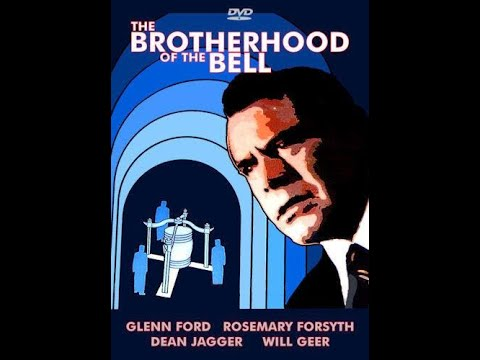
14 Days of Paranoia #10: The Brotherhood of the Bell (dir by Paul Wendkos)


First aired on television in 1970, The Brotherhood of the Bell tells the story of Andrew Patterson (Glenn Ford).

Andrew Patterson is a widely respected economics professor.  He is an influential academic, one who has a nice house, a beautiful wife (Rosemary Forsyth), and a father-in-law (Maurice Evans) who owns a very successful business.  Patterson is also a member the Brotherhood of the Bell, a secret society made up of successful men who all graduated from the prestigious College of St. George in San Francisco.  Patterson has been a member of the society for 22 years and he’s never really taken it that seriously.  He thinks of it as just being a collection of influential men who enjoy getting together and discussing their vision for the world.

That all changes when the man who brought Andrew to the Society, Chad Harmon (Dean Jagger), gives Andrew an assignment.  The Society wants him to deliver an envelope to his friend, Dr. Konstantin Horvathy (Eduard Franz).  Horvathy is up for a deanship that another member of the Society desires for himself.  Inside the envelope is damaging information that the Society has gathered about the people who helped Horvathy defect to the United States, information that will be made public unless Horvathy withdraws as a candidate.  Reluctantly, Andrew shows Horvathy the envelope.  Horvathy responds by committing suicide.

Stricken with guilt, Andrew decides to expose the existence of the Society but he discovers that won’t be easy.  Almost overnight, Andrew’s perfect life starts to collapse.  He loses his job.  The IRS launches an investigation of his father (Will Geer).  As Chad explains it, the Society is responsible for everything that Andrew has and, therefore, the Society can take everything away.  When Andrew goes public, he’s dismissed as just being paranoid and soon, Andrew truly is paranoid.  With his marriage in ruins, Andrew goes on a talk show and can only watch helplessly as his claims are dismissed by the host (William Conrad) and as the audience argues about whether or not the Society is a white plot, a communist plot, a Jewish plot, a Catholic plot, or a government plot.  Even the people who believe Andrew are too busy fighting amongst themselves to provide any help for him or to stand up to the unified power of the Brotherhood.  The host repeatedly rings a bell during the show, the better to mock everyone’s fears.  The film makes a good point.  Crazed theorists are often a conspiracy’s best friend.

An intelligently written and well-acted film, The Brotherhood of the Bell‘s main strength is the direction of Paul Wendkos.  The lighting gets darker and the camera angles become increasingly more skewed as Andrew’s paranoia grows.  In fact, Wendkos does such a good job of visualizing Andrew’s deteriorating mental state that it’s easy to wonder if maybe everyone is right and all of this really is just happening in Andrew’s head.  Though the film ends on a slightly triumphant note, it’s hard not to feel that it’s a temporary victory at best.  The Brotherhood of the Bell (which I imagine was based on Yales’s Skull and Crossbones) will always be there.

14 Days of Paranoia:

  1. Fast Money (1996)
  2. Deep Throat II (1974)
  3. The Passover Plot (1976)
  4. The Believers (1987)
  5. Payback (1999)
  6. Lockdown 2025 (2021)
  7. No Way Out (1987)
  8. Reality (2023)
  9. Chappaquiddick (2017)

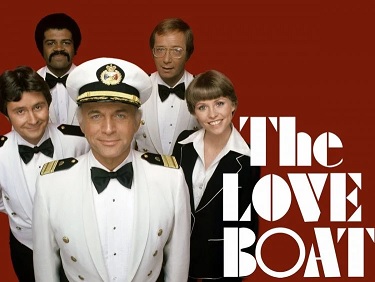
Retro Television Reviews: The Love Boat 2.13 “El Kid/The Last Hundred Bucks/Isosceles Triangle”


Welcome to Retro Television Reviews, a feature where we review some of our favorite and least favorite shows of the past!  On Wednesdays, I will be reviewing the original Love Boat, which aired on ABC from 1977 to 1986!  The series can be streamed on Paramount Plus!

Welcome aboard!  Get ready for tonal whiplash on this week’s episode of The Love Boat!

Episode 2.13 “El Kid/The Last Hundred Bucks/Isosceles Triangle”

(Dir by Allen Baron, originally aired on December 9th, 1978)

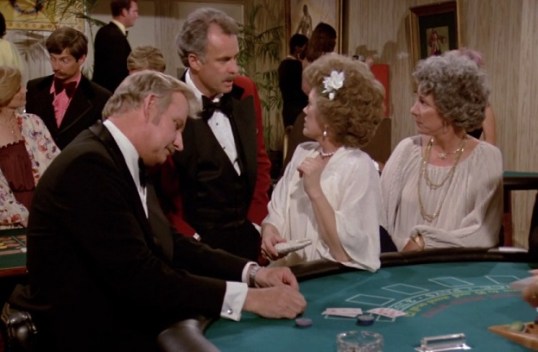
Wes (David Madden) and Renee Larson (Dena Dietrich) are happy to be setting sail with their friend and business partner, April (Rue McClanahan).  They’re even more excited when the widowed April meets Van Milner (Dabney Coleman), a recently divorced businessman.  Not only is April falling in love with Van but it also appears that Van might even be willing to join the board of April’s hospital and invest some of his money into fixing the place up.  Except, of course, Van lost his job over a year ago and he really doesn’t have that much money left.  April is crestfallen to discover that Van is not the wealthy man that she believed him to be.  Was he just romancing her for her money?  When Van wins a few thousand dollars at the craps table, he donates the money to the hospital and April realizes that he was being honest about his feelings towards her.

This was a pretty predictable story and April was way too quick to forgive Van for his dishonesty but it was interesting to see an actor like Dabney Coleman, someone who brought a naturally cynical edge to any character that he played, on a show like The Love Boat.  As played by Coleman, Van seemed to be suffering from very real inner pain.  For once, the emotional drama on The Love Boat felt, if not quite real, then at least credible.

Speaking of pain, that’s what Larry (Robert Urich) and Cybill Hartman (Heather Menzies) had waiting for them when they took the Love Boat to Mexico so they could adopt a baby.  Upon arriving at the local orphanage, they were told that the mother of their baby had changed her mind and would not be giving up her baby after all.  Instead, Larry and Cybill left with 12 year-old Pepito (Gabriel Melgar), a little brat who steals Larry’s watch and sells it on the boat.  When Larry gets upset, Pepito grabs an inflatable lifeboat and prepares to jump overboard.  Fortunately, Larry and Cybill talk him out of it and he agrees to be their son and to stop stealing stuff.  This was an annoying story, largely because Pepito was so whiny.  It was hard not to feel that Larry and Cybill deserved better than having to raise Pepito.

Finally, Julie’s friend, Karen Maynard (Connie Stevens), boards the boat and both Captain Stubing and Doc Bricker spend the entire voyage pursuing her because it’s not like the Captain and the ship’s doctor would actually be expected do their job while the ship is floating in the middle of the ocean.  Gopher, Ike, and Julie take bets on who Karen will choose but, in the end, Karen chooses neither because both Doc and Stubing decide to respect the other’s feelings and stop pursuing Karen.  This whole storyline was silly because there was really no doubt about who Karen would have picked.  Seriously, anyone who is a passenger on a cruise is automatically going to fall for the captain because the captain is the most powerful person on the boat.  But, on the plus side, the storyline showed off the chemistry between all of the show’s regulars.  It was likable, even if it never quite felt plausible.

This was an episode about which I had mixed feelings.  The three storylines were so tonally dissimilar that they didn’t really seem that they all should have been happening on the same cruise.  Plus, Pepito was the most obnoxious orphan since the kids on One World.  I’m glad things worked out for Dabney Coleman, though.

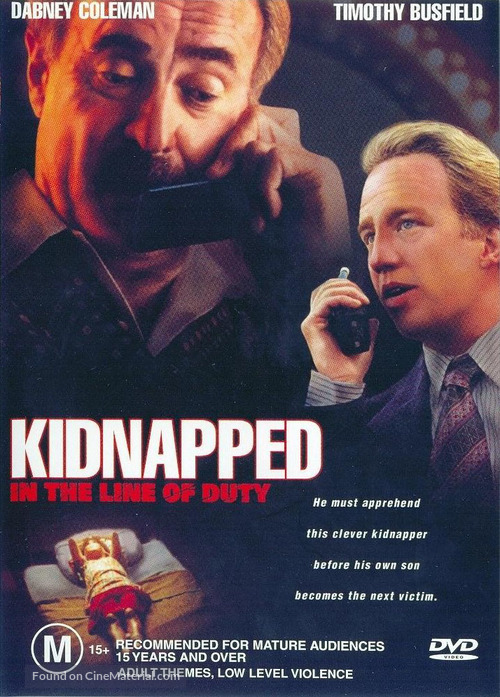
Kidnapped: In The Line of Duty (1995, directed by Bobby Roth)


Arthur Milo (Dabney Coleman) is an IRS agent who uses his government position and the powers that with it to commit heinous crimes.  (A corrupt IRS agent?  What a shock!)  Milo kidnaps the children of the wealthy, using legally-filed tax returns to select his target.  Most of his accomplices all have the perfect alibi because they’re all in prison!  As an agent of law enforcement, Milo is able to check them out of prison for hours at a time.  Milo claims that they’re helping him out with an investigation but actually, they’re kidnapping children and digging graves in return for Milo’s help with their tax problems.  Once the crime has been committed, Milo returns them to jail.  It seems like the perfect plan but Milo may have met his match in hard charging FBI agent Pete Honeycutt (Timothy Busfield).

Loosely based on a true story, Kidnapped was the tenth of NBC’s In The Line of Duty films and it was one of the few not to be directed by Dick Lowry.  It’s also the only one of the In The Line of Duty films to not feature a member of law enforcement getting gunned down nor does it end with a title card of statistics about the number of cops who are killed on the job each year.  All of this leads me to suspect that Kidnapped was not originally meant to be an In The Line of Duty movie and that it was added to the series at the last minute.  NBC was obviously hoping that the rating success of Ambush in Waco would rub off on Kidnapped.

Kidnapped is a pretty typical eccentric criminal vs eccentric investigator movie.  Pete is obsessed with taking down Milo and Milo is obsessed with showing up Pete.  It’s not a surprise when Milo starts to personally taunt Pete and it’s also not a surprise that Pete’s family is put at risk.  There are a few strange moments of humor, most of them supplied by Tracey Walter as Milo’s spacey accomplice.  The humor, though, doesn’t always seem to go along with a fact-based story about an IRS agent who abducted children and held them for ransom.

The best thing about the film is Dabney Coleman as Arthur Milo.  Coleman has always been an underrated actor.  Nobody did as good at a job at playing a curmudgeon as Dabney Coleman.  In Kidnapped, Coleman takes his usual persona up a notch by playing Milo as someone who is not just annoyed by people but who is willing to kill them too.  While Arthur Milo’s schemes are usually clever, he’s so arrogant and determined to show off how much smarter he is than everyone else that he’s usually his own worst enemy.  He’s the type of criminal who wears a white suit and a panama hat, despite the fact that his outfit will make him instantly recognizable to anyone who witnesses his crimes.  The character is a strange one but Coleman brings him to life and makes him believable.  Kidnapped is a pretty standard police procedural but worth seeing for Coleman’s villainous turn.

Film Review: Wargames (dir by John Badham)


If you thought Tom Cruise nearly started a war in Top Gun, you should see what Matthew Broderick did three years earlier in Wargames!

In Wargames, Broderick plays David Lighter, a dorky but likable teenager who loves to play video games and who spends his spare time hacking into other computer systems.  (Of course, since this movie was made in 1983, all the computers are these gigantic, boxy monstrosities.)  Sometimes, he puts his skills to good use.  For instance, when both he and Jennifer (Ally Sheedy) are running the risk of failing their biology class, he hacks into the school and changes their grades.  (At first, Jennifer demands that he change her grade back but then, a day later, she asks him to change it again.  It’s kind of a sweet moment and it’s also probably the way I would have reacted if someone had done that for me in high school.)  Sometime, David’s skills get him into trouble.  For instance, he nearly destroys the world.

Now, keep in mind, David really didn’t know what he was doing.  He was just looking for games to play online.  He didn’t realize that he had hacked into NORAD and that Global Thermonuclear War was actually a program set up to allow a gigantic computer named WOPR to figure out how to properly wage a thermonuclear war.  David also doesn’t know that, because humans have proven themselves to be too hesitant to launch nuclear missiles, WOPR has, more or less, been given complete control over America’s nuclear arsenal.

(Wargames actually starts out with a chilling little mini-movie, in which John Spencer and Michael Madsen play two missile technicians who go from joking around to pulling guns on each other during a drill.  Of course, Madsen’s the one ready to destroy the world.)

Of course, the military folks at NORAD freak out when it suddenly appears as if the Russians have launched a nuclear strike against Las Vegas and Seattle.  (Not Vegas!  Though really, who could blame anyone for wanting to nuke Seattle?)  In fact, the only thing that prevents them from launching a retaliatory strike is David’s father demanding that David turn off his computer and take out the trash.  However, WOPR is determined to play through its simulation, which pushes the world closer and closer to war.  (One of the more clever — and disturbing — aspects of the film is that, even after the military learns that the Russians aren’t planning the attack them, they still can’t go off alert because the Russians themselves are now on alert.   Once the war starts, it can’t be stopped even if everyone knows that the whole thing was the result of a mistake.)

With the FBI looking for him, David tries to track down the man who created WOPR, Dr. Stephen Falken (John Wood).  However, Falken is not easy to find and not as enthusiastic about saving the world as one might hope….

Watching Wargames was an interesting experience.  On the one hand, it’s definitely a dated film.  (Again, just look at the computers.)  At the same time, its story still feels relevant.  In Wargames, the problem really isn’t that WOPR wants to play a game.  It’s that men like Dr. John McKittrick (well-played by Dabney Coleman) have attempted to remove the human element and have instead put all of their faith in machines.  The appeal of a machine like WOPR is that it has no self-doubt and does whatever needs to be done without worrying about the cost.  But that’s also the reason why human beings are necessary because the world cannot be run on just algorithms and cold logic.  That’s a theme that’s probably even more relevant today than it was in 1983.

Wargames is also an exceptionally likable film.  In fact, it’s probably about as likable as any film about nuclear war could be.  On the one hand, you’ve got everyone at NORAD panicking about incoming missiles and then, on the other hand, you’ve got David and Jennifer having fun on his computer and trading flirty and silly quips.  Matthew Broderick and Ally Sheedy are both likable in the two main roles.  Broderick brings a lot of vulnerability to the role of David.  (David Lightner is a far more believable teenager than Ferris Bueller.)  He handles the comedic scenes well but he’s even better as David grows increasingly desperate in his attempts to get the stubborn adults around him to actually listen to what he has to say.  When it appears the only way to save the world is to swim across a bay, David is forced to admit that he’s never learned how to swim because he always figured there would be time in the future.  Yes, it’s a funny scene but the way Broderick delivers the line, you understand that David has finally figured out that there’s probably not going to be a future.  It’s not that he doesn’t know how to swim.  It’s that he’ll never get the chance to learn or do anything else for that matter.

Wargames is definitely a film of its time but its themes are universal enough that it’s a film of our time as well.

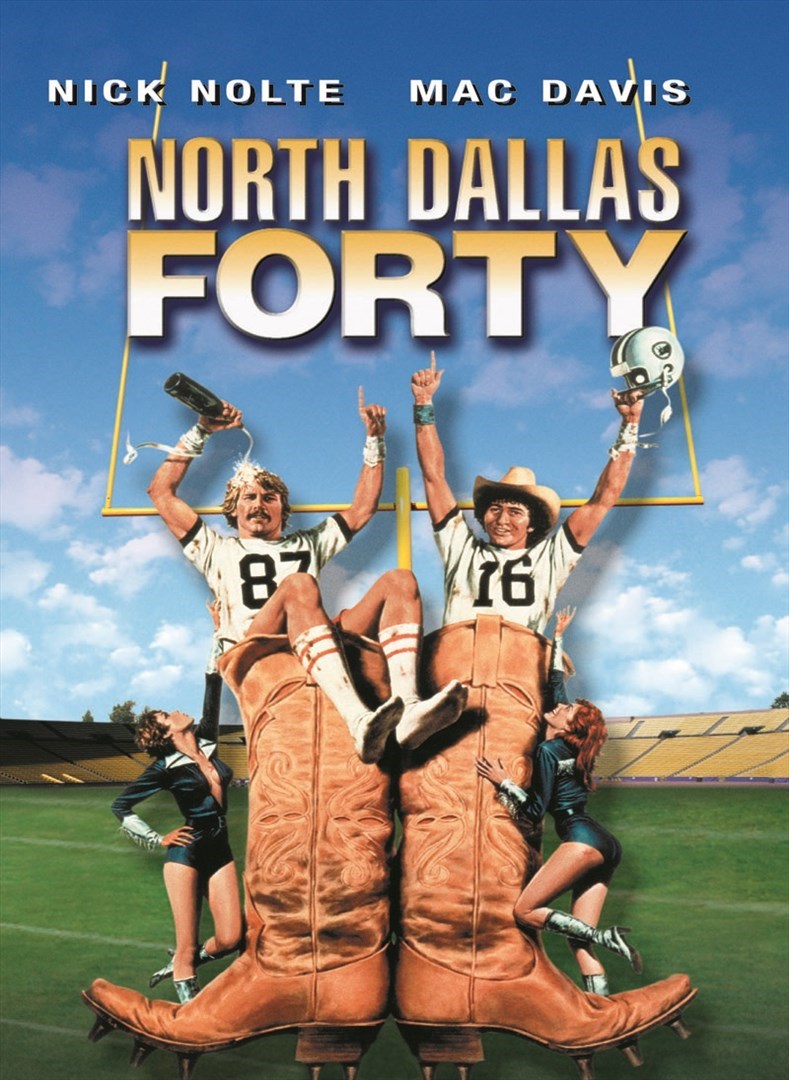
North Dallas Forty (1979, directed by Ted Kotcheff)


Pete Gent was a college basketball star at Michigan State University who, in 1964, received a tryout with the Dallas Cowboys.  Intrigued by the $500 that the team was offering to any player who attended training camp that summer, Gent accepted.  Despite the fact that Gent had never before played football, the Cowboys were impressed with his athleticism and they signed him to the team.

For five seasons, Gent played wide receiver.  During that time, he caught a lot of balls, became close friends (or so he claimed) with quarterback Don Meredith, and got under the skin of Coach Tom Landry with his nonconformist attitude.  After several injuries kept him off the field during the 1968 season, Gent was traded to the Giants who waived him before the next regular season began.

Out of work and with no other team wanting to sign him, Gent wrote a thinly veiled autobiographical novel about his time with the Cowboys.  North Dallas Forty was published in 1973 and it immediately shot up the best seller charts.  When the book was published, football players were still regularly portrayed as being wholesome, all-American athletes and the Dallas Cowboys were still known as America’s Team.  North Dallas Forty shocked readers with its details about groupies, drugs, racism, and gruesome injuries.  The NFL, of course, claimed that Gent was just a disgruntled former player who was looking to get back at the league.  When asked about the book (which portrayed him as being a marijuana-loving good old boy), Don Meredith was reported to have said, “If I’d known Gent was as good as he says he was, I would have thrown to him more.”

Meredith had a point, of course.  In the book, Pete Gent portrays himself as not only being the smartest man in football but also as having the best hands in the league.  Men want to be him.  Women want to be with him.  And the North Dallas Bulls (which is the book’s version of the Dallas Cowboys) don’t know what they’re losing when they release him for violating the league’s drug policy.  Today, when you read it and you’re no longer shocked by all of the drugs and the sex, North Dallas Forty comes across as mostly being a case of very sour grapes.

Luckily, the film version is better.

Nick Notle plays Phil Elliott, a broken-down receiver who wakes up most mornings with a bloody nose and who can barely walk without first popping a hundred pills.  Phil is a nonconformist and a rebel.  He loves to play the game but he hates how it’s become a business.  Mac Davis plays Seth Maxwell, the team’s quarterback and Phil’s best friend.  Seth is just as cynical as Phil but he’s better at playing politics.  G.D. Spradlin is B.A. Strother, the cold head coach who is a thinly disguised version of the legendary Tom Landry.  In the novel, B.A. Strother was portrayed as being a hypocritical dictator.  The film’s version is more sympathetic with Strother being portrayed as stern but not cruel.  Strother even tells Phil that he “can catch anything.”

Both the film and the book take place over the course of one week leading to a big game against Chicago.  In the book, Phil says that he and Seth don’t care about whether or not they win.  In the movie, they much do care but, at the same time, they know that they’re being held back by a system that cares more about whether or not they follow the rules than if they win the game.  While Phil’s teammates (including Bo Svenson as Joe Bob Priddy and John Mantuszak as O.W. Shaddock) behave like animals, Phil falls in love with Charlotte Caulder (Dayle Haddon), who doesn’t care about football.

Pete Gent was originally hired to write the film’s screenplay but left after several disagreements with producer Frank Yablans.  (The screenplay was completed by Yablans, directed Ted Kotcheff, and an uncredited Nancy Dowd.)  The movie loosely follows the novel while dropping some of its weaker plot points.  As a result, the film version has everything that made the novel memorable but without any of Gent’s lingering bitterness over how his career ended.  The novel used football as a metaphor for everything that was going wrong in America in the 60s and 70s but the movie is more of a dark comedy about one man rebelling against the system.

There’s only a few minutes of game footage but North Dallas Forty is still one of the best football movies ever made, mostly because Nick Nolte is absolutely believable as an aging wide receiver.  He’s convincing as someone who can still make all the plays even though he’s usually in so much pain that it’s a struggle for him to get out of bed every morning.  He’s also convincing as someone who loves the game but who won’t give up his freedom just to play it.  This is a definite improvement on the novel, in which Phil seemed to hate football so much that it was hard not to wonder why he was even wasting his time with it.  Country-and-western signer Mac Davis is also convincing as Seth Maxwell and fans of great character actors will be happy to see both Charles Durning and Dabney Coleman in small roles.

Whether you’re a football fan or not, North Dallas Forty is a great film.  Coming at the tail end of the 70s, it’s a character study as much as its a sports film.  It’s also one of the few cinematic adaptations to improve on its source material.  As a book, North Dallas Forty may no longer be shocking but the movie will be scoring touchdowns forever.

Viva Knievel (1977, directed by Gordon Douglas)


Last night, I watched one of the greatest movies of all time, Viva Knievel!

Viva Knievel! starts with the real-life, motorcycle-riding daredevil Evel Knievel breaking into an orphanage in the middle of the night, waking up all the children, and giving each of them their own Evel Knievel action figure.  When one of the kids says, “You actually came!,” Evel replies that he always keeps his word.  Another one of the orphans then throws away his crutches as he announced that he can walk again!

From there, Viva Knievel! only gets better as Evel preaches against drug use, helps his alcoholic mechanic (Gene Kelly) bond with his son, and flirts with a glamorous photojournalist (Lauren Hutton).  Evel was married at the time that Viva Knievel! was produced but his wife and family go unmentioned as Evel, Kelly, and Hutton travel through Mexico, jumping over fire pits, and battling drug dealers.

Evel’s former protegee, Jessie (former child evangelist Marjoe Gortner), has fallen in with a bad crowd and gotten messed up on the same drugs that Evel spends the entire movie preaching against.  An evil drug trafficker (Leslie Nielsen, a few years before Airplane! and The Naked Gun) pressures Jessie to convince Evel to do a dangerous stunt.  The plot is to replace Evel’s trusted mechanic with a crooked mechanic (Cameron Mitchell) who will sabotage the jump.  When Evel dies, he will be shipped back to the U.S. in a coffin and, hidden within the walls of the coffin, will be several kilos of cocaine.  Oh, the irony!  Evel Knievel, America’s number one spokesman against drugs, will be responsible for bringing them into the United States!  Can Evel thwart the nefarious plans of Leslie Nielsen while still finding time to fall in love with Lauren Hutton and break Gene Kelly out of a psychiatric ward?  If anyone can do it, Evel can.

Even Dabney Coleman’s in this movie!

From the start, Viva Knievel! is a vanity project but in the best, most loony and entertaining way possible.  There are many well-known actors in this film and all of them take a backseat to Evel Knievel, whom they all speak of as if he’s a cross between Gary Cooper and Jesus Christ.  Watching this movie, you learn three things: 1) Evel Knievel was high on life but not dope, 2) Evel Knievel always kept his word, and 3) Evel Knievel always wore his helmet.  He even makes sure that Lauren Hutton is wearing one before he takes her for a spin on his motorcycle.  You also learn that Evel Knievel liked to get paid.  He nearly beats up his manager (Red Buttons) when he thinks that he’s been cheated but they’re still friends afterwards because how could anyone turn down a chance to be in Evel’s presence?

There are plenty of stunts and jumps to be seen in Viva Knievel!, though watching Leslie Nielsen play a villain is almost as fun as watching Evel jump over a fire pit.  Judging from his performance here, Evel Knievel probably could have had a film career.  He had a natural screen presence and delivered even the worst dialogue with sincerity.   Unfortunately, three months after Viva Knievel! opened in the United States, Evel attacked a promoter with an aluminum baseball bat and ended up doing 6 months in jail.  Evel said it was because the promoter was spreading lies about him but, regardless, Evel lost most of his sponsorships and his toyline was discontinued.  Viva Knievel! sunk into an obscurity from which it has only recently reemerged.  Viva Knievel! is cheesy fun, a relic of a bygone era.  Watch it, think about whatever problems you may be dealing with in your own life, and then ask yourself, “What would Evel do?”


Lisa Reviews An Oscar Nominee: On Golden Pond (dir by Mark Rydell)


(With the Oscars scheduled to be awarded on March 4th, I have decided to review at least one Oscar-nominated film a day.  These films could be nominees or they could be winners.  They could be from this year’s Oscars or they could be a previous year’s nominee!  We’ll see how things play out.  Today, I take a look at the 1981 best picture nominee, On Golden Pond!)

On Golden Pond takes place in a cottage that’s located on a lake called Golden Pond.  Hence, the title.  As far as title’s go, it’s not a bad one.  It’s a film about an elderly couple who spends every summer in that cottage.  They’re in their golden years so I guess it makes sense that they would feel an affinity for Golden Pond.

That said, I think that an even better title for the film would be Everything Annoys Norman.

Norman Thayer, Jr. (Henry Fonda) is a cantankerous old man.  He’s 79 and not particularly looking forward to celebrating his 80th birthday.  He’s a retired college professor.  His wife claims that the last time Norma was really happy was when Franklin Roosevelt was elected president.  Norman likes to fish and still brags about the time he caught a legendary trout named Walter.

What Norman doesn’t like is having to deal with the world.  When he stops to get gas, he loudly complains that, “in his day,” gas only cost eighty-five cents.  When he’s told that there’s another “middle-aged” couple on the lake, he says that, unless he’s going to live to be 150, he’s not middle-aged.  He gets frustrated because his memory isn’t as good as it used to be.  When he goes out for a walk in the woods, he forgets where the path is and he has to return to the house.  Sometimes, he calls people by the wrong name.  At one point, he struggles to use a landline phone.  (I can only imagine how annoyed Norman would be if he was alive today.)  Norman doesn’t like to deal with anyone other than his wife.

Ethel (Katharine Hepburn) is Norman’s wife.  She loves him.  When she hears Norman referred to as being “a son of a bitch,” she replies, “That son of a bitch is my husband.”  Ethel is used to Norman and his ways.  As she puts it, she understands that he’s like a “lion” who has to roar just to remind himself that he still can.  Ethel is … well, basically, she’s Katharine Hepburn.

Ethel has invited their daughter, Chelsea (Jane Fonda), to celebrate Norman’s birthday with them.  Norman and Chelsea have a strained relationship.  It’s implied that Norman was an emotionally distant and overly critical father and that Chelsea has never been able to forgive him.  When she shows up with her new boyfriend, Bill Ray (Dabney Coleman) and his 13 year-old son, Billy Ray (Doug McKeon), Norman barely bothers to acknowledge her.  With Bill and Chelsea planning on vacation in Europe, they ask if Billy can stay at the cottage with Norman and Ethel.  Ethel agrees.  Norman acquiesces.

On Golden Pond is a film that I wanted to like more than I actually did.  After all, the film features two classic actors, Henry Fonda and Katharine Hepburn, appearing in their only film together.  (Both Henry Fonda and Hepburn won Oscars for their work here.)  Henry Fonda gives a good performance as a strong-willed man who is struggling to deal with his own mortality.  As for Hepburn, it’s not a great performance, largely because Ethel is a thinly written role, but she’s Katharine Hepburn so it doesn’t matter.  But almost everything about the film — from the tasteful music to the pretty but not overwhelming cinematography — feels more like something you’d expect to find in a television production instead of a feature film.  On Golden Pond was based on a play and, with almost all of the action set in that cottage, it really doesn’t escape its theatrical origins.  That said, it’s a sweet movie.  The love between Norman and Ethel feels real.  If nothing else, the film gave the great Henry Fonda his only Oscar.

On Golden Pond was nominated for Best Picture but lost to Chariots of Fire.