Horror Film Review: It! The Terror From Beyond Space (dir by Edward L. Cahn)


“Another name for Mars is …. DEATH!”

The 1958 sci-fi/horror hybrid, It!  The Terror From Beyond Space, opens with a NASA press conference.  The assembled reporters are reminded that, earlier in the year, America’s first manned mission to Mars was presumed to have been lost.  However, a second mission was sent to Mars and they discovered that the commander of the first mission, Edward L. Carruthers (Marshall Thompson), was still alive.

Unfortunately, all of Carruthers’s crewmates were dead.  Carruthers claimed that the murders were committed by a monster.  The commander of the second mission, Col. Van Heusen (Kim Spalding), instead suspected that Carruthers killed his crewmates when he realized they were stranded on Mars.  The ship had enough provisions to last the entire crew for one year or ten years for just one man.

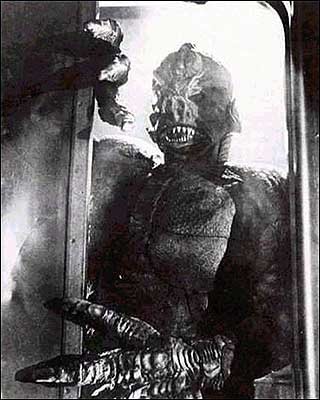
The second mission is now on their way back to Earth, with Carruthers under house arrest.  While one crewman does believe that Carruthers’s story could be true, the others are convinced that Carruthers is a murderer.  What they don’t know is that the monster from Carruthers’s story is not only real but that it also snuck onto their ship during lift-off.  Tall and scaly with huge claws and a permanently angry face, the Monster — It, for lack of a more formal name — is lurking in the lower levels of the ship and hunting for food.

To state what is probably already obvious, It! is not a film that worries much about being scientifically accurate.  While it does explain how living on the surface of Mars caused It to develop into the predator that it is, this is also a science fiction film from 1958.  It’s a film where, instead of going to the Moon, the first manned spaceflight is to Mars.  It’s also a film where there’s no weightlessness in space, the two women on the ship serve everyone coffee, and a nuclear reactor is casually unshielded at one point in an attempt to destroy It.  Bullets are fired on the spaceship.  Grenades are tossed.  Airlocks are rather casually opened.

Fortunately, none of that matters.  Clocking in at a mere 69 minutes, It! is a surprisingly suspenseful horror film, one that makes good use of its claustrophobic locations (a lot of the action takes place in an air duct) and which features a surprisingly convincing and, at times, even scary monster.  It may be a man in a rubber suit but that doesn’t make it any less shocking when its claw bursts out of an an open hatch and starts trying to grab everything nearby.  The cast of It! are all convincing in their roles.  Watching them, you really do believe that they are a crew who have seen a lot together and it makes the subsequent deaths all the more effective,

It! was a troubled production,  The monster was played by veteran stuntman Ray Corrigan, who reportedly showed up drunk a few times and also managed to damage the monster suit.  Many members of the cast were not happy about being cast in a B-movie.  (Fortunately, their resentment probably helped their performances as the similarly resentful crew of the second mission to Mars.)  Marshall Thompson, who played Carruthers, was one of the few cast members who enjoyed making It! and, perhaps not surprisingly, he also gives the best performance in the film.

Troubled production or not, It! was not only a box office success but, along with Mario Bava’s Planet of the Vampires, it was later cited as one of the inspiration for Alien.  At its best, It! has the same sort of claustrophobic feel as Alien.  The scene where one of the crewman is found in an air duct brings to mind the fate of Tom Skerritt’s character in Alien.

It! is still a very effective work of sci-fi horror.  Remember, another name for Mars is …. DEATH!
Brad reviews HOUSE OF WAX (1953), starring Vincent Price and a very young Charles Bronson!


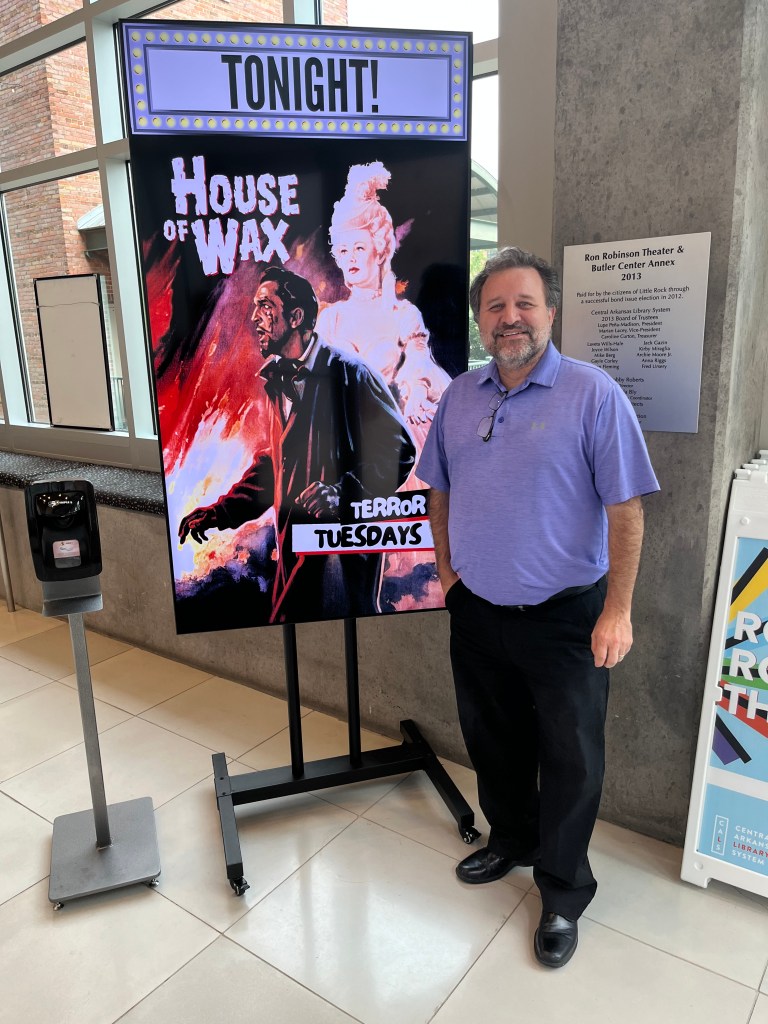
As my readers probably know, I’m one of actor Charles Bronson’s biggest fans, and I’m always on the lookout for venues showing his films on the big screen. In the summer of 2024, the Ron Robinson theatre in downtown Little Rock screened the 1953 Vincent Price classic, HOUSE OF WAX, which features Bronson in one of his earliest on-screen roles. It was so early, he was still being billed as Charles Buchinsky! Of course I wasn’t going to miss it! 

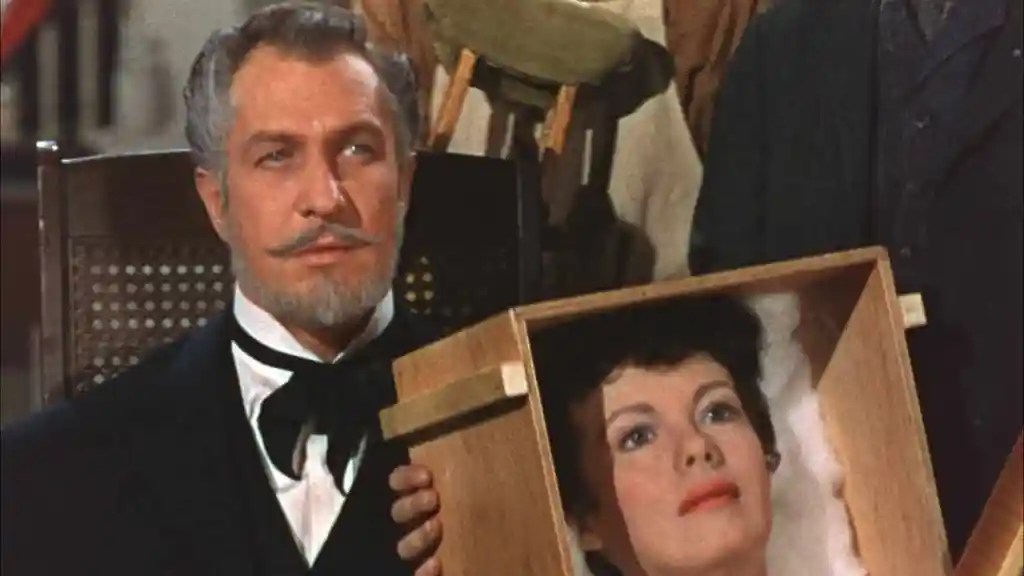
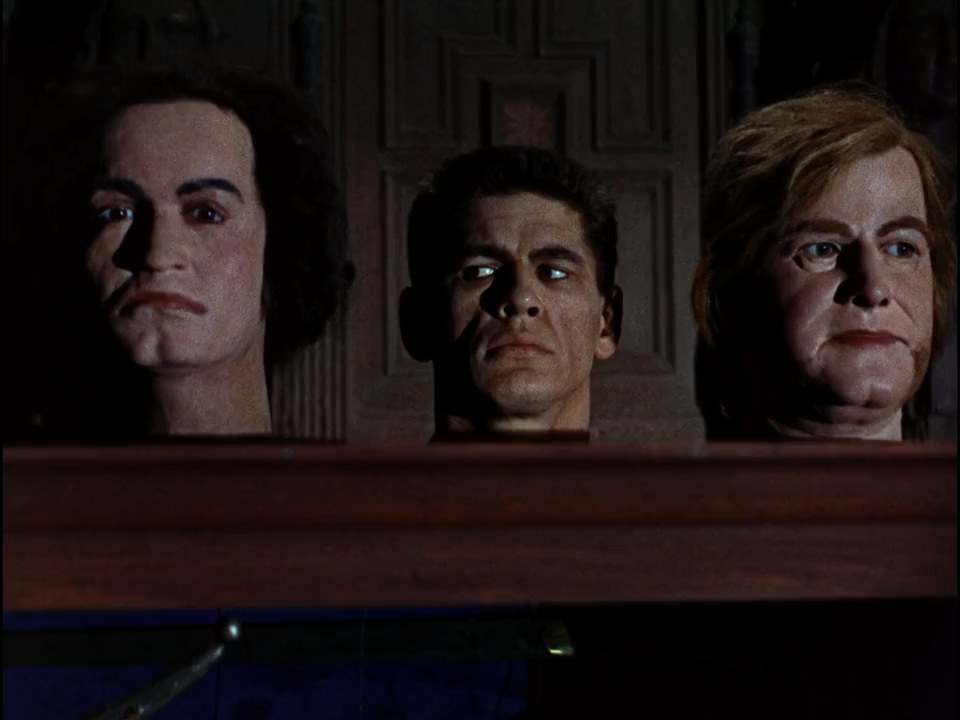
HOUSE OF WAX stars Vincent Price as Professor Henry Jarrod, a talented wax sculptor in early 20th-century New York City. Jarrod’s museum, which features historical figures that look amazingly lifelike, is his pride and joy. However, his business partner, Matthew Burke (Roy Roberts), has grown impatient with his investment and decides he wants to burn down the wax museum for the insurance money. When Jarrod refuses to take part in the fraudulent scheme, Burke sets the museum on fire, leaving Jarrod presumed dead in the process. But Jarrod survives, and with the help of his mute henchman Igor (Charles Bronson), returns to open a new wax museum with a dark and dangerous twist… his exhibits are eerily lifelike because they are real bodies coated in wax. As his former friend Sue Allen (Phyllis Kirk) and her boyfriend Scott Andrews (Paul Picerni) snoop around the house of wax, they begin to suspect that Jarrod has lost his mind and has descended into the mad depths of murder. Will they be able to expose Jarrod’s gruesome secret, or will they become his next exhibit?!!

Directed by André de Toth, HOUSE OF WAX is a landmark horror film, notable for its early use of 3D and Vincent Price’s excellent performance. The film’s strength lies in its undeniably creepy premise, that of turning human beings into wax sculptures, as well as Price’s ability to blend sophistication with menace. Jarrod is quite the sympathetic character at first, but he’s gradually revealed to be certifiably insane as a result of his near-death experience, and that transformation is quite scary. Young Charles Bronson’s portrayal of Igor is also quite freaky. His cold, blank, murderous stare says, “I’ll kill you and not even think twice about it.” His stalking of the heroine, played by Phyllis Kirk, in the dark, spooky house of wax near the end, is one of the true highlights of the movie. It’s also fun seeing Carolyn Jones (AKA Morticia Addams) show up as a spirited victim of the madman! Of course, you can’t help but notice the moments set up for the 3D effects, which come off as quite gimmicky at this point. I specifically took note of the movie’s use of paddleballs and leg kicks! I must admit, however, that these dated elements add to the overall charm of HOUSE OF WAX as a reminder of the olden days of 50’s Hollywood! 

Overall, in my humble opinion, HOUSE OF WAX is a classic scary movie. It’s a perfect treat for fans of vintage horror as well as a testament to the magnetic screen presence of Vincent Price!

A Movie A Day #126: Baby Face Nelson (1957, directed by Don Siegel)


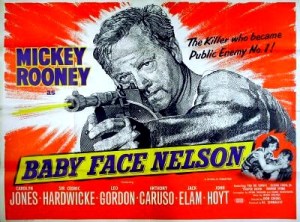
The place is Chicago.  The time is the era of Prohibition.  The head of the Chicago Outfit, Rocca (Ted de Corsia), has arranged for a career criminal named Lester Gillis (Mickey Rooney) to be released from prison.  A crack shot and all-around tough customer, Gillis has only two insecurities: his diminutive height and his youthful appearance.  Rocca wants to use Gillis as a hit man but Gillis prefers to rob banks.  When Rocca attempts to frame Gillis for a murder, Gillis first guns down his former benefactor and then goes on the run with his girlfriend, Sue Nelson (Carolyn Jones).  Because they are both patients of the same underworld doctor (played by Sir Cedric Hardwicke), Gillis eventually meets public enemy number one, John Dillinger (Leo Gordon).  Joining Dillinger’s gang, Gillis becomes a famous bank robber and is saddled with a nickname that he hates: Baby Face Nelson.

While it is true that Lester “Baby Face Nelson” Gillis was an associate of John Dillinger’s and supposedly hated his nickname, the rest of this biopic is highly fictionalized.  The real Baby Face Nelson was a family man who, when he went on the run, took his wife and two children with him.  While he did get his start running with a Chicago street gang, there is also no evidence that Nelson was ever affiliated with the Chicago Outfit.  (The film’s Rocca is an obvious stand-in for Al Capone.)  In real life, it was Dillinger, having just recently escaped from jail, who hooked up with Nelson’s gang.  The film Nelson is jealous of Dillinger and wants to take over the gang but, in reality, the gang had no leader.  Because Nelson killed three FBI agents (more than any other criminal), he has developed a reputation for being one of the most dangerous of the Depression-era outlaws but, actually, he was no more violent than the typical 1930s bank robber.  Among the era’s outlaws, Dillinger was more unique for only having committed one murder over the course of his career.  In this film (and practically every other film that has featured Baby Face Nelson as a character), Nelson is a full on psychopath, one who even aims his gun at children.

Baby Face Nelson may be terrible history but it is still an excellent B-movie.  Don Siegel directs in his usual no-nonsense style and Mickey Rooney does a great job, playing Baby Face Nelson as a ruthless but insecure criminal with a perpetual chip on his shoulder.  As his fictional girlfriend, Carolyn Jones is both tough and sexy, a moll that any gangster would be lucky to have waiting for him back at the safe house.  B-movie veterans like Thayer David, Jack Elam, Elisha Cook Jr., and John Hoyt all have colorful supporting roles but the most unexpected name in the cast is that of Cedric Hardwicke, playing an alcoholic surgeon with broken down dignity.

Don’t watch Baby Face Nelson for a history lesson.  Watch it for an entertaining B-masterpiece.


A Movie A Day #8: White Lightning (1973, directed by Joseph Sargent)


white-lightning-02

A year after co-starring in Deliverance, Burt Reynolds and Ned Beatty reunited for another movie about life in the backwoods, White Lightning.

White Lightning starts with two hippies, bound and gagged and floating in a canoe.  While a banjo plays in the background, two rednecks use a shotgun to blow the canoe into pieces.  They watch as the hippies drown in the swamp.  It turns out that one of those hippies was the brother of legendary moonshiner and expert driver, Gator McCluskey (Reynolds).  Gator is doing time but when he hears that his brother has been murdered, he immediately realizes that he was probably killed on the orders of corrupt Sheriff J. C. Connors (Ned Beatty).  The Feds arrange for Gator to be released from prison, on the condition that he work undercover and bring them enough evidence that they can take Connors down.

Back home, Gator works with a fellow informant, Dude Watson (Matt Clark), teams up with local moonshiner, Roy Boone (Bo Hopkins), and has an affair with Roy’s girl, Lou (Jennifer Billingsley).   Connors and his main henchman, Big Bear (R.G. Armstrong) both suspect that Gator and Dude are working for the government.  Since this is a Burt Reynolds movie, it all ends with a car chase.

A classic of its kind and a huge box office success, White Lightning set the template for almost every other film that Burt Reynolds made in the 1970s and 80s.  There is not much to the movie beyond Burt’s good old boy charm and Ned Beatty’s blustering villainy but if you’re in the mood for car chases and Southern scenery, White Lightning might be the movie for you.   Joseph Sargent also directed the New York crime classic, The Taking of Pelham One Two Three, and he gives White Lightning an edginess that would be lacking from many of Burt Reynolds’s later movies.

For tomorrow’s movie a day, it’s the sequel to White Lightning (and Burt Reynolds’s directorial debut), Gator.

white-lightning-05