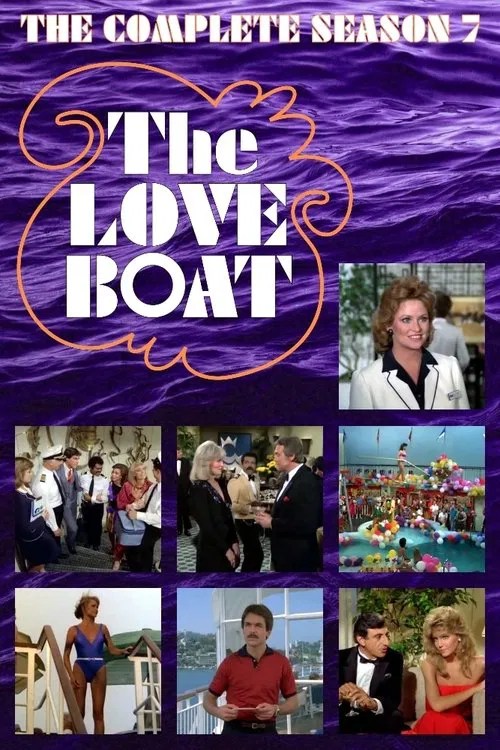
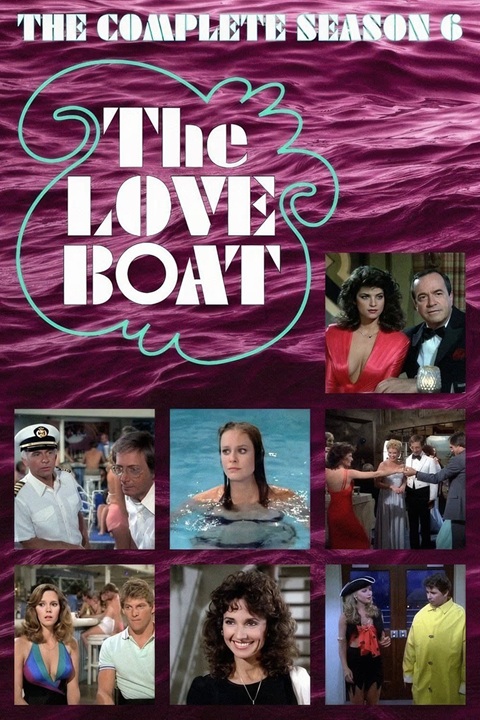
Retro Television Review: The Love Boat 6.22 “Abby’s Maiden Voyage/He Ain’t Heavy/I Like To Be In America”


Welcome to Retro Television Reviews, a feature where we review some of our favorite and least favorite shows of the past!  On Wednesdays, I will be reviewing the original Love Boat, which aired on ABC from 1977 to 1986!  The series can be streamed on Paramount Plus!

Love, life’s sweetest reward….

Episode 6.22 “Abby’s Maiden Voyage/He Ain’t Heavy/I Like To Be In America”

(Dir by Jerome Courtland, originally aired on February 26th, 1983)

When Abby (Mary Beth McDonough) boards the boat, her best friend (Constance Forslund) informs Julie that this cruise will be Abby’s “first time.”  She may be setting sail a virgin but she won’t be returning one.  Julie is too coked up to care.  Abby meets Neil (Brodie Greer), who is handsome and nice but, whenever they start to fool around, Abby starts laughing and the mood is killed.  At the end of the voyage, Abby is still a virgin but she and Neil are now a couple.

Spoiled high school grad Jimmy (Michael J. Fox) boards the boat with his adoptive parents (Don Porter and Barbara Billingsley) and almost immediately makes an enemy out of a waiter named Greg (Gregg Henry).  We’ve never actually seen Greg on the show before but Isaac acts as if Greg has been working on the boat forever.  Jimmy later realizes that Greg is his older brother, the one who he hasn’t seen since their parents died and Jimmy was adopted.  At first, Greg refuses to accept that Jimmy is his brother but, by the end of the cruise, they embrace.  Awww!  Actually, considering that Gregg Henry and Michael J. Fox look absolutely nothing alike, I can understand why Greg had his doubts.  That said, if he’s been on the boat for as long as this episode implies, Greg has surely seen another long-lost siblings just happen to find each during a cruise.  It happens at least once every season.

Speaking of once every season, it’s time for April Lopez (Charo) to take her annual voyage.  Though April is returning to Mexico, she wants to become an American citizen.  Good for her!  America rocks!  Unfortunately, she struggles with the oral exam.  Judge Kramer (Esther Rolle) realizes that April will be able to remember the answers if she sings them so she gives April the examination while April is performing in the Acapulco Lounge.  The audience loves it because who doesn’t love paying money for an expensive cruise just so you can spend the final night watching someone take a citizenship exam.

(For the record, in high school, I tutored one student who was about to take his exam because he was like really hot but he couldn’t remember how many years were in a Congressional term.  I taught him to think of it as 2-4-6.  Two for the House.  4 for the President.  6 for the Senate.  He became a citizen and sent me flowers and then he moved to Idaho.)

This week’s cruise was a bit bland but I’m glad April became a citizen of the greatest country in the world.

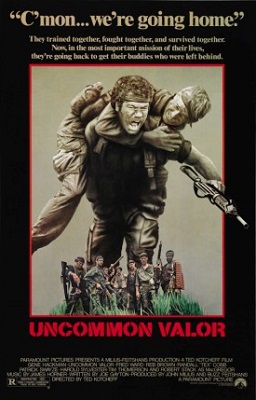
Uncommon Valor (1983, directed by Ted Kotcheff)


Retired Marine Colonel Jason Rhodes (Gene Hackman) and oilman Harry MacGregor (Robert Stack) share a tragic bonf.  Both of them have sons that served in Vietnam and are listed as being MIA.  Believing that their sons are still being secretly held in a POW camp in Loas, Rhodes and MacGregor put together a team to sneak into Southeast Asia and rescue them.

With MacGregor supplying the money and Rhodes leading the mission, the team includes Blaster (Red Brown), Wilkes (Fred Ward), Sailor (Randall “Tex” Cobb), and Charts (Tim Thomerson), all of whom served with Rhodes’s son.  Also joining in his helicopter pilot Curtis Johnson (Harold Sylvester) and former Marine Kevin Scott (Patrick Swayze), whose father was also listed as being MIA in Vietnam.  After a rough start, the group comes together and head into Laos to bring the prisoners home!

Uncommon Valor is one of the many movies released in the 80s in which Vietnam vets returned to Asia and rescued those who were left behind.  In the 80s, there was a very strong belief amongst many Americans that soldiers were still being held prisoner in Vietnam, Cambodia, and Laos and Hollywood was quick to take advantage of it.  The box office success of Uncommon Valor set the stage for films like Rambo and Missing In Action, film in which America got the victory that it had been denied in real life.

What set Uncommon Valor apart from the films that followed was the cast.  Not surprisingly, Gene Hackman brings a lot more feeling and nuance to his performance as the obsesses Col. Rhodes than Sylvester Stallone and Chuck Norris brought to their trips to Vietnam.  The film surrounds Hackman with a quirky supporting cast, all of whom represent different feelings about and reactions to the war in Vietnam.  Fred Ward’s character suffers from PTSD.  Randall “Tex” Cobb, not surprisingly, is a wild man.  Patrick Swayze’s character is trying to make the father he’ll never know proud.  Robert Stack and Gene Hackman represent the older generation, still trying to come to terms with everything that was lost in Vietnam and still mourning their sons.  The raid on the POW camp is exciting but it doesn’t feature the type of superhuman action that’s present in other POW-rescue films.  Col. Rhodes and his soldiers are ordinary men.  Not all of them survive and not all of them get what they want.

Uncommon Valor started out as a screenplay from Wings Hauser, though he’s not present in the cast of the final film and he was only given a “story” credit.  John Milius served as producer. Director Ted Kotcheff is best-known for First Blood, another action film about America’s struggle to come to terms with the Vietnam War.

Back to School #43: River’s Edge (dir by Tim Hunter)


In his film guide, Heavy Metal Movies, Mike McPadden describes the disturbing 1987 teen crime drama River’s Edge as being “666 Candles“.  It’s a perfect description because River’s Edge appears to not only be taking place in a different socio-economic setting than Sixteen Candles and The Breakfast Club but perhaps on a different planet as well.

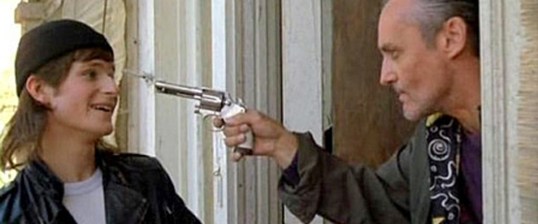
River’s Edge opens with a close-up of a dead and naked teenage girl lying on the edge of a dirty, polluted river and it gets darker from there.  The dead girl was the girlfriend of the hulking John Tollet (Daniel Roebuck, playing a character who is miles away from his role in Cavegirl).  As John explains to his friends, he strangled her for no particular reason.  His friends, meanwhile, respond with detachment.  Their unofficial leader, the hyperactive Layne (Crispin Glover), insists that since nothing can be done about the dead girl, their number one concern now has to be to keep John from getting caught.  While Layne arranges for John to hide out with a one-legged drug dealer named Feck (Dennis Hopper), two of John’s friends, Matt and Clarissa (played by Keanu Reeves and Ione Skye), consider whether or not they should go to the police.  Oddly enough, John really doesn’t seem to care one way or the other.

Seriously, River’s Edge is one dark film.  If it were made today, River’s Edge would probably be directed by someone like Larry Clark and, in many ways, it feels like a distant cousin to Clark’s Bully.  The teenagers in River’s Edge live in a world with little-to-no adult supervision.  Matt’s mom is more concerned with whether or not Matt has been stealing her weed than with the fact that Matt might be covering up a murder.  The local high school teacher is a former hippie who won’t shut up about how much better his generation was compared to every other generation.  In fact, the only adult with any sort of moral code is Feck and he’s usually too busy dancing with a sex doll to really be of much help.  It’s a world where no one has been raised to value their own lives so why should they care about a dead girl laying out on the banks of the river?

The film features good performances from Keanu Reeves, Ione Skye, and Daniel Roebuck but really, the entire movie is stolen by Crispin Glover and Dennis Hopper.  In the role of Layne, Glover is a manic wonder, speaking quickly and gesturing even when he isn’t making a point.  When Layne first shows up, he seems like he’s just overly loyal to his friend John but, as the film progresses, it becomes more apparent that he’s less concerned about protecting John and more interested in ordering other people to do it.  For Layne, protecting John is ultimately about maintaining power over Matt, Clarissa, and the rest of their friends.

As for Dennis Hopper — well, this is one of those films that you should show to anyone who says that Hopper wasn’t a great actor.  The role of a one-legged drug dealer who lives with a sex doll sound like exactly the type of role that would lead Hopper to going totally over-the-top.  Instead, Hopper gave a surprisingly subtle and intelligent performance and, as a result, he provided this film with the moral center that it very much needs.

Glover and Hopper