Retro Television Review: Homicide: Life On The Street 4.21 “Scene of the Crime”


Welcome to Retro Television Reviews, a feature where we review some of our favorite and least favorite shows of the past!  On Sundays, I will be reviewing Homicide: Life On The Street, which aired from 1993 to 1999, on NBC!  It  can be viewed on Peacock.
This week, it’s another night in Baltimore.

Episode 4.21 “Scene of the Crime”

(Dir by Kathy Bates, originally aired on April 12th, 1996)

This week, three murders are committed in the projects of Baltimore.

The first murder occurs when a drug dealer is tossed off the roof of an apartment complex, “the towers.”  Making the Lewis and Kellerman’s investigation difficult is the fact that the city has given a security contract to the Black Muslims.  The Muslims have been patrolling the Towers for a year and, in that time, they’ve chased out most of the drug dealers that once terrorized the building’s residents.  Kellerman feels that the Muslims are racists.  Giardello says that the Muslims just caused the dealers to go to another block.  Lewis, however, is a bit more conflicted.  As he explains it to Kellerman, why should white neighborhoods by the only ones allowed to have their own private security force?

The second and third murders occur at another set of towers.  This time, two teenage drug dealers ended up shooting each other.  When Munch and Russert arrive at the scene, they are met by patrolman Stu Gharty (Peter Gerety).  Gharty walks them through the scene, shows how the two dealers ended up killing each other, and then excuses himself to wait for the medical examiner.  Munch is impressed with Gharty but Russert can’t help but note the thirty-minute time gap between when Gharty got the call about the shooting and when he called for homicide.  Gharty confesses that, when he first arrived, he didn’t immediately enter the building, despite hearing the gunshots.  Gharty was concerned for his safety.  Munch understands and, even more importantly, he doesn’t believe in getting other cops in trouble.  Russert, however, is angered, especially after it turns out that one of the teenagers bled to death while Gharty was waiting outside.

This was an excellent episode of Homicide, one that was smart enough to paint anyone as being all good or all bad.  Ishmael Al-Hadj (Victor Williams), the head of the Muslim security force, is an anti-white fanatic but Lewis has a point when he says that Ishmael and his men have largely kept peace in the Towers in a way that the police have not been able to do so.  In the end, Ishmael turns over the name of the murderer but only after he knows that the man is no longer in Baltimore.

As for Stu Gharty, Russert is absolutely correct when she says that he failed to do his duty but, largely due to Peter Gerety’s empathetic performance, it’s hard not to sympathize with Gharty.  As Russert herself admits, Gharty has been a good cop for years but, that one night, he allowed his fear to get the better of him.  Russert, who is still thinking like a captain despite being demoted, feels that one moment of weakness cannot be overlooked.  Just about everyone else disagrees.  Whereas Russert and Kay Howard sees someone who failed to do his job, a detective like Munch looks at Gharty and sees a 54 year-old cop who is just a few years away from getting reassigned a desk job on account of his age and who made one mistake because he didn’t want his family to get a call telling them that he was dead.  At one point, Gharty says he’s thinking of just taking retirement.  Of course, he didn’t.  Instead, he returned a few seasons later as a regular.

This episode also featured Munch preparing for the return of Bolander.  After calling Bolander multiple times, Munch finally got him to agree to drop by the Waterfront Bar.  Of course, Bolander never showed up.  And it makes sense, really.  After getting shot and nearly dying during the previous season, Bolander was obviously done with being a cop.  (And, of course, Ned Beatty was no longer on the show.)  Still, there was something rather poignant about Munch’s growing realization that his partner and his hero was no longer going to be around.

Next week, the season comes to an end!
 

Miniseries Review: The Corner (dir by Charles S. Dutton)


Actor T.K. Carter died on January 9th.  He was 69 years old and his passing really didn’t get the notice that he deserved.

T.K. Carter may not have been a household name but I imagine that most people would recognize him if they saw him.  He appeared on a lot of television shows.  He did his share of movies.  He was usually cast in comedic roles, often playing the best friend who would inevitably provide some sort of gentle commentary on the problems of his friends or coworkers.  I just recently finished reviewing Good Morning, Miss Bliss, which featured Carter as Milo.  I’m not really sure what Milo did at John F. Kennedy Junior High but he was certainly more likable than Miss Bliss.

Carter appeared in some films as well.  Ironically, his two best-known films were not comedic at all.  He plays Nauls in John Carpenter’s The Thinga film that pretty much ends with Kurt Russell and Keith David freezing to death while wondering whether or not one of them is actually a killer alien.  And he also played Cribbs, a pot-smoking member of the National Guard who finds himself lost in the Louisiana bayou in Walter Hill’s Southern Comfort.  I have to admit that, after having watched both of those films more than once, it was a bit strange to see Carter exchanging jokes with Hayley Mills and Dennis Haskins on Good Morning Miss Bliss.

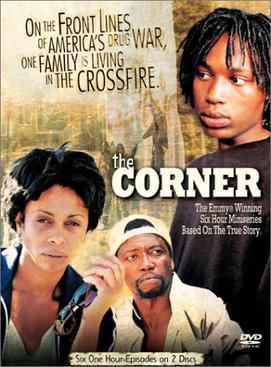
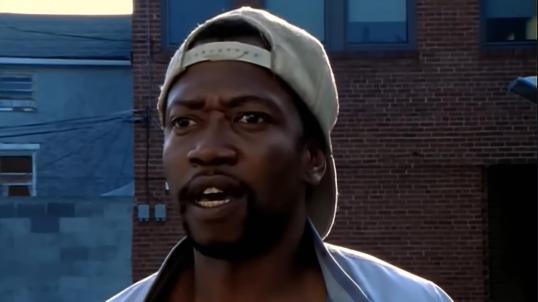
That said, if I had to pick Carter’s best performance, I would probably go with his work in the 2000 HBO miniseries, The Corner.  Based on a nonfiction book by David Simon, The Corner follows several characters over the course of one year in Baltimore.  Almost all of the characters are involved in the drug trade in some way or another.  DeAndre McCullough (Sean Nelson) is a fifteen year-old drug dealer who, despite his obvious intelligence, seems to be destined to become yet another statistic.  DeAndre’s parents are Fran (Khandi Alexander) and Gary (T.K. Carter).  At the start of the miniseries, both Fran and Gary are drug addicts and both of them make the effort to get clean.  Both have moments where their lives appear to be improving.  They both have moments where they relapse and have to start all over again.  Tragedy follows both of them.

The Corner is often described as being a forerunner to The Wire and indeed, there are definite similarities.  Like The Wire, The Corner was shot on location in Baltimore.  Like The Wire, The Corner emphasizes that futility of trying to wage a war on drugs.  As well, several members of The Corner‘s cast also appeared on The Wire.  Clarke Peters, Lance Reddick, Reg E. Cathey, Corey Parker Robinson, Delaney Williams, and Robert F. Chew are among the many Wire actors who appear in The Corner.  Interestingly enough, many of The Wire‘s cops and politicians appear as addicts in The Corner.  Clarke Peters and Reg E. Cathey play two long-time drug addicts who serve as a bit of a chorus for the neighborhood.  Lane Reddick appears as a recovering addict who tries to take advantage of Fran.

That said, The Corner doesn’t trust its audience in the same way that The Wire did.  That’s largely because The Corner was directed by Charles S. Dutton, who has never been a particularly subtle actor or director.  Dutton does a good job capturing the grit of Baltimore but he also includes “interviews” with various characters in which he asks questions while off-camera.  It feels a bit too on-the-nose, as if each episode of The Wire opened with a dramatic monologue from McNulty or Stringer Bell.  We don’t need the characters to look straight at the camera and tell us that things are bad.  We can see that for ourselves.

The entire cast does a good job but the best performance undoubtedly comes from T.K. Carter, who plays Gary as being an intelligent man, a good man, a hopeful man, but also a man who cannot escape his addiction.  With his gentle smile, his pleading eyes, and the almost shy way that he asks people to help him when he needs a fix, Carter gives a heart-breaking performance and one that shows that Gary truly is a prisoner of his addiction.  He doesn’t want to be an addict.  He wants to get clean.  But he also lives in a world where drugs are not only everywhere but they’re also the only escape that he and so many other people have from their oppressive existence.  With the government and the police treating the drug crisis as a war as opposed to a public health emergency, Gary’s two options really are either prison or the basement of his mother’s home.  The police view Gary as being nothing more than an criminal as opposed to someone with a sickness.  The dealers, meanwhile, view Gary as being a marketing opportunity.  T.K. Carter captures both Gary’s desperation and his sadness.  It’s a great performance and one that deserves to be remembered.  As played by T.K. Carter, Gary is the battered heart of The Corner.

T.K. Carter, RIP.