Retro Television Review: Homicide: Life On The Street 4.4 “A Doll’s Eyes”


Welcome to Retro Television Reviews, a feature where we review some of our favorite and least favorite shows of the past!  On Sundays, Lisa will be reviewing Homicide: Life On The Street, which aired from 1993 to 1999, on NBC!  It  can be viewed on Peacock.
This week’s episode made me cry and cry.

Episode 4.4 “A Doll’s Eyes”

(Dir by Kenneth Fink, originally aired on December 1st, 1995)

Here in America, there’s recently been a lot of debate about how much of a problem crime actually is.  It’s a bit of an odd debate because much of it is based on telling people to ignore what they’re seeing and experiencing and to instead, just take comfort in abstract statistics and numbers.  “Actually,” we’re told, “crime is down from last year,” as if the claim that there’s slightly less of it being reported somehow negates the fact that it exists.

Those who say that crime is not a big deal often forget that crime is not just a matter of statistics and police reports.  Crime is something that happens to people.  It’s something that scars people.  It’s not something that most people can just shrug off.  Every crime is different and everyone reacts to being a victim in their own individual way but react, they do.  It’s easy to be dismissive of people’s concerns about crime when you’re not the one getting your house broken into or hearing gunshots in the night.  It’s easy to say “It was just a mugging,” when you’re not the one getting mugged and losing whatever trust you may have once had in the system. Seth Rogen once tweeted that he didn’t care that his car got broken into because he wasn’t into worrying about possessions.  That’s easy to say when you can just buy a new car whenever you feel like it.  For someone who can’t and is now stuck with the knowledge that they’re not even safe in their own car, it’s considerably more difficult to be so cavalier.   Crime is about more than just statistics and numbers.  For those who have been victimized, it’s about loss.  It’s about never feeling truly safe or secure again.

This week’s episode of Homicide fellows Pembleton and Bayliss as they investigate a shooting at a mall.  A young boy was caught in the crossfire and now, he’s on life support at the hospital.  For Pembleton and Bayliss, it starts out as another case.  Tracking down the shooters is not difficult.  Getting the shooters to confess is not difficult.  Pembleton and Bayliss aren’t dealing with master criminals here.

For the boy’s parents (played, in two heart-breaking performances, by Marcia Gay Harden and Gary Basaraba), the shooting of their son is the moment that their lives stopped.  They’re the one who eventually have to make the decision to take their son off of life support.  Hearing that their son’s organs were donated and are helping other people provides cold comfort.  Their only son is dead and, as this episode make clear, they’re not going to be okay.  Some would describe their son as just being another statistic, part of the count of how many people died in Baltimore during any given year.  For his parents, he’s Patrick, a 10 year-old who loved dinosaurs and science and whose life was ended because he was in the wrong place at the wrong time.  When Bayliss runs into the father of a girl who got an organ transplant as the result of the Patrick’s death, the girl’s father muses on how strange it is that one child died so that his girl could live.  It’s a powerful moment, one that really captures the humanity at the heart of this show’s best episodes.  Patrick’s parents will never recover but his murder has led to other people being saved.  Was it worth the cost?  The show is smart enough to leave the question for us to ponder.

This episode made me cry.  It reminded me a bit of season 2’s Bop Gun, with its mix of the family trying to deal with an unimaginable tragedy while, for Pembleton and Bayliss, it’s another day at work.  I would actually say this episode was superior to Bop Gun.  Bop Gun tried too hard to wrap things up.  A Doll’s Eyes understands that sometimes, this is no way to wrap things up.  Life just keeps moving.

Retro Television Review: Homicide: Life on The Street 4.2 “Fire Part Two”


Welcome to Retro Television Reviews, a feature where we review some of our favorite and least favorite shows of the past!  On Sundays, Lisa will be reviewing Homicide: Life On The Street, which aired from 1993 to 1999, on NBC!  It  can be viewed on Peacock.

Guest reviewer alert!  I’m filling in for Lisa on the Homicide beat this week.  Let’s take a look at the second episode of the fourth season.

Episode 4.2 “Fire Part Two”

(Dir by Nick Gomez, originally aired on October 27th, 1995)

Continuing from where the previous episode ended, Pembleton, Bayliss, and Kellerman investigate the second warehouse fire.  Another victims has been found burned to a crisp in the fire.  Her dental records identify here are Bonnie Nash, a teenage girl.  The positioning of her body indicates that, unlike the first victim, she was already dead when the fire was set.

Pembleton continues to dislike Kellerman and gets especially annoyed when Kellerman announces that he’s decided to quit smoking.  Bayliss is suffering from a degenerative disc and spends more time complaining about the pain than actually investigating the case.  It’s Kellerman who solves the case and tricks chemistry teacher Gavin Robb (Adam Trese) into confessing.  While in the box with him, Kellerman plays good cop and even tells Robb that he’s free to leave after Robb denies being the arsonist.  As Robb stands, Kellerman whispers, “Why did you kill the dog?”

Without thinking, Robb replies, “I didn’t know it was there.”

(Of course, there was no dog there.)

Realizing his mistake, Robb confesses.  Bonnie was one of his students.  Having decided to kill her, Robb set the first fire to fool everyone into thinking that there was a serial arsonist on the loose so that the arsonist would be blamed when Bonnie’s body was found in the second fire.  The first death was an accident.  The death of Bonnie was premeditated.  When asked why he killed Bonnie, Robb replies, “That’s my personal business.”

Giardello invites Kellerman to join Homicide.  At first, Kellerman refuses because he doesn’t think he’s smart enough to be a member of the murder police.  But after visiting his father at his dead-end job in a distillery, Kellerman changes his mind.

Meanwhile, Kay and Munch both study for the sergeant’s exam.  Kay makes it to the exam and probably aces it.  Munch can’t find his lucky socks and misses it.  I would have missed it too.  You can’t do anything without the lucky socks.

This episode was an improvement over the previous episode.  Last episode, Kellerman came across as being a cliche, the hot-headed cop who has a problem with authority.  This episode, Kellerman was more likable and also a lot less cocky.  That he’s insecure about whether or not he can keep up with the other homicide detectives makes him a very relatable character.  It would have to be intimidating to find yourself suddenly working with someone like Frank Pembleton, who is always portrayed as being the best of the best.

As I mentioned last week, Reed Diamond was originally a controversial addition to the cast.  At the time, many critics said the show was selling out by casting an actor who didn’t look like Ned Beatty or Jon Polito.  Reed Diamond and Mike Kellerman would both prove themselves, leaving little doubt that they belonged.  Later, Homicide would make some bad casting decisions.  (Five word: Jon Seda as Paul Falsone.)  But Reed Diamond, with this episode, steps up and shows that he can keep up with the rest of the squad.


Retro Television Review: Homicide: Life On The Street 4.1 “Fire: Part One”


Welcome to Retro Television Reviews, a feature where we review some of our favorite and least favorite shows of the past!  On Sundays, Lisa will be reviewing Homicide: Life On The Street, which aired from 1993 to 1999, on NBC!  It  can be viewed on Peacock.

Episode 4.1 “Fire: Part One”

(Directed by Don Scardino, originally aired on October 20th, 1995)

Hey, guest reviewer here!  It’s my pleasure to review the fourth season premiere of Homicide.  As someone who lived in Baltimore while the show was airing, I watched every episode of Homicide (and later, The Wire).  It was always interesting to see Frank Pembleton and Tim Bayliss and John Munch and Kay Howard walking down streets that I recognized.  It didn’t matter that the show presented Baltimore as being a hotbed of murder and corruption, mostly because anyone who has lived in Baltimore knows that our city is often just that.  There are wonderful places and people in Baltimore.  There’s also a a lot of problems.

Enough editorializing from me!  Let’s talk about the fourth season premiere.  It opens with Kay and Munch talking about how Detectives Beau Felton and Stanley Bolander have been suspended without pay for 22 weeks because of some drunken shenanigans at a cop convention.  That was the way that the show wrote out former series regulars Daniel Baldwin and Ned Beatty.  (Baldwin was dropped due to his drug addiction.  Beatty wanted to get back to movies.)  Felton?  Sure, I could imagine him doing something stupid at a convention.  But the idea that conservative, straight-laced Bolander would join him in that behavior?  That’s never sat well with me.  That was out of character for Stanley Bolander.

Gee’s unit is now down by three detectives.  He needs replacements but Megan Russert — Tim’s cousin, we’re told! — says that they can’t afford to hire any new detectives.  Maybe Gee should reach out to another division and see if anyone wants to transfer.  Gee looks at the Board, which is covered in red ink.  His remaining detectives are struggling to close cases and nobody wants to partner up with Lewis.

Pembleton and Bayliss, the best Homicide team out there, are investigating a warehouse fire.  An unidentified body has been found in the warehouse, burned to a crisp.  They meet Detective Mike Kellerman (Reed Diamond), the cocky and youngish arson investigator who is convinced that the fire was set by a bigshot businessman named Matthew Rowland.  Kellerman gets on Pembleton’s nerves but he bonds with Bayliss.  Even though it hasn’t happened by the end of this episode, it’s obvious that Kellerman  is going to end up at Homicide.  And because everyone in this episode keeps talking about how they refuse to partner up with Lewis, you can guess who Kellerman is going to end up working with.

Mike Kellerman went on to become one of the best characters on the show.  Everyone remembers the Luther Mahoney story arc.  Reed Diamond eventually became a key member of the ensemble.  But I can remember the controversy that initially greeted his character.  A lot of viewers and critics resented that he was replacing the popular Ned Beatty.  (No one really cared about Daniel Baldwin.)  Reed Diamond was seen as a pretty boy actor who was intruding on a gritty crime drama.  As an introduction, this episode doesn’t do Kellerman many favors.  He comes on very strong and, within minutes, he’s antagonizing and double guessing Pembleton.  A scene where Megan confronts him about going after Matthew Rowland makes it seem like the show is trying too hard to be a typical cop drama.  It reminded me of when Itchy & Scratchy added Poochie and Poochie was just too in your face with his coolness.  Luckily, Reed Diamond was a better actor than Homer Simpson and Mike Kellerman did not die on the way back to his home planet.  Instead, after this shaky introduction, he became a key member of one of the best casts in the history of television.

This episode ends on a cliffhanger, with another fire being set at another warehouse.  Kellerman’s going to be around for a while, whether Frank Pembleton likes it or not.

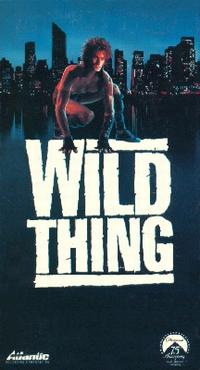
Wild Thing (1987, directed by Max Reid)


After his hippie parents are murdered by a drug dealer named Cutter (Robert Davi!), a young boy is taken in and raised by a homeless woman (Betty Buckley).  The boy eventually grows up to be Wild Thing (Robert Knepper), an urban Tarzan who jumps from rooftop to rooftop at night and who protects the neighborhood for evil doers (like Cutter).  A social worker (Kathleen Quinlan) hears the legend of Wild Thing and eventually finds him.  She continues his education, explaining to him why people do the “body bump.”  Carrying a bow and arrow and accompanied by a surprisingly loyal cat, Wild Thing fights the bad guys and seeks revenge for his parents.

Wild Thing is one of those movies that should be incredibly bad but somehow it isn’t.  John Sayles was one of three writers to work on the script (Sayles was the only one to get credit) and the film has a self-aware sense of humor similar to the scripts that Sayles wrote for films like Alligator, Battle Beyond The Stars, and Piranha.  A young Robert Knepper is probably about as convincing as anyone could be as an urban Tarzan who speaks broken English and who carries a bow and arrow as he makes his way across the rooftops of his neighborhood.  As always, Robert Davi is a good villain.  Davi knows that he’s appearing in a live action comic book and he gives an appropriate performance.

Wild Thing is a surprisingly enjoyable movie and yes, the song Wild Thing is heard in the movie but not as much as you might think.  There’s a few scenes where the song starts to play and is then cut off, as if the movie is teasing our expectations.  I just wish Sam Kinison had been invited to perform his version.


Retro Television Review: Homicide: Life On The Street 3.20 “The Gas Man”


Welcome to Retro Television Reviews, a feature where we review some of our favorite and least favorite shows of the past!  On Sundays, I will be reviewing Homicide: Life On The Street, which aired from 1993 to 1999, on NBC!  It  can be viewed on Peacock.

This week, the third season of Homicide comes to an end.

Episode 3.2o “The Gas Man”

(Dir by Barry Levinson, originally aired on May 5th, 1995)

The third season of Homicide was coming to an end and NBC was dragging its heels as to whether or not it would renew the show.  Homicide was critically acclaimed but its ratings were low, despite the efforts to make the show more audience-friendly during the third season.  Producer Barry Levinson grew frustrated with NBC’s refusal to tell him whether or not the show would be renewed.  Feeling that show was probably over, Levinson and showrunner Tom Fontana decided to do something truly radical.  They crafted a series finale that sidelined most of the major characters.

Instead, The Gas Man focuses on Victor Helms (Bruno Kirby) and his best friend, Danny Newton (Richard Edson).  Helms has just gotten out of prison, where he served six years after a gas heater he installed malfunctioned and caused the death of one of his customers.  Helms blames Frank Pembleton for the loss of both his freedom and his family.  (After getting released, Helms tries to talk to his teenage son but is rejected.)  Helms and Newton follow Pembleton across Baltimore, watching as he goes to work and to a fertility clinic.  While Pembleton is investigating the murder of a fortune teller, Helms and Newton sneak onto the crime scene and find both the murder weapon and the fortune teller’s severed head.  Helms takes both of them home and sends pictures to the Baltimore Sun, trying to taunt Pembleton.  Both the Sun and Pembleton assume its a hoax.  Eventually, Helms makes his move and, even with a knife to Pembleton’s throat, he realizes that he doesn’t have it in him to commit a cold-blooded murder.  He starts to cry.  Pembleton arrests him.  Life goes on.

This was an interesting episode.  The first time I saw it, I was a bit annoyed that the focus was taken off the lead characters.  But the more I think about it, the more I appreciate what Levinson was going for.  With this episode, he shows us what happens after the investigation and the conviction.  Victor Helms is angry because he feels, perhaps with some justification, that he was unfairly charged and convicted.  He’s obsessed with Pembleton but it’s clear that Pembleton doesn’t even remember him.  For Pembleton, arresting Victor Helms was a part of his job, nothing more.  For Helms, it was the moment that his entire life collapsed.  Bruno Kirby and Richard Edson both gave good performances as Helms and Danny.  Kirby captured Helms’s obsession but he also gave us some glimpses of the man that Helms used to be.  As portrayed by Edson, Danny’s loyalty to his friend was actually kind of touching.

Of course, it turned out that this episode was not the series finale.  Homicide would return for a fourth season, without Daniel Baldwin or Ned Beatty.  We’ll start season four next week!

Retro Television Review: Homicide: Life On The Street 3.19 “Colors”


Welcome to Retro Television Reviews, a feature where we review some of our favorite and least favorite shows of the past!  On Sundays, I will be reviewing Homicide: Life On The Street, which aired from 1993 to 1999, on NBC!  It  can be viewed on Peacock.

This week …. is the Homicide Unit cursed?

Episode 3.19 “Colors”

(Dir by Peter Medak, originally aired on April 28h, 1995)

A Turkish teenager who is dressed and made up like a member of KISS is lying dead on a front porch.  Jim Bayliss (David Morse) claims that the teenager was banging on his door and acting aggressive.  He says that he grabbed his gun to protect his family and that he ordered the teenager to get off his porch before he shot him.  The teen’s friend, who was standing a few feet away, says that the victim raised his hands before he was shot and that he was only at the house because he was trying to go to a party and got the wrong address.

Pembleton thinks that Jim shot the teenager even though he knew the teen was no longer a threat and because he was angered by the teen’s broken English.  It’s true that Jim did once get into a fight in a bar with someone who was visibly Middle Eastern.  Jim’s wife mentions that Jim gets annoyed with people who can’t speak English.  Pembleton says that Jim is so prejudiced that he doesn’t even think twice about assuming the worse about anyone who isn’t white.

Complicating things is that Jim Bayliss is the cousin of Tim Bayliss.

Tim spends almost the entire episode trying to defend his cousin.  He asks Giardello for permission to be in the Box during the interrogation,  (Giardello refuses, rightly pointing out that Tim has a conflict of interest.)  Later, while watching the interrogation, Tim gets so angry that he breaks a two-way mirror.  Oddly, the one thing that Tim doesn’t do is tell his cousin to ask for a lawyer, which would have ended the interrogation before it could even get started.  Eventually, Ed Danvers, who we haven’t seen much of this season, takes Jim before a Grand Jury and the Grand Jury declines to indict.  Everyone in the courtroom applauds but Tim is left to wonder if Pembleton was correct about his cousin.

At one point, Bolander says that he fears that the Homicide Squad may be cursed and then he lists all of the things that have happened over the course of the third season — Crosetti committed suicide, three detectives were nearly killed in a shooting, Munch opened a bar, and now Bayliss and Pembleton are fighting.  Bolander has a point.  It’s a bit much, particularly when you compare it to the first two seasons.  Homicide took a melodramatic turn during the third season.  That doesn’t mean that the show hasn’t been good.  The acting continues to be amazing.  But it’s still quite a contrast to how the show started.

As for this episode, David Morse kept you guessing as Jim Bayliss.  At first, Jim just seems like a harried home owner who wanted to protect his family.  As the episode progresses, his anger becomes more and more pronounced until the viewer is left feeling that Jim was destined to eventually shoot someone.  That said, this episode was occasionally a bit too much on the nose in its storytelling.  It also left unaddressed something that should have been a bigger issue.  Should Pembleton have been allowed to investigate the case or lead the interrogation, considering that Tim is his partner?  Giardello was rightly concerned about Tim’s conflict of interest but he never addressed the fact that Pembleton potentially had one as well.

Next week, season 3 comes to an end.

Retro Television Review: Homicide: Life On The Street 3.18 “In Search of Crimes Past”


Welcome to Retro Television Reviews, a feature where we review some of our favorite and least favorite shows of the past!  On Sundays, I will be reviewing Homicide: Life On The Street, which aired from 1993 to 1999, on NBC!  It  can be viewed on Peacock.

This week, Giardello sets a dangerous precedent.

Episode 3.18 “In Search of Crimes Past”

(Dir by Kenneth Fink, originally aired on April 14th, 1995)

A woman (Felicia Shakman) takes Colonel Barnfather hostage, pointing a gun at his head and demanding that Bolander reopen the investigation into a murder that occurred sixteen years ago.  Bolander was the primary on the murder and the man that he arrested is scheduled to be executed in just a matter of hours.  The woman with the gun is the man’s daughter.  Russert wants to bring in the hostage negotiators but Giardello instead orders Bolander to take a look at the files and the evidence and to try to see if he arrested the wrong man.

I’m not really sure I buy Giardello’s response.  Giardello claims he has no choice but actually, it seems to me that Giardello is setting a dangerous precedent.  In Baltimore, if you think a relative has been wrongly convicted, you can apparently just take someone hostage and demand the case be reopened.  I’m not sure those are the rules that anyone wants to set.

Now, of course, it turns out that Bolander did arrest the wrong guy.  It perhaps would have been more interesting if Bolander had look at the files and said, “Yeah, I got the right guy,” but then this episode wouldn’t be able to make a statement against the death penalty.  Bolander realizes that he made a mistake and also that the actual murderer is a man who committed suicide that very evening.

While that’s going on, Pembleton and Bayliss investigate the death of an elderly woman who appears to have slipped and drowned in her bathtub.  Her husband (Barnard Hughes) seems to be heartbroken.  Of course, the husband actually killed her.  He has fallen in love with another woman and he killed his wife so that he could be with her.  I preferred this storyline to the Bolander one, just because it featured a lot of Pembleton/Bayliss scenes and a good performance from Barnard Hughes.

Finally, Munch hired a new bartender.  He didn’t bother to tell his partners beforehand but how could Lewis and Bayliss possibly complain about Munch hiring Jerry Stiller to tend bar?  (Technically, Stiller was playing an Irishman named McGonical.)  This was a minor but likeable storyline, mostly because of Jerry Stiller’s likably bizarre performance.

So, this was yet another good but not great episode.  The Bolander storyline was a bit too melodramatic for its own good.  It’s not the sort of thing that would have happened during the show’s first two seasons, back when the whole point was to be realistic.  But that Bayliss/Pembleton storyline featured the show’s two most compelling characters doing what they did did best.  This episode was not perfect but it held my attention nonetheless.

Retro Television Review: Homicide: Life On The Street 3.17 “The Old and the Dead”


Welcome to Retro Television Reviews, a feature where we review some of our favorite and least favorite shows of the past!  On Sundays, I will be reviewing Homicide: Life On The Street, which aired from 1993 to 1999, on NBC!  It  can be viewed on Peacock.

This week, Bolander and Howard return to Homicide.

Episode 3.16 “The Old and the Dead”

(Dir by Michael Fields, originally aired on March 3rd, 1995)

When Giardello discovers that Colonel Granger (Walt MacPherson) has been hiring his brother-in-law’s shady plumbing firm to do unnecessary repairs at the city’s police stations, he leaks the story to the press.  When the scandal forces Granger out, Captain Barnfather is promoted to replace him.  Giardello thinks that, with his years of experience, he’ll be the obvious replacement for Barnfather.  Instead, the captain position is offered to Russert.  As Barnfather explains it, the mayor is aware that the majority of the voters in Baltimore are women.  When Giardello mentions that even more of the voters are black, Barnfather explains that the mayor’s leadership team already has a black man, him.

Giradello is not happy and he doesn’t hold back from letting Russert know about his displeasure.  I have to say that I respected Giardello for not holding back.  Russert has less experience than Giardello and, from what we’ve seen of her, she doesn’t appear to be as good at her job as Giardello is.  I mean, let’s be honest.  Russert had an affair with Beau Felton, of all people!  It’s a little bit hard to respect her judgment.

While Giardello was once again failing in his efforts to move up, both Howard and Bolander returned to duty.  Howard, on light duty, still manages to solve a case.  Bolander, meanwhile, is now wearing a hat to cover up the surgery scars that crisscross his head.  Ned Beatty, as usual, gave a good performance as Bolander.  I like Ned Beatty.  For some reason, I’ve never really liked Stanley Bolander.  I think it might be because he’s always complaining about something.  Maybe it’s because I’m still annoyed by the amount of unnecessary time that the first season spent on Bolander’s love life.  Or maybe it’s because Munch is devoted to the guy and Bolander still treats him like crap every chance that he gets.  For whatever reason, Bolander has always just kind of annoyed me.  That was the case with this episode.  I’m not saying I felt good about it.  Bolander was shot in the head and nearly died!  He has every right to be grumpy.  But there is just a part of me that is like, “If you hate your job so much, just retire.  Otherwise, stop bitching about everything!”

Finally, Bayliss and Felton worked surprisingly well together as they investigated a skeleton found in someone’s backyard.  It turned out that two men has never reported the death of their father so that they could continue to collect his social security checks.

As much as I complain about Bolander, this was not a bad episode.  This was a good example of an episode where the mysteries and plotlines were less important than just watching everyone in the cast play off of each other.  As of this season, the ensemble has really come together as a tight unit and each character has really come to life as an individual.  That’s one reason why I enjoyed watching Bayliss and Felton work together.  It was interesting to see how they interreacted and to compare it to how Bayliss worked with Pembleton and Felton with Howard.

Finally, this episode featured a cute cameo from the late Tim Russert, who is introduced as being Megan’s cousin.  Felton says that he never misses Meet the Press.  For some reason, I doubt that.

Retro Television Review: Homicide: Life On The Street 3.16 “Law & Disorder”


Welcome to Retro Television Reviews, a feature where we review some of our favorite and least favorite shows of the past!  On Sundays, I will be reviewing Homicide: Life On The Street, which aired from 1993 to 1999, on NBC!  It  can be viewed on Peacock.

This week, Munch gets away with murder.

Episode 3.16 “Law & Disorder”

(Dir by John McNaughton, originally aired on February 24th, 1995)

This week’s episode of Homicide gets off to a strange start, with a cameo from Chris Noth as Law & Order‘s Detective Mike Logan.  (Logan appeared early in the history of Law & Order, before North became known as the ill-fated Mr. Big on Sex And The City.)  Logan is transporting a prisoner to Baltimore and that prisoner is played by none other than John Waters!  Meeting Pembleton at the Amtrak station, Logan proceeds to bitch about Baltimore.  Pembleton bitches about New York.  Waters comments that Edgar Allan Poe hated New York.  When Pembleton says that Waters will be heading to prison but at least it will be a Baltimore prison, Waters says that’s why he didn’t fight extradition.  It’s a cute scene, though, as I watched it, I was struck by just how better of an actor Andre Braugher was than Chris Noth.  Noth delivered all of his line like a TV actor.  Braughter delivered his dialogue like a poet.

As for the rest of the show, we get several plotlines.  Bayliss is investigating the death of Gordon Pratt but, because Pratt shot Bolander, Felton, and Howard, none of his fellow detectives are that concerned about solving his murder.  Bayliss comes to suspect that it was a homicide detective who shot Pratt.  He asks Pembleton, Lewis, and Munch for their alibis and none of them really have a good one.  Myself, I think it’s pretty obvious that Much shot Pratt.  Munch’s hero-worship of Bolander, his anger after Pratt walked out of the station, all of it pretty much makes him the main suspect.  Lewis, who is still struggling to come to terms with Crosetti’s suicide, seems like he would be more likely to deal with his anger by drinking.  Even if he doesn’t want to admit it, Pembleton is too much of a wannabe Jesuit to do the eye for an eye thing.  Munch, though …. yeah, there’s no way Munch didn’t kill Gordon Pratt.  John Munch is a murderer.  (Okay, to be clear, the show leaves it ambiguous and never outright states that Munch was the killer but it’s still kind of obvious.)

And he gets away with it.  Bayliss tells Giardello that he’s followed-up every lead and that the Pratt case is just going to have remain open and go cold.  “Won’t help your clearance level,” Giardello shrugs.  It’s a decision that’s going to haunt Bayliss but the show suggests that Bayliss sees it as a sort of cosmic justice.  Before announcing that the case is going to go cold, Bayliss has a conversation with Pembleton and, of course, Bayliss brings up the Adena Watson case.  The Arabist got away with killing Adena Watson so Bayliss is going to let someone — Munch, let’s be honest — get away with killing Gordon Pratt.

Munch isn’t just a murder suspect in this episode.  He’s also a laughing-stock as a nude photo of him from his hippie days is the centerpiece of a photography exhibition that’s being put on by an ex-girlfriend (Valerie Perrine).  It was kind of strange, watching the episode go from Much being a suspected murderer to Munch being the comedic relief.  Still, I always enjoy it when the show remembers that Munch is basically a drug-addled survivor of the 60s.

Felton returns to the squad room, cleared for light duty.  He insists on going out to a crime scene with Giardello, leading to Felton stumbling around, making a fool of himself, and then throwing up afterwards.  Giardello informs Felton that he’s not a good detective in his current state but then again, Giardello adds, Felton has never been a good detective.  Ouch!  That’s harsh.  Of course, it’s also true.  As I’ve said before, I would not want sweaty, racist, borderline illiterate Beau Felton investigating the murder of anyone close to me.

Finally, Pembleton and Lewis investigated an apparently random shooting.  Pembleton thought the gunshot came from the projects.  Lewis insisted that the gunshot came from the white side of the neighborhood.  It turned out Lewis was right but Pembleton was unapologetic, saying he would investigate the case the exact same way if he had to do it all over again.  Watching this storyline, I found myself thinking about how black characters on television often feel interchangeable and they rarely have much of a personality beyond being a white person’s idea of what their black best friend might be like.  Homicide featured three prominent black characters — Lewis, Pembleton, and Giardello — and all three of them are portrayed as being unique individuals with their own different ways of viewing the world, the job, and each other.  Even today, when every television show is desperate to make sure everyone knows how “committed to diversity” they are, it’s rare to see a network show like Homicide, where black characters are portrayed as being individuals as opposed to just stereotypes.  This is something for which Homicide definitely deserves a bit more credit.

This was a good episode.  It appears the murder of Gordon Pratt will never be solved.  Of course, we all know Much did it.

Retro Television Review: Homicide: Life On The Street 3.15 “End Game”


Welcome to Retro Television Reviews, a feature where we review some of our favorite and least favorite shows of the past!  On Sundays, I will be reviewing Homicide: Life On The Street, which aired from 1993 to 1999, on NBC!  It  can be viewed on Peacock.

This week, the Homicide detective finally arrest the shooter but can they get a confession?

Episode 3.15 “End Game”

(Dir by Lee Bonner, originally aired on February 10th, 1995)

Finally, the Homicide detectives have figured out who actually shot Bolander, Howard, and Felton.  Gordon Pratt (Steve Buscemi), who lived at the apartment that the detectives were accidentally sent to, is a gun-obsessed pseudo-intellectual whose apartment is full of books that he’s probably never read and a picture of himself posing like Lee Harvey Oswald with the rifle he used to kill JFK.  Pratt also has an outstanding warrant for his arrest, explaining why he panicked when the cops accidentally knocked on his door.

Here’s my question.  Why exactly did it not occur to anyone to see who lived in Apartment 201 when the shootings first happened?  I understand that they were focused on a different suspect but it still seems strange that, with all the detectives assigned to the case, no one bothered to check out the guy who lived in Apartment 201.

Anyway, Bayliss and Mitch Drummond drop in on Pratt’s parents, who own a farmhouse and insist that Gordon would never shoot anyone.  Meanwhile, Pratt’s co-workers all talk about how much they hate his guts with one guy mentioning that Pratt went out of his way to antagonize people.  Pratt is finally tracked down at a massage parlor.

The majority of this episode centers around Pembleton and Bayliss interrogating Pratt.  It’s an obvious attempt to recapture the intensity of the first season’s Three Men and Adena and it actually succeeds, thanks to some smart writing and the performances of Andre Braugher, Kyle Secor, and especially Steve Buscemi.  Buscemi plays Pratt as being the ultimate uneducated know-it-all, someone who has picked bits and pieces of philosophy and who has learned that, if you deliver your mundane thoughts with a sneering contempt, some people will assume that you’re smarter than you actually are.  Pembleton and Bayliss have fun picking apart Pratt’s arrogance but — and this is what sets Homicide apart from so many other cop shows — Pembleton ultimately goes too far.  When he takes a look at Pratt’s copy of Plato’s The Republic and realizes that it’s written in Greek, Pembleton can’t help but taunt Pratt and point out that, unlike Pratt, he can actually read ancient Greek because he was educated by “the Jesuits,” while Pratt didn’t even mange to graduate high school.

“I want a lawyer!” Pratt shouts.

At this point, I realized that I had gotten so wrapped up in the interrogation scene that I had totally forgotten about the fact that all of the evidence linking Pratt to the shooting was circumstantial.  Without a gun or a confession, there’s not enough evidence to hold Pratt.  He pleads out to his outstanding assault warrant and he’s free within a few hours.

“You got too cute, Frank,” Munch says, leading to Pembleton physically attacking Munch and then storming out of the station.  Munch goes to the hospital to see Bolander (who has woken up from his coma but who has no memory of who Much actually is) and Bayliss is the only person left to take the call when Gordon Pratt turns up dead in the lobby of his apartment building, shot in the head.

Who murdered Gordon Pratt and was it a cop?  That’s what Bayliss — who sarcastically declares “I love my job!” before heading to the crime scene — will have to figure out.

Great episode!  Not only was it wonderfully performed but, just when you thought to yourself, “There’s no way Pembleton could get away with this in real life,” it turns out that Pembleton couldn’t get away with it on Homicide either.  That’s what makes Frank Pembleton such a fascinating character.  He’s a brilliant detective but, in this episode, he let his desire to embarrass Pratt get in the way of doing his job.  “He who loses control loses,” Pembleton says and, in this episode, he lost control.  Pembleton’s reaction is to storm out of the station in a huff, leaving Bayliss the task of figuring out who killed Gordon Pratt.

My money’s on Munch, just because of how upset he was when Pratt walked and also that it would make sense for Munch to avenge Bolander’s head wound by shooting Pratt in the head.  We’ll see if I’m correct next week!