Horror Film Review: White Zombie (dir by Victor Halperin)


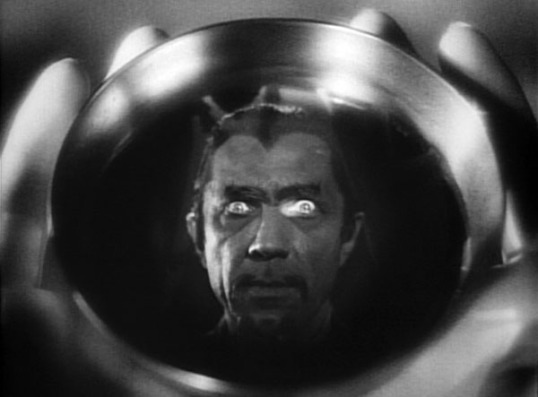
In the 1932 film, White Zombie, Bela Lugosi plays one of his most evil characters.

Lugosi is “Murder” Legendre, a voodoo master who lives on the island of Haiti.  He owns a sugar cane mill, one that has an ever-growing amount of workers.  All of Legendre’s workers do their work without complaint.  Actually, they work without talking at all.  Even when one of them falls to his apparent death, the rest continue to work as if they didn’t even notice.  Legendre has made himself into a wealthy and feared figure because everyone knows that he has an army of zombies who serve him.  He’s not only evil but he’s also someone who enjoys being evil and causing as much trouble as possible.  And yet, because his magic is powerful, the island’s rich plantation owners often pay him for favors.

Among those who are willing to pay Murder for his services is Charles Beaumont (Robert W. Frazer), a plantation owner who is in love with Madeleine Short (Madge Bellamy) and jealous of her fiancé, Neil Parker (John Harron).  Charles wants Madeleine to love him so Murder gives Charles a potion to slip into Madeleine’s drink.  When Madeleine drinks the potion, she appears to die.  After her funeral, Charlies and Murder break into her crypt and retrieve Madeleine.  Madeleine is now in a state of limbo, not quite alive but also not quite dead.  She can still play the piano but she cannot speak and she stares straight ahead with a blank look in her eyes.  She is now one of Murder’s zombies.  Needless to say, Charles isn’t happy about this and neither is Neil.

Now, one thing I should make clear is that the zombies in White Zombie are more like the zombies of Haitian mythology than the zombies that one would expect to find in a George Romero film.  The zombies in White Zombie do not eat human flesh.  They’re not in a process of decay.  They are not immortal.  These zombies are not the walking dead.  Instead, they’re brainwashed victims who have been turned into slaves by Murder and his magic potions.  Murder uses them to punish his enemies and to work in his mill.  As I said at the start of this review, Murder Legendre is one of Bela Lugosi’s most evil characters.

White Zombie is usually considered to be the first feature length zombie film.  Though it was released 91 years ago and watching it requires a bit of adjustment on the part of modern viewers, White Zombie still creates and maintains a memorable atmosphere of ominous magic and growing menace.  The scenes in Murder’s sugar cane mill are especially strong, with Murder’s zombies silently marching from one task to another.  The acting is a bit inconsistent.  Watching the film, it’s easy to see that it was made at a time when Hollywood was still making the transition to sound.  But the important thing is that Bela Lugosi is absolutely fantastic as the menacing Murder Legendre, smirking as he casts his spell and, in one of the film’s most famous scenes, walking straight towards the camera with an evil gleam in his eyes as if he’s coming straight for the audience.  Flaws aside, White Zombie features one of Bela Lugosi’s best performances and is more than worth watching for that reason alone.

Pre Code Confidential #20: SAFE IN HELL (Warner Brothers 1931)


gary loggins's avatarcracked rear viewer

“Wild Bill” Wellman  gave us some of the wildest movies of the Pre-Code Era: THE PUBLIC ENEMY, NIGHT NURSE, FRISCO JENNY, HEROES FOR SALE, WILD BOYS OF THE ROAD. But for sheer, unadulterated sleaze, you can’t beat SAFE IN HELL, chock full of lust, murder, shady characters, and a marvelous performance by the virtually forgotten Dorothy Mackaill.

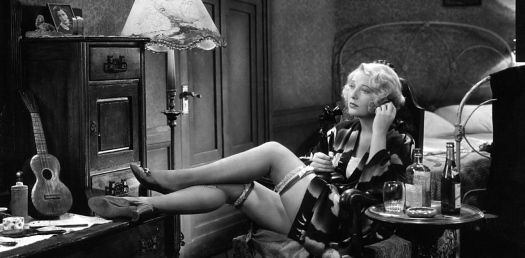
Scantily clad Gilda Karlson (Mackaill) is a New Orleans prostitute, and there’s no doubt about it right from the get-go! We see her lounging around as she takes a call from her madam (Cecil Cunningham) to go out on a job and show a john a good time. That john turns out to be Piet van Saal (Ralf Harolde), the man she was caught in flagrante delicto with by his wife, leading to her current sordid life. Piet tries to rekindle that old flame (for a price, of course), but Gilda turns him…

View original post 699 more words

Halloween Havoc!: BLACK MOON (Columbia 1934)


gary loggins's avatarcracked rear viewer

moon1

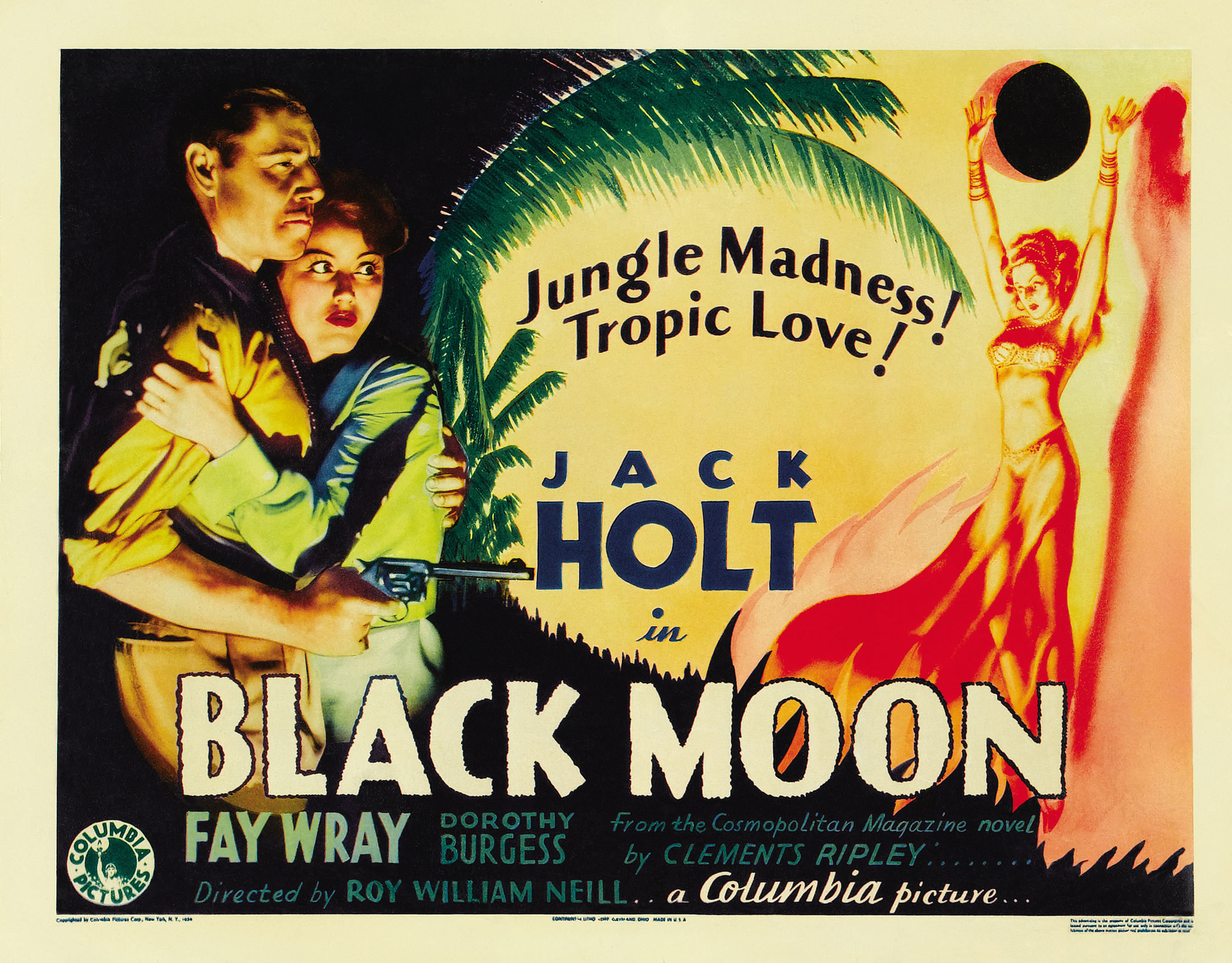
I thought I’d seen, or at least heard of, all the horror films made during the 1930’s. I was wrong. BLACK MOON was new to me when I viewed it recently as part of TCM’S Summer Under the Stars salute to KING KONG’s  main squeeze, Fay Wray. It’s a voodoo tale also starring square-jawed Jack Holt and Pre-Code favorite Dorothy Burgess . The director is Roy William Neill, who would later work with genre giants Karloff (THE BLACK ROOM), Lugosi and Chaney (FRANKENSTEIN MEETS THE WOLF MAN), and helm eleven of the Universal Sherlock Holmes films with Basil Rathbone.

moon2

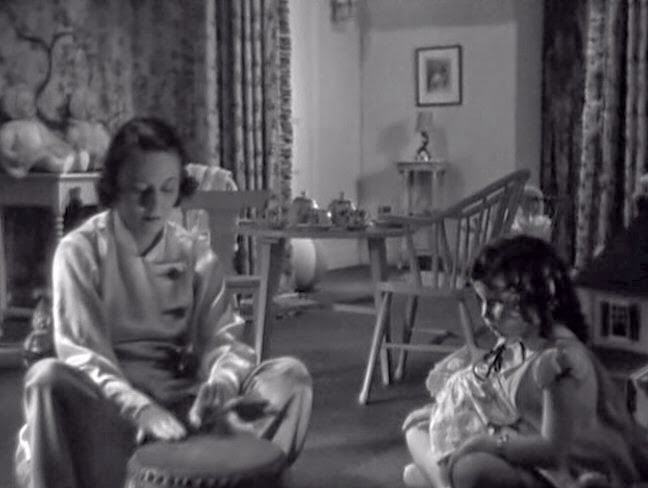
The film open with the pounding of jungle drums, and we see Nita Lane (Burgess) is the one pounding them in her luxurious home. Nita grew up on the Caribbean isle of San Christopher, where her parents were murdered during a native uprising. Hubby Stephen (Holt) is against Nita returning to the…

View original post 456 more words

Cleaning Out The DVR #33: Heaven Can Wait (dir by Ernst Lubitsch)


(For those following at home, Lisa is attempting to clean out her DVR by watching and reviewing 38 films by the end of today!!!!!  Will she make it?  Keep following the site to find out!)

Heavencwaitposter

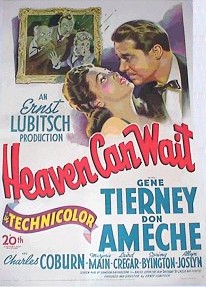
The 1943 film Heaven Can Wait opens with a 70 year-old man named Henry Van Cleve (Don Ameche) stepping into an opulent drawing room and having a conversation with a refined but menacing man known as His Excellency (Laird Cregar).  From their conversation, it quickly becomes obvious that Henry has recently died and His Excellency is in charge of Hell.  Most people who come to see His Excellency do so because they want to argue that they do not belong in Hell and they usually end up falling through a convenient trap door.  However, Henry is there to argue that, after living an enjoyable but dissolute life, he belongs in Hell.

Henry tells the story of his life.  He tells how he was born into great wealth and influenced by his down-to-Earth grandfather (Charles Coburn).  As a young man, he spent most of his time chasing after showgirls bur eventually, he met the beautiful and kind-hearted Martha (Gene Tierney).  He immediately fell in love with Martha but, unfortunately for him, she was engaged to his cousin (Allyn Joslyn).  Henry, however, used his considerable charm to convince her to elope with him.

(It helps, of course, that Henry’s cousin was totally and completely obnoxious, in the way that rival suitors often are in films like this.)

And, for 25 years, Henry was happy with Martha.  It took him a while to settle down and, at one point, Martha even left him as a result of his affairs.  However, they always got back together and Henry eventually did settle down, even going so far as to prevent his son from running off with a showgirl of his own.  It was only after Martha herself died that Henry, who always felt he didn’t deserve her love, returned to his old ways.

And, Henry argues, it’s because he was unworthy of his wife that he deserves to spend an eternity in Hell.  Does His Excellency agree?

Well, it would certainly be a depressing movie if he did.

One of the great things about TCM’s 31 Days of Oscar is that it gave me a chance to discover several films from director Ernst Lubitsch, films like The Smiling Lieutenant, The Love Parade, Ninotchka, and Heaven Can Wait.  Of those four Lubitsch films, Heaven Can Wait is probably the least substantial but it’s still an undeniably entertaining and nicely romantic film.  This is one of those films that you watch because the sets look wonderful, the costumes are to die for, and the performers are all pleasant to watch.  It’s pure entertainment, a crowd-pleaser in the best sense of the word.

In fact, tt was such a crowd-pleaser that it was nominated for best picture of the year.  However, it lost to the ultimate crowd-pleaser, Casablanca.