Film Review: Woodstock (dir by Michael Wadleigh)


A few nights ago, as I watched the 1970 documentary Woodstock, I thought to myself, “Goddamn, this is a long movie…”

Just how long Woodstock is depends on which version that you watch.  The original version, which won an Oscar for Best Documentary and which was also nominated for Best Editing (the first nomination ever for the legendary Thelma Schoonmaker), had a running time of little over three hours.  The version that I watched was the “director’s cut,” which clocks in at close to four hours.  Of course, since Woodstock was shot over the course of a three-day music festival, it could have been even longer.  32 acts performed at Woodstock but only 14 of them appeared in the original version of the film.  (By including footage of Jefferson Airplane, Janis Joplin, and Canned Heat, the director’s cut increases that number to 17.)

As for the music that does appear in the film, your reaction is going to depend on how much you like the music of the late 60s.  Jimi Hendrix, Sly and the Family Stone, and Ten Years After are all brilliant but, at the same time, you also have to deal with Joan Baez rambling about her imprisoned husband and singing perhaps the smuggest version of Swing Low Sweet Chariot ever recorded.  Watching Crosby Stills & Nash perform, I was reminded of every boring grad student that I’ve ever known while John Sebastian’s stage patter sounded almost like a parody of hippie shallowness.  I would say that Woodstock was a perfect example of why the rockers are better remembered than the folk singers, except for the fact that my favorite musical performance in the film comes from Arlo Guthrie:

That said, Woodstock really isn’t about the music.  That may sound like a strange thing to say, considering that almost every concert film made since owes a debt to Woodstock but really, the most interesting parts of the film aren’t the performances.  Instead, it’s the interviews with the people involved, not only the concertgoers themselves but also the citizens of the nearby town of Bethel, New York.  Some of the people interviewed as very positive about the sudden hippie invasion.  Quite a few others are not.  One older man seems to be more concerned with working on his car than anything else.  Like any good documentary, Woodstock provides a record of the time when it was made.  As much as I like music, I absolutely love history and, to me, that’s the main appeal of Woodstock.  Watching the film is like getting a chance to step into a time machine and experience an age that I would otherwise never get a chance to know.

Whenever I watch Woodstock, I’m always struck by the fact that I probably would not have enjoyed it as much as some of the people who attended.  I have a feeling that I’d be like that poor girl who is spotted about halfway through the film, crying about how it’s too muddy and crowded.  I always cringe a little when I see everyone bathing in the same dirty pond.  (A young Martin Scorsese worked on the film and reportedly spent the entire festival wearing an immaculate white suit.  That’s something that I would have liked to have seen.)  And yet, at the same time, I just find the documentary fascinating to watch.  I always find myself wondering what became of the people who were interviewed in the film.  How many of the hippies are still hippies and how many of them eventually ended up working on Wall Street?  Did the cranky guy working on his car even bother to see the film?  (It wouldn’t surprise me if he didn’t.  Movies, especially movies about a bunch of stoned hippies, really didn’t seem to be his thing.)  To me, questions like those are what makes a movie like this fascinating.

As an event, the original Woodstock is often cited as being the best moment of the 60s counterculture.  (30 years later, the 1999 Woodstock would be remembered as one of the worst moments in the history of both music and American popular culture.)  As a film, Woodstock is undeniably optimistic that the people who braved the rain and the mud so that they could see Joan Baez would somehow manage to build a new society.  Still, sharp-eyed viewers will note a hint of what was to come.  One of the first people interviewed in the documentary is a local shopkeeper.  As he speaks, a newspaper can be seen over his shoulder.

The headline reads: “Sharon’s Pals Balk At Probe,” a reference to the investigation into the murder of Sharon Tate by Charles Manson and his followers.  Seen today, that headline serves as a reminder that, even at the time it was occurring, the peaceful promise of the original Woodstock would be short lived.

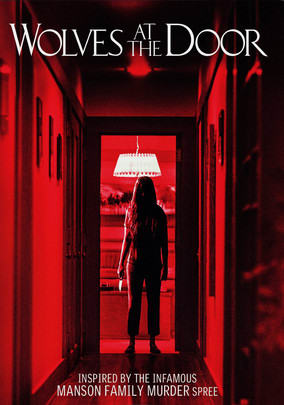
 

The TSL’s Horror Grindhouse: Wolves at the Door (dir by John Leonetti)


I’m really not sure what to make of Wolves at the Door.

I knew the film was inspired by the crimes of Charles Manson and his family before I watched the film.  Not only was Wolves at the Door specifically advertised as being “Inspired by The Infamous Manson Family Murder Spree” but just check out the plot description that was provided by Warner Bros:

Four friends gather at an elegant home during the Summer of Love, 1969. Unbeknownst to them, deadly visitors are waiting outside. What begins as a simple farewell party turns to a night of primal terror as the intruders stalk and torment the four, who struggle for their lives against what appears to be a senseless attack.

The Manson Family have inspired a countless number of films, so that’s not really an issue.  Almost all of those films either presented Manson and his followers as being the epitome of evil or they told stories that were heavily and obviously fictionalized.

Wolves at the Door, however, is different.  Other than in some news footage that is shown during the end credits, Manson is not seen in the film.  For that matter, the members of the Family don’t get much screen time either.  Mostly, they’re just seen as shadows, creeping down hallways and sometimes materializing in a doorway before vanishing.  There’s no mention of Helter Skelter or the Beatles.  I’d have to rewatch the film to say for sure but I think it’s possible that we only hear them say one or two words over the course of the entire movie.

Instead, Wolves at the Door spends most of its running time with the victims of the Manson Family, following them as they are unknowingly stalked inside of a Los Angeles mansion.  Usually, in a film like this, you would expect the names to be changed but, for some reason, that doesn’t happen in Wolves At The Door.

So, Katie Cassidy plays a pregnant actress who is named Sharon.

Elizabeth Henstridge plays a coffee heiress who is named Abigail.

Adam Campbell plays Abigail’s Polish boyfriend, who is named Wojciech.

Miles Fisher plays a hairdresser who is named Jay and who just happens to be Sharon’s ex-boyfriend.

And, finally, Lucas Adams plays a teenager stereo enthusiast named Steven, who just happens to be in the wrong place at the wrong time.

Speaking as someone who loves horror and who has defended some of the most critically derided films of all time, everything about Wolves at the Door just feels icky, tacky, and wrong.  Many grindhouse horror films have been inspired by actual crimes but most of them at least changed the names of the victims.   You really have to wonder just what exactly the filmmakers were thinking here.

(Then again, just two years ago, NBC greenlit a show called Aquarius, which could have just as easily been called “The Adventures of Young Charlie Manson.”)

It’s not just that Wolves at the Door is offensive.  In fact some of the best movies of all time were specifically designed to be offensive.  The problem with Wolves at the Door is that it’s also just a very shoddy film.  (In fact, if the film had been well-made, it wouldn’t be quite as offensive.)  Though the actors may be talented, they’re let down by a script that’s full of some of the clunkiest dialogue that I’ve ever heard.  Though the soundtrack may feature some good songs, they’re still the same damn songs that show up in every movie set in 1969.  (Judging from the movies, everyone in 1969 just listened to the same five songs over and over again.)  Though the movie itself is only 73 minutes long, it is so abysmally paced that it feels much, much longer.

Sadly, this film was directed by John Leonetti, who did a pretty good job with Annabelle.  Again, I’m not sure what exactly he or anyone else was thinking with Wolves at the Door, which I’m going to go ahead and declare to be the worst film of 2017.  I know that the year isn’t over yet but I just can’t imagine anything as bad as this.

6 Trailers In The Basket


Hi there and welcome to the Easter edition of Lisa Marie’s Favorite Grindhouse and Exploitation Trailers!

1) Bunnyman (2009)

Just in time for Easter, it’s Bunnyman!

2) Deathmaster (1972)

Much like Twilight, Deathmaster combines the true life crimes of Charles Manson with vampires.  In this one, the Manson character is played by Robert Quarry.  Speaking of which, did anyone see those pictures of the modern-day, incarcerated Manson that were released last week?  I took one look at those and I went, “Santa Claus is really letting himself go.”

3) The Last Horror Film (1984)

Speaking of maniacs, this film reunited the two stars of the infamous movie of the same name, Caroline Munro and Joe Spinell.

4)  Hercules (1983)

For the past month and a half, I’ve been watching Lou Ferrigno on The Celebrity Apprentice and, even though I’m rooting for Aubrey O’Day, it’s impossible not to like Lou.  Here’s Lou starring as Hercules in a film from the infamous Luigi Cozzi.  (I wanted to also include the trailer for Hercules In New York, the 1970 debut of Arnold Schwarzenegger but every single Hercules in New York YouTube video is embedding disabled.  Bleh!)

5) Ironmaster (1983)

Yes, it’s yet another history lesson from the Joel Schumacher of Italian exploitation, Umberto Lenzi.

6) The Phantom of the Opera (1998)

Since it’s the holidays, let’s end with some Argento.

A Bonus-Sized Collection Of Trailers, Part Two


Part two of this week’s bonus-sized edition of Lisa Marie’s Favorite Grindhouse and Exploitation trailers actually kinda sorta has a theme or two.  One unintentional theme is that most of the movies highlighted here have not been released on DVD in the U.S.  However, the other intentional theme is that, to quote the old song, “the female of the species is deadlier than the male.”

(You can view themeless part one of this week’s edition by clicking here.)

1) The Female Bunch

“They swore never again to let a man hurt them…”  See, the grindhouse has a lot more to teach us than many realize.  The Female Bunch was released in 1969 but it was actually filmed a year earlier at the Spahn Movie Ranch which was also the home of Charles Manson and his followers at the time.  It’s rumored that members of the Manson Family can be spotted in the film as extras.  It was directed by Al Adamson who, 30 years later, would be murdered and buried in cement.

2) Some Girls Do

Is it even necessary for me to state that this film came out in the 60s?  1969 to be exact.  Some girls do?  I certainly know I do.

3) Danger Girls

Yes, this one is from 1969 too.  It was directed by the one and only Rene Cardona, Jr.  For those keeping track, this one is about a “sinister organization of beautiful girls … driven by a lust for blood.”

4) Scorpions and MiniSkirts

This (as opposed to The Graduate or Bonnie and Clyde) was apparently the most surprising production of 1967.  It says so right in the trailer.  I just like the title, perhaps because I’m a Scorpio who likes to show off her legs.

5) The Miniskirt Mob

By 1968, scorpions were no longer in fashion but the miniskirt was still très chic.  “They ride hard…no matter what they’re mounted on!”

6) 7 Golden Women Against Two 007

This is from 1966 and I really don’t know what to say about it other than … well, 1966.  If any of you men out there want to know why the female of the species became deadlier than the male, the answer is to be found in this trailer here.  Call it self-defense.  That said, this trailer fascinates me because, seriously, what the Hell’s going on?  I fear I may never know as this film has apparently never been released on DVD.