Catching Up With The Films of 2023: After Everything (dir by Castille Landon)


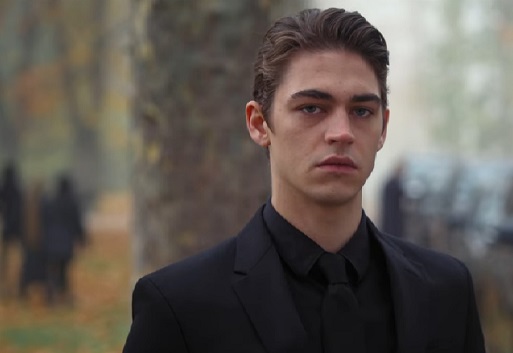
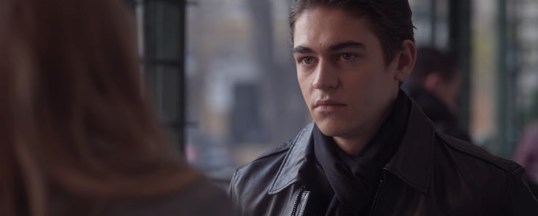
The saga of the world’s most boring and tedious couple finally comes to an end in After Everything.

When last we checked in on Tessa Young (Josephine Langford) and Hardin Scott (Hero Fiennes Tiffin), they were probably both wondering how they ended up with the type of names that most people would expect to find attached to fake profiles on a dating app.  Tessa had also just left Hardin, upset that he used the details of their relationship to write his first novel, After.

After Everything opens with best-selling, voice-of-his-whiny-generation Hardin being pressured to come up with a follow-up novel but he has writer’s block because Tessa won’t even return his texts.  As he explains it, he’s lost his muse and he can’t write anything without her.  (Maybe he should send her some of the money that he made off of her life story then.)  Despondent, Hardin starts drinking again.  This would be a big plot point if not for the fact that, in every After film, the alcoholic Hardin starts drinking again.  Hardin has gotten sober and given up his sobriety so many times that, at this point, it’s more about being indecisive than anything else.  Either be a drunk or don’t be a drunk but make up your freaking mind.

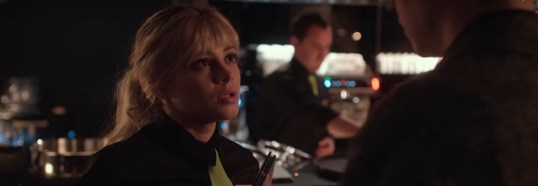
Hardin does what any struggling writer would do when confronted with writer’s block.  He goes to Portugal and reunites with a woman whose life he ruined.  Natalie (Mimi Keene) had a scholarship and a promising future until Hardin filmed himself having sex with her in order to win a bet.  When Hardin’s friends made the film public, Natalie was humiliated, she lost her scholarship, and she spent years mired in depression before she escaped to Portugal.  In a plot twist that is not only dumb but also rather offensive, she’s surprisingly forgiving of Hardin when he shows up in Lisbon.  Sure, he took her virginity to win a bet and sent a video to all of his friends without her consent but hey, Hardin’s had a rough life as the privileged child of two wealthy people who give him everything that he wants.  Natalie’s life may have been ruined, the film tells us, but Hardin has recently spent a few weeks feeling bad about it so they’re even.  Natalie introduces him to all of her friends.  (It doesn’t take long because Natalie only has two.)  Everyone is really impressed to discover that Hardin wrote After.

“I hear they’re making a movie!” one friend says.

“Harry Styles should play you!” the other friend shouts, a reference to the fact that the whole damned After franchise started as Harry Styles fan fiction.

(It’s a moment so awkwardly executed and so self-congratulatory that it reminded me of the moment in the second film when the author of the original book made a cameo appearance.  “What do you write?” she was asked.  “Oh,” she replied, smirking directly at the camera, “this and that.”  I threw a shoe at my TV but, fortunately, I have terrible aim.)

If Natalie forgiving Hardin isn’t bad enough, Hardin also decides to write a book about the time that he ruined her life, a book that he cleverly entitles Before.  You really do have to wonder if Hardin has ever met anyone that he didn’t end up exploiting in some terrible way.  Having learned his lesson with Tessa, Hardin allows Natalie to read the book before sending it off to the publisher.  Natalie happily gives her consent for it to be published because what girl wouldn’t want the guy who sexually humiliated her to use the memories of that humiliation as a way to make money for himself?

As you may have noticed, Tessa is not present for the majority of After Everything, though she does appear in several flashbacks to the earlier films.  She shows up briefly at the beginning and then the end of the film and there’s a point about halfway through the film where she wakes up and discovers that Hardin has sent her a weepy text.  When Hardin gives his best man speech at his half-brother’s wedding reception and, as usual, makes it all about himself, there’s a shot of Tessa looking moved.  But, for the most part, this installment is all about Hardin thinking about the past and saying stuff like, “I’m trying to be a better person.”  Of course, we do still get the franchise’s signature overheated but discreetly-shot sex scenes, though one of them is just Hardin having a dream about a flight attendant while most of the rest are just flashbacks.

(This film has so many flashbacks to the previous films that it’s hard not to notice that the franchise’s makeup artists could never quite remember the exact locations of all of Hardin’s tattoos.)

Unfortunately, Hero Fiennes Tiffin’s bland performance as Hardin has always been one of After’s biggest problems so basing an entire movie around his petulant screen presence was perhaps not the best way to go.  We are continually told that Hardin Scott is the most exciting writer in the world but there’s nothing about Tiffin’s performance that suggests that Hardin can even think in complete sentences, let alone write them down.  Hardin spends a lot of time whining and a lot of time drinking and there comes a point where you just want someone to say, “You’re a twenty-something alcoholic who is still bitching about stuff that most people get over when they’re 16.  Grow up.”  Unfortunately, no one does say that.  However, about 52 minutes into the film, Hardin totally gets his ass kicked by some beach bullies.  That was emotionally satisfying to watch.

In the end, Hardin and Tessa are reunited.  After five movies, Josephine Langford and Hero Fiennes Tiffin still do not have a shred of romantic chemistry.  It’s nice that Hardin and Tessa worked everything out but I would still dread getting stuck in a conversation with either one of them.

Apparently, this is the last of the After films and that’s probably for the best.  At this point, I think the only place left to go would be After Life, with Tessa and Hardin boring everyone in Purgatory with their story about how they first bonded over their shared love of an obscure novel called The Great Gatsby.  Writing this review, I was shocked to discover that this franchise is only 4 years old.  Seriously, I thought had been suffering for at least ten years because of these two.

Other After Films:

  1. After
  2. After We Collided
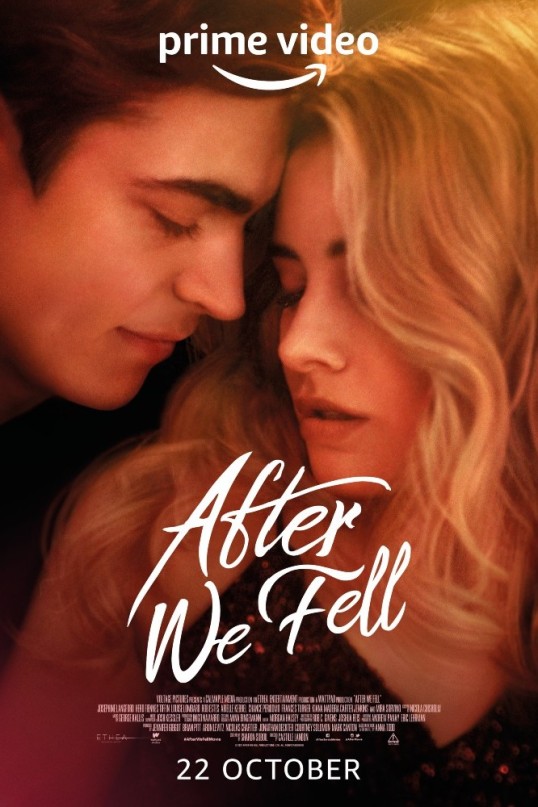
  3. After We Fell
  4. After Ever Happy

Film Review: After Ever Happy (dir by Castille Landon)


The fourth installment in the After franchise, After Ever Happy picks up where After We Fell ended.

The world’s most boring couple, Tessa Young (Josephine Langford) and Hardin Scott (Hero Fiennes Tiffin), are in London to attend Hardin’s mother’s latest wedding.  Unfortunately, Christian Vance (Stephen Moyer) takes this opportunity to reveal that he is actually Hardin’s father which leads to Hardin storming off and grabbing a bottle of whiskey.  If you’ve seen the previous three After films, then you know that’s a big problem because Hardin is a recovering alcoholic who turns into an asshole when he’s drunk.  Of course, Hardin’s usually an asshole when he’s sober as well.

Because Tessa really doesn’t have any life beyond chasing after Harin and trying to keep him from being self-destructive, Tessa chases after him and tries to keep him from doing anything self-destructive.  Unfortunately, since Harden’s already drunk, he decides that he might as well burn down his mother’s house and that’s exactly what Hardin does.  In most movies, this would be treated as Hardin going off the deep end and as evidence that Tessa should get a thousand miles away from him.  In the After films, every stupid, impulsive, and destructive thing that Hardin does is just an excuse for Tessa to comfort him by having soft-focus sex in a car.  In the world of the After films, every toxic relationship is a Dior commercial.

Not now, Natalie!

Anyway, After Ever Happy pretty much follows the exact same pattern as the previous three films.  After Tessa’s father dies, she moves to New York in order to heal and Hardin loses it.  Hardin follows her to New York.  Tessa takes him back.  Hardin explodes over some trivial issue.  Tessa forgives him.  Tessa tries to do something for herself.  Hardin gets mad.  Tessa forgives him.  Hardin tries to be a better person, which in this case means that he gives his scarf to an old homeless man whom Tessa has been giving food.  (Tessa explains that giving the homeless man food makes her feel better about losing her dad, which is another way of saying that she’s only helping him to make herself feel good.  If her Dad was still alive, the homeless man would probably end up freezing to death while Tessa and Hardin debated whether Fitzgerland was a better writer than Hemingway.  Maybe one of those schmucks could try to help the old homeless man find shelter or something.  That scarf’s only going to do so much.)  Hardin turns his journals into a novel, which is somehow published.  Tessa is angered that Hardin wrote about her without asking her permission and she leaves him.  Hardin’s book is acclaimed, despite the fact that the excerpt we hear sound terrible.  Hardin becomes an amateur boxer or something.  I’m not really sure what was up with that scene.  “To be continued….,” the title card announces, so maybe the next movie will feature more action in the ring.

A few questions sprang to mind as I watched After Ever Happy:

Why, after four movies, does Hardin still only have one facial expression?

See?  Just one.

What was going on with Tessa’s hair during the second half of the movie?

Seriously, Tessa’s hair was one of the few things that she had going for her and this movie took that away from her.

Finally, how is it that, after four films, the lead performers still have next to zero romantic chemistry?  You would think that, after three years of playing these people, Hero Fiennes Tiffin and Josephine Langford would at least have a little bit of a spark to their interactions but instead, they still come across as being friendly acquaintances as opposed to lovers.  There’s nothing about their performances that suggest that they know each other in a way that only two people who are deeply in love could know each other.  There’s none of the little details that one immediately spots between people who have shared trauma and found love.  Instead, every emotion and thought is on the surface.  There’s no depth to the relationship.  Hardin is toxic and whiney.  Tessa is the doormat that other doormats walk over.

Typically, with a film like this, critics will say that the cast does their best with the material they’ve been given but, in this case, everyone’s just as lousy as the material.  Say what you will about the 50 Shades Films, at least Jamie Dornan and Dakota Johnson appeared to be having fun.  The cast of After Ever Happy, from the stars on down, just seem to be hoping that it will soon all be over with.

Catching Up With The Films of 2021: After We Fell (dir by Castille Landon)


After We Fell continues the story of Tessa and Hardin, the world’s most boring couple.

If you’ve seen After and After We Collided, you know the story of Tessa (Josephine Langford) and Hardin (Hero Fiennes-Tiffin).  You know that Tessa has an alcoholic father and that she met and fell in love with Hardin during her first semester of college.  You know that Hardin is a British bad boy with a lot of really lame tattoos but he also really likes The Great Gatsby.  Hardin’s from a wealthy family and he’s a recovering alcoholic.  Hardin may come across like a sullen jerk but that’s just because no one but Tessa understands who he truly is.  Blah blah blah.

Hardin and Tessa spent the first two movies having a bunch of boring relationship problems and that’s pretty much what they spend the third movie doing, as well.  There’s a lot of tastefully filmed sex scenes but no one’s going to mistake these films for Fifty Shades of Grey.  Whenever Hardin and Tessa have sex in After We Collided, there’s a close-up of Hardin grabbing a condom.  The one time that Hardin doesn’t grab a condom, it leads to one of the film’s few plot developments.  It’s the rule of Chekhov’s Condom.  If a condom is used in the first act, a condom will not be used in the second act, and there will be consequences in the third act.

There’s not really much of a plot to this one.  Tessa takes a job in Seattle.  Hardin doesn’t want her to go to Seattle.  Tessa’s drunk dad shows up.  Hardin bonds with the drunk dad.  Hardin’s mother gets married so the film’s action moves to London.

When Hardin and Tessa visit his mom, Hardin’s mom says, “I set your bed up, Hardin.”

“I was expecting to stay on the floor,” Hardin replies.

OH, SHUT THE FUG UP, HARDIN!  JUST SAY THANK YOU FOR ONCE!

The After films wouldn’t be so bad if Hardin wasn’t such an annoying douchebag.  And it would help is Tessa actually had a personality that went beyond her relationship with Hardin.  They’re a boring couple.  Whatever chemistry Fiennes-Tiffin and Langford had in the first two films is totally missing in After We Fell.  When they have phone sex, you feel bad for whoever at the NSA is having to transcribe their conversation.  They have no interests outside of each other and listening to middlebrow music.  Hardin continually fears that Tessa is going to leave him but Tessa wouldn’t exist if she wasn’t half of a couple and neither would Hardin.  They’re not individuals.  They have no personality outside of worrying about each other, fighting with each other, and talking about each other.  One gets the feeling that they are the couple that everyone tries to avoid at a party.  “Don’t get stuck in a corner with those two unless you’re ready to spend the entire night listening to the story about that time Hardin was reading The Great Gatsby in the student union….”

The film ends with the promise of “To be continued.”  I’m looking forward to After The Divorce.

Lisa Marie’s 10 Worst Films of 2021


Also be sure to check out my picks for 2020, 201920182017201620152014201320122011, and 2010!

10. Paradise Cove (dir by Martin Guigi)
9. Eternals (dir by Chloe Zhao)
8. Spiral: From the Book of Saw (dir by Darren Lynn Bousman)
7. Space Jam: A New Legacy (dir by Malcolm D. Lee)
6. Falling (dir by Viggo Mortensen)
5. Deadly Illusions (dir by Anna Eizabeth James)
4. Being the Ricardos (dir by Aaron Sorkin)
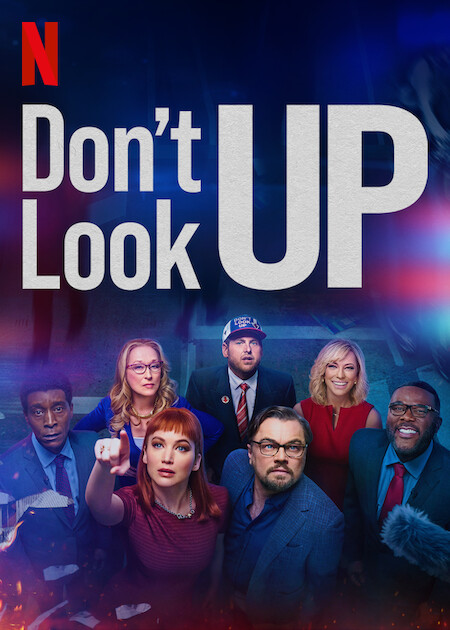
3. Don’t Look Up (dir by Adam McKay)
2. After We Fell (dir by Castille Landon)
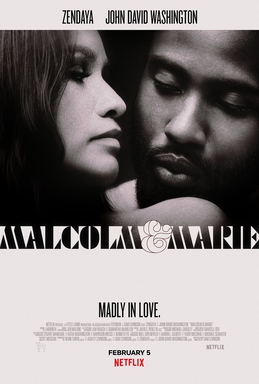
1. Malcolm & Marie (dir by Visionary Sam Levinson)

Cleaning Out The DVR, Again #26: The Maid (dir by Darin Scott)


(Lisa is currently in the process of trying to clean out her DVR by watching and reviewing all 40 of the movies that she recorded from the start of March to the end of June.  She’s trying to get it all done by July 11th!  Will she make it!?  Keep visiting the site to find out!)

The-Maid-window-620x369

The 26th film on my DVR was The Maid, which I recorded off of Lifetime on May 28th.

According to the imdb, The Maid is also known as A Housekeeper’s Revenge.  Regardless of which one you go with, both titles reveal this to be a Lifetime film.  That’s one thing that I always find interesting about Lifetime films — everyone always has a beautiful house and, naturally, everyone always has either a maid or a housekeeper.  I guess I find it interesting because very few of the people I know can afford to have a full-time maid, though I did once date this guy who was going to SMU where the school’s motto might as well be, “Our maid went to UT.”  When you get down to it, there are very few Lifetime films about poor people, unless the film is about somebody overcoming poverty so that they can go to Harvard or marry a professional athlete.

And I’m not complaining!  Lifetime is all about crowd-pleasing entertainment and, for the most part, we would all love to live in a big house with a great kitchen.  I know that most people would want to have a housekeeper or a maid.  Not me, though.  I like cleaning.

Anyway, in the case of this film, the maid is Colleen (Fay Masterson).  Colleen has just been hired to work for the Blackwell family!  Paul Blackwell (Lance Irwin) has just married a woman who is several years younger than him and, while they’re on their honeymoon, Paul’s angry, college student daughter, Laura (Kathryn Newton), has been left alone in the house with Colleen.  What could go wrong, right?

Well, a lot could go wrong.  If nothing went wrong, it would be a very boring movie.  Laura has had some trouble back at college.  Her boyfriend apparently got really possessive and then Laura started to receive threatening emails.  Even after returning home after her father’s wedding, strange things continue to happen.  Someone hacks into Laura’s Facerange (to use the Degrassi equivalent of Facebook) account and changes her password.  Someone is passing out flyers that announce that Laura’s a slut.  Her dog mysteriously disappears…

Could it be Laura’s ex or it could be … THE MAID!?

It turns out that Colleen has secrets of her own.  Her developmentally disabled son committed suicide, shortly after one of his high school classmates stood him up on a date.  Is it possible that Colleen is trying to destroy Laura?

Of course, it’s possible…

The Maid is pretty much a standard Lifetime film but that’s why I enjoyed it.  This is one of those totally over-the-top films where everyone is either bitter or crazy or both.  You won’t believe the plot for a second but you’ll be having so much fun with all the melodramatic twists and turns that it won’t matter.  Fay Masterson especially deserves a lot of credit for fully committing herself to playing the title character.  When she glares at the rich people that she’s planning on destroying, you never forget it.

And don’t worry,  It’s a made-for-TV movie so you know the dog’s going to be okay.

574c96e639ced_283985n