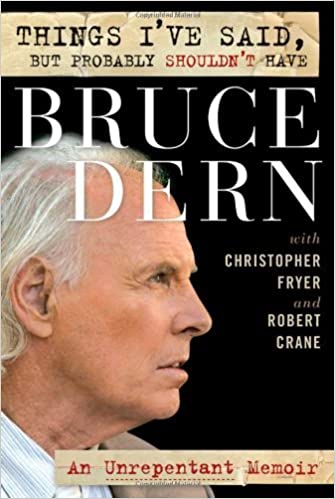
Book Review: Things I’ve Said But Probably Shouldn’t Have by Bruce Dern, with Christopher Fryer and Robert Crane


Bruce Dern is an interesting person.

He’s an actor, of course.  He spent a lot of his early career playing bad guys.  He was in a lot of biker films.  He killed John Wayne in a western.  Even Dern’s heroes were often unhinged in some way.  As he aged, he made the transition to becoming a character actor.  He still often plays characters who have their own individual way of looking at the world but now a Dern character is just as likely to be seen dispensing wisdom as he is to be seen killing people.

In real life, Bruce Dern was born into a socially prominent family.  (When Dern was born, his grandfather was serving as Secretary of War in FDR’s presidential cabinet.)  His godfather was Adlai Stevenson, who ran for president a handful of times.  Dern was a championship runner in high school.  When he was 20, he tried out for the Olympics.  In Hollywood, he appeared in both studio productions and independent films.  He was friends with everyone from Jack Nicholson and Dennis Hopper to John Wayne.  He worked for both Robert Evans and Roger Corman.  At the same time that Dern was playing drug-crazed bikers in Roger Corman movies, he was perhaps unique for being one of the few young actors in Hollywood who didn’t do drugs.  As he has commented in several interviews, he played Peter Fonda’s acid guru in The Trip despite the fact that he had never so much as even held a joint.

Bruce Dern is one of those actors who tends to show up in a lot of documentaries about Hollywood in the 60s and 70s.  If you read a book about that era, you can be sure that you’ll come across a lot of quotes from Dern.  Usually, Dern comes across as being both witty and straight-forward.  He’s an opinionated guy and he doesn’t hold much back.  It’s not surprising that he would be someone who many would want to interview.

Things I’ve Said, But Probably Shouldn’t Have is Bruce Dern’s memoir and it’s just as quirky as you would expect it to be.  Now, I should make cleat that the book was published in 2007, which was a a few years before Bruce Dern made his comeback with the Oscar-nominated Nebraska.  It was also written before Dern became a member of the Quentin Tarantino stock company and was introduced to an entirely new generation of filmgoers.  At the time this memoir was published, Dern was a part of the Big Love cast and his last “big” movie was Monster, in which he had a small but memorable role.  Things I’ve Said…. was written before the “resurgence” of Dern’s career and, as such, there are certain parts of the book that almost feel like an elegy.  At times, it’s almost as if Dern is saying, “Okay, I was never as big as I should have been but I still had fun.”  Fortunately, films like Nebraska and others reminded people of just how good an actor Bruce Dern actually is and, even in his mid-80s, he’s a busy character actor.

As you would probably expect, Things I’ve Said is a bit of a quirky book.  If anything, it reads as if Dern just sat down beside you and started talking about his career.  It skips back and forth through time.  Just because a chapter begins by discussing one subject, there’s no guarantee that it’ll stick with that topic.  A chapter about his Oscar-nominated turn in Coming Home also contains his thoughts on Florence Henderson (“A Cloris Leachman type dame …. a real fox”) and the Lord of the Rings trilogy.  Some of his best-known films are mentioned only in passing while others, like The The Incredible Two-Headed Transplant, get an entire chapter’s worth.  He writes about how he came up with the perfect final line for Walter Hill’s The Driver and how he created his most memorable movie psycho, the blimp pilot in Black Sunday.  He writes about turning down roles that were offered by everyone from Woody Allen to Francis Ford Coppola to Bernardo Bertolucci.  (Coppola, Dern writes, offered him the role of Tom Hagen in The Godfather but just as a bargaining tactic to get Robert Duvall to reduce his salary demands.)  Dern writes about his friendship with Jack Nicholson and the other members of the Hollywood counter culture and how he always found himself competing with people like Nicholson and Scott Wilson for roles.  He also discusses how killing John Wayne in The Cowboys led to him receiving death threats and getting typecast as a villain.  Dern seems to be more annoyed by the typecasting than the threats.

It’s an enjoyable read.  Dern comes across as being a genuine eccentric but he’s the good type of eccentric as opposed to the type of eccentric who keeps dead animals in his basement.  He also comes across as being very confident.  He has no fear of saying that his performance saved certain movies.  But you know what?  Bruce Dern has saved a lot of movies.  So, if he’s a little bit overly sure of himself …. well, he’s the earned the right.

I’ve read a lot of bad actor memoirs and a lot of good actor memoirs.  Bruce Dern’s memoir is definitely one of the good ones.
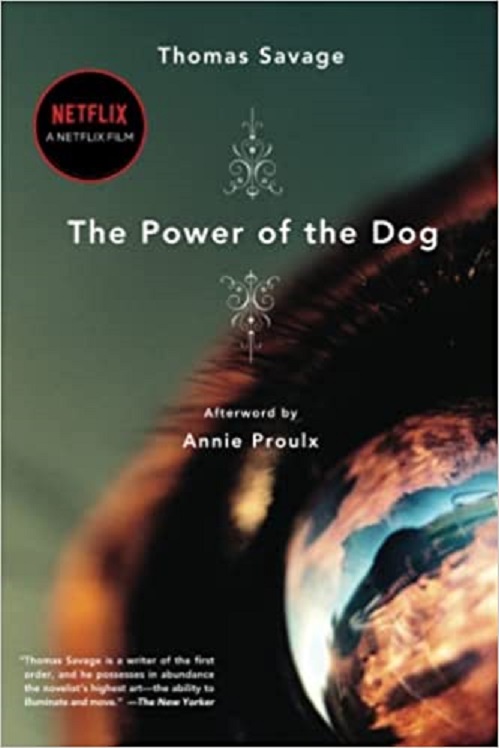
Novel Review: The Power of the Dog by Thomas Savage


If I may be allowed to open with a cliché: “You’ve seen the movie, now read the book!”

I ordered a copy of and read Thomas Savage’s 1967 novel, The Power of the Dog, before the release of Jane Campion’s film adaptation.  Hence, when I watched Campion’s film, I already knew about the Burbank Brothers, Bronco Henry, Rose, and Peter Gordon.  Neither the film’s big twist nor the diabolically clever ending were quite as much of a shock to me as they apparently were for others, though both were still undeniably effective in both the book and the movie.  Campion’s film sticks close to the plot of the book and visually, it captures Thomas Savage’s simple but effective prose.

In case you’ve yet to see the film or read the book, The Power of the Dog takes place in Montana in the 1920s.  Phil and George Burbank are brothers.  Ever since their parents retired, Phil and George have owned and managed the family ranch.  The gentle and kind-natured George has spent almost his entire life allowing himself to be led around by Phil.  Phil, meanwhile, has fully embraced the identity of being a tough cowboy and all of the myths that go along with it.  He rarely bathes.  He makes it a point to castrate all of the cattle personally.  He seldom wears gloves, believing the all work should be done bare-handed.  He’s dismissive of anyone who he believes has shown any sign of weakness.  He’s a bully and a sadist but he’s also an Ivy League graduate who takes pride in his ability to quote Ovid in the original Latin.  Phil is brutally dismissive of almost everyone.  He only seems to truly care about his brother and the memory of his mentor, the mysterious Bronco Henry.  When George meets and marries a widow named Rose, Phil can’t handle it.  George is breaking free of Phil’s influence and Phil seeks revenge against Rose, psychologically tormenting her and driving her to drink.  When Rose’s son, Peter, arrives at the ranch, Phil initially dismisses Peter as being weak.  But, to Rose’s horror, Phil soon starts to take an interest in Peter….

Author Thomas Savage was born in Montana and grew up on his stepfather’s ranch.  Savage later said that, much like Peter, he always felt like a misfit on the ranch.  His stepfather was a man who was much like Phil Burbank while Savage felt a lot like Peter Gordon.  Despite never feeling like he belonged, Savage was still able to use his early experiences as a ranch hand as the inspiration for his first published short stories.  Savage went on to write several western novels, many of which dealt with dysfunctional ranch families.  Though well-reviewed, The Power of the Dog was not a best seller when it was originally published and even the positive reviews often seemed to wilfully miss the subtext behind Phil’s homophobia and his devotion to the memory of Bronco Henry.  In 1967, The Power of the Dog was ahead of its time.

Hopefully, with the release of Campion’s adaptation, the original novel will be read by an entirely new audience.  As I mentioned earlier, Campion remains faithful to the book’s plot but there are a few elements in the original novel that will add to one’s understanding of the film.  For instance, the book goes into more detail about the history and the culture of the town and it also goes into more details about  the ranch’s dealings with the local Native tribes.  Whereas both the film and the book present Phil as being a wilfully malicious agent of chaos, the book makes clear that Phil is also a creation of the culture in which he was raised.  The book makes clear that, for all of his overt macho energy, Phil still feels like an outsider among even the ranch hands who worship him and that adds an element to his relationship with Peter that is only suggested at in the film.

Perhaps most importantly, the book devotes a chapter to the life of Rose’s first husband and the circumstances that led to his suicide.  Rose’s first husband is a doctor who comes to Montana to try to help people but who is slowly destroyed by the town’s apathy.  We learn of the argument that led to his suicide and, again, it adds an entirely new element to Phil and Peter’s relationship.

So, if you’ve seen the movie, read the book.  Or read the book and then see the movie.  They’re both excellent deconstructions of the mythology of the American west.

Book Review: Monster: Living Off The Big Screen by John Gregory Dunne


First published in 1997, Monster is a memoir about working in Hollywood.  It follows eight years in the life of John Gregory Dunne (who wrote the book) and his wife, Joan Didion.  While Dunne (who passed in 2003) and Didion (who passed away a few weeks ago) were best-known as essayists and novelists, they also had a hand in writing a number of films.  As such, it shouldn’t be surprising that, along with being a portrait of Hollywood, Monster is also the story of the making of one particular film.

That said, Monster is not the story of the making of a great film.

It’s also not the story of the making of a terrible film.

Instead, it’s the story of the making of a thoroughly mediocre and forgettable film.  The film in question is Up Close and Personal, which still pops up on HBO occasionally.  Up Close and Personal tells the story of a self-righteous news producer — a gentleman with the laughable name of of Warren Justice — who finds and grooms an aspiring reporter named Tally (Michelle Pfeiffer).  While Warren (played by Robert Redford) teaches her how to work the camera and deliver the news, they fall in love.  Then Tally’s career skyrockets, Warren’s career goes downhill, and eventually Warren ends up dying.  Boo hoo.

Monster tells the story of how Dunne and Didion were originally hired to adapt a biography of Jessica Savitch, a real-life anchorwoman who eventually got hooked on cocaine, who was physically abused by her mentor, and who eventually ended up dying in a car crash.  Realizing that real life might be too depressing to generate a hit film, the executives at Disney instead decided that they wanted Dunne and Didion to turn Savitch’s Hellish life story into a sentimental romance.  The drug abuse was dropped.  Savitch’s death was abandoned.  Her abusive boyfriend was transformed into the saintly character of — snicker — Warren Justice.

(Dunne actually devotes a good deal of space to explaining why they named the character Warren Justice.  Warren was a good “everyman” name and Dunne was apparently under the belief that Justice was a common surname in the South because he knew someone from Florida whose last name was Justice.  The logic is understandable, if flawed.  I’ve lived in the South almost my entire life and I’ve never met anyone named Justice.  Still, writers of Dunne and Didion’s caliber should have known better than to try to get away with such an easily mocked name.)

For eight years, Dunne and Didion write and rewrite Up Close and Personal and, along the way, a large number of Hollywood figures are attached to the film.  Ultimately, it’s directed by a fellow named Jon Avent, who were told has a strong ego.  Actually, the entire book is full of people who have strong egos.  Scott Rudin, for example, is in the book, demanding that that Dunne and Didion focus on appealing to as wide an audience as possible.  “It’s about two movie stars,” Rudin explains when Dunne worries that the film doesn’t actually have anything to say.

While Up Close and Personal is going through the pains of production, Dunne and Didion work on a number of other studio films, few of which come to production and none of which sound like they would have been particularly good had they been produced.  Ultimatum is a thriller about a terrorist plot.  Dunne and Didion correctly realize that the title needs to be changed to something less generic but their proposed replacement, Ploot, sounds like the title for a film about a flatulent goblin.  A bit more intriguing is their attempt to write a serious movie about aliens for the infamous producer Don Simpson.  Simpson comes across as being savvy but unfocused, which is actually a pretty good description of just about everyone in the book.  The Hollywood of Monster is a town and an industry controlled by former outsiders who are determined to reinvent themselves as tough guys.

And Dunne did a pretty good job of capturing the town.  The book is written with a dry wit and, as acidic as many of the passages are, Dunne doesn’t let himself off the hook.  He’s as open about his role in the making of a thoroughly forgettable film as he is about everyone else’s role.  There’s little concern for art or higher truth to be found in Dunne’s Hollywood.  Instead, the entire town is a monster.

It’s a good book and a memorable portrait of the American film industry in the 1990s.

Novel Review: The Books of Rachel and The Lives of Rachel by Joel Gross


My aunt has always been a prodigious reader and, when I was growing up, I always enjoyed looking through the stacks of books that she had sitting in the closets of her room. A few years ago, for medical reasons, my aunt had to move out of her house.  Because she wouldn’t have room for all of her books in her new place, she gave the majority of them to me.  So far, I’ve only read a few but this year, I plan to read all of them and review the ones that I like.  That’s one of my resolutions for 2022.

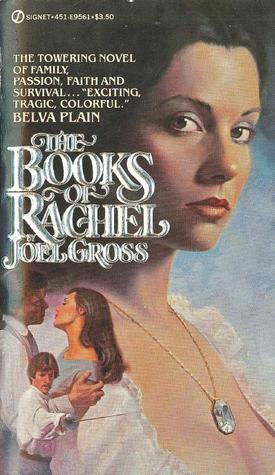
When I first got my aunt’s collection, one of the first books that I came across was a paperback called The Books of Rachel.  The cover featured a beautiful woman with a lovely necklace, a man fencing, and a couple kissing.  The blurb promised that Joel Gross’s The Books of Rachel was “exciting, tragic, colorful!”  That’s all I needed to see!  I read the book and I liked it so much that I went on Amazon to see what else Joel Gross had written.  That’s when I came across the prequel to The Books of Rachel, The Lives of Rachel.  Of course, I immediately ordered a copy of that book and read it as well.

The Books of Rachel was first published in 1979.  The Lives of Rachel was published in 1984.  Taken together, these two books tell the epic story of one family, following them from ancient Judea all the way to 1980s New York.  Though the family is frequently forced to relocate and each section of the book takes place in a different country and in a different century, a few things remain the same.  There is always a Rachel.  Whenever a Rachel passes, the first daughter to be born after her is given the name and becomes the heiress to centuries of strength, faith, and struggle.  They also, eventually, become the owner of a flawless, 60-carat diamond, the Cuheno Diamond.  The other thing that remains true is that, no matter where or when the individual Rachels may live, they do so under the shadow of the oldest of all prejudices and evils. From the ancient Romans to the Spanish Inquisition to the fascists and Nazis of post-World War I Europe, anti-Semitism is the one constant that every evil in the world tends to share.

There are many different Rachels.  Some are kind.  Some are innocent.  Some are less kind and some are definitely not innocent.  But what they all have in common is that they’re willing to fight, for themselves, for their family, and ultimately for their people.  For all of the sex and the melodrama (and, make no mistake, there is quite a bit and that’s definitely a good thing), The Books of Rachel and The Lives of Rachel are a tribute to survival, inner strength, and the faith and legacy of a people who would not allow themselves to be defeated.  With everything going on in the world today and so many prominent people openly embracing anti-Semitic conspiracy mongering, the lessons of these books are even more needed than ever.

Finally, another reason why I loved these books is because, as I’ve mentioned many times on the site, I am a total history nerd and these books are historical fiction at their finest.  The books are obviously very well-researched and the attention to detail makes them a wonderful read for those us who are interested in how life was once lived.

They’re good books.  I recommend them.  We can all learn from the Rachels.

Book Review: Behind the Bell by Dustin Diamond


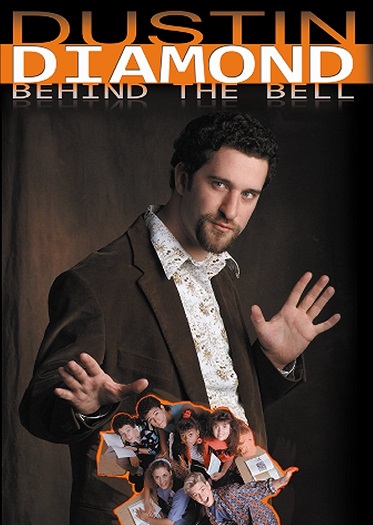
How bitter can one celebrity be?  The 2009 “memoir,” Behind the Bell, attempts to answer that question.

I was originally planning on reviewing Behind the Bell last year.  I didn’t, for the obvious reason that Dustin Diamond passed away in April of 2021 and Diamond did not come across particularly well in the book.  At the time, I know that a lot of culture bloggers, myself included, felt a bit conflicted when Diamond died.  Several years ago, I was one of the contributors to a blog about Saved By The Bell: The College Years, in which we spent nearly every review trashing the character of Screech Powers and the performance of the actor who played him.  To be honest, if I had to do it again, I probably wouldn’t change a thing that I wrote because Screech was a terribly-written character on a show that was full of them and Dustin Diamond’s increasingly cartoonish performance in the role didn’t do anything to help matters.  But still, after he died, I did find myself thinking about all the crap that Diamond took over the years for playing the character and I realized that it wasn’t entirely fair.  With the scripts that were being written, I doubt any actor could have made Screech any less annoying of a character.

That said, it also doesn’t diminish the tragedy of a non-smoker dying of lung cancer at the age of 44 to admit that Dustin Diamond did some fairly shady things after his time on Saved By The Bell.  There was the sex tape.  There was the controversial fundraiser to save his house.  There was the stabbing incident in a Wisconsin bar and his subsequent arrest for violating the conditions of his parole.  But again, you have to ask yourself if any of that would have happened if Diamond hadn’t, at the age of 11, been cast on the television show that would both make him famous and also pretty much typecast him as everyone’s least favorite student at Bayside.

Yes, Dustin Diamond was only 11 years old when he was cast as an 8th grader in Good Morning, Miss Bliss, the show that would eventually become Saved By The Bell.  He was considerably younger than the rest of his castmates, which undoubtedly led to him becoming the show’s outsider.  Along with Dennis Haskins, he stuck with the franchise all way to the end, for ten years.  He was 21 when Saved By The Bell: The New Class ended.  At a time when most people were having their first legal drink, Diamond was trying to figure out what to do with his life now that his acting career was pretty much over.  One would have to be heartless to not have some sympathy for the kid.

Behind the Bell deals with Diamond’s time on Saved By The Bell and his attempts to figure out what to do with his life after the show ended.  Unfortunately, as I mentioned earlier, Diamond doesn’t come across particularly well in Behind the Bell.  If anything, it’s perhaps one of the most bitter showbiz memoirs ever written.

Of course, before I write anything else, I should point that Diamond himself claimed that he didn’t actually write the book.  In 2013, during an interview for Oprah: Where Are They Now?, Diamond said that the book was ghost written by a guy who interviewed him and who either exaggerated his answers or took things out of context.  That may be true.  There are a few obvious factual errors in the book, a big one being the claim that Elizabeth Berkley starred in Showgirls while also appearing in Saved By The Bell.  Everyone knows that the original Saved By The Bell had already ended its run before Showgirls even went into production.  At the same time, the book’s bitterness is so obsessive, so detailed, and so personal that it’s hard to believe that it could all just be the product of a ghost writer’s imagination.  Diamond may have told the truth about having a ghost writer but it’s hard to buy his claim that the entire book was just based on a few vague and general answers that Diamond provided in an interview.

The majority of the book’s bitterness is directed at his fellow castmates.  Mario Lopez is described as being a bully.  Tiffani-Amber Thiessen is portrayed as being a bitch.  (And yet, at one point, Diamond mentions that he briefly lived with Tiffani-Amber and her family while he was being stalked by a fan.)  Elizabeth Berkley and Lark Voorhies are both described as being vapid while Dennis Haskins is apparently difficult to work with.  Diamond insinuates that Ed Alonzo seduced Neil Patrick Harris while Harris was still underage.  Still, the book reserves most of its ire for Mark-Paul Gosselaar.  Interestingly enough, Gosselaar is never described as doing anything that bad and, if anything, he comes across as being rather level-headed for a teen idol.  And yet, Diamond insists on telling out that Mark-Paul was actually a “douchebag” who got all of the attention and didn’t want to hang out with “the Dust.”  Throughout the book, Mark-Paul is frequently referred to as being “the golden child,” as if Mark-Paul owed Diamond an apology for being the best-looking actor on a show that was all about appearance.

When Diamond (or his ghost writer) isn’t trashing the rest of the cast, he’s telling us about the 2.000 women that he claims to have had sex with while playing Screech.  Diamond even claims to have had an affair with one of the show’s executive producers, who was in her 30s at the time.  (Diamond would have been 14.)  The woman later died of cancer and, as such, was not available to respond to Diamond’s claims.  An entire chapter is devoted to getting laid at Disneyland or “the Dizz” as Diamond (or his ghost writer) calls it.  Diamond really should have insisted on a better ghost writer.

(He also should have insisted on better copyeditor and fact checker.  The book is full of formatting errors and, at one point, a paragraph appears twice.  Hopefully, a fact checker would have noticed that Elizabeth Berkley was no longer on Saved By The Bell when Showgirls went into production.)

And yet, there are moments in the book that are actually kind of sweet.  The middle section of the book described a typical week in the production of Saved By The Bell and, for once, Diamond stops bitching about his castmates and trying to impress the readers and instead, he just talks about a unique experience that only he and a few other people experienced.  For a few brief chapters, the book actually becomes an interesting read and you can briefly see who Diamond was when he wasn’t busy being bitter.  There’s a wistful nostalgia to this section of the book.  Unfortunately, it only last for a few chapters and then we’re back to accusations of drug abuse and a nauseating “open letter” to all the women who Diamond claimed to have had sex with over the years.

In the end, I guess the main lesson of not just Behind the Bell but also of Dustin Diamond’s life in general is that child actors need a strong support system around them.  Too many people will try to take advantage of them and the pressure to often be the sole provider for the family is too much weight to be put on any 11 year-old’s shoulders.  Diamond needed someone to look out for him and sadly, it appears that very few people were willing to do that.

Book Review: The Godfather by Mario Puzo


“The book,” it is often said, “is always better than the film.” But is that always true?

No, it’s not and, if you need proof, just read Mario Puzo’s The Godfather and then re-watch the movie. Or re-watch the movie and then read the book. Either way, you’ll be left with the conclusion that, while the novel did lay the foundation for what became the greatest movie ever made, the novel itself is still a bit …. off.

The Godfather was originally published in 1969 and, before I write anything else, it should be noted that Mario Puzo himself never claimed that the book was meant to be a great work of literature. Puzo had previously written three novels and one children’s book. One of those novels was a pulp paperback that he wrote under a pseudonym for a quick payday. The other two novels were both meant to be works of “serious literature” that examined the human condition. Puzo considered his second novel, The Fortunate Pilgrim, to be his best and most poetic work. The only problem is that, while the reviewers were respectful, hardly anyone read Puzo’s “serious” fiction. As such, The Godfather was Puzo’s attempt to write the most commercial book possible, a page-turner that would climb the best seller list and help Puzo pay off his gambling debts. The Godfather certainly did that, spending 67 weeks on the New York Times’s Best Seller List and selling over 9 million copies in two years. Producer Robert Evans was so sure that the novel would be a hit that he even paid for the film rights while the book was still in the galleys.

Reading the book, especially after watching the movie, can be an odd experience.  The film itself is largely faithful to the book. Just about everything that happens in the movie can be found in the book.  Michael, Sonny, Tom, Fredo, Vito, Kay, Barzini, Sollozzo …. they’re all here.  Usually, characters are more complex in the original book than they are in the subsequent film adaptation.  In this case, the opposite is true and reading Puzo’s somewhat leaden prose really does make you appreciate the depth and nuance that actors like Al Pacino, Marlon Brando, James Caan, Robert Duvall, and John Cazale brought to the characters.  (Perhaps the most extreme example is Kay Adams, who was written as a dull nonentity with none of the nervous likability than Diane Keaton brought to the role.)  To be honest, perhaps the only character who comes across more vividly in the book than in the film is Luca Brasi.  The book goes into the details of what Brasi did for the Don in the past and, as a result, it’s much easier to understand why everyone was so terrified of him.

But, as I said, all of the events that can be found in the movie can also be found in the book.  However, there’s also a lot of things in the book that we’re left out of the film and it’s easy to see why.  In the film, for instance, Johnny Fontane shows up in only two scenes.  Tom Hagen goes to Hollywood.  Jack Woltz ends up with a horse’s head in his bed.  And that’s it for the film industry.  (In the book, the horse’s head is just placed in Woltz’s room as opposed to his bed.  Francis Ford Coppola later admitted that he misread the passage where Woltz finds the head.)  In the book, however, the Hollywood scenes go on forever.  Large sections of the narrative are handed over to Johnny Fontane and his best friend as they party in Hollywood.  It gets frustrating.  You want to read about the Corleones but instead, you’re reading predictable Frank Sinatra fanfic.

When the book’s not getting bogged down on Fontane, it’s getting caught up with Lucy Mancini and her quest to find a man who is as well-endowed as the late Sonny Corleone.  Lucy was Sonny’s lover.  He was the only man who was large enough to satisfy her.  After Sonny’s death, Lucy is given a casino in Las Vegas.  It’s while in Vegas that Lucy meets Dr. Jules Segal, an abortionist who explains to Lucy that she can’t achieve sexual satisfaction because her vagina is too big.  Fortunately, he can help.  Or, as he puts it, “Baby, I’m going to build you a whole new thing down there, and then I’ll try it out personally.” Awwwwwww!

Anyway, for whatever reason, Francis Ford Coppola decided not to include any of this when he made his film version.  And it’s for the best.  When it comes to The Godfather as a book …. well, the movie’s great.  And the sequel’s even better!  The book really makes you appreciate what Coppola and his amazing cast and crew were able to accomplish.

Horror Novel Review: The Knife by R.L. Stine


I thought I was done with reading R.L. Stine this October when I finished up Trapped but then I noticed that his 1991 YA novel, The Knife, was still sitting on my desk. Being a completest, I decided to go ahead and read it now, as opposed to leaving it for next year’s Horrorthon. Afterall, it was short and the title promised all sorts of grisly Fear Street fun. It’s not like a title would be misleading, right?

Well, there is indeed a knife in The Knife. It’s being wielded by a man who is chasing the book’s main character, Laurie, at the start of the story. And, later on, a bitchy nurse ends up getting a scalpel shoved in her throat and a scalpel is a type of knife so I guess the title isn’t completely misleading. That said, the book’s use of knives is actually a fairly minor detail. Stine could have just as easily called the book “The Teddy Bear” after the gift that Laurie tries to give to the boy at the center of the book’s plot.

Laurie is volunteering at Shadyside Hospital. She works in the Fear Wing, named after the Fear Family. She becomes attached to a patient named Toby. When Toby is discharged, Laurie is happy that he didn’t die but she is disturbed when Toby tells her that the woman taking him home is not his mother. Laurie decided to investigate Toby’s homelife on her own and, after doing a lot of stalking and basically repeatedly beaking the law, she stumbles across one of those huge crime rings that always seemed to popping up all over Shadyside.

It’s an okay book. If you’ve seen enough Lifetime films, you’ll be able to figure out what’s going on with Toby and his fake mother. And you’ll also figure out who murdered the nurse. There aren’t many surprises to be found but it’s a quick read and it’s kind of fun to watch Laurie try to balance getting a new boyfriend with cracking the case of an international crime ring. It’s like those weird episodes of Saved By The Bell where Lisa Turtle worked at her mom’s hospital. Technically, there are knives in the book so let’s give Stine credit for that.

And now, I think I’m done with reading about Fear Street for this month.

Book Review: If Chins Could Kill: Confessions of a B-Movie and many other books by Bruce Campbell


Everyday, we should give thanks to Bruce Campbell is not a jerk.

Seriously, can you imagine how disappointing it would be to discover that Bruce Campbell — ASH!  GROOVY BRUCE! — was not a laidback, blue collar actor who appreciated his fans, had a sense of humor about his films, and who enjoyed ending the day with maybe a can of beer and a nicely rolled joint?  It would be awful!  Bruce Campbell going on and on about the method while telling people not to see his early films?  Unthinkable!  Bruce Campbell demanding a huge trailer and bad-mouthing his co-stars?  That’s not our Groovy Bruce!

No, Bruce Campbell is pretty likable and appears to be downright nice.  That’s a huge part of his appeal.  He’s an actor but he’s also a fan.  He’s talented but he’s also level-headed.  He loves his films but he doesn’t pretend that they were anything that they weren’t.  Other actors would hide the chin.  Bruce shows it off every chance he get.  He even named his first memoir after the chin!

And it’s quite a good memoir too, If Chins Could Kill is,  Bruce discusses growing up.  He discusses the first films that he made with Sam Raimi.  The Coen Brothers make an appearance.  There’s stuff about Bubba Ho-Tep and Maniac Cop.  Really, it’s the definitive overview of the first part of Bruce Campbell’s amazing career and it’s a fun read.  Campbell has a sense of humor about both himself and his movies but, at the same time, he also has a deep love and appreciation for indie filmmakers.  It’s the humor that makes the book entertaining but it’s the love that will keep your reading.  And, after you finish the first memoir, move on to Campbell’s subsequent books — How To Make Love the Bruce Campbell Way, Hail to the Chin, and The Cool Side of My Pillow.  They’re all good books.  They’ll make you appreciate not only Bruce and the movies but also the art of writing about yourself without acting like a pompous jackass.  Bruce pulls it off and we’re all the better for it!

Book Review: Night of the Living Dead by John A. Russo


A few years ago, I found a slightly beat-up copy of John Russo’s novelization of Night of the Living Dead at Half-Price Books. Of course, I immediately purchased it. From my own knowledge of the making of George Romero’s classic horror movie, I knew that John Russo was the one who came up with an idea involving zombies which led to Romero writing a story outline for Night of the Living Dead which Russo then turned into the film’s screenplay.

I also knew that Romero and Russo had a falling out of sorts after the success of Night of the Living Dead. With the film in the public domain as the result of a screw-up on the part of the movie’s distributor, there was some controversy over who had the rights to the original’s story. That’s one reason why the titles of Romero’s subsequent zombie films (i.e., Dawn of the Dead, Day of the Dead, Land of the Dead, and the rest) were all about “the Dead” as opposed to “the Living Dead.” Russo’s subsequent zombie-themed work (i.e. Return of the Living Dead) featured the term “Living Dead” and was also sold as a sequel to the original Night of the Living Dead.

With all that in mind, I was curious to see what Russo’s novelization would be like. What extra information would the book contain about the characters? Would there be any extra details that were cut from the film? How about an alternate ending? It’s been known to happen. (Check out the novelization for Halloween if you want to see how much a novelization can differ from the film that inspired it.)

Well, it turns out that novelization of Night of the Living Dead is pretty much a straight recreation of the film. We do learn a bit more about just how bad a relationship Barbara has with her brother Johnny. And it’s firmly established that Ben was a truck driver before the dead came back to life. Otherwise, it’s pretty much just the movie in novel form. We don’t learn much about the characters that we didn’t already know. Harry is still stubborn and cowardly. Ben is still the designated hero who manages to get everyone killed through his own stubbornness. Barbara is still catatonic for most of the book. (I know some would complain about Barbara being so passive but her stunned disbelief is perhaps the most realistic part of the film and the novel. That’s how most of us would react to going through what she’s just been through.) Russo is a good writer and he does a good job capturing the tension in that little house. The final few chapters — which recreate the film’s downbeat ending — are particularly well-done. But there’s not much in the book that isn’t also in the movie.

One interesting thing about the novelization is that it was originally published in 1974, six years after the release of Night of the Living Dead. Was it written in an attempt to help establish that Russo and/or Romero owned the rights to the film? Or did it just take the publisher that long to realize that they’re might be a market for a novel based on the film? Who knows?

The book doesn’t add much to the overall story but I’m still glad I’ve got a copy, You can never have enough Night of the Living Dead memorabilia.

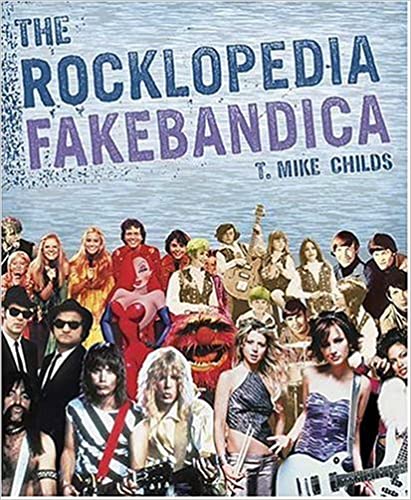
Book Review: The Rocklopedia Fakebandica by T. Mike Childs


Have you ever asked yourself, “Who was the imaginary band that sang that song that doesn’t actually exist in that fictional movie that I watched back in 2004?”

Well, fear not! The Rocklopedia Fakebandica can answer all of your fake band questions. This is a reference books that is solely devoted to fictional bands from the movies and from television. It may not be complete (because it was published 2004 and I don’t there’s ever been an updated edition) but it’s still pretty damn entertaining. California Dreams? They’re in here. Zack Attack? They get an entry. Of course, Rex Manning gets a mention but so does Berko, the musician who encouraged Gina to sing her heart out on the roof of Empire Records! Stillwater, the band from Almost Famous and not the recent Matt Damon film, is represented, along with a listing of the bands that the members were in before coming together. Spinal Tap gets an entry, of course. So does 4Skore, the boy band that Hank Hill thought was “kind of like Doo Wop” on King of the Hill.

It’s a fun book, written in an enjoyably sarcastic manner. Most fake bands aren’t that good and T. Mike Childs has no fear of calling them out. Take that, Zack Attack!

Incidentally, this one of the many books in my collection that I originally found at Recycled Books of Denton, Texas. Be sure to support your used bookstores. This not a book that I would have found if I was just searching on Amazon. This is a book that I found because I went down to a used bookstore and I walked up and down the aisles, seeing what they had available. I saw it, I was intrigued by the title, I pulled it off shelf, I smiled as I skimmed through it, and I bought it and, in the years since, it’s provided me with a lot of entertainment. Support physical media. Support book stores. You’ll miss them if you don’t.