Normally, this is where and when I would post my weekly review of Fantasy Island but, due to this being a busy week, my Retro Television Reviews are on break until Sunday. Fear not, though, we have alternative programming!
From 1969, it’s The Mama Cass Television Program! This was actually meant to be a pilot for a variety show that would have been hosted by Mama Cass Elliott, formerly of the Mamas and the Papas. For that reason, there’s some comedy bits along with Cass singing. Keep an eye out for Martin Landau! The comedy, to be honest, is a bit cringey but it really doesn’t matter when you’ve got Cass Elliott and her amazing voice.
Fantasy Island will return next week but for now….
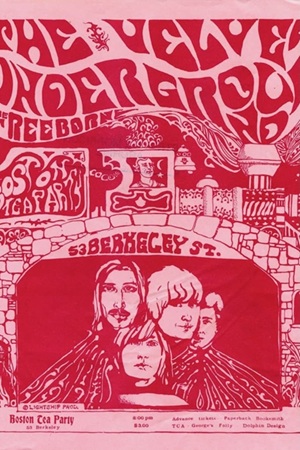
In the late 60s, The Velvet Underground often performed at the Boston Tea Party, a concert venue in — you guessed it! — Boston. Lou Reed described the Boston Tea Party as being the band’s favorite place to play and the Velvets’ performances at the venue would eventually become legendary. The Velvet Underground would attract an audience made up of bikers, Harvard students, MIT Students, Northeastern Students, celebrities, and a young Jonathan Richman.
In 1967, artist Andy Warhol attended a performance and filmed the show. He got 33 minutes of footage, one that doesn’t quite work as a concert film but which does work marvelously as a time capsule. While the music itself is often distorted (and this is not the film to watch if you’re wanting to hear your favorite songs performed live), Warhol’s camera does capture the feel of the psychedelic 60s, complete with strobe lights, sudden zoom shots, and an audience that alternates between moving to the music and standing still in a state of stoned contemplation. Warhol films like someone who has just gotten his first camera and can’t wait to experiment and see what it can do. The end result is actually rather likable, even if it is often incoherent. The enthusiasm and the excitement of filmmaking and capturing history comes through. When you’re first learning and experimenting with film, there’s nothing cooler than a sudden close-up or a sudden pull back to reveal the size of the crowd. The film finds Warhol having fun with the camera and the footage is ultimately rather hypnotic.
It’s a true time capsule. Here is The Velvet Underground in Boston.
In the 1955 short film, Cindy Goes To A Party, Cindy is upset because she hasn’t received an invitation to a party. Even her dumbass friend Dennis has been invited! Cindy’s mom assures Cindy that her invitation has probably just gotten lost in the mail. Consumed by ennui, Cindy goes to bed at 2 in the afternoon.
Cindy is visited by her fairy godmother who, with the help of her magic wand, transports Cindy to the party and then gives Cindy and Dennis a long list of rules to obey. For those of you who don’t have 9 minutes to watch this film and discover the rules for yourself, here they are:
Be Clean and Neat
Arrive on Time
Leave on Time
Join In The Games (even if the games are totally lame)
Don’t Be Noisy and Rough
Don’t Break Things
Don’t Tease or Make Fun of Others (even if Dennis kind of deserves it)
Obey the Rules of the Game
Be a Good Loser (this rule is specifically given to Dennis because it’s obvious Dennis will never have to worry about being a winner)
Be Considerate
Be A Good Winner (something that Dennis will never have to worry about)
Be Polite
Be Considerate of other (wait a minute, we just did that one)
Remember Your Table Manners
Leave On Time (again, we already did that one)
Thank Your Hostess
That’s a lot of rules! I think Cindy would have more fun just staying home.
This short film was one of the many educational films directed by Herk Harvey. Today, of course, Harvey is best known for directing the horror classic, Carnival of Souls.
Dragnet began as a radio program in 1949 before making it’s way over to television in 1951. Each episode starred (and the majority were directed by) Jack Webb, who played a no-nonsense cop named Joe Friday. Friday narrated every episode, dropping trivia about the history of Los Angeles while also showing viewers how the cops went about catching criminals. Despite what is commonly believed, Joe Friday never said, “Just the facts, ma’m,” but he did investigate each case with the cool determination of a professional who kept his emotions under control. The majority of Dragnet’s episodes were based on actual cases that were worked by the LAPD, hence the opening declaration of, “The story you are about to see is true.”
On television, Dragnet originally ran from 1951 to 1959, during which time Dragnet also became the first television series to be adapted into a feature film. Jack Webb decided to relaunch Dragnet in 1966 and he produced a made-for-television movie that followed Friday and his latest partner, the far more talkative Bill Gannon (Harry Morgan), as they worked multiple cases over the course of one long weekend. That made-for-television movie led to a series that ran from 1967 to 1970.
The second television series is the best-remembered version of Dragnet, beloved for its scenes of Friday and Gannon debating the issues with a motely collection of hippies, campus radicals, and pipe-smoking academics. Jack Webb viewed Friday as being the voice of the common American, who supported the troops, supported the president, and who wanted to spend the weekend grilling in peace. Friday was the middle-aged suburbanite who wanted to the kids to stay off the grass, whether it was on his front lawn or being sold on a college campus. These episodes were often campy. It’s hard not to smile while listening to Friday and Gannon deadpan their way through conversations with flakey long-haired hippies. It was often obvious that the writers of Dragnet had never actually had any experiences with the hippies, beyond what they saw on the evening news. And yet, as silly as things often were, the show is an interesting time capsule of the era in which it was made. If nothing else, it’s a chance to see the turbulent 60s through the eyes of the other side.
Last year, I shared my favorite episode of Dragnet. For the new year, I’m sharing my second favorite, an episode that originally aired on March 19th, 1970. In Night School, Joe Friday is attending a night class where he and his classmates sit in a circle and just “rap” about the issues of the day. No one knows that Joe is a cop but Joe feels that he is still on duty and when he sees that the guy sitting across from him has a baggie of weed in his notebook, Friday makes an arrest. The professor, who says “There’s nothing wrong with marijuana, I smoke it myself!,” attempts to kick Sgt. Friday out of his class. “Would you rather be known as good ol’ friendly Joe, the class narc?” the professor asks. Joe fights for his right to get an education and a man with an eyepatch emerges as an unlikely voice of reason.
Why do I like this episode? There’s something undeniably entertaining about seeing straight-laced, deadpan Joe Friday attending a class with at least three hippies. It always amuses me that, on this show, Joe Friday loosening up just means that Joe trades his suit for a sweater. Also entertaining is Leonard Stone’s over-the-top performance as the villainous professor. And how can you not smile at Bill Gannon’s weary claim of “I just knew there was no way you could get a B sitting around talking?” Or Jack Webb’s delivery of the line, “That’s my thing, keeping the faith, baby?” Or Jack Curtiss’s hyperactive performance as campus drug pusher Jerry Morgan? “Hey, that’s just oregano!” Whatever you say, Jerry.
Today’s blast from the past certainly does feel like a trip in a time machine. Step on in and take a look at California in 1970!
The afternoon hours are approaching and soon, the sun will go down and the trick or treaters will be demanding candy. If you’re still having a hard time reaching the status of being fully alert on this all-important day, why not have some coffee with Boris Karloff? From 1966, here is Boris Karloff for Butternut coffee:
The much-missed Gary Loggins loved Halloween and he loved the old, frequently subversive cartoons from the 1930s. He was a particular fan of the Fleischer Brothers so it only seems right that today, on Halloween, we should share one of those cartoons. Here is 1930’s Swing You Sinners.
In this bizarre cartoon, a dog named Bimbo attempts to steal a chicken. After the police chase him into a cemetery, Bimbo is confronted by ghosts, demons, and apparently death. Shockingly, there is no escape offered in this film. Abandon all hope!
I guess chicken theft was a really huge problem in 1930.
Vincent Price was born, at the start of the 20th Century, in St. Louis, Missouri. When he first began his film career in the 1930s, he was promoted as a leading man and he was even tested for the role of Ashley Wilkes in Gone With TheWind. (Imagine that!) However, Price would find his greatest fame as a horror icon.
Among the fans of Price’s horror films was a young animator named Tim Burton. In 1982, Price and Burton would work together for the first time, with Price providing the narration for a short, stop motion film that Burton had written and directed. Called Vincent, the film was about a seven year-old boy named Vincent who wanted to be — can you guess? — Vincent Price! The six-minute film follows Vincent as he gets involved in all sorts of macabre activities. Of course, as Vincent’s mom points out, Vincent isn’t actually a monster or mad scientist. He’s just a creative child with an overactive imagination. (To say the short feels autobiographical on Burton’s part would be an understatement.) The animation is outstanding and full of wit but it really is Vincent Price’s wonderful narration that makes this short film a classic.
Both Price and Burton would later call making this film one of the most creatively rewarding collaborations of their respective careers.
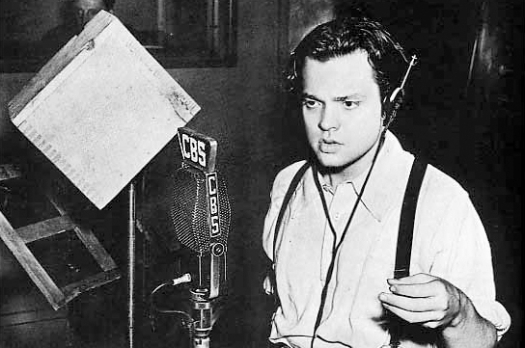
On October 30th, 1938, Orson Welles and the Mercury Theater On The Air broadcast an adaptation of H.G. Wells’s War of the Worlds and, legend has it, they scared the ever-loving heck out of America.
Actually, there’s some debate as to just how panicked America got when they heard the Mercury Theater On The Air’s adaptation of War of the Worlds. There was definitely some panic but there are differing reports on just how wide spread it was. For our purposes, let’s assume that the entire country was terrified at the same time and that everyone was loading up a shotgun and planning to go out and look for aliens. One thing is for sure. With his adaptation of War of the Worlds, Orson Welles managed to invent the whole found footage genre that would later come to dominate horror cinema in the late 90s and the aughts. Every found footage horror film owes a debt to what Orson Welles accomplished with War of the Worlds. We won’t hold that against Orson. Instead, it’s just another example of how far ahead of his time Orson Welles was.
H.G. Wells, the original author of War of the Worlds, and Orson Welles only met once, while they were both in San Antonio, Texas in 1940. (Orson Welles and H.G. Wells hanging out in San Antonio? To be honest, that sounds like it would make a good movie.) They were interviewed for a local radio station. H.G. Wells expressed some skepticism about the reports of Americans panicking while Welles compared the radio broadcast to someone dressing up like a ghost and shouting “Boo!” during Halloween. Both Wells and Welles then encouraged Americans to worry less about Martians and more about the growing threat of Hitler and the war in Europe.
I’ve shared this before but this just seems like the time to share it again. Here, for Halloween Eve, is the 1938 Mercury Theater On The Air production of The War of the Worlds!
1957’s Final Curtain is a short, 22-minute film in which a mysterious man (Duke Moore) wanders around a creepy and seemingly abandoned theater. While Dudley Manlove (who played Eros the Alien in Plan Nine From Outer Space) provides narration, the man sees many strange things in the theater. What is real and what is merely a hallucination? Watch to find out!
Final Curtain was envisioned, by director Edward D. Wood, as being the pilot for a horror anthology series. Though none of the networks were interested in buying Wood’s proposed series, Wood considered Final Curtain to be his finest film and it certainly is a bit more atmospheric than the typical Wood film. The role of the mysterious man was written for Bela Lugosi but, after Lugosi passed away, Duke Moore was cast in the role instead.
May 1st is a day of many holidays, including Law Day.
President Dwight D. Eisenhower first proclaimed May 1st to be Law Day in 1958 and apparently, it’s been celebrated every year since. On Law Day, Americans are meant to reflect on the role of law in the foundation of the nation and also consider its importance to the social order.
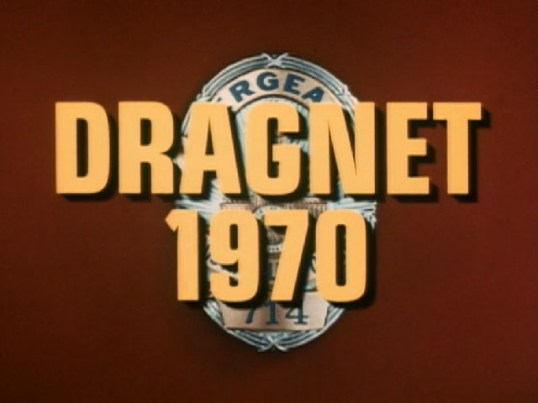
To observe this year’s Law Day, I’m happy to present our readers with my favorite episode of Dragnet 1968.
Dragnet began as a radio program in 1949 before making it’s way over to television in 1951. Each episode starred (and the majority were directed by) Jack Webb, who played a no-nonsense cop named Joe Friday. Friday narrated every episode, dropping trivia about the history of Los Angeles while also showing viewers how the cops went about catching criminals. Despite what is commonly believed, Joe Friday never said, “Just the facts, ma’m,” but he did investigate each case with the cool determination of a professional who kept his emotions under control. The majority of Dragnet’s episodes were based on actual cases that were worked by the LAPD, hence the opening declaration of, “The story you are about to see is true.”
On television, Dragnet originally ran from 1951 to 1959, during which time Dragnet also became the first television series to be adapted into a feature film. Jack Webb decided to relaunch Dragnet in 1966 and he produced a made-for-television movie that followed Friday and his latest partner, the far more talkative Bill Gannon (Harry Morgan), as they worked multiple cases over the course of one long weekend. That made-for-television movie led to a series that ran from 1967 to 1970.
The second television series is the best-remembered version of Dragnet, beloved for its scenes of Friday and Gannon debating the issues with a motely collection of hippies, campus radicals, and pipe-smoking academics. Jack Webb viewed Friday as being the voice of the common American, who supported the troops, supported the president, and who wanted to spend the weekend grilling in peace. Friday was the middle-aged suburbanite who wanted to the kids to stay off the grass, whether it was on his front lawn or being sold on a college campus. These episodes were often campy. It’s hard not to smile while listening to Friday and Gannon deadpan their way through conversations with flakey long-haired hippies. It was often obvious that the writers of Dragnet had never actually had any experiences with the hippies, beyond what they saw on the evening news. And yet, as silly as things often were, the show is an interesting time capsule of the time in which it was made. If nothing else, it’s a chance to see the 60s through the eyes of the other side.
My favorite episode was the show’s third season premiere. It originally aired on September 19th, 1968 and it features Joe and Gannon appearing on a talk show. The subject of the show: “The Fuzz Who Needs Them?” Joe and Gannon argue on behalf of the fuzz. Appearing on the other side of the panel are a pipe-smoking academic (Stacy Harris) and the publisher (Howard Hesseman, credited as Don Sturdy) of an underground newspaper. Questions are asked from the audience. John Dietz (played by Lou Wagner, who also plays Harlan Arliss on CHiPs) wants to know why drug are illegal. Mondo Mabamba (Dick Anthony Williams) wears blue glasses and demands to know why the cops are always sitting in squad cars. Overseeing the show is the evil Chuck Bligh (Anthony Eisley). Friday struggles to hold back his disgust as the newspaper publisher throws a “Make Love Not War” pin at him.
This an interesting episode, if just because both sides are allowed to make their case and, in a rarity for Dragnet, neither Friday nor Gannon change anyone’s mind. On the one hand, the academic and the publisher are both portrayed as being fairly obnoxious. On the other hand, Howard Hesseman delivers his lines with such sharpness that his character cannot be as easily dismissed as the usual Dragnet hippie. Chuck Bligh’s talk show predicts the political panel shows of today and it’s interesting to see how we’re still debating many of the same issues that were raised in this episode.

 Through the Shattered Lens