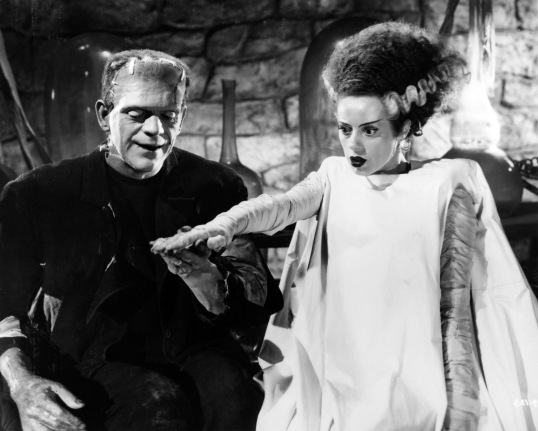
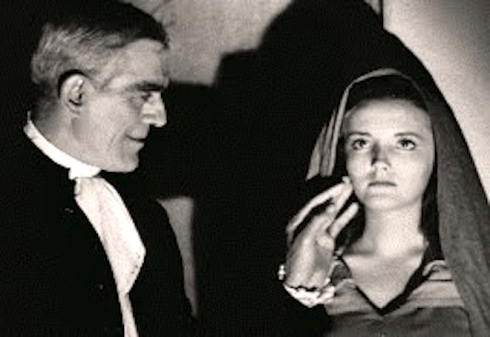
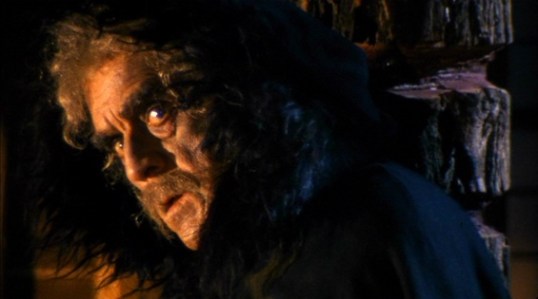
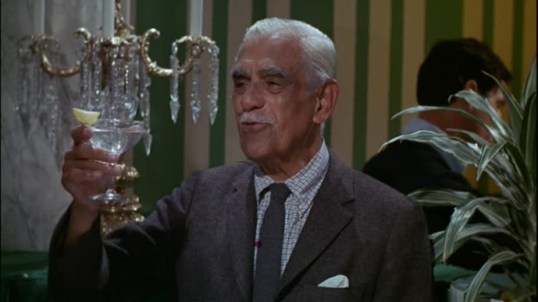
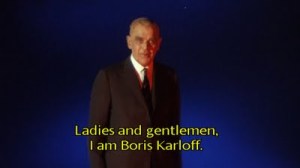
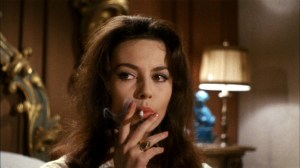
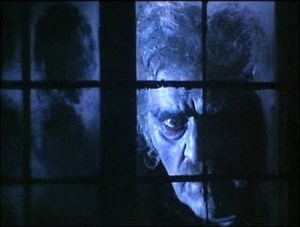
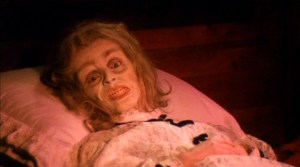
4 Shots From 4 Films is just what it says it is, 4 shots from 4 of our favorite films. As opposed to the reviews and recaps that we usually post, 4 Shots From 4 Films is all about letting the visuals do the talking. The late, great King of Horror Boris Karloff was born on this date in 1887. Here’s 4 Shots from 4 Films in his memorable career:
“War Pigs” is the classic heavy metal song by the godfathers of heavy metal itself, Black Sabbath. This song will kick you in the nuts from it’s ominous bass heavy intro right through one of the best guitar solos in the middle right up to it’s epic ending. It’s not a surprise that many heavy metal fans both new and old still consider this one of the best heavy metal songs ever. It also highlights Ozzy Osbourne as a frontman who became a template for future metal frontmen everywhere. Hearing him sing out the lyrics reminds us that he wasn’t a mumbling, drug-scarred reality tv show personlality. Ozzy was the face of metal and his voice in the early albums of Black Sabbath was one of the best in the business.
The song itself is actually an anti-war song despite many uses of it in films, tv and trailers highlighting war and violence. Last year’s 300: Rise of An Empireliterally reveled in using this song for it’s end credits. Which makes me wonder if those who actually listened to this song actually listened to the lyrics after the first verse.
The lyrics speaks of the inequality of war and how those most willing to begin one are the rich and powerful (meaning they would never ever be put into harm’s way) while those who do the killing and dying are the poor and downtrodden. The interesting thing about this song is how it’s early version was not an anti-war one but just a metal song about witches and black magic rituals. The early name for the song was “Walpurgis” but with the band already being seen as Satanic by puritanical groups in England and in the US they were convinced to change the title to “War Pigs” and adjusted the lyrics to make it the anti-war song it is today.
No matter it’s history and backstory, “War Pigs” remain one of the essential heavy metal songs that any prospective heavy metal newbie needs to listen to and study.
War Pigs
Generals gathered in their masses Just like witches at black masses Evil minds that plot destruction Sorcerers of death’s construction In the fields the bodies burning As the war machine keeps turning Death and hatred to mankind Poisoning their brainwashed minds Oh lord yeah!
Politicians hide themselves away They only started the war Why should they go out to fight? They leave that role to the poor
Time will tell on their power minds Making war just for fun Treating people just like pawns in chess Wait ’til their judgment day comes Yeah!
(guitar solo)
Now in darkness world stops turning Ashes where the bodies burning No more war pigs have the power Hand of God has struck the hour Day of judgment, God is calling On their knees the war pig’s crawling Begging mercy for their sins Satan laughing spreads his wings Oh lord yeah!
I suppose if I asked most people what music they identified with horror, John Carpenter’s “Halloween Theme” and Mike Oldfield’s “Tubular Bells” (The Exorcist) would come up first. After that, you’d get a lot of Rob Zombie and Glenn Danzig. So right off the bat, you’re looking at an enormous variety of sounds and styles connected mainly by association. While John Carpenter’s work was intentionally composed for the film in which it appeared, “Tubular Bells” was originally a 50 minute progressive rock opus that was anything but sinister or foreboding in its full form. Misfits was a goth punk band that happened to favor horror themes. White Zombie’s horror imagery was more a matter of crudeness and vulgarity in the spirit of GWAR; their sound was a frontrunner in the emergence of industrial groove metal, and the greatest “horror” associated with Rob was the countless terrible nu metal spinoffs. A couple of “top ten horror songs” lists I stumbled upon even list Bobby Boris Pickett’s “Monster Mash” and Richard O’Brien’s “Time Warp”. I mean, “Monster Mash” is a fun Halloween song, sure, but horror? Really? And the Rocky Horror Picture Show does make me want to vomit, but we have to draw the line somewhere.
Suffice to say, “horror” music is not a genre at all. Simply associating a song with a scene or theme is enough to relate them; Huey Lewis and the News will probably make me smile and think of Christian Bale chopping people to bits in his apartment for the rest of my life. But there are definitely certain musical attributes that conjure in us a less glitzy feeling of dread than Hellbilly Deluxe. That skittering cockroach beat in the background of Halloween is completely unnerving; Carnival music is way creepier than Stephen King’s It; Black Sabbath’s appreciation for diabolus in musica virtually invented heavy metal; and it took a firm dose of the blues in 1988 for Danzig to capture a sense of the sinister that Misfits could never convey.
I don’t believe that any particular musical formula is the coalescence of evil. The music we find most haunting is derived from association too, but it connects in more subtle ways than say, the fact that a particular song appears in a horror film or mentions witches in the chorus. The real deal distorts what comforts us, denies our sense of order, and pries upon our innocence. Through a musical medium as through any other, horror focuses on shattering the lens through which we perceive reality as an ordered, logical construct. It reminds us of the real nightmares in life while nullifying our means to counteract them. It takes us to the world of the child, where emotional extremes enhance our senses of comfort and terror alike.
The carnival tune and music box are prime targets, conjuring in our minds a time when fear was more potent. The brief piano loop, the simple hum, the monotone drone–these bring us to solitude and isolation through minimalism. Effective horror themes offer no comforting symphony or rock ensemble to encase us in a nuanced world. They surround us with something singular and far from warm, or with nothing at all. The wind chimes warn of a storm; when none is coming, the darkness is all the more unnatural. The cathedral bell, a sign of fellowship on a Sunday morning, also tolls for death. A twitch, a buzz, a repeated knocking, a bit of static–things that would otherwise annoy us–exploit the close connection between discomfort and tension.
Or else we can completely overwhelm the senses with noise that strips away the familiarity which typically diminishes extreme music’s effect, leaving us a nervous wreck. When Blut Aus Nord chose to employ programmed, industrial blast beats in their 777 trilogy, they effectively eliminated the one element of the music that would have sounded too familiar to disturb. Instead, the epileptic guitar finds companionship in a persistent, unnatural clatter designed to place us permanently on edge.
Other bands have found other means to the same end. Peste Noire’s unique “black ‘n’ roll” sound enlivens a standard formula for “evil” music with a pep and a grin, giving the brutalizer a human face in the spirit of medieval sadism. Sunn O))) are inclined to drone on for ages, developing a false sense of comfort before infusing their deep buzz with a caterwaul of shrill pitches and clattering chimes. (I actually had a guy start freaking out on me at work one day when “Cry For The Weeper”, which he didn’t even notice playing, hit the 3:55 mark.)
And lastly, we can’t forget the power of lyrics to render a song gruesome. The stereotypical lines of a black metal song–nonsense about necromoonyetis and an appeal to Satanism far less disturbing than the average Christian commentator on Fox News–are pure cheese, and they entertain us in a manner similar to your typical zombie flick. But when you first heard Smashing Pumpkin’s “x.y.u.”, you probably got a feeling more akin to Henry: Portrait of a Serial Killer.
Horror in lyrics is something a bit the opposite of horror in sound; it strikes us most deeply when we can be convinced that there is absolutely nothing supernatural about it. There are certainly a few exceptions–Townes Van Zandt’s tall tale in “Our Mother the Mountain” chills me to the bone–but generally speaking, the real atrocities committed throughout human history far exceed the limits of our imaginations. Vlad Tepes was worse than any vampire, and from Elizabeth Bathory and Ariel Castro to Hernando Cortes and Adolf Hitler, we are flooded by examples of direct personal cruelty and dehumanized mass slaughter. When a song manages to make us think of these individuals and events beyond the safety blanket of historical narrative, an authentic feeling or horror is hard to deny.
For my latest horror review, I will be reviewing another classic film from one of my favorite directors, Mario Bava. Following the suggestion of my twitter friend Tom, I spent last night watching Bava’s 1963 classic Black Sabbath.
Starring Boris Karloff, Black Sabbath is a compilation film that’s made up of three different horror-themed stories. Originally entitled Three Faces of Fear, Black Sabbath has been released in many different versions over the years. Depending on which version you seen, the stories may be in a different order than in the order that Bava intended. The version I watched was the original, uncut, Italian-language version that was released by Anchor Bay. For those of you who want to truly experience the genius of Mario Bava, this is the version to see.
Black Sabbath begins with Boris Karloff playing himself, giving a deliberately over-the-top introduction and informing us that there could very well be vampires and werewolves sitting next to us in the theater. Yes, it’s silly and yes, it’s campy but it’s also a lot of fun. A lot of this is because these words are delivered by Karloff, an actor who could make even the silliest of dialogue sound important. The other part is that, as silly as the introduction may be, it’s beautiful to look at. Instead of going for the standard spooky narrator in a cobweb-filled library approach, Bava frames Karloff standing against a brilliant dark blue backdrop that establishes that this isn’t just your typical horror host … this is BORIS FREAKIN’ KARLOFF!
After Karloff’s introduction, we move on to the first of Black Sabbath’s three separate stories, The Telephone.
In The Telephone, Michele Mercier plays a Parisian prostitute who returns to her apartment after an evening out. As she tries to change for bed, her bright red telephone rings. Every time Mercier opens the phone, she hears a man’s voice taunting and threatening her. Finally, the caller claims to be Frank, Mercier’s former pimp who has just escaped from prison. The terrified Mercier calls her estranged lesbian lover (Lydia Alfonsi). Alfonsi comes over to the basement to comfort Mercier. However, what Mercier doesn’t realize is that it wasn’t Frank calling her. It was Alfonsi, pretending to be Frank. However, needless to say, there’s more twists to come before the night’s over.
Of the three segments, The Telephone is probably the least succesful if just because it has the most pedestrian plot. At the same time, this segment also show just how good Bava was at creating tension even with so-so material. Speaking as someone who has been stalked in the past, I can say that both Mercier and Bava perfectly captures the way that one seemingly simple intrusion on your privacy can leave you suddenly feeling very isolated and very alone. Finally, even after the segment’s over, it’s impossible to forget the sight of that vibrantly red phone sitting like a lurking monster in that artfully drab apartment.
The Telephone is followed by probably the film’s most famous segment, The Wurdalak.
Based on a short story by Tolstoy, The Wurdalak opens with a Russian nobleman (played Italian exploitation mainstay Mark Damon) on a long trip through the Russian wilderness. He comes across a headless corpse with a dagger plunged into its heart. Damon takes the dagger as a morbid souvenir of his trip.
As night falls, Damon comes across a small cottage and asks the family inside for shelter. Inside the cottage, Damon discovers a wall that is covered with daggers similar to the one he found earlier. His hosts explain that the daggers belong to the family patriarch, Gorcha (Boris Karloff). Gorcha left five days earlier to kill a wurdolak (or vampire, by any other name). As the family waits for Gorcha to return, not knowing whether or not he himself is now a vampire, Damon finds himself falling in love with Gorcha’s daughter. When Gorcha finally does return, it’s obvious that he’s not the same man he was when he originally left.
Of the three segments, The Wurdolak is probably the most obviously Bavaesque and a whole lot of the same images and themes would later turn up in Bava’s masterwork, Kill, Baby, Kill. Everything, from the constantly howling wind to the sense of isolation to the well-meaning but ultimately impotent upper-class hero, is classic Bava. Special mention should also be made of Boris Karloff’s performance here. Because Karloff was best known for appearing in “monster” movies, he never gets enough recognition for being a pretty good actor. His performance here, which is full of malice and threat, is just as menacing as his earlier appearance in the introduction was fun and campy.
The final segment of the film is entitled The Drop of Water.
In many ways, The Drop of Water is the simplest segment of the film but for me, personally, it’s also the scariest. In London, a nurse (Jacqueline Pierreux) is called to a large house to prepare a medium for burial. While doing this. the nurse notices a large (and, quite frankly, kinda gaudy) ring on the medium’s finger. The nurse steals the ring and returns to her own apartment. As soon as she goes to her apartment, she finds herself haunted by increasingly ominous events: a buzzing fly refuses to leave her alone, the sound of water dripping echoes through the apartment, the lights go on and off, and — naturally — a mysterious figure suddenly appears in her bedroom.
Mixing the sense of growing paranoia that characterized The Telephone with Wurdolak’s sense of predestined, metaphysical doom, The Drop of Water is the perfect concluding chapter of Black Sabbath. It also happened to scare the Hell out of me. Along with Bava’s usual superb direction, this film was distinguished by some wonderfully creepy make-up work. Seriously, once that mysterious figure reveals itself, you’ll wish it hadn’t.
I usually don’t enjoy compilation films because, too often, it seems that you’re lucky if you get just one above average story surrounded by a bunch of forgettable filler. Far too often, the stories themselves don’t seem to go together. Instead, they just appear to have been tossed together randomly with the weakest of possible connection. Black Sabbath is an exception and that’s largely because of Mario Bava’s iconic direction. The stories aren’t linked together by plot as much as their linked together by motif and theme. Each story — from the emphasis on isolation to the creative use of color to suggest mood and menace — is linked by Bava’s style. Boris Karloff may have been the name emphasized in the credits but the true star of Black Sabbath is Mario Bava.
The genius of Bava wasn’t in the originality of the stories he told but instead, in the new ways that he found to tell familiar stories. Usually, I hate it when directors describe themselves as being about “style” as opposed to “substance.” Too often, it seems like that’s just an excuse to not come up with an interesting story. However, Bava is one of the few directors about whom the term “style over substance” can be used as a compliment. Bava knew how to make style into art and he certainly did that in Black Sabbath.
This has been sort of the year of stoner metal. I swear a new entry to the stoner/doom/sludge genre comes out every week. I’ve ignored most of it. It’s not that I dislike it, I just haven’t been in the mood. But once in a while I’ll sample a few tracks here and there, give each band a minute or two of my time. The Flight of Sleipnir didn’t even require that much effort–within the first ten seconds of the opening track I was hooked.
Transcendence
How these guys aren’t on the radar is beyond me, because this is pretty much everything I could ever want from an album. Sure, the production isn’t that great, but neither is Black Sabbath’s, so let’s get over that right form the start and soak this all in. Here’s a band that just hands you everything you could wnat on a silver platter right form the get-go. A killer bluesy stoner metal groove, delicious acoustic interludes, perfectly executed black metal style screaming, beautiful clean vocals that harken to Mikael Akerfeldt, and we’re only five minutes into the album.
As Ashes Rise (The Embrace of Dusk)
As you might have expected, the opener is just an introduction to what they have in store. Sure they’ve played all of their cards. No additional styles or elements are implemented further down the line. But what they’ve introduced just keeps on improving as the album progresses.
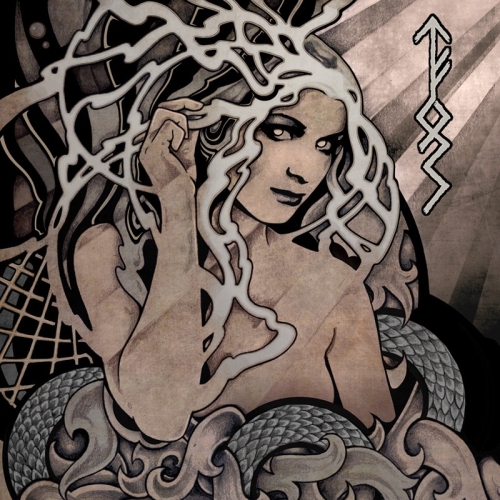
There is a surprising prominence of acoustic melodies packed into Essence of Nine, so much so that I’m inclined to call it folk metal just as much as stoner metal. The abundant allusions to Norse mythology and use of rune stones on a decidedly doom metal album cover suggest that the band would agree. That distinction alone could make an album stand apart, but if “stoner folk metal” is now a term with meaning, they’ve done more than initiate. They’ve come awfully close to perfecting it.
The Seer in White
Because the quality of their song writing overshadows the fact that what they’re doing here is unique. And while I’ve showcased those songs that most appeal to me–the most folk-centric of the lot–there is plenty to be had for fans of the more punishing characteristics of doom. It’s never quite crushing enough to rival the best artists of that sort of music, but as a compliment to the folk side of their sound rather than the main focus of the music, it’s certainly sufficient. Given a live venue and enough amplification I think they would blow me away.
As Cinders Burn (The Wake of Dawn)
Anyway, there you have it. I think I’ll spend more time talking about this album than actually listening to it throughout the year. It’s not the sort of thing I’m always in the mood for, but I can find no fault. People looking for strictly doom metal might find it lacking, but if you’re interested in something a bit more diverse Essence of Nine is a sure bet.
It is now just minutes since the 4th of July finally arrives in the US once more (at least on the West Coast since the East Coast has been celebrating the 4th of July for 3 hours now). What better way to celebrate the arrival of another 4th of July than to pick the song of the same name for today’s latest “Song of the Day”.
Soundgarden’s Superunknown album from 1994 may be part of the grunge scene which sprouted during the early 1990’s but this album has more metal about it than the grunge espoused by the disciples of Cobain. The song I picked for today I consider the best in the album which contains other classics. “4th of July” is such a heavy song that so many casual fans of the album fail to miss the heavy influence of early Black Sabbath in the song. They also fail to realize just how un-grunge it is with its dark lyrics (not emo mind you, but dark in a palpable sense). “4th of July” becomes an accidental introduction for newbie metal fans to the world of doom metal.
This song is the very definition of heavy and doom. From the heaviness in the guitar riffs to the subdued, but evocative way Cornell sings the dark lyrics (lyrics I always thought of someone just experiencing and living through the aftermath of a nuclear war). But in the end this song really shows it’s Black Sabbath and doom metal pedigree from the sludge-like sound coming out of the bass guitar chords.
“4th of July” once heard cannot be unheard. It’s a song that grabs one by the throat, doesn’t let go until the final doom-laden lyric and note has finally faded into the air.
HAPPY 4th of JULY!
4th of July
Shower in the dark day Clean sparks driving down Cool in the waterway Where the baptized drown Naked in the cold sun Breathing life like fire Thought I was the only one But that was just a lie
Cause I heard it in the wind And I saw it in the sky And I thought it was the end And I thought it was the 4th of July
Pale in the flare light The scared light cracks & disappears And leads the scorched ones here And everywhere no one cares The fire is spreading And no one wants to speak about it Down in the hole Jesus tries to crack a smile Beneath another shovel load
And I heard it in the wind And I saw it in the sky And I thought it was the end And I thought it was the 4th of July
Now I’m in control Now I’m in the fall out Once asleep but now I stand And I still remember Your sweet everything Light a Roman candle And hold it in your hand
Cause I heard it in the wind And I saw it in the sky And I thought it was the end And I thought it was the 4th of July
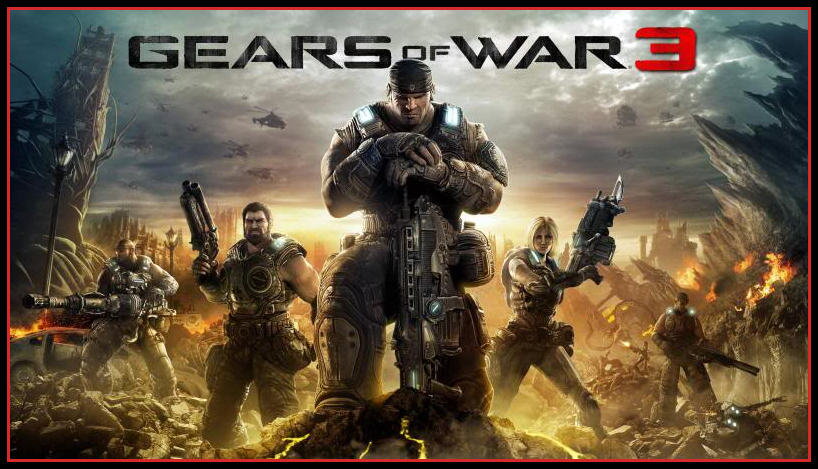
Well, it’s finally out and that could only mean one thing. The major hype and media blitz that tells every Xbox 360 gamer that the latest Gears of War title is just months from coming out. Well, it would be 4 months still, but with E3 just around the corner sure to release more details on Gears of War 3 the anticipation for the third and final game in this wildly popular Xbox 360 franchise will hit the stratosphere by the time the release date rolls around.
The trailer shows some small detail about the plot of the game. Something about the main character (Marcus Fenix) finding out his father is alive and now must find and save him from the Locust (the bug-looking insect enemy). Other than that it doesn’t show much else other some gloriously cool mayhem on the screen. Some looks to be cutscenes while others look to be gameplay. But knowing Epic Games and the games’ designer Cliff Bleszinski scenes of gameplay and cutscenes always uses the same engine (an upgraded Unreal Engine 3.5) so there’s no weird transition from gameplay to cutscene.
Trailers for the Gears of War titles have always been making great use of licensed songs in the past to give a clue to the tone of the game. This latest trailer doesn’t disappoint as it uses Black Sabbath’s classic “War Pigs” song to highlight the violent and war-footing nature of this final game in the trilogy. Cliffy B. promised that the third game will take the carnage and mayhem in the series to past ridiculous. What better way to say a game has an extreme level of violence, mayhem and carnage than Sabbath’s “War Pigs”.
So, come September 20, 2011 it’s time to lock and load and get that chainblade roaring for some heavy metal Gears of War 3.
Since I have been in a metal state of mind since finding out that The Big 4 of thrash metal would be appearing together on-stage this coming April 23 at Indio, CA I just had to pick a metal song for the latest “Song of the Day”. The song picked was an easy choice. It was Diamond Head’s classic metal track, “Am I Evil?”, from their 1980 debut album Lightning to the Nations.
Taking inspiration from the openings of both Black Sabbath’s “Symphony of the Universe” and Gustav Holst’s “Mars, the bringer of war”, the beginning of Diamond Head’s “Am I Evil?” has become one of the most recognizable and beloved of all metal songs. Right from the start the song just oozes an aura of heavy evil and the lyrics of a young boy who witnesses his mother’s witch-burning and his quest to avenge that death just adds to the doom and gloom of the song.
Diamond Head was part of the New Wave of British Heavy Metal (NWBHM for short) bands which bridged the Atlantic from the mid-to-late 70’s all the way into the early part of the 80’s. While they were not as successful as other groups who came out of the NWBHM scene like Judas Priest, Iron Maiden and Def Leppard they were a huge influence on another growing subgenre of metal that was about to give birth in the U.S.
I speak of the rise of thrash metal and how it’s four horsemen (Metallica, Anthrax, Slayer and Megadeth) would look to Diamond Head as one of the NWBHM bands which influenced their sound with all four looking at Diamond Head’s “Am I Evil?” as one of those songs which taught them what heavy metal really meant.
It’s no surprise that during the concert tour season of 2010 these four giants of thrash metal would tour together and do seven shows with the show in Sofia, Bulgaria ending with three of the four bands sharing the stage to cover this Diamond Head classic.
Whether played by Diamond Head, Metallica or the Big 4 just listening to “Am I Evil?” definitely makes one feel like their soul just got darker and their heart colder. Just the way heavy metal should affect anyone and be glad that it does.
Am I Evil?
My mother was a witch, she was burned alive Thankless little bitch, for the tears I cried Take her down now, don’t wanna see her face Blistered and burnt, can’t hide my disgrace
27 every one was nice, gotta see them, Make them pay the price See their bodies out on the ice, take my time
Am I evil, yes I am Am I evil, I am man
As I watched my Mother die, I lost my head Revenge now I sought, to break with my bread Takin’ no chances, you come with me I’ll split you to the bone Help set you free.
27 every one was nice, gotta see them, Make them pay the price See their bodies out on the ice, take my time
Am I evil, yes I am Am I evil, I am man
On with the action now, I’ll strip your pride I’ll spread your blood around, I’ll see you ride Your face is scarred with steel, wounds deep and neat Like a double dozen before you, smell so sweet.
27 every one was nice, gotta see them, Make them pay the price See their bodies out on the ice, take my time
Am I evil, yes I am Am I evil, I am man
I’ll make my residence, I’ll watch your fire You can come with me, sweet desire My face is long forgotten, my face not my own Sweet and timely whore, take me home
It is a sad day in the metal world today. Legend metal frontman Ronnie James Dio has passed away at the age of 67 after battling stomach cancer for the past couple years. His death was confirmed by his wife, Wendy Dio, through his website.
Ronnie James Dio would always remains one of the pioneers of metal and one of its gods. He fronted such hard rock and metal bands like Elf and Rainbow during the late 60’s and early 70’s before finally landing his most famous gig in his career: frontman of Black Sabbath. Ronnie James Dio was chosen to replace Ozzy Osbourne after he was fired by the band. It was during his stint with Black Sabbath where Dio popularized the use of the so-called “devil’s horns” hand symbol during concert shows. While this symbol has been used in the past it was Dio’s use of it as Black Sabbath frontman which soon epitomized the “devil’s horns” as metal’s own symbol.
Ronnie James Dio would continue to beyond Black Sabbath as he formed his own metal band named Dio and in the latter part of his life another band called Heaven and Hell. His death puts a pall of sadness on the world of metal. While he’s now gone to Valhalla with the rest of the rock and metal gods of past his music will live on forever.
I think it would’ve been quite remiss of me to not set this as song of the day just days before the release of Iron Man 2.
Black Sabbath’s iconic song from their second studio album (Paranoid) should be well-known to everyone by now. I’m not even talking about metal and rock fans, but even those who wouldn’t be caught dead listening to the so-called “devil’s music”. If people have seen 2008’s superhero film Iron Man then they’ve heard of this song. This song is pretty much classic heavy metal before all the different metal sounds started appearing years later.
Iron Man wasn’t your typical current heavy metal where sometimes speed and overly complex playing has been the choice of some metal bands. Not with Sabbath and definitely not with this song. It’s pretty straightforward and still has some of the progressive stylings that Led Zeppelin introduced with their third and fourth album. Where Black Sabbath really made the song their own was how heavy they made it. Whether it was Iommi’s lead guitar starting off the song right up to Butler’s near Bonham-like tree-trunk drumming.
With the sequel to Iron Man right around the corner I wouldn’t be surprised if this song ended up on iTunes top ten song download for the whole summer of 2010.
Iron Man
Has he lost his mind?
Can he see or is he blind?
Can he walk at all,
Or if he moves will he fall?
Is he alive or dead?
Has he thoughts within his head?
We’ll just pass him there
Why should we even care?
He was turned to steel
In the great magnetic field
Where he traveled time
For the future of mankind
Nobody wants him
He just stares at the world
Planning his vengeance
That he will soon unfold
Now the time is here
For iron man to spread fear
Vengeance from the grave
Kills the people he once saved
Nobody wants him
They just turn their heads
Nobody helps him
Now he has his revenge
Heavy boots of lead
Fills his victims full of dread
Running as fast as they can
Iron man lives again!



 Through the Shattered Lens