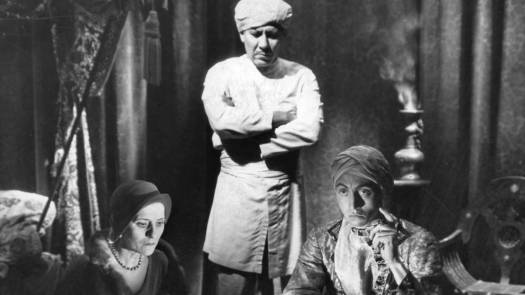
1932’s SINISTER HANDS is an “old, dark house” murder mystery influenced by the horror cycle of the early talkie era, complete with a sinister swami conducting spooky séances. Former silent film matinee idol Jack Mulhall stars as the detective, with Mischa Auer the swami, Western ingenue Gertrude Messenger the damsel in distress, and the ubiquitous Bess Flowers! Sit back, grab some popcorn, and enjoy watching SINISTER HANDS:
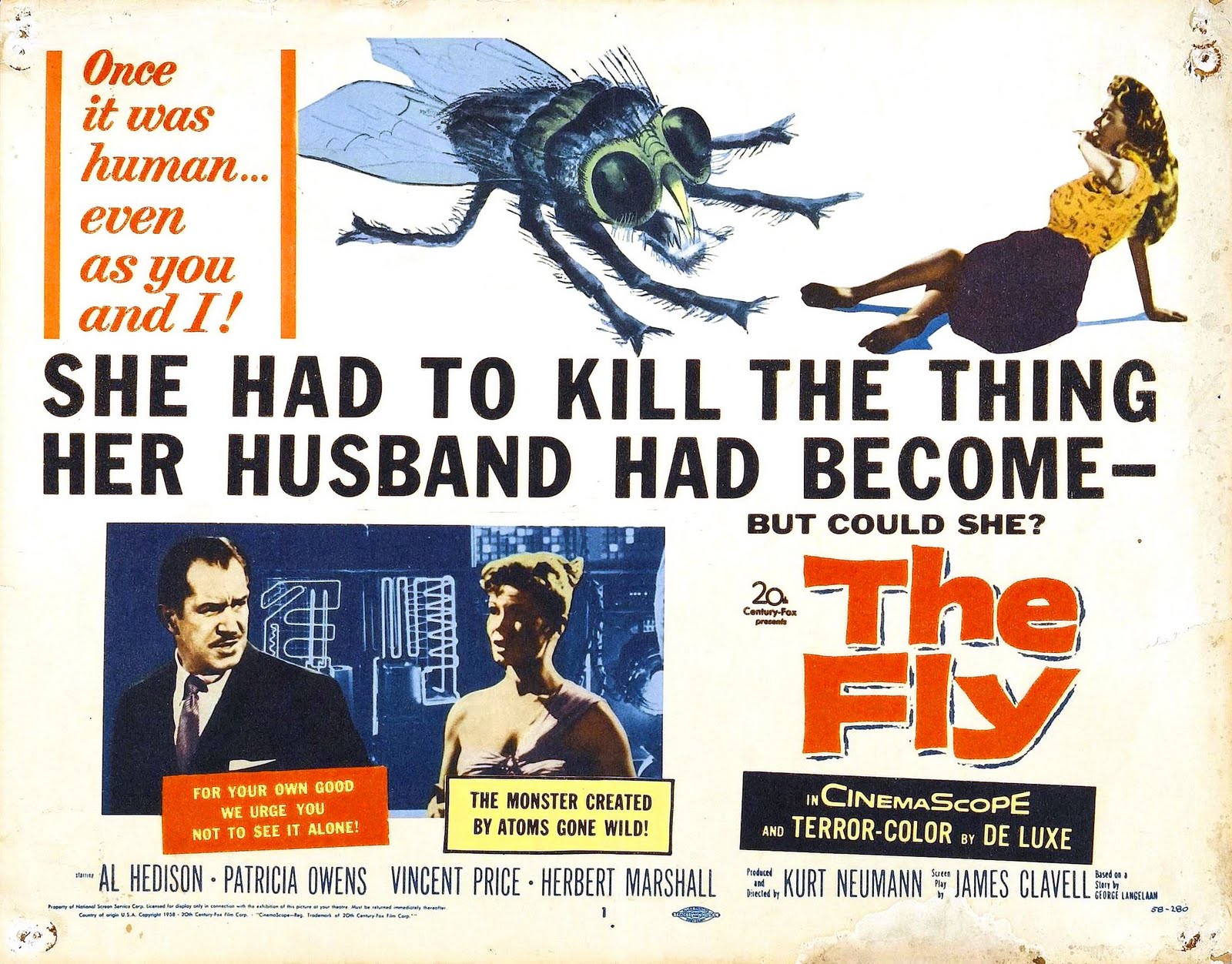
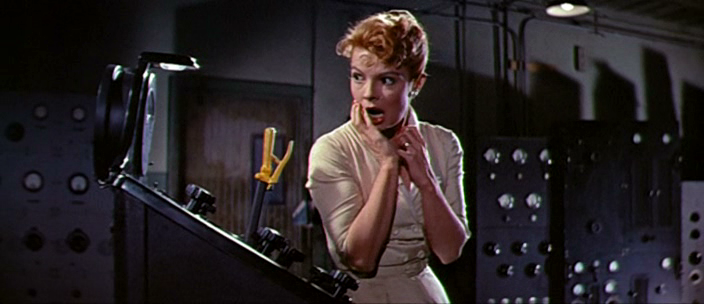
THE FLY is one of those films you’re probably familiar with if you’re a horror/sci-fi fan. I’ve seen it many times, but was under the impression it was a black & white movie (probably due to early viewings as a young’un, deprived of color TV). So when I rewatched it again in glorious Technicolor, I was pleasantly surprised. This tale of science gone wrong has held up well, and its iconic scene of The Fly’s unmasking still manages to jolt the viewer (even if you know it’s coming!).
The film’s framing device finds us witnessing Helene Delombre murdering her husband Andre by squishing his head and arm under a huge hydraulic press (and it’s a pretty gruesome demise), then calling her brother-in-law Francois to tell him. Francois is stunned, to say the least, and gets ahold of his friend Inspector Charas. They drive over to the Delombre Freres (the movie’s set in Montreal)…
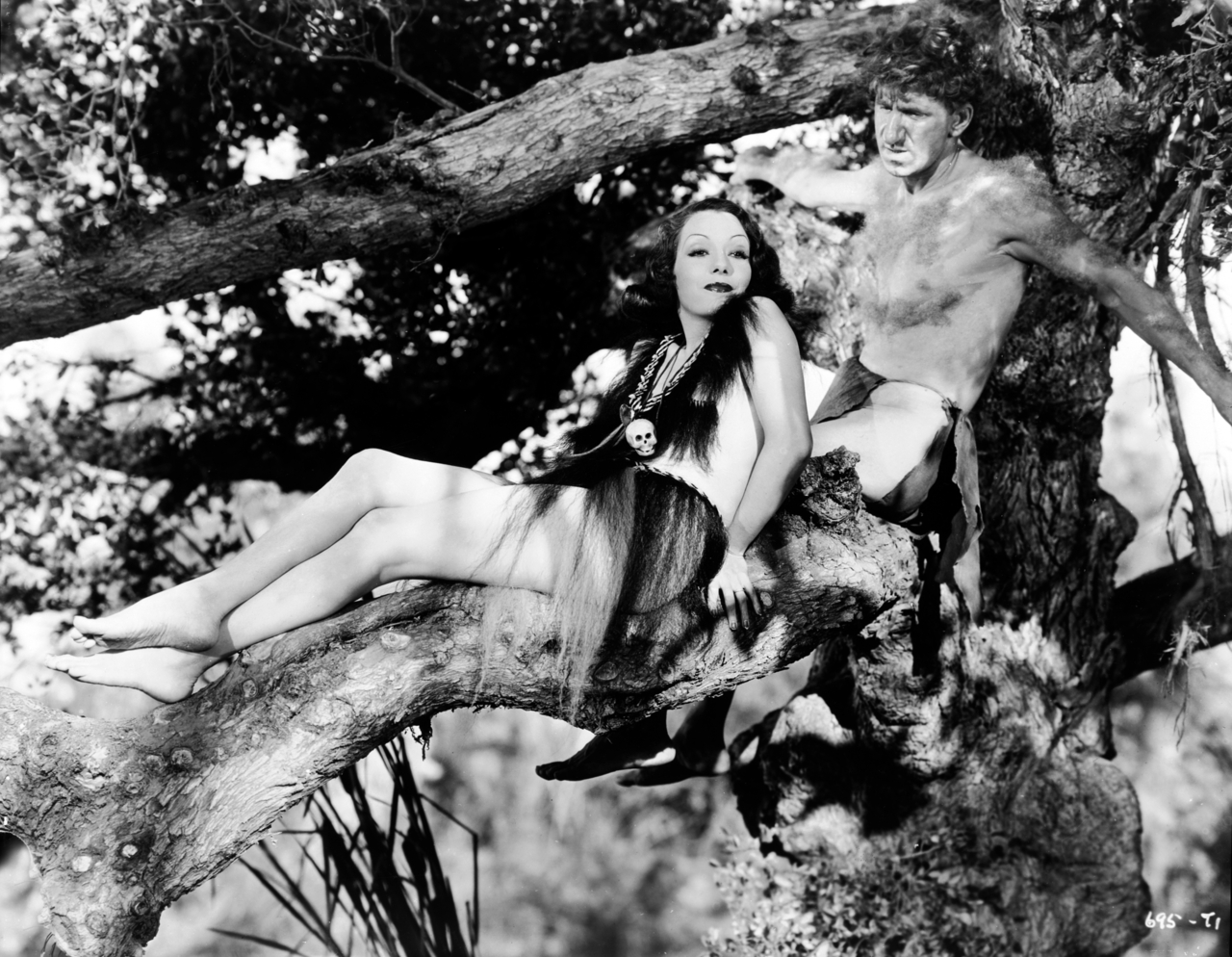
One of the most bizarre films of the Pre-Code (or any) era is HOLLYWOOD PARTY. This practically plotless hodgepodge stars Jimmy Durante as jungle movie hero Schnarzan, whose films are tanking at the box office. The public has grown tired of his battles with “moth-eaten, toothless lions”, so his producer decides to buy new ones from the adventurer Baron Munchausen (radio star Jack Pearl doing his schtick). Schnarzan throws a big Hollywood party for the Baron, hoping to win his favor, but screen rival Liondola (dialect comic Georges Givot), disguising himself as the Grand Royal Duke of Peloponnesia, crashes the bash and tries to buy the lions for himself with the help of Oklahoma oil baron Harvey Crump (the perpetually perplexed Charles Butterworth).
All this is just an excuse for a series of unrelated comic bits featuring some of the era’s top funnymen. Durante, as the nominal star, gets the bulk of the material…
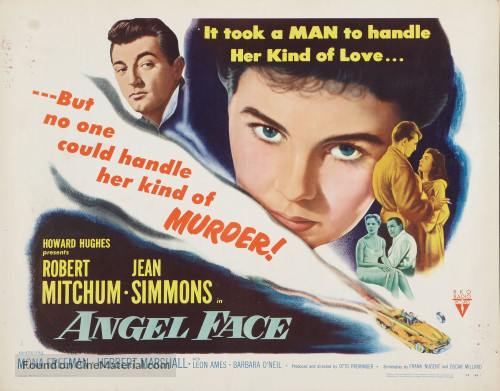
I saved ANGEL FACE for last in this week’s look at RKO/Robert Mitchum films because it’s been hailed as a near-classic by many film noir fans. It’s certainly different from HIS KIND OF WOMAN and MACAO; much darker in tone, and features an unsympathetic performance by Mitchum. It’s more in the noir tradition of bleak films like DETOUR and BORN TO KILL. But better than the other two? That depends on your point of view. Let’s take a look:
An ambulance screams its way to the Tremayne home in ritzy Beverly Hills. The wealthy Mrs. Catherine Tremayne has been subjected to a gas leak of unknown origin. One of the ambulance drivers, Frank Jessup, comes across beautiful Diane playing the piano. She bursts into hysterics, and Frank smacks her, receiving one in return. After she calms down, Frank and his partner Bill head home. Frank has a date with his girl Mary…
For those following at home, Lisa is attempting to clean out her DVR by watching and reviewing 38 films by the end of today!!!!! Will she make it? Well, it depends on whether or not she can finish the review below!)
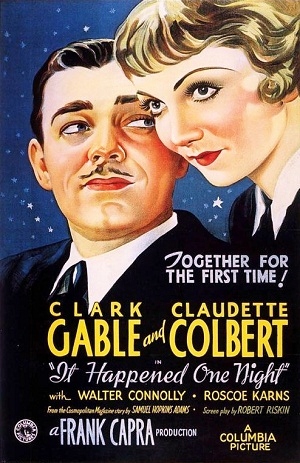
Before I talk too much about the 1934 film It Happened One Night, I want to tell a story about legs.
I’ve always been insecure about having a slightly large nose and once, when I was 17 years old, I was giving my mom a hard time about the fact that I had basically inherited it from her. I was going on and on and being fairly obnoxious about it. (Yes, believe it or not, I can occasionally be obnoxious…)
Finally, my mom held up her hand and said, “Yes, you got your nose from me but you also got my legs so stop crying!”
And you know what? I glanced down at my legs and I realized that she was right and that made me feel a lot better. Ever since then, I’ve taken a lot of pride in having a good pair of legs.
Now, you may be asking yourself what that has to do with It Happened One Night. Well, It Happened One Night is one of the ultimate “good legs” movies. That’s because It Happened One Night features the famous scene in which Claudette Colbert teaches Clark Gable the proper way to hitchhike. (If I ever take up hitchhiking, I’m planning on using the same technique.)
That’s the scene that It Happened One Night is justifiably famous for. However, It Happened One Night is more than just a film about hitchhiking.
It’s also a romance, one that features Claudette Colbert at her wackiest and Clark Gable at his sexiest. Reportedly, the sell of undershirts plummeted after Clark Gable took off his shirt and revealed that he wasn’t wearing one.
It was one of the first road movies and it was such a success that it remains influential to this very day. Any time you watch a movie that features two seemingly different characters getting to know each other on a road trip, you’re watching a movie that exists because of It Happened One Night. (And yes, that includes Tom Hardy and Charlize Theron in Mad Max: Fury Road.)
Frank Capra won his first Oscar for directing this film and It Happened One Night remains one of his most likable and least preachy films. Just compare the unpretentious, down-to-Earth style of It Happened One Night to Meet John Doe.
Perhaps most importantly, It Happened One Night was the first comedy to win the Oscar for best picture. It Happened One Night is a film that announces that a film doesn’t have to be a self-serious, pretentious epic to be great. Before the victory of It Happened One Night, the top prize was exclusively reserved for films like Cimarron and Calvalcade. (Seriously, just try watching some of those early winners today.) It Happened One Night‘s Oscar victory was a victory for the future of entertainment.
(By the way, as I sit here typing up this review, I keep accidentally typing It’s A Wonderful Life instead of It Happened One Night. That’s the power of Frank Capra.)
It Happened One Night tells the story of Pete Warne (Clark Gable). Pete is an out-of-work reporter. Though he may be down on his luck, he’s still confident and lovably cocky in that way that only Clark Gable could be. While riding on a bus from Florida to New York, Pete recognizes one of his fellow passengers as Ellie Andrews (Claudette Colbert), an heiress who has recently eloped with a buffoonish big game hunter named King Westley (Jameson Thomas). Ellie’s father wants to get the marriage annulled and has people all over the country searching for his daughter. Pete agrees not to call Ellie’s father if Ellie will agree to give him an exclusive story when she meets up with Westley in New York.
For the rest of the film, we follow Pete and Ellie as they cross the United States, spending awkward nights in motel rooms, getting kicked off of buses, and hitchhiking. Ellie gives lessons on how to get a car to stop. Pete delivers a long monologue on the proper way to undress before going to bed. Along the way, Pete and Ellie fall in love. It also becomes obvious that Ellie’s father is right about Westley only marrying her for her money.
They also meet a large cast of increasingly eccentric characters. Whether they’re dealing with the passengers on the bus or the cranky people staying at a rest stop or a motorist who won’t stop singing, Pete and Ellie do noy meet anyone who doesn’t have at least one odd quirk. Like many classic screwball comedies, It Happened One Night takes place in a world where everyone — from a bus driver to a desk clerk to a group of women waiting to use a shower at a rest stop — has something to say about everything. Some of the film’s funniest moments come from watching the normally smooth Pete have to deal with the increasingly crazy world in which he’s found himself.
(For her part, Ellie is at her happiest when things are at their strangest. Ellie’s the best.)
The other great moments come from simply watching Gable and Colbert interact. They have an amazing chemistry and it comes through in their performances. It’d odd to read that apparently neither Gable nor Colbert were happy to be cast in It Happened One Night because their performances are so much fun to watch. A love story only works if you love the characters and the love story in It Happened One Night definitely works.
As I stated above, It Happened One Night was the first comedy to win Best Picture. Beyond that, it was also the first movie to win all of the top 5 Oscars: Picture, Director, Actor, Actress, and Adapted Screenplay. (Those were also the only 5 nominations that It Happened One Night received.) For once, the Academy got it right. It Happened One Night remains a delightful film.
(Oh my God, y’all, I did it! That’s 38 films reviewed in 10 days and my DVR now has space to record all sorts of things! And making it all the better is that I finished this project by reviewing a truly wonderful comedy like It Happened One Night!)
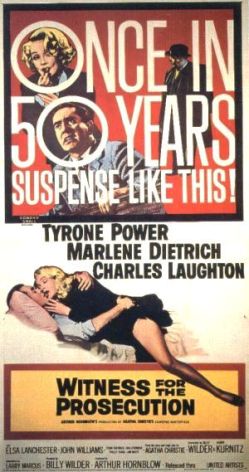
Earlier today, I DVRed the 1957 best picture nominee, Witness for the Prosecution, off of TCM. I watched the film as soon as I finished dinner and, having now seen Witness for the Prosecution, I am prepared to give you my professional and erudite review.
Okay, are you ready for it? Here we go:
🙂 Oh my God, I freaking love this movie!!!!!!!!! 🙂
Witness for the Prosecution is many things. It’s a courtroom drama. It’s a domestic comedy. It’s a twisty murder mystery. It’s a showcase for three great performers. It’s crowd pleaser that will make you think and, even if it does involve people killing each other, it will probably make you smile as well. Don’t let that 1957 date fool you. Witness For the Prosecution is a lot of fun.
Leonard Vole (Tyrone Power) is a somewhat sleazy man who has two claims to fame. One is that he claims to be responsible for inventing the egg beater. The other is that he’s been accused of murdering Mrs. French (Norma Varden), a wealthy widow who had recently named Leonard as the beneficiary of her will. Everyone assumes that Leonard must have been having an affair with Mrs. French but Leonard claims that he’s innocent.
Suspecting that he is soon going to be arrested, Leonard hires Sir Wilfred Robarts (Charles Laughton) to serve as his attorney. Though Sir Wilfred is recovering from a heart attack and has been ordered to not take on any more stressful criminal cases, he agrees to defend Leonard. He proceeds to do just that, under the watchful eye of his nurse, the protective Mrs. Plimsoll (Elsa Lanchester).
(The testy relationship between Sir Wilfred and Mrs. Plimsoll provides the film with its comedic relief. Laughton and Lanchester were married in real life and, watching the film, you can tell that they had a lot of fun acting opposite each other.)
Sir Wilfred is convinced that he can win acquittal for Leonard, especially since Leonard’s German wife, Christine (Marlene Dietrich), is willing to provide an alibi for him. (In one of the film’s best moments, Sir Wilfred talks about how distraught Christine will be to discover that Leonard has been arrested just to then have the very calm and self-possessed Christine step into the room.) However, to everyone’s shock, Christine is called as a witness for the prosecution. She testifies that Leonard confessed the murder to her and that she only provided an alibi out of fear and love.
Things aren’t looking good for Leonard but then, a mysterious woman with a cockney accent contacts Sir Wilfred and reveals that Christine may have had reasons of her own for not giving Leonard an alibi…
Witness For The Prosecution ends with a voice over that says, “The management of this theater suggests that for the greater entertainment of your friends who have not yet seen the picture, you will not divulge, to anyone, the secret of the ending of Witness for the Prosecution.” And I have to say that, when I heard that, it just made me love the film even more. I had enjoyed the film so much and had so much fun following all the twists and the turns of the mystery that I found myself nodding in agreement.
“Sure, 58 year-old voice over,” I said, “I will not divulge the secret ending of Witness For The Prosecution.”
And I’m not going to! Though, to be honest, you’ll probably guess the secret before it’s revealed. It’s a plot twist that has been imitated by so many other courtroom dramas that it’s probably not as much of a mind-blower today as it may have been back in 1957.
But no matter! Witness For The Prosecution is still a lot of fun. Even if you figure out the mystery early, you can still watch the film and enjoy Laughton’s wonderfully theatrical performance.
Witness for the Prosecution was nominated for best picture and, interestingly enough, another theatrical courtroom drama — 12 Angry Men— was also nominated that year. It’s interesting to compare the low-key drama of 12 Angry Men to the cheerful flamboyance of Witness For The Prosecution. They are both great films about the law but each is told from a very different perspective.
Of course, in the end, both of these great films ended up losing to The Bridge On The River Kwai.


 Through the Shattered Lens