Horror Film Review: The Norliss Tapes (dir by Dan Curtis)


1973’s The Norliss Tapes begins with a disappearance.

David Norliss (Roy Thinnes), a California-based journalist, has vanished.  Before he disappeared, he had started work on a book that would have detailed his own adventures investigating the paranormal.  Though Norliss vanishes, he leaves behind several audiotapes in which he discusses some of the frightening things that he has seen.  Searching for clue about Norliss’s disappearance, his editor, Sanford T. Evans (Don Porter), sits down and listens to the tapes.

(Incidentally, Sanford T. Evans is a wonderful name for an editor.  It’s a name that just says, “My father knew Hemingway and I went to the University of Pennsylvania as a legacy.’)

As Evans listens to each tape, we watch the story unfold from Norliss’s point of view.  In this film, we watch as Norliss investigates an incident in which Ellen Sterns Cort (Angie Dickinson) claims that she was recently attacked by her dead husband, James Cort (Nicki Dimitri).  James was an artist who, in his final days, became obsessed with the occult and fell under the influence of the Mademoiselle Jeckiel (Vonetta McGee), a mysterious woman who claimed to appreciate James’s art and who gave him a scarab ring that he insisted on being buried with.

Norliss interviews Ellen and investigates her story.  He’s far more sympathetic to the idea of James having returned from the dead than the local sheriff (Claude Akins) is.  Of course, the sheriff has problems of his own.  Dead bodies keep turning up in his county, their skin gray and their bodies drained of blood.  Hmmm …. I wonder if that could have anything to do with James Cort and his scarab ring….

The Norliss Tapes is a pretty simple film.  Norliss shows up and then basically waits around until James Cort makes an appearance.  The film only runs 72 minutes and it’s very much a pilot for a television series that never went into production,  Apparently, each episode would have featured Stanford listening to a different tape and hearing about David Norliss and a weekly guest star dealing with some sort of supernatural occurrence.  Director Dan Curtis was also responsible for the cult television series, Kolchak: The Night Stalker, and The Norliss Tapes feels very much like a dry run for that show.  The main difference is that Roy Thinnes’s David Norliss is nowhere near as nervous as Darren McGavin’s Carl Kolchak.

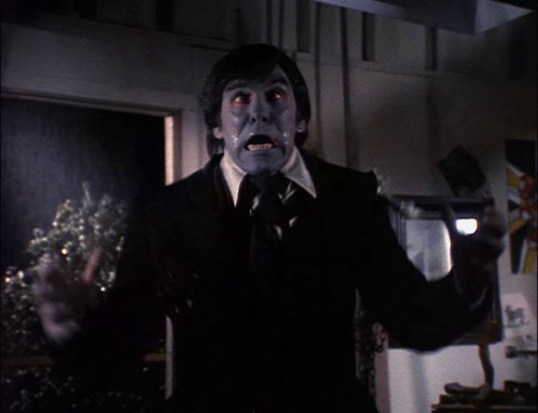
That said, the exact details for what’s going on with James Cort are almost ludicrously complicated.  It turns out that James Cort is not only trying to cheat death but he’s also helping an ancient Egyptian deity invade our world.  It’s best to ignore the nonsense about the Egyptian Gods and instead just focus on how creepy the undead James Cort is.  With his hulking frame, his gray skin, and his nearly glowing eyes, Cort is a truly frightening monster and he’s certainly the most impressive thing about this movie.  What makes Cort such an effective villain is how angry he seems to be.  Whenever he’s on screen, he’s either bursting through a door or chasing someone.  He’s pure nightmare fuel.

The Norliss Tapes never became a series but it did do well in Europe, where it was released in theaters.  The Norliss Tapes still has a cult following, not bad for a failed pilot.  Who knows what other adventures David Norliss could have had?
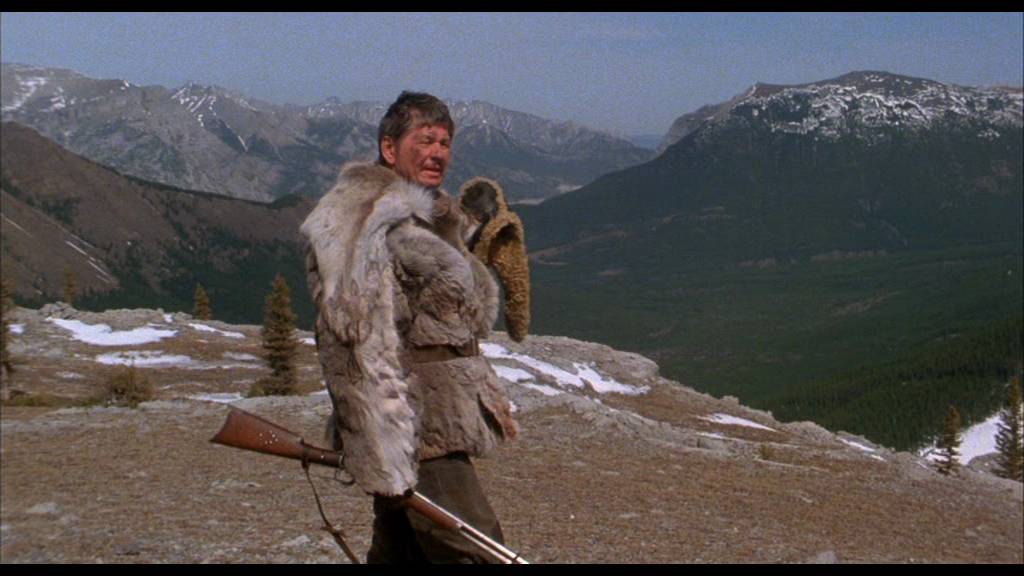
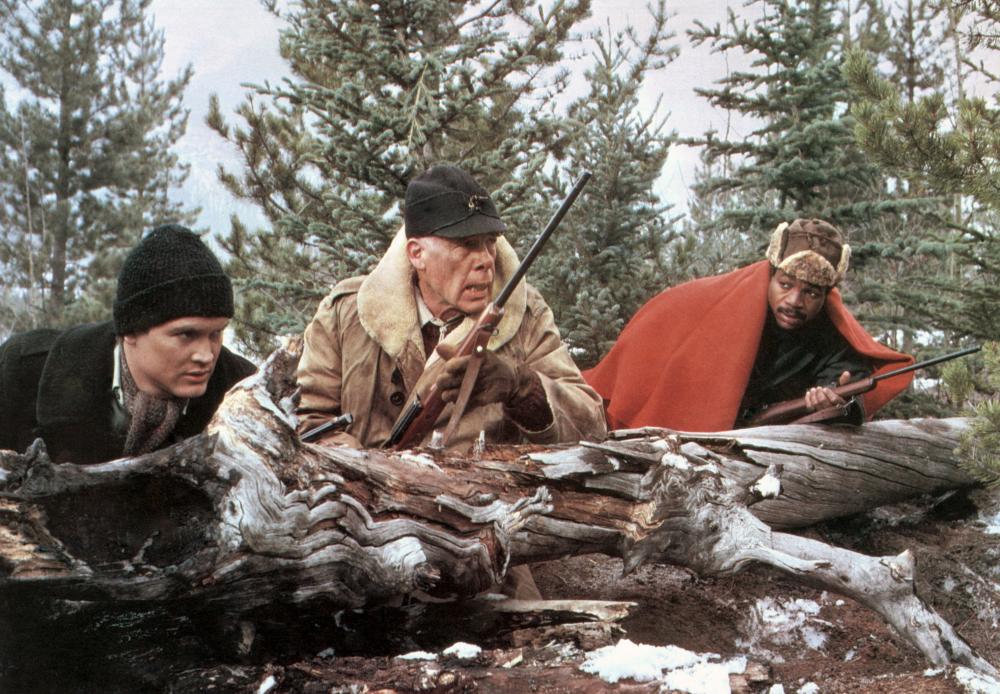
Brad reviews DEATH HUNT (1981), starring Charles Bronson, Lee Marvin, Carl Weathers, and Andrew Stevens! 


Today is actor Andrew Stevens’ 70th birthday. I grew up watching Stevens in the Charles Bronson films 10 TO MIDNIGHT (1983) and DEATH HUNT (1981), the movie I’m reviewing today. I also enjoyed watching him in Brian De Palma’s THE FURY (1978). Later in his career he stepped behind the camera where he produces and directs mostly low budget films. As of this writing, he’s still going strong, and he’s built quite a nice career. And for me, my appreciation all started because he worked with Charles Bronson when he was in his twenties!

In the “based on a true story” DEATH HUNT, Charles Bronson plays trapper Albert Johnson, who lives in the Yukon Territory in the year of 1931 and just wants to be left alone. Early in the film, Johnson comes across a vicious dogfight and rescues one of the participants who’s almost dead. The problem is that the dog belongs to a piece of shit named Hazel (Ed Lauter), and even though Johnson pays him for the dog, Hazel heads to town and tells Sergeant Edgar Millen (Lee Marvin), of the Royal Canadian Mountain Police, that Johnson stole his dog. Millen doesn’t have time for Hazel’s B.S., so he tells him to go on. Millen would rather drink whiskey and hang out with his friends and co-workers in town. These people include the experienced tracker Sundog, aka George Washington Lincoln Brown (Carl Weathers), a young fresh-faced constable with the RCMP named Alvin Adams (Andrew Stevens), his latest lover Vanessa McBride (Angie Dickinson), and everyone’s favorite sidepiece, the Buffalo woman (Amy Marie George). Not willing to let things slide, Hazel and his men go up to Johnson’s cabin and start some more trouble, and one of his buddies gets his scalp shot off by the more than capable Johnson. Even though the entire mess has been started by Hazel and his crew of goons, who include character actors William Sanderson and Maury Chaykin, Millen is forced to try to bring Johnson in, so they can straighten everything out. When it seems Johnson may be about to go in with Millen, one of Hazel’s dumbass men opens fire, and all hell breaks loose. In the aftermath, Johnson escapes, kicking off a massive manhunt across the mountains and wilderness of the Yukon Territory! 

DEATH HUNT is an awesome film, primarily because it pairs Charles Bronson, as the tough mountain man, against Lee Marvin, as the seasoned lawman who probably has only one chase left in him. This is a match made in heaven, and even though the two stars share little screen time, the icons dominate each frame of the film. Their characters respect each other and you get the feeling the two men, who couldn’t be more different in real life, probably felt the same way about each other. The remainder of the cast is filled with so many recognizable names and faces. I’d say the the best performances outside of Bronson and Marvin come from Carl Weathers, Andrew Stevens and Ed Lauter. I like the camaraderie that Weathers shares with Marvin, and of course he’s a lot of help when the action starts. Initially, Stevens seems like he’s going to be another “new kid” who’s too inexperienced to be of much help, but he proves to be more than capable by the end of the film. And good grief is Lauter good at playing a piece of crap! Everything about Hazel is cruel, sadistic, and ignorant, and he plays the part perfectly. A scene where a bullying Hazel gets his comeuppance at the hands of the young Adams (Stevens), is a highlight of the film. Sadly, Angie Dickinson, one of the most beautiful women in the history of cinema, is somewhat wasted in her small, unimportant role. I still like seeing her though, even if the part is beneath her. 

Aside from the phenomenal cast that Director Peter R. Hunt (DR. NO and THUNDERBALL) was able to assemble, there are other good reasons to watch DEATH HUNT. I love movies that are filmed outside of the city, and you can’t get much further out of the city than the Canadian Rocky Mountains. This setting provides plenty of beauty, but its frozen landscape and bitter conditions also allow for a sense of loneliness, isolation and desperation to seep in for the various characters as the manhunt stretches out over time. There is also some rugged and violent action spread out through the film. I was caught off guard the first time I watched the film by some of the more graphic violence in the action scenes. I’ve already mentioned Bronson’s character basically blowing a guy’s head off, and there’s another scene involving William Sanderson getting his arm caught in a trap. These scenes make my toes curl up just thinking about them. The action highlight occurs when the men think they have killed Johnson in an explosion, to only have him emerge from the smoke and flames of his decimated cabin with slow motion shotgun blasting. It’s an incredibly badass moment in the movie and in Bronson’s overall filmography. Finally, the story is interested in contrasting the old ways of doing things, as exemplified by Bronson and Marvin, versus the new ways of doing things, as exemplified by the young Stevens and a hotshot pilot (Scott Hylands) who is called in to help with the search. Edgar Millen is somewhat of a dinosaur who isn’t ready to truly move into the 20th century. He wants to catch Johnson through old-fashioned, out maneuvering him in the wilderness, while Stevens’ character brings in a radio and the expertise to use it, and Hylands tries to locate him and gun him down from high in the sky. These two schools of thought clash and play out to varying degrees of success and failure as the chase rushes toward its conclusion.

DEATH HUNT is not a perfect film by any stretch of the imagination, but it’s been one of my favorite Bronson films since I first saw it the mid to later 80’s. Just seeing Bronson and Marvin together on screen, in a rugged, violent, badass story, goes a long way with me. It’s as simple as that! See the trailer below:

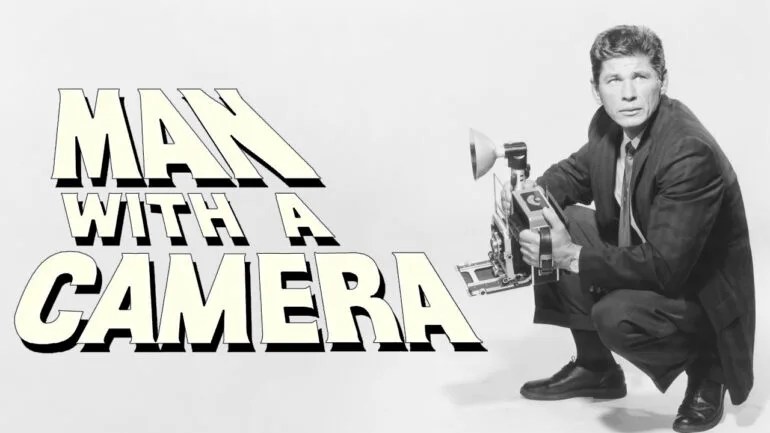
MAN WITH A CAMERA (TV Series) – starring Charles Bronson – S1, E4: Close-up on Violence 


Mike Kovac (Charles Bronson) is taking pictures at a tenement fire in New York City. After getting his pictures of the fire, he gets a few shots of some of the people hanging around, including Norma Delgado (Angie Dickinson). A group of young men see him taking the pictures, so they take the camera away from him. It seems Norma is the daughter of Marty Delgado (Robert Armstrong), a mobster who’s just finished off a six year stretch in prison. Prior to going to prison, Marty stashed a lot of cash away and the boys are planning on taking it away from him. They’re afraid if anyone knows his daughter is around, they’ll be on their way to take the money for themselves. When the boys show back up at Kovac’s house, take his pictures and smash him on the head, he’s determined to figure out what the hell is going on. The first step is finding Norma. Once he finds her, everything else should become clear. 

Aside from Charles Bronson as Mike Kovac, the most interesting thing about this episode is the presence of the lovely Angie Dickinson. At this point in her career she was mostly guesting on TV shows or doing smaller parts in movies. She’s so beautiful, but she really doesn’t have a lot to do here. The next year she would play John Wayne’s love interest in RIO BRAVO (1959) and she’d be on her way to stardom. It’s a treat seeing her and Bronson on screen together. 

Bronson does have one decent tough guy exchange with the young thugs:

Kovac – “…a real tough bunch. You’re tough like a coat of cheap paint. First stretch of bad weather comes along and it peels right off!”

Thug – “Maybe you’re the paint remover?!”

Kovac – “You don’t get that boy out the darkroom, we’ll soon find out!”

As soon as Kovac says this he gets knocked out cold, so Bronson’s not always as tough as he seems at this point in his career. 

One other thing, I am finding that I like the episodes where Kovac’s “Pop” Anton (Ludwig Stossel) shows up. Pop is also a photographer, and he’s so proud of his son and the way his pictures are always in magazines and in the papers. During the middle part of this episode he just has one slight criticism of his son’s work, “you need more lighting.” When Kovac gets the money shot at the end and Pop sees it in a magazine, he’s so proud… he just thinks there needed to be more lighting! It’s a lighthearted and fun way for the episode to end. 

Scenes That I Love: Angie Dickinson Hits Lee Marvin In Point Blank


Point Blank (1967, directed by John Boorman)

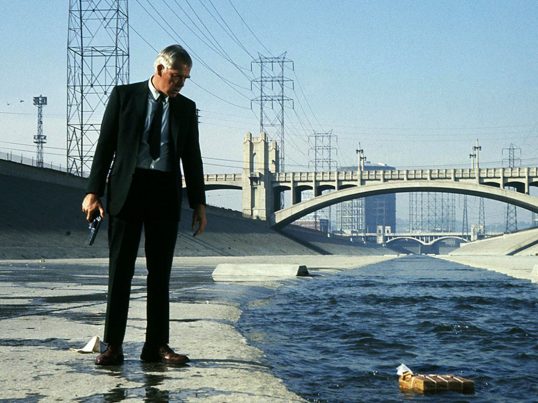
Today is the anniversary of the birth of one of the greatest of the screen tough guys, Mr. Lee Marvin!  Today’s scene that I love comes from the 1967 film, Point Blank.  In this short but emotionally exhausting scene, Angie Dickinson hits Lee Marvin’s career criminal, over and over again.  Marvin, for his part, barely reacts.  This scene is the epitome of Lee Marvin’s mystique.  He played men who only showed emotion when it was necessary.  Dickinson hits Marvin to try to make him feel something but Marvin’s career criminal in beyond such concerns.

From Point Blank, here is today’s scene that I love:

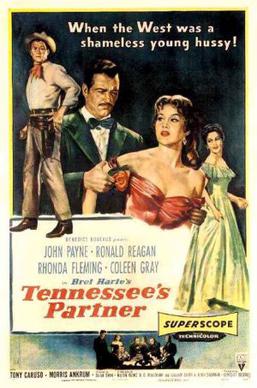
Tennessee’s Partner (1955, directed by Allan Dwan)


Tennesse (John Payne) is an old west gambler who co-owns a saloon (and bordello) with Elizabeth Farnham (Rhonda Fleming).  When Tennessee is ambushed after a poker game, he’s saved by a local man who goes by the name of Cowpoke (Ronald Reagan).  Tennessee and Cowpoke become fast friends but when Tennessee realizes that Cowpoke is about to marry a golddigger (Coleen Gray), Tennessee puts the woman on the next boat out of town.  Cowpoke vows to get vengeance but Tennessee has bigger things to worry about.  Rival businessman Turner (Tony Caruso) has framed Tennessee for the murder of a local prospector, Grubstake McNiven (Chubby Johnson).

Very loosely based on a short story by Bret Harte, Tennessee’s Partner has surprisingly high production values for a B-western.  Director Allan Dwan started his career in the 1910s and directed over 200 westerns.  He knew how to keep the action moving.  Tennessee’s Partner is also the only film that old friends John Payne and Ronald Reagan made together.  Reagan, whose days as a major studio leading man had ended by the time he made this film, gives one of his better performances in the role of the simple but honest Cowpoke and shows the likability that he was later able to translate into a political career.  Reagan could be a stiff actor but his naturally amiable manner made him perfect for best friend and sidekick roles, like in this movie.  Payne also gives a good performance as the gambler with a moral code.  However, the best thing about the film is Rhonda Fleming, giving a tough and sexy performance as Elizabeth.  Because this film came out in 1955, it couldn’t really come out and say that Elizabeth was a madam and the saloon was a bordello but Fleming’s performance and a few lines of innuendo left little doubt about what was actually going on upstairs from the bar.  Keep an eye out for Angie Dickinson, playing one of Elizabeth’s girls.

The performance elevate Tennessee’s Partner, making it a B-western that can be enjoyed even by people who aren’t necessarily into westerns.

Charles Bronson in DEATH HUNT (1981) – Keep warm my friends!


If you’re in Texas or Arkansas today, I hope you’re keeping as bundled up as Charles Bronson in DEATH HUNT. It’s cold out there people! Keep safe and stay home if at all possible! We don’t know how to drive in this weather!

Enjoy DEATH HUNT’s trailer below! Charles Bronson and Lee Marvin are as tough as it gets!

Remembering Actor Earl Holliman (1928 – 2024) – 3 things I’ll remember him for!


I saw that actor Earl Holliman passed away on November 25th, 2024 at 96 years of age. For someone who loves movies as much as I do, Mr. Holliman has been a pleasant part of my life over the years, and it makes me sad that he’s gone.

I first really noticed Earl Holliman as one of the sons of Katie Elder along with John Wayne and Dean Martin. I like John Wayne movies so I’ve watched it quite a few times over the years. There’s just something about Holliman that appeals to me, and his fate in the film still makes me sad. Later, in 2006, I acted in the Southwest Arkansas Arts Council production of THE RAINMAKER in Hope, Arkansas. The 1956 movie version stars Burt Lancaster, Katherine Hepburn, Lloyd Bridges and Earl Holliman. I played the Lloyd Bridges part, so I watched the movie several times to help me get into my character. Holliman was just so good in the movie. He won a Golden Globe for his performance in the film, and it just made me notice him that much more. Finally, as part of the THIS WEEK IN CHARLES BRONSON podcast, I had the opportunity to interview actor Jordan Rhodes who had worked with Charles Bronson in MR. MAJESTYK and THE INDIAN RUNNER. As part of the interview, Jordan told us some of the things that made him proud over the years during his time in Hollywood. He told us about the time that his mom was visiting him in Los Angeles, and how proud he was to be able to introduce her to Earl Holliman who was working on POLICE WOMAN with Angie Dickinson at the time. His story was complimentary of Mr. Holliman and just another really nice thing to hear. 

Thanks, Earl Holliman, for adding joy to my life over the years through your performances on TV and in the movies. Much love and respect for a job well done, sir. Rest in peace. 

Horror on the Lens: The Norliss Tapes (dir by Dan Curtis)


The Norliss Tapes (1973, dir by Dan Curtis)

Today’s Horror on the Lens is The Norliss Tapes, a 1973 made-for-TV movie that was also a pilot for a television series that, unfortunately, was never put into production.

Reporter David Norliss (Roy Thinnes) has disappeared.  His friend and publisher, Stanford Evans (Don Porter), listens to the tapes that Norliss recorded before vanishing. (Stanford Evans, it must be said, is a great name for an editor.)  Each tape details yet another paranormal investigation.  (Presumably, had the series been picked up, each tape would have been a different episode.)  The first tape tells how Norliss investigated the mysterious death of an artist who apparently returned from the grave.

For a made-for-TV movie, The Norliss Tapes is pretty good.  It’s full of atmosphere and features a genuinely menaching yellow-eyed zombie monster. The film was directed by Dan Curtis, who was responsible for several made-for-TV horror films and who also created the deathless TV show, Dark Shadows. Curtis also directed a few feature films. Burnt Offerings, for instance, will be forever beloved for its scene of annoying little Lee Montgomery getting crushed by a chimney. If you ever get a chance to listen to the director’s commentary that Dan Curtis recorded for the Burnt Offerings DVD release, you must do so. Curtis comes across as the crankiest man on the planet and it’s actually kind of fascinating to listen to. His irritation when Karen Black keeps asking him if he knows the name of the actor who played the ghostly chauffeur is truly an amazing thing to here. (For the record, the actor’s name was Anthony James, he also had important supporting roles in two best picture winners — In The Heat of the Night and Unforgiven — and yes, he was one of the best things about Burnt Offerings. Karen Black knew what she was talking about.)

But back to The Norliss Tapes!

Admittedly, this is not the first Halloween in which I’ve shared The Norliss Tapes with our readers. Back in both 2015 and 2021, The Norliss Tapes was one of our “horrors on the lens.” Unfortunately, there’s only so many good quality, public domain horror films available on YouTube so, occasionally, a movie is going to show up more than once over the years. But, as long as it’s good film, who cares?

Enjoy The Norliss Tapes!

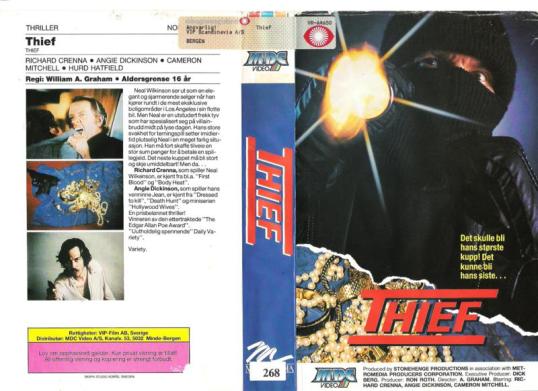
Retro Television Review: Thief (dir by William A. Graham)


Welcome to Retro Television Reviews, a feature where we review some of our favorite and least favorite shows of the past!  On Sundays, I will be reviewing the made-for-television movies that used to be a primetime mainstay.  Today’s film is 1971’s Thief!  It  can be viewed on Tubi and YouTube.

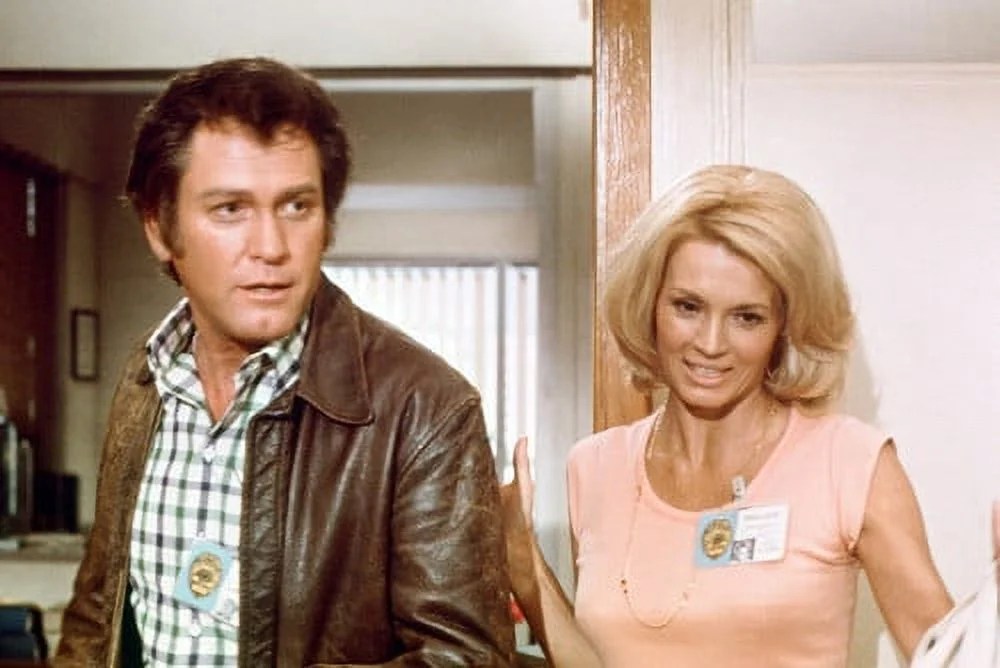
Neal Wilkinson (Richard Crenna) would appear to be living a great life.  He has a nice house in the suburbs.  He has a beautiful girlfriend named Jean Melville (Angie Dickinson).  As he heads into middle-age, he is still fit and handsome and charming.  He dresses well, or at least well by the standards of the early 70s.  (By the standards of today, a few of his ties are a bit too wide.)  Everyone believes that Neal has a nice and comfortable job as an insurance agent.

Of course, the truth is far different.

Neal is a veteran con man and a thief.  He’s just recently been released from prison and his deceptively friendly parole officer (played by the great character actor, Michael Lerner) is convinced that Neal will screw up again eventually.  And, of course, Neal has screwed up.  A gambling addict, he is $30,000 in debt.  Can Neal steal enough jewelry from enough suburban homes to pay off his debt?  Can a man like Neal change his ways?

This is a surprisingly somber made-for-TV movie.  Just from the plot description and the film’s first few minutes, you might expect Thief to be a light-hearted caper film in which Neal and Jean work together to pull off one last heist so that Neal can retire.  Instead, Neal spends almost the entire film lying to Jean and there’s hardly a light moment to be found.  Neal says that he wants to retire from his life of crime but, as the film makes clear, that’s a lie that he’s telling himself.  Neal cannot stop stealing and gambling because he’s as much of an addict as the wild-haired junkie (Michael C. Gwynne) who briefly confronts Neal at the parole office.  At one point, Jean tells Neal, “The more I know you, the less I know you,” but the truth of the matter is that Neal is so deep in denial about the futility of his life that he doesn’t even know himself.

It’s not a particularly happy film.  Richard Crenna is ideally cast as Neal, playing him with enough charm that the viewer can buy that he could talk his way out of being caught in a stranger’s backyard but with also with vulnerability that the viewer can see his fate, even if he can’t.  Thief also provides a rare opportunity to see Cameron Mitchell playing a sympathetic role.  Mitchell is cast as Neal’s attorney, who continually tries to get Neal to stop messing up but who ultimately knows that his attempts to reform Neal are just as futile as Neal’s attempts to go straight.

The movie ends on a surprisingly fatalistic note, one that suggests that there’s only one way to truly escape from a life of crime.  I can only imagine how viewers responded in 1971, when they turned on their television and found themselves watching not a light-hearted caper film but instead a bleak examination of criminal ennui.  It’s not a happy film but it is more than worth watching for Richard Crenna’s lead performance.

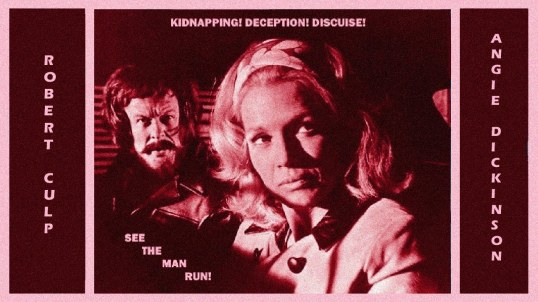
Retro Television Reviews: See The Man Run (dir by Corey Allen)


Welcome to Retro Television Reviews, a feature where we review some of our favorite and least favorite shows of the past!  On Sundays, I will be reviewing the made-for-television movies that used to be a primetime mainstay.  Today’s film is 1971’s See The Man Run!  It  can be viewed on YouTube!

Two criminals have kidnapped the 18 year-old daughter of Dr. Thomas Spencer (Eddie Albert).  They call the number that they have for Dr. Spencer and they tell the man that answers that they are going to kill his daughter unless he pays them a large amount of money.

What the criminals don’t know is that Dr. Spencer has recently changed his phone number and his old number was given to a struggling actor named Ben Taylor (Robert Culp).  When the kidnappers call, Ben has just gotten out of bed and he’s still a bit too groggy to explain to them that they have the wrong number.  Though he suspects that the whole thing might be an elaborate prank, he decides to call the real Dr. Spencer and tell him about the phone call.  However, when the doctor answers, Ben does such a bad job of explaining the situation that Dr. Spencer thinks that Ben is the kidnapper.  Begging Ben not to hurt his daughter, Dr. Spencer says that he’ll pay anything and that he won’t even call the police.

This gives Ben and his wife, Joanne (Angie Dickinson), an idea.  When the kidnappers call back, Ben pretends to be Dr. Spencer.  After the kidnappers tell Ben the amount of money that they want, Ben then calls Dr. Spencer and, pretending to be the kidnapper, relays the message but he also adds an extra $50,000 to the ransom demand.  Ben and Joanne’s plan is to collect the ransom from Dr. Spencer, take their cut, and then deliver the ransom to the kidnappers.

It’s a complicated plan and, throughout the course of the day, both Ben and Joanne have their moments of doubt.  But they stick with it, because Joanne wants the money and Ben wants the chance to not only prove himself as an actor but to also show Joanne that he’s not the loser that she insists that he is.  Complicating matters, though, is that Dr. Spencer’s wife (June Allyson) has called the police without telling Dr. Spencer.  Though Dr. Spencer doesn’t know it, the cops are determined to be there when he hands off the ransom to the man who claims to have his daughter.

Clocking in at a briskly-paced 73 minutes, See The Man Run is an enjoyable thriller, one that is full of unexpected twists and which features a fierce performance from Angie Dickinson and a rather poignant one from Robert Culp.  Culp is convincing rather he’s playing a kidnapper, a doctor, or just an out of work actor who doesn’t realize that he’s gotten in over his head.  As smart as he may be, Ben cannot escape from his own insecurities and his fear of being betrayed.  It all leads to a diabolically clever surprise ending, one that proves that you can run only so far before you stumble.